

Looking for a new place should be an exciting chapter, not a stress-filled hunt for a needle in a haystack of scams. To keep yourself safe, the golden rules are simple: always verify the property and the landlord, never send a deposit before you have a signed, legitimate lease, and only use traceable payment methods like a credit card or a secure online portal.
The Hidden Dangers of Today's Rental Market
The rental market is hotter than ever, and that intense competition has unfortunately created the perfect breeding ground for fraud. Scammers prey on the sense of urgency and desperation many renters feel. They know you’re under pressure to act fast before a great apartment disappears, and they use that fear of missing out to their advantage, which can cloud anyone’s judgment.
Just understanding that dynamic is half the battle. This isn't just about a few dishonest people; it's a widespread issue fueled by housing shortages and skyrocketing demand. This environment makes it all too easy for criminals to post convincing "phantom rentals"—listings for properties that either aren't actually for rent or, in some cases, don't even exist.
Why Scams Are on the Rise
The numbers really tell the story. Over the last two years, there’s been a staggering 45% increase in reported rental scams, a trend that lines up perfectly with the tightening housing market. When people are desperate, they’re more likely to ignore red flags.
For example, data shows that 55% of victims were lured in by a listing priced way below the going market rate. Another 52% were pressured by a scammer's promise of immediate availability. It's a classic trap.
Key Takeaway: A competitive market doesn't just mean higher rent; it means higher risk. Scammers weaponize your desire for a good deal and a quick move-in against you.
To help you quickly identify potential trouble, here's a quick rundown of the most common warning signs.
Quick Guide to Spotting Rental Scam Red Flags
This table provides a quick summary of the most common warning signs of a fraudulent rental offer, helping you identify suspicious activity right away.
| Red Flag | Why It's a Warning Sign |
|---|---|
| Rent is too good to be true | Scammers lure you in with an unbelievable price to make you act fast and ignore other red flags. |
| They refuse an in-person tour | A legitimate landlord will always allow you to see the property. Excuses about being out of town are a classic scam tactic. |
| High-pressure tactics | If they say you must decide now or send money immediately, they're trying to rush you before you can do your research. |
| Requests for a wire transfer or gift cards | These payment methods are untraceable. Once you send the money, it's gone for good. |
| Sloppy listing with typos | While not always a scam, professional landlords usually have professional-looking listings. Multiple errors can be a sign of a fake post. |
| No screening process | Landlords want reliable tenants. If they don't ask for an application, credit check, or references, it's a huge red flag. |
Always trust your gut. If something feels off during the process, it probably is. Taking a moment to double-check these points can save you a world of trouble.
Know the Psychological Traps
Scammers are masters of social engineering. They build a false sense of trust and then pile on the pressure, often using a sob story about being out of the country or needing to find a tenant urgently for a sick relative. They are counting on your desire for the amazing deal to be real. Once you can spot these manipulative tactics, you switch from being a potential target to being an empowered, informed renter.
These strategies are used everywhere, but how they’re applied can differ based on your location. If you’re in a competitive city, it pays to look for local advice. For example, you can find targeted resources like expert tips to avoid scams when renting a studio in Rotterdam that offer invaluable insights for that specific market. Building this kind of awareness is your single best defense.
How to Spot a Fake Rental Listing
Your first line of defense against rental fraud is learning how to dissect a listing like a detective. Scammers are clever, but they almost always leave a trail of digital breadcrumbs. Knowing what to look for can help you filter out the fakes before you even make contact, saving you time, money, and a massive headache.
The most common tactic is an offer that seems too good to be true—because it is. Scammers love to haunt popular vacation rental sites, but they're increasingly targeting social media marketplaces on Craigslist and Facebook. They’ll lift photos from a legitimate property listing and repost them with an unbelievably low price to create a false sense of urgency.
Become a Photo Detective
A picture might be worth a thousand words, but online, it can also be a thousand lies. One of the most powerful and simple tools you have is a reverse image search. This quick check can instantly tell you if the photos in a listing have been swiped from somewhere else.
Here’s how to do it:
- In most browsers, you can just right-click an image in the listing and select "Search image with Google."
- Sift through the results. Does the same photo pop up on a real estate sales site like Zillow for a much higher price? Or maybe it's from an old rental ad posted years ago? These are huge red flags.
- Keep an eye out for watermarks. Some scammers get lazy and use photos that still have an MLS (Multiple Listing Service) watermark on them. If you spot one of those on a Facebook Marketplace or Craigslist post, you can be almost certain it's a scam.
Analyze the Listing's Language
Beyond the pictures, the words themselves can tell you a lot. While a single typo isn’t a dealbreaker, a listing riddled with bad grammar, weird punctuation, and clunky phrasing should make you pause. This often happens with scammers operating from overseas who rely on translation software or just lack professionalism.
Pay close attention to the tone. Does it feel aggressive or desperate? Scammers try to rush you by using phrases like "must rent today" or "first person with a deposit gets it." A real landlord or property manager has a standard, professional process. They won't pressure you into making a snap decision. To get a better feel for these shady communication tactics, it helps to review some common phishing email examples to watch out for.
A legitimate landlord wants a reliable, long-term tenant, not just the fastest person with cash. Their language will reflect a professional screening process, not a frantic giveaway.
The verification process doesn't stop with just the listing. As the image below shows, checking reviews and other details is a critical part of protecting yourself.
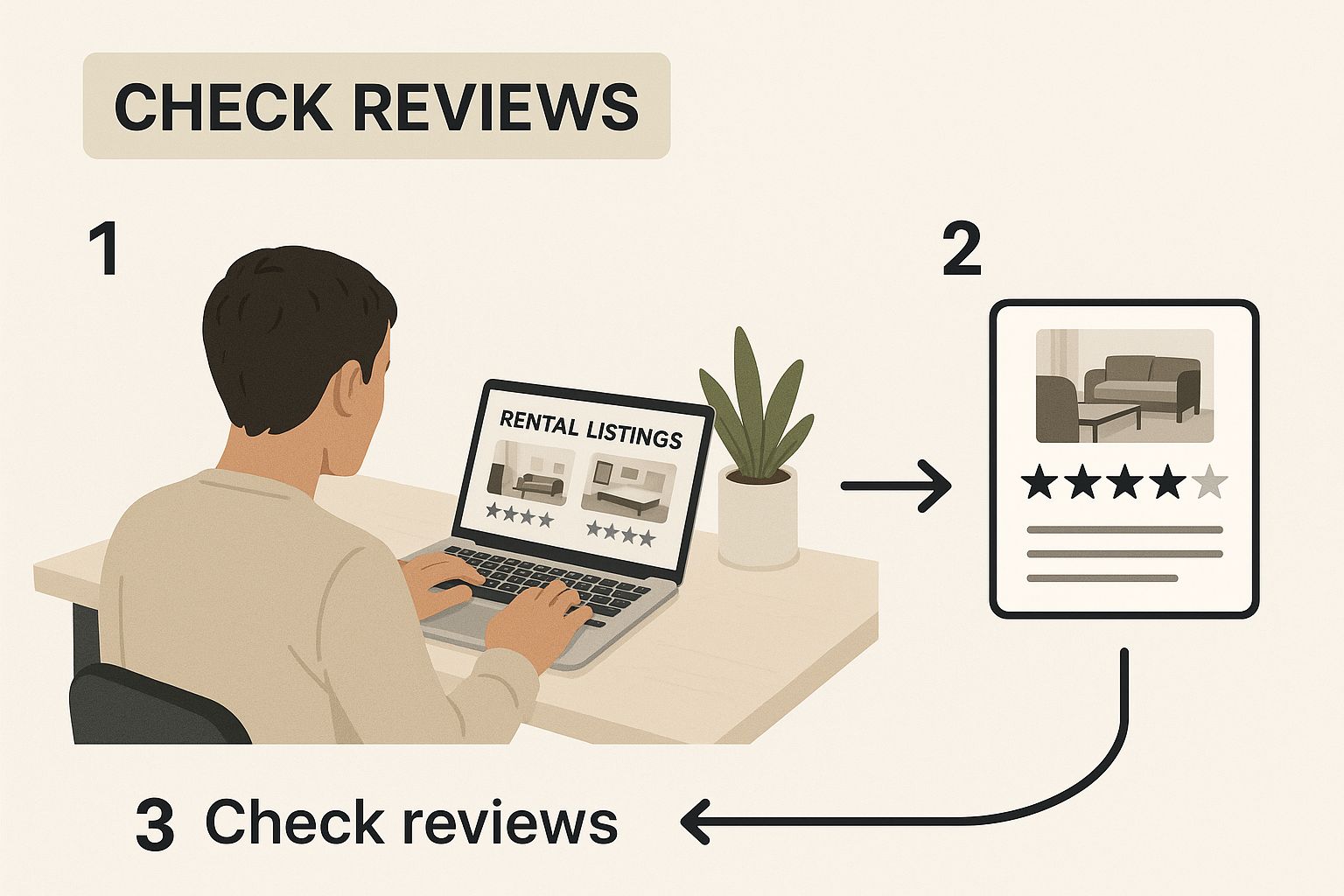
Remember, examining the listing is just the first step. True peace of mind comes from doing your due diligence throughout the entire rental process.
Verifying the Property and Landlord Are Real
So, you've found a listing that doesn't immediately scream "scam." Great. But now the real work begins. Before you even think about sending a dime, you need to do your due diligence.
I can't stress this enough: never, ever send money for a property you haven't confirmed actually exists and is legitimately for rent. Scammers thrive on pressure tactics and creating a false sense of urgency. This is the exact moment to slow down and protect yourself.
The absolute best way to do this? See it with your own two eyes. Always insist on an in-person tour. If the "landlord" spins a tale about being out of the country, on a mission trip, or otherwise unable to show you the place, that's a massive red flag.
What if you're moving from out of state? That’s a common scenario, but it doesn't mean you have to rent blind. Demand a live, interactive video tour. I'm not talking about a pre-recorded walkthrough they can send to anyone. You need to be on a live video call, directing them where to point the camera. Ask them to do specific things—open the fridge, turn on the shower, show you the view out the bedroom window. This proves they are physically inside the unit in real-time.
Confirming the Person Is the Owner
Seeing the property is just one piece of the puzzle. You also have to confirm that the person you're dealing with is the actual owner or an authorized property manager. This is where a little bit of sleuthing can save you a world of hurt.
A legitimate landlord or property management company fully expects to be vetted. In fact, it's helpful to see things from their perspective. Understanding how legitimate landlords screen tenants gives you a clear picture of what a professional process looks like, which makes spotting a fraud that much easier. Don't be timid about asking for proof of ownership.
Here are a few ways you can run your own quick background check:
- Check Public Records: Most counties have online databases where you can look up property ownership records using the address. The name on the title should match the person you're talking to.
- Research the Company: If it's a property management company, Google them. Do they have a professional website? Real reviews? A physical office you can look up on a map?
- Ask for ID: When you meet them for the tour (in-person or video), it's completely reasonable to ask them to show a government-issued ID that matches the name on the property records.
Pro Tip: Try asking detailed questions that only a real owner would know. Ask about the age of the appliances, when the roof was last replaced, or what day the trash gets picked up. A scammer who just lifted photos online will be stumped.
Understanding Your Rights and Theirs
A huge part of this verification process is simply knowing the rules of the game. Scammers operate outside the law, so their requests and documents are often legally questionable.
For instance, getting familiar with the basics of landlord-tenant law in California can give you a solid baseline for what's standard practice and what isn't. This knowledge helps you spot illegal clauses in a bogus lease or recognize when a "landlord" asks for something they have no right to.
A real landlord has to play by the rules. A scammer doesn't. By verifying both the property and the person, you effectively close the door on the most common tactics rental fraudsters use.
Protecting Your Information During the Application
The rental application is where the rubber meets the road—and it's also where your personal data is most exposed. A legitimate landlord has to verify who you are and if you can pay the rent. But for a scammer, this is a golden opportunity for identity theft.
Knowing what to share—and when to share it—is everything.
One of the biggest red flags is a "landlord" asking for extremely sensitive details way too early. If someone demands your Social Security number (SSN) or bank account info before you've even seen the property, that’s your cue to walk away. Immediately. No professional operates that way.
What Information Is Safe to Share?
Think about the application process in stages. In the beginning, your name and basic contact details are fine. It’s only after you’ve toured the place and decided you want it that a landlord will need more to run a proper background and credit check.
Here’s what a standard application will ask for after you've had a viewing:
- Proof of income, like recent pay stubs. You can and should black out sensitive info like your full bank account numbers.
- References from past landlords or even employers.
- Your permission to run a formal credit and background check, which is almost always done through a secure, third-party service.
Never, ever write your SSN or bank information on a paper application or send it in a plain old email. Any landlord or property manager worth their salt will use a secure online portal that encrypts your data to keep it safe.
This tiered approach is a sign of a professional operation. They only gather the information they need, when they need it. This process can also give you a feel for whether the rent price is fair; you can learn more by checking out our guide on how to price a rental property.
The Growing Threat of Application Fraud
Rental fraud is getting more sophisticated by the day. It used to be that property managers could catch almost 90% of fake applications. Now, that number has dropped to about 75% because scammers have gotten much better at faking documents.
With a staggering 85% of landlords saying they've dealt with rental fraud, it's a huge problem on both sides. You can see just how much scammers are adapting by reading the latest tenant fraud statistics.
At the end of the day, a real application process should feel professional and secure. Be suspicious of anyone asking for an "application fee" in cash, via wire transfer, or through payment apps like Zelle or Venmo. These are untraceable methods, and that’s exactly why criminals love them.
Always use a credit card or a secure online portal to pay fees. That way, you have a paper trail and can dispute the charge if things go south. Trust your gut—if the whole thing feels rushed, sketchy, or insecure, it’s not worth the risk.
Handling Payments and Leases Securely
You’ve made it to the final stage of securing a rental. This is where the deal gets done—and where you face the biggest financial risk. The payment and the lease signing are the moments your money is actually on the line, and one wrong move can be devastating. Learning how to navigate these final steps is your ultimate defense against rental scams.
A scammer’s only real goal is to get your cash and vanish. They do this by pushing you toward payment methods that are untraceable and irreversible.
If a potential landlord demands payment via cash, a wire transfer, cryptocurrency, or gift cards, you need to stop everything. These are massive, flashing red flags. Once you send money through these channels, it’s gone for good. There’s no getting it back.
The Only Safe Ways to Pay
Any legitimate landlord or professional property manager will offer secure, traceable, and professional payment options. This is a business deal, after all, and it should feel like one.
These are the payment methods you should look for:
- Credit Card: This is probably your best bet. Credit cards offer powerful fraud protection. If the rental turns out to be a scam, you can simply dispute the charge with your bank.
- Secure Online Portal: Many management companies now use dedicated online portals for applications and payments. These systems are built for security and give you a clear digital paper trail.
- Check: A personal or cashier’s check is another solid option. It creates a physical record and is made out to a specific person or company, so you know exactly who is getting the funds.
Never let anyone pressure you into using peer-to-peer payment apps like Venmo, Zelle, or Cash App for your security deposit or first month’s rent. They’re great for paying back a friend for lunch, but they weren't designed for these kinds of business transactions and often lack the fraud protection you absolutely need.
The Lease Is Your Legal Shield
The timing of the payment is just as critical as the method. A real landlord will never ask you for a large sum of money without a signed, legally binding contract in place first. The lease agreement is the single most important document you’ll have.
Crucial Rule: You must have a fully executed lease agreement—signed by both you and the landlord—before any money leaves your bank account. Anyone asking for a deposit to "hold the apartment" without a signed lease is almost certainly a scammer.
A fake lease can be just as bad as no lease. I’ve seen fraudulent contracts that are vague, missing key details, or even include illegal clauses. You have to scrutinize the document.
A proper lease will always clearly state:
- The full names of all tenants and the landlord or management company.
- The exact property address, including the apartment or unit number.
- The lease term, with specific start and end dates.
- The exact monthly rent and the security deposit amount.
- A clear breakdown of who is responsible for which utilities.
- Rules about pets, guests, and property maintenance.
If the lease you receive is sloppy, full of typos, or looks like a generic template someone just pulled off the internet, be very careful. A professional operation uses professional, legally reviewed documents. When you’re dealing with your home and your savings, taking the time to read every single word is a non-negotiable step.
What to Do If You've Been Scammed
Realizing you've been caught in a rental scam is a gut-wrenching moment. It feels awful, but this is the time to push past the shock and act fast. The quicker you move, the better your chances of limiting the damage.
Your first call should be to your bank or the payment service you used to send the money. Be clear and direct: explain that the transaction was part of a scam and you need to stop or reverse the payment immediately. If you were smart enough to use a credit card, you're in the best position—disputing the charge gives you a strong chance of getting your money back.
Taking Official Action
Once you've addressed the immediate financial threat, it's time to create an official paper trail. This isn't just about getting justice; it's a critical step that helps authorities track these criminals and prevents them from duping someone else.
- File a Police Report: Head to your local police station and file a formal report. Bring every piece of evidence you have—the fraudulent listing, any email or text conversations, and proof of your payment. The more details, the better.
- Alert the Listing Platform: Go back to the website where you found the ad, whether it was Zillow, Facebook Marketplace, or another site. Report the listing as fraudulent. They have a vested interest in cleaning up their platform and can shut down the scammer's account.
It's also vital to report the crime to federal authorities. The Federal Trade Commission (FTC) and the FBI's Internet Crime Complaint Center (IC3) are the primary agencies that collect data on these incidents to identify patterns and pursue larger criminal networks.
Finally, remember that this is a two-way street. Just as you were trying to find a good home, legitimate landlords are constantly working on avoiding a bad tenant. When you report fraud, you're not just helping yourself; you're helping the entire rental community.
Still Have Questions About Rental Scams?
Even when you know what to look for, specific situations can pop up during your rental search that just don't feel right. Let's tackle some of the most common questions and concerns renters face when trying to dodge a scam.
How Do I Know the Landlord is Actually the Owner?
This is a huge one, and thankfully, you have a few ways to verify who you're dealing with. Your first move should be to check the county's public property records online for the address in question. This will tell you the name of the legal owner.
If you’re working with a property management company, a quick Google search is your best friend. A legitimate company will have a professional website, real reviews, and a physical office address you can verify.
When you get to the tour—and you should always do a tour, even if it's live video—ask to see their ID. A real owner or agent won’t think twice about showing you ID that matches the name on the property records. If they get defensive, that's a major red flag.
Is It Ever a Good Idea to Rent a Place Sight-Unseen?
Honestly, this is a risky move and should be your absolute last resort. I get it, sometimes you're moving from across the country and it feels like your only option.
If you absolutely must rent remotely, you have to insist on a live, interactive video tour. I'm not talking about a polished, pre-recorded video they send you. You need to be on a live call, directing the person on the other end.
Get them to do specific things while you watch. Ask them to turn on the faucet in the kitchen, open that specific closet you're curious about, or show you the actual view out the bedroom window. This is how you confirm they are physically in the unit, in real-time. An even better approach? See if a friend or family member in the area can stop by for you.
What Are the Only Safe Ways to Pay a Deposit?
When it comes to your money, only use payment methods that are traceable and offer some form of protection. Your safest bet is almost always a credit card, simply because you can dispute fraudulent charges with your bank.
Other solid options include:
- A secure online payment portal, usually offered by a professional property management company.
- A cashier’s check or even a personal check, made out to the verifiable name of the property owner or the management company.
Never, ever use payment methods that are untraceable. Scammers love these for a reason. Stay away from wire transfers, paying in cash, gift cards, or using peer-to-peer apps like Zelle or Venmo for initial deposits and fees. Once that money is gone, it's gone for good.
Navigating the rental market requires a partner you can trust. Edinhart Realty and Property Management offers professional, reliable real estate services, making sure every transaction is transparent and secure. Whether you're buying, selling, or need an expert to manage your property in the Fresno area, we're here to protect your interests. Learn how we can help you achieve your real estate goals with peace of mind.


