

In California, every lease you sign comes with a built-in, non-negotiable promise from your landlord: they are legally required to keep your rental unit in a "habitable" or livable condition. This legal promise is known as the implied warranty of habitability.
Think of it as the foundational safety net for your rental. It isn't just a nice-to-have; it's a core legal requirement that ensures your home meets basic safety and functional standards from the day you move in.
Understanding Your Landlord's Core Repair Duties
When you get the keys to your new place, you're not just renting four walls and a roof. You're entering a legal agreement where your landlord guarantees the property is safe and livable. This unwritten promise is the bedrock of California’s landlord-tenant law, and it clearly lays out who is responsible for what when it comes to repairs.
The idea of "habitability" is really all about the essentials—the things you absolutely need for a home to be considered safe and sanitary. While specifics can vary, the core concept is consistent. This is a huge part of the property management responsibilities for landlords, as handling these duties properly is critical.
What Habitability Means in Practice
So, what does this legal promise actually cover on a day-to-day basis? It zeroes in on the crucial systems that make a home functional. Your landlord must make sure these elements are working properly when you move in and must step in to make repairs to keep them that way.
Here’s a breakdown of the key areas a landlord must maintain:
- Weather Protection: This means a solid roof that doesn't leak, windows without cracks, and waterproofed walls to keep the elements out.
- Functional Plumbing: You need working toilets, sinks, and showers, plus reliable access to both hot and cold running water.
- Safe Electrical Systems: All wiring, outlets, and lighting must be up to code and free from fire or shock hazards.
- Effective Heating: A dependable heating system is a must, especially one that can keep the home comfortable during colder months.
- Clean and Safe Grounds: Common areas should be kept clear of trash, potential hazards, and infestations from pests like rodents or roaches.
Landlord vs Tenant Repair Responsibilities At a Glance
To make it even clearer, it helps to see a quick side-by-side comparison. While landlords handle the big-ticket items that affect habitability, tenants are generally expected to take care of minor upkeep and cleanliness.
| Type of Repair | Primarily Landlord's Responsibility | Primarily Tenant's Responsibility |
|---|---|---|
| Plumbing | Leaky pipes, broken water heater, clogged main drain | Clogged toilet/sink due to misuse |
| Electrical | Faulty wiring, broken outlets, circuit breaker issues | Replacing a standard lightbulb |
| Structural | Leaking roof, broken windows, damaged floors | Minor cosmetic scuffs on a wall |
| Appliances | Repairing a supplied fridge, stove, or dishwasher | Cleaning appliances, replacing filters |
| Pest Control | Roach, rodent, or bedbug infestations | Keeping the unit clean to prevent pests |
| Safety | Broken locks, non-working smoke detectors | Replacing smoke detector batteries |
This table is a general guide, and your lease might have specific clauses. But for the most part, if it affects the safety or basic function of the home, it falls on the landlord.
The Scope of Landlord Responsibility
The division of labor is heavily weighted toward the property owner, and for good reason. In fact, across major markets, landlords are generally responsible for 89% of property repairs, leaving only a small fraction of maintenance duties to tenants.
This lopsided split isn't an accident. It reflects the legal expectation that property owners are ultimately responsible for maintaining the structural integrity and livability of their investment.
A landlord’s duty is not just about fixing things when they break. It’s about proactively maintaining a safe environment, ensuring that essential services like plumbing, heat, and electricity are consistently available and up to code.
This framework sets clear expectations for everyone involved. While you might be on the hook for changing a lightbulb or keeping things tidy, your landlord is responsible for the bigger, more critical issues. Understanding this distinction is the first step toward protecting your rights and ensuring your home remains a safe place to live.
Diving Into the Implied Warranty of Habitability
Every single rental agreement in California comes with a powerful, unspoken promise from your landlord. You won't find it spelled out in the fine print because it's baked into state law. It's called the implied warranty of habitability, and you can think of it as a mandatory consumer protection plan for your home.
This warranty is the bedrock for understanding what repairs a landlord is responsible for. It applies to every residential lease, whether it's a casual month-to-month agreement or a formal year-long contract. The idea is refreshingly simple: if a landlord is renting out a home, that home has to be fit for people to actually live in.
We're not talking about fancy upgrades or cosmetic touches. The warranty is all about the essentials that make a place safe, sanitary, and secure. If a rental unit fails to meet these core standards, it can be legally classified as "uninhabitable," which gives the tenant some serious leverage.
What Actually Makes a Home Legally Uninhabitable?
"Uninhabitable" might sound vague, but California law gets surprisingly specific. California Civil Code 1941.1 lays out a checklist of conditions a property must meet to be considered livable. If your rental is missing any of these crucial features, your landlord is almost certainly violating the implied warranty.
Let's pull this out of the legal jargon and into the real world. A home is considered uninhabitable if it’s seriously lacking any of the following:
- Weatherproofing: Your home needs solid protection from the wind and rain. This means a waterproof roof and exterior walls, along with intact windows and doors that aren't broken. That persistent ceiling leak every time it rains? That's a classic habitability problem.
- Working Plumbing: This covers the basics: a functional toilet, sink, and a bathtub or shower, all hooked up to a proper sewage system. Just as important, it guarantees you have access to both hot and cold running water.
- Safe Gas Facilities: Any gas lines or appliances provided by the landlord—like a stove or water heater—have to be kept in good, safe working condition.
- Adequate Heating: The property must have a functioning heating system. A furnace that gives out in the middle of a cold snap doesn't just make things uncomfortable; it makes the home legally uninhabitable.
These are some of the big ones, but the law also requires things like safe electrical wiring, clean common areas free from vermin and trash, and proper garbage cans.
The Landlord's Ongoing Duty to Maintain
This warranty isn't a one-and-done deal on move-in day. It’s a continuous promise. The landlord has an ongoing responsibility to make repairs to keep the property livable for your entire tenancy. This is central to the question of what repairs landlords are responsible for.
The implied warranty of habitability isn't a suggestion—it's a legal obligation. It sets a minimum standard for living conditions and puts the responsibility for maintaining that standard squarely on the landlord.
Let's say your water heater suddenly breaks, leaving you with ice-cold showers for days. That's more than just an inconvenience; it's a direct breach of the warranty. The landlord has to get on it and fix the problem. The same goes for a broken window that compromises your security or lets the elements in—that requires a fast response.
But this powerful protection isn't a one-way street. Tenants have a role to play, too. You have to notify the landlord about the issue and give them a reasonable amount of time to make the repair. Also, the warranty won't cover damage that you, your family, or your guests caused through carelessness or deliberate misuse.
Maintaining The Essential Systems That Keep You Safe
Beyond the general promise of a habitable home, a landlord's duties get very specific when it comes to the critical systems that keep your rental safe and running. It helps to think of a property like a living thing: it needs a healthy circulatory system (plumbing), a nervous system (electrical), and a way to breathe (heating and ventilation) to function properly.
When any of these systems fail, it's more than just a headache—it can be a direct threat to your well-being. Your landlord is on the hook to ensure these core components are in good working order from the day you move in and must fix them when they break down. This isn't just about keeping you comfortable; it's about a fundamental duty of care.
Let's break down exactly which systems fall under this critical umbrella.
Plumbing and Gas Lines
A reliable plumbing system is completely non-negotiable. This goes way beyond just a working toilet; it’s the entire network of pipes bringing clean water in and taking wastewater out. Your landlord is responsible for fixing issues like leaky pipes, busted water heaters, and serious drain clogs that aren't your fault.
Gas lines and any gas-powered appliances that came with the rental, like a stove or furnace, also fall squarely on the landlord. A gas leak is a true emergency that demands immediate attention, and keeping these systems maintained is a top priority to prevent a catastrophe.
Electrical and Heating Systems
Faulty electrical wiring is a silent but incredibly dangerous hazard. Landlords must make sure all wiring, outlets, and circuit breakers are safe and up to code. This responsibility means fixing flickering lights, dead outlets, or any other issue that could pose a fire or shock risk. You should never have to worry that plugging in your coffee maker could spark a fire.
Likewise, a working heating system isn't a luxury—it's a legal requirement. When the temperatures drop, a lack of heat can make a home unsafe in a hurry, especially for kids or the elderly. The question of what repairs are landlords responsible for always includes keeping the main source of heat in good working order.
Structural Integrity: Roofs and Walls
The very structure of your home—the roof, walls, floors, and foundation—must be sound. A landlord has to repair a leaky roof that's causing water damage or compromising the building's integrity.
Broken windows, which impact both weatherproofing and your security, are also the landlord's job to fix. These elements are the home's first line of defense against the outside world, and keeping them intact is a core part of the job.
A landlord's duty to repair essential systems is proactive, not just reactive. It involves not only fixing what's broken but also ensuring that the home's core infrastructure is fundamentally safe and compliant with all health and safety codes.
Mandated Safety Devices
Some safety devices are so critical that the law specifically requires landlords to install and maintain them. Think of these as your first line of defense against common household emergencies.
- Smoke Detectors: These are absolute life-savers, and landlords are required to install them in specific locations throughout the property.
- Carbon Monoxide (CO) Detectors: These are mandatory in homes with gas appliances, fireplaces, or attached garages to prevent deadly CO poisoning.
Maintaining these safety systems is a key part of a landlord's responsibilities. Consider that in 2017 alone, there were over 1.3 million fires in the US. That statistic really drives home how vital functional smoke detectors are—an item landlords are almost universally required by law to provide and maintain.
Staying on top of smoke alarm compliance legislation and other safety standards is crucial. For any landlord, staying organized is the only way to manage it all, which is why a detailed rental property maintenance checklist can be such a game-changer. It helps track inspection dates, repairs, and compliance, making sure nothing important falls through the cracks.
Emergency Repairs Versus Non-Urgent Fixes
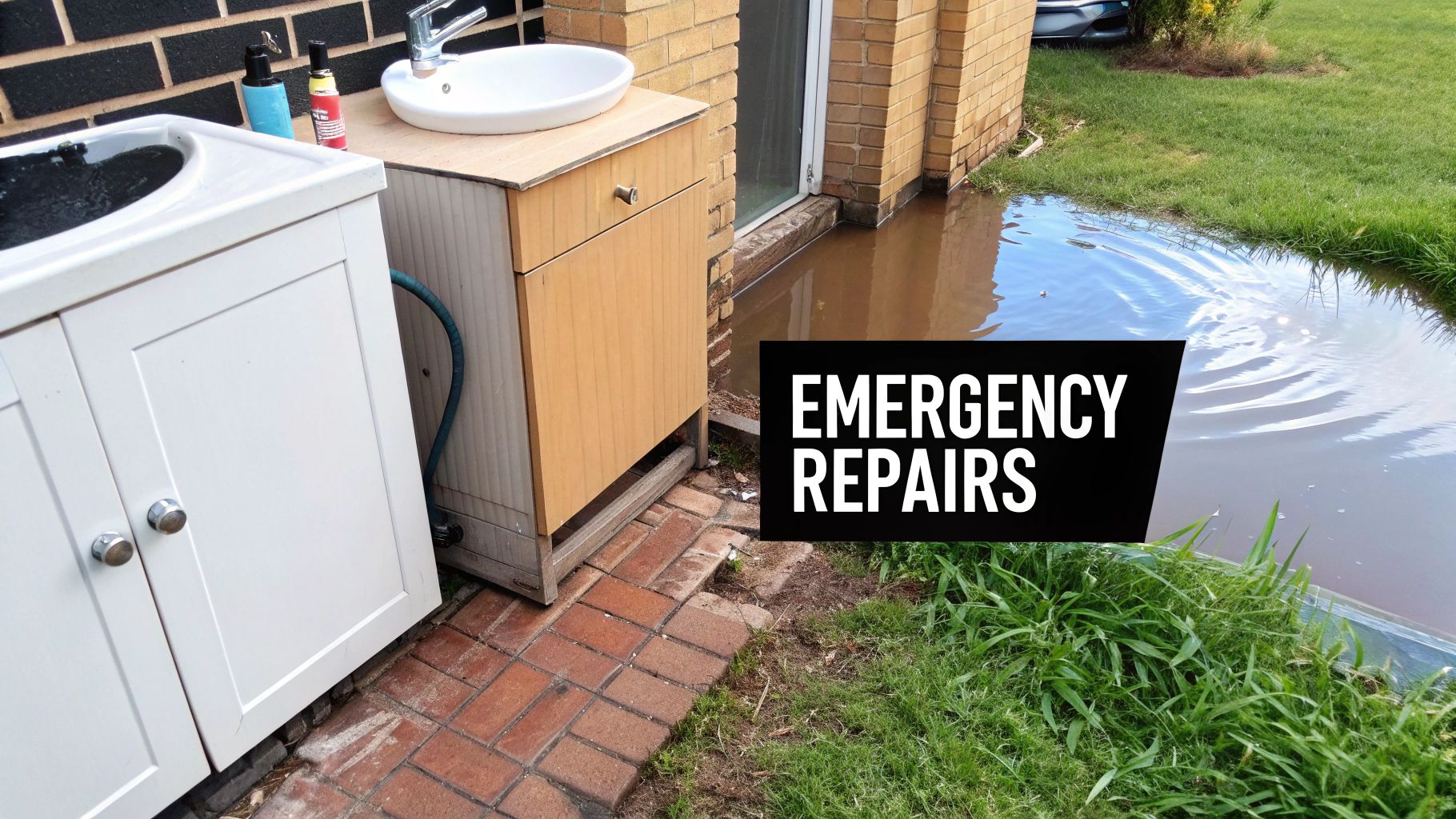
When it comes to property maintenance, not all repair requests carry the same weight. A loose cabinet handle is an inconvenience, sure, but a burst pipe flooding the kitchen is an all-hands-on-deck crisis. Knowing how to tell the difference is a game-changer, as it sets the legal timeline for how quickly a landlord needs to respond.
Think of it like a hospital's triage unit. Some problems need a surgeon now, while others can wait for a scheduled follow-up. The law sees it the same way, sorting repairs into two basic categories to manage expectations and ensure the most dangerous issues get handled first.
This distinction is at the heart of figuring out what repairs are landlords responsible for. While California law gives landlords a "reasonable" amount of time to fix things, what’s reasonable for a dripping faucet is worlds away from what's expected for a gas leak.
Defining an Emergency Repair
So, what qualifies as a true emergency? An emergency repair is anything that poses a direct, immediate threat to a tenant's health and safety or the property's structural integrity. These aren't just annoyances; they're legitimate crises that make the unit unsafe or flat-out uninhabitable.
If you're dealing with a situation like this, the landlord is expected to act immediately—usually within 24 hours.
Common examples of emergencies include:
- A complete loss of heat, especially in cold weather.
- Major plumbing failures, like a burst pipe or a serious sewage backup.
- A suspected gas leak (your first call should be to the gas company, then the landlord).
- Serious electrical problems, such as sparking outlets or a total power outage.
- A broken lock on a main entry door that compromises security.
These issues simply can't wait. A landlord’s duty is to jump on it, even if it means getting an expensive after-hours professional out to the property to stop the damage.
When a repair issue directly threatens a tenant's health or safety, the clock starts ticking immediately. The concept of a 'reasonable' timeframe shrinks from weeks or days down to mere hours.
Understanding Non-Urgent Fixes
The vast majority of maintenance requests you'll get will fall into the non-urgent bucket. These issues absolutely need to be addressed, but they don't pose an immediate danger. For these routine fixes, California law gives landlords a more flexible "reasonable period" to get them done, which is generally understood to be 30 days.
This 30-day window gives property managers enough breathing room to schedule contractors during regular business hours, avoiding the premium costs of emergency call-outs. It’s a practical approach that balances the tenant's right to a well-maintained home with the operational realities of managing properties.
Repair Urgency and Expected Landlord Response Times
To make things crystal clear, let's break down some common repair issues and the kind of timeline you can expect. Knowing this helps set the right expectations from the moment a tenant reports a problem.
| Repair Issue Example | Category | Expected Response Time |
|---|---|---|
| Suspected Gas Leak | Emergency | Immediate (within 24 hours) |
| No Hot Water | Emergency | 24-48 hours |
| Leaking Roof | Emergency | 24-48 hours |
| Dripping Faucet | Non-Emergency | Within 30 days |
| Broken Appliance (if supplied) | Non-Emergency | Within 30 days |
| Loose Cabinet Hinge | Non-Emergency | Within 30 days |
| Clogged Toilet (not caused by tenant) | Emergency/Urgent | 24-48 hours |
No matter how urgent the fix is, the ball starts rolling with the tenant. They need to officially notify you of the problem—preferably in writing. This simple step creates a paper trail, establishes when the legal clock started, and helps keep small frustrations from turning into big disputes.
What to Do When Your Landlord Ignores Repairs
Knowing your rights is one thing, but actually getting a landlord to act is another game entirely. When a landlord ghosts you on a valid repair request, it’s easy to feel powerless and frustrated. The good news is, California law gives tenants a clear, powerful action plan so you don't have to put up with unsafe or unlivable conditions.
This isn’t about picking a fight. It’s about following a legally protected process to get the problem fixed. And the whole thing starts with one critical step: putting your repair request in writing. This simple act creates an official record and starts the legal clock on your landlord's responsibility to get to work.
The Power of a Written Notice
Before you can even think about your other options, you have to formally notify your landlord about the issue. A quick phone call or mentioning it in passing just won't cut it in a legal dispute. A written notice, ideally sent via certified mail with a return receipt, is your ironclad proof that you reported the problem and gave the landlord a "reasonable" amount of time to fix it.
Your notice should be professional and straight to the point. Make sure it includes:
- A detailed description of the problem (e.g., "The water heater is completely broken and isn't producing any hot water.").
- The date you first noticed the issue.
- A clear request for the repair to be made promptly.
- Your name, address, and the date you're sending the letter.
Think of this document as your shield. Without it, a landlord could easily claim they were never properly informed, which would completely undermine any further action you try to take.
Your Legal Remedies When Ignored
So, a reasonable amount of time has passed—usually 30 days for non-emergency issues—and your landlord still hasn't done a thing. Now what? California law gives you several powerful remedies. These aren't steps to take lightly, and you have to follow the rules for each one to the letter.
1. The "Repair and Deduct" Remedy
This is one of your most direct and effective options. If the cost to fix the problem isn't more than one month's rent, you can hire a professional yourself and simply deduct the cost from your next rent check.
But you have to follow the procedure exactly:
- You must have already sent the landlord a written notice and given them a reasonable time to respond.
- The total cost of the repair cannot be more than one month's rent.
- You can only use this remedy twice in any 12-month period.
Make sure you keep all receipts and give your landlord a copy along with your reduced rent payment. This tool is meant for serious habitability issues, not for minor cosmetic touch-ups.
2. Withholding Rent Legally
This is a much more aggressive move and one you should handle with extreme care. You can legally withhold rent if the landlord's failure to make repairs has made part (or all) of the property uninhabitable. A perfect example would be a broken furnace that makes the home unlivable during the winter.
The amount of rent you withhold has to be proportional to the problem. You can't withhold a full month's rent over a broken cabinet door. It's a very smart move to put the withheld rent into a separate bank account, known as an escrow account. This shows a court that you're acting in good faith and have every intention of paying once the repairs are finally done.
3. Breaking Your Lease (Constructive Eviction)
In the most extreme situations, where the conditions are so bad that the property is truly uninhabitable, you might have the right to move out and break your lease free and clear. This is legally known as "constructive eviction." It applies when the landlord's neglect has essentially forced you out of your home.
This is a major legal step. Getting a handle on the full scope of landlord-tenant law in California is critical before you even consider going down this road.
It's also interesting to see how property management plays into this. A 2017 study revealed that absentee-owned properties often racked up more building code violations than owner-occupied ones, suggesting that a hands-on landlord makes a difference. Surprisingly, professionally managed properties sometimes did even worse, which really underscores how important it is to have a diligent management company in your corner. You can learn more about these property maintenance findings.
By following these legally defined procedures, you can confidently tackle ignored repairs and make sure your home stays safe, secure, and livable.
Common Questions About Rental Repairs
When it comes to rental repairs, knowing the law is one thing, but dealing with real-world situations is another. The day-to-day scenarios are where friction often builds between landlords and tenants. This section cuts through the confusion and gives you straight answers to the most common questions we hear about repair responsibilities.
Think of this as your practical FAQ for handling everything from a broken dishwasher to scuffs on the wall. We’ll tackle the gray areas so you can manage these issues with confidence.
Is My Landlord Responsible for Appliance Repairs?
This is a classic, and the answer almost always lies in the lease agreement. If appliances like a refrigerator, stove, dishwasher, or washing machine came with the property when the tenant moved in, then yes, the landlord is generally on the hook for repairs. Those items are part of the rental package the tenant is paying for.
But that responsibility isn't a blank check. If an appliance breaks because of a tenant's negligence—say, they overload a washing machine way past its limit and burn out the motor—the landlord can almost certainly charge for that repair. The whole game is telling the difference between a malfunction from normal use and damage caused by the tenant.
Always double-check the lease for an "appliances" clause. It should spell out exactly which items the landlord agrees to maintain.
What Repairs Are Tenants Responsible For?
While landlords handle the big structural and system-related items, tenants have a key role to play, too. It’s really a partnership. The tenant's core duties are to keep their unit clean and safe and, most importantly, not cause damage through carelessness.
Generally, tenants are expected to take care of:
- Minor Upkeep: This is the simple stuff, like swapping out a dead light bulb or replacing the batteries in smoke and carbon monoxide detectors.
- Cleanliness: Regular cleaning is the tenant's job. This doesn't just keep the place looking nice; it helps prevent bigger problems like pest infestations or mold that grows from neglect.
- Damage You Cause: If a tenant, their family member, or a guest causes damage that goes beyond normal wear and tear—like punching a hole in a door or cracking a window—that repair bill belongs to the tenant.
- Prompt Reporting: This is one of the biggest responsibilities a tenant has. Notifying the landlord about a problem right away is critical. A tiny, unreported leak under the sink can quickly morph into a massive, expensive water damage nightmare.
Good, proactive communication can save everyone a world of headaches.
Can My Landlord Charge Me for a Repair?
Yes, but only in specific situations. A landlord can't charge you for fixing pre-existing issues or problems that pop up from normal, everyday use. That’s squarely on them as part of their maintenance duties.
However, a landlord can—and probably will—charge you for repairs if the damage was caused by you or your guests through negligence, abuse, or a deliberate act.
For example, if your kid decides the living room wall is a canvas for their permanent marker art, the cost to repaint is on you. If you clog a toilet by flushing things that have no business being flushed (like paper towels or wipes), you can expect to get the plumber's bill. These costs are often taken out of the security deposit if they aren't paid upfront.
What Is Considered Normal Wear and Tear?
This is probably the single biggest source of arguments between landlords and tenants, but the concept is pretty straightforward when you break it down. Normal wear and tear is the natural decline a property goes through from being lived in. It's unavoidable and happens over time.
Damage, on the other hand, is the result of accidents, neglect, or abuse. It’s harm that goes way beyond the gentle aging process of a home. Landlords have to fix wear and tear; tenants have to pay for damage.
| Item | Normal Wear and Tear (Landlord's Cost) | Damage (Tenant's Cost) |
|---|---|---|
| Paint | Minor scuffs, faded paint from sunlight | Large holes in the wall, unapproved paint jobs |
| Carpets | Faint traffic patterns, minor fading | Large stains, burns, or rips |
| Flooring | Light scratches on a hardwood floor | Deep gouges, cracked tiles, water damage |
| Fixtures | A wobbly toilet seat from regular use | A cracked toilet tank from dropping something on it |
The infographic below shows the steps a tenant might take if a landlord ignores critical repairs, a situation that can sometimes escalate to the point of breaking a lease.
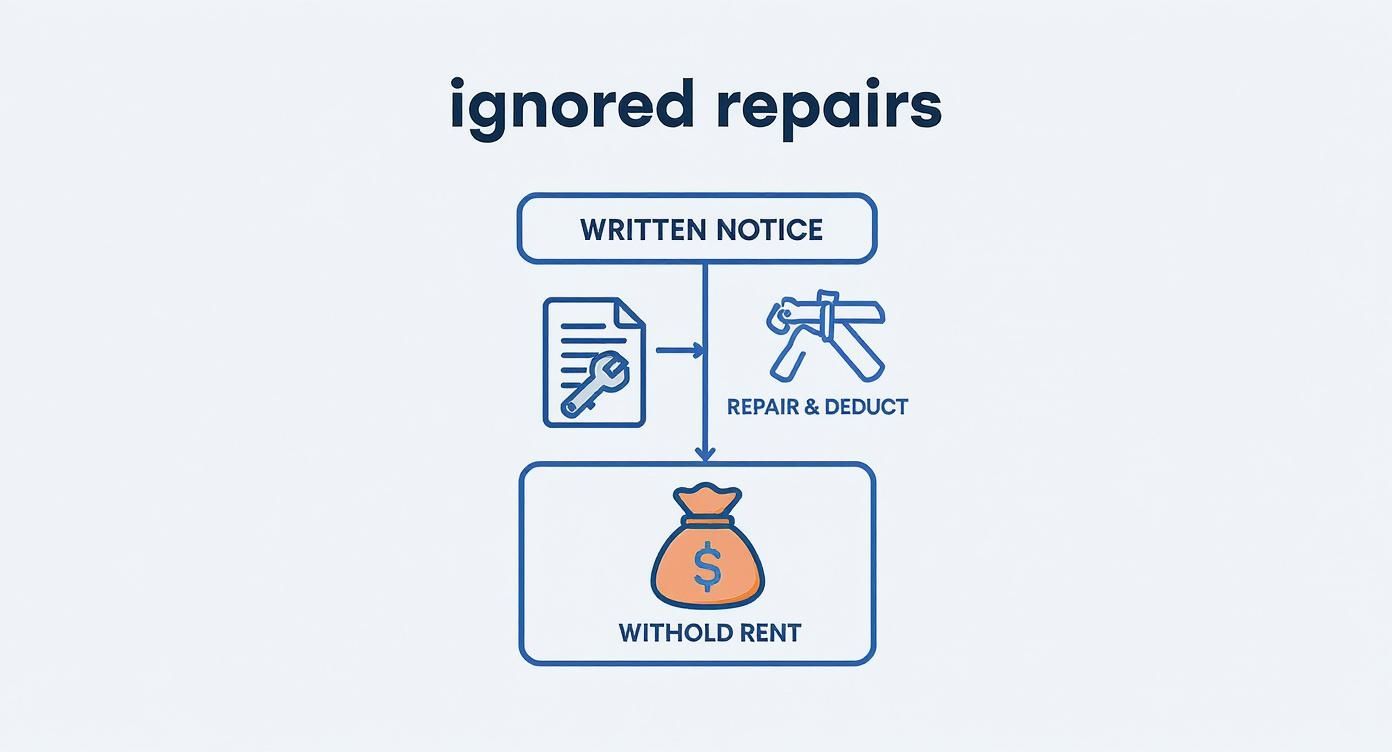
This visual guide lays out the legal remedies available, showing just how important it is to follow the proper procedure when a home's habitability is on the line. In severe cases of neglect where the property becomes unlivable, knowing your options is essential, as these situations often provide a valid reason to break a lease without facing a penalty.


