

Think of a security deposit as a landlord's financial safety net. It's there to cover specific costs, mainly unpaid rent or damage to the property that goes beyond normal wear and tear. It's almost like a refundable reservation for your rental home—if you stick to the lease and leave the place in good shape, you should get the full amount back.
Understanding Your Security Deposit’s Purpose

When you hand over that deposit, it’s not extra rent or a slush fund for the landlord to do property upgrades on your dime. It’s actually a form of collateral. That money is held in trust to protect the property owner from specific, provable financial losses that you might cause during your tenancy. The rules for what a security deposit is used for are surprisingly strict and clearly defined by law.
Valid vs. Invalid Deductions
The biggest point of confusion—and where most disputes happen—is figuring out what a landlord can legally deduct. The line is really drawn between a tenant's direct financial responsibility and a landlord's everyday cost of doing business.
For instance, a landlord can definitely use your deposit to pay for repairing a huge hole you punched in the wall. But they can't use it to repaint the apartment just because the color is five years old and they want a fresh look for the next person.
The core idea is simple: The deposit is meant to cover the costs of bringing the property back to the condition it was in when you moved in, minus the effects of normal, everyday living.
To get a better handle on this, let's break down what's typically allowed versus what's not.
Quick Guide to Security Deposit Deductions
Here’s a simple table that cuts through the noise and shows what your deposit can and cannot be used for. It’s a great reference to have when you're moving out.
| What It Covers (Valid Deductions) | What It Does Not Cover (Invalid Deductions) |
|---|---|
| Unpaid Rent – Covering the final month's rent if you leave without paying. | Normal Wear and Tear – Minor scuffs on walls or faded paint from sunlight. |
| Significant Property Damage – Broken windows, large stains on carpets, or damaged appliances. | Routine Maintenance – Professional carpet cleaning between tenants (unless specified and legal). |
| Extensive Cleaning Costs – If the unit is left exceptionally dirty, requiring deep cleaning. | Property Upgrades – Installing new countertops or light fixtures for the next tenant. |
| Unpaid Utility Bills – If the lease agreement makes the tenant responsible for certain utilities. | Pre-existing Damage – Any issues that were present before you moved in. |
Getting these differences straight is the absolute first step to making sure everything is fair and transparent when your lease is up. Throughout this guide, we'll dig much deeper into each of these areas, giving you the knowledge you need to protect your deposit.
The Three Pillars of Security Deposit Use
At its heart, a security deposit is all about managing risk. As a landlord, you're handing over the keys to a hugely valuable asset, and the deposit is your financial safety net against a few specific kinds of trouble.
Think of it this way: the deposit isn't a slush fund for the landlord to use however they please. It's more like a locked box with very specific rules for when it can be opened. Every single dollar taken out has to be justified by one of these three core reasons. This structure protects the landlord's investment while also protecting the tenant from unfair charges.
1. Covering Unpaid Rent
This is the most straightforward reason a landlord would need to dip into a security deposit: to cover unpaid rent. Life throws curveballs, and sometimes a tenant has to move out unexpectedly, leaving behind a final month's rent or other rental debts. For a property owner, that's a direct financial hit.
For instance, say a tenant's lease is up on July 31st, but they pack up and leave on July 10th without paying for July. The landlord can legally use the security deposit to cover that missing rent payment. It ensures they aren't left holding the bag for the time the property was still legally theirs to occupy.
2. Repairing Property Damage
Here's where things can get a little tricky, and it's easily the most common source of disputes. A security deposit is meant to pay for damage that goes beyond normal wear and tear. We're talking about fixing things that were actually broken or damaged through carelessness, accidents, or intentional actions.
So, what does that actually look like?
- Damage You Can Deduct For: A deep, ugly scratch across a hardwood floor from someone dragging a sofa. A baseball-sized hole punched in the drywall. A massive pet stain that has soaked through the carpet and into the padding below.
- What You Can't (Normal Wear and Tear): Paint that's faded a bit from the sun. Minor scuff marks on the walls where a couch was sitting. Carpet in the main hallway that's just a little worn down from people walking on it every day.
The core idea is simple: a tenant needs to return the property in the same shape they got it, minus the unavoidable effects of just living there. The deposit pays to fix actual harm caused by the tenant, not to cover the costs of routine aging.
3. Settling Costs from Lease Violations
The third and final pillar covers the costs a landlord has to pay because a tenant directly broke a rule in the lease agreement. These violations often force the landlord to spend money to fix the problem or restore the property.
A few common examples include:
- Unauthorized Pets: A tenant sneaks in a cat, and now there's a flea infestation. The landlord can use the deposit to pay for the professional exterminator.
- Unauthorized Alterations: The tenant decides to paint the bedroom a deep, dark purple without asking. The landlord can deduct the cost of the extra primer and paint needed to get that wall back to a neutral color.
- Improper Move-Out: The tenant moves out but leaves behind a broken couch and bags of trash, forcing the landlord to pay for a junk removal service.
These three pillars—unpaid rent, tangible damages, and lease violation costs—are the legal foundation for using a security deposit. This basic function of protecting landlords is pretty universal. In the United States, a deposit is typically one month's rent, but that can climb higher in competitive cities. You can even discover more insights about how rental deposits compare around the world.
Wear and Tear vs Damage: What's the Difference?
This is where most of the arguments happen. The line between gentle, everyday use and actual, tenant-caused harm can feel blurry, often leading to disputes between landlords and tenants. It’s the single biggest reason for security deposit disagreements.
Think of it this way: normal wear and tear is the unavoidable result of just living in a space. It’s the subtle fading of paint from sunlight streaming through a window or the carpet fibers getting a bit matted down in the main walkway. You can’t live somewhere without leaving some faint trace of your presence.
On the other hand, deductible damage is something else entirely. This is neglect, carelessness, or accidents that go beyond daily living. We’re talking about a crayon masterpiece on the living room wall, a massive coffee stain that’s now a permanent feature of the carpet, or a fist-sized hole in a door.

Identifying Normal Wear and Tear
To figure out what’s just normal aging, your best friend is the move-in condition report you (hopefully) filled out. Always compare the property's current state to how it looked on day one.
Here are a few classic examples of wear and tear that a landlord generally can't deduct for:
- Sun-faded Paint: A gradual, subtle loss of color on the walls from months of UV exposure.
- Carpet Compression: Fibers that have simply flattened out in high-traffic areas like hallways.
- Small Wall Scuffs: Faint marks left behind from moving furniture around.
Basically, if it's something that happens naturally over time from just living, it’s probably not coming out of your deposit.
Assessing Deductible Damage
When it comes to damage, there’s usually a clear cost to fix or replace something. This isn't about the property getting a little older; it's about specific incidents that require repair.
A tenant who leaves behind a baseball-sized hole in the drywall or a stovetop caked with greasy, burnt-on residue has clearly crossed the line from "wear" to "damage."
Examples of things you can be charged for include:
- Crayon Murals: The cost of primer, paint, and labor to get that wall back to its original state.
- Coffee Stains: Professional cleaning costs to remove a deep stain, or even the prorated cost to replace a section of carpet if it's ruined.
- Broken Fixtures: The price of a new doorknob, window latch, or light fixture, plus the installation.
To see just how clear the line can be, here’s a quick comparison.
A Practical Comparison of Wear and Tear vs Damage
The table below breaks down some common situations to help you see the difference between what's considered a part of normal living and what's considered damage you're responsible for.
| Item | Normal Wear and Tear | Deductible Damage |
|---|---|---|
| Paint | Slight fading due to sunlight or minor scuffs from furniture. | Crayon drawings, unapproved paint jobs, or large gouges in the wall. |
| Carpet | Gentle, even flattening in walkways or very minor spotting. | Large coffee stains, pet urine stains, burns, or rips needing replacement. |
| Walls | A few tiny nail holes from hanging pictures. | Large holes from mounting a TV, furniture abuse, or doorstops. |
| Fixtures | A loose cabinet handle that just needs tightening. | A completely broken drawer pull, cracked light switch plate, or bent vent cover. |
Seeing the examples side-by-side makes it easier to spot what a landlord can and can't legally deduct from your deposit.
If you’re dealing with something major, understanding the scope of significant damage like fire can help put smaller, everyday damages into perspective.
Considering Tenancy Duration
How long you’ve lived in the rental matters. The definition of "normal" wear and tear changes depending on the length of your stay.
- Short Lease (1 year or less): A few minor scuff marks and tiny nail holes are expected.
- Long Lease (5+ years): More significant signs of aging, like faded curtains, worn flooring, and more noticeable carpet wear are considered normal.
A landlord can't expect a property to look brand new after a tenant has lived there for several years. Always bring it back to the initial condition versus the time that has passed.
Preparing for the Move-Out Inspection
Don't wait until the last day to start thinking about this. Document everything before you move out to protect yourself from any unfair claims.
Take dated photos and videos of every room, paying close attention to any pre-existing flaws or areas that show only normal wear.
- Date-Stamped Photos: Your smartphone automatically adds this data, creating a timestamped record of the property's condition when you left.
- Written Notes: Keep a running list of any dents, stains, or other issues you notice.
This prep work is your best defense against unfair deductions. Having solid proof makes it much harder for a landlord to charge you for something you didn't do.
For a complete guide on what to look for, check out our rental property inspection checklist. It’s a great tool to help you prepare for the final walk-through and protect your deposit.
When you walk into that final inspection armed with knowledge and clear documentation, you’re in a much stronger position to get your full security deposit back without a fight.
How Local Laws Protect Your Deposit
Your security deposit isn’t just some random fee you hand over with your first month's rent. It's actually protected by a solid framework of state and local laws. Think of these regulations as the official guardrails that keep a landlord from treating your hard-earned money like their personal slush fund.
These laws set the rules of the game for the entire landlord-tenant relationship. They ensure things are fair and transparent, turning what could be a one-sided deal into a balanced agreement where everyone knows their responsibilities. Without them, there'd be no consistency in how these crucial funds are managed.
Getting a handle on your specific local regulations is a must, because the rules can change quite a bit from one place to another. To get a better sense of what applies to you, you can dive deeper into our guide on landlord-tenant law in California. Knowing the details is how you protect yourself.
Key Legal Protections for Tenants
While the nitty-gritty details vary, most security deposit laws cover a few critical areas designed to keep your money safe. These aren't just suggestions, either—they have real legal teeth.
Here are a few common protections you’ll find:
- Deposit Limits: Lots of states put a cap on how much a landlord can ask for. It’s often limited to one or two months' rent, which stops landlords from creating a massive financial hurdle just to move in.
- Separate Accounts: Many laws require landlords to keep your deposit in a completely separate bank account. It can't be mixed in with their personal or business money, which makes sure your cash stays yours and is ready to be returned.
- Return Deadlines: Landlords don't have forever to give your money back. The law sets strict deadlines, usually between 14 to 30 days after you move out, to prevent them from holding onto your deposit without a good reason.
The Power of Being Informed: A Real-World Example
Let's look at a real-life scenario. Imagine a tenant, Sarah, moves out of her apartment after living there for two years. A few weeks later, she gets an itemized list of deductions from her landlord, including a $500 charge for "complete interior repainting."
Sarah remembers her move-in photos, which clearly showed only minor scuffs on the walls—the kind of stuff that’s considered normal wear and tear.
Because she knew her state's laws, Sarah understood that routine painting between tenants falls on the landlord, not her. She immediately wrote a formal demand letter, pointing to the exact statute that protected her from that kind of deduction and mentioning her photo evidence.
The landlord, faced with the clear legal facts and the risk of getting sued, quickly dropped the charge. In some states, landlords who wrongfully withhold a deposit can be forced to pay the tenant double or even triple the amount they tried to keep.
This story makes one thing crystal clear: knowledge is your best defense. When you understand the legal limits on what a security deposit can be used for, you can push back against unfair deductions with confidence and get back the money you're owed. The laws are there to protect you, but they only work if you know about them.
What Happens to Your Money While Your Landlord Has It
When you hand over your security deposit, it's easy to wonder where that chunk of change goes. For tenants, it's a significant sum—often thousands of dollars—that’s just tied up, sometimes making it tough to even secure a place to live. On the flip side, landlords see it as a crucial safety net against financial risk.
So, where does that money actually go? What’s it doing while it's out of your hands?
It’s best to think of it not as a payment, but as money held in trust. Unlike your monthly rent, which the landlord earns as income, the security deposit is still technically your property. The landlord is just the temporary guardian, and they have to follow some pretty strict rules.
Your Deposit vs. Insured Bank Savings
You might be tempted to compare your deposit to money in a savings account. In both cases, someone else is holding your funds for safekeeping. But that's where the similarities end.
The money in your bank is typically insured by a government agency like the FDIC. This is a big-picture safety measure to keep the whole economy stable. If the bank goes belly-up, that insurance makes sure you don't lose your savings.
A security deposit, however, is a totally different animal. It operates under a private contract: your lease agreement. The laws are there to protect your individual funds from being misused by the landlord, not to prop up the financial system.
While security deposits do get funneled into the broader economy, they are not the same as insured consumer funds. The safety of your deposit hangs entirely on state and local landlord-tenant laws. For a peek at how much consumer deposits have grown, you can check out a summary on the FDIC's official site.
The bottom line is this: Your security deposit is not an investment for your landlord. It's a temporary, refundable trust that's legally protected to make sure it’s handled fairly and returned to you.
This is exactly why you need to know your local laws. Your biggest protection comes from the specific regulations in your city and state that spell out exactly how a landlord must store, use, and return your money. These rules are the only thing stopping your deposit from being treated like the landlord’s personal piggy bank.
A Step-By-Step Guide to Getting Your Deposit Back
Getting your full security deposit back shouldn't feel like winning the lottery. It really just comes down to being proactive. With clear communication and good documentation, both tenants and landlords can make the refund process smooth and painless.
For tenants, the work starts the moment you get your keys. The single best way to protect yourself against unfair deductions is to create a detailed record of the property's condition before you even move your first box in. This isn't just a friendly suggestion—it’s the most powerful tool you have.
Tenant Checklist for a Full Refund
Getting that deposit back is a marathon, not a sprint. If you follow these steps throughout your tenancy, you’ll set yourself up for an easy, argument-free move-out.
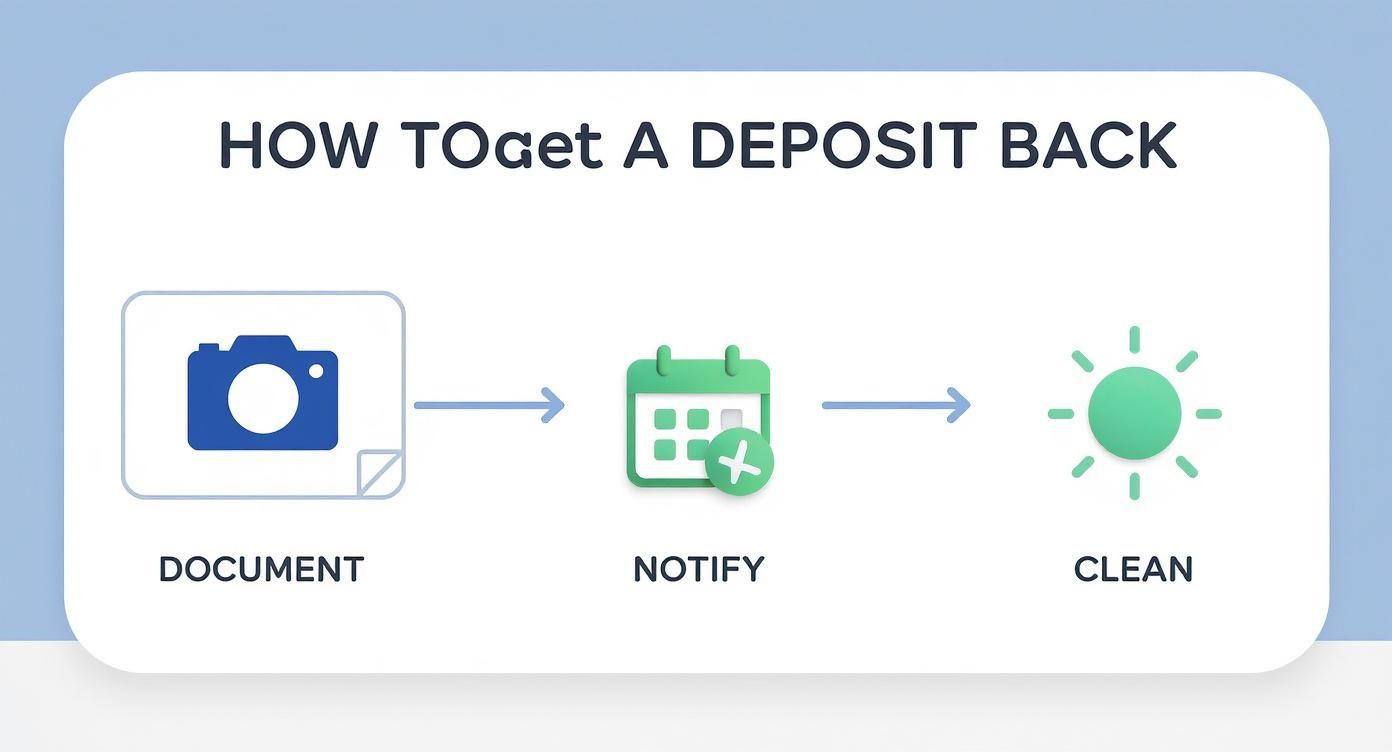
- Document Everything at Move-In: Before you unpack, walk through every room with your phone. Take date-stamped photos or a detailed video, paying close attention to any existing issues like scuffed paint, carpet stains, or a leaky faucet. This creates an undeniable baseline for what the place looked like when you got there.
- Report Maintenance Issues Promptly: A tiny drip under the sink can quickly become major water damage. By reporting problems in writing as soon as you spot them, you’re not only being a responsible tenant, but you’re also preventing small issues from turning into expensive repairs that could be deducted from your deposit.
- Give Proper Move-Out Notice: Pull out your lease agreement and double-check the required notice period—it’s usually 30 or 60 days. Not giving proper written notice is a simple mistake that can easily lead to losing part of your deposit.
- Clean Thoroughly Before Leaving: The rule of thumb is to leave the property in the same condition you found it, minus normal wear and tear. That means a deep clean of the kitchen and bathrooms, vacuuming every room, and getting all your personal belongings and trash out.
This whole process is about being proactive. Document, notify, and clean—that's the foundation for a successful move-out.
Landlord Best Practices for a Smooth Process
Landlords aren't off the hook, either. You play a huge part in keeping things from getting messy. The key is transparency. Give your tenants a detailed move-in condition checklist to fill out, and always keep meticulous records of any repair costs, complete with receipts.
It’s also on you to respect the legal deadlines for returning the deposit. Depending on your state, this is typically between 14 to 30 days. Following a clear protocol not only protects you legally but also builds a good reputation.
If you do run into issues or feel your deposit has been unfairly withheld, it’s important to understand how to handle security deposit disputes. But honestly, most of these headaches can be avoided from the very beginning. By clearly defining everyone's responsibilities in a solid rental lease agreement template, you can prevent most conflicts before they even start.
Common Questions About Security Deposits
Even with a solid lease, the nitty-gritty details of a security deposit can get tricky. Let's tackle some of the most common questions we see from both landlords and tenants when it's time to part ways.
Can My Landlord Use My Deposit For Routine Upgrades?
That’s a hard no. A landlord can't use your deposit to give the unit a facelift for the next renter—things like a fresh coat of paint between tenants or swapping out an old but functional appliance.
A security deposit is strictly for covering costs directly related to your tenancy, like repairing a hole you put in the wall. It’s not a slush fund for property renovations, which are simply the cost of doing business for the landlord.
What If My Landlord Misses The Return Deadline?
State law is very clear on this. Landlords have a specific window, usually 14-30 days, to return your deposit. If they blow past that deadline, your first move should be to send a formal demand letter.
If that doesn't work, you've likely got a solid case for small claims court. In fact, many states have laws that let you sue for double or even triple the deposit amount if a landlord is wrongfully holding onto your money.
Your lease is a binding contract, but it can never trump state law. Any clause that tries to make you sign away your right to a timely deposit return is completely unenforceable.
Can I Just Use My Deposit For The Last Month's Rent?
This is a very common question, and the answer is almost always no. Your lease will almost certainly forbid it. Think of it this way: the deposit is there to cover any damages found after you’ve already moved out.
If you use it for your last month's rent, you leave the landlord with no financial protection against potential repairs. Skipping that final rent payment is a breach of your lease and can have serious consequences.
At Edinhart Realty and Property Management, we handle these complex details every day so you don’t have to. Our team ensures every rental is managed ethically and legally, protecting everyone involved. See how our professional property management services can give you peace of mind by visiting us at https://edinhart.com.


