

At its most basic, property management is simply having a professional oversee your real estate investment on your behalf. But that definition feels a little flat, doesn't it?
A better way to think of it is this: your property manager is the CEO of your rental property. Their job is to run the entire operation—from fielding tenant calls to coordinating maintenance—so that your asset stays profitable and in great shape, freeing you from the day-to-day grind.
What Does a Property Manager Actually Do?

In essence, a property manager serves as the crucial link between you, the property owner, and the people living in your unit. For any investor juggling multiple properties or living hundreds of miles away, trying to self-manage can quickly turn into a logistical nightmare. That's precisely when bringing in a professional makes all the difference.
They step in as your frontline representative, handling all the headaches and complexities you’d rather avoid. They’re the ones getting the 2 a.m. call about a burst pipe, meticulously screening applicants to find the most reliable tenants, and making sure the rent shows up on time, every single month.
This creates a vital buffer that lets you reap the rewards of real estate ownership without getting bogged down by the hands-on hassles. This professional approach is central to successful Fresno property management, where deep local knowledge can make or break an investment’s performance.
It's Far More Than Just Collecting Rent
While getting the rent paid is a huge part of the job, a great manager’s duties go much, much deeper. Their work has a direct and lasting impact on your property's value and, ultimately, your bottom line.
Here are a few of the key areas they handle:
- Tenant Relations: They manage every bit of communication, from the first inquiry and application screening to lease renewals, complaints, and move-outs.
- Maintenance and Repairs: They coordinate all the upkeep, both routine and emergency. Most have a trusted network of vetted contractors, ensuring you get quality work at a fair price.
- Financial Administration: Beyond just cashing checks, they handle security deposits, pay property-related bills, and deliver clear, detailed financial statements to you each month.
The real goal of a property manager is to protect your investment, keep your costs down, and push your income up. They're there to turn a potentially stressful, all-consuming venture into a genuinely passive and profitable one.
The proof is in the numbers. The global property management market, currently valued at USD 26.58 billion, is expected to explode to nearly USD 49.90 billion by 2035. This massive growth is driven by smart investors who see the incredible value in professional oversight. It just makes sense.
Core Functions of a Property Manager at a Glance
To really wrap your head around everything they do, it helps to see it all laid out. This table breaks down the primary responsibilities a professional property manager takes off your plate.
| Responsibility Area | Key Tasks Involved |
|---|---|
| Marketing and Leasing | Advertising vacancies, showing the property, screening applicants, executing lease agreements. |
| Financial Management | Setting optimal rent, collecting payments, managing budgets, and preparing financial reports. |
| Tenant Management | Handling move-ins, responding to requests, enforcing lease terms, and managing evictions. |
| Maintenance & Upkeep | Performing inspections, coordinating repairs, and managing preventative maintenance schedules. |
| Legal Compliance | Adhering to local, state, and federal landlord-tenant laws and ensuring property compliance. |
Seeing it all together makes it clear: a good manager does far more than just find a tenant and collect rent. They are the operational engine that keeps your investment running smoothly and profitably.
The Four Pillars of Management Responsibilities

When you really break it down, property management stands on four essential pillars. Think of them as the legs of a sturdy table—if one is weak, the whole thing gets wobbly. These core responsibilities work in harmony to protect your investment, keep it profitable, and shield you from unnecessary risk.
Getting these four areas right is what turns a simple rental house into a genuine, high-performing asset. Let's dig into what each pillar actually involves.
Tenant Acquisition and Management
This is the most forward-facing part of property management, and it’s where your cash flow lives or dies. The goal isn't just to fill a vacancy; it's to find the right person who pays on time and respects your property. A great manager acts as the professional face of your investment, handling every interaction with care.
This pillar is all about action:
- Strategic Marketing: It starts with creating eye-catching listings with professional photos and getting them in front of the largest possible pool of qualified renters.
- Rigorous Screening: This is non-negotiable. A standardized screening process that complies with fair housing laws—including credit checks, criminal background reports, employment verification, and chats with past landlords—is your first line of defense.
- Lease Management: From negotiations and signings to renewals, every piece of paper needs to be handled correctly to ensure all legal boxes are checked.
- Ongoing Communication: The manager is the go-to person for every tenant question, maintenance request, and minor issue, stepping in to solve problems before they have a chance to grow.
Mastering this pillar is how you dramatically cut down on turnover costs and avoid the nightmare of a costly eviction.
A vacant property is a liability, but a property with a bad tenant is a catastrophe. Professional tenant screening is the single most important defense an owner has against future problems.
Financial Oversight and Reporting
At the end of the day, your rental property is a business. And like any business, it needs sharp financial management to succeed. This pillar is all about making sure the numbers are handled with precision and total transparency. It's so much more than just cashing a rent check.
A manager's financial duties are broad. They'll conduct a detailed market analysis to set the perfect rent price—one that's competitive but doesn't leave your money on the table. They also run the entire rent collection machine, from sending reminders to enforcing late fees when necessary.
On the other side of the ledger, they manage every property-related expense, from the water bill to a plumber's invoice. You should receive a crystal-clear financial statement every month that shows exactly where your money went, making tax time a whole lot less painful.
Property Maintenance and Repairs
The physical health of your property is directly linked to its value over the long haul. This pillar is dedicated to protecting that asset through proactive care and quick, effective repairs. A well-kept home doesn't just attract better tenants; it stops tiny, cheap problems from snowballing into huge, expensive disasters.
Regular inspections are a huge part of this. Using a detailed rental property inspection checklist, managers can spot potential issues early, whether it's a small leak under a sink or a faulty smoke detector.
When something does break, a good management company handles everything. They have a trusted network of licensed and insured vendors who do quality work at fair prices. This saves you from the stress of hunting for a reliable roofer on a Sunday afternoon. And during turnovers, a thorough ultimate rental property cleaning checklist is crucial for getting the unit ready for the next resident.
Legal Compliance and Risk Management
Navigating the tangled web of landlord-tenant law can feel like a full-time job. Rules are always shifting at the federal, state, and even city level, and one wrong move can land you in serious legal and financial trouble. This final pillar is all about keeping your investment safe and fully compliant.
This means making sure every single step—from how you word a rental ad to how you handle a security deposit—follows the letter of the law, including the Fair Housing Act. This growing legal complexity is a major reason the property management industry has seen such growth. In the United States, there were 316,993 property management businesses, a figure that has been climbing by 2.0% annually, with another 2.5% increase projected. It's a clear sign that owners recognize the need for a professional navigator.
Choosing Your Ideal Management Model
Not all property management is the same. Just like you wouldn't use a sledgehammer for a finishing nail, the management model you choose has to match the job at hand. For property owners, this choice usually boils down to two main paths: full-service management or placement-only services.
Each model is built for a completely different type of landlord and level of involvement. One is designed for the investor who wants a truly hands-off, passive income stream, while the other is for the hands-on owner who just needs a professional boost to get started. Making the right call here will define your experience as a landlord, impacting your time, stress, and ultimately, your return on investment.
Full-Service Management The All-Inclusive Solution
Think of full-service management as the "all-inclusive resort" of real estate investing. You make the initial investment, and from that point forward, the management company handles literally everything. This is the ultimate set-it-and-forget-it option for owners who value their time and peace of mind above all else.
In this model, the property manager basically becomes the CEO of your rental. Their job covers the entire lifecycle of a tenancy, including:
- Marketing and Leasing: Professionally advertising your property and handling all the showings.
- Tenant Screening: Running a tight screening process to find qualified, reliable renters.
- Rent Collection: Making sure rent is paid on time and dealing with any delinquencies.
- Maintenance Coordination: Handling all repair requests, from routine fixes to 24/7 emergencies.
- Financial Reporting: Sending you detailed monthly statements showing all income and expenses.
- Legal Compliance: Staying on top of landlord-tenant laws and managing evictions if it ever comes to that.
This all-in approach is perfect for investors who live out of state, own a bunch of properties, or simply don’t want to get bogged down in the day-to-day grind. The fee for this convenience is typically a percentage of the monthly rent collected, usually somewhere between 8-12%.
Placement-Only Services The A La Carte Approach
On the flip side, placement-only services (sometimes called tenant procurement or lease-only) are for the hands-on landlord who actually enjoys managing their property but can’t stand the marketing and leasing part. It’s an a la carte service that tackles the most difficult part of being a landlord: finding a great tenant.
With this model, you hire a property manager for a specific set of upfront tasks. Once a qualified tenant signs the lease and moves in, the manager hands the keys back to you. From then on, you’re responsible for everything else.
Placement-only services are like hiring a professional headhunter for your property. Their job is to find, vet, and place the best possible candidate, after which you take over as the direct manager.
This is a fantastic tool for DIY landlords who want to tap into a professional’s marketing muscle and screening expertise without signing up for long-term management. The one-time fee is usually equal to 50-100% of the first month's rent.
This infographic breaks down the time commitment and cost of self-management versus bringing in a professional.
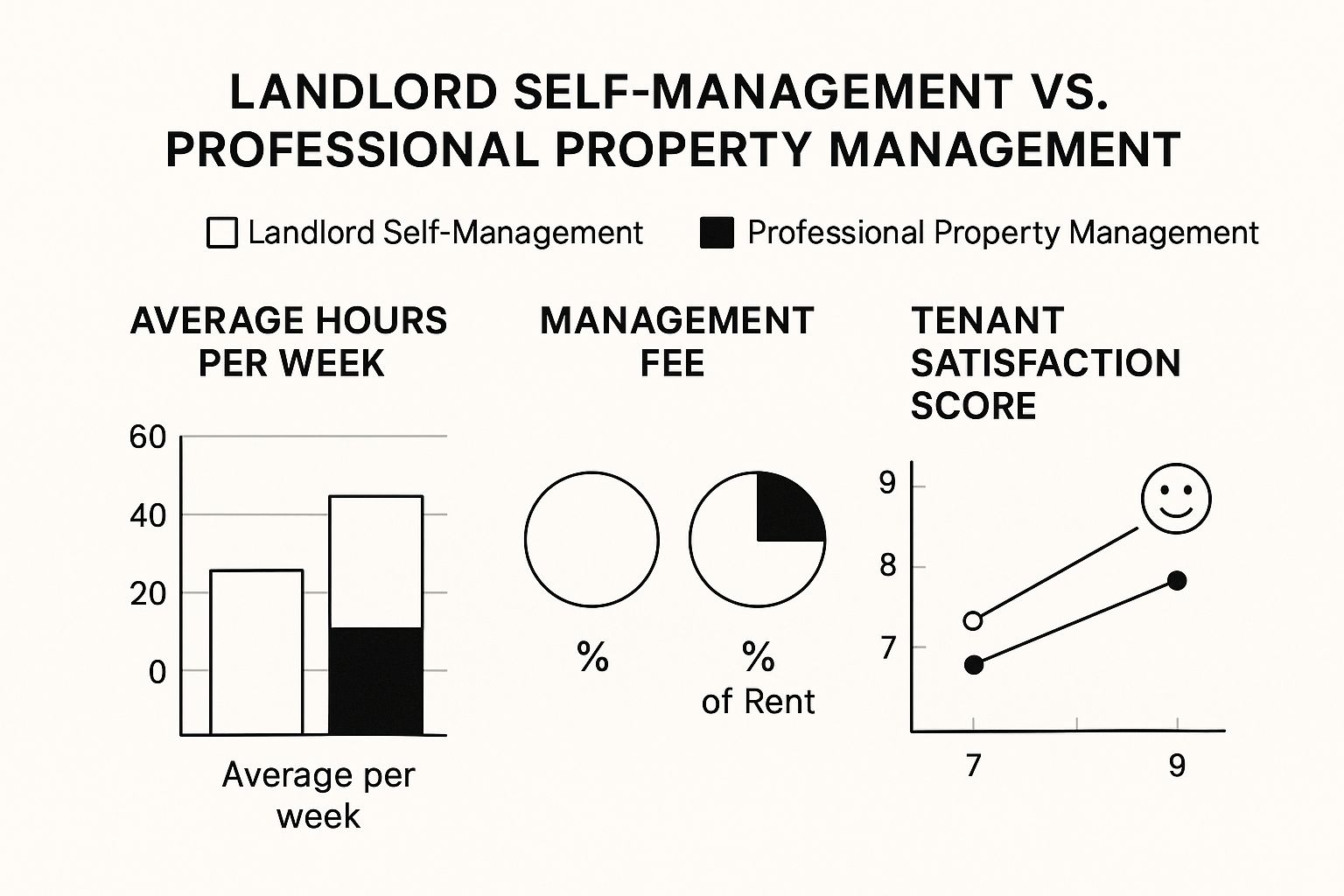
The numbers make it clear: while professional management has a fee, it saves a massive amount of time and often leads to happier, longer-term tenants.
To make the decision even clearer, here’s a direct comparison of the two models. This should help you figure out which one really fits your investment strategy and lifestyle.
Full-Service Management vs Placement-Only Services
| Feature | Full-Service Management | Placement-Only Services |
|---|---|---|
| Best For | Hands-off investors, out-of-state owners, or those with multiple properties. | DIY landlords who need help with marketing and tenant screening. |
| Scope of Work | End-to-end management: marketing, screening, rent, maintenance, etc. | Upfront tasks only: marketing, showings, screening, and lease signing. |
| Cost Structure | Recurring monthly fee (8-12% of rent). | One-time fee (50-100% of first month's rent). |
| Owner Involvement | Minimal. The manager handles all day-to-day operations and tenant contact. | High. The owner becomes the primary contact and manager after move-in. |
| Duration | Ongoing, long-term partnership. | Short-term, project-based service. |
At the end of the day, the right choice depends on your specific needs. Are you looking for a partner to run the show, or just a specialist to handle the heavy lifting upfront?
Which Model Is Right for You?
Choosing between these two models comes down to a simple question: How involved do you want to be? Your answer will depend on your location, your experience level, how many properties you own, and how much you value your time. Getting this right is a key part of understanding what is property management for your portfolio and setting yourself up to hit your financial goals with the right amount of personal effort.
Why a Great Manager Is a Smart Investment
It’s easy to look at property management fees as just another line item expense. But that’s a common mistake. In reality, bringing a great manager on board is one of the smartest financial moves a property owner can make.
Think of it as a direct investment in your property’s future—one that maximizes returns, minimizes risks, and gives you back your most valuable asset: your time. This isn't just about someone else handling late-night maintenance calls. It’s a strategic decision that turns a hands-on headache into a high-performing, genuinely passive investment.
Maximizing Your Revenue Potential
One of the first places you’ll see a return is in your rental income. A professional manager doesn't just guess what your property is worth. They run a detailed comparative market analysis (CMA), digging into the data to find that sweet spot for your rent—high enough to boost your cash flow but competitive enough to attract quality tenants without delay.
After all, an empty unit is an expensive liability. Every single day a property sits vacant, it's costing you money. Managers attack this problem head-on with professional marketing, high-quality photos, and wide advertising reach to get your property in front of the largest possible pool of qualified applicants.
The right manager doesn't just collect rent; they actively work to increase your property's earning power. By minimizing vacancies and setting the right price, they often cover their own fees and then some.
Protecting Your Physical and Financial Assets
Beyond the balance sheet, a manager’s greatest value is in shielding you from risk. It all starts with rigorous tenant screening, which is your first and best line of defense against future problems. A thorough process that includes credit checks, background reports, employment verification, and calls to past landlords dramatically cuts down on the risk of late payments, property damage, and the nightmare of eviction.
Imagine the alternative: a DIY landlord, unfamiliar with fair housing laws, accidentally asks a discriminatory question during an interview and ends up in a legal mess. A professional manager navigates this complex legal landscape every day, ensuring each step of the process is compliant and protects you from liability. That peace of mind alone is invaluable.
This proactive approach isn't just a local best practice; it's a global standard. Europe, for instance, holds a major share of the global property management market, which is projected to hit USD 27.81 billion. Key markets like the United Kingdom are expected to generate over USD 1.35 billion in revenue, all driven by a real estate sector that gets the value of professional oversight. You can explore more about these global trends and what they signal for the industry.
The True Value of Reclaimed Time
Finally, don’t forget the non-financial return on your investment: your own time and well-being. What's it worth to you to not have to mediate tenant disputes, coordinate an emergency plumbing repair on a holiday, or chase down late rent?
A professional property manager takes on these operational burdens for you. That frees you up to focus on what really matters—whether that’s finding your next investment property, growing your career, or just spending more time with your family. This is the ultimate, and perhaps most important, benefit of their service.
Here’s a quick breakdown of the tangible returns:
- Higher-Quality Tenants: Professional screening attracts residents who pay on time, stay longer, and treat your property with respect.
- Shorter Vacancy Cycles: An effective marketing and leasing process gets your unit filled faster, putting money back in your pocket.
- Lower Maintenance Costs: Managers have a network of vetted, affordable vendors, which saves you money on repairs and general upkeep.
- Increased Tenant Retention: A responsive, professional manager keeps good tenants happy, which means less turnover and fewer vacancy costs.
Hiring a manager isn't an admission that you can’t do it yourself. It's a strategic decision to run your investment like a professional business—one that’s optimized for performance, protection, and your own peace of mind.
How to Find the Right Property Management Partner

Choosing a property manager is a big deal. You’re not just handing off a few tasks; you’re trusting someone with one of your most valuable assets. The right partner can protect your investment, boost your income, and give you priceless peace of mind.
But the wrong one? They can turn a great investment into a costly headache almost overnight.
Finding a company you can trust takes a bit of legwork. You need a solid game plan to see past the sales pitches and find a team that’s genuinely on your side. By asking the right questions and knowing what to look for, you can make your choice with confidence.
Start With Local Expertise and Reputation
Your search should always start local. A manager who lives and breathes your specific market has a huge advantage—they know the rent trends, the neighborhood quirks, and the local laws inside and out.
First, build a shortlist. Ask other real estate investors, your realtor, or people in local investment groups for referrals. Online reviews on Google and Yelp can also offer good clues, but learn to read between the lines. Look for patterns. A few cranky reviews happen, but consistent complaints about poor communication or surprise fees are a major red flag.
Dig Deep During the Interview Process
Once you have a shortlist, it's time to interview at least three different companies. This is your chance to separate the talkers from the doers. Treat it like a job interview, because that’s exactly what it is.
Your questions need to be sharp and specific, hitting the main pillars of property management. You need to know their exact process for handling your money, your tenants, and the property itself. To get started, check out this detailed list of questions to ask a potential property management company—it’ll help you cover all your bases.
Here are a few critical areas you absolutely have to ask about:
- Tenant Screening: What are their specific screening criteria? Ask about required credit scores, income-to-rent ratios, and their policies on criminal backgrounds or prior evictions. A company with a vague or lax screening process is gambling with your investment.
- Maintenance Protocols: How do they handle repairs? Do they have their own maintenance crew or a network of outside vendors? You’ll want to clarify how they handle emergencies and if they add any markups or coordination fees to repair bills.
- Communication Style: How will you get updates? Do they have an online owner portal where you can see financial statements and inspection reports anytime? Set clear expectations for communication right from the start.
A great property manager should be able to explain their processes clearly and confidently. If they give you vague answers or hesitate to share details, it’s a sign that their operations might be a mess.
Scrutinize the Fee Structure and Agreement
Property management fees can be tricky, and some companies love to bury extra charges in the fine print. Never pick a manager just because they have the lowest price. Instead, focus on understanding the total cost and the value you’re getting for your money.
Ask for a complete fee schedule in writing. Look beyond the monthly management percentage and ask about other common charges:
- Leasing or Tenant Placement Fee: A one-time fee for finding and placing a new tenant.
- Lease Renewal Fee: A charge for negotiating and signing a new lease with a current tenant.
- Maintenance Surcharge: Some companies add a percentage (often 10%) on top of vendor invoices.
- Vacancy Fee: A fee charged while the property is empty. A good company should never bill you for managing a vacant unit.
Once you’re clear on the costs, it’s time to read the management agreement. This is the legally binding contract that spells out everyone’s responsibilities. Pay very close attention to the termination clause—you need to know how to get out of the contract if you’re not happy. Look for a clause that lets you terminate with reasonable notice (usually 30-60 days) without a massive penalty.
Be wary of any contract with long-term lock-ins or steep early termination fees. This document is your ultimate protection, so it’s always a smart move to have an attorney look it over before you sign.
Got Questions? We’ve Got Answers.
Jumping into the world of professional property management always brings up a few practical questions. As an investor, you need straightforward answers to feel confident about who you’re trusting with your assets. Let's tackle some of the most common things owners ask when they’re thinking about bringing on a management partner.
How Much Is This Going to Cost Me?
This is usually the first question out of the gate, and for good reason. The answer really depends on the level of service you’re looking for. The great thing is that most fee structures are designed so the manager only makes money when you do—their success is tied directly to yours.
For full-service management, you can expect to pay a monthly fee somewhere between 8% and 12% of whatever rent is collected. So, if your property brings in $2,000 a month, a 10% management fee would be $200. Some companies might offer a flat monthly fee instead, which can be a great deal for properties with higher rents.
If you just need placement-only services (help finding a great tenant), that’s typically a one-time fee. It usually runs between 50% to 100% of the first month’s rent. You pay them for the heavy lifting upfront, and then you take the reins.
Always, always ask for a complete fee schedule before you sign anything. It’s the only way to see past the main management fee and spot any other potential costs for things like lease renewals, coordinating maintenance, or handling an eviction.
When Is It Actually Time to Hire a Property Manager?
Deciding to hire a manager is a personal call, but there are definitely a few clear signs that it’s the right financial move. If any of these sound familiar, it's probably time to bring in a pro.
- You're juggling more than one property. The demands of several units can turn into a full-time job, fast. A manager centralizes everything and saves you a mountain of stress.
- You don't live nearby. Being a long-distance landlord is tough. It's nearly impossible to deal with emergencies, show the unit, or do inspections right.
- You just want the passive income. If your goal was to enjoy the financial perks of real estate without the landlord headaches, a manager is a must.
- You're struggling with the day-to-day. Are you dealing with high vacancies, nightmare tenants, or confusing landlord-tenant laws? A professional can completely turn your investment around.
What Kind of Communication Should I Expect?
Clear, consistent communication is what separates the good managers from the great ones. You should never be left wondering what’s going on with your property.
A solid management partner will provide:
- Monthly Financial Statements: Clean, detailed reports showing every dollar that came in and every cent that went out.
- Prompt Maintenance Updates: You'll get an immediate heads-up on any big or emergency repairs, along with a plan and an estimated cost.
- Regular Property Reports: Updates and photos from routine inspections to show you how your asset is holding up.
Many modern firms also give you a secure online owner portal, which is a game-changer. It means you have 24/7 access to all your reports and financial data. Before you commit, get clear on their communication policy, find out who your go-to person will be, and ask how they handle after-hours emergencies. Getting on the same page from day one is key.
Can a Property Manager Really Make Me More Money?
Yes, without a doubt. It’s a huge misconception that the management fee is just another expense. The truth is, a sharp manager is a revenue generator who can seriously boost your bottom line.
They start by setting the perfect rent price based on deep market analysis, making sure you aren't leaving money on the table. Their marketing and leasing process is built to slash those expensive vacancy periods, keeping cash flow steady.
On top of that, their tough tenant screening locks in high-quality, long-term renters, which cuts down on turnover costs—one of the single biggest drains for a landlord. They also have a network of trusted vendors, often getting you better prices on repairs than you could on your own. A great manager doesn't just protect your asset; they make it work harder for you.
At Edinhart Realty and Property Management, we deliver transparent, professional services built to maximize your return and bring you peace of mind. Whether you need a team to handle everything or just an expert to place the perfect tenant, we have a solution that fits your goals. Learn more about how we can enhance your real estate investment.


