

Think of landlord liability insurance as your financial shield against lawsuits. It’s a specific kind of coverage designed to protect you, the property owner, from the massive financial hit you could take if a tenant or visitor gets hurt on your property and holds you responsible. It steps in to cover legal fees, medical bills, and any potential settlements.
This isn't just an add-on; it's a core part of any smart landlord's insurance policy.
Understanding Your Financial Shield as a Landlord
Running a rental property is running a business, plain and simple. And like any business, it comes with risks you can't always see coming. While you’re focused on the day-to-day of collecting rent and keeping the building up, an accident can happen in a flash.
A guest might slip on a recently mopped floor. A loose handrail on a staircase could finally give way. A faulty wire could spark a fire, damaging a tenant's prized possessions.
Without the right protection, the financial fallout from one of these incidents could be absolutely devastating. This is exactly where landlord liability insurance comes into play, acting as a critical buffer between a costly claim and your personal assets.
The Core Purpose of Liability Coverage
At its heart, this insurance is all about handling claims of negligence. If you knew about a hazard—like a cracked sidewalk or an icy patch you didn't salt—and someone gets hurt because of it, you could be facing a lawsuit.
Landlord liability insurance is built for these exact situations. To get a clearer picture, let's break down what a typical policy covers in our "at a glance" table.
Landlord Liability Insurance At a Glance
Here’s a quick summary of the main protections you'll find in a standard landlord liability insurance policy.
| Coverage Type | What It Protects You From |
|---|---|
| Medical Expenses | Pays for the medical bills of anyone injured on your property. |
| Legal Defense | Covers your attorney's fees and court costs, whether you win or lose. |
| Settlements or Judgments | If you're found liable, it pays the damages awarded, up to your limit. |
This protection isn't just a "nice-to-have" anymore; it's essential. The global landlord insurance market was valued at $20.7 billion in 2023 and is on track to hit $40.9 billion by 2032. That massive growth underscores just how critical this coverage has become for property owners everywhere.
Think about it: a single slip-and-fall lawsuit can easily skyrocket into tens of thousands of dollars in costs. Liability insurance takes a potentially catastrophic expense and turns it into a predictable, manageable part of doing business.
More Than Just a Policy
Building a truly robust financial shield involves more than just buying insurance. It requires smart, proactive property management. Using a comprehensive property management software can be a game-changer here. It helps you streamline operations, keep a detailed log of maintenance requests and repairs, and manage all your tenant communications in one place.
By keeping meticulous records of every repair and conversation, you build a powerful defense against claims of negligence. This proactive approach, combined with a solid insurance policy, gives you the peace of mind you need to secure your investment for the long haul.
What Landlord Liability Insurance Actually Covers
It's one thing to hear that liability insurance is a "financial shield," but seeing what it actually covers is where the rubber meets the road. When you get down to the nitty-gritty, this coverage really boils down to three core protections that kick in when someone accuses you of negligence.
Think of it this way: if a lawsuit is a battle, these are the three main defensive weapons in your arsenal. Each one is designed to counter a specific financial threat you could face from an incident at your rental property.
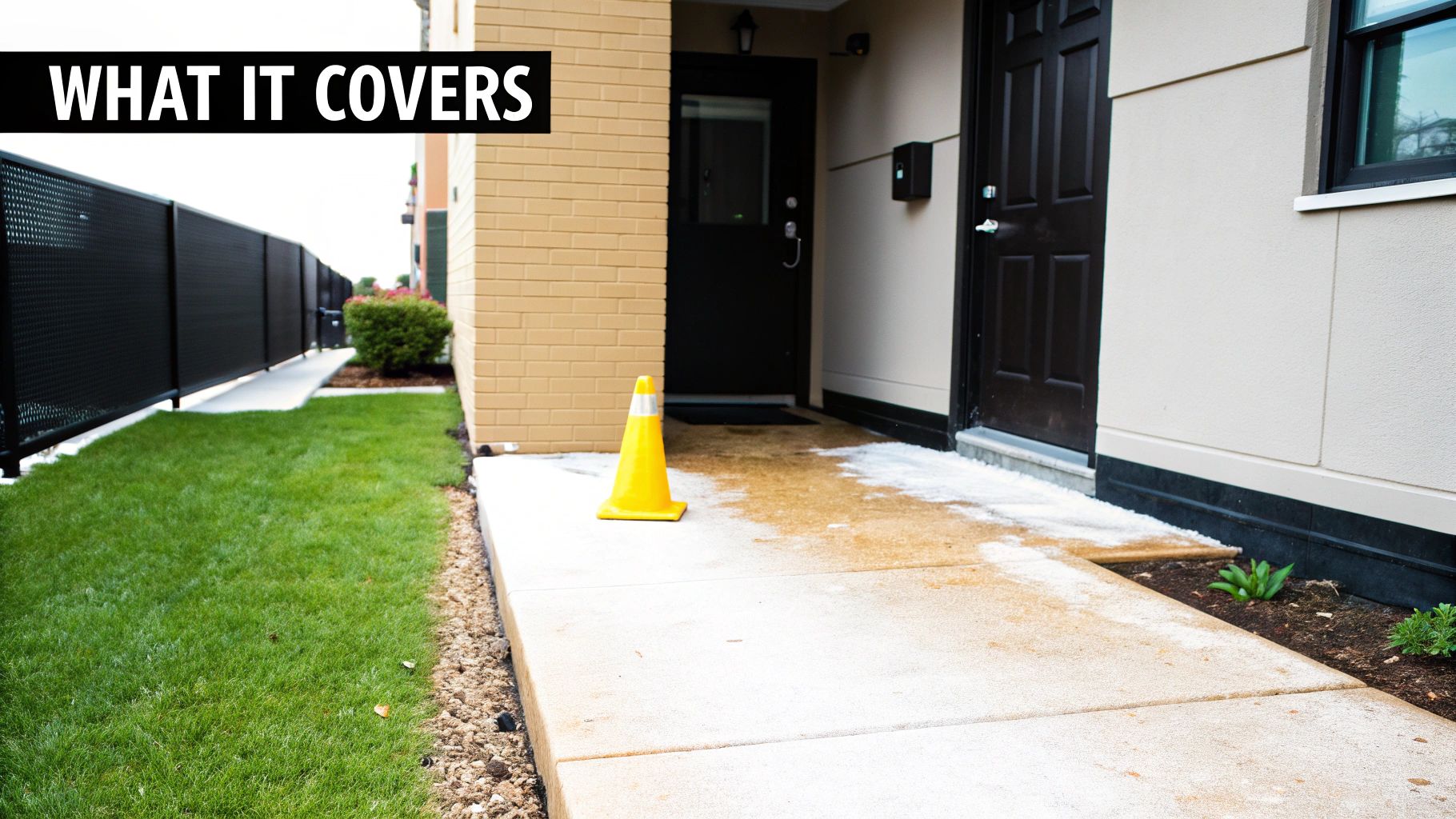
Bodily Injury to Others
This is the big one—the most common reason landlords end up in court. This part of your policy covers the medical bills for anyone who gets hurt on your property because of a potential hazard. We're talking tenants, their guests, a mail carrier, you name it.
Let's say a tenant slips and breaks their arm on an icy patch of your walkway you didn't get around to salting. Your liability insurance is what steps in to handle the hospital visit, physical therapy, and other medical costs, right up to your policy limit. It keeps you from having to drain your savings to cover those potentially huge expenses.
Damage to Others' Property
This pillar is all about protecting you when something on your property damages someone else's personal belongings. It’s crucial to remember this isn't for damage to your building—that's what your property coverage is for.
A classic example? A faulty wire inside a wall sparks a small fire. Even if the fire barely scuffs your paint, it could easily destroy your tenant's expensive laptop, furniture, and clothes. Your liability coverage would pay to replace their lost property, heading off a costly lawsuit before it even starts.
A single incident can spiral into a massive expense. In the United States, the average liability claim for a rental property can easily exceed $20,000, and that's before you even factor in legal fees.
Legal Defense and Court Costs
This might be the most underrated—and most vital—piece of the puzzle. If a tenant decides to sue you over an injury, your policy pays for your legal defense team. That includes attorney fees, court costs, expert witness fees, and all the other expenses that come with a lawsuit.
Here's the best part: this protection kicks in even if you're completely innocent. Just defending yourself against a bogus claim can cost a small fortune. Your insurance handles these costs from the get-go, so a baseless accusation doesn't become a financial nightmare. For a deeper dive into these specifics, this guide on premises liability insurance coverage is a fantastic resource.
Common Gaps in Your Liability Coverage

Getting a landlord liability policy is a great first step, but understanding what it covers is only half the story. The real key to protecting yourself is knowing what your policy doesn't cover. It's a huge mistake to think of your insurance as a catch-all solution for any problem that pops up—that assumption can leave you on the hook for thousands when you least expect it.
Many property owners are shocked to learn that a standard liability policy has very specific limits. It’s there to shield you from lawsuits and claims from other people, not to act as your personal property repair fund. Getting this distinction right is crucial.
One of the biggest surprises for new landlords is that their liability insurance won't cover damage to their own property. If a heavy storm tears up your roof or a pipe bursts and floods the kitchen, liability coverage won't touch it. For that, you need the property coverage part of your landlord insurance policy, which is a completely separate but equally essential piece of the puzzle.
Common Policy Exclusions
Beyond damage to your own building, there are a handful of other situations that are almost never covered by a standard liability policy. Knowing these exclusions ahead of time helps you see where you might need to add extra coverage, often called an endorsement or a rider.
You can almost always count on these things being excluded:
- Intentional Acts: If you deliberately cause harm to a tenant or their property, don't expect your insurance to back you up.
- Illegal Activities: Any claim that comes from illegal activity on your property, like renting out an unpermitted unit, will almost certainly be denied.
- Pest Infestations: Issues like termites, bedbugs, or rodents are typically seen as maintenance problems, not insurable liability events.
- Mold Damage: Most policies won't cover liability claims related to mold. This is a common exclusion that often requires its own special endorsement.
The Nuances of Negligence and Maintenance
This is where things can get tricky. Landlords often get confused about the line between a covered liability incident and a simple maintenance issue. For instance, if a rusty old pipe finally gives way and floods a tenant's apartment, your policy might cover the damage to their laptop. But if you knew about a pest problem for months and did nothing, you might not be covered if the tenant sues for health issues.
Insurers draw a hard line between sudden, accidental events and problems that arise from putting off necessary repairs. Staying on top of maintenance isn't just good practice—it's your best defense against having a claim denied for negligence.
This is exactly why keeping detailed records is a game-changer. Using a solid rental property maintenance checklist allows you to prove you're performing regular inspections and handling repairs quickly. That paper trail can be your saving grace, showing you’ve met your duties as a responsible landlord and helping you avoid those common, and costly, coverage gaps.
Why This Insurance Is a Non-Negotiable Asset
It’s easy to see insurance as just another expense on a spreadsheet, one more line item eating into your profits. But thinking about landlord liability insurance this way is a huge mistake. This coverage isn’t some optional add-on; it's the very thing that protects the foundation of your rental business and your personal financial health.
Let’s play out a simple, all-too-common scenario. A tenant has a friend over. The friend doesn't see a slightly raised carpet edge in the hallway, catches their foot, and goes down hard, breaking their wrist. It sounds minor, but the fallout can spiral faster than you can imagine.
Suddenly, you’re on the receiving end of a personal injury claim. That guest needs surgery and misses several weeks of work. Before you know it, there's an attorney involved. The initial medical bills are just the start—now you’re potentially on the hook for lost wages, ongoing physical therapy, and even damages for pain and suffering. Without insurance, every single one of those dollars comes directly out of your pocket.
From Minor Mishap to Financial Ruin
This is where you see the real power of liability coverage. A single uninsured claim doesn’t just put a dent in your monthly cash flow. It can force you to drain your personal savings, sell off other properties or investments, and could even put your own home at risk to cover a legal judgment.
Think about the annual premium for a solid liability policy, which is often just a few hundred dollars. Now, weigh that against the cost of a single lawsuit. The legal fees to defend yourself can easily climb into the tens of thousands, and that's before any settlement or judgment is even paid.
Your insurance premium is a predictable, manageable business expense. The cost of a lawsuit is a financial bombshell with the potential to alter your life. It’s a small price to pay for a massive safety net.
The Priceless Benefit of Peace of Mind
Beyond the hard numbers and financial protection, landlord liability insurance provides something just as valuable: peace of mind. Being a landlord comes with enough day-to-day headaches without adding the constant, nagging fear of a lawsuit hiding around every corner.
Knowing you have a strong policy backing you up lets you run your business with confidence. It frees you from the endless "what if" scenarios, so you can focus on what really matters—providing a great home for your tenants and growing your investment. This insurance shifts your mindset from a worried property owner to a secure business operator, ready for whatever comes your way.
How Much Liability Coverage You Really Need
Figuring out the right amount of liability coverage can feel like a shot in the dark, but it’s really about making a calculated decision based on your assets and risks. While a basic policy might offer $300,000 to $500,000, most pros I talk to now strongly suggest a minimum of $1 million. In today's lawsuit-happy world, it’s the only way to be truly protected.
Here’s a simple way to think about it: your coverage limit needs to be high enough to shield the total value of everything you own. That’s not just the equity in your rental property—it includes your personal home, your savings, investments, everything. A single, nasty lawsuit could wipe all of that out if your policy is too small.
Key Factors Influencing Your Premium
Your insurance premium isn’t some random number pulled from a hat. It’s a direct reflection of the risk an insurer sees in your property. Several key things go into that calculation, giving you a good idea of what’s driving the cost.
Your final policy cost comes down to a few core things:
- Property Characteristics: The age, size, and overall condition of your building are huge factors. An older building with outdated electrical or plumbing is naturally seen as a bigger risk.
- Location: Is your property in an area with a high crime rate? Or a region prone to specific types of claims, like slip-and-falls in icy areas? That geography will bump up the price.
- Claims History: If you’ve had to file liability claims before, insurers will see you as a higher risk. Unfortunately, that often means higher rates moving forward.
- Safety Features: This is where you have the most control. Making proactive safety upgrades can earn you some serious discounts.
Lowering Your Costs with Proactive Safety
Insurers love landlords who actively work to make their properties safer. Simple things like installing security cameras, adding smoke and carbon monoxide detectors, putting deadbolt locks on doors, and ensuring all stairs have sturdy handrails can all lead to lower premiums. Got a pool? A secure, locked fence isn't just a good idea—it's essential if you want decent rates.
The relationship is simple: the safer your property is for tenants and guests, the lower the risk of a claim. This translates directly into savings on your insurance costs.
Of course, the coverage amount you choose also plays a direct role. A higher coverage limit means a higher premium. On the flip side, a higher deductible (the amount you pay yourself before the insurance kicks in) can bring that premium down. Finding the right balance between the two is the name of the game.
This isn't just a local issue; it's a global trend. In the UK, over 70% of landlords carry liability insurance, with costs changing depending on the city. Meanwhile, in booming markets across the Asia-Pacific region, landlords are catching on, but adoption is still below 30% in many places. It just goes to show a growing worldwide awareness of these risks. You can read more about these global trends and see how different policies stack up in our detailed landlord insurance comparison.
Navigating California Insurance Requirements
When you own a rental property in California, you're playing in a league with its own unique set of rules. While the state itself doesn't have a blanket law forcing landlords to carry insurance, thinking it’s optional is a massive oversight. In the real world, landlord liability insurance is an absolute must-have for doing business here.
The first person who will make this crystal clear is your mortgage lender. If you have a loan on your property, your lender will almost certainly demand you carry a landlord insurance policy. It's not personal; it's about protecting their investment. A devastating lawsuit or disaster could wipe out your property's value, and they need to make sure their collateral is safe.
Local Rules and Tenant Responsibilities
Beyond your bank, some cities and counties across California have their own specific insurance requirements for rental properties. It's always a smart move to double-check the local regulations where your property is located.
One of the most effective strategies for any California landlord, however, is to require tenants to carry their own renters insurance.
This isn't just about making sure their stuff is covered if there's a problem. It's about creating a smart, complementary layer of financial protection. If a tenant's mistake—say, leaving a candle burning—causes a fire that damages your building, their liability coverage can step in first. This could potentially save you from filing a claim against your own policy and dealing with a rate hike.
For a landlord, requiring renters insurance is a strategic move. It clearly separates your responsibility (the building) from the tenant's (their personal property and liability), reducing confusion and potential legal friction after an incident.
To help visualize this relationship, let's break down who typically covers what.
California Landlord vs Tenant Insurance Responsibilities
| Covered Item | Landlord's Insurance | Tenant's Renters Insurance |
|---|---|---|
| The Building Structure | Yes (walls, roof, foundation) | No |
| Personal Belongings | No (tenant's furniture, electronics, etc.) | Yes |
| Liability for Guest Injuries | Yes (if due to property negligence) | Yes (if due to tenant negligence) |
| Loss of Use/Relocation | Yes (covers landlord's lost rent) | Yes (covers tenant's temporary housing) |
| Attached Fixtures | Yes (cabinets, built-in appliances) | No |
As you can see, the two policies are designed to work together, not overlap, creating a more comprehensive safety net for everyone involved.
The infographic below shows some of the key factors that will shape your specific insurance needs, from where your property is located to the safety features you've installed.
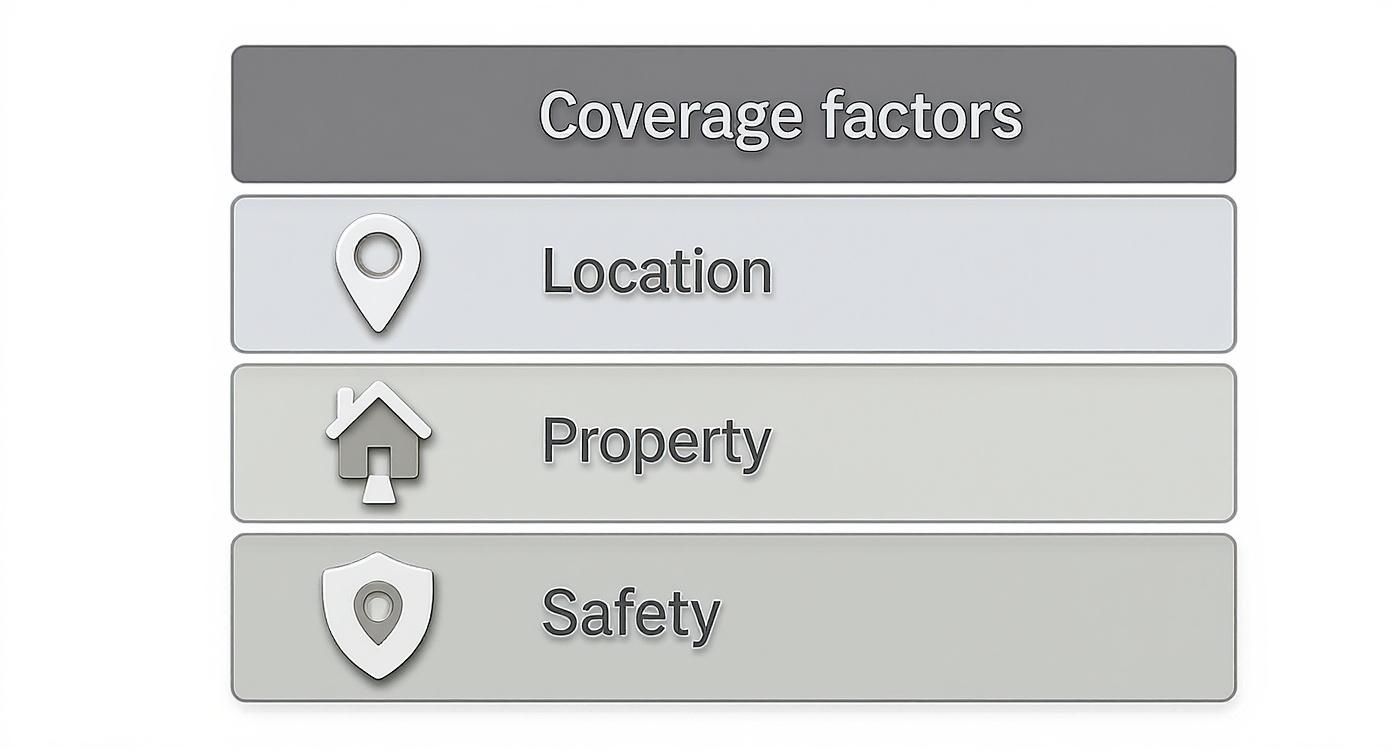
This visual really drives home how location, property type, and safety features all come together to build your unique risk profile—the very thing insurers look at to calculate your premiums.
Trying to manage all these requirements can feel overwhelming, especially if you own multiple properties in different cities. This is where having an expert in your corner makes all the difference. For property owners in the Central Valley, getting a handle on the specifics of Fresno property management can give you a major leg up. A good manager ensures you're meeting every local and lender rule while making sure your protection is airtight. By staying on top of things, you can confidently protect your investment in the Golden State.
Answering Your Top Questions
Getting into the nitty-gritty of insurance can feel like untangling a mess of wires. Let's clear up a few of the most common questions landlords ask about liability coverage. Getting these answers straight is key to making smart, confident decisions for your rental business.
Is Landlord Liability Insurance the Same as Homeowners Insurance?
Not even close. Confusing these two is one of the most common—and costly—mistakes a property owner can make.
Think of it this way: homeowners insurance is for the house you live in. Landlord insurance is a completely different beast, built from the ground up to protect you from the unique risks that come with having tenants—like someone getting hurt on your property and deciding to sue. Trying to use a standard homeowners policy for your rental is a gamble that almost always ends in a denied claim, leaving you completely exposed.
Can I Require Tenants to Carry Renters Insurance?
Yes, and you absolutely should. Here in California, it's standard practice—and highly recommended—to write a clause into your lease that requires tenants to have their own renters insurance policy.
This isn't about offloading responsibility; it's about creating a smart, layered defense. Their policy covers their personal stuff (like furniture and electronics) and gives them their own liability protection. This is huge because it dramatically lowers the odds of a small incident turning into a big claim against your insurance.
A common requirement is to have tenants carry at least $100,000 in personal liability coverage. This protects them, and in turn, it protects you from the smaller claims that could otherwise hit your policy and drive up your rates.
What's a Standard Liability Coverage Limit for Landlords?
Most basic landlord policies will start you off with liability limits somewhere between $300,000 and $500,000. But let's be real—in today's world, that might not be enough to cover a serious lawsuit.
That’s why most seasoned investors and insurance pros will tell you to aim for at least $1 million in coverage. You can often get there by pairing your main landlord policy with a separate umbrella policy, which kicks in when your primary coverage is maxed out. The right number for you really comes down to one thing: how much are your total assets worth? Because that’s what you stand to lose.
At Edinhart Realty and Property Management, we help property owners right here in the Fresno area sort through these details to make sure their investments are buttoned up and protected. From drafting solid lease requirements to managing day-to-day risks, our expertise is your peace of mind. Find out more about how we can help at https://edinhart.com.


