

83% of buyers' agents say home staging makes it easier for buyers to visualize a property as their future home. Home staging is a strategic marketing process that prepares a property for sale, using furniture, layout, color, light, and editing to make the home easier to understand and easier to want.
That distinction matters. Decorating serves the people who already live in a home. Staging serves the next buyer. It should support the listing price, strengthen the photographs, reduce distractions during showings, and help buyers imagine their own routines in the space.
The financial case deserves equal attention. The National Association of Realtors reported that 29% of agents saw staged homes receive a 1% to 10% increase in the dollar value offered, while 49% said staging reduced time on market in its 2025 Profile of Home Staging. Those figures don't guarantee a particular result for every property, but they do show why staging belongs in a serious pre-listing plan.
What Home Staging Means
Home staging is the deliberate preparation of a property for the market. A stager or agent edits the home, arranges furnishings, selects a broad-appeal color palette, improves visual flow, and directs attention toward the property's strengths. The goal is not to design a room around the current owner's taste. It is to make the property feel livable, understandable, and attainable to qualified buyers.
A model home in a new development demonstrates the approach. Builders arrange rooms to show how buyers could use them, without filling the space with one family's hobbies, collections, or favorite colors. Resale properties need the same discipline, especially because the listing photos often form a buyer's first impression.
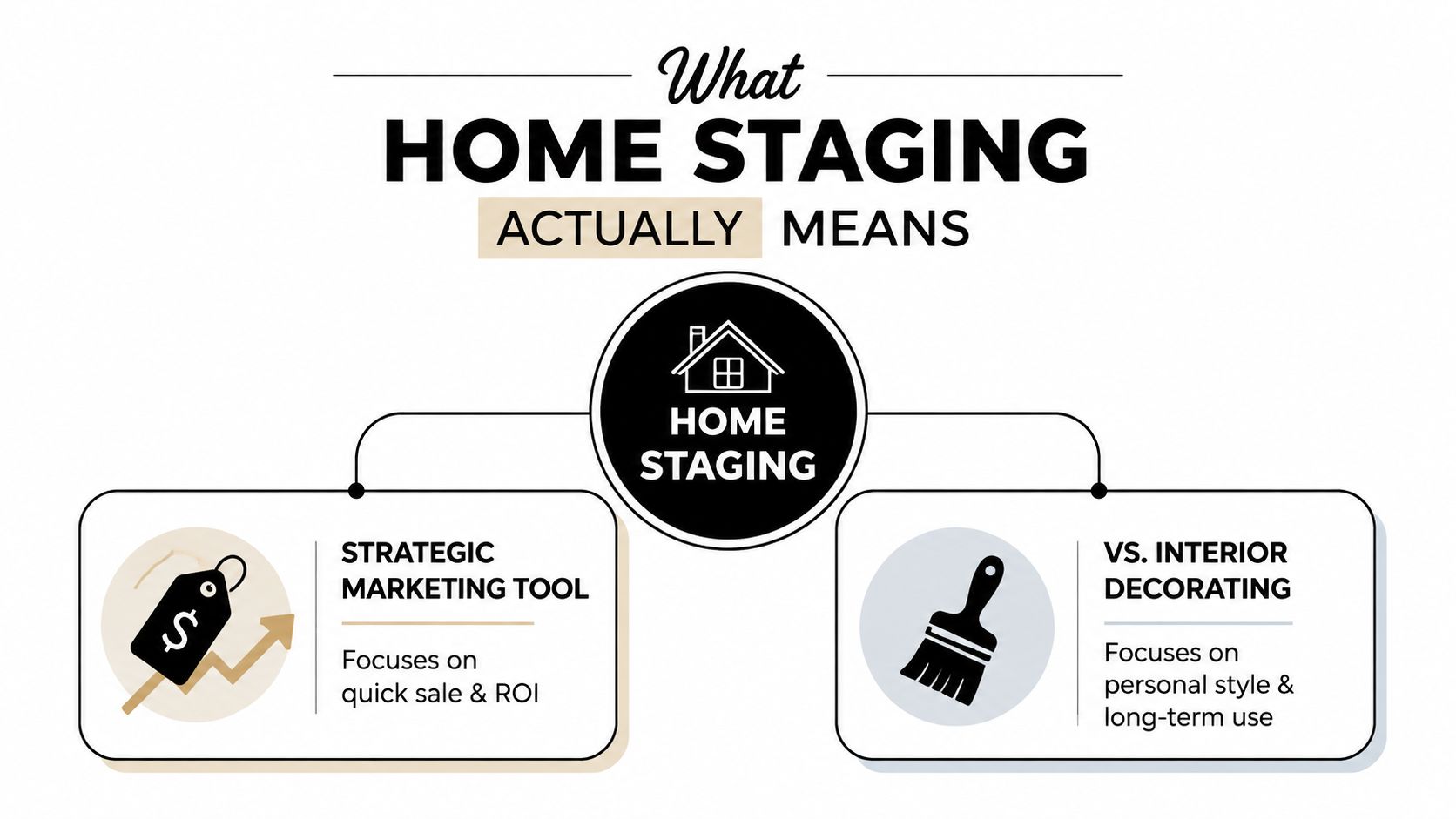
Staging is not decorating
Interior decorating answers a personal question: How should this home look and feel for the people living here? Staging answers a commercial one: How can this property communicate its value to the next owner?
That difference controls the practical choices:
- Furniture placement: Decorating may prioritize comfort or personal habits. Staging prioritizes clear walkways, appropriate room scale, and the best view of useful features.
- Color: Decorating can reflect individual preference. Staging often uses neutral walls, giving buyers fewer reasons to reject a room before considering its size and function.
- Accessories: Decorating displays personality. Staging removes highly personal items and keeps selected accents that add warmth without dominating the scene.
- Storage: Decorating accommodates daily life. Staging clears closets, counters, and floor space so buyers can judge capacity and function.
A thorough cleaning supports staging, but cleaning alone is not staging. Repainting one room will not fix a cramped layout, and an empty property can still look cold in listing photos. The strongest plan combines physical editing with a sales strategy, then selects the right presentation method for the property. For broader guidance on presentation techniques, the Virtual Tour Easy staging articles provide useful background.
The test is direct. If a change helps buyers understand the property and picture their lives there, it supports staging. If it mainly expresses the seller's personality, it belongs to decorating. Focus the budget first on rooms and features that dominate the photos, shape buyer expectations, and influence how the home feels during a showing.
The Measurable Benefits of Staging a Home
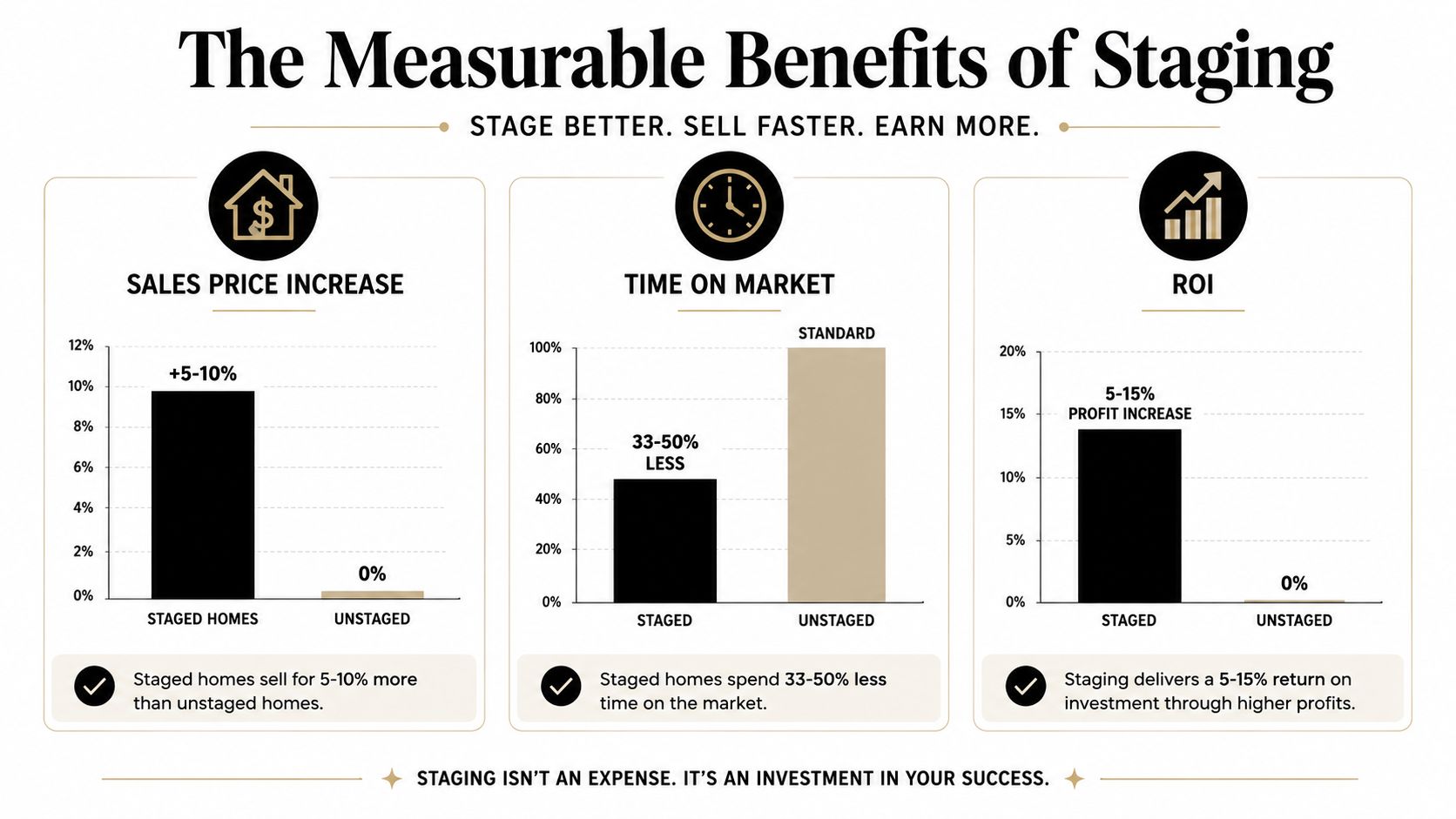
Staging earns space in the listing budget when it improves how buyers judge the property. The available 2025 data points to three practical results: clearer visualization, potentially stronger offers, and less time exposed to the market.
The NAR report found that 29% of agents saw staged homes receive a 1% to 10% increase in the dollar value offered, while 49% reported that staging reduced time on market. For a $400,000 home, NAR explained that a 1% to 10% increase would equal roughly $4,000 to $40,000 in potential extra sale price. Treat these figures as reported outcomes, not promises. Property condition, pricing, buyer demand, and local competition still control the final result. See the NAR report on staging, sale prices, and time on market.
Read ROI as a decision tool
RESA's 2025 figures show why sellers should examine the calculation behind an ROI claim instead of relying on one headline number. In Q1 2025, RESA reported an average staging investment of $3,588, an average ROI of 2,334%, and an average days-on-market figure of 12 for staged homes. In Q2 2025, it reported an average investment of $4,387, an average ROI of 4,415%, and average days on market of 9. The RESA 2025 staging statistics also reported that 70% of staging payers were homeowners and 26% were agents or teams.
Those figures are unusually large and volatile. Do not copy them into a seller net sheet as a guaranteed return. Use them to show that staging can create meaningful financial benefits for the right listing, then assess your property based on its buyer pool, vacancy, condition, price position, and expected marketing exposure.
Practical rule: Ask, “What buyer objection will this staging remove?” before asking, “What does staging cost?”
Staging can affect more than the eventual offer. A well-presented home may look stronger online, attract more showing interest, and compare favorably with similar listings. The return also depends on the method. Physical staging can clarify scale and function, vacant staging can prevent rooms from appearing cold, and virtual staging can improve online presentation when used transparently. None can correct an inflated price or a major defect.
For a more detailed financial assessment, review this guide to whether home staging is worth it. Then ask your agent to compare the proposal with the likely cost of leaving the property vacant, using weak photography, or keeping it on the market longer.
Which Rooms Matter Most for Staging
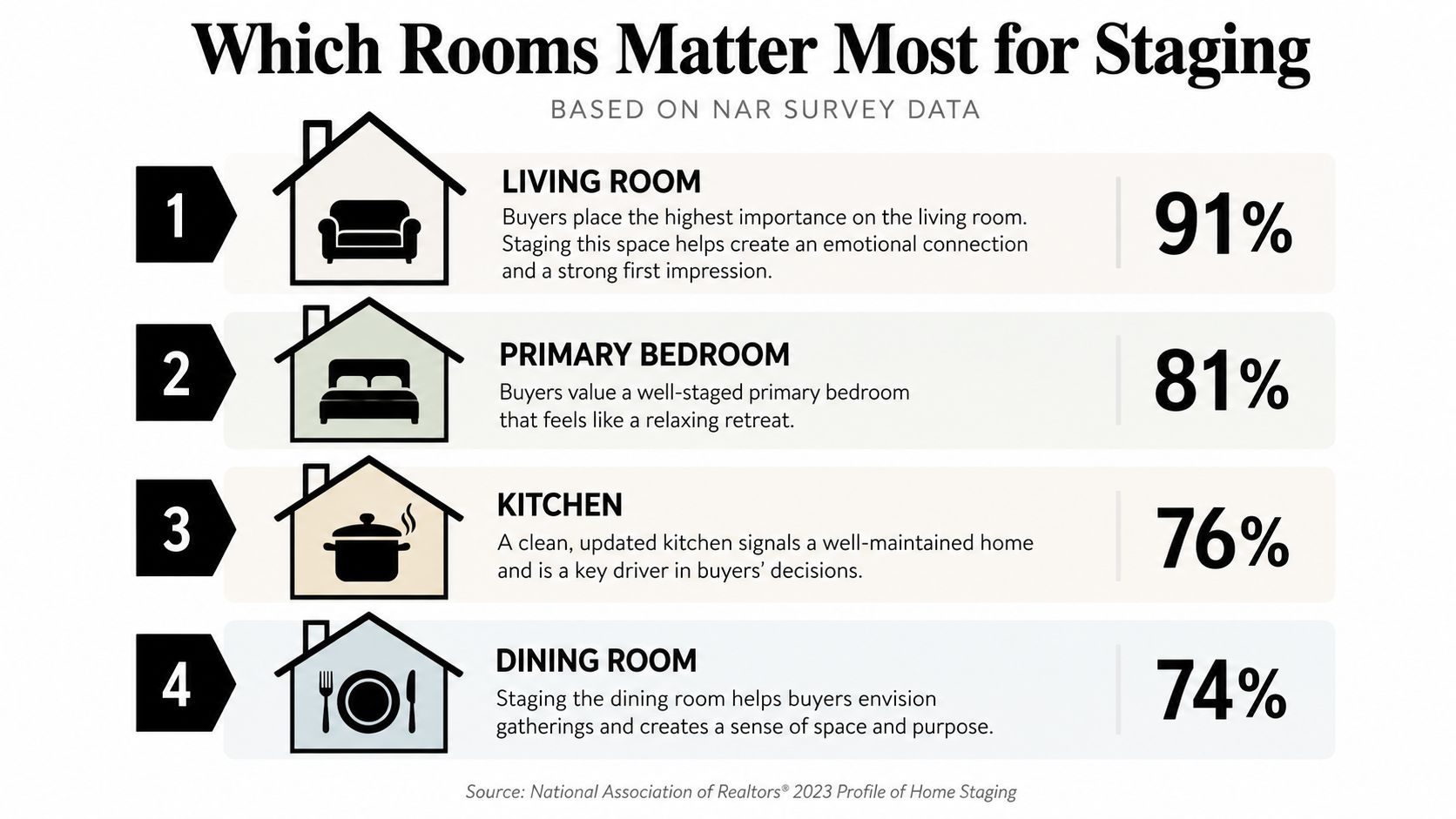
A seller should not spend equally on every room. The NAR's 2025 survey identifies the living room, primary bedroom, dining room, and kitchen as the rooms agents stage most often, with the living room leading at 91%, followed by the primary bedroom at 83%, dining room at 69%, and kitchen at 68%. The survey results are shown in the infographic below.
Put the budget where buyers form an opinion
Start with the living room. It usually carries major weight in listing photography and gives buyers an immediate sense of scale, circulation, and comfort. Remove oversized furniture, clear walking paths, and arrange seating to show how the room functions without making it feel crowded. If the room is already furnished, editing may produce more value than adding decor.
Stage the primary bedroom next. Buyers need to see whether it can accommodate a bed, bedside tables, storage, and comfortable movement. Use simple bedding, remove personal items, and create a calm presentation. A staged bedroom should clarify use, not look heavily decorated.
Use the dining room and kitchen to support the home's lifestyle story. Select dining furniture that demonstrates proportion. In the kitchen, clear counters, show usable work surfaces, and remove appliances or accessories that make the room appear smaller. These rooms benefit from disciplined editing more than decorative spending.
A secondary bedroom does not need elaborate design if its purpose is obvious. The same applies to bathrooms. Repair visible problems, clean thoroughly, replace tired towels or accessories when needed, and keep the presentation consistent. Do not spend on minor details while the main rooms still contain clutter or blocked pathways.
Use a priority order
- Correct visual obstacles first. Remove clutter, excess furniture, and personal collections throughout the property.
- Stage the living room and primary bedroom next. They usually carry the strongest emotional and photographic weight.
- Finish the kitchen and dining room. Show function, proportion, and the connection between spaces.
- Edit secondary rooms. Make each room's purpose clear without overdesigning it.
For room-specific guidance, review these living room staging ideas before photography. The right choice may be physical staging, vacant staging, or virtual staging, but the priority remains the same: spend first where presentation changes buyer judgment.
Physical Staging vs Virtual Staging vs Vacant Home Staging
The staging method should match the buyer's decision process and the property's condition. Physical staging lets buyers judge real scale, circulation, and furniture placement during a showing. Vacant-home staging gives empty rooms a clear purpose and warmth. Virtual staging improves listing photos without changing the property, so it wins attention online but cannot furnish the in-person experience.
| Staging Type | Typical Cost | Best For | Key Advantage |
|---|---|---|---|
| Physical staging | Use a written proposal from the stager, since the amount varies by property and service period | Occupied or partially furnished homes needing editing and stronger presentation | Buyers experience real furniture, scale, and flow |
| Vacant-home staging | Obtain a property-specific quote because the scope and rental period vary | Empty properties that look small, impersonal, or difficult to interpret | Gives rooms warmth and helps buyers understand proportion |
| Virtual staging | Obtain a photo-based quote, since pricing depends on the number of images and revisions | Listings where online presentation needs improvement and physical access is limited | Adds visual context to listing photos without moving furniture |
The buyer behavior differs by method. Physical staging supports confidence during a showing because the furniture is present and measurable. Vacant staging helps buyers read proportion when an empty room feels smaller or lacks a clear use. Virtual staging works earlier in the funnel, helping listing photos communicate a possible layout before a buyer schedules a visit.
Confirm who pays and what the quote covers. Ask about delivery, setup, removal, damage responsibility, rental duration, image editing, and whether the stated return reflects gross proceeds or another calculation. Do not approve a package until these terms are written down.
Match the method to the property
For an occupied home, begin with editing. Remove excess furniture and personal items before renting anything. A few targeted pieces may clarify scale and improve photographs without making the home feel overproduced.
For a vacant home, physical staging usually earns its place when buyers struggle to understand room size or purpose. Stage the rooms that shape the showing first, then leave low-impact spaces vacant if the budget is tight. A virtual solution can strengthen the first online impression, but it cannot repair, clean, or furnish the property for an in-person visit.
If you are comparing providers, review this explanation of how virtual staging AI works so you understand how image-based edits are created. Require clear disclosure of digitally added furnishings, and compare the edited photos with the actual rooms.
Use virtual staging when selling a home when photos need a fast presentation upgrade. Never use it to conceal damage, alter permanent features, or show a room buyers will not find during the showing.
How Staging Changes Buyer Perception
A buyer enters a cluttered living room and has to perform several mental tasks at once. They must look past oversized furniture, separate personal belongings from the room's features, estimate how much furniture can fit, and decide whether the space supports their routine. That mental work creates friction before the buyer has evaluated the home's actual strengths.
A staged version removes those obstacles. The seating arrangement shows circulation, the neutral palette keeps attention on the architecture, and the limited accessories add warmth without turning the room into a personal scrapbook. Buyers can focus on windows, ceiling height, flooring, and the relationship between the living room and adjoining spaces.

Neutral design reduces cognitive friction
A controlled study of staging conditions found that neutral wall color and good furnishings significantly improved buyer evaluations. The finding supports a practical conclusion: staging works partly by helping buyers mentally place themselves in the home, not merely by making the objects look attractive. You can review the study in the research on wall color, furnishings, and buyer evaluations.
That doesn't mean every room should look sterile. Neutral walls can carry texture through rugs, artwork, lighting, and restrained accessories. The aim is to create a flexible background that doesn't force buyers to spend their attention arguing with the design.
A buyer should notice the room's possibilities before noticing the seller's personality.
Photography amplifies the same effect. A camera compresses a room into a small number of images, so blocked windows, dark corners, and crowded furniture become more damaging. Professional photography should follow the staging work, not precede it, because the photographer can then capture the intended sightlines and strongest features.
Staging also clarifies limitations. It won't make a small room large, but it can prevent furniture from making that room feel even smaller. It won't change an awkward floor plan, but it can show the most practical way to use it. Good staging doesn't deceive buyers. It gives them a clear, appealing interpretation of the space.
Practical Staging Tips for Homeowners and Agents
Start with removal, not shopping. Sellers often buy accessories before addressing the furniture, collections, storage overflow, and personal items that make a home difficult to read. A well-edited property usually needs fewer additions than owners expect.
Work through the property in order
- Declutter surfaces: Clear kitchen counters, bathroom vanities, entry tables, and open shelving so buyers can see usable space.
- Depersonalize selectively: Pack family photographs, highly specific artwork, political materials, and collections that pull attention away from the room.
- Reposition furniture: Preserve a clear path through each room and point seating toward the room's strongest feature, not toward a television by default.
- Use neutral paint where it solves a problem: Choose a calm, adaptable color for walls that are highly personalized, visibly tired, or visually inconsistent.
- Maximize natural light: Open window coverings, clean the glass, remove objects blocking windows, and replace burned-out bulbs before photography.
- Make storage legible: Remove enough from closets and cabinets that buyers can understand capacity without opening a packed door.
A simple room-by-room checklist helps prevent missed details:
- Entry: Clear the threshold, minimize shoes and coats, and give buyers an unobstructed first view.
- Living room: Remove one piece if the room feels crowded, then check every photograph from the doorway.
- Kitchen: Leave work surfaces visible and remove magnets, papers, and excess countertop equipment.
- Primary bedroom: Use restrained bedding, reduce furniture, and keep bedside surfaces clean.
- Bathrooms: Deep-clean grout and fixtures, remove daily toiletries, and use fresh, coordinated textiles.
- Outdoor areas: Arrange patios or yards to show use, while keeping maintenance issues from dominating the inspection.
Don't over-furnish a small room, chase short-lived design trends, or use decorative objects to hide deferred maintenance. If you want seasonal detail, keep it restrained. Guidance on seasonal vase arrangements for every room can help you add controlled color without filling surfaces.
Agents should present staging as a pre-listing service with a defined purpose. Explain which rooms need investment, what the seller can handle, what requires professional help, and how staging connects to photography and pricing. Edinhart Realty and Property Management uses in-house interior design and staging expertise alongside professional photography and strategic pricing when preparing listings.
Making Staging Part of Your Selling Strategy
Staging can't compensate for an inflated price, unresolved defects, weak photography, or poor showing access. It works as part of a coordinated launch in which the property looks clear online, feels comfortable in person, and is priced against competing homes rather than against the seller's emotional attachment.
The decision also depends on the property. A teardown may need clean documentation rather than furniture. A highly competitive seller's market may require less physical staging, although strong images still matter. An empty home, an unusual floor plan, or a listing that has already struggled deserves a more deliberate presentation plan.
NAR's 2025 report found that 21% of agents staged all homes before listing, while 10% staged only homes that were difficult to sell. Those responses show two reasonable approaches. Some agents treat staging as a standard launch investment. Others reserve it for properties where presentation problems are likely to affect buyer response. Your agent should explain which approach fits your home and why.
Use this decision framework:
- Stage fully when the home is vacant, visually confusing, highly personalized, or competing with polished listings.
- Use targeted staging when the main living areas need furniture edits, neutralization, or stronger photography.
- Use virtual staging carefully when online images need context but the physical home already presents well.
- Skip unnecessary spending when the property is being sold primarily for land, major renovation, or teardown value.
The best staging plan is specific. It identifies the rooms that matter, the buyer objections it will address, the media it will improve, and the result the seller needs from the launch.
Edinhart Realty and Property Management helps homeowners prepare listings with in-house staging guidance, professional photography, and strategic pricing. Visit Edinhart Realty and Property Management to discuss the right presentation plan for your home before it goes on the market.


