

An investment property is real estate held primarily to generate rental income, capital appreciation, or both, rather than as the owner's primary residence. This guide breaks down the main property types, tax and financing treatment, insurance issues, and the cash flow and ROI checks that matter before you buy in Fresno, Clovis, or Friant.
You may be asking because a property has recently changed roles. A home you once lived in might become a rental after you move, an inherited bungalow might sit vacant while you decide what to do, or a duplex might let you live in one unit while renting the other. The address hasn't changed, but its purpose, use, and financial treatment may have.
Why Homeowners Are Asking What Counts as an Investment Property
A Clovis homeowner inherits her parents' bungalow in Fig Garden. She doesn't live there, but she's considering renting it to a long-term tenant. Her first question is usually practical: does putting a tenant in the home make it an investment property for tax purposes?
The answer depends primarily on how the property is held and used, not on whether the owner calls it a rental. A property held mainly to produce rental income or grow in value is generally treated differently from a home occupied by the owner. That distinction can affect tax reporting, insurance, lender underwriting, and the documentation an owner needs to keep.
Central Valley households increasingly find themselves in this position. A parent may help an adult child purchase a duplex. Someone relocating for remote work may keep a Fresno home and rent it out. An inherited property can become an income-producing asset even when the owner never planned to become a landlord.
Why classification matters before leasing
The classification decision should happen before a tenant signs a lease. A lender may view a home purchased as a rental differently from an owner-occupied residence. An insurer may require landlord coverage rather than a standard homeowners policy. Tax treatment can also change based on rental use, personal use, intent, and the way income and expenses are documented.
Homestead protections and local rules may also need review. A property in Clovis may have different zoning or short-term-rental considerations from a home in unincorporated Fresno County. A rural property near Friant can raise additional questions about septic systems, water, access, and maintenance.
Practical rule: Decide what role the property is expected to serve before you calculate its return. A rental, flip, second home, and owner-occupied duplex can share the same physical features but carry different financial consequences.
The rest of the decision is easier when you work in order. Start with the formal definition, identify the property type, check tax and financing treatment, calculate realistic cash flow and ROI, then apply a Fresno-area property checklist. You don't need to know every rule on day one, but you do need a clear record of who uses the property and why.
The Formal Definition Made Simple
In plain language, an investment property is real estate held mainly for rental income, capital appreciation, or both, rather than for the owner's personal residence or business operations. The IRS describes property held for investment broadly, including property that produces interest, dividends, annuities, royalties, or gains from sale or trade, as well as interests in activities where the owner didn't materially participate. Property used in a trade or business is treated differently under IRS Publication 550.
Under IFRS and IAS 40, the definition is narrower and more specific to real estate. Investment property means land, a building, or part of a building held to earn rentals, for capital appreciation, or both. It excludes property used to produce goods or services, used for administration, occupied by the owner, or held for sale in the ordinary course of business. The UK government's accounting guidance reflects this same central distinction.
IRS and IFRS side by side
| Criterion | IRS, U.S. tax law | IFRS, IAS 40 |
|---|---|---|
| Main purpose | Producing investment income or gains | Earning rentals, capital appreciation, or both |
| Personal residence | Personal-use property is treated differently | Owner-occupied property is excluded |
| Business operations | Property used in a trade or business is not investment property under the investment classification | Property used for production, services, or administration is excluded |
| Partial building | Treatment depends on use and tax context | A part of a building can qualify when held for rentals or appreciation |
| Property held for sale | Resale activity can receive different tax treatment | Property held for sale in the ordinary course of business is excluded |
Consider a Sunnyside bungalow. If the owner lives in it as a primary residence, personal use is the dominant purpose. If the owner moves out and rents the entire home, the purpose shifts toward income production. If the owner keeps an upstairs home office while renting the remaining space, classification may depend on the extent and nature of each use. If the garage becomes a short-term rental, the owner must separately review local rules, insurance, records, and tax treatment.
A duplex creates another boundary case. One unit may serve as the owner's residence while the other produces rent. That doesn't make the entire property identical to a fully rented building. The owner should allocate income, expenses, and use carefully.
For readers exploring the tax consequences, this resource on lower taxes on your rental property can provide additional planning context. Tax classification still depends on the owner's facts, records, and applicable rules.
The shared principle is simple: whose needs does the property primarily serve? If it mainly serves tenants or a long-term appreciation strategy, it is moving toward investment use. If it mainly serves the owner's residence or operating business, a different classification may apply.
The Main Types of Investment Property
The label “investment property” covers several strategies, and each one asks the owner to manage a different combination of income, risk, and work. A long-term rental may prioritize predictable occupancy. A flip depends on acquisition, renovation, and resale execution. A commercial building may rely on longer leases and more complex operating obligations.
Long-term residential rentals
A single-family home in Bullard or a bungalow near Fresno State is a familiar starting point. The owner rents the home under a longer lease and earns income from monthly occupancy. This strategy can be easier to explain to a first-time investor, but it still requires tenant screening, maintenance planning, lease administration, and vacancy management.
A rental's performance depends on the property itself. A home near a university may attract a different tenant pool from one near a major shopping corridor or employment center. The owner should assess actual comparable rents rather than relying only on a listing's advertised price.
Fix-and-flip properties
A Tower District craftsman or Friant-area foreclosure may appeal to an investor who intends to renovate and resell. The primary objective is usually capital gain from the completed sale, not ongoing rent. That makes the investment sensitive to purchase price, construction scope, permitting, holding costs, and resale timing.
A flip can require more active oversight than a long-term rental. Delayed work, hidden defects, or a weaker resale market can reduce the margin quickly. Intent matters, and so does the way the owner conducts the activity.
Multifamily properties
Duplexes and fourplexes can combine several rent streams within one building. They may also let an owner occupy one unit while renting another, creating a mixed-use personal and investment situation that requires careful recordkeeping.
The tradeoff is operational complexity. More units can mean more tenant communication, repairs, turnovers, and compliance tasks. The owner must evaluate each unit's condition and realistic rent separately, not treat the building as one simple number.
Vacation rentals
Short-term rentals can produce a different operating pattern from traditional leases. Owners must account for guest turnover, furnishing, cleaning, advertising, and local restrictions. Rules in unincorporated Fresno County and ordinances in Clovis can change whether a proposed use is permitted, so local verification comes before purchase assumptions.
Commercial property
Small mixed-use buildings and retail strips around River Park may serve as commercial investments. These properties often involve different leases, tenant improvements, maintenance obligations, insurance needs, and financing structures. Professional management may become more valuable as the number of tenants and contract details grows.
| Property Type | Primary Intent | Risk Level | Typical Management Effort |
|---|---|---|---|
| Long-term residential rental | Ongoing rental income | Moderate | Tenant placement, maintenance, collections, renewals |
| Fix-and-flip | Resale gain after renovation | Higher | Acquisition, construction, permits, resale |
| Multifamily | Multiple rental income streams | Moderate to higher | Unit-level leasing, repairs, turnover, compliance |
| Vacation rental | Short-term income | Higher | Guest service, cleaning, furnishing, local compliance |
| Commercial property | Lease income and appreciation | Variable | Lease administration, vendors, insurance, tenant relations |
The best type depends on your available cash, experience, time, and tolerance for uncertainty. A property doesn't become a good investment merely because it can generate income. Its strategy must match your ability to operate it.
How Taxes, Financing, and Insurance Treat Investment Property
A primary residence and a rental property may look alike from the street, but the professionals evaluating them ask different questions. Tax authorities focus on use and income intent. Lenders assess repayment risk and reserves. Insurers need to know whether the owner occupies the home, leases it to one household, or offers it to rotating short-term guests.
Tax treatment follows activity and use
Rental income and related expenses generally need to be documented and reported. Depreciation may affect taxable income, while a quick resale can receive different treatment from a property held for ongoing rent. Passive-activity rules, ownership structure, holding period, and the owner's participation can also affect the result.
Don't assume that moving out automatically answers every tax question. Keep records of occupancy, advertising, leases, repairs, closing documents, and personal use. Separate personal expenses from investment expenses, and ask a qualified tax professional about your facts before filing.
Financing changes the underwriting conversation
A newly purchased rental is often evaluated differently from a home the borrower will occupy. The lender may review projected rent, reserves, credit history, debt obligations, and the property's condition. Loan terms and required cash can vary by lender and borrower, so get a written pre-approval that identifies the intended use.
A homeowner who lived in a property and later converts it to a rental may have a different financing history from someone buying a rental from the start. That doesn't remove the need to update insurance, review loan documents, and preserve evidence of the conversion.
Insurance must match the real use
A standard homeowners policy may not be appropriate once tenants occupy the property. Long-term rentals commonly require landlord coverage, while short-term rentals can involve additional liability, furnishing, guest, and turnover concerns. Tell the insurer how the property is used, not how it was originally purchased.
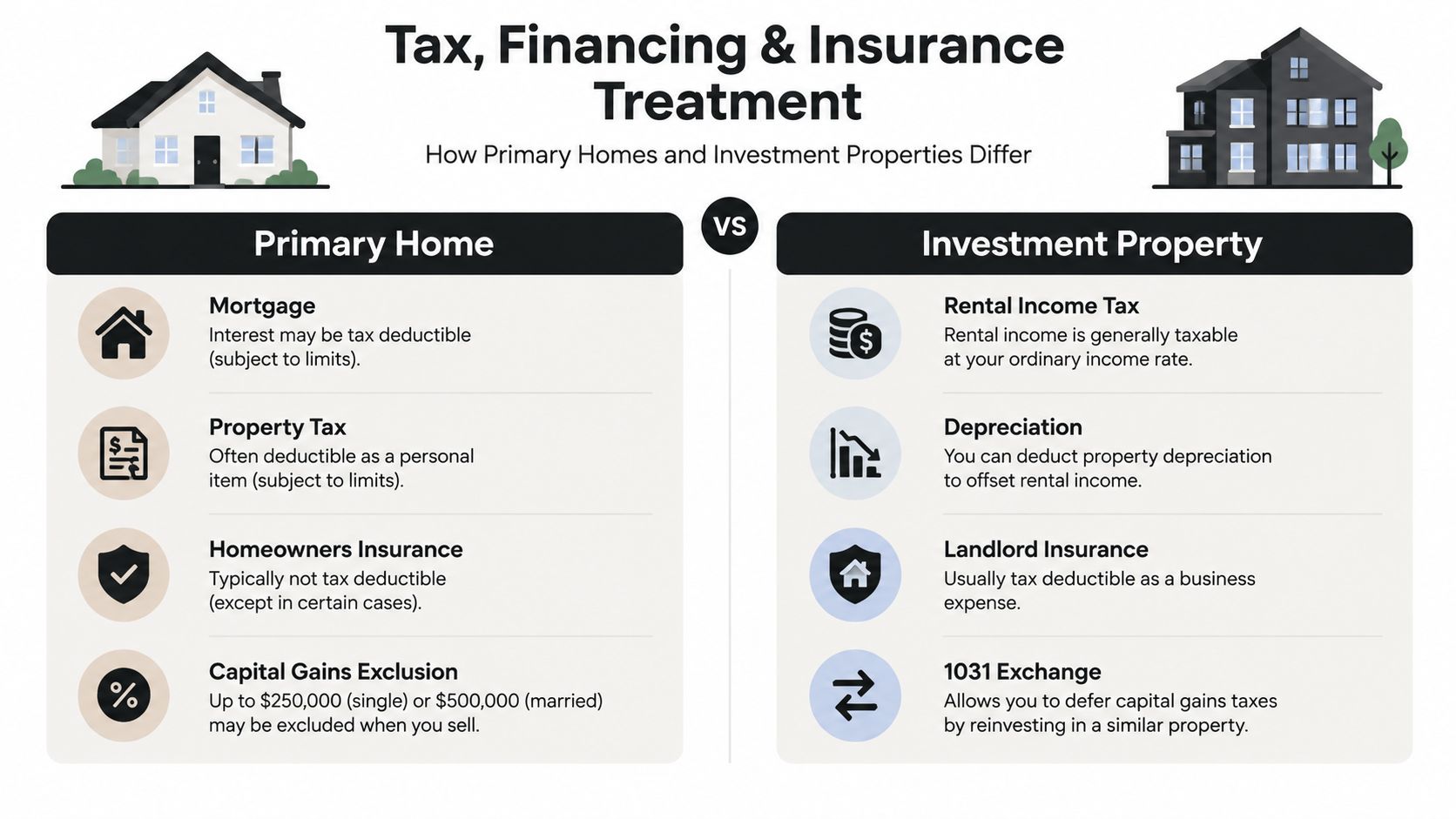
Local permits, zoning, landlord requirements, and homeowners-association rules may affect the intended use. For a separate explanation of deductible rental costs, review this guide to rental property tax deductions. Treat it as educational material, then confirm the final position with your tax, lending, insurance, and legal advisers.
Evaluating Cash Flow and ROI Before You Buy
Rent alone doesn't tell you whether a property works. A Fresno listing may advertise an attractive monthly rent, but the owner still has to account for vacancy, management, maintenance, utilities, property taxes, insurance, debt payments, repairs, and reserves.
Start with operating income. Use realistic comparable rents and make a conservative allowance for periods without a tenant. Then subtract recurring operating expenses before considering the mortgage. Only after that should you calculate cash flow available to the owner.
A simple Fresno rental example
Suppose a rental receives $2,400 in monthly rent, incurs $650 in operating expenses, and has a $1,350 monthly mortgage payment. The estimated monthly cash flow is $400 before income taxes, and the annual cash flow is $4,800.
| Item | Monthly Amount | Calculation Notes |
|---|---|---|
| Gross rent | $2,400 | Stated monthly rental income |
| Operating expenses | -$650 | Recurring property costs |
| Mortgage payment | -$1,350 | Monthly debt payment |
| Estimated cash flow | $400 | Rent minus expenses and debt |
| Annual cash flow | $4,800 | $400 multiplied by the months in a year |
These figures are only a mechanical example, not a Fresno market estimate. They don't include purchase price, down payment, closing costs, initial repairs, or reserve funding. If a roof, HVAC system, plumbing line, or major appliance needs replacement, a property that appears cash-flow positive can still require substantial owner cash.
Calculate return on the cash you invest
ROI should compare the return with the total cash invested. Include the down payment, closing costs, repairs, furnishing if applicable, and reserves. A positive monthly figure may produce a weak ROI when the upfront investment is large. Conversely, a modest cash-flow property may fit an appreciation-focused strategy if the buyer understands the risk and can carry the costs.
Before making an offer, compare rent listings, recent sales, insurance quotes, financing terms, taxes, repairs, and resale risk. Broader research, such as this overview of the best investment property cities for 2026, can help with market screening, but it can't replace property-level underwriting.
A detailed rental property cash flow analysis should answer one practical question: after realistic costs and debt payments, does the property support the strategy you're buying it for?
Investment Property in Fresno, Clovis, and Friant
The same floor plan can produce a different investment outcome depending on its location, physical systems, tenant demand, and operating rules. A Fresno rental, a Clovis home, and a Friant property shouldn't share one generic worksheet.
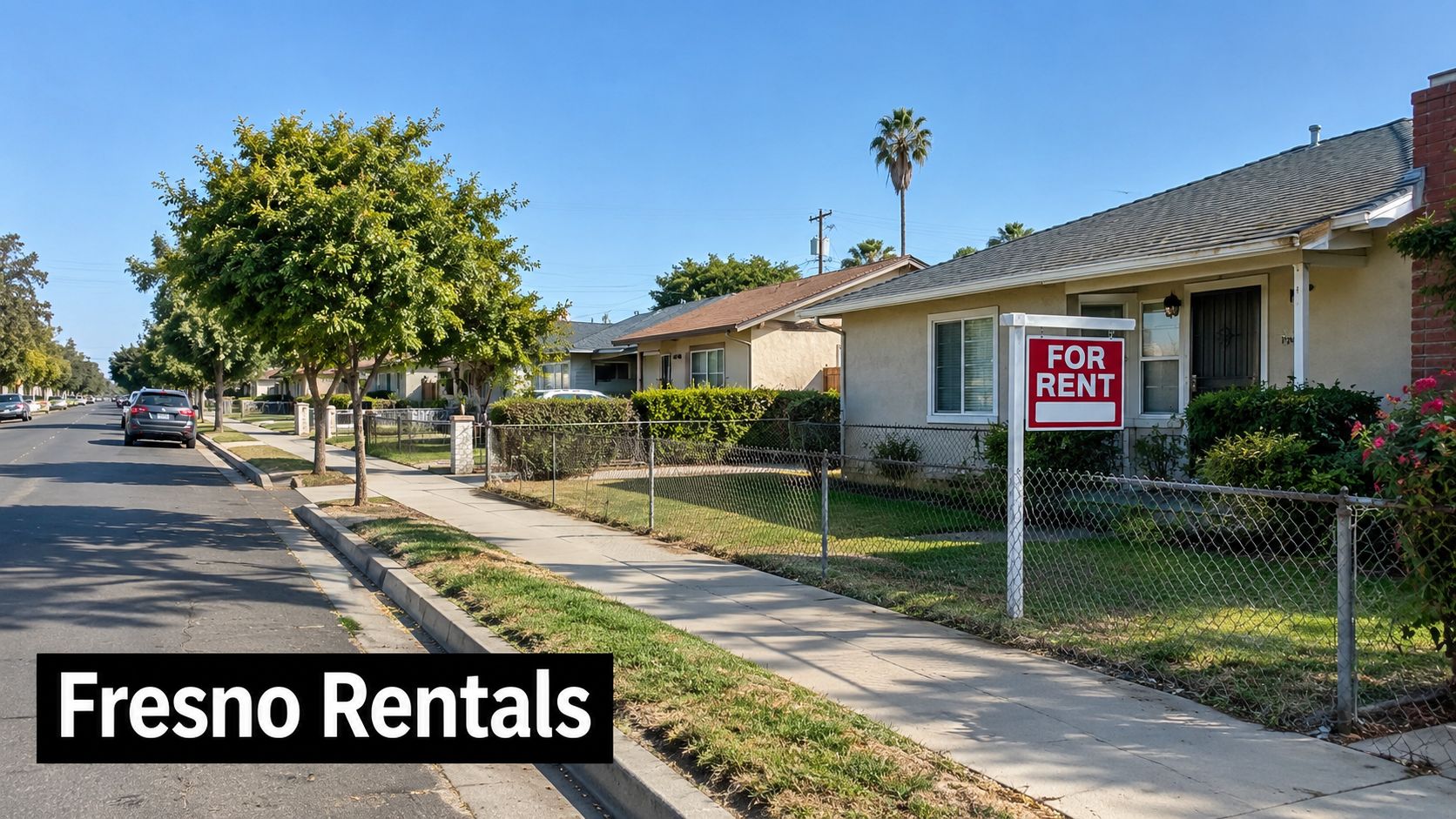
A single-family home in Fresno may appeal to renters who value access to employment centers, established neighborhoods, schools, or Fresno State. A property near campus can attract a different tenant profile from a home near a retail corridor. The owner should compare local rents, likely vacancy, maintenance needs, and insurance costs for that specific pocket.
Three local underwriting conversations
Fresno: A lower purchase price can look attractive, but the analysis still needs realistic repairs, property taxes, insurance, and tenant demand. A home with deferred maintenance may require more capital than the listing first suggests.
Clovis: Neighborhood appeal, amenities, and schools may support long-term rental demand. The buyer should still test whether the purchase price and renovation budget leave enough room for the intended return.
Friant: Larger lots and rural characteristics can offer a different lifestyle proposition. Before assuming a premium rent, investigate water availability, septic systems, fire exposure, road access, zoning, and the depth of the tenant pool.
For a local owner comparing acquisition options, property for investment guidance can help frame the questions to ask. It shouldn't replace inspections, comparable-rent research, insurance quotes, or professional tax advice.
A rural property may need a longer maintenance visit and a more specialized vendor. A city rental may turn over faster but offer a deeper pool of contractors and tenants. The address helps define the opportunity, but the property's systems and operating requirements determine whether the opportunity survives contact with real expenses.
A visual walkthrough can also help first-time owners think through the difference between a home's appearance and its income-producing potential.
Your Homeowner Checklist and How Edinhart Can Help
Use this checklist before you classify, purchase, or lease a property:
- Define the intent: Decide whether the property will be a long-term rental, flip, multifamily holding, vacation rental, or commercial asset.
- Confirm personal use: Record whether you'll live there, use part of it, or keep it entirely available to tenants.
- Review the documents: Gather the deed, purchase records, loan documents, leases, repair invoices, and occupancy history.
- Ask the lender: Confirm how the intended use affects approval, reserves, loan terms, and borrower documentation.
- Get the right insurance: Request quotes for owner-occupied, landlord, or short-term-rental coverage as appropriate.
- Build the rent estimate: Use comparable properties in the same Fresno, Clovis, or Friant area.
- List every expense: Include management, vacancy, repairs, utilities, taxes, insurance, and debt payments.
- Calculate cash flow: Test the property with conservative assumptions rather than relying on gross rent.
- Measure ROI: Include down payment, closing costs, repairs, furnishing, and reserves in the cash invested.
- Check local rules: Verify zoning, permits, short-term-rental requirements, and applicable landlord obligations.
- Review HOA restrictions: Confirm that the association permits the intended rental period and property use.
- Plan operations: Decide who will screen tenants, collect rent, coordinate repairs, document expenses, and handle emergencies.
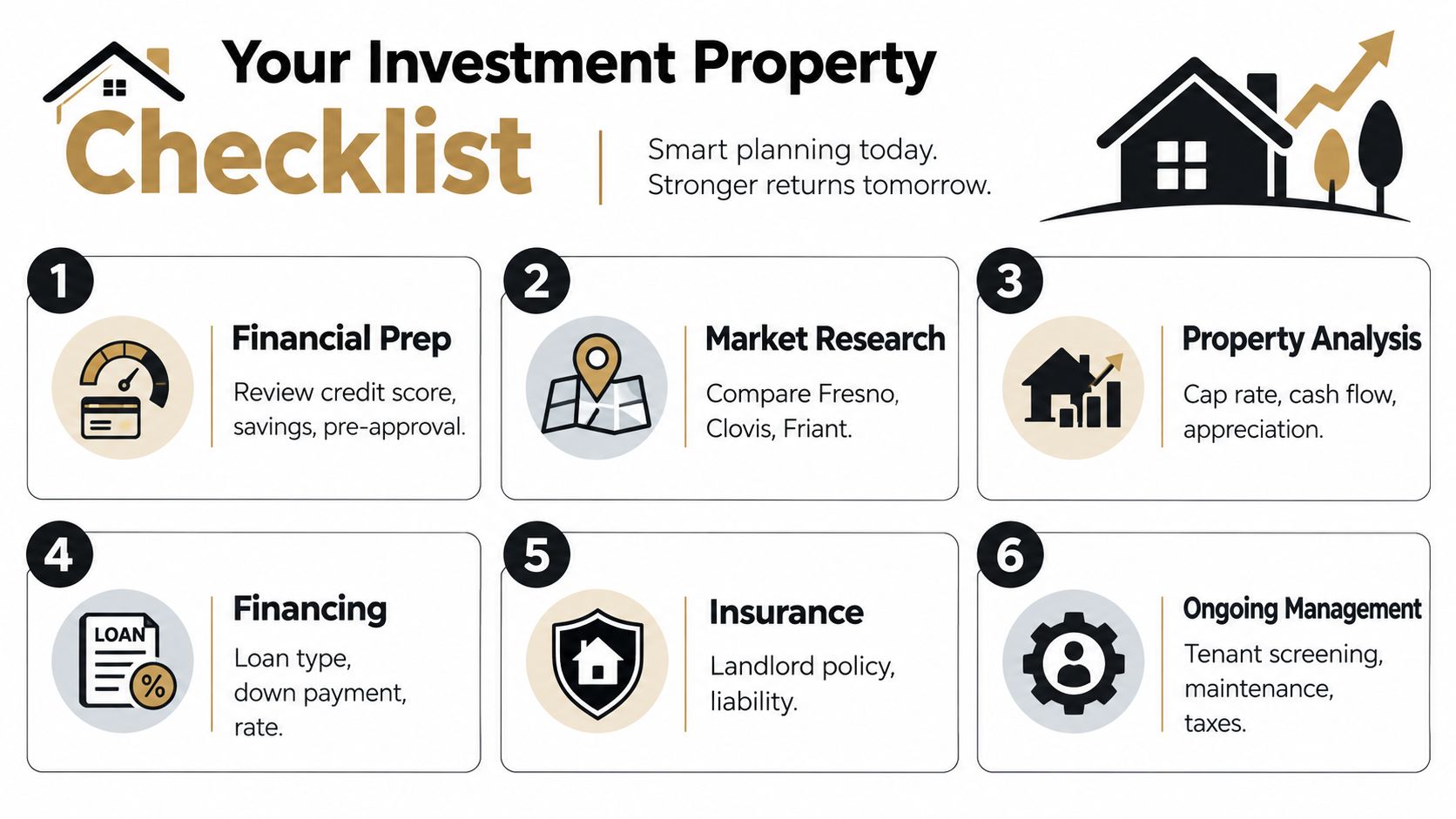
The last step often determines whether the investment remains manageable. Edinhart Realty and Property Management offers full-service management for owners who want support with rent collection, repair coordination, tenant communication, move-in and move-out coordination, lease renewals, and accounting statements. Its placement-only service is designed for owners who will manage the property themselves but want help with marketing, applicant screening, and lease drafting.
That model can fit an owner with one inherited Fig Garden home as well as an investor building a larger portfolio. You can choose to self-manage, hire help for placement, or delegate ongoing operations, depending on your time, experience, and comfort with tenant and vendor coordination.
Revisit the checklist whenever the property's use changes, financing is refinanced, insurance is renewed, or local rules are updated. A home can shift from residence to rental, from long-term lease to short-term use, or from personal project to resale inventory. Your records should reflect that change.
If you're deciding whether a Fresno, Clovis, or Friant property should become a rental, Edinhart Realty and Property Management can help with placement-only leasing or ongoing management. Visit the team to discuss your property's intended use, projected cash flow, and the level of day-to-day support you want.


