

Think of a rent roll report as the financial heartbeat of your rental property. It’s a simple yet powerful document that gives you a real-time snapshot of your income stream and tenant stability. At its core, it's a ledger that lists every unit, who's living in it, what they pay, and the status of their lease.
For any serious investor, this is the single most important document for judging a property's health.
Your Property's Financial Story in a Single Snapshot
Trying to understand a business without its sales figures would be pointless, right? A rent roll serves that exact same purpose for your rental property. It’s far more than a list of names and numbers; it's a complete performance dashboard that tells the financial story of your investment.
The core principles of real estate investing are pretty universal, which is why it's worth understanding the fundamental reasons why New Zealanders invest in residential rental property—the goals are often the same, no matter where you are.
This single document reveals everything you or a potential buyer needs to know:
- Income Stability: It tells you who is paying, how much, and whether they're on time.
- Occupancy Health: It immediately flags vacancies and alerts you to upcoming lease expirations.
- Overall Value: This is the raw data lenders and buyers use to figure out what your property is actually worth.
For investors navigating competitive markets like Fresno and Clovis, getting comfortable with this report is the first step toward making smarter, more profitable decisions. For a little context, industry data showed that average residential rent rolls in California reported delinquency rates around 3-5% in 2023. That’s a huge improvement from the 7.2% peaks we saw during the 2020 pandemic.
That positive trend is no accident. It’s largely thanks to property managers adopting stricter screening processes—a practice we take very seriously at Edinhart with our rigorous applicant vetting.
Ultimately, a rent roll takes a mountain of complex data and turns it into clear, actionable insights. It’s the foundation for analyzing your cash flow, planning for future vacancies, and positioning your property to sell. This guide will break down every piece of it, helping you turn those numbers into a clear story of your property's success.
Breaking Down the Components of a Rent Roll
So, what exactly makes up a rent roll? Let's peel back the layers. Think of it less like a spreadsheet and more like the financial heartbeat of your property. Each piece of information is a vital sign, telling you a story about your investment's health. A good rent roll transforms columns of data into a clear narrative of your property's performance.
This map here gives you a great visual of how a rent roll ties everything—income, tenants, and financial health—into one cohesive document.
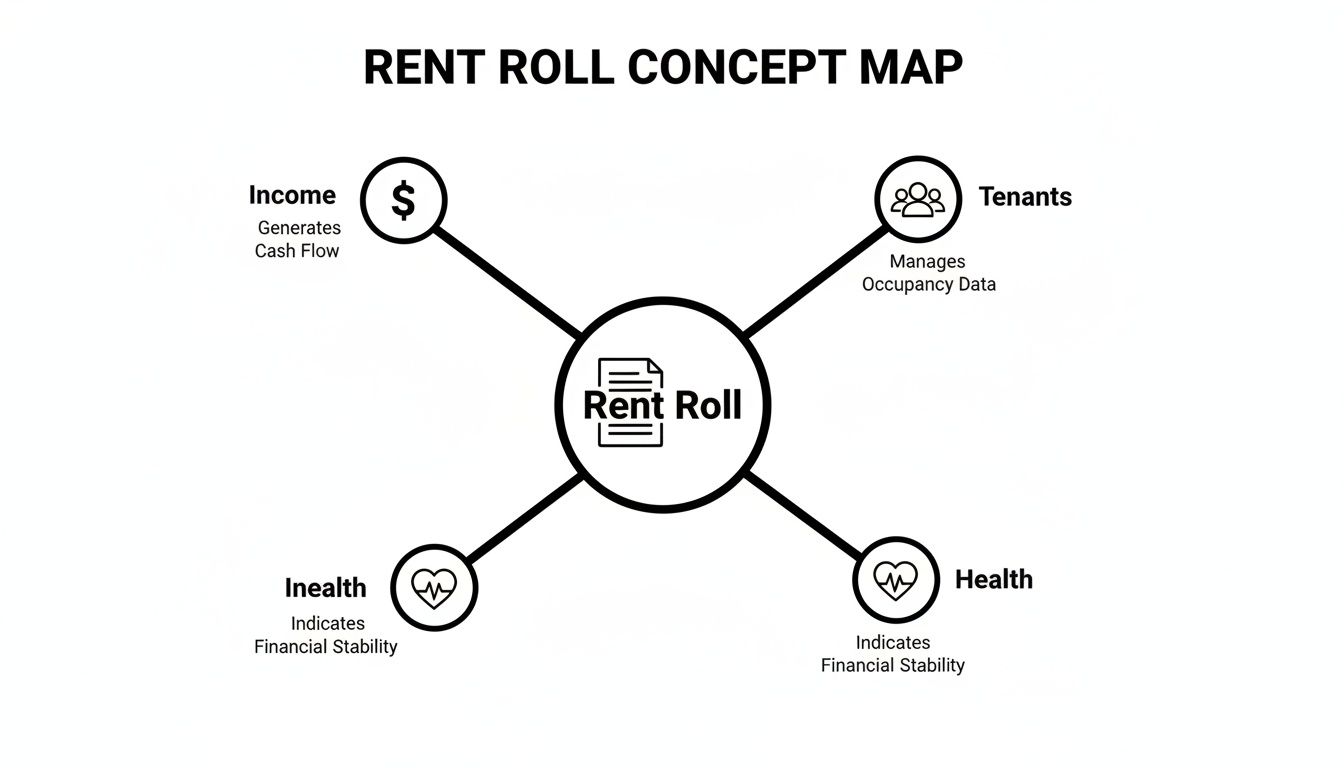
When you track these core areas, you get a complete picture. It becomes the central hub where the people (tenants) meet the money (income streams), revealing the true condition of your investment.
Unit and Tenant Information
First things first, you have to know who is where. The first few columns on any rent roll cover the basics. It might seem simple, but this is the foundation for everything else.
- Unit Number: This identifies the specific apartment or suite, like "Apt 2B" or "Suite 104."
- Unit Size: Usually in square feet, this detail is crucial for calculating key metrics like rent per square foot—a go-to performance indicator.
- Tenant Name: This shows who is legally on the lease. If a unit is empty, you'll just see "Vacant."
A quick scan of these details tells you who’s in each unit, how much space they have, and which units aren't making you money right now. It's the starting point for any real analysis.
Critical Lease and Financial Data
Now we get to the good stuff. This is where the rent roll really flexes its muscle, turning tenancy into cold, hard numbers. These columns show the contracts that generate your revenue and highlight just how stable each tenant is.
A solid rent roll gives you a crystal-clear look at your cash flow. For instance, a rent roll for a Fresno retail center might show 12 tenants, 25,000 square feet, and monthly base rents hitting $62,500. It would also detail another $8,200 from common area maintenance (CAM) charges and $95,000 in security deposits, painting a picture of 97% occupancy. It’s this level of detail that matters.
Here’s a breakdown of the financial columns you need to watch:
- Lease Start and End Dates: These might be the most strategic data points on the whole document. Knowing when leases are up lets you get ahead of vacancies, plan renewals, and schedule maintenance months in advance.
- Monthly Rent: This is the base rent due every month. When you compare this to current market rates, you can quickly spot any under-rented units and flag them for future increases.
- Additional Charges: This is for recurring fees like pets, parking, or storage. Tracking them separately from the base rent gives you a more complete view of your total income.
- Security Deposit: This shows the amount you’re holding for each tenant. It’s essential for managing move-outs and staying compliant with local laws.
- Payment Status and Arrears: This column tells you if a tenant is paid up. Any amount listed under "Arrears" is an immediate red flag that needs your attention.
All these numbers feed directly into your property's bigger financial picture. They're the building blocks for calculating key metrics and, as our other guide explains, for truly understanding what is net operating income. An accurate, detailed report empowers you to manage your property proactively, not reactively.
Using Your Rent Roll to Boost Investment Returns

Think of a rent roll report as more than just a list of names and numbers. It's really a financial powerhouse—a tool you can actively use to squeeze more value out of your property and beef up your investment returns. Once you get the hang of what each column means, you can go from just passively reading data to making smart, profitable moves.
This single document tells the entire financial story of your property. It’s what lenders and appraisers look at first to see what your property is really worth. When you’re trying to get financing or preparing to sell, they’ll dig into this report to confirm your cash flow, gauge the risk, and land on a market value. A clean, accurate report builds instant trust and often translates to better loan terms or a higher sales price.
Unlocking Growth Through Strategic Analysis
A well-kept rent roll is a goldmine. It's packed with clues that show you exactly where you can make small tweaks to improve your bottom line. This isn't just about collecting rent—it’s about optimizing every single unit to perform at its peak.
To get started, focus your analysis on a few key areas:
- Spotting Rent Increase Opportunities: How do your current rents stack up against the market rate? A quick scan might show you have several units leased for less than they’re worth. That’s an immediate opportunity to raise the rent when the lease is up for renewal.
- Slashing Vacancy Costs: Keeping an eye on lease expiration dates lets you get ahead of turnover. If you start your marketing and renewal conversations a good 60-90 days in advance, you can dramatically shorten the time a unit sits empty, which directly protects your cash flow.
- Gauging Tenant Quality: The payment history on your rent roll is pure gold. Are certain tenants always late? Do you have recurring arrears? This data helps you refine your screening process for future applicants, so you can build a more reliable tenant base over time.
This kind of proactive thinking is what separates casual landlords from serious investors. You simply can't run a complete rental property cash flow analysis without the rock-solid data that a rent roll provides.
The Lender’s Perspective and Securing Financing
When it comes to underwriting a loan, lenders lean heavily on the rent roll. Why? Because it gives them a completely transparent look at the property’s financial health and stability.
In fact, 95% of multifamily loans in 2024 required a trailing 12-month rent roll showing less than 5% delinquency to get approved for loans under $5 million. This isn't just a local trend. Over in Europe, similar reports helped fuel a 3.7% rent growth in 2024, proving how critical this document is to real estate finance worldwide.
For owners with a whole portfolio of properties, pulling together all the rent rolls can reveal huge opportunities for efficiency. For instance, a professional management service like Edinhart can use this aggregated data to cut down administrative time by as much as 40% by streamlining reports and snagging multi-property discounts.
And if you’re trying to figure out your potential profits, the data from your rent roll is essential for plugging into a rental property ROI calculator. At the end of the day, a pristine rent roll doesn’t just track your income; it proves your property’s value, solidifies your financial standing, and opens the door to real growth.
How to Spot Red Flags in Your Rent Roll Data
A perfect rent roll tells a story of a healthy, profitable investment. But what happens when the numbers are trying to warn you about something? Learning to read between the lines is like being a financial detective, letting you spot small issues before they snowball into major headaches that drain your bank account.
Think of it as a health checkup for your property. Just like a doctor scans for troubling symptoms, you can scan your rent roll for warning signs that point to instability, weak management, or even poor market demand. Catching these red flags early is the real secret to proactive and successful property management.
High Tenant Turnover and Short Leases
The first thing I always look at is tenant stability. If your rent roll is full of month-to-month agreements or has a bunch of leases expiring in the next couple of months, that’s a big red flag. A little flexibility is fine, but a revolving door of tenants usually points to bigger problems.
This kind of instability can mean a few things:
- Tenant Dissatisfaction: Are people leaving because of shoddy maintenance, a manager who never answers the phone, or problems with the property itself?
- Market Weakness: It could also mean the property just isn't attracting long-term, committed residents, forcing you to rely on less stable, short-term renters.
A high concentration of expiring leases—say, 50% or more turning over in the same quarter—creates an incredible amount of risk. A mass move-out could slash your income practically overnight, leaving you scrambling to cover costs from a deep financial hole.
Frequent Late Payments and Arrears
Next, your eyes should jump right to the payment status column. A single late payment here and there isn't a crisis, but a pattern of arrears is a serious warning. When multiple tenants are consistently behind on rent, it's a clear sign that your income stream is breaking down.
This isn't just a cash flow problem; it points to weak spots in your screening process or your rent collection system. Are your tenant screening criteria tough enough? Are your collection efforts prompt and firm? Ignoring arrears lets small debts pile up until they become almost impossible to collect, often leading to costly and stressful evictions. A truly healthy rent roll shows nearly everyone paid up, on time.
Excessive Rent Concessions and Discounts
Finally, be on the lookout for artificial demand. Rent concessions, like offering the first month free or a steep discount, can be a great tool to fill up a brand-new building. But if an established property depends on them constantly, something is wrong.
Using concessions over and over again usually means the advertised rents are too high for the local market, and the owner is having a tough time getting tenants to pay that price. This tactic can make the property's gross potential income look great on paper while hiding the fact that actual collections are much lower. When an investor is reviewing your what is a rent roll report, they will absolutely see through this, and it could seriously lower their valuation of your property.
Making It Real With A Sample Rent Roll Template
Theory is great, but seeing a rent roll in action is where it all really clicks. To pull everything together, let's walk through a simple example for a hypothetical four-unit property. This hands-on sample will help you see exactly how the data comes together to tell a story about a property's health.

While you can definitely track this in a spreadsheet, professional property management software takes care of it automatically. It generates clean, error-free reports on demand, saving you time and ensuring you have accurate numbers for those big financial decisions.
Sample Rent Roll for a 4-Unit Property in Clovis CA
Here’s a snapshot of what a basic rent roll might look like. Even with just a few columns, you can see how it organizes critical information for a small multi-family property.
| Unit | Tenant Name | Lease Start | Lease End | Monthly Rent | Security Deposit | Status |
|---|---|---|---|---|---|---|
| 101 | Sarah Chen | 03/01/2023 | 02/28/2025 | $1,650 | $1,650 | Paid |
| 102 | Mark Davis | 07/15/2023 | 07/14/2024 | $1,600 | $1,500 | Paid |
| 103 | Vacant | N/A | N/A | $0 | $0 | N/A |
| 104 | Brian Welch | 09/01/2022 | 08/31/2024 | $1,700 | $1,700 | Arrears: $350 |
This simple table is more than just a list—it's a diagnostic tool that instantly highlights what needs your attention.
What This Sample Report Tells Us
With just a quick scan, an experienced investor can spot key action items that need to be addressed right away. This is the real power of a well-organized rent roll.
A quick glance at this report immediately flags three key action items an owner must address: a pending lease expiration, a potential underperforming unit, and a tenant with outstanding arrears.
Let's break down the insights from this sample:
- Upcoming Vacancy Risk: Look at Unit 102. Mark Davis's lease is ending soon. Now is the time to reach out about a renewal or start marketing the unit to find a new tenant and avoid any costly downtime.
- Rent Discrepancy: Why is Unit 102 renting for $50 less than the nearly identical Unit 101? This is a classic sign of an under-market lease. It signals a clear opportunity to raise the rent to market rate when the lease is up. A great next step would be using a rental property income calculator to see how that increase impacts your bottom line.
- Collection Issue: Brian Welch in Unit 104 is behind on his rent by $350. This needs immediate follow-up. The sooner you address arrears, the less likely it is to become a bigger problem that requires more drastic action.
- Current Vacancy: Unit 103 is sitting empty, which means it’s generating zero income. This is a direct hit to your cash flow, and it’s time to get a strong marketing push underway to fill it fast.
Answering Your Top Questions About Rent Rolls
When landlords first start digging into rent rolls, a few questions always pop up. It's totally normal. Getting these fundamentals down is the key to using this report to its full potential and making sharp, confident decisions about your properties.
Let's clear up some of the most common questions we hear from property owners just like you.
How Often Should I Be Looking at My Rent Roll?
You should be reviewing your rent roll every single month. That’s the industry standard, and for good reason. A monthly check-in keeps you plugged into the financial pulse of your property—you can track payments as they come in, see vacancies on the horizon, and get a jump on expiring leases.
Think of it as proactive management, not just paperwork. Catching a tenant who’s starting to fall behind early on can prevent a small issue from snowballing into a major cash flow problem down the road.
Can I Just Make My Own Rent Roll?
Absolutely. Plenty of new landlords start out with a simple spreadsheet, and that’s a fine way to get your feet wet. The problem is, as soon as you add a second or third property, that manual approach becomes a huge time-suck and is ripe for human error. One misplaced decimal can throw off your entire financial picture.
For the long haul, professional property management software is the way to go. It keeps everything accurate, updates automatically, and produces the kind of clean, professional reports that lenders and potential buyers expect to see.
A strong rent roll is one of the most powerful documents for justifying a higher sale price. It provides buyers and lenders with concrete proof of the property's income-generating potential and financial stability.
What's the Difference Between a Rent Roll and a P&L Statement?
Here’s a simple way to think about it: the rent roll is a close-up photo, while the Profit and Loss (P&L) statement is the wide-angle landscape shot. Your rent roll is laser-focused on one thing: the rental income from your units and the details of each lease.
A P&L, on the other hand, gives you the complete financial story. It includes all income (rent, laundry, parking, etc.) and all expenses (maintenance, taxes, insurance, mortgage payments). It’s the document that tells you whether you're actually making a profit or operating at a loss.
Managing a property effectively means keeping meticulous records and acting on insights quickly. At Edinhart Realty and Property Management, we handle the details, providing you with accurate, up-to-date rent rolls and comprehensive financial reporting so you can focus on growing your investment. Learn more about our professional services at https://edinhart.com.


