

So, what exactly is a property management agreement? Think of it less like a standard contract and more like the official playbook for your real estate investment. It’s the single most important document that lays out the relationship between you and your property manager, defining every responsibility, fee, and expectation to keep everyone on the same page.
What Is a Property Management Agreement and Why It Matters

Imagine hiring someone to pilot your prized boat. You wouldn't just toss them the keys and wish them luck, right? You'd give them a map, a destination, and a clear set of rules for the journey. A property management agreement is your map—it gives your manager the legal authority to operate your property while making sure they’re steering it exactly where you want it to go.
This document is the bedrock of your partnership, covering everything from how rent gets collected to who answers the phone for a 3 AM emergency repair. To really grasp its weight, it’s helpful to understand the essential elements of a contract that make any deal legally sound. Without one, you’re leaving the door wide open for confusion over money, maintenance, and who’s responsible for what.
To put it simply, this document is what keeps small misunderstandings from turning into big, expensive problems.
Core Functions of a Property Management Agreement
At its heart, the agreement is all about bringing clarity and protection to both you (the owner) and the manager. The property management industry is booming—the global market is expected to hit around $38.48 billion by 2034—and that growth means more investors are relying on these formal arrangements to protect their assets.
This table breaks down the key jobs a well-written agreement performs for you.
| Function | What It Covers | Why It's Critical |
|---|---|---|
| Defines the Relationship | Establishes the owner-manager partnership, naming both parties and the property involved. | This legally confirms who is in charge and what property is being managed, preventing any confusion. |
| Grants Authority | Gives the manager legal power to sign leases, collect rent, and handle daily operations on your behalf. | Without this, a manager can't legally perform their duties, leaving your property in limbo. |
| Outlines Responsibilities | Details the specific services provided, from marketing vacancies to screening tenants and coordinating maintenance. | This sets clear expectations so you know exactly what you're paying for and what tasks the manager will handle. |
| Establishes Financial Terms | Specifies all management fees, late fees, leasing fees, and how funds (like rent and security deposits) are handled. | It prevents financial disputes by creating total transparency around costs and money flow. |
| Sets the Term and Termination | Defines the contract's length, renewal process, and the specific conditions for ending the agreement by either party. | This provides a clear exit strategy, protecting both you and the manager if the partnership needs to end. |
Each of these functions works together to create a safety net for your investment.
This contract is what legally empowers the property manager to act on your behalf in very specific ways. It’s not just a menu of services; it's a vital risk management tool that draws a clear line around the manager’s authority. Before we get into the nitty-gritty of different clauses, it helps to first understand the bigger picture of what property management is and the immense value a good manager brings to the table.
A well-drafted property management agreement acts as your first line of defense. It prevents misunderstandings by setting clear expectations and provides a legal framework for resolving conflicts if they arise, saving you time, money, and stress.
Decoding the Essential Clauses in Your Agreement

A property management agreement is so much more than a simple formality. Think of it as the official playbook for your investment property. Every single clause defines a piece of the relationship between you and your manager, and really understanding them is the only way to protect your asset.
Let’s be honest, vague language is where expensive disputes are born. So, let's pull back the curtain on the most important sections you’ll find in any solid agreement.
The real foundation of the entire contract is the Scope of Services. This section lays out, in plain English, exactly what you're hiring the manager to do. It needs to go way beyond a generic phrase like "manage the property" and spell out the specific duties.
A well-written services clause should clearly detail responsibilities like:
- Marketing and Leasing: How, exactly, will they advertise your vacant unit? What does their tenant screening process look like? Who executes the final lease agreement?
- Rent Collection: What's the protocol for collecting rent and handling late payments? At what point do they begin the eviction process if a tenant stops paying?
- Maintenance and Repairs: This is a big one. It defines the manager’s authority to approve repairs and, crucially, sets a spending limit (say, $300) that requires your sign-off before they proceed.
Without this level of detail, it’s easy to assume a service is included when it isn't, which is a fast track to surprise fees and frustration.
Financial Obligations and Authority
Alright, let's talk money. The Fees and Compensation section needs to be crystal clear. It should break down not just the main management fee, but every potential charge. You’ll want to see specifics on leasing fees for placing new tenants, any fees for lease renewals, and whether they add a markup on maintenance and repair work.
Just as important is the Owner's Responsibilities clause. This part of the agreement outlines what you need to bring to the table. Typically, this includes:
- Maintaining a Reserve Fund: Most managers will require you to keep a minimum balance (often around $500) in an account they can draw from for everyday repairs and emergencies.
- Securing Proper Insurance: The contract will specify the insurance policies and coverage amounts you’re required to carry. To get a handle on what’s needed, it's a great idea to learn more about what landlord liability insurance is and how it shields you from risk.
This section makes sure your manager has the funds and protection needed to run your property the right way.
Key Takeaway: A well-defined agreement creates a clean line between the manager's duties and the owner's. It should explicitly state spending thresholds and funding requirements to prevent any financial confusion and keep things running smoothly.
Term and Termination
Even the best working relationships don't always last forever. The Term and Termination clause is your exit strategy, and it’s one of the most critical parts of the agreement. It states how long the contract lasts—usually one year—and explains the renewal process.
More importantly, it details how either one of you can end the partnership. You’ll typically see two kinds of termination:
- Termination for Cause: This lets you break the contract immediately if the manager fails to hold up their end of the bargain, like through negligence or illegal activity.
- Termination Without Cause: This allows you to end the agreement for any reason at all, but it almost always requires a written notice period, usually 30 to 60 days.
Keep a sharp eye out for any early termination fees or penalties. A fair contract provides a clear and reasonable path for both of you to go your separate ways if things aren't working out. It’s the safety valve that keeps you from getting stuck in a partnership that no longer serves your investment.
Understanding the True Cost of Property Management Fees
The monthly management fee is what usually grabs your attention, but trust me, it’s almost never the whole story. To really get a handle on what you'll be spending, you have to look past that headline percentage and see the complete financial picture. I’ve seen too many owners get caught off guard by extra charges that take a real bite out of their net income.
A good, transparent agreement will lay everything out, item by item, so there are no surprises down the road. Let’s pull back the curtain on the typical fees you should expect to see.
The Main Management Fee: Flat vs. Percentage
Your core fee will almost always be structured in one of two ways: a flat monthly rate or a percentage of the rent that comes in.
- Percentage-Based Fee: This is the industry standard, and you’ll typically see it fall between 8% to 12% of the monthly rent collected. The beauty of this model is that it aligns our success with yours—we only get paid when you get paid. It's a simple, effective partnership.
- Flat Fee: Some companies prefer to charge a fixed dollar amount each month, no matter what. While this gives you predictable costs, it doesn't always create the same urgency to fill a vacancy, which is something to keep in mind.
One crucial detail to look for in your agreement is whether that percentage is based on rent collected or rent due. You absolutely want it to be based on rent collected. After all, you should only pay for income that actually lands in your account.
Common Additional Fees You Will See
Beyond that base fee, your agreement will list other charges for specific services. These aren't hidden costs; they’re compensation for distinct, often time-consuming tasks that fall outside of the day-to-day routine.
Think of these charges not as penalties, but as payments for specialized work. A well-written property management agreement will clearly define exactly when these fees kick in, leaving no room for confusion about your financial obligations.
Here are the most common ones you’ll run into:
- Tenant Placement or Leasing Fee: This covers all the heavy lifting involved in finding a great tenant—marketing your property, showing it, running background checks, and getting the lease signed. This fee is usually between 50% to 100% of the first month's rent.
- Lease Renewal Fee: When a great tenant wants to stay, we negotiate and draft a lease extension. This is a smaller fee for handling that important paperwork and securing your income for another term.
- Maintenance Markup: Many managers add a small surcharge, often around 10%, to invoices from vendors for coordinating repairs. This fee covers the time and logistics of scheduling contractors, overseeing their work, and ensuring the job is done right.
- Eviction Fee: Hopefully, you never need this, but an eviction is a complex legal process. This is a flat fee to manage all the filings, court appearances, and coordination required.
- Vacancy Fee: Be wary of this one. It's a monthly fee charged while the property is empty. This can be a red flag because it might reduce the manager's incentive to find a new tenant as quickly as possible.
You're seeing more complex fee structures these days, and that's partly because the property management industry is booming. It's projected to grow from $15.57 billion in 2024 to $22.4 billion by 2029, and with that growth come rising operational costs for managers. A clear contract is your best tool for ensuring these costs are handled transparently. You can read more about the property management service market growth to understand how the industry is evolving.
Here's a quick look at how these fees often break down.
Common Property Management Fee Structures
A comparative look at the typical fees landlords may encounter in a management agreement.
| Fee Type | Typical Cost | What It Usually Covers |
|---|---|---|
| Monthly Management Fee | 8% – 12% of collected rent | Day-to-day operations, rent collection, tenant communication, basic accounting. |
| Tenant Placement Fee | 50% – 100% of first month's rent | Marketing, showings, tenant screening, lease preparation, and move-in coordination. |
| Lease Renewal Fee | Flat fee ($100 – $300) | Negotiating terms and drafting the new lease agreement for an existing tenant. |
| Maintenance Markup | 10% – 15% of vendor invoice | Coordinating repairs, scheduling vendors, and overseeing the quality of the work. |
| Eviction Fee | Flat fee ($300 – $600+) | Managing the legal eviction process, filing court documents, and coordinating with law enforcement. |
Understanding this breakdown helps you see the value behind each charge and forecast your expenses more accurately.
Finally, the agreement has to spell out exactly how your money is handled. It should specify when you’ll receive your rental income each month and how security deposits are held in a legally required trust account. Nailing down this cash flow is absolutely vital for protecting your investment.
Choosing Between Full-Service and Placement-Only Agreements
When you sign a property management agreement, you’re doing more than just hiring help—you're deciding on a business model for your investment. The two main paths you'll encounter are Full-Service Management and Placement-Only Service. Knowing the difference is crucial for making sure the contract truly fits your goals.
I like to use an analogy: Think of a Full-Service agreement as hiring a dedicated captain to fly, maintain, and manage every single detail of your private jet for its entire lifespan. A Placement-Only agreement, on the other hand, is like hiring an expert broker to find the perfect pilot, get them vetted, and hand you the keys to the cockpit. Once they're in the seat and the lease is signed, you take over the controls.
The All-Inclusive Full-Service Model
For property owners who want a truly hands-off experience, a full-service agreement is the way to go. With this kind of contract, the management company steps in and handles everything from A to Z. They become the single point of contact for the tenant and any issues that pop up with the property.
This all-in approach typically covers:
- Ongoing Rent Collection: They'll process monthly payments, chase down late rent, and deal with any delinquencies.
- Complete Maintenance Coordination: From fielding late-night emergency calls to dispatching plumbers and electricians for routine repairs, they manage it all.
- Tenant Relations: They handle all communication, from complaints and lease renewals to navigating potential disputes.
- Financial Reporting: You'll get detailed monthly statements that clearly track all the income and expenses for your property.
This model is a perfect fit for investors who value their time, live out of state, or would just rather not deal with the day-to-day headaches of being a landlord. The fee, usually a percentage of the monthly rent, pays for this continuous oversight.
The infographic below shows some of the common fee structures you might run into with either type of agreement.
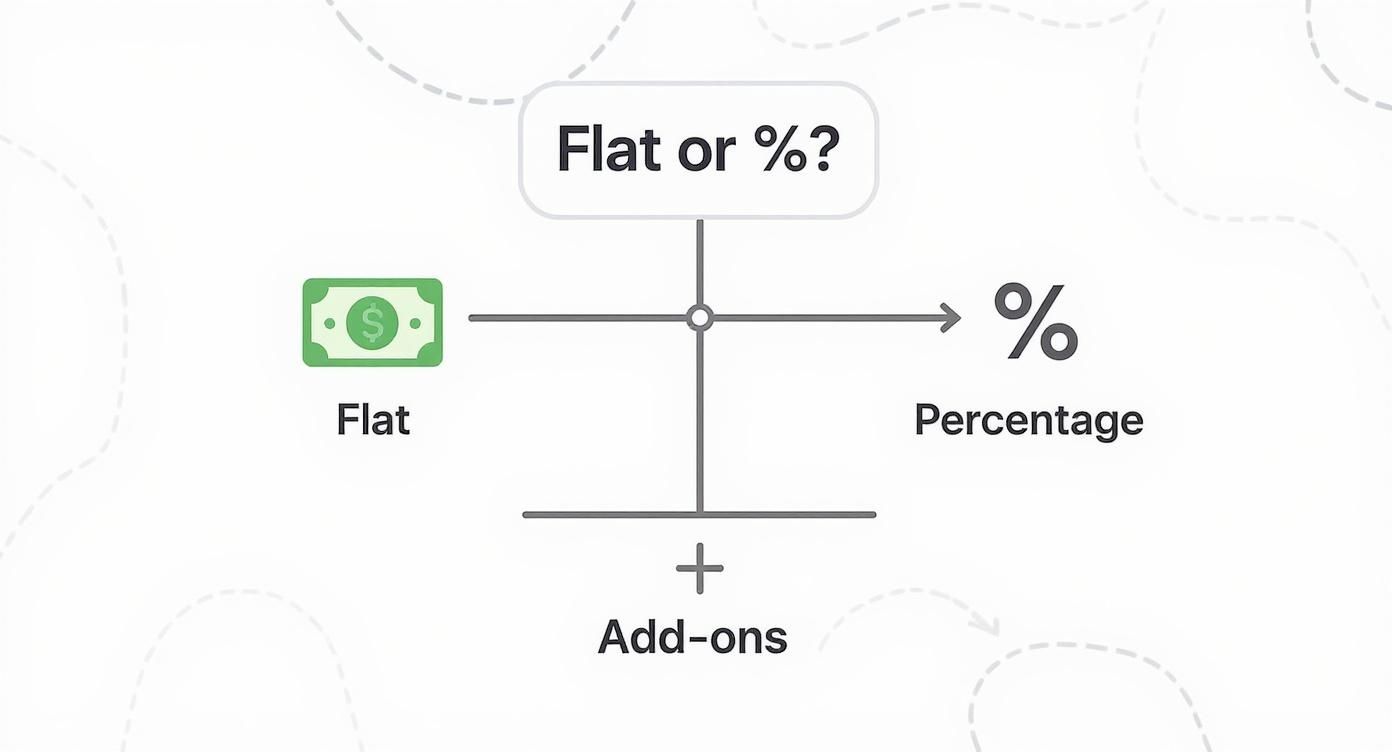
As you can see, whether you go with a flat or percentage-based fee, there's almost always an option for add-on services to cover specific tasks.
The Strategic Placement-Only Option
A placement-only (or lease-only) service is built for the hands-on landlord. You're comfortable managing the property yourself but want an expert's help finding and screening a top-notch tenant. It's a one-time, project-based service, not an ongoing relationship.
In a Placement-Only agreement, the manager's job is to deliver a fully-vetted, lease-signed tenant. Once the tenant moves in and pays their first month's rent and security deposit, the manager's contractual obligation is complete.
If you're leaning toward a placement-only agreement, it’s vital to understand how to present your property effectively to attract the best applicants. Modern strategies like virtual staging for real estate can make a huge difference in how quickly your unit gets leased.
The fee for this is usually a flat rate, often equal to the first month’s rent. Here at Edinhart, our Placement-Only service gives owners the best of both worlds—you get professional marketing and our tough screening process, but without the long-term commitment of monthly management. Ultimately, your choice between these two models will fundamentally shape what your property management agreement covers.
Spotting Red Flags and State-Specific Legal Requirements

Signing the wrong property management agreement can turn your valuable asset into a costly, stress-inducing liability. It happens faster than you'd think. While every contract has its own quirks, there are a few universal red flags that should make you pause and take a much closer look before putting pen to paper.
Think of it like inspecting a home before you buy it. You’re not just looking at the new paint; you’re checking for foundational issues that could cause serious headaches down the road. An unbalanced agreement that gives all the power to the manager can leave you completely stuck if things go wrong.
Universal Red Flags in Any Agreement
Vague language is your number one enemy in any contract. If a clause feels ambiguous or leaves too much open to interpretation, it’s a problem just waiting to happen. You have to be on the lookout for specific tripwires that can put your investment and your bank account at risk.
Here are some of the most common red flags we see:
- One-Sided Termination Clauses: Watch out for this one. If the manager can walk away with little notice, but you’re locked in with huge penalties, that’s a major power imbalance. A fair contract offers a clear and reasonable exit strategy for both parties, usually with a 30 to 60-day notice period.
- Ambiguous Maintenance Protocols: The agreement absolutely must define the manager’s spending authority. A clause that just says "manager will handle repairs" without a specific dollar limit (like $300) before needing your approval is a recipe for thousand-dollar surprise bills.
- Unfair Liability Terms: Be extremely cautious of any clause that forces you to cover the manager for their own negligence. A standard, fair agreement should include mutual indemnification, meaning each party is responsible for their own mistakes. Simple as that.
Spotting these warning signs is more important than ever. The property management market is growing fast—what was a USD 21.75 billion global market in 2024 is expected to more than double by 2033. That growth brings a lot of new players, and not all of them use high-quality, owner-friendly contracts. You can discover more about the property management market forecast to get a sense of just how quickly the industry is expanding.
Why California Laws Matter
Beyond the universal red flags, your agreement has to be rock-solid in its compliance with state and local laws, which vary wildly from place to place. Here in California, we have a highly regulated and famously tenant-friendly legal environment. Local expertise isn’t just a nice-to-have; it's a must.
A property management agreement that isn’t compliant with state law isn't just a bad contract—it’s a legal minefield. In California, missteps on issues like security deposits or tenant notices can lead to significant financial penalties for the property owner.
The California Civil Code has strict rules that your agreement must reflect. A few key examples include:
- Security Deposit Handling: The law dictates exactly how security deposits must be held (in a separate trust account, never co-mingled) and the strict timeline for returning them after a tenant moves out.
- Landlord's Right to Enter: California law is very specific about why a landlord or manager can enter a rental unit. It also requires "reasonable" advance notice, which is almost always defined as 24 hours in writing.
Your property management agreement needs to explicitly state that the manager will operate within these legal boundaries. If it doesn't, you're the one on the hook when (not if) a compliance issue comes up.
Common Questions About Property Management Agreements
Even with a detailed contract in hand, real-world questions always pop up. It's one thing to read the clauses, but it's another to know how they apply when you're actually in a situation. This section tackles some of the most common concerns we hear from property owners, giving you straightforward answers to navigate these moments with confidence.
Let's break down what to do when things don't go exactly as planned.
How Do I Terminate My Agreement if I Am Unhappy?
Ending a partnership is a big decision, and your agreement should give you a clear roadmap for how to do it. The very first place you need to look is the termination clause. This is where all the rules for parting ways are spelled out.
Most contracts will require you to give written notice, usually 30 to 60 days in advance, for what's called a "termination without cause." This lets you end the relationship for any reason at all, as long as you respect the notice period. Keep an eye out for any early termination fees—some agreements include them, so you'll want to know what costs might be involved.
But what if the manager isn't holding up their end of the deal? If they've failed to perform their duties, that's a "termination for cause." The process for this is often different and might let you exit the contract faster and without a penalty. No matter the reason, always document everything and keep your communication professional and in writing. It's your best protection.
Does a Property Manager Need to Be Licensed?
In California, the answer is a hard yes. For a property management agreement to be legally binding, the manager or their brokerage must have a valid real estate broker's license. There are no exceptions here.
Trying to operate without one is illegal. More importantly for you, it can completely void your contract, leaving you exposed and without legal recourse. Before you sign anything, do a quick check with the California Department of Real Estate to verify their license. It’s a simple step that saves you from a world of potential trouble with unqualified or unlawful operators.
Key Insight: A valid license is non-negotiable. An agreement with an unlicensed manager offers you zero legal protection and may expose you to significant liability if something goes wrong on your property.
What Are My Options if a Dispute Arises?
Even with the best intentions and a solid contract, disagreements can still happen. If you find yourself at odds over something in the agreement, the first step is always direct communication. You’d be surprised how many issues are just simple misunderstandings that a calm, professional conversation can clear up.
If talking it out doesn’t work, go back to your contract and find the Dispute Resolution clause. This section usually outlines the next steps, often requiring both sides to try mediation or arbitration before heading to court. These alternative methods are typically much faster and more cost-effective than a lawsuit.
If you’re still at a standstill, it’s time to consult with an attorney specializing in real estate law. They can review your contract, explain your rights, and help you figure out the best path forward. Of course, preventing these headaches in the first place is always the best strategy. That's why we put together a guide with key questions to ask a property management company before you ever sign on the dotted line.
Navigating the complexities of property management is what we do best. At Edinhart Realty and Property Management, we build our agreements on a foundation of transparency and trust, ensuring you always know exactly where you stand. Whether you need our Full-Service or Placement-Only model, we’re here to protect your investment and maximize your returns. Learn more about how we can help you today.


