

When you’re selling your home, a powerful first impression isn’t just an advantage—it's everything. Virtual staging is the secret weapon that gets this done. It digitally furnishes photos of empty rooms, instantly making them feel warm, inviting, and move-in ready for potential buyers.
Think of it as a digital makeover for your property. This approach helps buyers see a house's true potential, often leading to a much faster sale at a better price. It's a smart, flexible, and wallet-friendly alternative to hauling in physical furniture.
Why First Impressions Matter So Much
Picture this: you're scrolling through dozens of home listings online. Suddenly, one photo stops you in your tracks. It’s a beautifully staged living room, filled with sunlight and just the right furniture. It feels like home. That immediate emotional spark is what makes a buyer click for more details.
Your online photos are your new curb appeal.
An empty room, on the other hand, is just a box of questions. Buyers can't easily figure out if their king-sized bed will fit, where the sofa should go, or how the space could actually feel. They just see walls and floors, not a future life. This is precisely where virtual staging changes the game.
Solving the Empty Room Problem
Virtual staging acts like your personal digital interior designer. We take high-quality photos of your empty rooms and use specialized software to add stylish, photorealistic furniture and decor. It’s the bridge between a blank canvas and a buyer's imagination.
Instead of seeing a vacant space, potential buyers see:
- A cozy living room perfect for movie night.
- A functional home office ready for productive workdays.
- A serene primary bedroom designed for unwinding.
- A welcoming dining area set for holiday dinners.
You're not just showing a room; you're showcasing a lifestyle. By helping buyers connect emotionally before they even visit, you generate serious interest and get more people through the door for actual showings.
In today's market, a stunning online presence is a necessity. Virtual staging guarantees your property grabs attention and inspires buyers to take that next step.
Don’t just take our word for it—the numbers speak for themselves. Homes marketed with virtual staging sell an incredible 75% faster than homes that aren't staged. What's more, a staggering 83% of them sell at or above the asking price.
To give you a clearer picture, here's a quick rundown of how virtual staging directly impacts your sale.
How Virtual Staging Impacts Your Home Sale
| Concept | What It Means for Sellers |
|---|---|
| Emotional Connection | Buyers see a welcoming home, not an empty space, making it easier for them to picture their life there. |
| Visualizing Potential | It answers the question, "How would I use this room?" by showing a clear, attractive layout. |
| Stands Out Online | Your listing grabs more attention with beautiful, engaging photos that stop the scroll. |
| Faster Sale Time | Staged homes generate more interest and showings, leading to quicker offers. |
| Higher Offers | When buyers can see the full value and potential of a home, they're often willing to pay more. |
Helping buyers visualize a property's potential isn't just a nice touch; it's a proven strategy that leads to a more successful and profitable sale. For a deeper dive into these trends, check out AgentUp's research on key real estate statistics.
The Financial Case for Virtual Staging
When you're selling a home, every single decision filters down to one thing: the financial impact. Virtual staging creates stunning photos, no doubt. But its real magic is in the impressive return on investment (ROI). This isn't just about making things look pretty; it's a strategic financial move that can seriously boost your bottom line.
Think of it this way. An empty house often feels cold, small, and uninspired. Buyers have a hard time picturing their lives there, and that uncertainty can lead to lower offers. Virtual staging completely flips that script by creating perceived value. It showcases a lifestyle and helps buyers connect emotionally before they even step through the front door.
That emotional connection? It often translates directly into more competitive offers.
Maximizing Your Final Sale Price
The biggest financial win with virtual staging is its direct impact on your final sale price. A small upfront investment in digital furnishing can bring back returns that blow the initial cost out of the water. When buyers see a beautifully appointed home online, they see it as move-in ready and more valuable than a blank, empty space.
This isn't just a hunch; the numbers back it up. Virtual staging can deliver an incredible ROI, sometimes ranging from 500% to 3,600%. A modest investment of around $350 for a $400,000 home can add anywhere from $4,000 to $40,000 in perceived value. In fact, many virtually staged properties sell for 1–10% more than similar unstaged homes.
This boost means you don't just get your staging money back—you walk away with a significantly fatter wallet. It's a smart play that pays for itself many times over.
The Hidden Savings of a Faster Sale
Beyond just a higher price tag, virtual staging saves you money by getting your home off the market faster. Every single day a property sits unsold, it's costing you money in carrying costs. These expenses can quietly eat away at your profits.
A faster sale isn't just about convenience; it's a direct financial gain. By minimizing carrying costs, you protect your equity and improve your net proceeds from the sale.
Let's break down these easily forgotten expenses:
- Mortgage Payments: You’re still on the hook for your mortgage every month the home is yours.
- Property Taxes: Taxes don't stop just because the house is empty.
- Homeowners Insurance: Your policy has to stay active right up until closing day.
- Utilities: Even a vacant home has bills for electricity, water, and gas to keep things running.
- Upkeep: Don't forget landscaping, cleaning, and any minor repairs that pop up.
Selling your home just a few weeks or a month sooner can save you thousands of dollars in these carrying costs. That's a huge, often overlooked, benefit of making a great first impression online.
Attracting a Wider Pool of Serious Buyers
Finally, the financial argument for virtual staging gets even stronger when you consider the buyers it attracts. Jaw-dropping listings get more online views, more clicks, and more inquiries. That flood of interest leads to more showings and, crucially, a better chance of receiving multiple offers.
A bidding war is every seller's dream scenario. When several buyers are competing, they're pushed to submit their best-and-final offers, often driving the sale price well above asking. This puts you firmly in the driver's seat during negotiations, ensuring you get the absolute best return on your property. That extra profit is a big deal, especially when you factor in other selling costs. When you're budgeting, it's also smart to understand the typical real estate agent commission rates that will be part of your closing.
Essentially, virtual staging is a powerful marketing catalyst. It doesn't just make your home look better; it turns it into a hot commodity in a competitive market, setting the stage for a financially rewarding sale.
Virtual Staging vs Physical Staging
So, you’re ready to sell your house. One of the biggest decisions you'll face is how to present it to potential buyers. This often boils down to two main choices: virtual staging or the old-school physical staging. Both have the same goal—to help buyers fall in love with your property—but they get there in completely different ways, with huge differences in cost, hassle, and speed.
Physical staging is what most people picture. It means renting actual furniture, hiring designers, and coordinating movers to physically set up every room. It’s a very hands-on process that can take weeks to pull together, but it creates a real, tangible experience for buyers walking through the home. The downside? It comes with some serious logistical headaches and a hefty price tag.
Virtual staging, on the other hand, is the digital-age solution. Using specialized software, designers add stylish, photorealistic furniture and decor to pictures of your empty rooms. No movers, no rental fees, and zero risk of a sofa scuffing your freshly polished floors. It’s a much simpler, cheaper, and incredibly fast alternative.
Comparing Your Staging Options
To really understand the differences, let's break them down side-by-side. This table cuts through the noise and compares virtual and physical staging on the factors that matter most when you're selling.
| Factor | Virtual Staging | Physical Staging |
|---|---|---|
| Cost | Low (typically $30-$60 per photo) | High (often $2,000-$6,000+) |
| Timeline | Extremely fast (24-48 hours) | Slow (can take weeks to coordinate) |
| Logistics | Simple (just need photos) | Complex (movers, rentals, setup) |
| Flexibility | Highly flexible (easy to change styles) | Rigid (locked into one look) |
| Buyer Experience | Excellent for online listings | Best for in-person tours |
As you can see, the choice isn't just about budget—it’s about your timeline, your tolerance for hassle, and how you want to market your home in today's digital-first world.
Costs and Logistics
The most glaring difference is the cost. Physical staging is a major financial commitment, often running from $2,000 to $6,000 or even more. That price covers the designer’s time, furniture rental (which is usually a monthly fee), delivery, setup, and teardown.
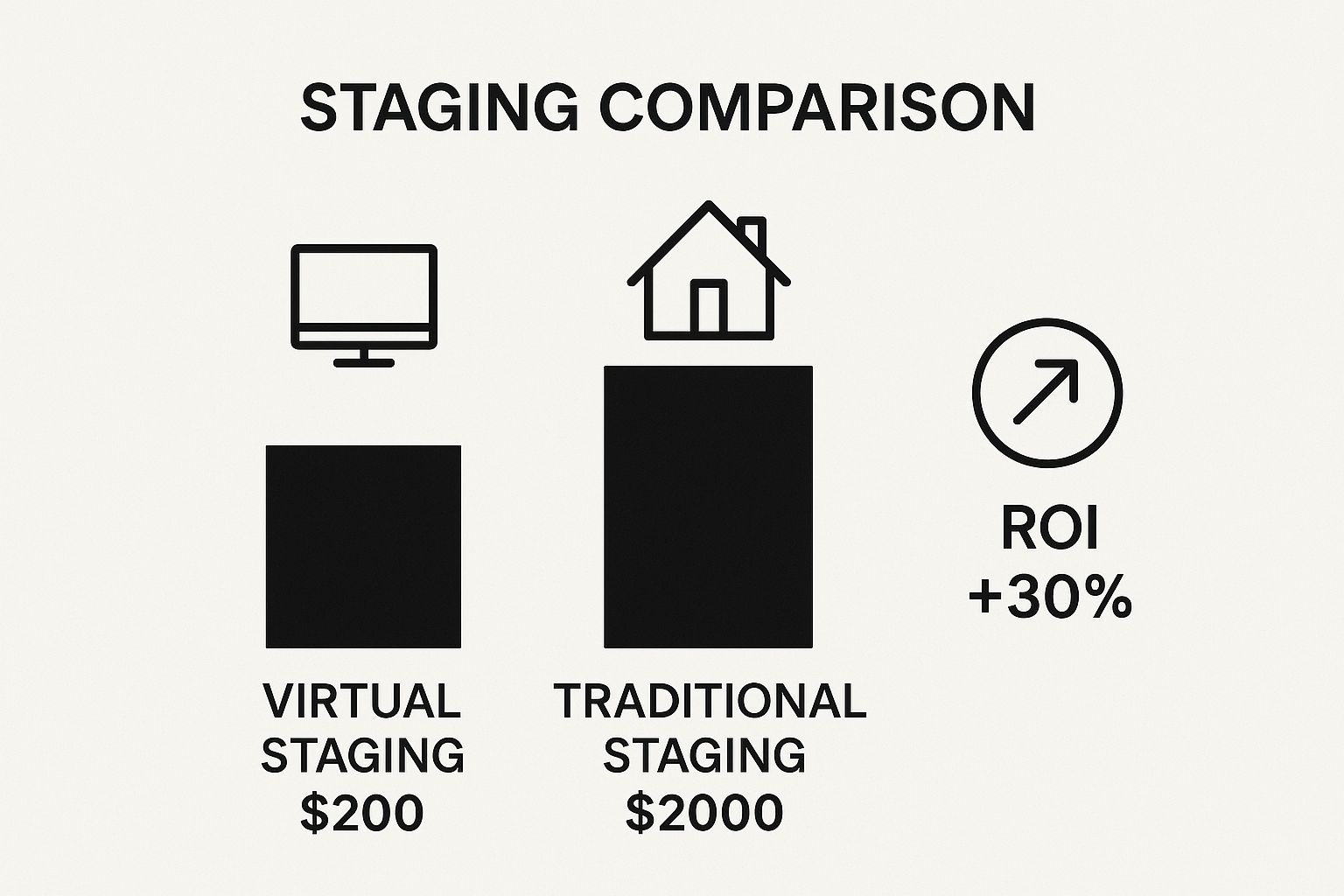
The numbers don't lie. Virtual staging costs a tiny fraction of its physical counterpart, making it a smart, high-return investment for almost any seller.
Beyond the money, physical staging is a logistical puzzle. You’re scheduling movers, making sure the house is free for them to work, and worrying about potential damage. If you want to dive deeper, you can explore the principles for choosing furniture for physical staging to see just how much thought goes into it.
Virtual staging skips all of that. All you need is a good set of photos of your empty rooms. The whole thing is done digitally, usually with a turnaround of just 24 to 48 hours. For sellers who need to get their home on the market fast, this speed is a game-changer. If you're in a hurry, learning how to sell a house quickly can offer even more great strategies.
Flexibility and Creative Freedom
Here’s where virtual staging really shines: its incredible flexibility. Once you’ve physically staged a home, you’re stuck with that look. If a buyer doesn’t like the style, too bad.
Virtual staging throws those limits out the window. You can show off the same room in different ways to attract different kinds of buyers.
- That spare bedroom? Show it as a cozy nursery for young families and as a sleek home office for remote professionals.
- The empty basement? Let’s see it as both a fun entertainment den for movie nights and a home gym for fitness lovers.
- Not sure on the style? You can try out modern, traditional, or Scandinavian looks with just a few clicks.
This ability to show off a room's potential is a huge marketing advantage. It helps more buyers imagine themselves living there, which makes your property far more appealing.
Trying to achieve this with physical furniture would be a logistical nightmare, costing a fortune and adding weeks to your timeline. The digital approach lets you tell the perfect story for your home, giving you a serious edge in a crowded market.
So, How Does Virtual Staging Actually Work?
The whole idea of turning empty, lifeless photos into beautifully furnished rooms might sound a bit like digital wizardry, but the process is surprisingly simple. Think of it less like a complicated tech project and more like ordering from a design catalog. You supply the blank canvas—your photos—and a professional team handles the creative heavy lifting. In just a few easy steps, they bring your vision to life.
The entire workflow is built for speed. It allows you to get your property on the market far quicker than if you were hauling furniture around. Most of the work happens behind the scenes, leaving you with a clean, straightforward experience. Let's walk through what you can expect from start to finish.
Step 1: It All Starts with Great Photos
Everything hinges on good photography. The photos of your vacant rooms are the foundation for all the digital magic to come. If you start with poor-quality images—bad lighting, low resolution—the final staging will look fake. This first step is absolutely critical if you want results that will truly impress buyers.
To get the best possible outcome, keep these tips in mind:
- Hire a Pro: Real estate photographers know how to capture the right angles, lighting, and high-resolution shots that are perfect for virtual staging. It’s worth every penny.
- Let the Light In: Open all the blinds and curtains. Shooting during the day makes every room feel brighter and more spacious.
- Go Completely Empty: Make sure the rooms are totally cleared out. If you can't move everything, most services offer item removal for a small extra fee.
- Shoot from Multiple Angles: Give the designer options. A few different shots of each key room let them choose the best perspective to work with.
Think of it this way: solid photos provide the realistic backdrop that makes the digital furniture look like it truly belongs in the space.
A professional photographer’s fee is a small investment that pays huge dividends. Their expertise in lighting and composition provides the perfect canvas for virtual staging, ensuring the final images look believable and captivating to potential buyers.
Step 2: Pick Your Partner and Your Style
Once your photos are ready, it's time to choose a virtual staging company and decide on a design direction. This is the fun part where you get to play creative director. Most services have huge online catalogs of furniture styles, letting you pick a look that fits your home and attracts your target buyer.
You'll get to browse through all sorts of aesthetics, like:
- Modern: Clean lines, neutral colors, and a minimalist vibe.
- Farmhouse: Cozy, rustic pieces that create a warm, inviting feel.
- Scandinavian: Simple, functional furniture in light, airy spaces.
- Traditional: Classic pieces and timeless, elegant decor.
You just upload your photos, select a style for each room, and add any specific notes you have—for instance, "I'd like to turn this spare room into a home office." This ensures the final product lines up perfectly with your marketing goals. From there, the designer gets to work, meticulously adding furniture, rugs, art, and even lighting to your photos.
Step 3: Review and Finalize the Look
This is the final—and most exciting—step. Within 24 to 48 hours, your virtual staging provider will send back the first drafts. You’ll get to see your empty rooms completely transformed into stylish, welcoming spaces that are ready to capture a buyer's imagination.
Your job is to review the images closely. Check the scale of the furniture, the color choices, and the overall layout. Does it feel right? If something seems off, most companies include a round or two of revisions in their price. You can give feedback like, "Can we try a different armchair?" or "Let's use a larger rug in the living room."
Once you're happy with the tweaks, you’ll receive the final, high-resolution images. They're now ready to be uploaded to your online listing, where they’ll immediately make your property stand out from the competition.
Strategies For Maximum Staging Impact
Getting the most out of virtual staging isn't just about dropping a few digital sofas into a photo; it’s about smart, strategic execution. To really make that investment work for you, you need a solid plan that plays up your home's best features and forges an emotional connection with buyers. And the absolute bedrock of that plan? Professional photography.
Trying to stage a home using low-quality, blurry, or poorly lit photos is like building a house on a shaky foundation. It just doesn't work. No amount of digital magic can fix a bad starting image. High-resolution photos from a real estate photographer capture everything perfectly, from the way natural light fills a room to the true proportions of the space. That realism is what makes the virtual furniture look like it actually belongs there, creating a final image that's both convincing and compelling.
Prioritize High-Impact Rooms
When you're working with a budget, it's smart to focus your virtual staging on the rooms that have the biggest sway on a buyer’s decision. You don’t need to digitally furnish every single space to leave a lasting impression. Just concentrate on the areas where future owners will picture themselves spending the most time.
Put your investment into these key spaces:
- The Living Room: This is usually the first interior shot buyers see. It’s where they’ll imagine themselves relaxing with family or hosting friends.
- The Primary Bedroom: Staging this room transforms it from an empty box into a peaceful, personal sanctuary.
- The Kitchen: You won't be adding new appliances, but staging an eat-in nook or adding some simple decor can make it feel like the true heart of the home.
- A "Flex" Space: Got a spare room? Show it off as a home office, a nursery, or a workout space to highlight the home’s versatility.
By zeroing in on these areas, you can make a huge impact on a buyer’s perception without breaking the bank. For more great ideas on prepping your home, check out our guide on home staging tips for sellers.
Choose Decor That Tells a Story
The style of furniture you select is absolutely critical. Remember, the goal isn’t to show off your personal taste; it's to appeal to the widest possible pool of buyers. Pick a design style that fits your home's architecture and the likely tastes of people in your area. A sleek, modern aesthetic might be a perfect match for a downtown condo, while a cozy, modern farmhouse vibe could be just right for a family home in the suburbs.
Whatever you choose, keep the design clean, uncluttered, and neutral. This lets buyers easily imagine their own lives and belongings in the space without getting distracted by bold or overly specific decor. The right staging tells a story of comfort, potential, and new beginnings.
Ethical Transparency Is Non-Negotiable
You absolutely must disclose that your images are virtually staged. A simple watermark like "Virtually Staged" on each photo builds trust and sets clear expectations. The point is to inspire, not to mislead, and buyers will always appreciate the honesty.
This whole approach has become even more important as the market has evolved. The costs for traditional staging have shot up, climbing from a median of around $400 back in 2019 to $1,500 more recently. At the same time, virtual home viewings have doubled.
Virtual staging is also a fantastic tool for breathing new life into a property that's been sitting on the market for a bit too long. For a deeper dive, you can explore other strategies to revive stale listings and sell for over asking. When you pair stunning visuals with smart marketing, you can turn a listing that's gone cold into an opportunity no one wants to miss.
How to Choose a Virtual Staging Service
Picking the right virtual staging service is a huge part of marketing your home, but let's be honest—the quality out there can be all over the map. Not all stagers are created equal, and choosing the right one is absolutely essential for getting photos that look aspirational but still totally believable.
The difference between a great provider and a mediocre one is night and day. It’s what separates photos that captivate buyers from those that turn them off with unrealistic, video-game-like furniture.
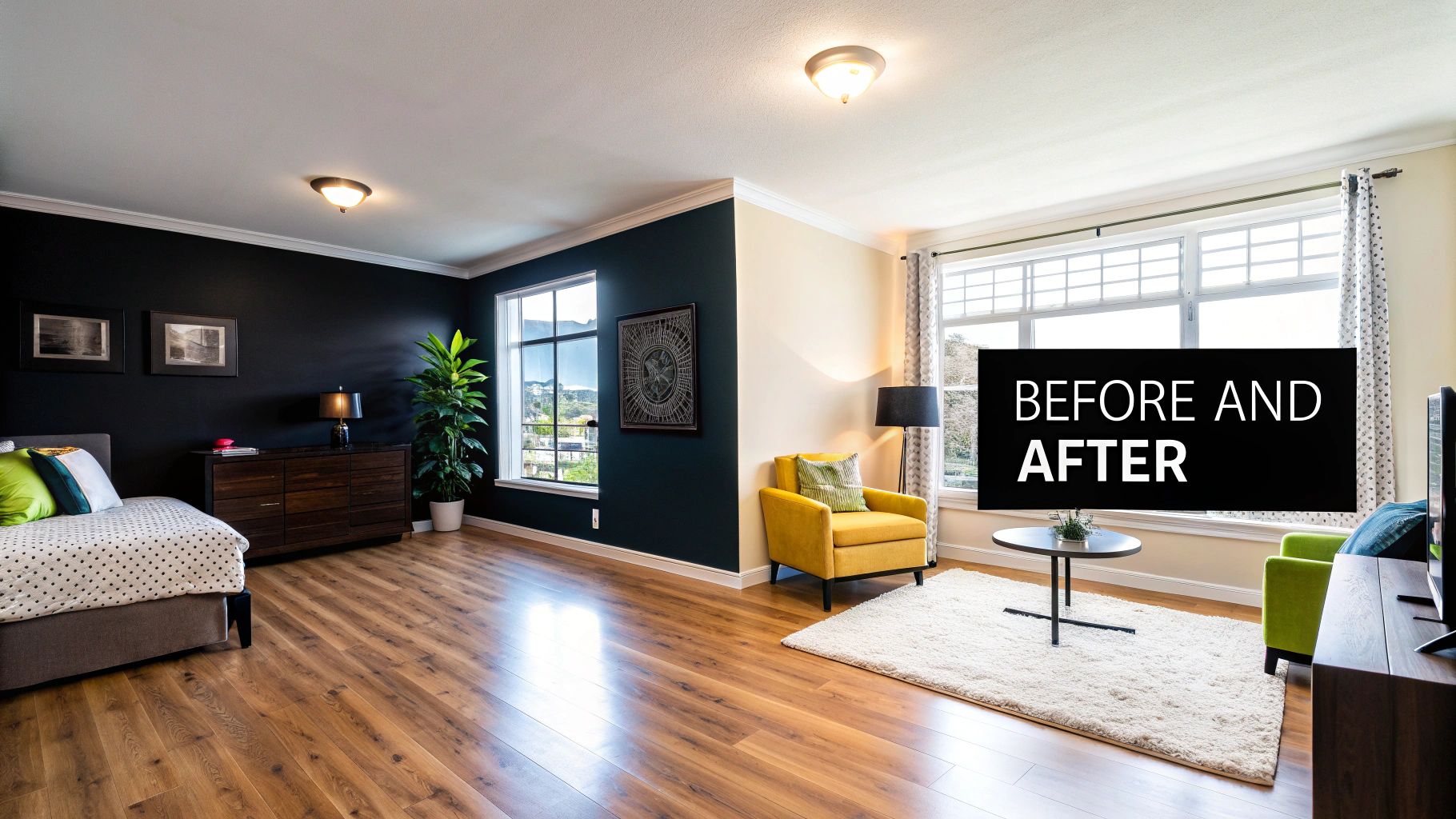
Making a smart choice means looking past the price tag. You need to get a feel for the provider’s skill, their reliability, and most importantly, their design sense to make sure your investment actually pays off.
Evaluate the Company Portfolio
The best way to judge a virtual staging company? Look at their past work. A strong portfolio is your window into the quality you can expect to receive. Don’t just scroll through the images; really analyze them with a critical eye.
Look for these key details that separate the pros from the amateurs:
- Realistic Lighting and Shadows: This is the biggest giveaway. Does the virtual furniture cast believable shadows that match the room's natural light? If it looks fake, buyers will notice.
- Correct Scale and Proportion: Does the sofa look way too big for the room, or is the dining table awkwardly tiny? Furniture needs to fit the space naturally, just like it would in real life.
- High-Resolution Textures: The fabrics, wood grains, and metals on the virtual items should look crisp and clear. Blurry or pixelated textures are a dead giveaway of shoddy work.
A top-tier virtual stager is really a digital artist who understands interior design, lighting physics, and perspective. Their portfolio should feel less like a folder of computer-generated images and more like a gallery of beautifully photographed, real-life rooms.
Review Policies and Pricing
Once you've sized up their quality, it's time to get into the nuts and bolts. Understanding a company's process and policies will save you a lot of headaches later on.
Before you commit, make sure you're crystal clear on:
- Turnaround Time: How quickly will you get your staged photos back? Most professional services deliver within 24 to 48 hours, which is a must for getting your listing live without delay.
- Revision Policy: What happens if you don’t love the first design? A reputable company will almost always offer one or two rounds of revisions for free to make sure you’re happy with the final product.
- Pricing Structure: Most services are priced per photo, typically somewhere between $25 and $75. It's always a good idea to ask about package deals or discounts for staging multiple rooms to get the most out of your budget.
Reading customer reviews can also give you some invaluable insight. See what other real estate agents and sellers are saying about their experience with the company's communication, speed, and the quality of the final images. Choosing a partner who is both talented and reliable is the key to a smooth and successful virtual staging process.
Your Top Questions About Virtual Staging, Answered
Even after seeing all the benefits, it's totally normal to have a few questions swirling around about virtual staging. You're not alone. Let's tackle the most common ones head-on so you can feel confident about using it to sell your home.
We'll cover everything from cost and ethics to the nitty-gritty logistics.
How Much Does Virtual Staging Cost?
Here’s the best part: virtual staging is dramatically cheaper than bringing in physical furniture. We're talking about a cost savings of 90-97% compared to traditional methods.
Think about it. Physically renting furniture, paying for movers, and hiring a designer can easily run you thousands of dollars. Virtual staging, on the other hand, is typically priced per photo. Most services fall in the $25 to $100 per image range. You could stage your entire property online for less than it costs to furnish one physical room.
Is Virtual Staging Deceptive to Buyers?
This is a big concern for many sellers, but the answer is a firm no—as long as you’re upfront about it. Honesty is key. The industry standard, and the right thing to do, is to clearly disclose that the images have been digitally furnished.
A simple "Virtually Staged" watermark on the photo or a quick note in the property description is all it takes to be transparent and build trust.
The point of virtual staging isn’t to pull a fast one on buyers. It's a marketing tool. It’s about helping people see a home’s incredible potential by overcoming the blank canvas of an empty room.
Can You Virtually Stage a Room That Already Has Furniture In It?
Absolutely. This is a perfect solution for people who are still living in their home while it's on the market. You don't have to move a thing.
Most professional virtual staging companies offer a service called "virtual furniture removal" or "item removal." Their designers can digitally erase your existing furniture, clutter, or even that old wallpaper right out of the photos. Once they have a clean slate, they can drop in stylish, modern furnishings that will grab a buyer's attention.
How Fast Is the Virtual Staging Turnaround?
Speed is one of virtual staging's biggest perks. Getting a home physically staged can take weeks of planning, scheduling, and labor. The digital process? It’s lightning-fast.
Most quality virtual staging providers will deliver your beautifully finished images within 24 to 48 hours. That kind of rapid turnaround means you can get your listing live almost immediately, catching the eye of eager buyers without any of the traditional delays.
Ready to make your property stand out and sell faster? The expert team at Edinhart Realty and Property Management leverages professional photography and strategic staging to maximize your home's appeal and value. Discover how our proven marketing strategies can achieve outstanding results for you at https://edinhart.com.


