

An out-of-state investor is considering a Fresno rental. The property looks promising online, but a flight, a hotel, and a day away from work add friction to a decision that may still end with “the home wasn't what I expected.” A local renter faces a different problem. They may be comparing several homes after work, while the owner wants fewer unqualified showings and a faster path to a serious application.
That's where virtual property tours can help, but they aren't magic listing boosters. The useful question is whether a tour removes enough uncertainty, reaches the right prospects, and supports the rest of the marketing package. It also helps to understand how top agents use AI tools to organize listing content, follow up with leads, and improve distribution without replacing professional judgment.
The practical test is straightforward. By the end, you'll know which tour format fits a Fresno rental or Central Valley home, how to produce one without making the property look worse, how to distribute it, and when professional help earns its place in the marketing budget.
Why Virtual Property Tours Matter Now
A landlord with a vacant home usually has two competing priorities. The listing needs to answer enough questions online to attract serious prospects, but it can't promise more than the property delivers. A polished gallery may show the kitchen, living room, and primary bedroom, yet still leave a remote viewer unsure about room flow, hallway width, storage, stairs, or the relationship between indoor and outdoor spaces.
A virtual tour gives that viewer more control. They can move through the home before scheduling a showing, revisit a room, and decide whether the layout fits their needs. For an investor outside California, that first screening may determine whether a trip to Fresno is worthwhile. For a busy local renter, it may determine whether they request a showing at all.
The decision is about friction, not novelty
Modern listing portals have trained people to expect rich visual information. That doesn't mean every owner needs a complex 3D scan. It means the listing should make the property easy to understand and should respect the viewer's time.
A tour becomes more valuable when the property has features that still photos struggle to explain:
- A distinctive layout: Split levels, connected living areas, long hallways, and unusual room arrangements benefit from guided movement.
- A remote audience: Out-of-state investors, relocating employees, and renters moving from another market may need stronger digital screening.
- A costly showing process: If the home is occupied, access is restricted, or the property is far from the manager's office, better pre-screening can matter.
- A strong visual story: Updated finishes, architectural details, a large yard, or an attractive view can justify a format that lets viewers explore.
A tour won't repair poor lighting, deferred maintenance, weak pricing, or incomplete listing information. It can expose those weaknesses more clearly. That's why the right approach is candid: use the tour as one part of a strong listing, not as a substitute for preparation, accurate disclosures, good photos, or an in-person inspection.
What a Virtual Property Tour Actually Is
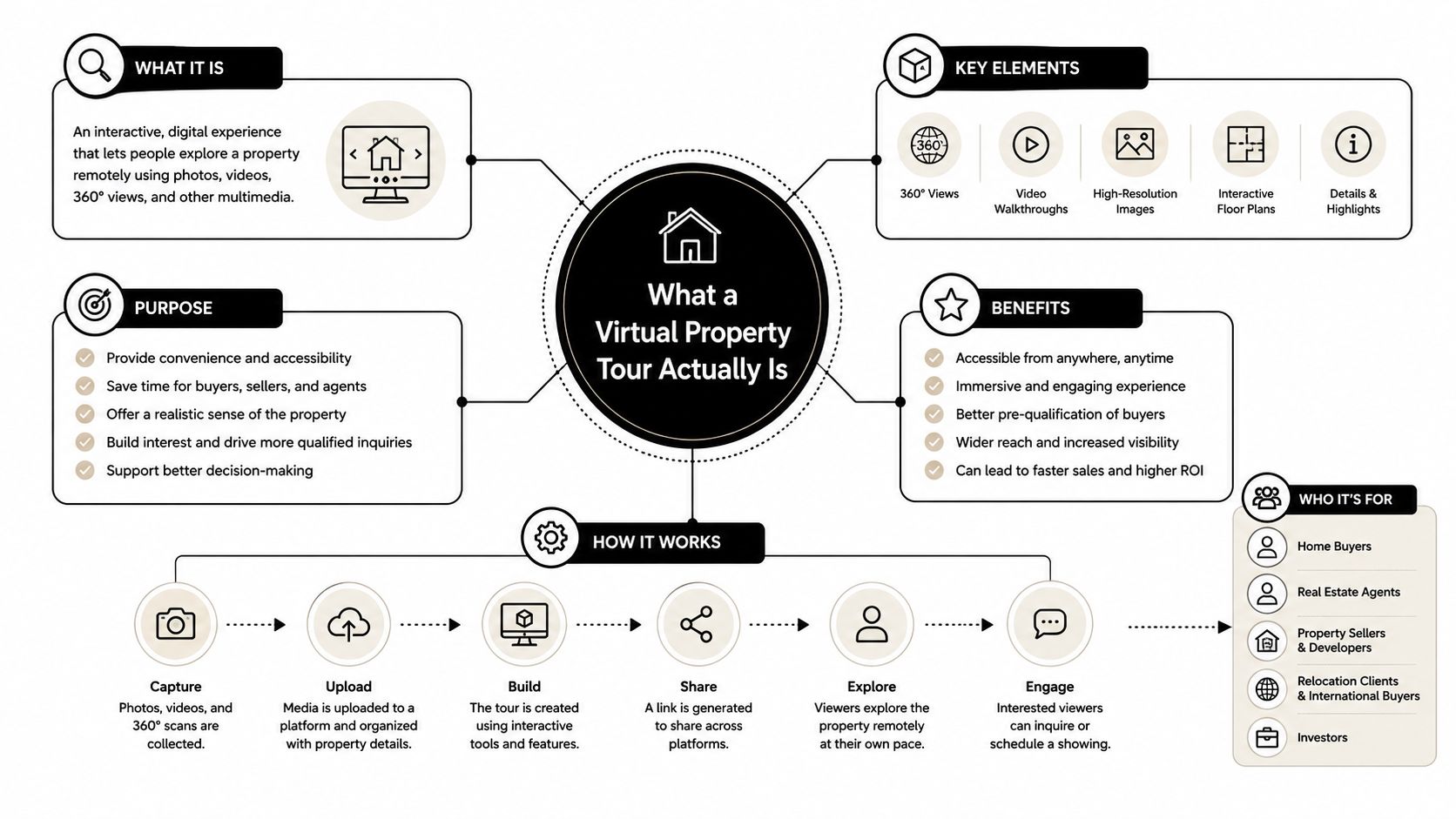
A photo gallery is like a postcard. It gives you selected views of a place, usually chosen by the sender. A true virtual tour is closer to an open house that the viewer can explore at their own pace. The distinction is interactivity. A viewer should be able to look around, move between points, follow a path, or inspect the relationship between rooms rather than just watch a fixed sequence of images.
That definition rules out a common misunderstanding. A video walkthrough can be an excellent marketing asset, but not every property video is a virtual tour. A presenter moving through a home creates a guided experience. A 360 platform or 3D scan lets the viewer control the perspective. Both can be useful, but they serve different viewing habits.
Three formats landlords should recognize
360 panoramic photos place a camera at selected points around the property. The viewer can rotate the view, but movement between rooms may be limited or guided by clickable links. This format works well when an owner wants broader spatial context without commissioning a full scan.
Guided video walkthroughs follow a deliberate route. The person filming can explain upgrades, point out storage, describe parking, and call attention to details that a viewer might miss. Video adds personality and narrative, but the viewer generally can't change the camera's position.
3D dollhouse-style scans, commonly associated with Matterport, connect captured spaces into a navigable model. Viewers may move through rooms, switch viewpoints, and understand the floor plan more intuitively. This is the most immersive option, but it also demands more planning, equipment, editing, and careful quality control.
The central question isn't whether one format is universally superior. It's whether the property, audience, and owner's budget justify the level of immersion. A modest rental with a simple layout may need only strong photos and a concise video. A furnished executive rental or a home marketed to remote buyers may benefit from a deeper spatial experience.
Comparing 360 Photos, Video Walkthroughs, and 3D Matterport
The three formats solve different marketing problems. 360 photos provide spatial orientation, video provides a guided story, and 3D Matterport provides the strongest sense of navigation. The best choice depends less on what looks impressive to the owner and more on what a prospect needs to decide whether the property deserves a showing.
| Format | Cost Tier | Production Effort | Best For |
|---|---|---|---|
| 360 panoramic photos | Lower | Moderate setup and capture | Budget-conscious rentals and straightforward layouts |
| Guided video walkthrough | Lower to mid-range | Planning, filming, stabilization, editing, narration | Homes where finishes, flow, and personality matter |
| 3D Matterport scan | Higher | Professional capture, processing, review, and hosting | High-value homes, distinctive layouts, and remote-buyer audiences |
360 photos keep the barrier low
A 360 setup can give prospects more context than still images without requiring a full 3D model. It's a sensible option for a clean, vacant rental with a conventional floor plan. The limitation is that panoramic images can feel flat and disconnected when the viewer moves between rooms. Poor camera placement also creates distorted lines, awkward reflections, or a view dominated by furniture.
Video creates a controlled experience
A walkthrough video works when the property benefits from an explanation. A steady route can show how the entry opens into the living space, where the laundry sits, how the kitchen connects to dining, or why a yard is practical. Narration should describe observable facts, not make unsupported promises. A rushed recording, shaky movement, loud background noise, or excessive transitions will make a well-maintained property feel careless.
Matterport earns its place selectively
A 3D scan is impressive because it lets viewers explore rather than merely watch. It's especially useful when the layout itself is a selling point or when remote prospects need to study the property before traveling. It can be overkill for a modest rental, particularly if the owner hasn't already invested in cleaning, repairs, staging, and excellent still photography.
Practical rule: Choose the simplest format that answers the prospect's biggest unanswered question.
For many Fresno rentals, that means quality photos plus a short guided video. Use 360 imagery when spatial context matters and the budget is controlled. Consider Matterport when the property's value, complexity, or remote audience makes deeper inspection commercially meaningful.
What the Research Says About Tour ROI
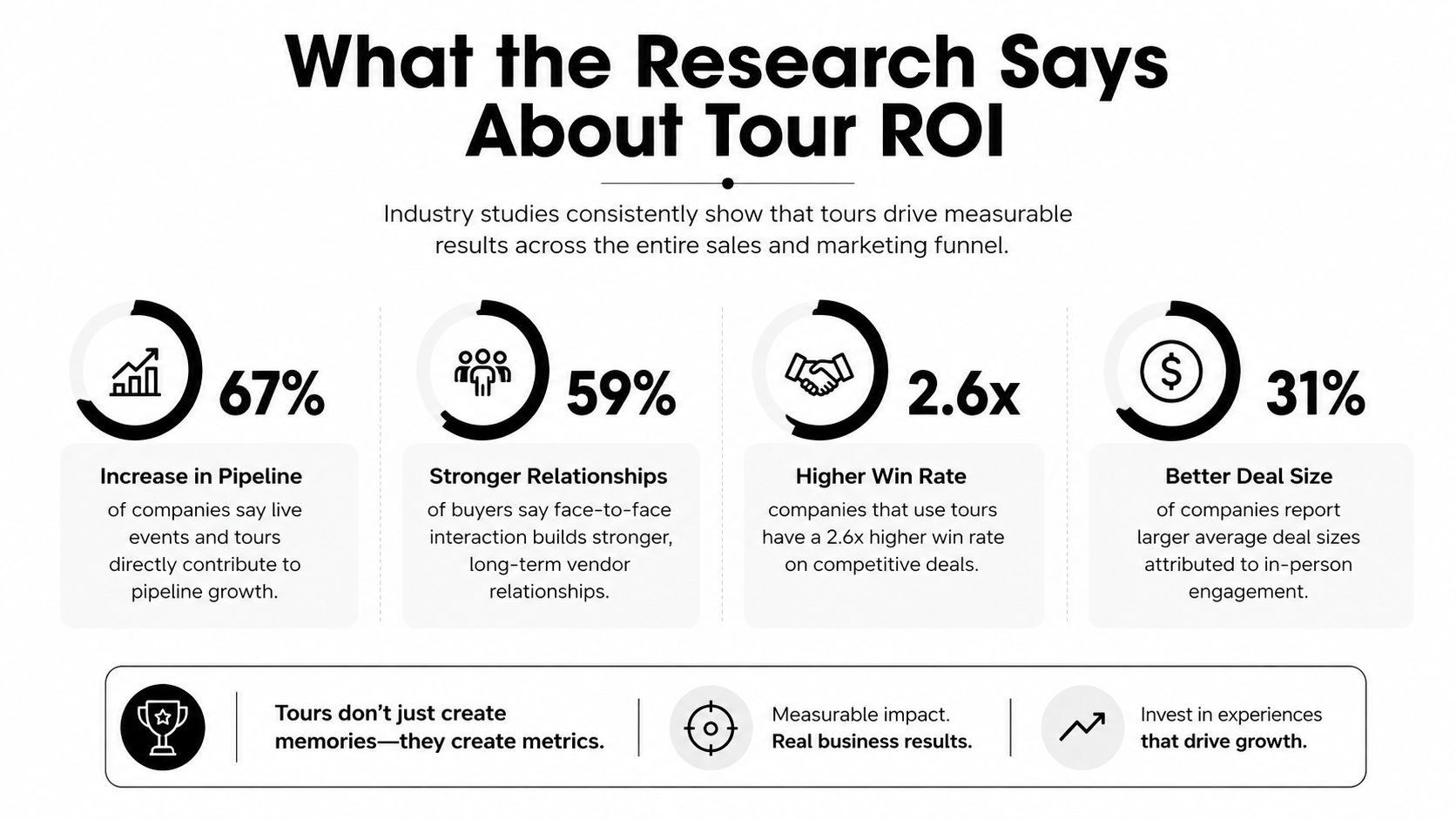
The evidence doesn't support the claim that every virtual tour automatically increases a property's price. A 2024 NBER working paper using MLS data from Greater Vancouver and property-assessed values found that offering a virtual tour was associated with an average 1% increase in sale price after controlling for other marketing features. The researchers used classical econometric models and causal machine learning, making the study a useful example of separating tour effects from photo quality, captions, and agent effects. The NBER working paper explains the analysis.
A different result appears in a Harvard Business School summary of research involving 74,374 home sales in Greater Los Angeles. Once better photos and captions were controlled for, virtual tours had an insignificant effect on final price. Earlier estimates showed about a 1.1% lift without those controls, along with a possible downside of longer time on market. The Harvard Business School summary details those findings.
Why the results differ
The contrast matters because listing quality creates selection bias. Agents may add tours to homes that already have better photography, stronger captions, more desirable features, or a larger marketing budget. If those elements drive the outcome, the tour can receive credit it hasn't earned.
A practical landlord shouldn't ask, “Will this tour raise my price?” Ask instead:
- Will it reduce wasted showings?
- Will it help a remote prospect understand the layout?
- Will it make a distinctive property easier to compare?
- Will it support a strong listing that already has accurate details and quality photos?
Research on decision speed adds another useful dimension. Recent research found that VR tours shortened average listing time from 34 days to 19 days, suggesting they can accelerate decisions. The same reporting still treats tours as a complement rather than a replacement because defects can remain hidden until someone visits in person. The University of Texas at Dallas report discusses the finding and its limitations.
The honest conclusion is narrow but useful. A tour can improve access and speed, particularly for remote viewers. It shouldn't replace strong photography, precise descriptions, honest disclosures, or an in-person inspection.
How to Produce or Commission a Great Tour
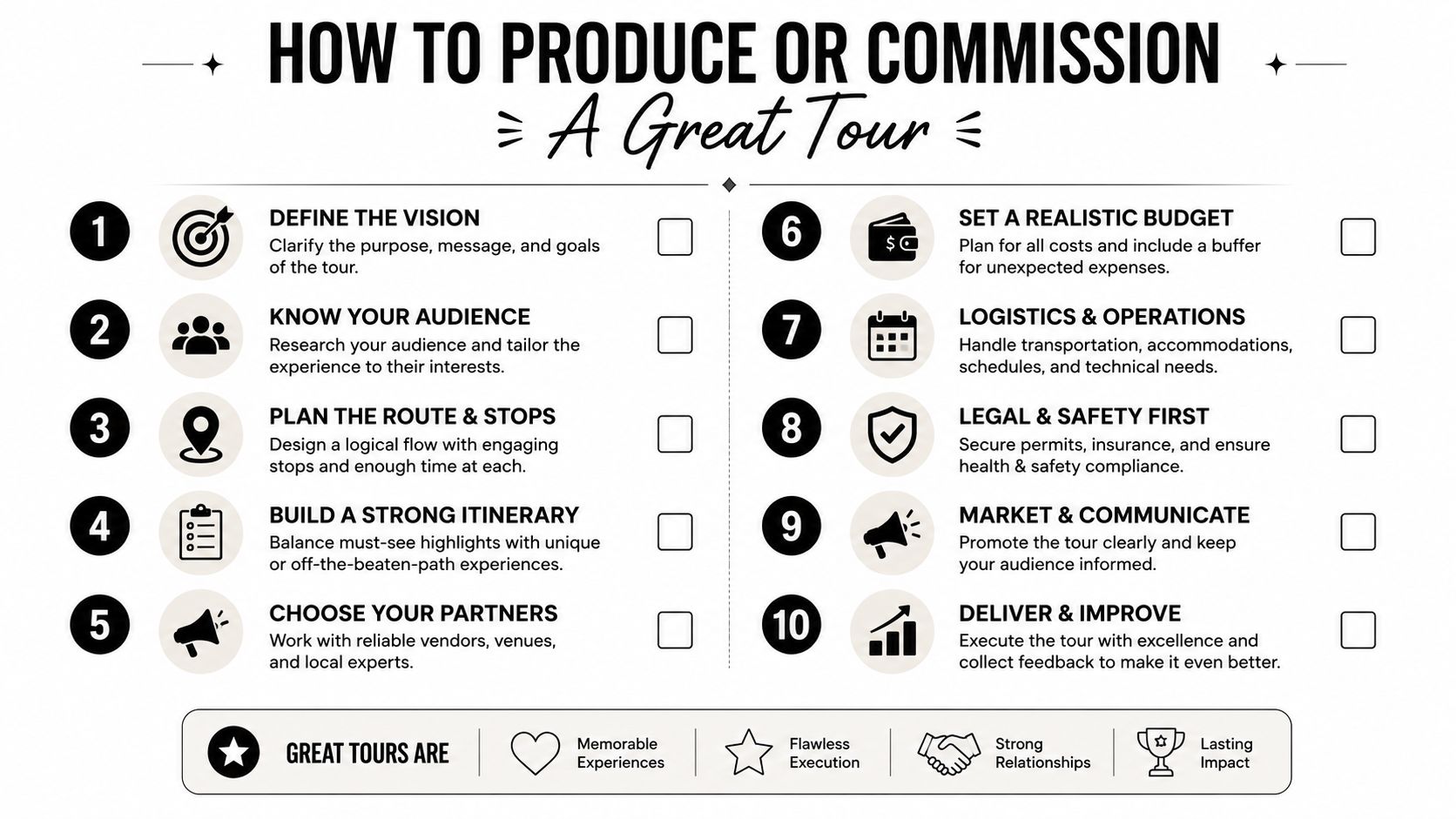
Start with the property, not the camera. A virtual tour records the entire viewing path, so clutter that might sit outside a still-photo frame can remain visible as the viewer moves through the space. Remove personal documents, family photographs, medication, valuables, cleaning supplies, loose cables, overflowing bins, and anything that reveals private information.
Clean thoroughly, complete visible repairs, open blinds, turn on appropriate lights, and arrange furniture so the rooms feel navigable. The goal isn't to make the home look artificial. It's to make the layout legible. Viewers should see where they would walk, where doors open, and how rooms connect.
Match the production method to the assignment
For a basic 360 tour, use a compatible camera or smartphone setup on a stable, level tripod. Place the camera where it can show the room without creating an awkward perspective, and move it methodically from one capture point to the next.
For video, use stabilization, keep the route intentional, and record clean narration separately if the room acoustics are poor. Avoid walking too quickly. Pause at features that deserve attention, but don't turn the recording into a long sales pitch.
For a 3D scan, a professional operator can manage capture points, lighting problems, stitching, floor-plan accuracy, and final review. Matterport can be worthwhile when the owner needs a navigable model, but the scan still depends on preparation. It can't make a dirty or poorly maintained property appealing.
Production standard: A stale or sloppy tour is worse than no tour because it creates expectations the showing may not meet.
Use this checklist before publishing:
- Camera height: Keep viewpoints consistent and natural instead of placing the lens too low or too high.
- Light control: Test the property at the time of day that shows the rooms clearly, and balance artificial and natural light.
- Reflections: Check mirrors, windows, appliances, and polished surfaces for the camera, operator, or unwanted objects.
- Private information: Remove mail, paperwork, access codes, tenant belongings, and identifying photographs.
- Room sequence: Follow a logical path from entry through the main living areas, bedrooms, bathrooms, storage, and exterior spaces.
- Current condition: Replace the tour after meaningful renovations, furnishing changes, or turnover-related updates.
- Accuracy: Show defects and limitations truthfully rather than relying on angles that conceal them.
Landlords who are improving the conversion path around a tour can also review these service business CRO tips for practical ideas about calls to action, forms, and page structure. For still-image preparation, this guide to real estate photography tips is a useful companion.
A short visual example can help operators evaluate pacing, camera movement, and room order before they film their own property.
Getting Your Tour Seen by the Right Renters and Buyers
A polished tour still fails if prospects cannot find it or do not know what to do next. Put it where the decision happens: the MLS when supported, the major listing portals, and the property's dedicated page. Check each placement on a phone. A broken link, missing thumbnail, or slow-loading embed can erase the value of the production.
Use different cuts for different jobs. Keep the complete tour on the listing page, where serious renters and buyers can review the home. Use a short vertical clip of the entry, kitchen, living room, or backyard for social discovery. Email the full experience to people who have already asked about the property, particularly those relocating or reviewing it from outside the area.
The publishing sequence matters more than posting everywhere at once:
- Listing portals: Add the correct tour link and confirm that it opens on mobile.
- Property page: Place the tour beside the floor plan, application instructions, showing schedule, and contact method.
- Social channels: Cut clips that point viewers to the complete tour rather than explaining the entire home in one post.
- Prospect email: Include availability, qualifications, pet policy, parking details, and one direct next step with the tour.
- Local discovery: Use the company's Google Business Profile where appropriate, while keeping the property page as the complete source.
Search visibility improves when the media has context. Name the file descriptively, caption the property type and location, and use accurate phrases such as “virtual property tour,” “Fresno rental,” or “Clovis home for rent.” A qualified web professional can add relevant listing structured data. Keep the page responsive, and check load speed when embedding a large 3D experience.
Remote viewers also need facts that video cannot supply. Add measurements where relevant, clear disclosures, neighborhood information, application requirements, and a simple way to request an in-person visit. The RentReboot safety guide provides useful context for a sight-unseen rental process, although local property details and laws require separate review.
For the wider channel plan, apply these best real estate marketing strategies so the tour supports the listing instead of sitting as an isolated media asset. Track views, inquiries, completed applications, and showing requests by source. That record shows whether the tour is attracting qualified prospects or merely collecting plays.
When to Call in Professional Help
A Fresno rental can lose a week to poor media before an owner notices. DIY works when the property has a straightforward layout, the owner can prepare it carefully, and likely renters live close enough for a conventional showing. A clean 360 capture or steady phone video may cover a modest home. Review every frame, remove private information, and update the published tour whenever the property changes.
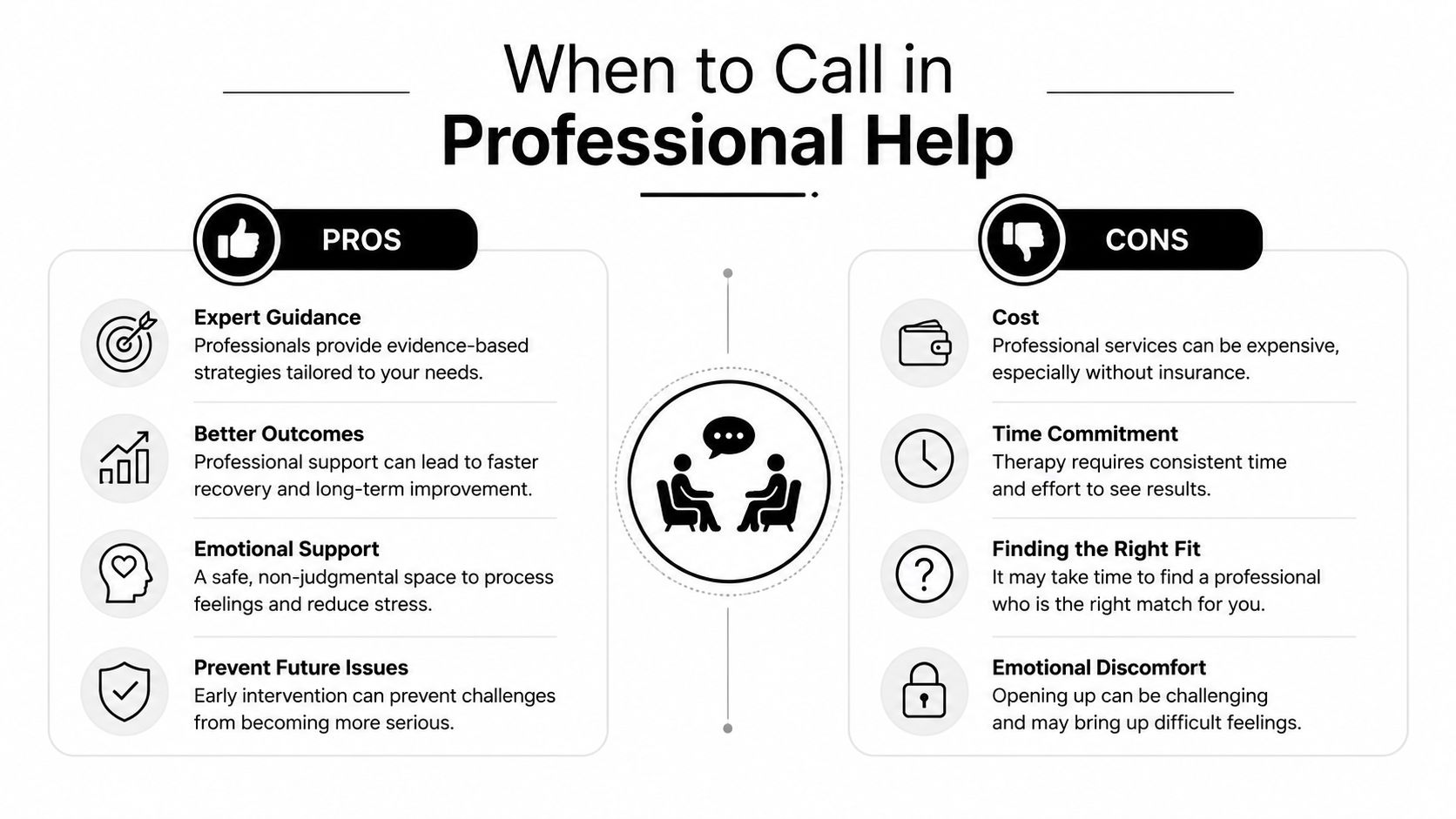
Professional production earns its cost when several conditions apply:
- The home has a complex or distinctive layout that still photos do not explain clearly.
- The property targets remote or out-of-state prospects who need confidence before traveling.
- Vacancy carries meaningful cost and qualified attention is needed quickly.
- The home has premium finishes or staging that benefit from controlled lighting, composition, and narration.
- The owner lacks time or equipment to capture, edit, publish, and check the experience across listing platforms.
Compare the production fee with the rent or sale value at stake, the size of the likely tenant pool, repeated showing costs, and the consequences of a stale listing. A tour does not guarantee a higher price. The Los Angeles evidence discussed earlier also shows why owners must separate the effect of tour technology from the effect of strong photos and listing copy. If photo quality explains the price lift, paying for a tour alone may not produce the expected return.
The Greater Vancouver research provides a useful counterpoint. The 2024 NBER working paper associated offering a virtual tour with an average 1% increase in sale price after controlling for other marketing features, using econometric models and causal machine learning. Read the NBER paper's methodology and findings discussed earlier. That result supports testing the format, not assuming it will perform the same way for every Fresno rental.
Edinhart Realty and Property Management provides professional photography, staging, marketing, and Matterport-based 3D tour creation for properties across Fresno, Clovis, Friant, and the Central Valley. Owners comparing vendors can review real estate photography companies near me and ask whether the provider also handles publishing, applicant communication, and listing updates.
A virtual tour is an investment when it helps qualified prospects understand the property, reduces wasted access, or supports a remote decision. It becomes decoration when the home is poorly prepared, the audience is entirely local, or the owner expects software to correct weak pricing and weak presentation.
Edinhart Realty and Property Management can prepare, photograph, stage, and create Matterport virtual property tours for Fresno, Clovis, Friant, and Central Valley rentals and homes for sale. Visit Edinhart Realty and Property Management to discuss a placement-only or full-service marketing plan that puts the tour in front of qualified prospects and keeps the listing accurate.


