

You're probably dealing with this right now. A tenant reports a leak, you call the cheapest plumber who says he can come “sometime this afternoon,” the repair drags into the next day, drywall gets cut wider than necessary, the tenant gets irritated, and now a simple maintenance call has turned into a bigger invoice and a reputation problem.
That's the trap. Most landlord vendor decisions get made under pressure, and pressure usually pushes people toward the lowest bid or the fastest promise. In California property management, that approach gets expensive fast. The actual cost isn't just the invoice. It's tenant frustration, repeat work, scheduling headaches, and avoidable legal risk when the wrong contractor is on your property.
A solid vendor selection process fixes that. It gives you a repeatable way to choose vendors before the emergency hits, compare them fairly, and keep weak operators out of your rotation.
Beyond the Lowest Bid A Smarter Vendor Strategy
Cheap work rarely stays cheap in rental housing. If a handyman misses a roof flashing issue, you don't just pay for the patch. You pay for the interior damage, the follow-up visit, the tenant complaints, and the vacancy risk if the resident loses confidence in how you maintain the property.
Professional landlords stop treating vendor hiring like a one-off errand. They treat it like risk control.
A structured, weighted evaluation process works better than going by demos, sales talk, or instinct alone. In one verified benchmark, organizations using a weighted-scoring method plus proof-of-concept pilots reported a 35% reduction in post-award service disruptions according to Technology Match's vendor selection checklist. The setting in that research isn't residential property management, but the lesson translates well. Test vendors against real work, score them consistently, and fewer problems show up after you hire them.
What landlords usually get wrong
Most mistakes happen in three places:
- They buy on price first: The lowest bid wins, even when the scope is vague.
- They skip field reality: They judge the company by the estimator, not the crew who'll enter the property.
- They rush the paperwork: They assume they can sort out insurance, response times, or workmanship disputes later.
That's backward. Price belongs near the end of the decision, not the start.
Practical rule: If two bids aren't based on the same scope, they aren't really competing bids.
For landlords who want a broader process view outside real estate, this no-nonsense guide for law firms is useful because it reinforces the same core idea. Vendor management starts before the contract is signed and continues after the work begins.
What a smarter strategy looks like
The right vendor strategy for California rentals is simple in principle. Define the job clearly, screen for risk, compare vendors with a scorecard, lock expectations into the contract, and keep tracking performance after the first work order closes.
That sounds more formal than many owners are used to. It is. And that's the point. Informal vendor hiring creates informal results.
Defining Your Scope and Service Expectations
Most landlords think scope means the repair itself. It doesn't. Scope also includes access, communication, cleanup, photos, tenant interaction, and what counts as a completed job.
If you write “replace garbage disposal,” you haven't said enough. A usable scope says who supplies the unit, whether the vendor tests for leaks before leaving, whether they haul away the old disposal, whether they text the resident with an arrival window, and whether they upload before-and-after photos.

Scope is also about behavior
This matters more in residential property management than many generic procurement guides admit. Your vendor isn't just fixing something. They're entering someone's home, representing your standards, and often speaking directly with your tenant.
That human piece gets overlooked. Yet one verified framework argues that vendor selection content often ignores Talent Quality, which should carry 20 to 30% of the decision weight, and notes that 70% of outsourcing failures stem from poor personnel retention rather than process flaws according to VA Masters' outsourcing vendor selection framework. For landlords, that translates into a practical question: who will show up at the property next month, and will it be the same caliber of person you met during the bid?
A vendor with a polished owner and a revolving field crew can become a service problem even if their pricing looks fine.
What to define before asking for bids
Before you request quotes, write down the operating standards you expect. Include points like these:
- Response expectations: Emergency calls, routine work orders, and follow-up timing.
- Tenant communication rules: Call ahead, text on arrival, and no discussing unrelated property issues with residents.
- Documentation standards: Photos, invoices tied to unit numbers, and notes about observed risks.
- Property protection: Shoe covers when appropriate, gate security, lock-up procedure, and cleanup before departure.
- Escalation rules: Who the vendor contacts if they find mold-like growth, water intrusion, unsafe wiring, or habitability concerns.
A landlord-ready request checklist
Use a short written intake sheet before sending work to a new company. Ask:
| Item | What you want to know |
|---|---|
| Team assignment | Who performs the work, employee or subcontractor |
| Rental experience | Experience in occupied residential units |
| Communication method | How they coordinate with owners, managers, and tenants |
| Service area | Whether they cover your city consistently |
| Documentation | Whether they provide photos and written notes |
| Follow-up | How they handle callbacks and warranty issues |
If you market vacancies yourself, this same level of upfront detail helps elsewhere too. Owners who understand targeting and messaging usually write better vendor briefs because they already think in terms of service standards and brand consistency. That's one reason resources on successful postcard campaigns can be surprisingly relevant. The discipline of defining audience, message, and execution carries over to vendor instructions.
The person knocking on your tenant's door is part of your business, whether they're on your payroll or not.
Finding and Screening Potential Partners
A Google search will give you names. It won't tell you which companies perform well in occupied rentals, return calls after the first invoice, or keep insurance current. You need a tighter filter.
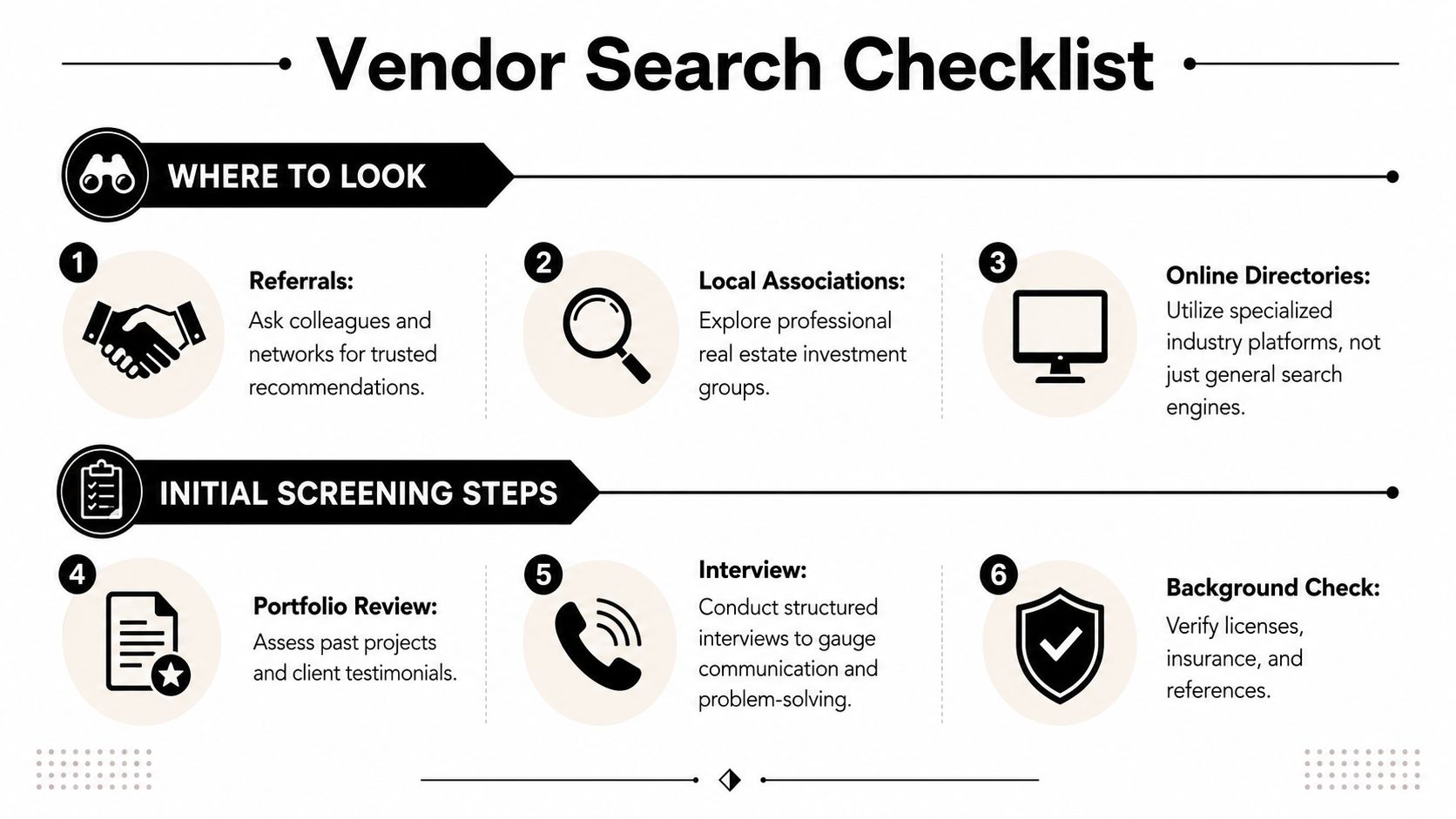
Start with sources that already have some accountability built in. Ask other property managers, local investors, brokers, maintenance coordinators, and supply houses which vendors they see repeatedly. A plumber who gets steady work from professionals usually has earned that lane somehow. That doesn't mean you skip screening. It means you start with a better list.
Build the first pass carefully
Keep the longlist short enough that you'll vet each company. The practical mistake is collecting names faster than you can review them.
For landlords building a local bench, these channels work well:
- Peer referrals: Ask owners with similar property types, not just anyone with a favorite handyman.
- Trade counters: Plumbing supply and HVAC parts counters often know which contractors buy regularly and pay attention to quality.
- Investor groups: Local real estate meetups can surface crews that understand turnover timelines and tenant-occupied work.
- Vendor applications: A formal intake form saves time and standardizes what each company submits. If you want a model, review this property management vendor application.
Screen for risk before you compare prices
At this point, many landlords cut corners. Don't.
A sound vendor selection process starts with pre-qualification. Best practices call for verifying financial stability, insurance coverage, legal compliance, and other baseline requirements before issuing a formal request, and they also recommend due diligence such as reviewing operational and financial stability according to Smartsheet's vendor assessment guide. In landlord terms, that means you don't waste time comparing bids from companies that shouldn't be on your property in the first place.
Use a mandatory screening list:
- License verification: Check the contractor's status with the California State License Board when the trade and job require it.
- Insurance review: Get certificates, not verbal assurances.
- Business identity: Confirm the legal business name matches the paperwork and invoice.
- Service capacity: Ask how they cover urgent calls, vacations, and overflow demand.
- Crew structure: Find out whether they use employees, subs, or a mix.
A quick video can help frame the screening mindset before you build your list:
Ask better reference questions
Reference checks are one of the most useful parts of the process when you do them properly. A verified best practice is to conduct reference checks with organizations that have similar technical requirements so you can compare promised performance against real-world delivery, support quality, and implementation issues, as noted by Veridion's vendor selection process article.
For rental property vendors, don't ask “Were you happy?” Ask:
- Did they show up when they said they would?
- How did they handle occupied units and tenant communication?
- Did the final invoice match the approved scope?
- How often did you need callbacks?
- Did they document work clearly enough for your records?
If a reference hesitates when you ask about callbacks or communication, pay attention. That's usually where the real story starts.
Using a Scorecard for Objective Evaluation
Once you've screened out risky candidates, you need a way to compare the qualified ones without getting pulled around by personality, fast promises, or a sharp-looking estimate. That's where a scorecard earns its keep.
The value of a scorecard is discipline. It forces you to decide what matters before the final sales conversation starts influencing you. Best practices recommend detailed evaluation scorecards with weighted criteria and a standardized scoring rubric, typically using a 1 to 10 scale, because that structure reduces subjective bias and keeps the final choice tied to business goals rather than just price, according to Smartsheet's evaluation guidance.
What deserves weight in rental housing
The right categories depend on the trade. A landscaping vendor and an emergency plumber don't carry the same operational risk. But for most California landlords, these factors belong on the sheet:
- Price: Important, but not dominant.
- Rental property experience: Occupied units are different from owner-occupied remodels.
- Response reliability: Especially for leaks, HVAC, electrical, and lock issues.
- Insurance and compliance readiness: A vendor who drags their feet on paperwork creates problems before work begins.
- Communication quality: Clear estimates, updates, and close-out notes.
- Reference strength: Specific, relevant, recent.
Sample vendor evaluation scorecard
Use a 1 to 10 score for each category, then multiply by the weight. Adjust the weights based on the trade and the property.
| Criteria | Weight (%) | Vendor A Score | Vendor A Weighted Score | Vendor B Score | Vendor B Weighted Score |
|---|---|---|---|---|---|
| Price competitiveness | 20 | 8 | 1.6 | 6 | 1.2 |
| Experience with occupied rentals | 20 | 9 | 1.8 | 7 | 1.4 |
| Response time and scheduling reliability | 20 | 7 | 1.4 | 9 | 1.8 |
| Insurance and compliance readiness | 15 | 10 | 1.5 | 7 | 1.05 |
| Communication and documentation | 15 | 8 | 1.2 | 6 | 0.9 |
| References and past performance | 10 | 9 | 0.9 | 8 | 0.8 |
This kind of table is especially useful when two vendors are close. The lower bid often looks stronger until you give proper weight to responsiveness and documentation. In practice, those categories decide whether your office spends the next month cleaning up confusion.
Use examples, not vague labels
Don't leave criteria abstract. Define what a high score means.
| Criterion | What a high score looks like |
|---|---|
| Response reliability | Gives realistic windows, confirms appointments, follows up |
| Communication | Sends clear notes, photos, and change approvals |
| Rental experience | Understands tenant notice, access limits, and turnover pressure |
| Compliance readiness | Produces certificates and forms quickly without chasing |
If you ever hire outside help for listing prep or marketing, the same scoring logic applies. For example, when you hire a real estate professional photographer, price alone won't tell you who understands lighting, turnaround, occupancy coordination, and presentation standards. Vendor evaluation works the same way across services.
A scorecard won't make the decision for you. It will show you whether your instincts line up with your standards.
Negotiating Ironclad Contracts and SLAs
A good selection process can still fall apart if the contract is loose. This situation often leads landlords to forfeit their advantage. They spend time finding the right vendor, then accept a vague proposal that leaves too much unsaid.
Price is only one term. The contract is where you define responsibility.

What every landlord should pin down
A usable vendor agreement should cover more than the line item total. It should answer the questions that usually trigger disputes later.
Include these basics:
- Scope of work: What is included, what is excluded, and what requires written approval.
- Payment terms: Deposit rules, progress billing if applicable, and when invoices are due.
- Insurance obligations: Required coverage before work begins and responsibility for keeping it current.
- Workmanship expectations: What is warranted and for how long.
- Change order process: No extra work without approval from the authorized decision-maker.
- Termination terms: When either side can end the relationship.
Turn service standards into written obligations
For recurring vendors, use service-level expectations even if you don't call them an SLA. Spell out response and communication standards in writing.
A practical service addendum might address:
| Service issue | Example contract language |
|---|---|
| Emergency response | Vendor must acknowledge urgent calls promptly and provide an ETA |
| Routine scheduling | Vendor confirms appointment windows in advance |
| Tenant communication | Vendor contacts the resident professionally and updates management on access issues |
| Documentation | Vendor submits photos and job notes at close-out |
| Return visits | Vendor addresses verified workmanship issues promptly |
Those standards don't need legal jargon. They need clarity.
If you're tightening up how you handle estimates and contractor conversations, this guide on negotiating with contractors is worth reading because it focuses on the practical give-and-take that happens before the signature, not just after.
Don't rely on verbal side agreements
This happens constantly. A vendor says, “If anything goes wrong, I'll take care of it.” That's nice. Put it in the contract anyway.
Verbal assurances disappear when ownership changes, office staff turns over, or the person who gave the promise stops answering the phone. Written expectations survive all of that.
Mastering California-Specific Compliance
California landlords can't afford to be casual about compliance. The wrong vendor doesn't just create repair issues. They can create licensing disputes, insurance problems, and exposure that reaches well past the original job.
The practical rule is simple. If someone is going to work on your property, verify what they're legally allowed to do and what coverage they carry before they start.
Insurance is not one thing
Landlords often ask for “insurance” as if that settles the issue. It doesn't. You need to understand what protection the vendor has.
General liability and workers' compensation serve different purposes. General liability addresses certain third-party property damage or bodily injury claims tied to the vendor's operations. Workers' compensation addresses worker injury issues tied to employment. If a vendor has one but not the other, that gap matters.
For owners, the operational takeaway is straightforward:
- Ask for current certificates: Don't accept “we'll send it later.”
- Match the certificate to the legal business name: Nicknames and DBA confusion create trouble.
- Review the type of coverage requested: Don't assume all certificates solve the same risk.
- Keep records organized by vendor: If there's ever a claim, you'll want the paperwork quickly.
California licensing requires attention
California also has contractor licensing rules that landlords should respect carefully. Whether a vendor needs a license for the work at hand depends on the job and the legal requirements that apply. Don't guess. Verify through the appropriate state channel before approving work.
This matters most when an operator markets themselves broadly as a “handyman” but starts taking on jobs that may cross into licensed contractor territory. The problem for landlords isn't just workmanship. It's that disputes become harder to manage when the person doing the work wasn't properly positioned for the job in the first place.
If you're sorting through the broader compliance side of managing rentals in this state, it helps to stay grounded in current California landlord-tenant law guidance. Vendor decisions often connect directly to habitability, notice, entry, repair timing, and documentation.
California compliance problems usually start with small shortcuts. A missing certificate. A vague invoice. An unverified license. That's how routine maintenance turns into expensive cleanup.
Treat paperwork as part of the job
A vendor who resists documentation is telling you something. Good operators are used to being asked for certificates, license details, W-9 information, and signed agreements. They may not love admin work, but they won't act surprised by it.
That's a strong signal in itself. In California, professionalism includes paperwork.
Ongoing Vendor Management and Performance Review
Selecting a vendor is only the start. If you stop paying attention after the first decent invoice, you'll eventually end up back in reactive mode.
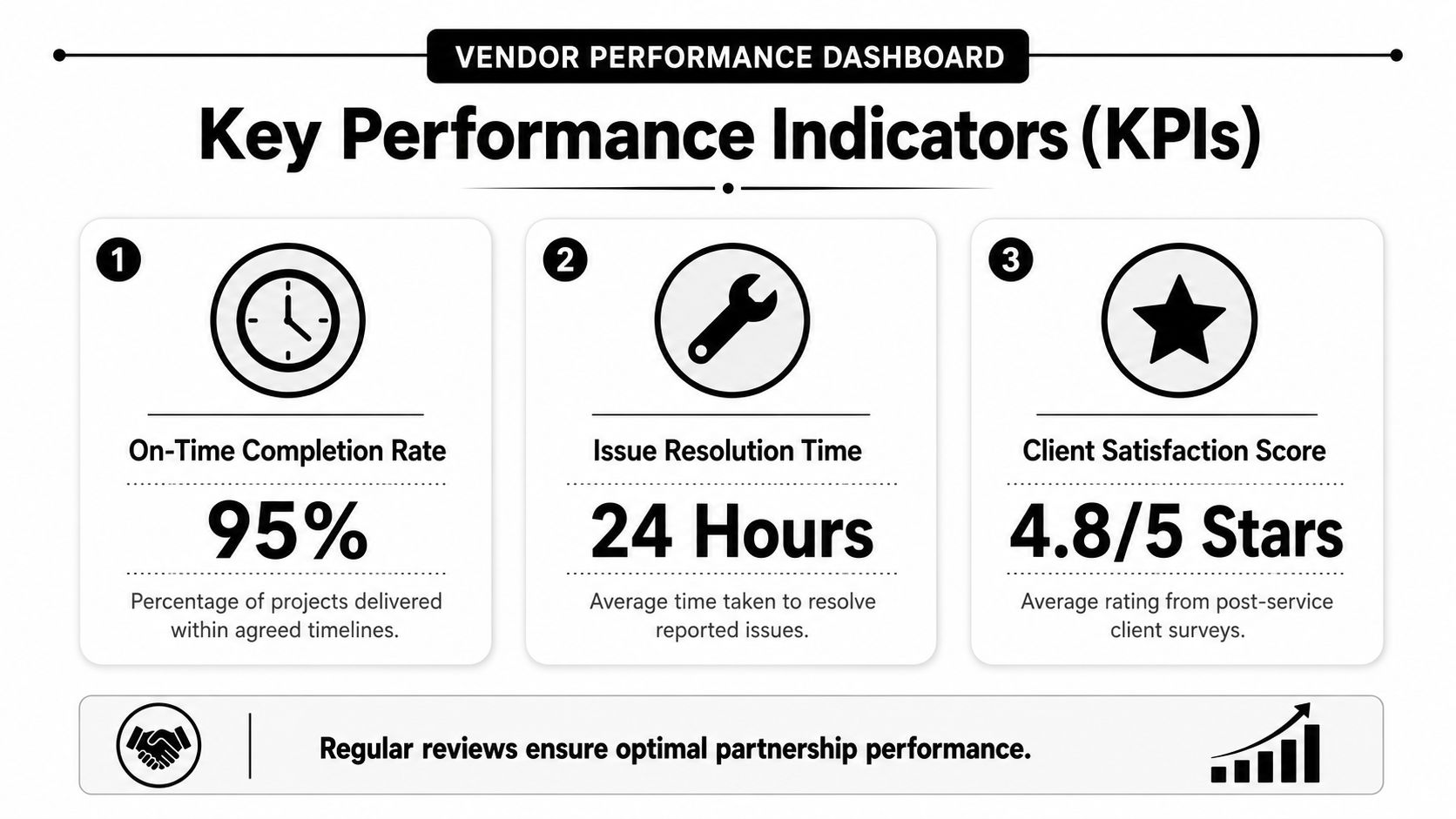
Good landlords keep a short bench of proven vendors and review that bench regularly. The goal isn't to create bureaucracy. The goal is to know who can be trusted with occupied units, urgent calls, and repeat work without constant supervision.
What to track after every job
You don't need a fancy platform to manage vendor performance. A spreadsheet, property management software notes, and a shared digital folder can do a lot if your team uses them consistently.
Track a few practical items:
- Timeliness: Did they show up when scheduled and finish when expected?
- Quality: Was the job completed correctly the first time?
- Communication: Did they update you clearly when something changed?
- Tenant impact: Was the resident comfortable with how the vendor handled the visit?
- Documentation: Did they provide photos, notes, and a clear invoice?
Keep a simple review rhythm
For core trades like plumbing, HVAC, electrical, and turnover cleaning, set a recurring review schedule. Semi-annual or annual works well for many landlords, but the exact rhythm should fit your volume and risk tolerance.
Use a short review agenda:
- Review completed jobs and any callbacks.
- Note patterns in scheduling, communication, and invoice accuracy.
- Confirm insurance and compliance records are still current.
- Decide whether the vendor stays preferred, stays backup, or comes off the list.
A vendor doesn't need to be perfect to stay on your bench. They do need to be consistent, accountable, and easy to work with when something goes wrong.
Build a bench, not a dependency
One of the biggest mistakes in vendor management is relying too heavily on one person. Even your best contractor gets booked out, takes vacation, changes territory, or shifts priorities.
Keep at least a primary and a backup for critical trades. Document what each one does well. One company may be better for emergency response, another for larger planned work, and another for tenant-sensitive occupied-unit jobs. That's normal.
The best vendor list isn't the longest one. It's the one where you know exactly who to call, for what, and why.
A disciplined vendor selection process saves money in a very unglamorous way. Fewer callbacks. Fewer disputes. Fewer rushed decisions. Less tenant frustration. That's how such savings materialize.
If you want help building a stronger vendor bench, tightening repair coordination, or taking the daily management burden off your plate, Edinhart Realty and Property Management works with California owners who want dependable systems, strict screening, and practical oversight that protects both the property and the tenant experience.


