

If you're staring at two rental websites and wondering how the same Tower District unit can seem underpriced on one platform and overpriced on another, you're not alone. This is one of the most common problems owners run into with Tower District rentals. The neighborhood looks simple from the outside. Strong location, historic character, steady tenant demand. In practice, pricing a unit here takes more judgment than most Fresno submarkets.
That confusion usually starts with a reasonable question. What should my property rent for right now? In the Tower, the answer depends less on a neighborhood average and more on the details that public portals often flatten out. A small upstairs apartment over an older storefront, a refreshed duplex near nightlife, and a renovated bungalow with parking may all sit under the same neighborhood label while competing in very different slices of the market.
The good news is that the Tower District is one of Fresno's clearest examples of why hyper-local analysis matters. Owners who understand the stock, the tenant profile, and the quirks of historic properties tend to price better, lease faster, and avoid the expensive cycle of chasing the market down after an optimistic list price misses.
The Enduring Appeal of the Tower District
On a good evening in the Tower, you can feel why people want to live there. Tenants aren't just renting square footage. They're renting proximity to local restaurants, older streets with personality, and a neighborhood that still feels like a real district instead of a disconnected collection of apartment complexes.

That appeal has roots in the way the neighborhood was built. The City of Fresno's Tower District design standards describe a historic mixed-use pattern where housing was often built on upper floors, tied to pedestrian activity and storefront continuity. That matters for landlords because it helps explain why the area still attracts renters who want an urban, walkable experience rather than a conventional suburban layout.
Why the neighborhood keeps pulling renters in
Tower District rentals benefit from a housing base that wasn't built all at once. According to the city's design standards and neighborhood housing data referenced there, the area has 2,864 homes, a median year built of 1928, and a majority of residents live in rental properties, all of which point to a mature rental ecosystem rather than a brand-new trend-driven market (Tower District design standards and neighborhood context).
Older neighborhoods can be fragile if they lose relevance. The Tower hasn't. Its charm still translates into demand because the housing stock matches the lifestyle people are seeking. Some tenants want a classic unit with built-ins and original character. Others want a renovated interior in the same location. Both groups are shopping for the district first.
The Tower rents on identity as much as utility. That's a strength, but only if the property actually delivers the experience tenants expect.
What owners should notice
Owners sometimes assume age is a liability. In the Tower, age can be an asset if it's paired with functionality. Historic architecture, upper-floor living, detached cottages, and mixed-use surroundings all create inventory that's hard to duplicate elsewhere in Fresno.
A few traits tend to hold attention with renters:
- Walkable surroundings: People choose the Tower because daily life feels closer and more connected.
- Distinctive housing types: A duplex, courtyard apartment, or vintage home often stands out more than a generic unit.
- Neighborhood recognition: The district has an identity tenants already understand before they tour.
That doesn't mean every old property performs well. Character helps open the door, but condition closes the deal. Landlords who maintain original appeal while fixing the practical pain points usually hold the strongest position in this neighborhood.
Decoding the Tower District Rental Market
The public data on Tower District rentals looks messy because it is messy. One portal can show what appears to be a modest neighborhood average, while another presents a much higher median. If you treat those figures as interchangeable, you'll price wrong.
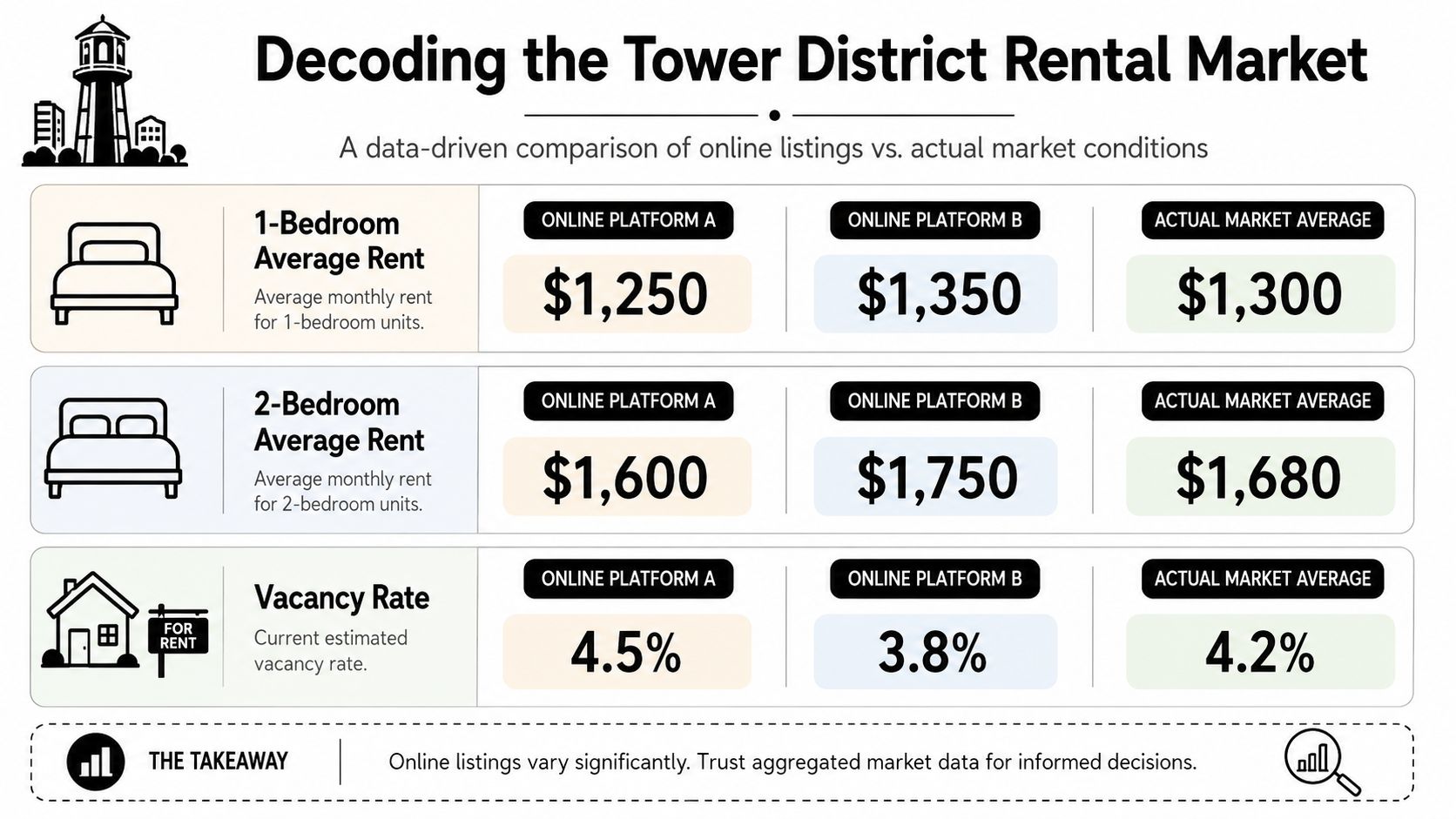
Apartments.com reports that as of June 2026, average rent in the Tower District is $873 for a studio, $758 for a one-bedroom, and $1,162 for a two-bedroom, while the same source shows January 2026 averages of $747, $750, and $1,152, and notes a 1.2% year-over-year increase in apartment rents (Tower District rent averages on Apartments.com). Realtor.com, by contrast, lists a median rental price of $1,395 for apartments in Tower District with 32 active rentals (Tower District apartment listings on Realtor.com).
Why Zillow-like portals and apartment sites don't line up
These numbers can both be true because they aren't measuring the same thing in the same way. In a neighborhood like the Tower, the dataset matters as much as the headline number.
Here are the main reasons the spread is so wide:
- Property type differences: A compact older apartment and a renovated house may both be tagged as Tower District rentals, but they don't compete for the same renter.
- Condition differences: New paint and basic cleanup don't move a property into the same pricing tier as a real kitchen and bath upgrade.
- Portal methodology: Some sites lean toward listed inventory snapshots, while others aggregate broader apartment data.
- Mixed stock: Historic units over retail, duplexes, cottage courts, and newer infill all sit in the same neighborhood bucket.
Public listing sources also show this wider affordability and data-quality problem directly. Apartments.com shows smaller-unit averages around $728 to $758, while Realtor.com reports a median rent of $1,395, and listing snippets from other portals often fall in the low-to-mid four figures. That spread is one reason owners and tenants alike struggle to answer what a realistic rent is. A new 18-unit apartment complex opening in central Fresno's Tower District is another reminder that comps can shift quickly in a mixed-stock area (ABC30 coverage of new Tower District apartments).
What a real pricing analysis looks at
A workable pricing opinion starts with the subject property, not the neighborhood average. That's the difference between internet browsing and valuation.
A solid comp review should look at:
| Factor | What matters in the Tower |
|---|---|
| Unit style | Vintage flat, duplex, bungalow, mixed-use unit, or newer infill |
| Interior finish | Original but clean, partially updated, or fully renovated |
| Functional layout | Small but efficient layouts often outperform awkward larger units |
| Parking and access | Off-street parking, private entry, and laundry can meaningfully change demand |
| Micro-location | Being in the Tower isn't enough. The immediate block still matters |
Practical rule: Never set rent off a neighborhood average alone in the Tower District. Set it off the closest true substitutes.
If you want a broader market baseline before narrowing down to the Tower, this overview of the average rent in Fresno, CA can help frame where the district sits relative to the rest of the city. After that, the critical next step is comparing your property to units tenants would choose instead.
What Today's Tower District Tenants Want
Tower tenants usually aren't looking for the same thing as renters in a newer suburban complex. They expect personality. They also expect the basics to work without excuses.
That combination trips up a lot of owners. A charming unit with bad lighting, tired flooring, weak cooling, or slow maintenance won't hold attention for long. In this neighborhood, tenants often forgive modest square footage. They rarely forgive inconvenience.
Charm has to be livable
The strongest-performing Tower District rentals usually blend older character with a few targeted upgrades. You don't need to erase the age of the property. You do need to remove the daily friction.
Tenants respond well when owners focus on the spaces they use hardest:
- Kitchens that feel usable: Good cabinet condition, functional counters, and dependable appliances matter more than flashy finishes.
- Bathrooms that feel clean and current: Fresh tile work, proper ventilation, and quality fixtures carry real weight.
- Lighting and paint: Historic units can feel dark. Better lighting and the right paint palette change that quickly.
- Laundry and storage: Even limited storage helps if it's well thought out.
Lifestyle fit matters more than generic amenities
Tower renters often choose the neighborhood because they want local identity and a sense of place. They care about whether the home fits that lifestyle. A pet-friendly policy, a small outdoor area, bike storage, or a front porch that feels usable can matter more than amenities that read well in a listing but don't improve daily life.
Responsive management also plays an outsized role here. Older housing needs more attention. Tenants know that. What they want is confidence that repairs won't get delayed or minimized.
If you own an older rental in the Tower, maintenance response is part of the product, not a back-office function.
Help tenants settle in without damaging the unit
Owners sometimes underestimate how much stable tenants value personalization. Renters stay longer when the home feels like theirs, but they also need practical ways to do that without creating wall damage or fixture issues. Sharing resources like these damage-free rental decorating tips can reduce wear by steering tenants toward removable, low-risk options.
A few smart policies help:
- Be clear about alterations: Spell out what's allowed before move-in.
- Approve simple upgrades case by case: Curtain hardware, removable shelving, and garden touches can be worth allowing.
- Document condition thoroughly: Photos and written checklists protect both sides.
The owners who do well here don't just advertise a vacancy. They shape a living experience that matches what Tower renters came for in the first place.
Essential Landlord Practices for Success
The Tower can be forgiving on demand and unforgiving on execution. A well-run property often keeps tenants longer and avoids the constant turnover that eats up returns. A poorly run one can drift into deferred maintenance, pricing mistakes, and resident issues that were preventable from the start.
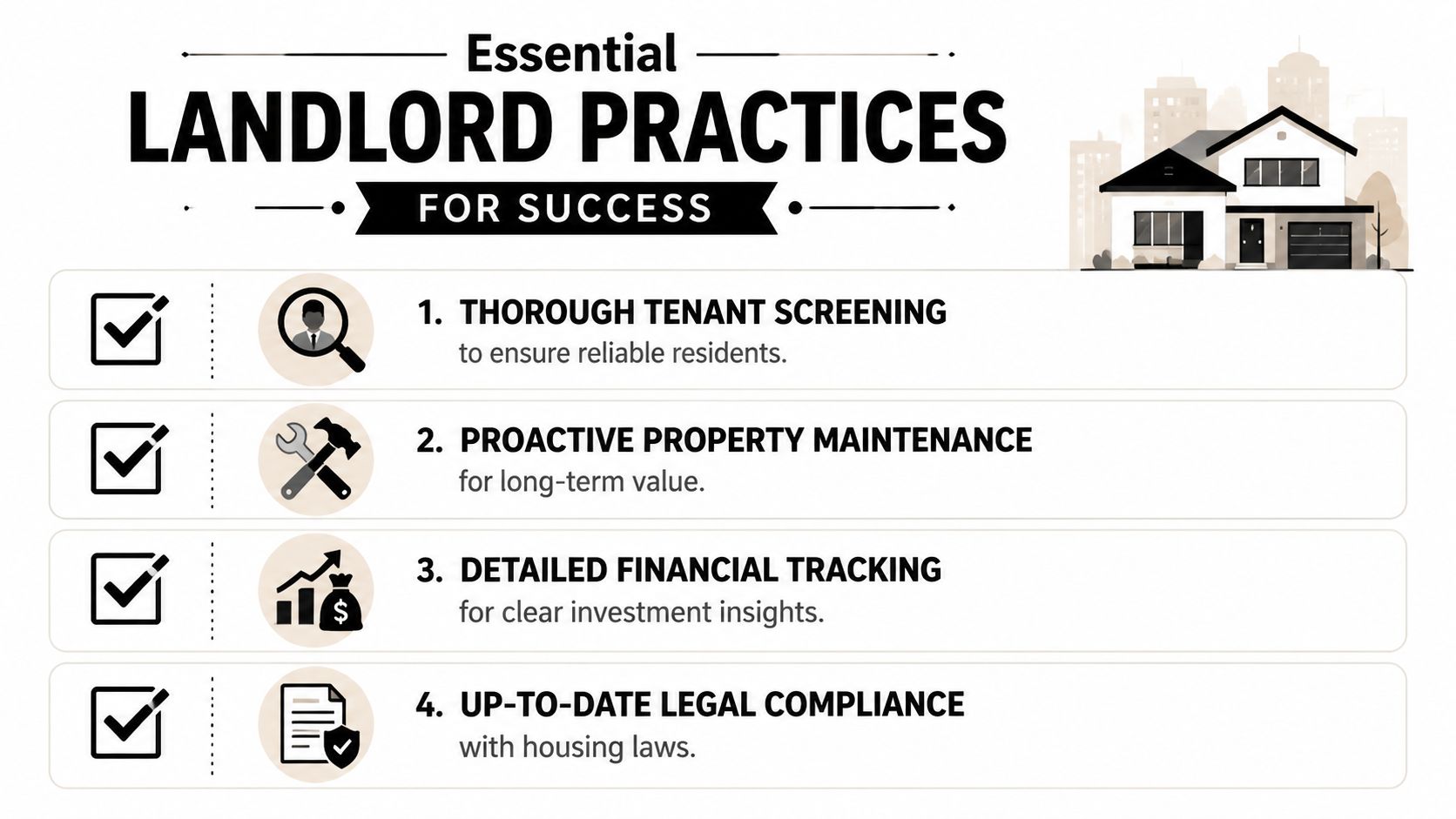
Price for the unit you have
In the Tower, strategic pricing starts with honesty. Owners get in trouble when they price for the version of the property they intend to create later, not the one a tenant sees today.
A practical pricing process usually includes:
- Current condition review: Deferred paint, worn flooring, and dated baths all affect where the unit sits.
- Comp selection discipline: Pull from properties with similar age, finish level, and utility setup.
- Market response monitoring: If inquiries are weak or showings don't convert, the market is telling you something.
One detail owners often miss is flooring. In older rentals, the wrong flooring choice creates repeated turnover costs. Before replacing surfaces, it's worth reviewing this expert flooring advice for real estate to think through durability, maintenance, and fit for rental use.
Screen thoroughly and consistently
Tenant screening is where many future problems either get prevented or get invited in. In a neighborhood with mixed housing types and broad renter demand, it's easy to rush because interest feels strong. That's exactly when standards slip.
Good screening isn't about being aggressive. It's about being consistent, documented, and fair.
- Verify income carefully: Use the same process for each applicant.
- Review rental history in context: Look for patterns, not just isolated issues.
- Match applicant fit to property type: A tenant who works well in a detached home may not be ideal for a tightly shared building.
A vacancy is expensive. The wrong placement is usually more expensive.
Maintain proactively instead of reactively
Historic properties punish delay. A small plumbing issue, roof concern, or HVAC complaint can expand quickly if no one addresses it early. Proactive maintenance also affects retention because tenants in older units pay close attention to whether ownership takes the property seriously.
Routine owner habits should include seasonal inspections, documented vendor follow-up, and a clear repair triage system. Even simple items like exterior lighting, locks, and drainage should never wait until turnover.
Stay current on California compliance
Legal compliance isn't a side task in California. It's part of operating the asset correctly. Lease forms, notices, habitability standards, fair housing practices, and documentation all need to stay current.
For owners managing on their own, this overview of California landlord-tenant law is a useful starting point. It won't replace legal advice for specific disputes, but it does highlight why informal habits create risk. The landlords who operate cleanly tend to treat screening, maintenance, accounting, and compliance as one connected system rather than separate chores.
How Professional Management Maximizes Your Investment
Some owners enjoy being hands-on. Others have reached the point where self-management is costing them too much time, too much uncertainty, or too many pricing mistakes. Tower District rentals can be especially management-sensitive because the housing stock is varied and the right rent isn't obvious from a quick search.
A professional manager's value usually shows up in places owners don't see on day one. Better listing presentation. Tighter leasing procedures. Cleaner documentation. Faster repair coordination. More realistic pricing. Those things don't feel dramatic individually, but together they reduce drift.
Where owners usually lose money on their own
Most self-managing landlords don't fail because they don't care. They lose ground because they make reasonable decisions with incomplete information.
Common pressure points include:
| Challenge | What professional oversight can improve |
|---|---|
| Pricing uncertainty | More accurate rent positioning based on true competing inventory |
| Marketing quality | Better photos, listing copy, and showing coordination |
| Screening risk | More consistent applicant review and lease preparation |
| Repair handling | Faster vendor coordination and cleaner communication |
| Recordkeeping | Better statements, tracking, and move-in or move-out documentation |
That matters in the Tower because every one of those tasks is influenced by the neighborhood's mixed inventory. Older unit. Newer infill. Small multifamily. Detached home. Each needs a slightly different leasing approach.
Two management models can fit different owners
Not every owner needs the same level of help. Some want full support because they're out of town, busy, or done with handling day-to-day tenant issues. Others mainly want stronger placement, then prefer to manage the tenancy themselves.
One local option is Fresno property management through Edinhart Realty and Property Management, which offers both a full-service monthly management model and a placement-only service. That means an owner can choose ongoing handling of rent collection, repair coordination, tenant communication, renewals, and accounting, or use professional marketing, screening, and lease drafting while retaining direct control after move-in.
That kind of flexibility is useful for Tower owners because the right setup depends on distance, experience, and how much operational work they want to carry.
A quick look at what owners should expect from a management process can help make that choice more concrete.
Management is often a risk decision, not just a time decision
Owners sometimes frame management as a convenience purchase. In practice, it's often a risk-control decision. If pricing is off, the unit sits. If screening is loose, turnover and collections issues get more likely. If notices or forms are sloppy, small disputes become larger ones.
Professional management doesn't remove every problem. It does create process around the problems that tend to hurt returns most. In a neighborhood where public data is noisy and property types are highly variable, process has real value.
The owner who knows the exact rent range, markets the unit well, screens consistently, and documents everything usually isn't relying on luck.
Take the Next Step for Your Tower District Property
Tower District rentals can be excellent long-term assets, but they don't respond well to generic decision-making. This is a neighborhood where broad averages often blur the truth. The right rent for a property depends on its exact condition, layout, block, finish level, and the tenant it is likely to attract.
If you're an owner, the practical next step isn't guessing which portal got it right. It's getting a property-specific rental analysis based on real competing inventory. That lets you answer the questions that matter. Is the unit under-improved for the rent you're hoping to charge? Are you leaving money on the table because the presentation is too weak? Would a few targeted upgrades move the property into a better pricing bracket?
A simple way to move forward
Use this checklist before you list:
- Walk the property as a renter would. Note every point of friction, not just major defects.
- Separate neighborhood reputation from unit quality. The Tower name helps, but tenants still compare condition closely.
- Review true substitutes, not just nearby addresses. A bad comp set causes bad pricing.
- Decide how hands-on you want to be after move-in. Leasing is only the first stage.
If you already have a rental in the Tower and the numbers you're seeing online don't agree, that's normal. The neighborhood's mix of historic apartments, houses, duplexes, and updated units creates more pricing noise than many Fresno owners expect. The solution isn't more browsing. It's better analysis.
The owners who perform best here usually make one disciplined move first. They get a realistic rent opinion before they list, renovate, or renew.
If you own a Tower District rental and want a clearer answer on pricing, leasing strategy, or management fit, Edinhart Realty and Property Management is a practical place to start. A focused rental analysis can help you compare your property against the right comp set and make a smarter decision before the listing goes live.


