

Your tenant has scheduled the movers, and you're already arranging painters and the next listing photos. Then the questions arrive. Does the carpet need cleaning? Can the tenant leave a shelving unit? When will the deposit come back?
Move-out disputes often start before anyone checks the oven. A vague departure date, an undocumented walkthrough, or a repair bill without supporting photos can turn an ordinary turnover into a lengthy argument. Meanwhile, contractors need instructions, utilities need to stay on, and the next tenant needs a realistic possession date.
A tenant check out checklist should connect those decisions, not just list surfaces to clean. Start with written notice, give the tenant clear correction opportunities, record the condition when possession returns, and reconcile the deposit against actual evidence.
Keep one file for each tenancy, with a named person responsible for updating it. That file should let someone unfamiliar with the property understand what changed, why work was necessary, and how you calculated any charge. The practical standard is simple: another person should be able to follow your decision without needing your memory.
1. Written Notice to Vacate and Lease Review
Start by confirming what the tenant intends. A message saying they're “moving next month” isn't a useful scheduling record. Ask for written confirmation of the property address, intended departure date, and who is giving notice.
Review the lease alongside the notice. Check the tenancy end date, applicable notice provisions, early-termination terms, cleaning instructions, and responsibility for utilities and outdoor areas. Don't assume the tenant's preferred moving date automatically ends their rent obligation.
Confirm the dates before booking vendors
Say a Clovis tenant emails that they've accepted a job elsewhere and plans to leave before the lease ends. Reply with the proposed handover arrangements and explain which financial questions still need resolution. Don't imply that accepting keys automatically settles those questions.
Keep the notice process clear enough for everyone handling the turnover to follow.
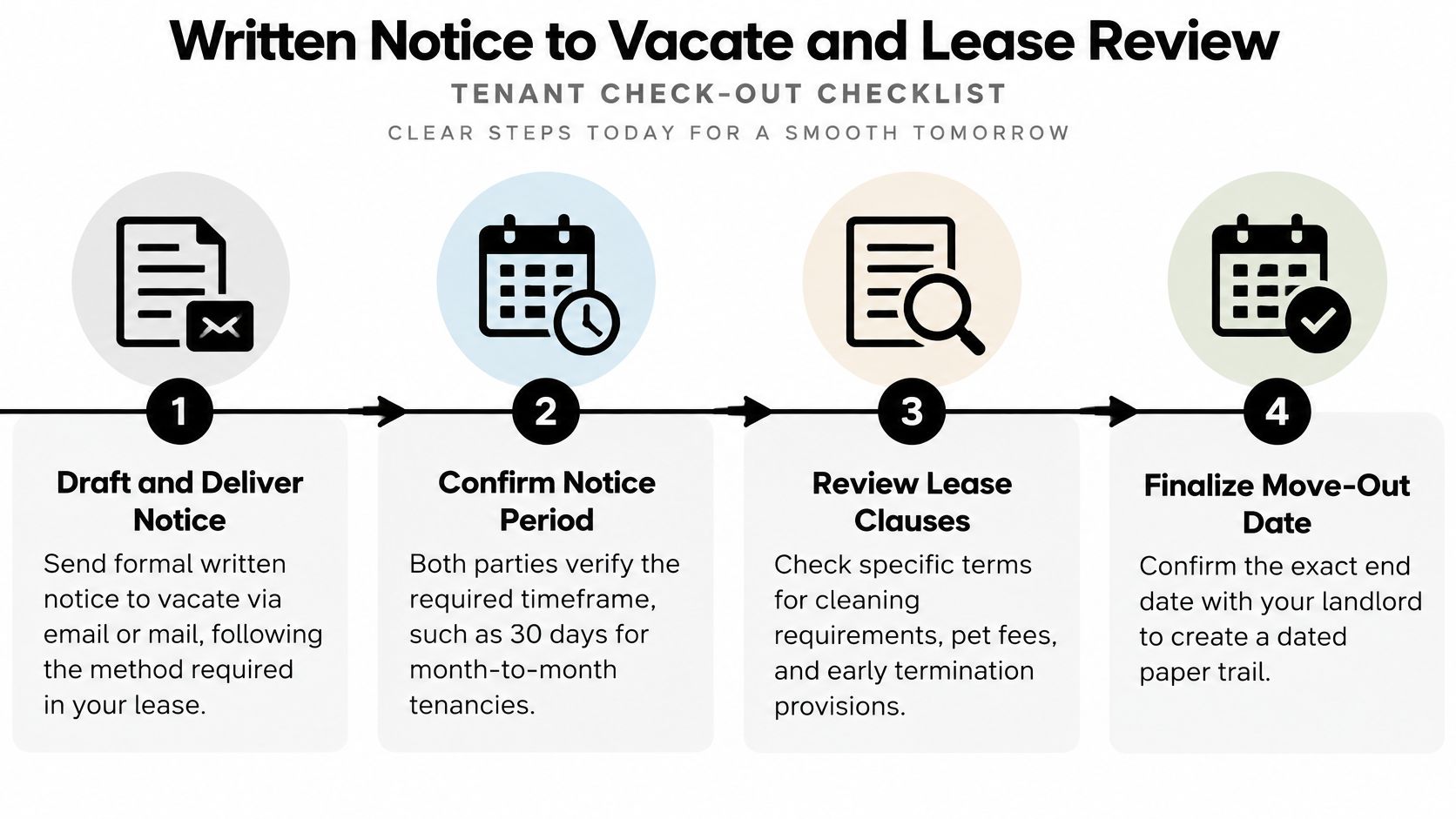
- Save the original notice. Preserve the email, attachment, or signed document, not just your summary.
- Acknowledge it in writing. State the anticipated handover date and identify unresolved lease issues.
- Send move-out instructions. Include cleaning expectations, access-device returns, inspection arrangements, and a forwarding-address request.
This is also the time to create your turnover calendar. Keep the anticipated departure date separate from the date possession is returned, and update the record if circumstances change.
2. Scheduled Pre-Move-Out Inspection
Offer the inspection before discussing deductions as settled charges. Under California Civil Code §1950.5, after either party gives notice ending the tenancy, the landlord must provide written notice of the tenant's right to request an initial inspection and attend it; if requested, it must occur at a reasonable time during the final two weeks of the tenancy.
After the inspection, provide an itemized statement identifying proposed cleaning or repair deductions so the tenant can address qualifying problems before leaving. This is an advisory inspection, not a final deposit calculation. Furniture may still conceal damage, and moving can change the condition afterward.
Use a consistent landlord move-out inspection checklist to keep the walkthrough focused on specific conditions rather than broad demands.
Describe the correction, not just the complaint
For a Fresno rental, you might identify grease inside the oven and a damaged cabinet hinge. Record the location, observed condition, and corrective work needed. Don't describe ordinary scuffing as damage without comparing it with the move-in record.
Practical rule: Give tenants instructions they can act on. “Remove grease from the oven interior” is useful. “Leave everything perfect” isn't.
Retain the inspection offer, tenant's response, scheduling confirmation, inspection notes, and delivered correction statement. Note inaccessible areas without guessing about their condition. At the final walkthrough, check whether the identified work was completed.
3. Documented Final Walkthrough with Photos and Video
Inspect after belongings have been removed and possession has returned, before cleaners or contractors change the evidence. An empty room makes floor damage, concealed stains, and missing fixtures easier to identify.
Photograph the untouched condition before beginning repairs.
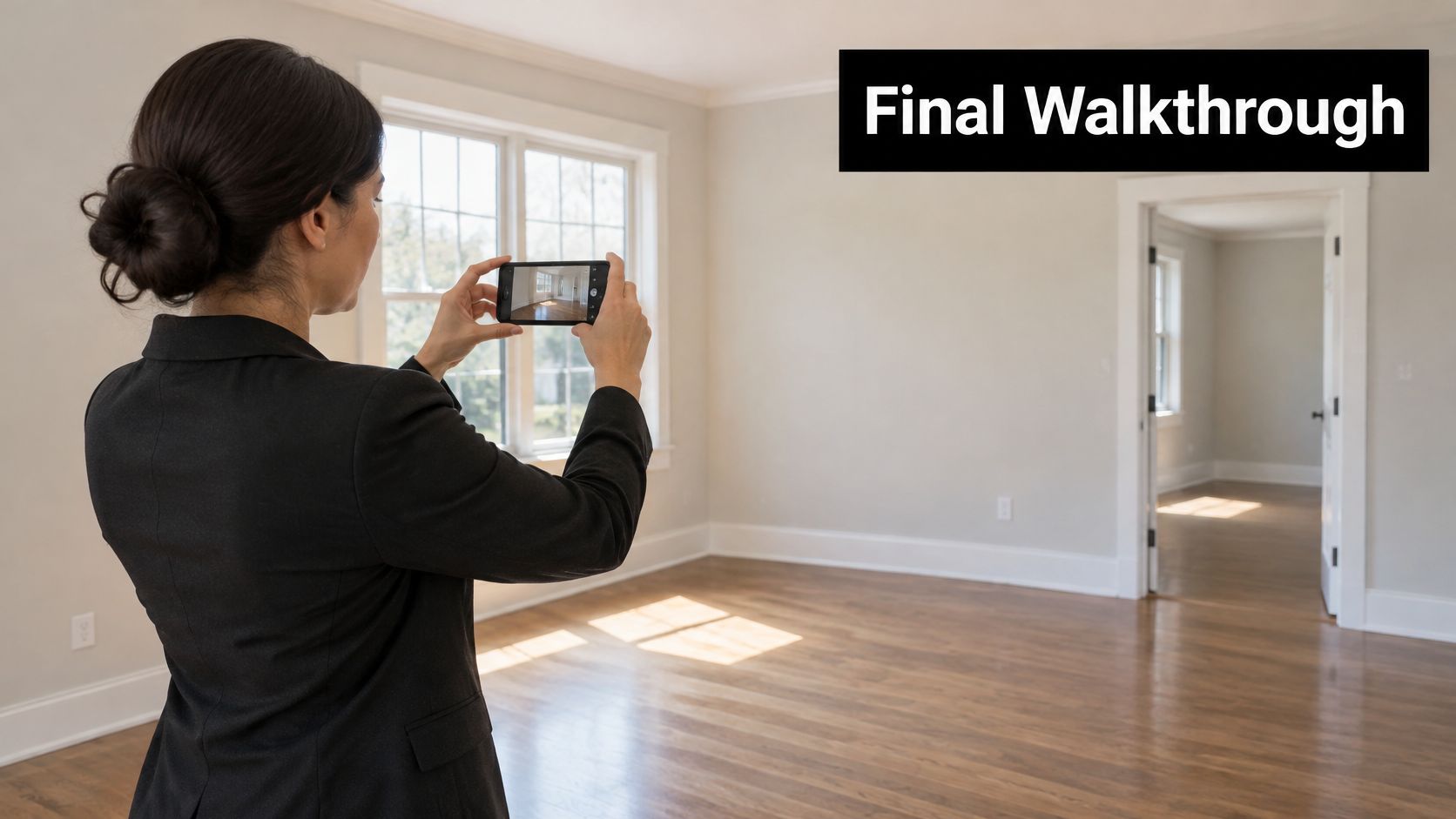
Canada Mortgage and Housing Corporation's inspection guidance recommends jointly completing, signing, and dating condition reports at move-in and move-out, then comparing the property's condition. That comparison is useful inspection practice, not a substitute for California's requirements.
Capture context and detail
For a scratched kitchen floor, photograph the room, the affected floor section, and the scratch close enough to show its character. Use substantially matching move-in angles where available. Preserve original files and timestamps rather than relying on compressed screenshots.
Check appliance operation, faucets, drains, doors, windows, lighting, and smoke and carbon monoxide devices. Record what you tested and what you couldn't test. Don't turn a suspected defect into a confirmed diagnosis.
Use the walkthrough video as supplementary context, not a replacement for clear still photographs and written findings.
Save the signed checklist when available, or document who attended and whether anyone declined to sign. An acknowledgment of receipt shouldn't be presented as agreement to every deduction.
4. Cleaning to Move-In Condition
Judge cleanliness against the documented starting condition, not the standard you'd prefer for your next listing. A turnover refresh and a tenant cleaning obligation aren't necessarily the same expense.
Give tenants the rental property cleaning checklist before their final cleaning. Specific instructions help them prioritize appliance interiors, cabinet shelves, bathroom fixtures, window tracks, and storage areas instead of spending all their time on visible countertops.
Inspect those surfaces before a cleaner starts work.

For example, a Clovis tenant may leave the living areas clean but overlook food residue in the refrigerator drawers. Scope the required cleaning to the actual shortfall rather than automatically billing for a whole-house service.
- Specify the work. Identify dirty surfaces and rooms in the cleaning order.
- Separate owner work. Keep renovation cleanup and marketing preparation off the tenant's cleaning bill.
- Retain evidence. Save before-and-after photos, the cleaner's scope, and the invoice.
A service description such as Clean Space SA move-out cleaning can help you compare what a cleaning package includes. It doesn't establish a California tenant's obligations or prove a charge is deductible.
Schedule contractor cleanup before final floor cleaning whenever possible. Otherwise, you may pay to clean the same surfaces again after painters and repair crews leave.
5. Distinguishing Tenant Damage from Normal Wear and Tear
A worn carpet and a burned carpet require different decisions. Both may need attention before leasing, but the owner doesn't automatically get to charge the tenant for either replacement.
The HUD move-in/move-out inspection form uses a condition comparison to distinguish tenant-caused damage from ordinary deterioration when assessing permissible deductions. Build your review around that comparison rather than the repair invoice alone.
Classify the finding before assigning its cost
Use separate categories for normal wear, cleaning, owner maintenance, and probable tenant-caused damage. This prevents a contractor's turnover punch list from becoming an unsupported deposit statement.
Say a bathroom vanity has water damage. Inspect the supply connections, review prior leak reports, and ask the contractor to describe the likely cause. A failed plumbing connection and damage worsened by an unreported problem aren't interchangeable explanations.
A repair bill proves that work was performed. It doesn't, by itself, prove the tenant caused the problem.
For damaged carpet or paint, consider its age, original condition, and remaining useful life before calculating a charge. Don't use the deposit to replace an already worn item at full new cost without a supportable basis.
Your record should include the baseline condition, current photographs, maintenance history, cause assessment, repair scope, and calculation. Explain the result plainly. “Burned area beside the bedroom doorway” is more useful than “carpet damage,” especially when the tenant disputes responsibility.
6. Return of Keys, Remotes, and Access Devices
Treat key handover as an inventory reconciliation, not a quick exchange on the driveway. Compare what comes back with what was issued during the tenancy, including replacements and additional copies you authorized.
A tenant may return the front-door keys but forget a mailbox key, garage remote, or community access card. Discovering that omission when the next resident arrives wastes time and creates an avoidable access problem.
Close physical and digital access together
Record the handover date, time, person returning the devices, and any missing items. Confirm the possession arrangements separately if belongings remain or the tenant says they still need entry.
- Physical devices. Log door keys, mailbox keys, garage remotes, gate transmitters, and access cards.
- Digital permissions. Remove smart-lock users, temporary PINs, app invitations, and contractor permissions that shouldn't remain active.
- Security work. Keep locksmith invoices and code-reset records with the turnover file.
For a Fresno house with a smart lock, deleting the former resident's app invitation may not remove every active entry code. Check the lock's user list and test the replacement access arrangements.
Security work and tenant liability are separate decisions. You may choose to rekey between tenancies as an owner precaution. Don't automatically charge that routine expense to the departing tenant. Evaluate missing-device costs against the lease, actual circumstances, and applicable law, then document the basis for any proposed deduction.
7. Utility Transfers and Final Meter Readings
A vacant property still needs working utilities for inspection, repairs, cleaning, and safe operation. Coordinate the account transition before departure instead of discovering a shutoff when the cleaner arrives.
First identify which services are tenant-held, owner-held, or billed through another arrangement. Electricity, gas, water, sewer, and trash may follow different processes. Don't assume the same transfer instruction works for every provider.
For a Clovis rental, the tenant might schedule electricity service to end on departure while the owner arranges vacancy service. Confirm the effective dates with the provider and keep written confirmation where available.
Record the reading and the account boundary
Photograph accessible utility meters during the walkthrough. Include the meter identifier as well as the reading so the image can be matched to the correct property. Don't open sealed equipment or attempt utility work yourself.
- Save account confirmations. Record service-ending and service-starting arrangements without collecting unnecessary account credentials.
- Log equipment status. Note thermostat settings, water-heater status, and appliances left operating.
- Review later bills. Separate tenant-period usage from vacancy consumption and fixed charges.
A final bill that arrives after move-out isn't automatically the tenant's entire responsibility. Check its service dates and billing basis before allocating it.
Keep utility accounting separate from the maintenance decision to leave services operating. If you're arranging landscaping, pool care, or leak monitoring during vacancy, give vendors clear instructions about the active services they can rely on.
8. Forwarding Address and Security Deposit Return
Collect the forwarding address in writing before the tenant disappears into the moving process. Confirm the recipient's name and retain the original message so an address transcription error doesn't derail delivery.
The California Courts security-deposit guide requires landlords to return the deposit or send the remaining balance with an itemized deduction statement within 21 days after the tenant vacates, and generally requires supporting invoices or receipts when deductions exceed $125. If qualifying work remains unfinished, provide the required accounting on time and follow the applicable rules for estimates and later final documentation.
Keep the return paperwork connected to the inspection evidence.

Prepare the packet while work proceeds
For a Fresno rental awaiting a repair invoice, don't leave the entire accounting untouched until the vendor responds. Prepare the ledger, organize photographs, and identify the documentation still outstanding. Use the security deposit laws guide alongside current requirements when checking your process.
Deadline control: A delayed invoice is a task to manage, not permission to postpone the deposit accounting.
Save the statement, supporting documents, payment record, and delivery evidence. If the forwarding address is missing, follow the applicable delivery rules rather than treating the missing address as an extension. Assign a backup reviewer so an absent manager doesn't leave the packet unsent.
9. Removal of Belongings, Trash, and Hazardous Materials
Check garages, patios, sheds, closets, and other included storage areas during the possession walkthrough. Record leftover items then, even though their removal and accounting may continue afterward.
Don't treat all remaining property as trash. A bag of household rubbish, a couch, and a box of personal records require different handling. A lease provision alone doesn't mean you can immediately discard belongings.
Document before moving anything
Say a tenant leaves furniture in a Friant garage and cleaning chemicals under the sink. Photograph each location, make an inventory, and separate obvious waste from belongings that may require notice and storage. Follow California's abandoned-property procedures before disposing of personal property.
For chemicals, batteries, solvents, or unknown containers, use the appropriate local disposal route. Don't pour liquids into drains or put hazardous materials into ordinary trash. Keep containers upright and avoid mixing their contents.
- Condition record. Photograph the items where you found them, including labels when safe.
- Communication record. Preserve messages about collection, ownership, or permission to remove items.
- Cost record. Retain storage, hauling, and disposal documentation and identify the work performed.
If you agree to accept a shelving unit for the property, document that agreement. Otherwise, the tenant may believe they left a useful improvement while you believe they left a removal bill.
Only include supported, legally permissible charges in the deposit assessment. A hauling receipt supports the expense, but it doesn't eliminate the need to justify responsibility and proper handling.
10. Final Rent Proration and Account Settlement
Reconcile the tenant ledger before approving the deposit calculation. Review rent charges, payments, credits, reversals, and any other outstanding amounts against the lease and supporting records.
Moving out before a billing period ends doesn't automatically mean the tenant owes rent only through the moving date. Confirm the legally effective termination date, any written agreement, and applicable obligations before deciding whether proration is appropriate.
Show the calculation without double charging
For example, a Fresno tenant may have a repair credit that never reached the ledger. Apply that credit before calculating the balance. If an early departure requires a more complex rent assessment, resolve the basis rather than using the key-return date as a shortcut.
- Rent calculation. State the period charged and explain any permitted proration method.
- Credits and payments. Match receipts and approved adjustments to the ledger.
- Deposit application. Show exactly which supported amounts were deducted.
- Remaining balance. Identify the refund due or separately explain any amount still claimed.
Keep owner improvements, routine turnover maintenance, and tenant-responsible work in separate accounting categories. A vendor invoice may contain all of them, so review individual line items instead of posting the total against the deposit.
Finally, compare the ledger with the itemized statement and payment. The figures must reconcile across every document. Save the approved version and document later corrections rather than replacing the original record.
How Each Tenant Check Out Checklist Item Compares
| Item | Primary Responsibility | Key Deadline or Timing | Main Evidence Needed | Common Dispute Risk |
|---|---|---|---|---|
| Written Notice to Vacate and Lease Review | Tenant gives written notice; both parties confirm lease terms and move-out date | Follow the lease notice period; commonly 30 days for month-to-month tenancies | Dated notice, delivery record, landlord acknowledgment, lease | Disagreement over notice period or tenancy end date |
| Scheduled Pre-Move-Out Inspection | Landlord offers an inspection; tenant can request one and address listed issues | Typically during the final two weeks of the tenancy | Written inspection list and confirmation of the inspection | Disagreement over whether issues were identified or corrected |
| Documented Final Walkthrough with Photos and Video | Property manager and tenant document the vacant unit's condition | After belongings are removed, near move-out | Time-stamped photos and video, signed checklist, move-in condition records | Poor documentation or disagreement about pre-existing damage |
| Cleaning to Move-In Condition | Tenant cleans the unit to a condition similar to move-in, excluding normal wear | Before returning keys and vacating | Move-in condition records, cleaning checklist, cleaning receipts if applicable | Disagreement over cleaning standards or charges |
| Distinguishing Tenant Damage from Normal Wear and Tear | Landlord classifies and supports any damage-related deductions | During deposit accounting after move-out | Move-in and move-out records, photos, repair estimates, itemized explanation | Disputes over wear versus damage, depreciation, or repair costs |
| Return of Keys, Remotes, and Access Devices | Tenant returns issued access items; property manager records receipt and resets codes | At the walkthrough or key handover | Key and device log, written acknowledgment of return | Missing keys or disputed rekeying costs |
| Utility Transfers and Final Meter Readings | Tenant closes or transfers accounts; owner arranges continued service as needed | Set dates to align with move-out and next occupancy | Account confirmations, meter readings, photos, account responsibility record | Billing gaps or charges for usage after move-out |
| Forwarding Address and Security Deposit Return | Tenant provides a forwarding address; landlord sends the deposit or itemized deductions | Deposit or statement due within 21 days after vacating | Written forwarding address, itemized statement, receipts or invoices, payment record | Missed deadline, incomplete address, or unsupported deductions |
| Removal of Belongings, Trash, and Hazardous Materials | Tenant clears the unit and included storage areas | By the move-out deadline | Walkthrough photos, disposal or hauling receipts | Disputes over abandoned property, disposal costs, or hazardous waste |
| Final Rent Proration and Account Settlement | Parties settle rent, credits, fees, and other lease charges | At final accounting after move-out | Final ledger, lease, payment history, proration calculation | Errors in proration or disagreement over fees and balances |
Turn This Checklist into a Repeatable Move-Out Routine
A dependable move-out process starts when notice arrives and ends when the financial record is complete. Cleaning matters, but it's only part of the work. The stronger protection comes from connecting each condition finding to the baseline, the corrective opportunity, the completed work, and the final accounting.
Run this tenant check out checklist in order, while allowing related tasks to overlap. Collect the forwarding address early, check belongings during the final walkthrough, and prepare the ledger while contractors finish authorized work. Don't postpone administrative tasks because a repair remains open.
Give each turnover a clear owner
Assign someone to maintain the file and someone to review the deposit decision before it goes out. For a self-managing landlord, that can mean setting aside a separate review session rather than approving charges while answering contractor calls. The review should test the evidence, not just the arithmetic.
- Check the sequence. Preserve notice, inspection communications, possession records, and delivery confirmations.
- Check the explanation. Connect every proposed deduction to a specific condition and a permissible basis.
- Check the cost. Separate tenant responsibility from owner maintenance and improvements.
- Check completion. Confirm the refund, statement, supporting documents, and ledger agree.
Keep turnover planning separate from deposit assessment. You may decide to repaint, replace flooring, or upgrade fixtures to improve the next tenancy. Those can be sensible ownership decisions without becoming charges against the departing resident.
Standardized records also help you plan future work. If inspection files repeatedly show the same cabinet hardware failing or moisture appearing in the same location, investigate the underlying maintenance issue. Don't keep treating a recurring building problem as a new tenant problem.
For owners who want coordinated support, Edinhart Realty and Property Management handles move-out coordination, property condition images, and exit reconditioning coordination through its full-service management offering. We also provide monthly statements showing income and expenses, helping owners keep turnover spending connected to their property accounts.
The aim isn't to retain as much of the deposit as possible. It's to return what belongs to the tenant, support any lawful deductions, and prepare the home without unnecessary delays or duplicate work.
Edinhart Realty and Property Management coordinates move-outs, documents property condition, and arranges exit reconditioning so owners don't have to manage each handoff alone. Visit Edinhart Realty and Property Management or call 559-400-5011 to discuss your rental and arrange a time for us to review the property.


