

When you sell a house as-is, you're sending a clear signal to buyers: what you see is what you get. You won’t be making repairs or offering credits for issues that pop up during inspections.
But let's clear up a common myth right away. Selling as-is isn't a get-out-of-jail-free card for hiding problems. Here in California, the law is crystal clear—you still have to disclose everything you know about the property’s condition.
So, What Does Selling a House As-Is Really Mean?
"As-is" is probably one of the most tossed-around—and misunderstood—phrases in real estate. It’s all about setting expectations right from the start. When you list your home this way, you're telling the world, "The property is for sale in its current state, flaws and all."
The price is set to reflect that condition, and the buyer agrees to take on the responsibility for any and all repairs down the line.
Now, this doesn't mean buyers skip their due diligence. Quite the opposite. Most as-is sales are still contingent on inspections. A buyer will bring in their own pro to go over the home's structure, systems, and every component with a fine-toothed comb. The real difference is what happens after you get that inspection report.
- In a traditional sale, the buyer might hit you with a list of requested repairs or ask for cash back to cover the costs.
- In an as-is sale, the buyer's choices are pretty simple: either they accept the property with all its quirks and flaws, or they walk away (assuming their contract has an inspection contingency).
A Real-World Fresno Scenario
Let's say you inherit an older home in a classic Fresno neighborhood. It's got great bones, but it's a total time capsule—think knob-and-tube wiring, old galvanized plumbing, and a kitchen straight out of the 1970s.
You're at a crossroads. You could pour tens of thousands of dollars and months of your life into a massive remodel, hoping to get top dollar.
Or, you could sell it as-is.
This path lets you sidestep the financial drain and the massive headache of managing a renovation. Instead of juggling contractors, you focus on being completely transparent. You disclose the dated electrical and plumbing systems, gather any old repair estimates you might have, and just present the home honestly.
By doing this, you're changing the story. The property isn't a "fixer-upper" you're trying to downplay; it's an opportunity for the right kind of buyer. This strategy tends to attract a very specific crowd:
- Investors and flippers: They see the untapped potential and know exactly how to turn a profit after they handle the updates.
- DIY-savvy homeowners: They're hunting for a home in a great location and are excited to put in the sweat equity to make it their own.
The whole point of an "as-is" sale isn't about hiding defects. It’s about transferring the responsibility for fixing them to the next owner. Full, transparent disclosure is your best friend and your strongest protection against legal trouble later.
Why Disclosure is Non-Negotiable in California
California law comes down hard on a seller’s duty to disclose. Selling your home "as is" absolutely does not let you off the hook.
You must fill out the Transfer Disclosure Statement (TDS) and other required forms, listing every single significant issue you know about—from a leaky faucet under the sink to cracks in the foundation. For a really deep dive into selling your house in its current condition, check out this ultimate guide to selling a property as-is.
Trying to hide a known problem can land you in serious hot water, even long after you've handed over the keys. If a buyer can prove you knew about an issue and didn't disclose it, they can sue you for damages. Honesty isn't just good practice; it's a legal requirement that builds trust and makes for a much smoother sale for everyone.
Weighing the Pros and Cons of an As-Is Sale
Deciding to sell your house "as is" is one of the biggest crossroads you'll face as a homeowner. It's a strategic choice, often trading a potentially higher sale price for a much faster and simpler process. For some people here in California, it's the perfect answer. For others, it’s like leaving cash on the table.
Before you jump in, you need to understand both sides of the coin to make a decision you'll feel good about. Let's get real about what you gain—and what you might be giving up—by going the as-is route.
This simple decision tree can help you visualize that first big question.
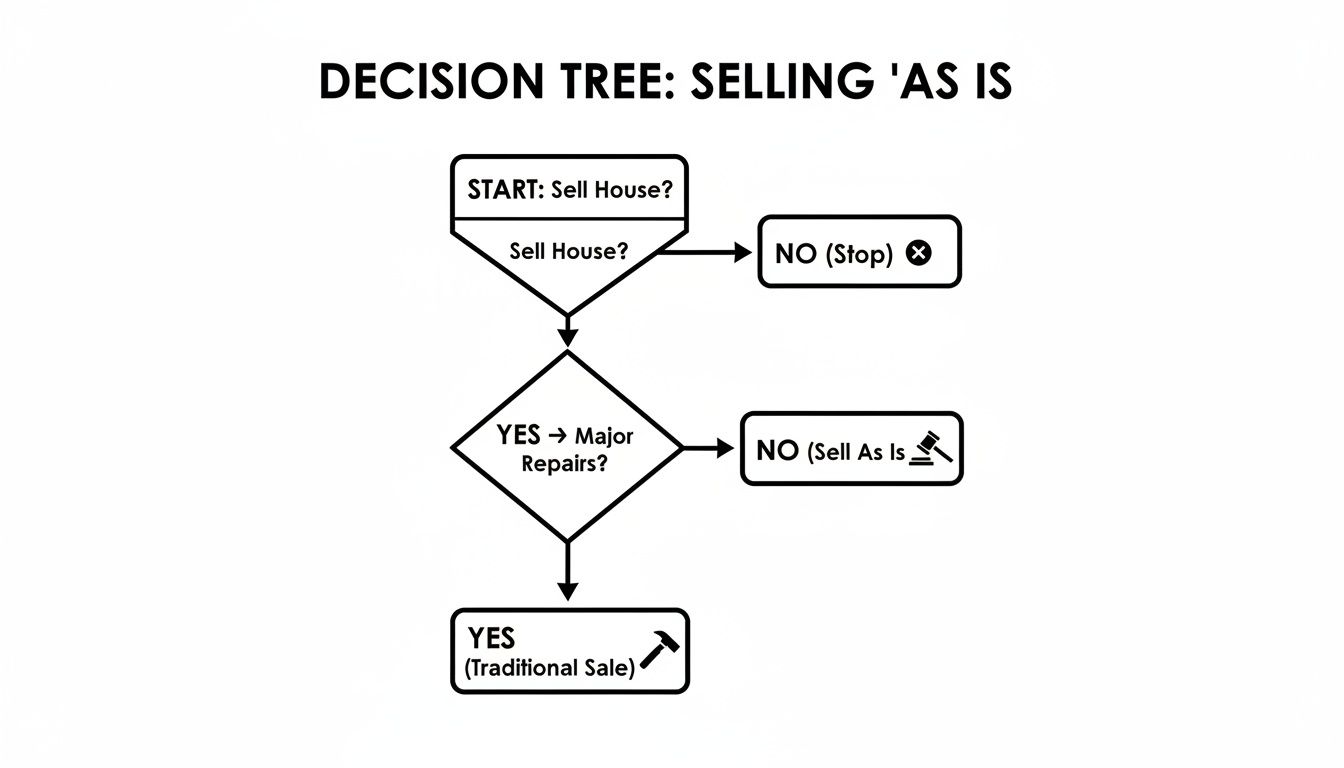
As you can see, it really boils down to this: are you willing and able to take on major repairs? If the answer is a hard no, then an as-is sale is your most direct path forward.
The Upside: Why Selling As Is Can Be a Great Move
Let's be honest, the biggest draw of an as-is sale is skipping the nightmare of home renovations. This is a game-changer for properties that need serious help, where a remodel could drag on for months and bleed your bank account dry.
Instead of juggling contractors and living in a construction zone, you get a clean, straightforward transaction. The benefits are pretty compelling:
- A Seriously Fast Timeline: As-is homes are magnets for cash buyers and investors who are ready to move. They aren't stuck waiting around for a traditional mortgage approval that’s tied to appraisals and property condition.
- Zero Repair Costs: You get to sidestep the massive expense of replacing a roof, overhauling an ancient HVAC system, or gutting a kitchen from the 70s. That money stays right where it belongs—in your pocket.
- Way Less Stress: Renovations are a headache. Period. Selling as is allows you to completely bypass the drama of getting quotes, managing the work, and dealing with those inevitable (and costly) construction surprises.
For anyone who’s inherited a property, facing a sudden job relocation, or dealing with financial pressure, these advantages are huge. The whole process becomes about speed and simplicity, not wringing every last cent out of the property.
The Downside: What You're Giving Up
Of course, all that convenience comes at a cost. The biggest hit you'll take is a lower final sale price compared to a fixed-up, market-ready home. Buyers aren't blind; they will calculate the cost of all those needed repairs and subtract it from their offer—often with a little extra cushion for their own risk and hassle.
An "as is" sale often attracts a smaller, more niche pool of buyers. While these buyers are typically more serious and decisive, you'll miss out on the larger market of traditional homebuyers seeking move-in-ready properties.
Here are the main challenges you can expect when selling a house as is:
- Lower Offers: Be prepared for offers to come in well below the market value of similar, updated homes in your neighborhood.
- A Smaller Buyer Pool: Most regular homebuyers get scared off by the thought of major repairs. They just don't have the cash, the time, or the know-how to take on a big project.
- Buyer Financing Can Get Tricky: Certain loans, especially FHA and VA loans, have strict rules about the condition of the property. If your home has big-ticket issues like a failing roof or faulty plumbing, buyers using these loans might not get approved, shrinking your pool of potential buyers even further.
To help you see the differences side-by-side, we’ve put together a quick comparison table. It breaks down the key factors to help you figure out which path really fits your goals.
Selling As Is vs a Traditional Sale at a Glance
| Factor | Selling 'As Is' | Traditional Sale (With Repairs) |
|---|---|---|
| Sale Price | Typically lower to account for needed repairs. | Potentially higher, reflecting market value. |
| Time to Close | Faster, often with cash buyers. | Slower, dependent on buyer financing and inspections. |
| Upfront Costs | Minimal to none; no repair expenses. | Can be substantial (renovations, staging). |
| Buyer Pool | Smaller; mainly investors and flippers. | Larger; includes retail buyers seeking move-in-ready homes. |
| Seller Effort | Low; less stress and management. | High; involves managing contractors and projects. |
| Negotiations | Fewer repair-related negotiations. | Often includes back-and-forth over inspection findings. |
Ultimately, the best choice really depends on your life and your priorities right now. Are you chasing speed and simplicity, or are you in a position to invest the time and money needed to get top dollar? Answering that question honestly will point you in the right direction.
Preparing Your As-Is Home For The Market
Just because you're selling a house "as-is" doesn't mean you can just list it and walk away. That's a common misconception. While you’re making it clear you won't be handling repairs, how you present the property can still make a huge difference in your final sale price and how fast you close.
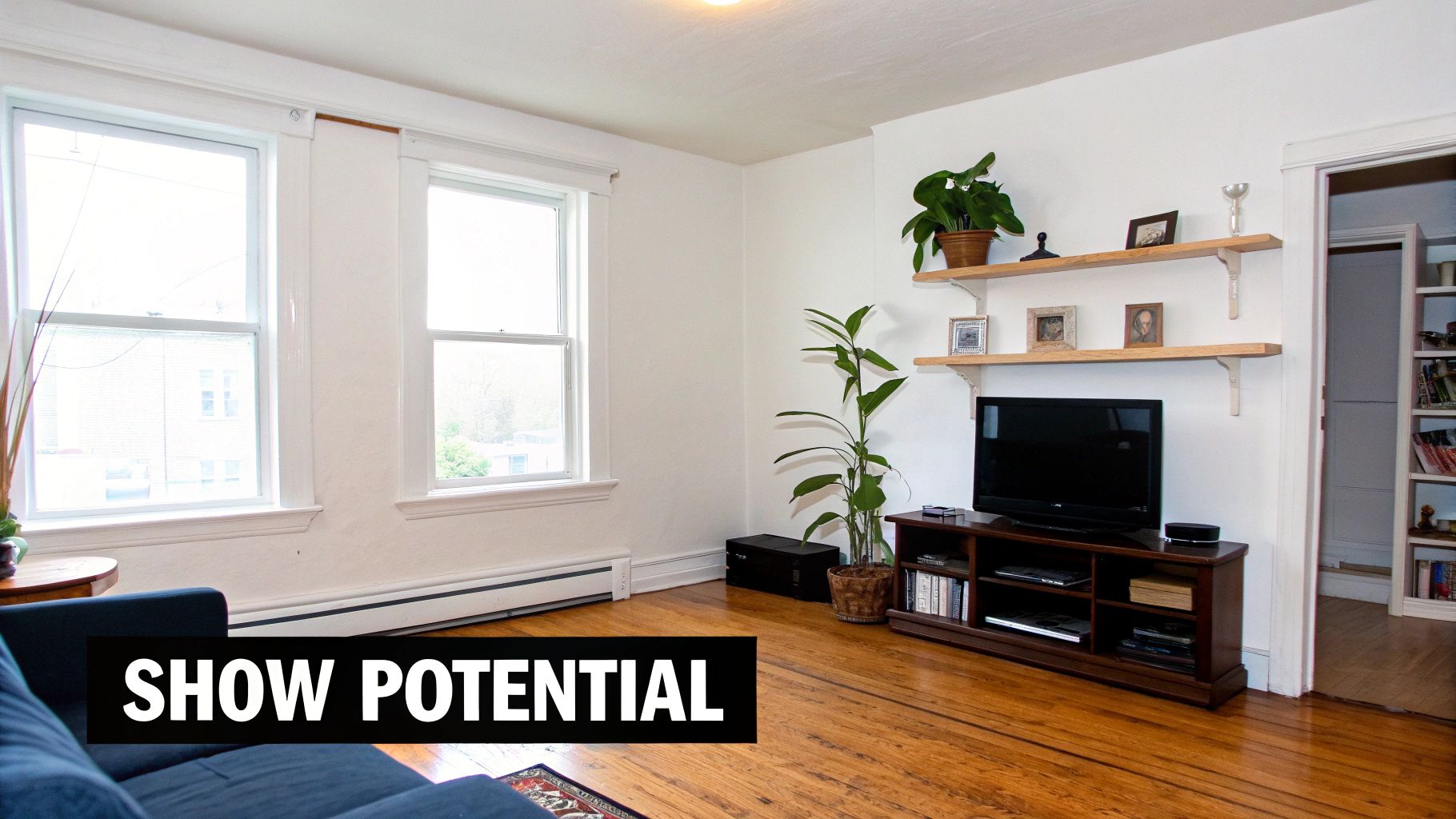
The key is to focus on high-impact, low-cost tasks that show off the home’s potential, not its problems. You're not trying to hide anything, but you absolutely want to make a great first impression. A clean, uncluttered space lets buyers see the "good bones"—the layout, room sizes, and natural light—without getting bogged down by your personal stuff or a layer of grime.
Prioritize High-Impact, Low-Cost Improvements
Your goal here isn't a renovation; it's a refresh. The idea is to spend a little time and money where it truly counts, making sure buyers see an opportunity instead of just a project.
Start with the basics that immediately shape a buyer's perception:
- Deep Cleaning: This is non-negotiable. If you have to, hire a professional service to scrub everything from the baseboards to the ceiling fans. A home that sparkles just feels cared for, even if it's a bit dated.
- Decluttering and Depersonalizing: Get rid of the excess. Pack away family photos, bulky furniture, and personal collections. You want buyers to imagine their own lives in the space, not feel like they're snooping around your house.
- Enhancing Curb Appeal: You get about 10 seconds to make a first impression. Mow the lawn, trim those overgrown bushes, pull the weeds, and throw down some fresh mulch. A welcoming exterior is an open invitation for buyers to come inside.
- Minor Fixes: I know, it's an "as-is" sale. But fixing a wobbly doorknob, a dripping faucet, or a dead light switch can eliminate those little red flags that make buyers unnecessarily jumpy.
It can be tough to know where to draw the line on an "as-is" sale. For a little more help, check out our guide on what to fix before selling a house to make sure you're making smart choices with your time and money.
The Power of a Pre-Listing Inspection
Here’s a pro tip: one of the smartest things you can do when selling "as-is" is to get your own pre-listing inspection. I know it sounds counterintuitive to pay someone to find problems, but trust me, this move puts you in the driver's seat.
Instead of getting blindsided by a buyer's inspection report later, you know every single issue upfront. This level of transparency builds incredible trust. You can hand the full report to any interested party, proving you have nothing to hide. This one step often leads to cleaner offers with fewer escape clauses because buyers feel confident they know exactly what they’re getting into.
A pre-listing inspection turns unknowns into knowns. It lets you price your property accurately and removes one of the biggest hurdles in negotiations, paving the way for a much smoother closing.
Marketing That Highlights Potential
A home needing work doesn't deserve bad marketing. In fact, professional marketing is even more crucial for an "as-is" property. Your listing has to tell a story about the home’s potential and spotlight its best assets, regardless of its current condition.
This is where a skilled team like ours at Edinhart Realty & Property Management really shines. We focus on:
- Professional Photography: Quality photos can make any room look its best. We know how to emphasize natural light, the flow of the space, and interesting architectural details. Dark, blurry phone pictures just scream "problem property."
- Highlighting Key Features: We write a listing description that plays up the positives. Does it have a fantastic floor plan? Is it in a top-rated school district? Is the backyard huge and private? These are the hooks that will attract the right kind of buyer.
- Targeted Audience: We don't just throw it on the market; we aim it at the right people—whether that's investors hunting for their next flip or determined homebuyers ready to build some sweat equity.
Today's market is driven by technology. A whopping 97% of buyers are looking online, and we've seen that homes with professional drone photography sell 68% faster. That's a game-changer for unrenovated properties in competitive areas like Central California. By investing in smart prep and professional marketing, you're setting your "as-is" sale up for success and attracting serious buyers who can spot a diamond in the rough.
Nailing the Price and Finding the Right Buyer
Pricing an "as is" home is a bit of a tightrope walk. Price it too high, and you'll hear crickets. Price it too low, and you're leaving money on the table. The trick is to find that sweet spot, and it takes a clear-eyed look at the market and a strategy built around your goals.
Your first move is to dive into the comps—the recent sales of similar homes in your area. But for an "as is" sale, you can't just look at the perfectly flipped house down the street. You need to pull two different sets of numbers to really understand your property's value.

Analyzing the Comps That Matter
First, look at homes like yours—similar size, age, and location—that have been completely updated and sold recently. This gives you the top-end value, what we call the After Repair Value (ARV). It’s what your home could be worth.
Next, and this is where an experienced agent really shines, you have to dig up comps for other homes that sold in "as is" condition. These sales show you what buyers are actually paying for a project. The gap between the ARV and these "as is" sales is the discount buyers expect for taking on all the work and risk. Because sellers of "as-is" homes usually want to move fast, it's crucial to understand the different strategies for pricing a home for a fast sale.
The goal is to find the pricing intersection where investors see a clear path to profit and ambitious homebuyers see an undeniable value proposition. This is where your property moves from being "listed" to "sold."
In a market like Fresno, selling "as is" lets you skip the expensive repairs, which is a big draw for investors. These homes can move surprisingly fast, but they do often sell for 5-10% below fully staged and renovated properties. With median U.S. home prices sitting around $449,800, a fixer-upper might go for closer to $400,000 in a competitive area.
Marketing to Your Target Audience
Once you've set your price, your marketing needs to be incredibly focused. You’re not trying to attract everyone; you're speaking to two very specific buyer types, and they each need to hear a different story.
1. The Investor
Investors live and breathe numbers. They're motivated by ROI, not a dreamy vision of family holidays. So, your marketing needs to be all business.
- Lead with the ARV: Show them the potential profit right away by highlighting the comps for renovated homes in the neighborhood.
- Share Repair Estimates: If you did a pre-listing inspection, give them the report. Any contractor bids you have are gold. Transparency saves them time and builds trust.
- Talk Rental Potential: In places like Fresno and Clovis, rental income is a major motivator. Point out the local rental rates and frame the property as a cash-flowing asset.
2. The Ambitious Homebuyer
This buyer is looking for a foothold in a great neighborhood they might otherwise be priced out of. They’re driven by the dream of creating their perfect home from the ground up.
- Highlight the "Good Bones": Talk up the solid foundation, the great natural light, or the beautiful, mature trees in the yard. Focus on what can't be easily changed.
- Sell the Lifestyle: Is the home near top-rated schools, great parks, or a cool downtown area? Paint a picture of the life they'll have after the dust settles.
- Frame it as an Opportunity: Use words like "blank canvas" or "a chance to make it your own." Help them see past the dated kitchen and envision their future.
This is where an agent's network becomes invaluable. At Edinhart Realty & Property Management, we don’t just put a sign in the yard. We actively market your property to our deep network of local investors and connect with agents who have clients specifically looking for a project. To dig deeper into how we get homes sold efficiently, check out our guide on how to sell your house quickly. By combining sharp pricing with laser-focused marketing, you attract the right buyer and set yourself up for a successful "as is" sale.
You've made it to the final sprint: offers are coming in. This is where the deal really starts to take shape, but it's also where a lot of "as is" sales can hit a snag if you're not careful. The key is to look beyond the big number at the top of the offer and really dig into the details.
It's a common rookie mistake to assume the highest offer is automatically the best one. I’ve seen it time and again—a seller gets starry-eyed over a high price, only for the deal to crumble because of shaky financing or endless contingencies. A slightly lower cash offer can often be your golden ticket to a smooth, guaranteed closing.

Evaluating the Terms of Each Offer
When an offer hits your agent’s inbox, it's time to put on your analyst hat. The price is just the starting point. The real story is told in the contingencies, which are essentially the buyer's escape clauses.
Here’s my checklist for what to scrutinize beyond the purchase price:
- Financing: Is it cash or a mortgage? Cash is king in an "as is" sale. It completely sidesteps the lender appraisal process, where the property's condition could kill the loan.
- Inspection Contingency: A serious buyer, even for an "as is" home, will want an inspection. But look at the timeline. A 7-day contingency period shows they mean business, whereas a 17-day or longer period can drag things out.
- Earnest Money Deposit (EMD): This is the buyer's "skin in the game." A larger deposit—say, 3% of the purchase price—signals a serious commitment and makes them less likely to bail.
- Proposed Closing Date: How fast can they close? An investor might be ready to close in 10 days. A traditional buyer will likely need 30-45 days for their loan to process. Which timeline fits your needs?
The sweet spot for an "as is" offer is a solid price backed by a strong financial position with minimal, short-contingency periods. A fast, clean, and certain close is almost always worth more than a slightly higher but riskier offer.
Responding to Different Buyer Types
In the "as is" world, you’re generally dealing with two kinds of buyers. Each one plays the game a little differently, and you need to know how to handle them.
The Investor:
These buyers are all about the numbers. They’ll likely come in with a low offer because they’ve already calculated their renovation costs, carrying costs, and exactly how much profit they need to make. Don't get offended—it’s just business. The best response is a firm, fair counteroffer supported by real comps of other "as is" properties that have sold nearby. They respect data and a no-nonsense approach.
The Retail Homebuyer:
This is someone looking for a place to call home, and they're willing to put in some sweat equity. They’re often more emotionally connected to the house, but that can also make them more nervous. Even with an "as is" sale, don't be surprised if they try to ask for credits after the inspection, especially for major health and safety issues. You’ll need to hold your ground on the "as is" condition, but it might be worth a small negotiation to keep a great, well-qualified buyer from walking away.
Managing the Paperwork for a Smooth Closing
Once you’ve accepted an offer, the race to the closing table begins. In California, this process is heavily structured around standard forms from the California Association of Realtors (CAR), which are designed to protect everyone involved.
Your agent will be your guide through the maze of paperwork—from the main Residential Purchase Agreement (RPA) to all the necessary seller disclosures and contingency removal forms. The key to a smooth closing is staying organized and being hyper-responsive to requests from the escrow and title companies. Meticulous paperwork management is what turns that accepted offer into a done deal, letting you hand over the keys without any last-minute drama. And as you calculate your net proceeds, don't forget to factor in the standard real estate agent commission rates that will be part of your closing costs.
Got Questions About Selling Your House As Is? We've Got Answers.
Diving into an "as is" sale in California can feel like navigating a maze. It’s a smart move for many homeowners, but it’s completely normal to have a ton of questions about the legal ins and outs, the money, and just how it all works. Let's tackle some of the most common questions we hear from sellers every day.
One of the first things that comes up is, "Can a buyer just walk away after we agree on a price?" In almost every case, the answer is yes, as long as they have an inspection contingency in their offer. This little clause gives them a window—usually 7 to 17 days—to bring in inspectors. If they find something they weren’t expecting and can't stomach, they can legally back out and get their deposit back.
This is exactly why getting a pre-listing inspection report done is such a game-changer. You eliminate the surprises and attract buyers who are serious and ready to move forward.
The Money and The Law
Financing is another big question mark. "Will a bank even lend money on a house being sold as is?" It's a mixed bag. Many conventional lenders are perfectly fine with it, but certain government-backed loans, like FHA and VA loans, have really strict health and safety standards.
If your property has major problems—think a leaky roof, serious foundation cracks, or plumbing that doesn't work—it likely won't qualify for those types of loans. This is why cash buyers and those with conventional loans and big down payments are so golden in an as-is sale. They have far fewer hoops to jump through.
Here's a myth we need to bust: selling "as is" does not mean you can pass off a property with a messy title or unpaid liens. That’s a hard no. You are still 100% legally required to deliver a clear title to the buyer when you close. All mortgages, tax liens, and other claims have to be settled out of the sale proceeds.
And what about after the keys are handed over? The worry of "Can they sue me later if something breaks?" is a big one. Your best defense in California is rock-solid disclosure. As long as you were honest and transparent about every single known issue on your Transfer Disclosure Statement (TDS) and other forms, you're well-protected.
Now, if a buyer can prove you deliberately hid a known problem, that’s a different story and could land you in legal trouble. This is why we preach honesty. Selling as is isn't about hiding flaws; it's about making it crystal clear that you won't be the one to fix them.
The Practical Side of an As-Is Sale
Finally, let's talk logistics. "Do I really have to leave the house for inspections?" It's not a legal requirement, but we strongly recommend it. Letting the buyer and their team have the place to themselves creates a low-pressure environment where they can be thorough and comfortable. It just makes the whole process smoother.
And a big one: "Can I still negotiate?" Of course! "As is" describes the condition of the house, not the terms of the deal. You absolutely can—and should—negotiate the price, closing date, and contingency timelines to get a deal that works for you. Remember, the best offer isn't always the highest price; sometimes, it's the one with the highest certainty of closing.
Juggling the details of an as-is sale takes a bit of strategy and a steady hand. If you're thinking about going this route and want to make sure you're protected while getting the best possible price, the team at Edinhart Realty & Property Management is here to help. Get in touch with us today, and let's build a sales plan that fits your property and your goals.


