

You usually find out how strong your maintenance plan is on the worst possible day. It's the afternoon the AC stops pushing cold air during a Fresno heat spike. It's the first real rain after months of dust, when water spills over clogged gutters and runs down stucco. It's a foggy winter morning when a tenant calls because the porch light is out and the front walk is slick.
In Central California, property systems don't fail at random. They fail under predictable stress. Heat exposes weak HVAC units, dry soil opens small exterior gaps into bigger repair issues, and fall moisture finds every roof edge and drainage problem you ignored in summer.
That's why seasonal property maintenance works better here than vague “get to it when you can” upkeep. A calendar-based plan gives owners and landlords a way to protect value, reduce emergencies, and keep rental properties safer for the people living in them.
Why Your Fresno Property Needs a Seasonal Maintenance Plan
A Fresno property goes through more seasonal stress than many owners expect. Summer heat pounds roofs, attic spaces, seals, paint, and air conditioning systems. Then the weather shifts. Dust settles into gutters and drains, rain exposes drainage problems, and Tule fog changes the safety picture around lighting, visibility, and slip hazards.
I've seen the same pattern repeat across single-family rentals and owner-occupied homes. A property looks fine in mild weather, so maintenance gets pushed off. Then a heatwave hits and the HVAC that “still worked last year” struggles. Or the first wet spell reveals a roof edge leak that had been manageable if someone had caught it earlier.
Preventive work is almost always cheaper than emergency work. In fact, studies show that every dollar spent on preventive maintenance can save homeowners and landlords up to $10 in future emergency repairs, with HVAC and water damage being the costliest areas of neglect according to this preventative maintenance guide.
Fresno weather punishes delay
Seasonal property maintenance matters here because local weather swings are hard on building materials and systems.
- Extreme heat strains cooling systems: Units that seem adequate in spring can fail when temperatures stay high for days.
- Dry conditions widen small issues: Caulk shrinks, soil shifts, and small cracks around windows, doors, and utility penetrations become pest and air-loss pathways.
- Fog and rain expose safety gaps: Burned-out exterior bulbs, slick walkways, and blocked drainage become more than cosmetic problems in colder months.
Practical rule: If a Fresno property depends heavily on AC, drainage, or exterior lighting for safe day-to-day use, those items should be checked before the season changes, not after a complaint comes in.
Landlords also have a compliance reason to stay ahead. In a rental, maintenance isn't just about preserving the building. It affects habitability, response times, documentation, and whether a safety issue was addressed before it became a liability problem.
Owners who want better visibility into recurring work often benefit from using systems that organize inspections, service requests, and vendor follow-up. A tool like property maintenance management software helps turn maintenance from a memory-based chore into a repeatable operating process.
Even landscaping should be seasonal and climate-specific. While Prescott isn't Fresno, there's useful planning logic in these expert tips for Prescott landscaping, especially the idea that plant care and water use should follow local climate realities instead of a generic schedule.
Spring Checklist Preparing for the Summer Heat
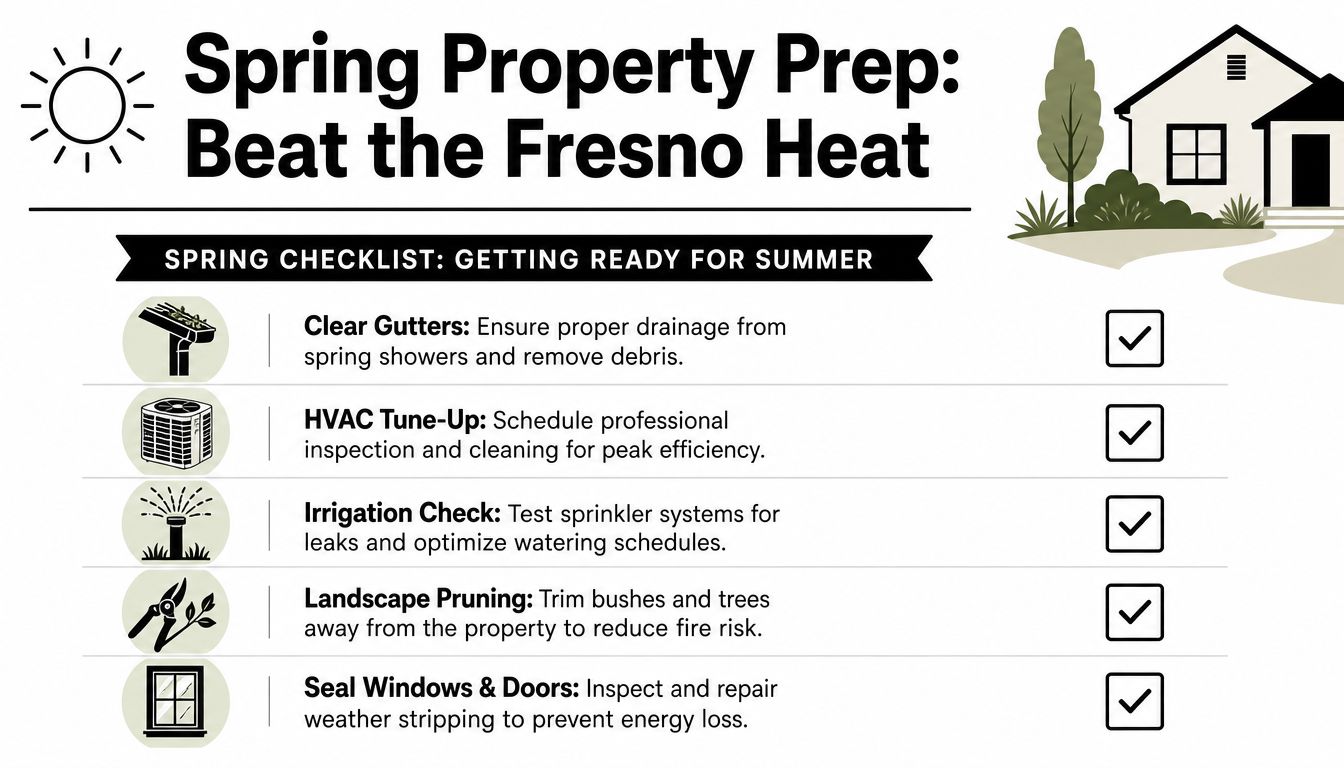
Spring is when Fresno owners make or miss their summer. If you wait until the first major hot spell to inspect critical systems, you're already behind. The right spring checklist is about load preparation, not cleanup.
Start with the cooling system
Book HVAC service early. Not when the first tenant says the house “doesn't feel as cold as it should.” Not when every contractor in town is backed up. Early.
A spring HVAC visit should focus on operation, airflow, coil condition, filter status, thermostat function, and any signs that the system is working harder than it should. For rental properties, this is also the time to confirm that supply vents aren't blocked by furniture and that return air paths are clear.
Work through water, seals, and the exterior
Once cooling is addressed, turn to the systems that heat and dryness wear down.
- Run every irrigation zone: Don't just glance at the timer. Walk each station while it's on. Look for broken heads, overspray onto walkways, pooling near the foundation, and lines that leak only under pressure.
- Reset watering logic: Spring schedules shouldn't stay on winter timing. Fresno's planted areas need a measured transition that keeps plants alive without wasting water or creating muddy areas near the house.
- Check window and door seals: Worn weatherstripping and failed caulk let conditioned air escape all summer.
- Inspect exterior cracks: Focus on penetrations around hose bibs, conduit, vents, and door frames where insects and rodents often enter.
- Clear winter debris: Remove leaf buildup, branches, and old ground clutter that trap moisture or create pest harborage.
Don't ignore trees, pools, and shade lines
Spring is also the right time to look up. Tree limbs that hang over roofs, fences, service lines, or parking areas become more troublesome once canopies fill out and summer winds pick up. Trim back growth before it creates clearance issues or rubs against structures.
If the property has a pool, inspect the pump, filter area, timer, gates, and deck surfaces. Fresno pool equipment works hard in summer. A spring check is easier than a midsummer equipment failure with algae starting and tenants waiting.
A small air leak at a window, a weak capacitor in an AC unit, and a sprinkler spraying the stucco wall can all look minor in April. By July, they're expensive.
Spring priorities in order
| Priority | What to handle first | Why it matters in Fresno |
|---|---|---|
| Highest | HVAC tune-up and filter check | Summer heat turns minor cooling issues into urgent calls |
| High | Irrigation inspection and timer adjustment | Dry conditions stress plants and expose leaks fast |
| High | Window, door, and exterior seal review | Keeps cooled air in and pests out |
| Medium | Tree and shrub pruning | Protects rooflines, siding, and defensible clearance |
| Medium | Yard and drainage cleanup | Reduces clutter, runoff problems, and hidden hazards |
What doesn't work is treating spring as a cosmetic season. Fresh mulch and trimmed hedges look good, but they won't help if the AC is on the edge or the sprinkler line is soaking the foundation.
Summer Survival Guide for Your Property
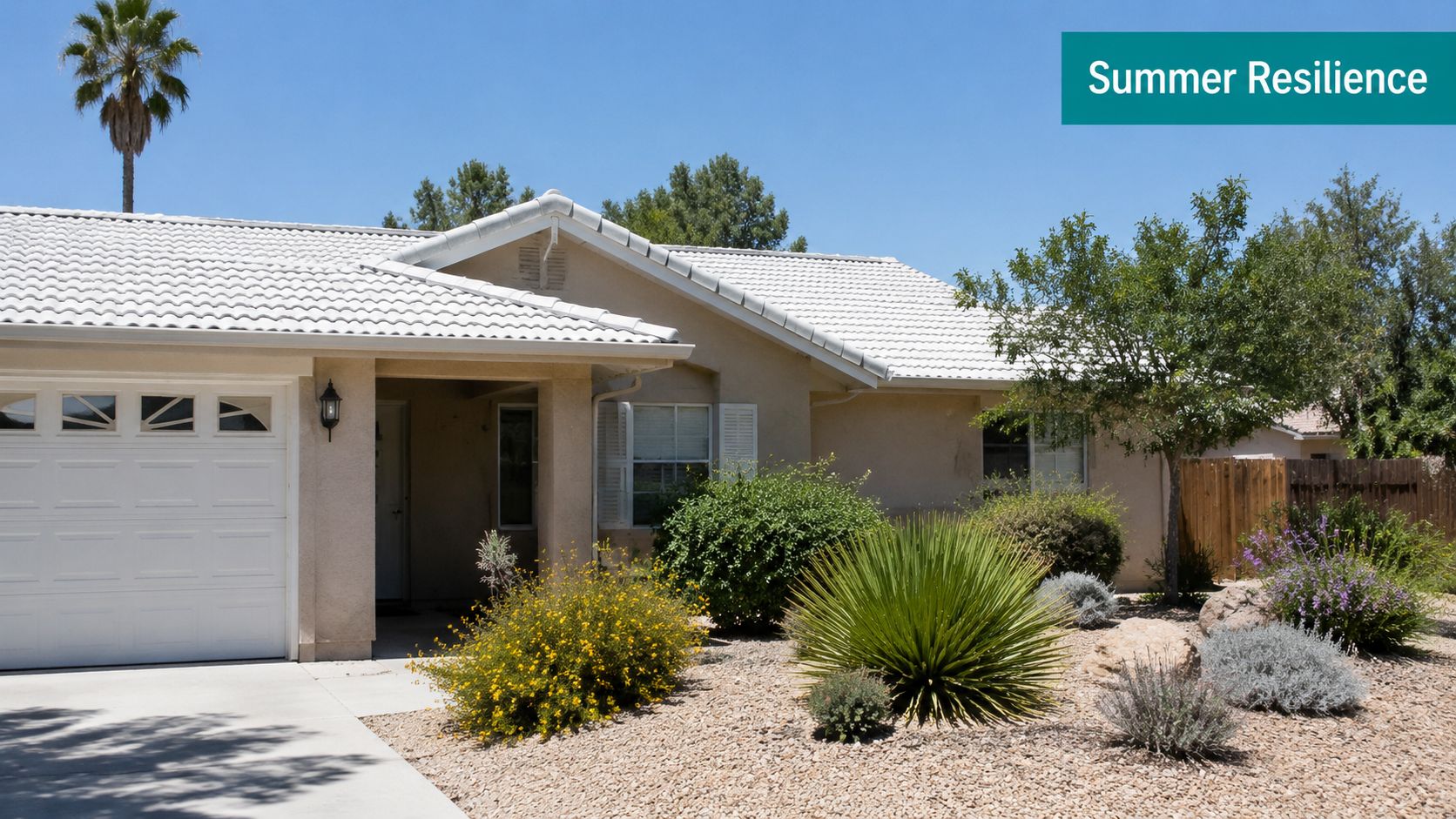
Summer is when Fresno properties get stress-tested every day. Long heat stretches expose weak insulation, poor ventilation, overworked condensers, thirsty landscaping, and tenant habits that drive up wear. The goal in summer isn't just comfort. It's preventing heat from turning into damage.
Watch for strain, not just failure
A cooling system rarely goes from perfect to dead with no warning. Summer inspections should look for signs of strain. That includes warm spots indoors, longer run times, weak airflow, frozen lines, unusual sounds, and dirty filters.
Owners often focus on the thermostat setting alone. That's not enough. If an attic is trapping heat because ventilation is poor, the AC may run longer even when the equipment itself is technically operational. The same goes for damaged duct insulation, loose weatherstripping, or sun-exposed windows with failing seals.
For the outside condenser, keep clearance around the unit. Don't let weeds, trash bins, or overgrown shrubs crowd it. Restricting airflow around the condenser makes summer performance worse.
Keep water use controlled and intentional
Fresno summers force a balancing act. Outdoor areas need water, but sloppy irrigation creates its own maintenance problems.
- Inspect morning runoff: If sidewalks, curb edges, or driveways stay wet after a watering cycle, a head is misaligned or the schedule is too aggressive.
- Look at plant stress by zone: Full-sun areas, shaded beds, and drip-fed plantings shouldn't all be treated the same.
- Protect foundations and hardscape: Water should support the grounds, not soak fence posts, exterior walls, or slab edges.
For rental properties, summer is also a communication season. Tenants should know basic operating expectations for cooling systems. They need to report weak airflow early, replace filters if that's part of the lease arrangement, and avoid shutting vents in ways that disrupt system balance.
If tenants don't know how to use the thermostat, when to report a problem, or what “normal” summer operation looks like, small issues turn into emergency calls.
A quick visual guide can help owners and residents think through hot-weather upkeep:
Sun damage is maintenance, not aesthetics
Fresno sun is hard on exterior finishes. Walk the property in full daylight and look at the sides that take the most exposure. Paint fade, cracked caulk, brittle trim, and dried sealant around penetrations are warning signs. They may look cosmetic in summer, but they often lead to moisture intrusion once the weather turns.
Check these areas closely:
- Attic access points and vents: Heat buildup shortens the life of roofing materials and raises cooling load.
- Window frames and sliders: Dry seals and tracks create both air loss and operational problems.
- Wood fencing and gates: Summer heat dries and twists components, which affects latches and safe egress.
- Patios and exterior surfaces: Surface cracking and lifted edges become trip hazards.
What doesn't work in summer is reacting only to occupant complaints. A property can be losing efficiency and developing preventable exterior damage long before anyone submits a work order.
Fall Wind-Down Preparing for Rain and Fog
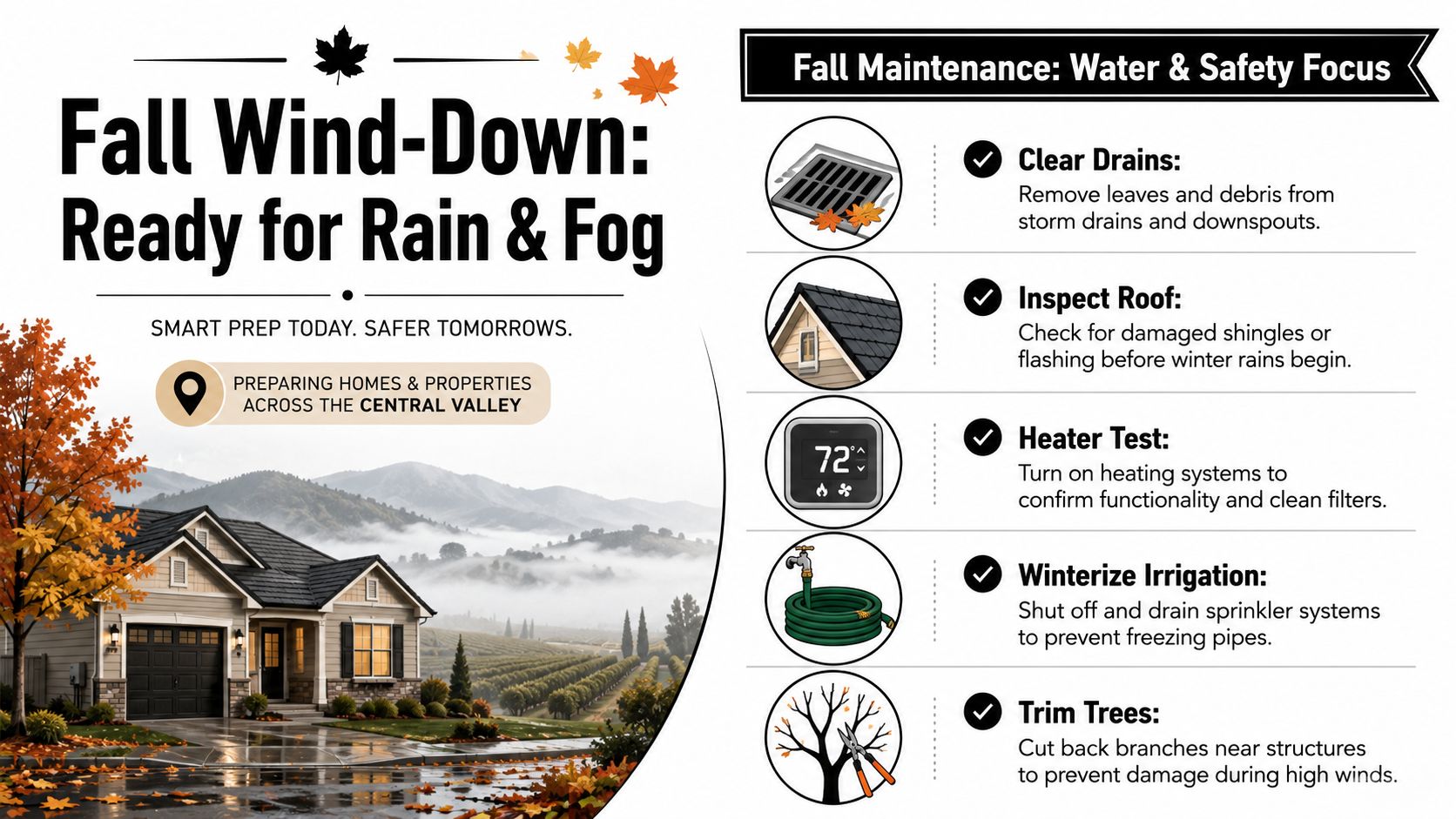
Fall in Fresno feels calmer, but it's one of the most important maintenance windows of the year. Summer leaves behind dust, brittle sealants, stressed vegetation, and roofs that have baked for months. Then the first rain arrives, and every neglected drainage point shows up at once.
Focus first on drainage and roof edges
Start with gutters, downspouts, drains, and roof transitions. If dust, leaves, and roof granules have built up, water won't move where it should. It spills over edges, backs up near fascia, and runs down walls and windows.
For most properties, I'd rather see a basic, thorough fall drainage cleanup than a long list of half-finished cosmetic projects. Water entry is the issue that gets expensive fast. Walk the perimeter after the first storm if you can. You'll see where splashback, ponding, and runoff happen.
Get the heater and lighting ready before you need them
Cooling gets most of the attention in Fresno, but fall is when you verify the heating side before cold mornings expose a problem. Test the furnace or heating system before tenants rely on it. Replace dirty filters, listen for unusual startup behavior, and confirm the thermostat is switching properly.
Exterior lighting matters just as much in late fall because Tule fog changes visibility and perceived safety. Burned-out bulbs, dirty lenses, and weak fixture output become more serious when tenants are walking paths, stairs, and parking areas in low-visibility conditions.
A good fall lighting check should include:
- Entry lights: Front doors, rear doors, garage-side entries, and gate areas
- Pathway lighting: Walks, steps, transitions, and uneven grade changes
- Motion fixtures: Confirm they trigger consistently and cover the intended area
- Address visibility: Make sure the house number can be seen clearly in poor conditions
Trim, clear, and tighten the exterior
By fall, trees and shrubs often need another round of attention. Trim branches away from roofs, windows, and walkways. Remove dead material that could break during storms or weigh down fences when wet.
This is also the right time to inspect the roof from the ground and, if needed, by a qualified roofer. Look for displaced materials, suspect flashing areas, or anything around penetrations that could let in water. If a rental has older weather seals around doors or windows, fix them before colder air and moisture make the interior less comfortable.
Fall maintenance in the Central Valley is mostly about one question: where will water go when it finally arrives?
A simple fall sequence
| Order | Task | What it prevents |
|---|---|---|
| First | Clean gutters and downspouts | Overflow, fascia damage, wall staining |
| Second | Inspect roof condition | Leaks during the first meaningful rain |
| Third | Test heating system | Cold-weather habitability issues |
| Fourth | Check exterior lighting | Slip, trip, and security concerns in fog |
| Fifth | Trim branches and clear debris | Storm damage and blocked drainage |
What doesn't work is waiting for “more leaves to fall” or “a better time” before cleaning drainage paths. In Fresno, the first rain often arrives before owners feel ready for winter.
Winter Fortification Against Frost and Storms
Fresno winters are milder than many parts of the country, but they still create real maintenance pressure. The risks are different here. Less snow, more moisture management. Fewer deep freezes, but enough cold snaps to damage exposed plumbing and enough fog to make exterior safety a daily issue.
Protect pipes, seals, and heated spaces
Start outside and in unconditioned areas. Exposed pipes at hose bibs, garages, crawl-access zones, and exterior walls need attention before the coldest nights arrive. Insulation sleeves, faucet covers where appropriate, and disconnecting hoses all help reduce freeze-related damage.
Inside, check windows and doors for drafts. A small gap around a back door or aging slider doesn't just waste heat. It can create comfort complaints, condensation, and extra strain on the heating system. In rentals, draft complaints often surface before owners realize weatherstripping has failed.
Cold weather also makes hidden moisture more noticeable. Bathrooms without proper exhaust use, closets on exterior walls, and corners with weak airflow can collect condensation and support mildew or mold. That's a ventilation and housekeeping issue first, but owners should still inspect those areas during winter turnovers and occupied visits when legally appropriate.
Safety systems move to the top of the list
When heaters run more often, life-safety devices need to be treated as active equipment, not background hardware.
- Test smoke alarms: Confirm operation and replace batteries or units as needed.
- Test carbon monoxide alarms: Especially important where fuel-burning appliances or attached garages are involved.
- Inspect walk surfaces: Frost, moss, and slick shade areas create fall hazards even in relatively mild winters.
- Verify exterior visibility: Fog reduces sightlines, so lights, railings, and clear walking paths matter more.
Winter complaints often sound small at first. “Musty smell in the hall closet” or “the side path is slippery in the morning” are the kinds of notes that deserve quick follow-up.
Fresno owners still need roof awareness
Ice dams aren't a standard Fresno problem, but roof moisture behavior still matters. Valleys, flashings, clogged drainage points, and cold-weather condensation can all affect roof performance. If you want a broader explanation of how cold-weather roof problems develop in harsher climates, this overview of what causes ice dams on roofs gives useful context on why ventilation and drainage details matter so much.
For Central Valley properties, I'd focus winter roof attention on active leak signs, blocked water paths, and any area where fog and rain keep surfaces damp for long periods.
What winter maintenance should accomplish
The winter checklist isn't about doing everything. It's about keeping the property warm, dry, visible, and safe.
| Winter concern | Best response |
|---|---|
| Cold snaps | Protect exposed pipes and outdoor connections |
| Heater-heavy months | Test smoke and carbon monoxide alarms |
| Drafty interiors | Replace weatherstripping and seal gaps |
| Persistent moisture | Improve ventilation and inspect problem zones |
| Slick exterior surfaces | Clean, treat, and monitor high-risk walkways |
What doesn't work is assuming a “mild winter” means no winter preparation is needed. Fresno doesn't need extreme cold to produce expensive water intrusion or a tenant safety issue.
DIY vs Hiring a Pro A Property Manager's Advice
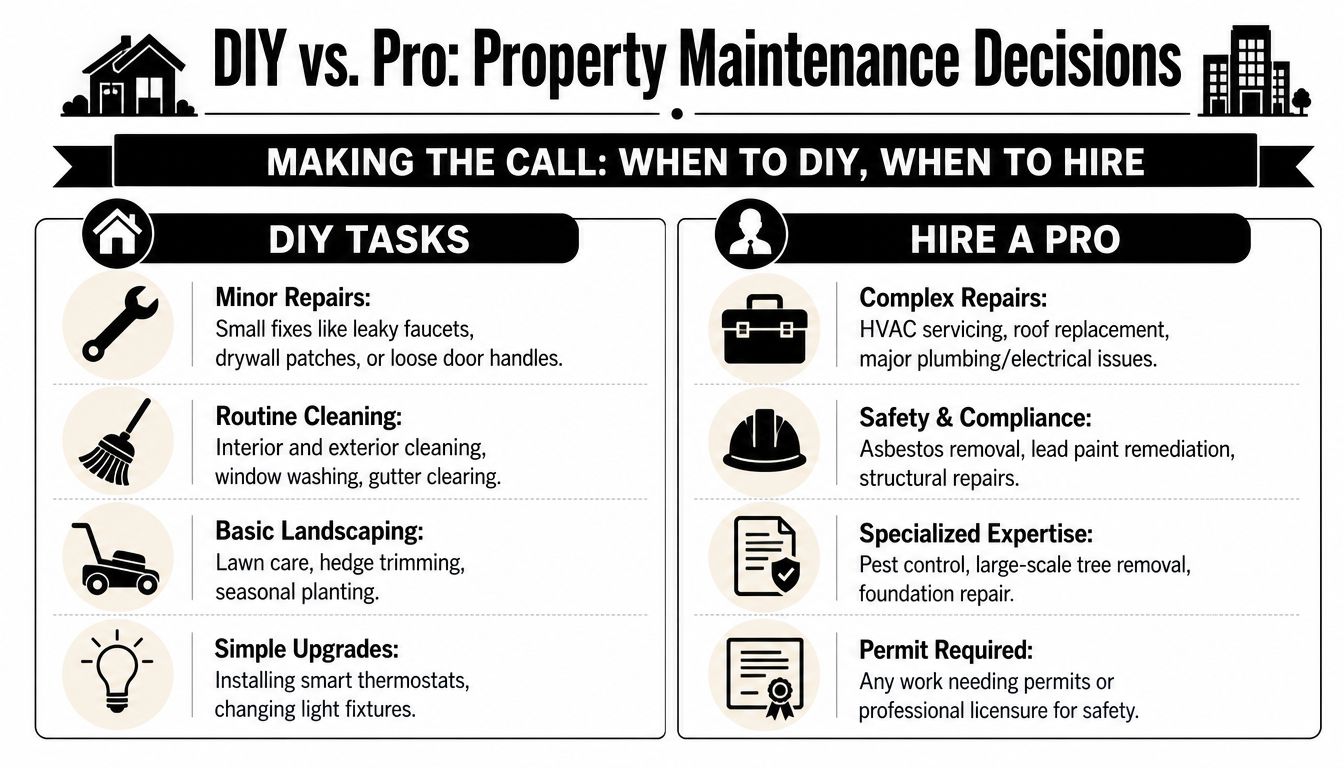
Most owners can handle part of their seasonal property maintenance plan themselves. The mistake is thinking every maintenance task sits in the same risk category. It doesn't. Some jobs are routine. Others carry injury risk, code concerns, liability exposure, or the kind of repair cost that follows a failed DIY attempt.
Use three filters before you decide
I use a simple test. Ask three questions before doing any property task yourself.
- Can this task injure someone if it goes wrong?
- Can this task create a hidden defect that gets worse later?
- Would a rental owner need documentation, licensing, or a permit for this work?
If the answer is yes to any of those, pause before doing it yourself.
The jobs most owners can usually handle
DIY makes sense for low-risk, visible, repeatable tasks.
- Filter changes: Straightforward, frequent, and important for airflow.
- Basic exterior inspection: Walking the property, spotting cracked caulk, checking lights, and looking for water staining.
- Minor yard cleanup: Removing debris, trimming light growth, and clearing obvious drainage obstructions.
- Detector testing: Press-test alarms and replace batteries or units when appropriate.
- Simple hardware fixes: Tightening loose handles, adjusting door stops, replacing weatherstripping.
That's the lane where owners save money without creating new problems. If you're trying to budget realistically, this guide to rental property maintenance costs is useful for thinking through what belongs in your annual planning.
The jobs that should go to licensed or specialized pros
Professional help is the right call for HVAC service, roofing repairs, major plumbing, electrical work, large tree trimming, structural concerns, and anything with meaningful fall risk. In rental housing, that threshold is even lower because tenant safety and documentation matter.
Pest issues are another area where owners often wait too long or try the wrong fix. For that reason, I like practical decision frameworks such as The Green Advantage pest management insights, which help owners separate manageable prevention from problems that need trained treatment.
Manager's view: DIY is for repeatable maintenance. Hire a pro for diagnosis, hazardous work, and anything that affects habitability or code compliance.
Here's the trade-off in plain terms:
| DIY is reasonable when | Hire a pro when |
|---|---|
| The issue is visible and low-risk | The cause isn't clear |
| The fix is simple to verify | Failure could damage the property |
| No permit or license is involved | The work affects HVAC, roof, plumbing, or wiring |
| You have the right tools and safe access | You'd be climbing high, cutting large limbs, or opening major systems |
What doesn't work is false economy. Saving a service call on the front end can cost far more when the repair has to be redone, documented, or defended after a tenant complaint.
A Year-Round Strategy for Your Real Estate Investment
The best seasonal property maintenance plan isn't a pile of reminders. It's a cycle. Spring gets the property ready for heat. Summer protects systems under load. Fall prepares for water and low visibility. Winter focuses on safety, moisture control, and heating reliability.
That rhythm matters because each season sets up the next one. A spring HVAC tune-up lowers the odds of a summer breakdown. A fall gutter cleanup helps prevent the winter leak that stains drywall and triggers a tenant call. A winter moisture check can reveal ventilation issues before they turn into a larger turnover problem in spring.
What consistency changes
Owners who stay on schedule usually see fewer surprises, better vendor coordination, and cleaner maintenance records. For rental properties, that also means better documentation around inspections, repairs, and tenant safety concerns.
Keep the plan simple enough to repeat:
- Assign tasks by season
- Document what was done
- Track recurring trouble spots
- Use professionals where failure costs more than the service call
- Review the property before weather changes, not after
A written maintenance schedule is more useful than a mental checklist. If you want a practical starting point, this rental property maintenance checklist helps turn annual intentions into a repeatable operating routine.
For Fresno and the Central Valley, that kind of discipline protects more than curb appeal. It supports habitability, tenant safety, and the long-term value of the asset.
If you want help keeping that schedule on track, Edinhart Realty and Property Management provides local support for owners across Fresno and the greater Central California region, whether you need full-service management or help placing qualified tenants while keeping maintenance standards high.


