

If you own a rental property, you already know that maintenance costs are a big, and growing, part of the deal. With inflation and labor shortages putting the squeeze on everyone, it's easy to see these expenses as a drain. But the savviest landlords I know have shifted their perspective—they see maintenance not as a cost, but as a critical investment in their asset.
This isn't just about protecting your property; it's about keeping great tenants and ensuring your investment actually pays off in the long run.
Understanding the True Cost of Rental Property Maintenance

To really get a handle on the finances of owning a rental, you have to know exactly where your money is going. Maintenance isn't one giant bill; it's a bunch of different costs that pop up. A reactive approach just won't cut it. Think of it like owning a car. You wouldn't skip oil changes and wait for the engine to seize, would you? The same logic applies here.
Being proactive is more important now than ever. In 2025, many landlords have seen their repair costs effectively double. This is thanks to a 5-7% jump in construction material prices, even while other inflation has started to cool down. That kind of spike shows just how crucial it is to have a solid financial plan in place.
The Three Pillars of Maintenance Spending
When you're building a budget that actually works, it helps to break everything down into three buckets. Each one plays a unique role in protecting your property's value and keeping it a safe, appealing place for tenants to call home.
- Routine Maintenance: These are the predictable, everyday tasks. Think lawn care, seasonal pest control, or cleaning the common areas. They just keep the property humming along.
- Preventative Maintenance: This is where you get ahead of the game. Things like an annual HVAC tune-up or cleaning out the gutters are designed to stop huge, expensive problems before they even start.
- Emergency Repairs: The ones everyone dreads. A burst pipe in the middle of the night, a dead water heater on a holiday weekend—these are the unexpected, urgent issues that demand immediate (and often pricey) attention.
A huge piece of this puzzle is also just staying on the right side of the law. Knowing your responsibilities is non-negotiable. A good place to start is this essential guide for landlords on gas safety certificates, which walks you through some of those recurring legal duties.
By separating your expenses and planning for regulations, you can turn what feels like a liability into a totally manageable part of your business.
Sorting Out Your Maintenance Costs for Smarter Budgeting
Trying to manage your rental property's maintenance costs as one giant, unpredictable expense is a surefire way to stress out your finances. It's much smarter to break everything down into a few key categories. This isn't just about organizing your spreadsheet; it's about shifting your mindset from reactive spending to strategic planning.
I like to think about it like managing your own health. You have your daily habits (like taking vitamins), your annual check-ups with the doctor, and then, of course, those unexpected trips to the ER. Each serves a totally different purpose and comes with a different price tag. Your property's financial health is no different.
When you start sorting expenses into these different buckets, you can finally get ahead of costs, set aside the right amount of cash, and protect your investment for the long haul.
Routine and Preventative Upkeep
Your first line of defense against big, expensive surprises comes from two closely related categories: routine and preventative maintenance. They might sound like the same thing, but they play distinct roles in keeping your property in top shape.
Routine Maintenance (The Daily Vitamins): These are the regular, predictable jobs that keep your property running like a well-oiled machine and looking good. Think landscaping, pest control, and cleaning the common areas. These are the things that keep tenants happy and protect your curb appeal.
Preventative Maintenance (The Annual Check-Up): This is all about being proactive. You're looking for small problems before they blow up into huge, expensive failures. This includes things like getting the HVAC serviced every year, cleaning out the gutters, and having a plumber do an inspection.
It's been shown that landlords who stay on top of these two areas can cut down on emergency repair calls by over 30%. Seriously, this is the most straightforward way to protect your cash flow from getting hammered by an unexpected bill.
The Inevitable Emergency Repairs
Look, no matter how meticulous you are with your planning, stuff is going to break. Emergency repairs are those urgent, out-of-the-blue problems that you have to deal with right now to keep your tenants safe and stop more damage from happening.
This is where the real stress comes from—a burst pipe flooding the kitchen, the water heater giving out in January, or a major electrical problem. You can't know when they'll strike, but you absolutely must plan for them by building up a solid reserve fund. As the old saying goes, failing to plan is planning to fail.
To really nail this down, let’s look at how these categories stack up side-by-side.
Types of Rental Property Maintenance Costs Explained
This simple table breaks down the three main types of maintenance expenses. It's a great way to visualize where your money is going and why each category is so important for your financial strategy.
| Maintenance Type | Description & Examples | Typical Frequency | Financial Goal |
|---|---|---|---|
| Routine | Predictable tasks like landscaping, pest control, and common area cleaning. | Monthly, Quarterly, Seasonally | Maintain tenant satisfaction |
| Preventative | Proactive work like HVAC tune-ups, gutter cleaning, and roof inspections. | Annually or Semi-Annually | Extend asset lifespan |
| Emergency | Unplanned, urgent fixes for issues like burst pipes or a failed furnace. | Unpredictable | Mitigate damage and ensure safety |
By understanding the purpose and frequency of each, you can move from just paying for maintenance to truly managing your property as a business asset.
How to Accurately Budget for Maintenance Costs
Knowing the different types of maintenance is half the battle. Building a financial safety net to handle them is where the real work begins. For a landlord, guesswork is a one-way ticket to a cash flow crisis, especially when a major system unexpectedly gives out.
To stop gambling and start planning, you can lean on a few proven formulas. These methods give you a reliable starting point for mapping out your annual maintenance costs. Each has its own vibe, so the best fit will depend on your property’s age, value, and your own financial strategy. The goal here is simple: build a dedicated reserve fund so you can handle issues without panicking.
The 1 Percent Rule
One of the most common and straightforward methods you'll hear about is the 1% Rule. It’s a simple guideline that suggests setting aside 1% of your property’s total value for maintenance every single year.
So, if your rental is valued at $300,000, your annual maintenance budget comes out to $3,000, which breaks down to $250 a month. This quick math gives you a solid baseline, particularly for newer homes or properties in pretty good shape.
That said, many experienced investors will tell you to aim a bit higher. A safer bet is to budget between 1% and 2% of the property's value. This is especially true for older homes that you just know will need a little more TLC.
The 50 Percent Rule
Another go-to model, especially for seasoned investors who've been around the block, is the 50% Rule. This formula is much broader and takes a more conservative approach to your finances.
The 50% Rule basically says that about half of your gross rental income will get eaten up by all operating expenses—not including your mortgage payment. This bucket of expenses covers taxes, insurance, vacancies, and, of course, maintenance.
Let's say your property brings in $2,000 in monthly rent ($24,000 a year). The 50% Rule tells you to expect around $12,000 in total operating costs. A slice of that $12,000 pie needs to be earmarked specifically for your maintenance fund. It's a sobering but realistic way to look at your profitability and is a crucial part of any serious rental property cash flow analysis.
The Square Foot Method
If you own several properties that are similar in construction, the Square Foot Method can be a great, scalable way to budget. The idea is to set aside a fixed dollar amount per square foot of living space each year.
A widely used figure is $1 per square foot per year. For a 2,000-square-foot house, that works out to a $2,000 annual budget. This method is really handy for single-family homes in tract communities where the age and build quality are pretty consistent across the board.
This infographic gives you a nice visual breakdown of where that maintenance money typically goes.
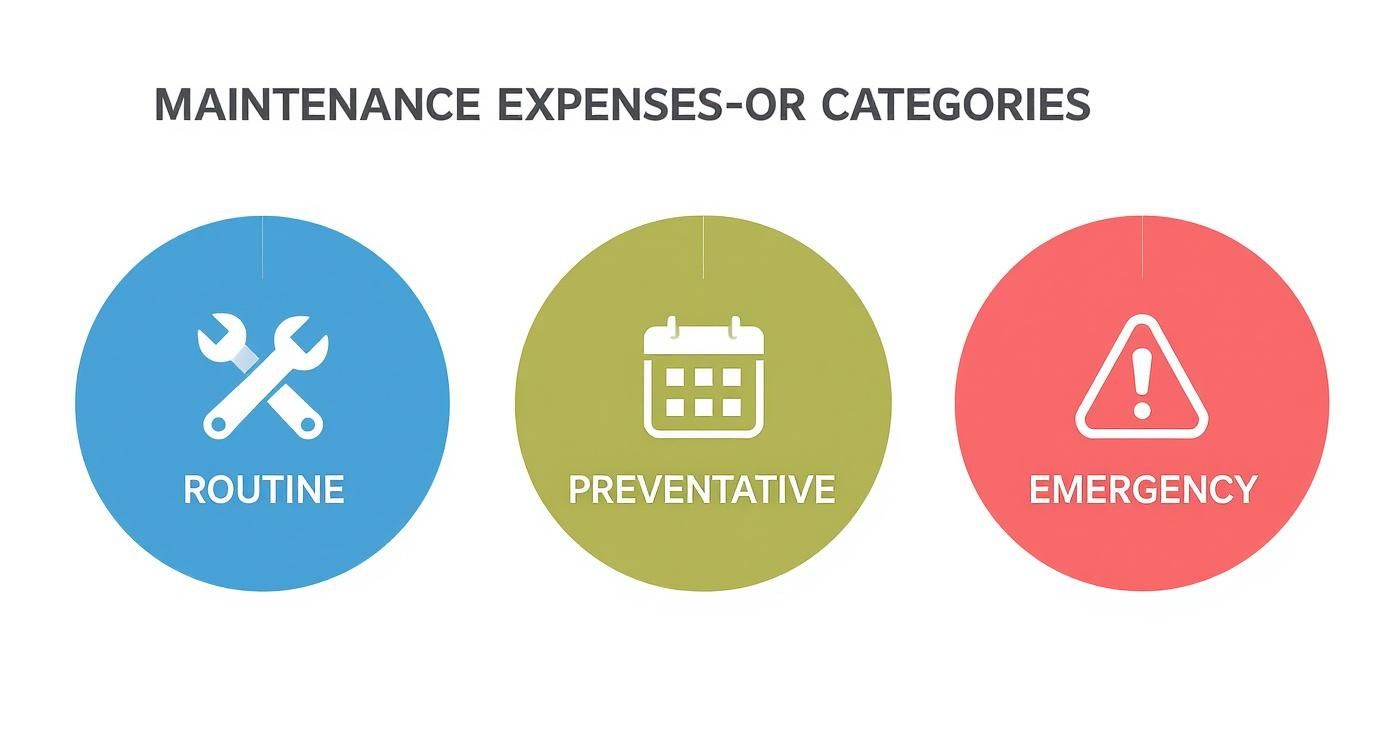
As you can see, routine and preventive stuff will make up the bulk of your spending. But if you don't manage things well, those emergency repairs can pop up and claim a huge, unpredictable chunk of your cash.
Common Rental Repair Costs and Their Price Ranges
Budgeting formulas give you a great bird's-eye view, but the real world hits when a contractor hands you an invoice. This is where knowing the typical price ranges for common repairs becomes your best defense against overpaying and your most practical guide for stocking your reserve fund.
Without these benchmarks, every quote can feel like a shot in the dark.
Think of these price ranges as the "market value" for a repair. Just like you'd look at comps before buying a house, knowing these numbers helps you gauge whether a contractor's bid is fair, a little high, or maybe even too good to be true. This knowledge gives you the power to ask the right questions and make confident calls on your property's biggest systems.
To give you a clearer picture, here's a quick reference table outlining what you can expect to pay for some of the most frequent jobs.
Estimated Cost Ranges for Common Rental Property Repairs
| Repair Category | Common Task | Estimated Cost Range |
|---|---|---|
| HVAC & Air Quality | Seasonal HVAC Tune-Up | $135 – $250 |
| Full HVAC System Replacement | $7,000 – $12,000 | |
| Air Duct Cleaning | $450 – $1,000 | |
| Roofing & Exterior | Minor Shingle/Leak Repair | $250 – $1,000 |
| Full Asphalt Shingle Roof Replacement | $9,000 – $18,000+ | |
| Plumbing | Fix a Minor Leak (Faucet/Pipe) | $200 – $450 |
| Clear Main Sewer Line Backup | $800 – $1,400 | |
| Appliances | Repair Dishwasher/Garbage Disposal | $150 – $300 |
| Electrical | Replace Outlets or Switches | $100 – $250 |
This table is a great starting point, but let’s dig a little deeper into what drives these costs.
HVAC and Air Quality Costs
Your property’s heating, ventilation, and air conditioning (HVAC) system is absolutely critical for tenant happiness. It's also one of the most common sources of maintenance calls, so keeping it in good shape is the key to avoiding those frantic, expensive emergency calls in the dead of winter or peak of summer.
Routine upkeep is pretty affordable. For instance, seasonal HVAC tune-ups usually run between $135 and $250. A full system replacement, however, is a major capital expense, easily costing $7,000 to $12,000. Don't forget to also factor in the average cost of air duct cleaning, which is another key task for maintaining good air quality and system efficiency.
Roofing and Exterior Repairs
The roof is your property's first line of defense against the elements. Even a tiny issue up there can snowball into major interior damage if you let it go. Costs can vary wildly depending on the size of the problem.
A simple spot repair for a few missing shingles or a small leak might only set you back $250 to $1,000. A full asphalt shingle roof replacement, on the other hand, is one of the biggest checks a landlord will ever have to write, with costs climbing from $9,000 to $18,000 or more depending on the roof’s size and complexity.
Key Takeaway: The massive gap between a minor repair and a full replacement highlights the financial power of proactive inspections. Catching a small issue early can save you tens of thousands of dollars down the road.
Plumbing and Electrical Systems
Hidden inside the walls, the plumbing and electrical systems are the lifelines of your property. They might be out of sight, but their repair costs can add up fast when something goes wrong.
Here are a few common scenarios and their typical price tags:
- Minor Leak Fix: A dripping faucet or a leaky pipe under the sink will often cost between $200 and $450 to get fixed.
- Main Line Backup: A sewer line clog is a much bigger headache. Expect to pay anywhere from $800 to $1,400 to get it cleared.
- Appliance Repair: If a dishwasher or garbage disposal goes on the fritz, the repair bill usually falls in the $150 to $300 range.
- Replacing Outlets/Switches: A simple electrical job like this might only cost $100 to $250, often billed at an hourly rate for a small project.
Knowing these numbers helps you prioritize what needs fixing now and what can wait, ensuring that small problems don't spiral into budget-breaking disasters.
Proactive Strategies to Reduce Your Maintenance Spending
Simply setting money aside for maintenance is playing defense. The savviest landlords I know play offense—they're always looking for ways to cut down on spending before a problem even starts. This isn't about being cheap or cutting corners; it's about making smart moves that protect your cash flow and keep your property’s big-ticket items running longer.
The biggest shift you can make is from being a reactive repair person to a proactive manager. That's how you get a real grip on your largest variable expense. Think about it: a small water stain on the ceiling is a minor fix today. Ignore it for six months, and you could be looking at a catastrophic roof and drywall repair bill that runs into the thousands. The goal is always to catch the small stuff early.
Conduct Regular Property Inspections
The absolute bedrock of any cost-saving strategy is getting your own eyes on the property. Formal inspections, at least twice a year—I like to time them with the seasons, like spring and fall—are your golden opportunity to spot little issues before they become budget-breaking disasters.
When you do these walkthroughs, you need to know what you're looking for.
- Under Sinks: Get a flashlight and check for any slow drips or water stains inside the cabinets.
- Around Windows and Doors: Feel for drafts and look for cracked or worn-out seals. This can jack up a tenant's utility bills and lead to complaints.
- In Attics and Basements: Scan every corner for signs of moisture, pests, or insulation that's seen better days.
- Exterior Checks: Take a walk around the outside. Are any roof shingles loose? Are the gutters clogged with leaves and debris?
This kind of scheduled vigilance puts you in the driver's seat. You get to plan for repairs on your timeline, not in a 2 AM panic.
Build Your Maintenance Playbook
A structured game plan will always beat winging it. Creating a preventative maintenance calendar takes all the guesswork out of upkeep and turns it into a simple, repeatable system. This schedule should map out key tasks and how often they need to be done.
By creating and sticking to a preventative maintenance schedule, landlords can reduce emergency repair calls by as much as 32%. This proactive effort directly translates into significant savings and fewer late-night emergencies.
Your playbook should also include a roster of reliable contractors. Having a go-to plumber, electrician, and HVAC tech before you're in a crisis saves you from getting gouged on emergency pricing. And learning how to negotiate with contractors is a skill that pays for itself over and over again.
Finally, bring your tenants into the fold. A good tenant is your first line of defense. Give them clear instructions on what they're responsible for, like changing HVAC filters, and stress the importance of reporting leaks or any other issues immediately. This partnership is what really keeps damage to a minimum and your rental property maintenance costs under control.
A Few Lingering Questions About Maintenance Costs
Even with a solid plan, a few questions always seem to pop up about rental property maintenance. Think of this as the final piece of the puzzle—a quick guide to clear up those common "what-if" scenarios that don't always fit neatly into a formula.
Getting these details right is what separates a good landlord from a great one. Let's tackle the questions we hear most often.
Are Rental Property Maintenance Costs Tax Deductible?
Absolutely. The money you spend on repairs and maintenance to keep your property in good shape is almost always a business expense you can deduct from your taxes in the same year you pay for it.
But here’s a critical distinction the IRS makes: there’s a big difference between a "repair" and an "improvement."
A repair, like fixing a leaky faucet or patching a small hole in the wall, is an immediate deduction. An improvement, on the other hand, is something that adds significant value or extends the property's life—like a full kitchen remodel. That’s a capital expense you have to depreciate over several years.
This is why keeping meticulous records and receipts for every single job is non-negotiable. It’s always smart to have a tax pro in your corner to make sure you're categorizing everything correctly. For a much deeper dive, you can explore our detailed guide on navigating rental property tax deductions and make sure you’re not leaving money on the table.
How Do I Create a Maintenance Reserve Fund?
Your maintenance reserve fund is your financial safety net. It’s the cash that keeps a busted water heater from turning into a full-blown financial crisis. The best way to set one up is to open a separate high-yield savings account just for this purpose.
Keeping this money firewalled from your personal and main operating accounts is key. It removes the temptation to "borrow" from it for other things.
Here’s how to build it up consistently:
- Automate It: Set up an automatic monthly transfer from your property’s main account into the reserve account.
- Fund It With Your Formula: Use your budgeting rule to decide the amount. If your 1% rule calculation is $3,600 for the year, you’d set up a transfer for $300 every month.
- Protect It: Treat this account like a true emergency fund. It’s only for necessary maintenance and repairs, not for cosmetic upgrades or other expenses.
The goal is to build up a balance that can comfortably cover a major system failure—think a new HVAC unit or roof—without wrecking your cash flow.
What Maintenance Can I Expect My Tenants to Do?
This is one of the biggest sources of landlord-tenant friction, and it’s easily avoided by being crystal clear in your lease agreement. While you’re on the hook for major systems and structural integrity, tenants can and should be responsible for basic upkeep.
Typically, you can expect tenants to handle:
- Changing HVAC Air Filters: A simple task that protects your expensive system from unnecessary wear and tear.
- Replacing Light Bulbs: Pretty standard for consumable items.
- Testing Smoke and Carbon Monoxide Detectors: This is for their own safety and helps you know when batteries need changing.
- Reporting Issues Immediately: This is their most important job—letting you know about a small leak before it becomes a huge problem.
You, as the landlord, are almost always responsible for plumbing, electrical, HVAC, appliances, and the property’s structure. Trying to push major repairs onto a tenant is not only illegal in most places but opens you up to massive liability. When in doubt, check your local landlord-tenant laws to make sure your lease is compliant.
At Edinhart Realty and Property Management, we turn the complexities of maintenance into a streamlined, proactive system, protecting your investment and maximizing your peace of mind. Learn how our expert management services can save you time and money.


