

Owning a rental property is a powerful investment, but its long-term success hinges on more than just collecting rent. Deferred maintenance is the silent portfolio killer, leading to costly emergency repairs, unhappy tenants, and diminished property value. A reactive approach, fixing things only when they break, is a recipe for financial stress and unexpected expenses that erode your profits. This is where a strategic, proactive plan makes all the difference, transforming property ownership from a stressful gamble into a predictable business.
This comprehensive rental property maintenance checklist is designed to shift your mindset from reactive to proactive. It provides a structured framework to protect your asset, enhance tenant satisfaction, and ultimately maximize your return on investment. By organizing essential tasks by frequency (monthly, quarterly, annually) and area (interior, exterior, systems), you can systematically address potential issues before they escalate into expensive crises. While this guide focuses specifically on rental properties, understanding the bigger picture is always beneficial. To fully grasp the scope of necessary upkeep, exploring a complete home maintenance checklist can provide valuable insights for property owners of all types.
Think of this checklist not as a list of chores, but as a strategic business plan for your property's physical health. It covers everything from routine HVAC filter changes and plumbing leak detection to critical electrical safety inspections and seasonal exterior weatherproofing. Following this guide will empower you to maintain your property in prime condition, ensuring it remains a safe, desirable home for your tenants and a consistently performing asset in your portfolio. Let's dive into the essential checks that will save you time, money, and headaches for years to come.
1. HVAC System Inspection and Filter Replacement
Of all the tasks on a comprehensive rental property maintenance checklist, proactive HVAC care is arguably the most critical. Heating, ventilation, and air conditioning systems are the lifeblood of a comfortable living environment, and their failure is a leading cause of tenant dissatisfaction and expensive emergency repairs. A systematic approach to inspection and maintenance prevents minor issues from escalating into catastrophic failures, ensuring tenant comfort and protecting your investment.
This involves more than just reacting to problems. It means establishing a regular schedule for filter replacements, professional tune-ups, and system checks to keep the unit running at peak efficiency. Neglecting this can lead to higher energy bills for tenants, premature system failure, and even potential air quality issues.
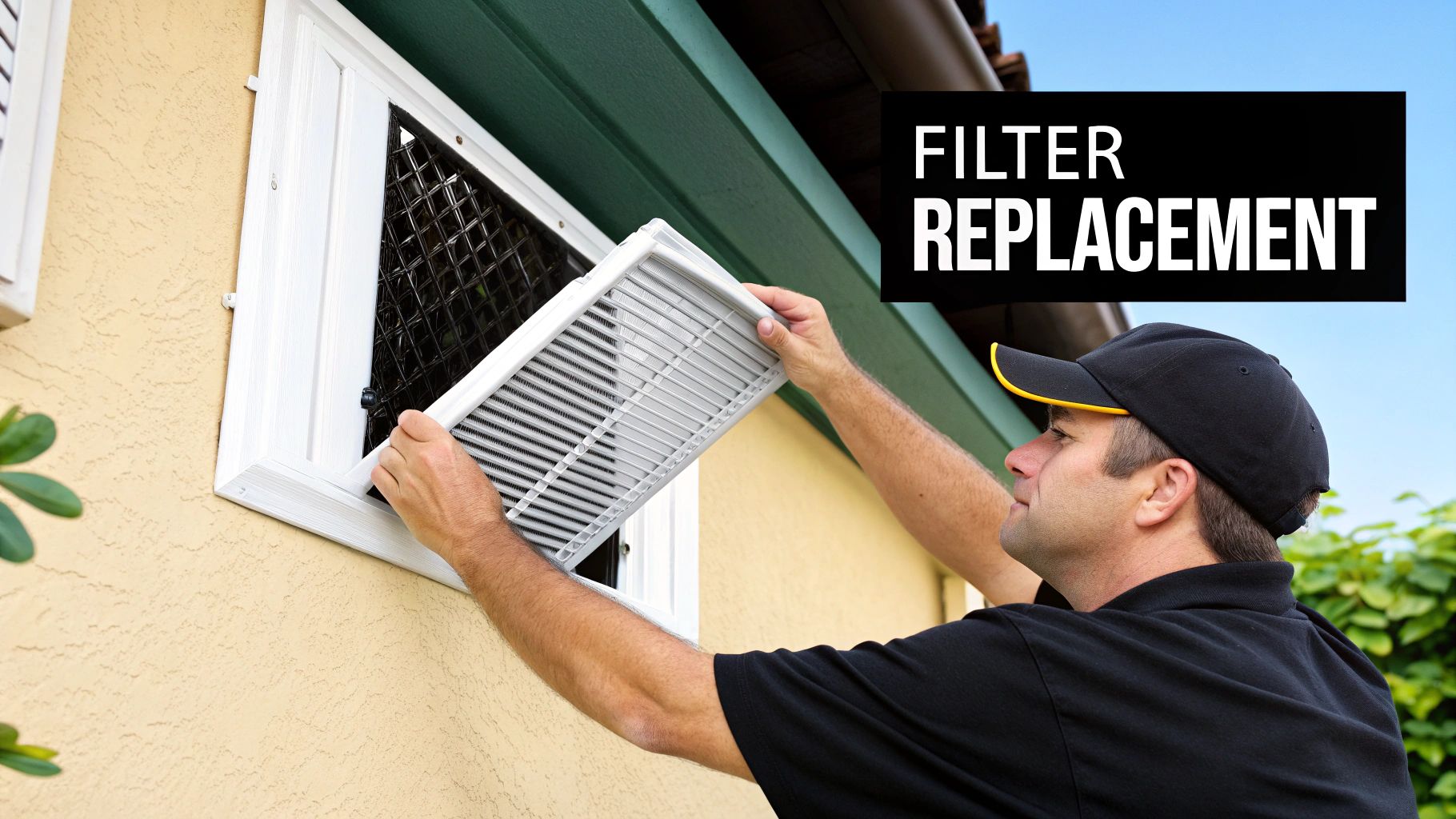
Why HVAC Maintenance is a Top Priority
Consistent HVAC maintenance directly impacts your bottom line and reputation as a landlord. It prevents the most common and disruptive tenant complaints while extending the lifespan of one of your property's most expensive components. A well-maintained system uses less energy, saving tenants money on utility bills, which is a significant factor in lease renewals.
Consider these real-world examples of successful implementation:
- Large-Scale Savings: Property management giant Greystar reported saving an estimated $2 million annually across its portfolio by implementing a robust preventive HVAC maintenance program.
- Reduced Emergency Calls: An apartment complex in Phoenix, Arizona, saw an 80% reduction in emergency HVAC service calls after instituting a mandatory monthly filter replacement program for all units.
- Increased Tenant Satisfaction: A property owner in Chicago tracked tenant satisfaction scores, which rose from 3.2 to 4.7 (out of 5) within a year of committing to consistent, scheduled HVAC tune-ups.
Key Insight: Proactive HVAC care isn't an expense; it's an investment. The cost of a semi-annual professional tune-up is a fraction of the cost of an emergency system replacement and the potential loss of a good tenant.
Actionable Maintenance Schedule and Tips
Implementing a structured HVAC maintenance plan is straightforward. Here’s a breakdown of what to do and when to do it.
Monthly:
- Replace or Clean Air Filters: This is the single most important task. Clogged filters restrict airflow, strain the system, and worsen air quality.
- Visually Inspect Vents: Ensure vents are unblocked by furniture or debris.
Seasonally (Spring and Fall):
- Schedule Professional Tune-Ups: Hire a qualified technician to inspect, clean, and service the system before the high-demand cooling and heating seasons.
- Clear Debris: Remove leaves, dirt, and branches from around the outdoor condenser unit to ensure proper airflow.
For a visual guide on what a professional inspection entails, see the video below.
To stay on track, buy filters in bulk for cost savings and use digital calendar reminders for monthly changes. It's also wise to educate your tenants on how to identify early warning signs, such as strange noises or weak airflow, so they can report issues immediately. Finally, keep detailed maintenance logs for each property; this is crucial for warranty claims and tracking the system's long-term health.
2. Plumbing System Maintenance and Leak Detection
Following closely behind HVAC, the plumbing system represents another critical area where proactive maintenance pays significant dividends. Water damage from a seemingly minor leak can quickly become one of the most destructive and expensive repairs a landlord can face. A comprehensive approach to plumbing maintenance involves regular inspections of pipes, fixtures, water heaters, and drainage systems to prevent catastrophic failures and protect the structural integrity of your property.
This proactive strategy shifts the focus from reacting to a flood to preventing one. It involves establishing a routine for checking for leaks, testing water pressure, inspecting for corrosion, and ensuring drains are clear. Ignoring these tasks can lead to widespread water damage, mold growth, tenant displacement, and costly emergency calls, making plumbing a vital part of any rental property maintenance checklist.
Why Plumbing Maintenance is a Top Priority
Consistent plumbing maintenance is essential for preserving your property's value and ensuring tenant safety and satisfaction. Undetected leaks can compromise structural components, lead to hazardous mold, and create major disruptions for your tenants. A well-maintained plumbing system operates efficiently, prevents waste, and avoids the kind of emergency situations that damage both your property and your reputation.
Consider these real-world examples of successful implementation:
- Massive Damage Prevention: Property management firm AvalonBay reportedly prevents an estimated $10 million in water damage annually across its portfolio by implementing proactive plumbing maintenance and leak detection technology.
- Catastrophe Averted: A rental property owner in Seattle avoided over $50,000 in potential flood damage and tenant relocation costs by catching a small, slow leak behind a washing machine during a routine quarterly inspection.
- Reduced Emergency Calls: A landlord in Florida implemented quarterly drain cleanings and fixture checks, resulting in a 70% reduction in plumbing-related emergency calls within the first year.
Key Insight: Proactive plumbing care is a form of insurance. The small cost and effort of regular inspections are insignificant compared to the financial and logistical nightmare of a major water damage event.
Actionable Maintenance Schedule and Tips
Implementing a structured plumbing maintenance plan is key to preventing water-related disasters. Here’s a breakdown of what to do and when to do it.
Monthly:
- Check Under Sinks and Around Toilets: Perform a quick visual inspection for any signs of moisture, drips, or water stains.
- Test All Faucets and Toilets: Ensure they are functioning correctly without running continuously or leaking.
Quarterly:
- Inspect and Clean Drains: Check all sink, shower, and tub drains for slow drainage and use a drain cleaner or snake as needed to prevent clogs.
- Test Sump Pump (if applicable): Pour a bucket of water into the sump pit to ensure the pump activates correctly.
Annually:
- Flush Water Heater: Drain the tank to remove sediment buildup, which improves efficiency and extends the unit's lifespan. For a complete guide on inspections, you can see more in this comprehensive rental property inspection checklist.
- Inspect Appliance Hoses: Check the hoses for washing machines and dishwashers for any cracks, bulges, or signs of wear.
To enhance your strategy, install smart water leak detectors in high-risk areas like laundry rooms, basements, and under water heaters. Educate tenants on the location of the main water shut-off valve for emergencies. Finally, keep a log of all inspections and repairs for each property to track the health of the system and for potential insurance purposes.
3. Electrical System Safety Inspection
Among the most critical, yet often overlooked, items on a rental property maintenance checklist is the proactive inspection of the electrical system. Faulty wiring, aging components, and overloaded circuits are silent hazards that pose a significant risk of fire and tenant injury. A methodical approach to inspecting outlets, switches, circuit breakers, and panels is not just about code compliance; it's a fundamental responsibility for ensuring tenant safety and mitigating catastrophic property damage.
This task involves moving beyond a reactive stance where problems are only addressed after a failure. It requires a scheduled routine of checks and tests to identify potential dangers before they escalate. Neglecting the electrical system can lead to devastating fires, legal liability, and a complete loss of trust from your tenants, making it an essential, non-negotiable aspect of property management.
Why Electrical Maintenance is a Top Priority
Consistent electrical safety inspections directly protect your assets, your tenants, and your financial stability. Identifying and rectifying electrical hazards is one of the most effective ways to prevent property fires, which are among the most destructive and costly incidents a landlord can face. Furthermore, a well-documented maintenance log demonstrates due diligence, which can be invaluable in the event of an insurance claim or legal dispute.
Consider these real-world examples of successful implementation:
- Major Fire Aversion: Camden Property Trust, a major real estate investment trust, credits its routine inspection protocol for discovering faulty wiring in an older building, a finding that prompted an immediate rewire and likely averted a major fire.
- Reduced Insurance Claims: A property management company in Florida implemented monthly GFCI tests and annual panel inspections, leading to a reported 60% reduction in electrical-related insurance claims over a two-year period.
- Liability Prevention: A landlord in New York prevented a potential lawsuit after a scheduled inspection uncovered a dangerously corroded and overheating electrical panel, which was replaced before causing harm to the tenant or property.
Key Insight: Proactive electrical inspections are not an optional expense but a core component of risk management. The cost of hiring a licensed electrician for an annual inspection is minuscule compared to the potential cost of a fire, property loss, and legal liability.
Actionable Maintenance Schedule and Tips
Implementing a structured electrical safety plan is a straightforward process. Here’s a breakdown of what to do and when to do it.
Monthly:
- Test All GFCI Outlets: Press the "TEST" button on all Ground Fault Circuit Interrupter (GFCI) outlets (typically in kitchens, bathrooms, and outdoors) to ensure they trip, then press "RESET."
- Check Smoke/CO Detectors: Test all smoke and carbon monoxide detectors and replace batteries as needed.
Quarterly/During Tenant Turnover:
- Inspect Outlets and Switches: Visually check for any signs of damage, discoloration, or heat. Ensure faceplates are secure and not cracked.
- Check for Overloaded Circuits: Look for an excessive use of extension cords or power strips, which can indicate an electrical system struggling to meet tenant needs.
Annually:
- Professional Panel Inspection: Hire a licensed electrician to inspect the main electrical panel for signs of rust, corrosion, burnt wires, or incorrectly sized breakers. This is a critical step in a comprehensive rental property maintenance checklist.
To stay on track, create a digital log of all inspections and repairs for each property. Educate tenants on the importance of not overloading circuits and reporting any issues like flickering lights or sparking outlets immediately. For any task beyond a simple GFCI test or visual check, always hire a licensed electrician; electrical work is not a DIY project.
4. Roof and Gutter Maintenance
Often overlooked until a problem becomes severe, proactive roof and gutter maintenance is a cornerstone of protecting a rental property's structural integrity. The roof is the primary defense against the elements, and its failure can lead to catastrophic water damage, mold growth, and compromised insulation. A systematic approach to inspecting and clearing these systems prevents small, easily managed issues from turning into costly, tenant-disrupting emergencies.
This involves scheduled checks for damaged shingles, clearing debris from gutters and downspouts, and ensuring water is effectively channeled away from the foundation. Neglecting this part of your rental property maintenance checklist can result in rotted wood, damaged drywall, foundation issues, and pest infestations, all of which are far more expensive to remediate than the cost of routine upkeep.
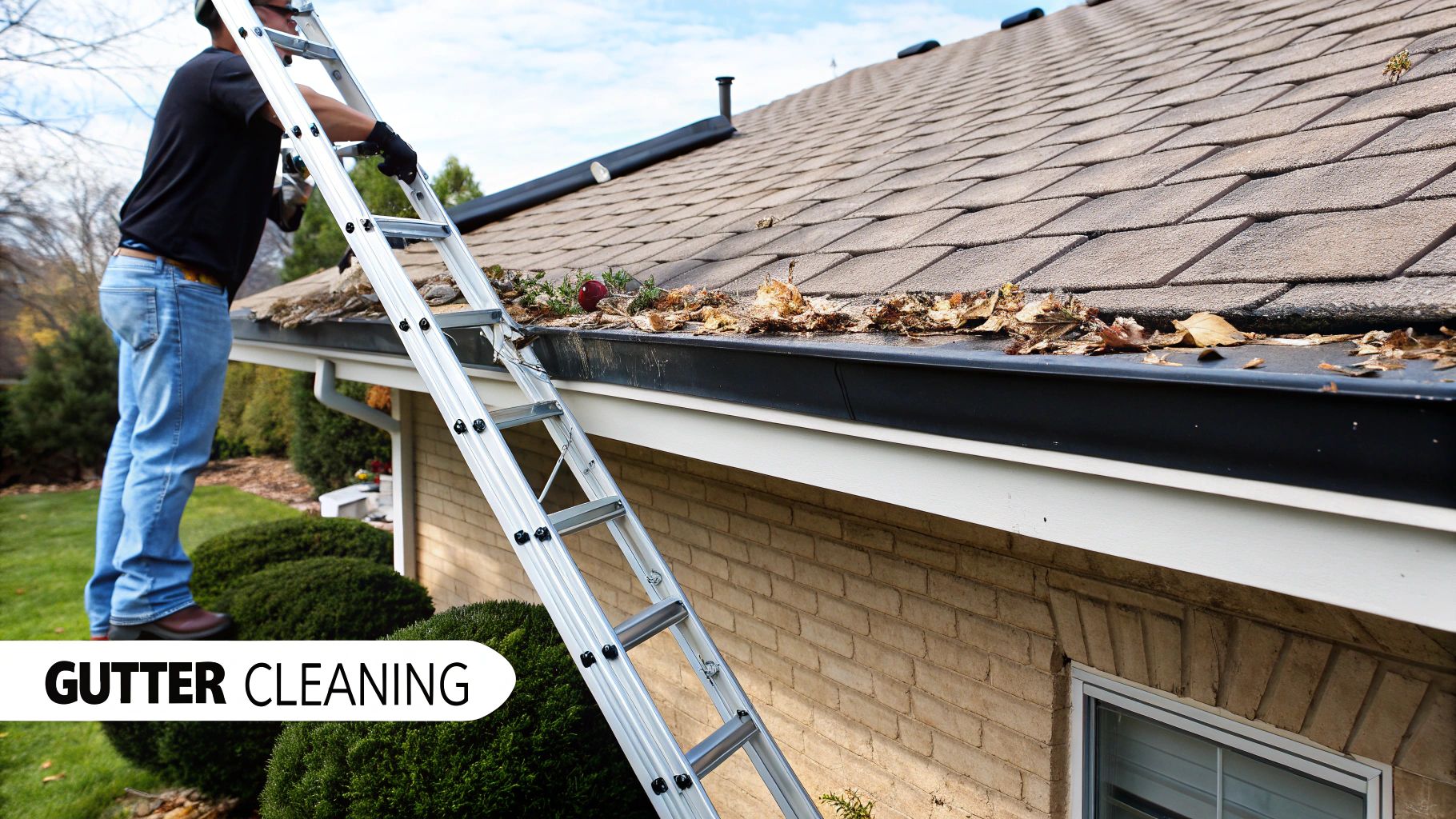
Why Roof Maintenance is a Top Priority
Consistent roof and gutter care directly preserves your property's value and prevents some of the most destructive and expensive repairs a landlord can face. It extends the lifespan of the roof, safeguards the building's interior, and demonstrates a commitment to tenant safety and well-being. A clean, functional gutter system is also critical for preventing ice dams in colder climates and foundation erosion in wetter regions.
Consider these real-world examples of successful implementation:
- Massive Cost Avoidance: Property management firm Equity Residential reported saving an estimated $5 million in premature roof replacements across its portfolio by implementing comprehensive preventive maintenance programs.
- Interior Damage Prevention: A property owner in Oregon prevented an estimated $30,000 in potential interior water damage by catching and repairing a small, hidden roof leak during a routine annual inspection.
- Reduced Insurance Claims: An apartment complex in Texas reduced its water-related insurance claims by 45% within two years of instituting mandatory quarterly roof and gutter maintenance checks.
Key Insight: Viewing roof maintenance as an operational necessity, not a reactive repair, is crucial. The minor cost and effort of a semi-annual gutter cleaning and roof inspection are insignificant compared to the expense of repairing widespread water damage and the subsequent loss of rental income.
Actionable Maintenance Schedule and Tips
Implementing a structured roof maintenance plan is a straightforward process that protects your investment. Here’s a breakdown of what to do and when to do it.
Quarterly or After Major Storms:
- Visual Ground Inspection: Walk the property perimeter and look for any missing, curled, or damaged shingles.
- Check Downspouts: Ensure water is flowing freely from downspouts and is directed away from the foundation.
Semi-Annually (Spring and Fall):
- Clean Gutters and Downspouts: Remove all leaves, twigs, and debris to prevent blockages and water overflow. This is the most critical task.
- Trim Overhanging Branches: Cut back any tree limbs that are touching or hanging directly over the roof to prevent damage and debris accumulation.
- Inspect Attic/Crawlspace: Check the underside of the roof deck from the attic for any signs of water stains, moisture, or daylight, which indicate a leak.
To ensure the longevity and safety of your rental property, a crucial component of your overall maintenance strategy involves regular roof care. You can find a more detailed comprehensive roof maintenance checklist to guide your process. For safety, always use proper equipment like a sturdy ladder and harnesses, or hire a professional for steep or multi-story roofs. Finally, document your inspections with photos and notes to create a detailed maintenance log for each property, which can be invaluable for insurance purposes and tracking the roof's condition over time.
5. Exterior Maintenance and Weatherproofing
The exterior of your rental property is its first line of defense against the elements and the first impression it makes on prospective tenants. Comprehensive exterior maintenance and weatherproofing involve the systematic inspection and repair of the building envelope, including siding, windows, doors, and caulking. This proactive approach is crucial for preventing water infiltration, improving energy efficiency, and maintaining strong curb appeal.
Neglecting the exterior can lead to significant structural damage, pest infestations, and high utility bills, all of which directly impact your property's value and profitability. A well-sealed and maintained exterior protects your investment from costly water damage repairs and creates a more comfortable, energy-efficient home for your tenants, making the property more desirable.
Why Exterior Maintenance is a Top Priority
A robust exterior maintenance plan is a cornerstone of any successful rental property maintenance checklist. It directly prevents some of the most expensive and destructive problems a landlord can face, from hidden rot and mold to foundational issues. A visually appealing and well-maintained exterior not only attracts higher-quality tenants but also commands higher rental rates and appreciates in value more reliably.
Consider these real-world examples of successful implementation:
- Increased Property Values: Real estate investment trust Related Companies reported that its portfolio-wide comprehensive exterior maintenance programs contributed to an average property value increase of 12%.
- Significant Energy Savings: A duplex owner in Minnesota successfully reduced annual heating costs by 25% across both units after a thorough weatherproofing project that included new caulk, weatherstripping, and sealing air leaks.
- Damage Prevention: A property manager in coastal Florida credited their proactive exterior maintenance schedule with preventing significant siding and window damage during a recent hurricane, saving thousands in potential repairs.
Key Insight: Viewing exterior maintenance as a seasonal chore is a mistake. It is an ongoing defense strategy that protects your building's structural integrity and boosts its long-term financial performance.
Actionable Maintenance Schedule and Tips
Integrating exterior care into your routine is essential. Here’s a breakdown of what to do and when to do it.
Annually (Typically in Spring or Fall):
- Power Wash Exterior: Remove dirt, mildew, and grime from siding, walkways, and decks to prevent long-term staining and decay.
- Inspect and Repair Siding: Look for cracks, gaps, or damage. Repair or replace sections as needed to prevent water intrusion.
- Check Caulking and Weatherstripping: Inspect seals around all windows and doors. Scrape out old, cracked caulk and apply a fresh, high-quality bead to prevent drafts and leaks.
Seasonally:
- Clean Gutters and Downspouts: This is critical in both spring and fall to ensure water is directed away from the foundation.
- Inspect Roof: Check for missing, loose, or damaged shingles, especially after major storms.
- Trim Trees and Shrubs: Keep vegetation from touching the siding or roof to prevent moisture damage and pests.
For landlords seeking expert guidance on managing these tasks, comprehensive services can make a significant difference. You can find more information about how professional property management handles exterior maintenance and other essential duties, ensuring your investment is protected. For more details on this, you can learn more about professional property management in Fresno. To stay organized, schedule major exterior work during favorable weather months to ensure proper curing and application of materials. Always use high-quality caulk and weatherstripping designed for exterior use; the extra cost upfront is worth the longevity. Finally, keep detailed records of paint colors and materials used to make future touch-ups and repairs seamless.
6. Appliance Maintenance and Safety Checks
Well-functioning appliances are a cornerstone of a positive tenant experience and a key part of any rental property maintenance checklist. From the refrigerator to the washer and dryer, these machines are used daily, and their failure can cause significant disruption. Proactive appliance maintenance and safety checks are essential for preventing costly emergency repairs, extending the lifespan of these assets, and ensuring the safety of your tenants.
This process involves more than just waiting for something to break. It means establishing a routine for cleaning, inspecting, and servicing all provided appliances. Neglecting this can lead to operational inefficiencies, higher utility bills, unexpected replacement costs, and, most importantly, serious safety hazards like fires or electrical faults.
Why Appliance Maintenance is a Top Priority
Systematic appliance care directly protects your investment and enhances tenant retention. A broken dishwasher or a faulty oven is a major inconvenience that can quickly sour a landlord-tenant relationship. Regular maintenance ensures these essential amenities remain reliable, preventing tenant complaints and the high cost of premature appliance replacement.
Consider these real-world examples of successful implementation:
- Reduced Replacement Costs: Real estate investment trust UDR, Inc. reported reducing its appliance replacement costs by an impressive 40% across its portfolio by shifting from a reactive to a preventive maintenance program.
- Fire Prevention: A landlord in California credited a routine maintenance check with preventing a potential apartment fire after a technician discovered a severely clogged and faulty dryer vent, a common and dangerous fire hazard.
- Increased Tenant Satisfaction: A property management firm saw tenant satisfaction scores related to in-unit amenities increase by 15% within six months of implementing and communicating a clear appliance maintenance schedule to its residents.
Key Insight: Regular appliance maintenance is a form of risk management. The small cost and effort of cleaning a dryer vent or checking a refrigerator coil are insignificant compared to the cost of a fire or a full appliance replacement.
Actionable Maintenance Schedule and Tips
Creating a structured appliance maintenance plan is a simple yet high-impact strategy. Here’s a breakdown of what to do and when.
Quarterly/Semi-Annually:
- Clean Refrigerator Coils: Dust and debris on condenser coils force the refrigerator to work harder. Clean them every six months to improve efficiency and prevent failure.
- Inspect and Clean Dryer Vents: This is a critical fire safety task. Check and clean the entire vent line, from the dryer to the exterior exhaust, to remove flammable lint buildup.
- Test GFCI Outlets: Regularly test all Ground Fault Circuit Interrupter outlets, especially those near water sources in kitchens and laundry rooms, to ensure they are functioning correctly.
Annually/During Tenant Turnover:
- Deep Clean Appliances: Perform a deep clean of the oven, dishwasher (run a cleaning cycle), and garbage disposal.
- Check Hoses and Connections: Inspect washer hoses and dishwasher connections for any signs of leaks, cracks, or brittleness and replace them as needed.
To stay organized, keep all appliance manuals and warranty information in a digital folder for easy access. Educate tenants on simple tasks like cleaning the dryer's lint trap after each use. Finally, plan ahead and proactively replace old, inefficient appliances before they fail completely, allowing you to schedule the replacement on your terms rather than during an emergency.
7. Smoke and Carbon Monoxide Detector Maintenance
Among the most critical duties on any rental property maintenance checklist, the systematic care of life-safety devices is non-negotiable. Smoke and carbon monoxide detectors are the first line of defense against tragedy, and their proper function is a matter of legal compliance, tenant safety, and significant liability protection. A proactive maintenance schedule ensures these devices work when needed most, safeguarding residents and your investment.
This process goes beyond simply installing detectors and hoping for the best. It requires a documented routine of testing, battery replacement, and eventual unit replacement to adhere to manufacturer guidelines and local regulations. Neglecting this crucial task exposes tenants to severe risks and landlords to devastating legal and financial consequences.
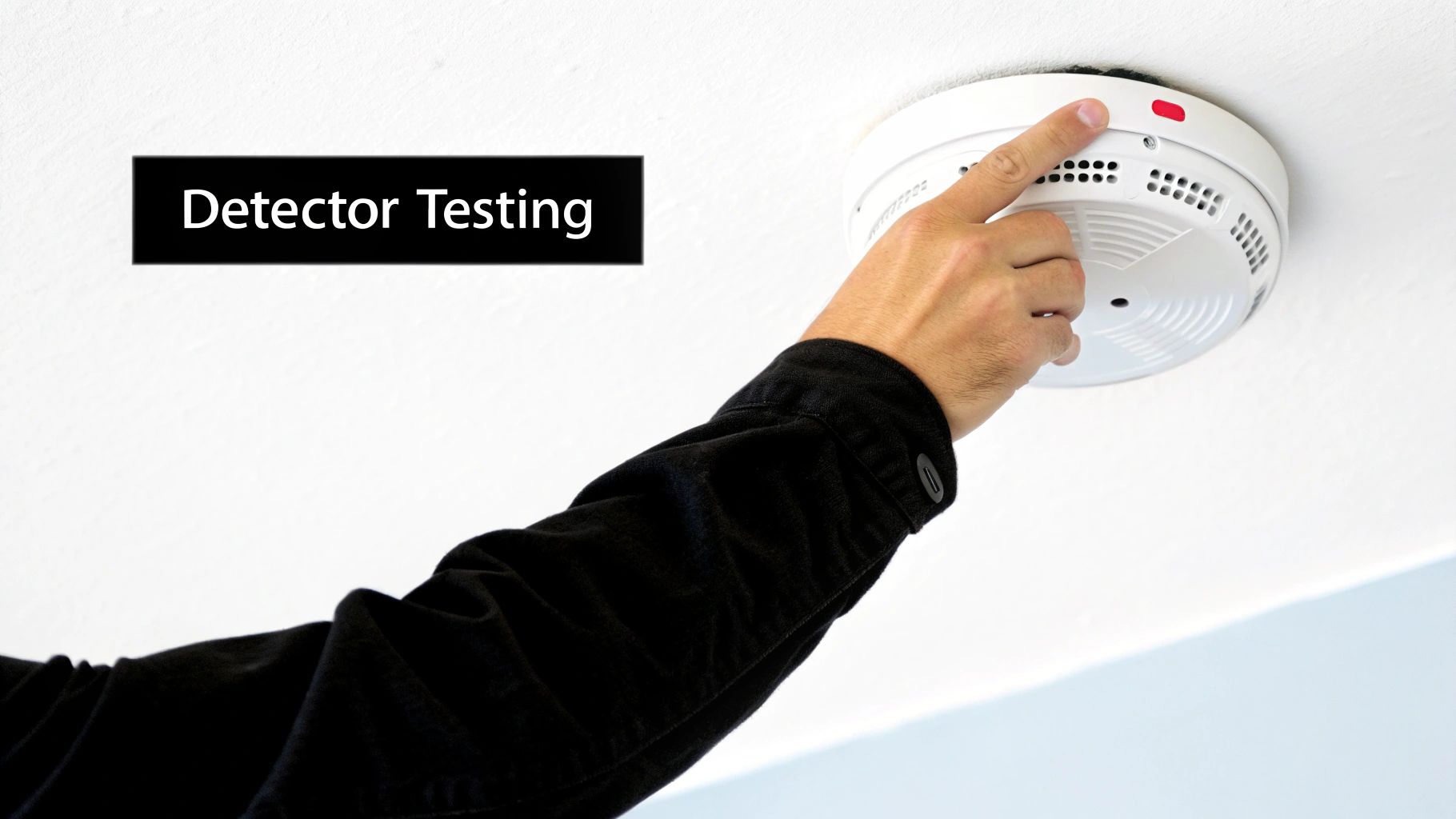
Why Detector Maintenance is a Top Priority
Vigilant smoke and carbon monoxide detector maintenance directly mitigates your greatest risks as a property owner. It fulfills a fundamental legal duty to provide a safe habitat, prevents catastrophic accidents, and is often a requirement for maintaining valid landlord insurance. Proper documentation of this maintenance can be a powerful defense in the event of an incident.
Consider these real-world examples of successful implementation:
- Prevented Tragedies: Apartment Investment and Management Company (Aimco) has credited its rigorous detector maintenance program with preventing 15 potential carbon monoxide incidents in a single year across its portfolio.
- Liability Aversion: The owner of a rental property in Chicago avoided a potential wrongful death lawsuit after a fire because maintenance logs proved the smoke detectors were tested and fully functional just weeks before the incident.
- Insurance Incentives: A property manager in Texas received a 10% discount on their insurance premium by providing exemplary fire safety maintenance records, including detailed logs of detector testing and battery replacements.
Key Insight: Functional smoke and CO detectors are not a feature; they are a fundamental life-safety system. The minor cost and effort of regular maintenance are insignificant compared to the potential for loss of life and the ensuing legal liability.
Actionable Maintenance Schedule and Tips
A structured approach to detector maintenance is simple to implement and essential for compliance. Here is a breakdown of what to do and when to do it.
Monthly:
- Test All Detectors: Press the "test" button on every smoke and CO detector in the unit to ensure the alarm sounds. Document the date and result of each test.
Semi-Annually:
- Replace Batteries: A common best practice is to change all batteries when the clocks change for daylight saving time in the spring and fall. This creates an easy-to-remember schedule.
Annually:
- Clean Detectors: Gently vacuum the exterior of the detectors with a soft brush attachment to remove dust and cobwebs that can interfere with sensor performance.
- Educate Tenants: Provide tenants with information on what the different alarm sounds mean and instruct them to report any chirping or malfunctions immediately. For comprehensive tenant safety, staying informed about topics such as Carbon Monoxide Awareness is an essential part of your strategy.
To streamline this process, use long-life lithium batteries to reduce the frequency of changes and minimize tenant disturbances. Always keep a stock of replacement detectors on hand for a quick swap-out when a unit fails or reaches its expiration date (typically 7-10 years). Finally, maintain meticulous records of all tests, battery changes, and replacements for each property. These logs are not just for your reference; they are crucial legal documents that can also help you secure better rates when you use a landlord insurance comparison tool.
7-Point Rental Maintenance Checklist Comparison
| Maintenance Task | Implementation Complexity 🔄 | Resource Requirements ⚡ | Expected Outcomes 📊 | Ideal Use Cases 💡 | Key Advantages ⭐ |
|---|---|---|---|---|---|
| HVAC System Inspection and Filter Replacement | Moderate – monthly filter changes + seasonal pro service | Monthly filter purchases, professional tune-ups | Prevents costly repairs, improves energy efficiency (15-30%), better air quality | Properties with central HVAC, rental units with tenant complaints | Extends system life by 5-10 years, reduces tenant turnover |
| Plumbing System Maintenance and Leak Detection | Moderate to High – some specialized tools, may need plumber | Leak detectors, inspection tools, quarterly pro checks | Prevents water damage, reduces water bills, preserves property value | Multi-unit properties, older plumbing systems | Avoids catastrophic damage, reduces emergency repairs |
| Electrical System Safety Inspection | High – requires electrical knowledge or licensed pro | Testing tools, licensed electrician for complex tasks | Prevents fires and hazards, meets code compliance | All properties requiring electrical safety checks | Reduces liability, prevents potentially fatal issues |
| Roof and Gutter Maintenance | Moderate to High – seasonal, potentially hazardous work | Safety equipment, roofing contractors as needed | Prevents water damage, extends roof lifespan | Properties exposed to weather, aging roofs | Maintains structural integrity, prevents ice dams |
| Exterior Maintenance and Weatherproofing | Moderate – weather-dependent, labor-intensive | Paint, caulk, pressure washers, scaffolding if needed | Improves energy efficiency, prevents water infiltration, enhances curb appeal | Large buildings, properties in harsh climates | Increases property value, extends building lifespan |
| Appliance Maintenance and Safety Checks | Moderate – requires appliance knowledge and time | Cleaning supplies, basic tools | Extends appliance lifespan, reduces energy use and emergency calls | Rental units with multiple appliances | Prevents safety hazards, maintains tenant satisfaction |
| Smoke and Carbon Monoxide Detector Maintenance | Low to Moderate – routine testing and battery replacement | Batteries, detector units | Saves lives, ensures legal compliance, reduces insurance costs | All rental properties, life-safety critical | Early hazard detection, low cost compared to risk |
Transforming Your Checklist into a Profitable Strategy
Navigating the extensive world of property upkeep can feel overwhelming, but the detailed rental property maintenance checklist provided in this guide serves as your strategic blueprint. It’s designed to transform your approach from reactive problem-solving to proactive asset management. By systematically addressing crucial areas like your HVAC, plumbing, electrical systems, and the building's exterior, you are not merely ticking off tasks; you are actively fortifying your investment against depreciation and unexpected failures.
This checklist is more than a list of chores. It's a foundational tool for creating a secure, desirable, and profitable rental property. Consistent, documented maintenance directly translates into tangible financial benefits, protecting your asset's value while minimizing the risk of tenant turnover and the staggering costs associated with emergency repairs.
From Checklist to High-Return Investment
The true power of this rental property maintenance checklist emerges when you view it as an investment strategy rather than an expense sheet. Each action, from replacing an HVAC filter to clearing gutters, contributes to a larger goal: maximizing your return on investment.
- Preventative vs. Reactive Costs: A scheduled plumbing inspection that costs a hundred dollars can prevent a catastrophic leak that results in thousands of dollars of water damage, mold remediation, and lost rent. This proactive mindset is the cornerstone of profitable landlording.
- Tenant Retention: A well-maintained property is a key driver of tenant satisfaction. Tenants who feel their living environment is cared for are more likely to renew their leases, reducing costly vacancy periods, marketing expenses, and turnover tasks like repainting and deep cleaning.
- Asset Value Preservation: Deferred maintenance is the fastest way to erode a property's value. A leaky roof or a faulty electrical panel doesn't just create an immediate problem; it can lead to structural damage and safety violations that significantly impact your property's market price. Following a structured checklist ensures your asset continues to appreciate.
Key Insight: The most successful landlords don't see maintenance as a cost center, but as a critical investment in their property's long-term financial performance and marketability. Every dollar spent on preventative care can save ten dollars in future emergency repairs.
Actionable Next Steps: Implementing Your Maintenance System
Knowledge is only potential power; action is where the value is unlocked. To effectively implement the insights from this guide, consider these immediate next steps:
- Customize Your Checklist: Use our comprehensive list as a template. Adapt it to your specific property, noting the age of appliances, the type of roofing material, and any unique features that require special attention.
- Create a Maintenance Calendar: Transfer the monthly, quarterly, and annual tasks onto a digital calendar or a physical planner. Set reminders for yourself or your property manager to ensure nothing falls through the cracks.
- Build Your Professional Network: Don't wait for an emergency. Identify and vet reliable, licensed professionals in your area for key systems like HVAC, plumbing, and electrical. Having these contacts ready saves you time, money, and stress when an issue arises.
- Document Everything: Keep meticulous records of all inspections, repairs, and maintenance activities. This documentation is invaluable for tracking expenses, handling tenant disputes, and demonstrating your due diligence as a landlord. It also provides a clear history of care when it's time to sell the property.
Implementing a robust rental property maintenance checklist is the definitive line between amateur landlording and professional property investment. It is the operational engine that protects your asset, ensures legal compliance, fosters positive tenant relationships, and ultimately drives profitability. While the initial setup requires diligence, the resulting peace of mind and financial security are well worth the effort, establishing a foundation for sustainable success in your real estate endeavors.
Are you ready to turn your rental property into a truly passive, high-performing investment? The team at Edinhart Realty and Property Management specializes in implementing comprehensive maintenance strategies for property owners throughout Fresno and the Central California region. Let us handle the checklist, so you can enjoy the returns. Visit us at Edinhart Realty and Property Management to learn more about our proactive approach.


