

A thorough rental inspection is more than a simple walkthrough; it's a critical process for protecting your investment, ensuring tenant safety, and maximizing profitability. A well-structured inspection prevents costly surprises, mitigates liability, and forms the bedrock of a successful landlord-tenant relationship. However, many landlords and property managers rely on generic, surface-level checklists that miss crucial details, leaving them vulnerable to unforeseen expenses and legal issues.
This guide moves beyond the obvious, providing a detailed, 8-point rental property inspection checklist designed to be actionable and comprehensive. We will break down each critical area, from the exterior structure and HVAC systems to safety features and legal documentation, equipping you with the specific insights needed to conduct inspections with confidence and precision.
Instead of just looking for scuff marks on a wall, you will learn to assess plumbing pressure, verify electrical code compliance, and evaluate the property's overall habitability with a professional eye. Whether you're a seasoned investor managing a portfolio or a new homeowner preparing your first rental, this checklist will help you maintain your property's value, ensure a safe environment for your tenants, and protect your bottom line.
1. Exterior Structural Assessment
An exterior structural assessment is the crucial first step in any comprehensive rental property inspection checklist. This foundational review goes beyond a simple walk-around; it’s a detailed evaluation of the building's primary defenses against the elements. A thorough assessment covers the foundation, roof, siding, gutters, windows, and doors, identifying potential safety hazards, emerging structural damage, and essential maintenance needs that directly impact tenant safety, property value, and long-term costs.
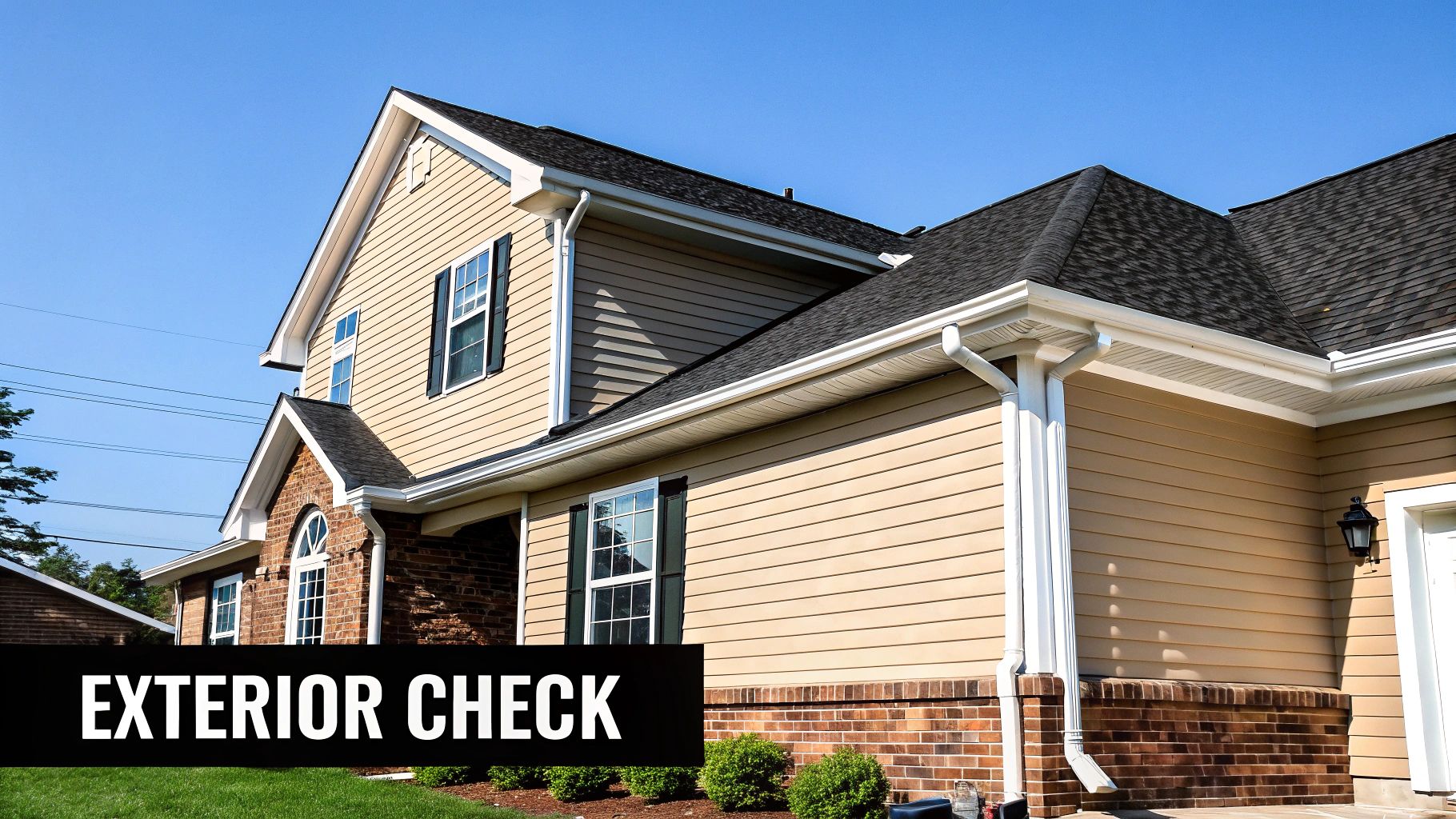
Neglecting the exterior can lead to catastrophic issues like water intrusion, pest infestations, and significant energy loss, all of which result in expensive repairs and tenant dissatisfaction. Proactive inspections protect your investment and ensure the property remains habitable and secure.
Why It's a Priority
Your property's exterior is its first line of defense. A small crack in the foundation or a few missing shingles can quickly escalate into major structural failures. By prioritizing this assessment, you can address minor issues before they become costly emergencies. For instance, large real estate investment firms like Invitation Homes perform regular exterior inspections to maintain portfolio value, while property management companies use detailed photo evidence of exterior conditions to support insurance claims and maintenance records. If you're looking for expert guidance, exploring professional Fresno property management services can provide insight into industry best practices.
Actionable Inspection Tips
To conduct an effective assessment, follow a systematic approach:
- Standardize Your Process: Use a detailed checklist for every inspection. Note the condition of the foundation (look for cracks or settling), siding (check for rot, warping, or damage), and the roof (scan for missing shingles, moss growth, or flashing issues).
- Embrace Technology: For multi-story properties, using drone technology for roof inspections provides a safe and highly detailed view without the risk of climbing ladders.
- Schedule Seasonally: Conduct inspections after major seasonal shifts, like after the winter thaw or a heavy rainy season, to catch weather-related damage promptly.
- Document Everything: Take high-resolution photos and videos of any areas of concern. This visual record is invaluable for maintenance planning and potential insurance claims.
- Know When to Call a Pro: If you discover significant foundation cracks, widespread water damage, or major roof issues, hire a certified structural engineer or licensed contractor for an expert evaluation.
This video provides a great visual guide on what to look for during an exterior walk-around:
2. HVAC System Performance Check
A thorough HVAC system performance check is a non-negotiable part of any rental property inspection checklist. This goes beyond simply turning the heat or AC on and off; it's a comprehensive evaluation of the heating, ventilation, and air conditioning systems to confirm operational integrity, energy efficiency, and tenant comfort. This inspection involves testing thermostats, inspecting filters and ductwork, and verifying consistent airflow, all of which are critical for preventing costly emergency repairs and ensuring a habitable environment.
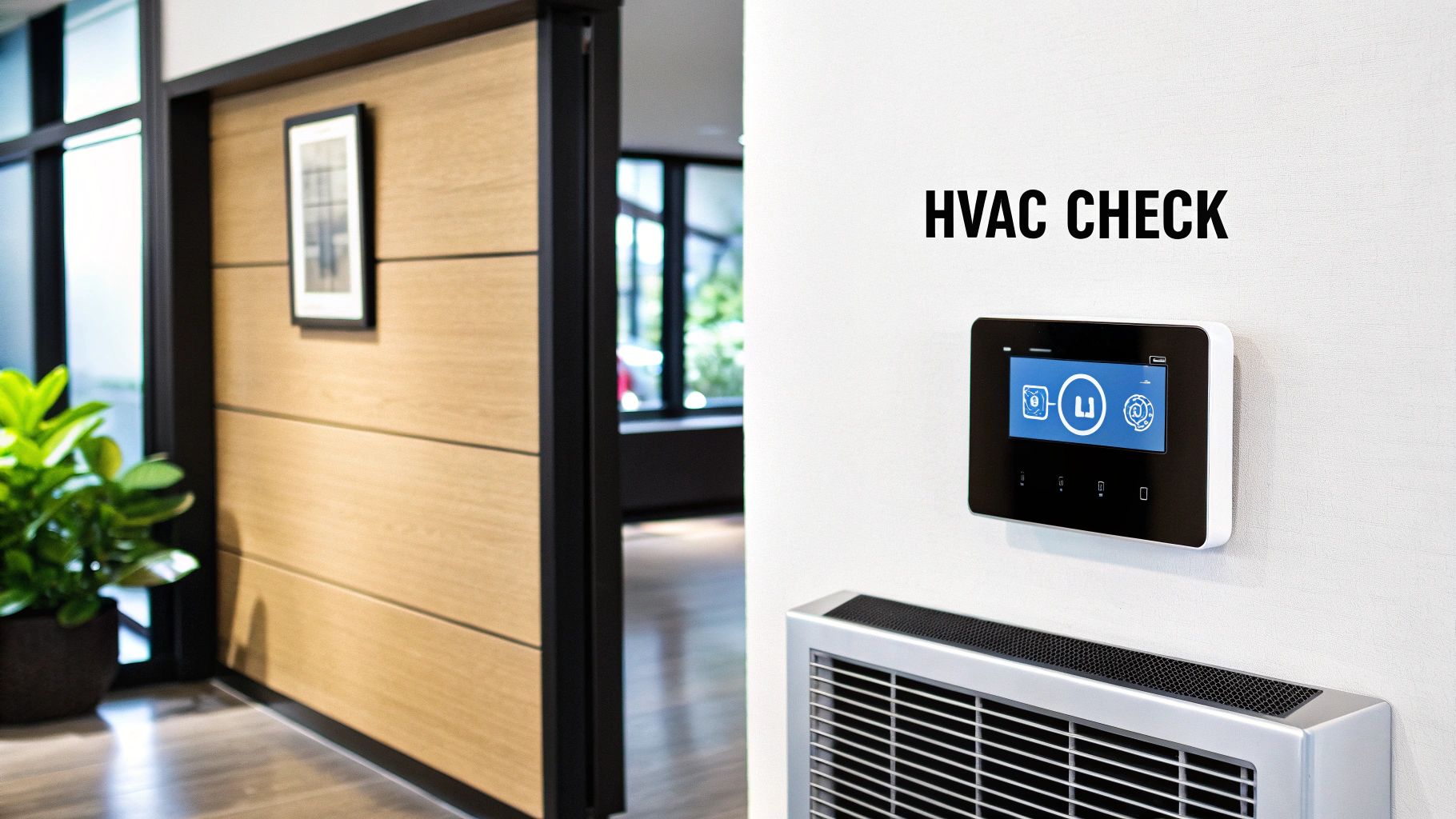
A malfunctioning HVAC system is one of the most common and urgent tenant complaints, leading to dissatisfaction and potential legal issues if not addressed promptly. Proactive inspections ensure these essential systems are reliable, protecting your tenants' well-being and your bottom line from unexpected failures.
Why It's a Priority
The HVAC system is the heart of a comfortable home, directly impacting tenant satisfaction and utility costs. A well-maintained unit runs more efficiently, saving money and extending the equipment's lifespan. Major property management firms like Lincoln Property Company have long integrated preventative HVAC maintenance into their standard procedures to minimize costly breakdowns. For a more detailed approach to maintaining these systems and ensuring their longevity, landlords can utilize an HVAC preventative maintenance checklist to guide their seasonal servicing.
Actionable Inspection Tips
To ensure your HVAC system is in peak condition, integrate these steps into your inspection process:
- Test All Functions: During your inspection, run both the heating and cooling cycles, regardless of the season, to confirm they engage properly. Check that the thermostat is accurate and responsive.
- Inspect Filters and Vents: Check the air filter and replace it if it's dirty, as a clogged filter is a primary cause of system failure. Ensure all vents are open and unblocked to allow for proper airflow.
- Schedule Professional Servicing: Arrange for a licensed HVAC technician to service the unit at least once a year, preferably before the peak heating or cooling season begins. Keep detailed service records for warranty and maintenance tracking.
- Educate Your Tenants: Provide simple instructions on how to operate the thermostat correctly and how to identify when the air filter needs changing. This small step empowers them to help maintain the system.
- Consider Smart Upgrades: Installing a smart thermostat allows for remote monitoring of system usage and performance, providing early warnings of potential issues and helping to manage energy consumption effectively.
3. Plumbing and Water System Evaluation
A plumbing and water system evaluation is a critical component of any rental property inspection checklist, focusing on the functionality and integrity of the entire water supply and drainage network. This detailed assessment involves checking all plumbing fixtures, from faucets and toilets to the water heater, for leaks, proper water pressure, and efficient drainage. A comprehensive evaluation identifies potential water damage risks, hidden blockages, and ensures the property's systems are up to code and ready for tenant use.
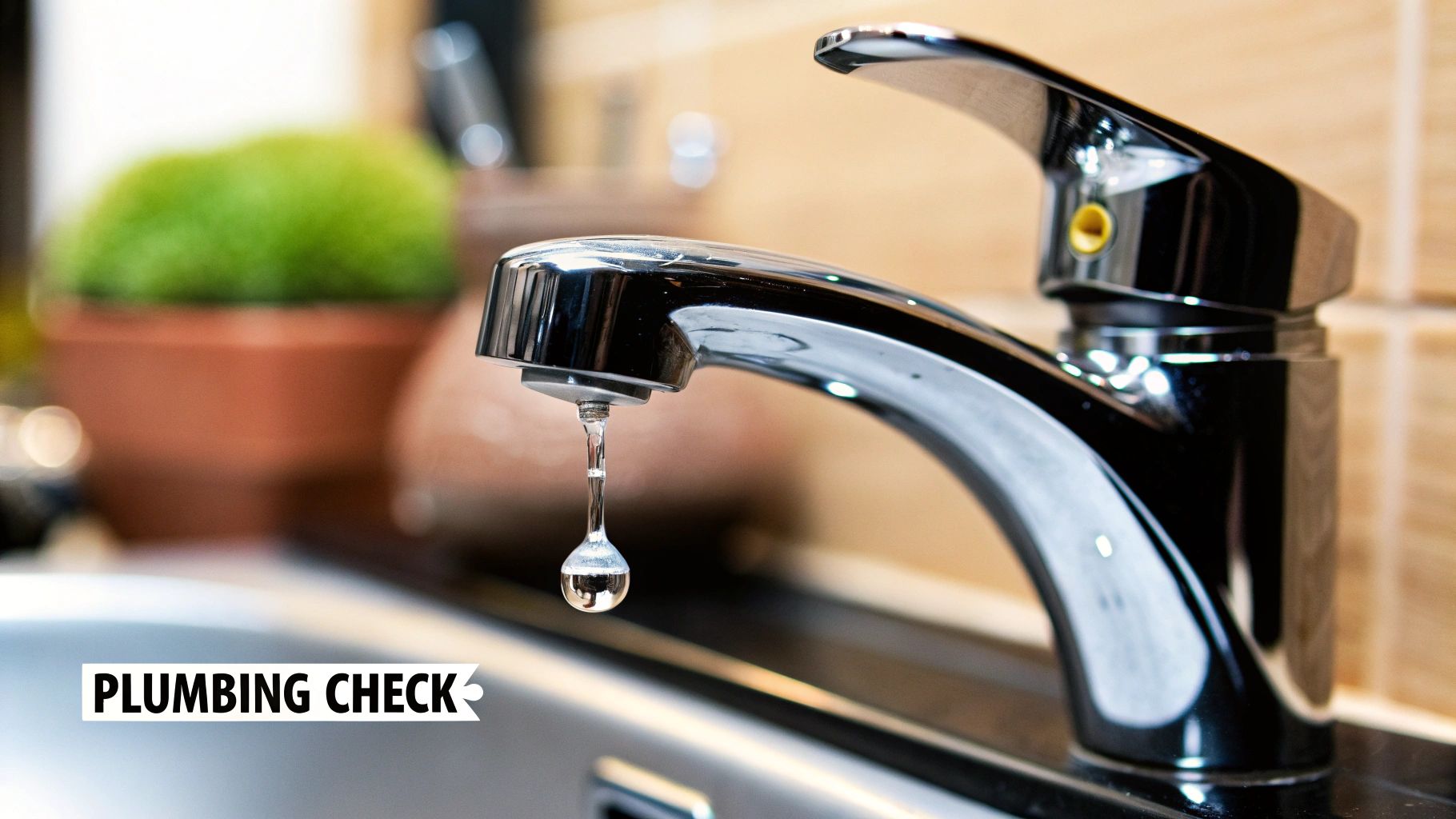
Ignoring minor plumbing issues like a slow drain or a dripping faucet can lead to major disasters, including widespread water damage, mold growth, and expensive emergency repairs. A proactive plumbing inspection protects your investment, conserves water, and prevents tenant complaints related to water access or damage.
Why It's a Priority
Your property's plumbing system is its circulatory system, and a failure in one area can quickly affect the entire home. Undetected leaks are one of the most destructive and costly issues a landlord can face. By prioritizing a thorough plumbing check, you can catch problems early. For example, large-scale operators like Camden Property Trust often install smart leak detection systems to get ahead of issues, while individual landlords can prevent costly breakdowns by having plumbers perform annual water heater flushing and inspections. For a deeper dive into specific plumbing checks, consider using an ultimate plumbing inspection checklist.
Actionable Inspection Tips
To conduct an effective plumbing evaluation, a systematic approach is key:
- Run All Fixtures: Systematically turn on every faucet (hot and cold), shower, and flush every toilet. Check for adequate water pressure, listen for unusual noises like hammering, and ensure everything drains quickly and completely.
- Inspect for Leaks: Look under every sink, around the base of toilets, and near the water heater for any signs of moisture, water stains, or active drips. Check that all caulking and seals around tubs, showers, and sinks are intact and free of mold.
- Document and Photograph: Take clear photos of every plumbing fixture, noting its condition in your inspection report. This creates a baseline to compare against during move-out inspections.
- Test During Peak Usage: If possible, test water pressure by running multiple fixtures simultaneously, such as a shower and a kitchen sink, to simulate real-world tenant usage.
- Maintain Professional Relationships: Keep a reliable, licensed plumbing contractor on call. For issues beyond a simple clog or minor leak, an expert can diagnose problems with water heaters, sewer lines, or main supply lines.
4. Electrical Safety and Code Compliance
A comprehensive inspection of the property's electrical systems is a non-negotiable part of any rental property inspection checklist. This detailed review involves examining the electrical panel, outlets, switches, light fixtures, and visible wiring to confirm they are functional, safe, and compliant with local and national electrical codes. This assessment is critical for preventing fire hazards, ensuring reliable power for tenants, and protecting the property owner from significant liability.
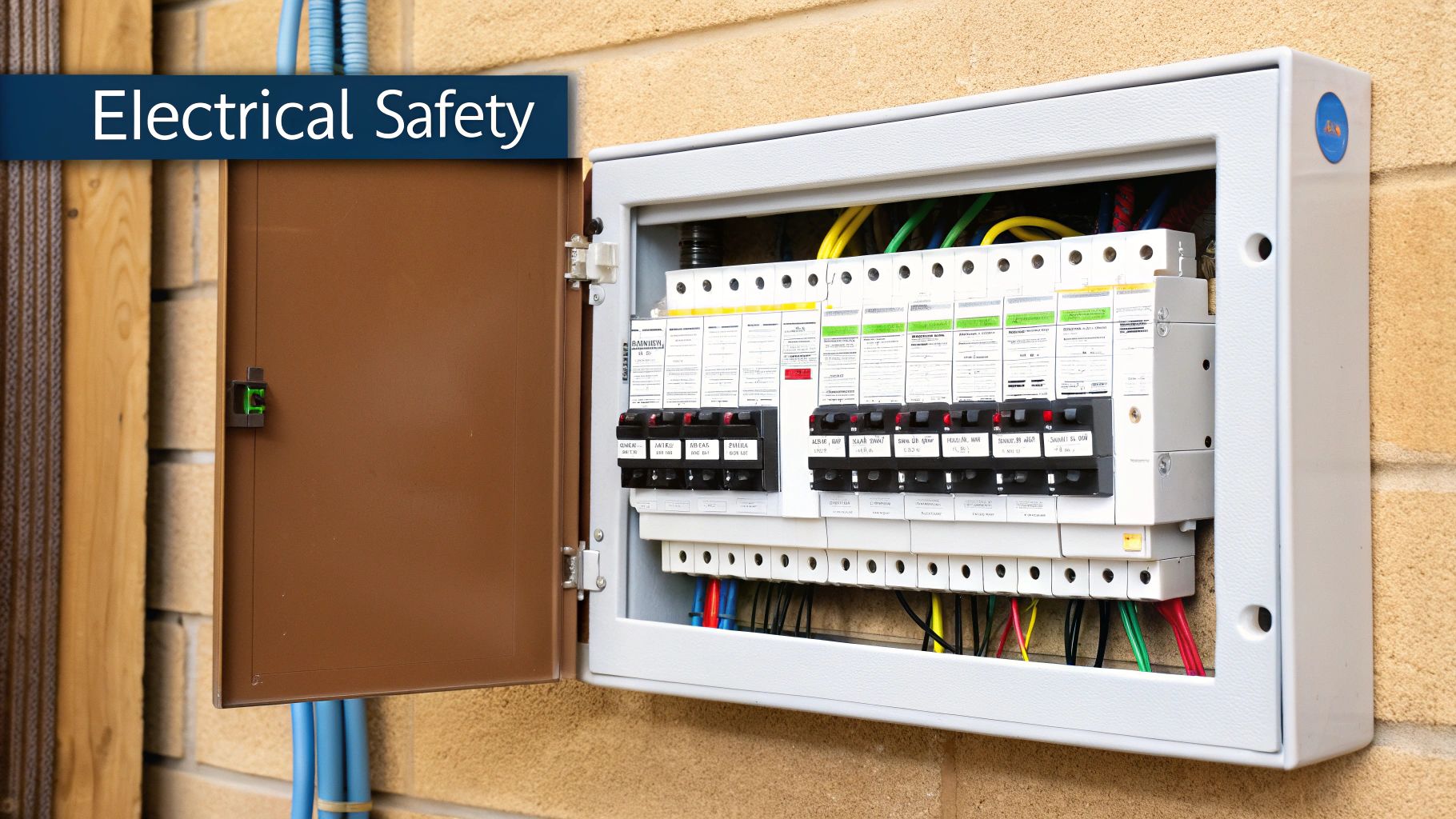
Faulty wiring and overloaded circuits are leading causes of residential fires. Overlooking electrical systems can lead to catastrophic property damage, tenant injury, and costly legal battles. A proactive inspection identifies potential dangers like outdated aluminum wiring, ungrounded outlets, or a malfunctioning breaker panel before they escalate into emergencies.
Why It's a Priority
Your property’s electrical system is its central nervous system, and any malfunction poses a severe risk. Prioritizing electrical safety and code compliance protects both your tenants and your investment. For instance, major insurance companies often require proof of a certified electrical inspection for coverage on older properties, and large-scale apartment operators like AvalonBay Communities conduct annual electrical safety audits to maintain safety standards across their portfolios. Following the guidance of organizations like the National Fire Protection Association (NFPA) not only ensures safety but also enhances property value and tenant trust.
Actionable Inspection Tips
To ensure your electrical systems are safe and up to code, follow these professional-grade steps:
- Hire a Licensed Electrician: Electrical work is not a DIY task. Always hire a qualified, licensed electrician for thorough inspections, repairs, and upgrades to ensure work is done correctly and safely.
- Test All GFCI Outlets: Ground Fault Circuit Interrupter (GFCI) outlets, required in areas near water like kitchens and bathrooms, should be tested monthly. Press the "TEST" button to ensure the circuit trips, then "RESET" to restore power.
- Check Smoke and Carbon Monoxide Detectors: Test every detector during each inspection and replace batteries at least once a year, or as recommended by the manufacturer. Hardwired detectors with battery backups are the industry standard.
- Inspect the Electrical Panel: Ensure the panel is clearly and accurately labeled. Look for signs of scorching, rust, or buzzing sounds, which indicate a need for immediate professional service.
- Verify Outlet and Switch Functionality: Test every outlet with an outlet tester to check for correct polarity and grounding. Flip every switch to confirm it operates the intended fixture without flickering.
5. Interior Condition and Habitability Assessment
A room-by-room assessment of the interior is a cornerstone of any effective rental property inspection checklist. This detailed review moves beyond surface-level tidiness to evaluate the core habitability of the space. A thorough inspection covers walls, ceilings, floors, fixtures, and appliances, identifying necessary repairs, cosmetic touch-ups, and potential safety concerns that directly impact tenant quality of life and your property's long-term value.
Neglecting the interior condition can lead to tenant disputes, higher turnover rates, and gradual property degradation. A proactive and well-documented interior inspection protects your asset, ensures compliance with habitability laws, and sets clear expectations for tenants regarding the property's condition at move-in and move-out.
Why It's a Priority
The interior is where your tenants live; its condition defines their daily experience and directly influences their decision to renew a lease. Minor issues like a dripping faucet, a malfunctioning appliance, or peeling paint can quickly become major points of dissatisfaction. By prioritizing a detailed interior assessment, you can maintain a safe, comfortable, and desirable living environment. For example, large management firms like Equity Residential use digital inspection apps to ensure every unit is assessed against the same high standards, while independent landlords often create detailed photo albums of each room to document its condition before a tenant moves in. This detailed record is essential for accurately assessing and justifying any security deposit deductions.
Actionable Inspection Tips
To conduct a comprehensive interior assessment, a methodical approach is key:
- Establish a Baseline: Before a tenant moves in, conduct a thorough inspection with detailed notes and high-resolution photos or videos. Major property management companies now use 360-degree cameras to create an immersive and indisputable record of the property's initial condition.
- Standardize Documentation: Use a consistent checklist for every room. Note the condition of walls (scuffs, holes), floors (stains, scratches), ceilings (water spots), and all fixtures. Use consistent lighting and angles for your photos to make before-and-after comparisons easy.
- Focus on High-Wear Areas: Pay extra attention to kitchens and bathrooms. Test all appliances, check for leaks under sinks, examine grout and caulk for mold or decay, and ensure proper ventilation.
- Involve Tenants: When possible, conduct the move-in walk-through with the new tenant. This collaborative process ensures both parties agree on the property's condition from day one, minimizing future disputes.
- Test Everything: Don't just look; test. Open and close every window and door, turn on every light switch and faucet, and run major appliances briefly to confirm they are in working order.
6. Safety and Security Features Verification
A thorough verification of safety and security features is a non-negotiable part of any rental property inspection checklist. This step involves a comprehensive check of all systems designed to protect tenants and the property itself, including locks, alarms, smoke detectors, carbon monoxide detectors, lighting, and any emergency equipment. A meticulous inspection ensures the property is not only secure but also fully compliant with local and national safety regulations, safeguarding both your tenants and your investment.
Failing to maintain these critical systems can lead to severe consequences, including tenant injuries, property damage from fire or break-ins, and significant legal liability. Proactively verifying these features mitigates risk, enhances tenant peace of mind, and upholds your responsibility as a landlord.
Why It's a Priority
Functional safety and security systems are fundamental to a habitable living environment. Beyond legal compliance, these features directly impact tenant retention and can influence insurance premiums. For instance, major real estate investment trusts like UDR, Inc. often install smart lock systems for enhanced security and monitoring. Similarly, many property managers partner with security companies to offer comprehensive alarm systems. Prioritizing these checks demonstrates a commitment to tenant well-being and can be a deciding factor for prospective renters. You can find out more by exploring a landlord insurance comparison to see how robust safety features can lead to better coverage and lower costs.
Actionable Inspection Tips
To ensure all safety and security measures are effective, follow a structured verification process:
- Test Every Device: During each inspection, physically test every smoke and carbon monoxide detector. Check all window and door locks to ensure they are secure and functioning correctly. Verify that exterior lighting and any security alarm systems are operational.
- Maintain Detailed Logs: Keep a record of all safety checks, including dates of battery replacements for detectors and any system maintenance or repairs. This documentation is crucial for liability protection and proving due diligence.
- Provide Clear Instructions: Ensure tenants have clear instructions for operating any security systems and know who to contact in an emergency. Post emergency contact numbers in a visible location.
- Upgrade for Modern Security: Consider upgrading to modern solutions like smart locks for keyless entry or security cameras for common areas. Landlords often use sealed smoke detectors with 10-year lithium batteries to reduce frequent maintenance needs.
- Schedule Regular Professional Audits: For complex alarm or fire suppression systems, schedule annual inspections with a certified professional to ensure they meet all required safety standards.
7. Pest Control and Environmental Health Check
A pest control and environmental health check is a critical component of a thorough rental property inspection checklist. This proactive inspection focuses on identifying signs of pest infestations like insects or rodents, as well as environmental hazards such as mold, mildew, and poor air quality. A comprehensive evaluation of these factors is essential for protecting tenant health, maintaining property value, and preventing costly remediation efforts down the line.
Ignoring subtle signs of pests or moisture can lead to widespread infestations, structural damage from wood-boring insects, and serious health risks for tenants. A diligent inspection ensures the living environment is safe, clean, and habitable, which is a fundamental landlord responsibility and key to tenant retention.
Why It's a Priority
Pests and environmental hazards pose significant risks to both your property and your tenants. An undetected rodent problem can damage wiring and insulation, while unnoticed mold growth can cause respiratory issues and allergic reactions. Prioritizing this check helps you mitigate liability and maintain a healthy living space. For example, large residential firms like Essex Property Trust implement integrated pest management (IPM) programs to prevent infestations before they start. Many property managers also install moisture sensors in high-risk areas like basements and crawl spaces to get ahead of mold issues.
Actionable Inspection Tips
To effectively assess for pests and environmental issues, follow these steps:
- Look for Evidence: During your inspection, search for pest droppings, gnaw marks, nests, and dead insects, especially in kitchens, bathrooms, basements, and attics. Check for musty odors or visible signs of mold on walls, ceilings, and around plumbing fixtures.
- Address Moisture Immediately: Identify and repair any sources of moisture, such as leaky pipes, roof leaks, or poor ventilation. Preventing moisture is the most effective way to prevent mold growth.
- Schedule Professional Audits: Arrange for annual professional pest inspections and consider periodic mold testing, especially in older properties or humid climates. This provides an expert assessment and peace of mind.
- Educate and Document: Provide tenants with information on preventing pests, such as proper food storage and waste disposal. Keep detailed records of all inspections, treatments, and any remediation efforts for legal and maintenance purposes.
- Check Ventilation: Ensure all exhaust fans in kitchens and bathrooms are functioning correctly to reduce humidity buildup, a common contributor to mold and mildew.
8. Documentation and Legal Compliance Review
A systematic review of documentation and legal compliance is a non-negotiable part of any comprehensive rental property inspection checklist. This administrative audit goes beyond the physical property, focusing on the essential paperwork that ensures your operation is legally sound. A thorough review covers rental licenses, inspection certificates, insurance policies, and tenant notification protocols, verifying that the property meets all local, state, and federal regulatory requirements and protecting you from potential legal liabilities.
Overlooking legal compliance can lead to severe consequences, including hefty fines, invalidated leases, and costly lawsuits. Maintaining organized and up-to-date documentation is not just good practice; it's a critical component of risk management that safeguards your investment and ensures a professional relationship with your tenants.
Why It's a Priority
Your property's compliance status is its legal foundation. A single expired permit or a missed tenant notification can undermine your authority as a landlord and expose you to significant risk. Prioritizing this review ensures your business operates within the bounds of the law, preventing avoidable legal entanglements. For instance, large-scale operators like Bozzuto Management Company utilize cloud-based systems to automate compliance tracking, while property management software like AppFolio provides independent landlords with tools to manage renewal dates and legal documents efficiently. Staying informed on specific regulations is key, and understanding resources on California landlord-tenant law can offer crucial insights into state-specific requirements.
Actionable Inspection Tips
To conduct an effective documentation and legal compliance review, integrate these steps into your process:
- Digitize and Organize: Use a digital document management system or property management software to store all essential paperwork. Create organized folders for each property, including leases, insurance policies, permits, and maintenance records.
- Set Calendar Alerts: Schedule calendar reminders for crucial renewal dates, such as rental licenses, safety inspection certificates (e.g., fire alarms, elevators), and insurance policies. Set alerts 60-90 days in advance.
- Stay Locally Informed: Local ordinances change frequently. Regularly check your municipal and state government websites or subscribe to newsletters from organizations like the National Association of Residential Property Managers (NARPM) to stay updated.
- Create a Compliance Checklist: Develop a master checklist of all required documents for each property. During your inspection, review this list to confirm that all files are current and complete.
- Consult Legal Counsel: When in doubt, especially regarding new legislation or complex tenant issues, consult with a real estate attorney. An annual legal check-up can prevent costly misinterpretations of the law.
8-Point Rental Inspection Comparison
| Inspection Type | Implementation Complexity 🔄 | Resource Requirements ⚡ | Expected Outcomes 📊 | Ideal Use Cases 💡 | Key Advantages ⭐ |
|---|---|---|---|---|---|
| Exterior Structural Assessment | Medium – Requires professional expertise | Moderate – Tools + certified inspectors | Early detection of structural issues, maintenance needs | Real estate investors, property managers, multi-story roofs | Prevents costly repairs, maintains property value |
| HVAC System Performance Check | Medium – Specialized tools and knowledge needed | Moderate – HVAC professionals + monitoring | Improved energy efficiency, air quality, system longevity | Property managers, landlords before peak seasons | Reduces energy costs, prevents system failures |
| Plumbing and Water System Evaluation | Medium to High – May need invasive testing | Moderate to High – Plumbing tools & pros | Leak detection, water efficiency, code compliance | Older properties, those with past water issues | Prevents water damage, maintains tenant comfort |
| Electrical Safety and Code Compliance | High – Licensed electrician required | High – Professional inspections + repairs | Fire hazard prevention, code compliance | All residential properties, insurance compliance | Prevents fires, reduces liability, code adherence |
| Interior Condition and Habitability Assessment | Medium – Detailed and time-intensive process | Low to Moderate – Camera, checklist | Maintains habitability, tenant satisfaction | Rental turnovers, security deposit documentation | Maintains tenant retention, documents property condition |
| Safety and Security Features Verification | Medium – Requires testing and some tech systems | Moderate – Safety device tools & maintenance | Enhances tenant safety, reduces liability | Properties needing safety compliance and security upgrades | Reduces risks, complies with safety codes |
| Pest Control and Environmental Health Check | Medium – Some specialized testing | Moderate – Pest control & environmental pros | Prevents infestations, health hazards | Properties with history of pests, moisture or mold issues | Maintains property health, reduces remediation costs |
| Documentation and Legal Compliance Review | Low to Medium – Ongoing document management | Low – Software and administrative resources | Avoids legal fines, ensures regulatory compliance | Property managers, landlords managing multiple properties | Prevents legal issues, maintains management standards |
Turning Your Checklist into a Proactive Management Strategy
Navigating the complexities of property ownership requires more than just a list; it demands a proactive, systematic approach. The detailed, eight-point rental property inspection checklist we've explored is your blueprint for transforming a routine task into a powerful asset protection strategy. It elevates the inspection process from a simple box-ticking exercise to a comprehensive health assessment for your investment.
By consistently evaluating everything from the Exterior Structural Assessment and HVAC System Performance to the nuanced details of Documentation and Legal Compliance, you create a resilient management framework. This isn't merely about finding issues. It’s about anticipating them, mitigating risks before they escalate, and fostering a safe, habitable environment that attracts and retains high-quality tenants. A thorough inspection is the foundation of a positive landlord-tenant relationship, built on transparency and a commitment to property upkeep.
From Checklist to Actionable Data
The true power of this comprehensive rental property inspection checklist is realized when the data you collect is used to drive decisions. A crack in the foundation noted during one inspection becomes a monitored item in the next. A minor faucet drip is fixed promptly, preventing water damage and a major bill down the line. Each completed checklist becomes a historical record, invaluable for tracking property depreciation, planning for capital expenditures, and providing concrete evidence in case of security deposit disputes.
To manage this wealth of information efficiently, many modern landlords and investors are turning to technology. Digital tools can help you schedule inspections, store photographic evidence, and generate reports with just a few clicks. If you're looking to streamline your workflow and keep meticulous records, you might want to compare various property management software solutions to find a platform that aligns with your portfolio's needs. This technological integration is the key to turning your checklist from a static document into a dynamic management tool.
Safeguarding Your Investment's Future
Ultimately, mastering the art of the property inspection is about safeguarding the long-term value and profitability of your real estate asset. It is your first line of defense against neglect, your primary tool for ensuring compliance, and your most effective method for maintaining tenant satisfaction. By embracing a detailed, consistent inspection process, you are not just managing a property; you are cultivating a successful, sustainable investment. This diligence pays dividends, ensuring your property remains a competitive and valuable asset in the rental market for years to come.
Ready to ensure your Central California property is managed with meticulous attention to detail? Let the experts at Edinhart Realty and Property Management handle the complexities of comprehensive inspections, from move-in to move-out. Contact us today to learn how our proactive management strategies can protect and enhance the value of your real estate investment.


