

So you've invested in a rental property. That's a huge step. But what now? Many landlords quickly discover that collecting rent is just the tip of the iceberg. True rental property management is the entire operating system for your investment, designed to maximize your financial returns while taking the day-to-day headaches off your plate.
What Is Rental Property Management, Really?

Think of a professional manager as the "Portfolio CEO" for your property. Their job isn't just to fill a vacancy; it's to protect your asset, keep it profitable, and navigate all the tricky legal stuff that comes with being a landlord in California.
This is the definitive answer to the classic DIY landlord nightmares. We’re talking about eliminating those late-night emergency calls about a burst pipe, the awkwardness of chasing down late rent, and the constant stress of keeping up with our state's complex tenant laws. It’s all about turning a high-maintenance headache into a high-performing, hands-off asset.
Shifting Your Role from Operator to Investor
At its core, professional rental properties management lets you step back from being a hands-on operator and become a strategic investor. Instead of worrying about clogged drains or sifting through rental applications, you get to focus on the big picture: your portfolio’s growth and performance.
That shift is what brings real peace of mind and sustainable returns. Let's be honest, managing a property well takes a ton of time and a surprisingly wide range of skills.
The real value of a property manager is their ability to handle the day-to-day fires so you don't have to. They are the buffer between you and the operational grind, letting you enjoy the perks of ownership without the burdens.
This professional buffer handles everything from market analysis to tenant relations, making sure every angle of your investment is covered by an expert.
The Key Pillars of Professional Management
To get a clearer picture, let's break down what a manager actually does. These are the core pillars that support a healthy, profitable rental property.
- Financial Performance: This starts with setting the right rent based on real-time market data. It includes collecting payments efficiently (usually with online systems) and giving you clear, detailed financial statements each month. The goal is simple: optimize your cash flow and keep you in the loop.
- Tenant Acquisition and Retention: A good manager runs smart marketing campaigns to attract a pool of qualified applicants. Their screening process is rigorous—they check credit, background, and rental history to find reliable tenants. Placing the right tenant from the start is the key to a smooth tenancy and fewer vacancies.
- Property Maintenance and Preservation: They coordinate every single repair, from routine fixes to middle-of-the-night emergencies. By using a network of trusted, vetted vendors, they ensure the work is done right and at a fair price, which protects the physical condition and value of your property.
- Legal Compliance and Risk Mitigation: This one is huge, especially in California. Staying compliant with local, state, and federal housing laws is non-negotiable. A professional manager makes sure every lease, notice, and procedure follows the letter of the law, shielding you from costly legal trouble.
Ultimately, hiring a professional property manager is an investment in stability and growth. It puts the systems and expertise in place to not only maintain your property but to boost its long-term value in a competitive market like Fresno or Clovis.
Understanding Core Management Services and Fees

When you're looking at rental properties management, it's easy to just focus on the monthly fee. But that's missing the bigger picture. A management fee isn’t just an expense; it’s a direct investment in the health, legal standing, and ultimately, the profitability of your property. Let's really get into what you're paying for.
Think of tenant screening. It's not just a simple background check. It's your first line of defense against future headaches. A rock-solid process that digs into credit history, verifies income and employment, and checks past rental behavior is what separates a great tenant from a costly problem. Getting this right from the start saves an unbelievable amount of time and money down the road.
Same goes for rent collection. It's so much more than just cashing a check. It’s about creating a reliable cash flow system. Professional managers use online portals to make payments easy and on-time, deal with late payments quickly and by the book, and give you crystal-clear financial statements. This turns a potentially unpredictable income stream into something you can actually count on.
Unpacking the Core Service Offerings
Beyond finding tenants and collecting rent, a full-service plan covers every operational angle of your investment. Each piece of the puzzle is designed to protect your asset and squeeze every last drop of performance out of it.
- Marketing and Leasing: Every day your property sits empty, it's costing you money. A huge part of good management is filling vacancies fast. For a deeper dive, check out these effective marketing strategies for rental properties. Managers use professional photos, write compelling listings, and get your property in front of as many eyes as possible to attract a deep pool of qualified applicants.
- Maintenance Coordination: This is your ticket to sleeping through the night. No more panicked calls about a broken pipe. Managers provide 24/7 response, sending out trusted, insured vendors for everything from a leaky faucet to an AC that dies in the middle of a Fresno summer. Plus, they’ve built relationships with these pros, often getting better pricing than you could on your own.
- Legal and Regulatory Compliance: Let's be honest, navigating California’s landlord-tenant laws is a minefield. A good manager makes sure every lease, notice, and eviction process is handled in strict compliance with local and state rules, including Fair Housing laws. This expertise is what keeps you out of expensive legal trouble.
Demystifying Common Fee Structures
Knowing how property managers charge is key to finding the right partner. The fee structure should make sense for the services you’re getting and your property's bottom line. While there are a few variations, two main models pop up most often.
Percentage-Based Fees
This is the most common setup. The manager takes a percentage of the monthly rent collected, usually somewhere between 8-12%. This model is great because it means their success is tied directly to yours—they don't get paid unless you get paid. It's a built-in incentive to keep a good, paying tenant in your property.
Flat-Rate Fees
Some companies charge a set monthly fee, no matter what the rent is. This gives you predictable expenses, which can be really appealing for owners of higher-end properties in places like Fresno or Clovis where rents are higher.
It's absolutely crucial to ask what’s included in that fee. Get the details on extra charges like leasing fees (a one-time fee for placing a new tenant), lease renewal fees, or any markups on maintenance. Real transparency here is a non-negotiable sign of a trustworthy manager.
Today's rental properties management is also powered by technology. The US market is set to grow from $81.52 billion in 2025 to $98.88 billion by 2029, and a big reason is tech. With 72% of tenants now preferring digital communication, things like online owner portals and automated maintenance requests are becoming standard. This tech gives you a clearer view of what's happening with your investment and makes everything run smoother.
Choosing Between Full Service and Placement Only
When you decide to hire professional help for your rental properties management, you’ll find yourself at a fork in the road. You can go one of two ways, and each path is built for a different kind of landlord with different goals, schedules, and ideas about what it means to be an investor.
Picking the right one is a big deal. It’s about making sure the service you get actually fits your life and your financial strategy.
Think of it like this: you could hire a general contractor to build your house from the ground up, managing every single detail from foundation to fixtures. That's Full-Service Management. Or, you could hire a specialized framer just to get the structure perfect, and you handle the rest yourself. That's Placement-Only. One is a complete, hands-off solution, while the other is a powerful tool for the hands-on investor.
Full Service Management: The Passive Income Model
Full-Service Management is for the property owner who wants to be just that—an owner, not a landlord. If you're a busy professional, an investor who lives out of state, or simply someone who values their time over day-to-day control, this is your answer. The whole point is to turn your rental into a truly passive income stream.
Your property manager becomes the CEO of your rental. They handle everything. Marketing the property, vetting every applicant, coordinating midnight emergency maintenance calls, and navigating the legal maze of tenant relations—it all falls on their shoulders. This all-in approach means you never get a call that interrupts dinner or a vacation.
This model is built on delegation and trust. You are handing over the day-to-day operations to an expert so you can focus on your career, family, or next investment opportunity. It transforms a rental property from a part-time job into a hands-off asset.
The fee structure, which is usually a percentage of the rent collected, perfectly aligns your manager's goals with yours. They don't get paid unless you do. This simple fact creates a powerful partnership focused on keeping the property filled with a great, paying tenant for the long haul.
Placement Only Service: The DIY Landlord with an Edge
The Placement-Only model, sometimes called a tenant locator service, is custom-made for the hands-on landlord. This is for the investor who has the time, is local, and feels comfortable managing the property but wants a professional advantage where it counts most: finding a top-tier tenant.
With this service, you're essentially plugging into a property manager's powerful marketing and screening machine. They will:
- Professionally market your property with high-quality photos and list it everywhere that matters, drawing in a huge pool of applicants.
- Conduct all the property showings, which saves you from the endless back-and-forth of scheduling with potential renters.
- Perform a deep-dive screening on the best applicants, covering credit, criminal background, and income verification.
- Draft a rock-solid, legally compliant lease to make sure your investment is protected right from the start.
Once the lease is signed and the tenant has the keys, the manager steps back and you take over. From that point on, you’re responsible for collecting rent, handling maintenance, and all communication. It's a fantastic option for local Fresno or Clovis landlords who know the ropes but want to slash vacancy time and avoid the nightmare of a bad tenant.
Making the Right Decision for Your Goals
So, which one is for you? It really just comes down to an honest look at your time, your experience, and what you want to get out of your investment. Neither is "better"—they just serve different needs.
To make the choice crystal clear, let's break it down side-by-side.
Full Service vs Placement Only: A Quick Comparison
This table cuts right to the chase, showing who handles what in each model. It’s a great way to see exactly where the responsibilities lie and decide which level of involvement feels right for you.
| Service Component | Full-Service Management | Placement-Only Service |
|---|---|---|
| Marketing & Showings | Included and ongoing | Included for one vacancy |
| Tenant Screening | Included for every vacancy | Included for one vacancy |
| Lease Drafting | Included and handles renewals | Included for initial lease |
| Rent Collection | Yes, handled by manager | No, handled by owner |
| Maintenance Coordination | Yes, 24/7 management | No, handled by owner |
| Tenant Communication | Yes, manager is the contact | No, owner is the contact |
| Move-Outs & Turnovers | Yes, fully managed | No, handled by owner |
Ultimately, the decision is pretty straightforward. If your main goal is to buy back your time and build a truly passive income, Full-Service Management is the obvious choice. But if you have the time for the daily tasks and just want an expert to help you land the perfect tenant, a Placement-Only service gives you that professional boost while keeping you firmly in the driver's seat.
How to Select the Right Property Manager
Picking a partner to manage your rental property is one of the biggest decisions you'll make as an investor. This isn't just about hiring someone to collect rent—you're entrusting a valuable asset to a professional who will protect it and help it grow. The right manager acts as your fiduciary, always putting your best interests first.
The wrong choice can spiral into costly vacancies, legal headaches, and a property that falls into disrepair. On the flip side, a great manager can seriously boost your net income and give you total peace of mind. The trick is to look beyond the monthly management fee and really dig into the competence, systems, and transparency they offer.
Key Questions to Ask Every Potential Manager
To sort the true professionals from the low-cost providers, you have to ask the right questions. Their answers will tell you everything you need to know about their operational depth and how seriously they take protecting your investment. Treat this like a job interview, because that's exactly what it is.
Here are the critical questions that should be on your list:
What is your tenant screening process? A vague answer here is a huge red flag. You want to hear specifics like credit score minimums, income requirements (usually 2.5-3x the rent), and a deep dive into their rental and eviction history. A strict, well-documented screening process is your number one defense against problems down the road.
How do you market properties to minimize vacancy? Ask them about their exact digital marketing plan. Are they using professional photography? Do they syndicate listings across all the major rental sites? What about social media? A proactive marketing strategy is crucial for attracting a big pool of qualified applicants fast.
How do you stay current with California's landlord-tenant laws? This is a big one, especially in a state with complex and constantly changing regulations. A solid manager will be part of professional organizations, attend legal seminars, and use official California Association of Realtors (C.A.R.) forms to keep you compliant.
The global property management market is expected to hit $31.87 billion by 2029, a jump driven by the growing need for expert tenant relations and lease administration. This growth also reflects a huge shift in what renters expect—a whopping 80% of tenants now prefer to pay rent online. That makes a manager’s use of modern, transparent systems a make-or-break factor in your decision.
Looking for Signs of a Value-Driven Partner
Beyond their answers, look for real proof of a well-run business. The best property managers run on systems that create efficiency and transparency, giving you a crystal-clear view of how your investment is performing at all times.
A major indicator is an online owner portal. This tool should give you 24/7 access to financial statements, maintenance requests, and inspection reports. It’s a clear sign that the company is all about open communication and accountability. Another positive sign is a proactive maintenance plan, where they schedule regular inspections to catch small issues before they become budget-busting problems.
This simple decision tree can help you figure out which management style fits your current needs and expertise.
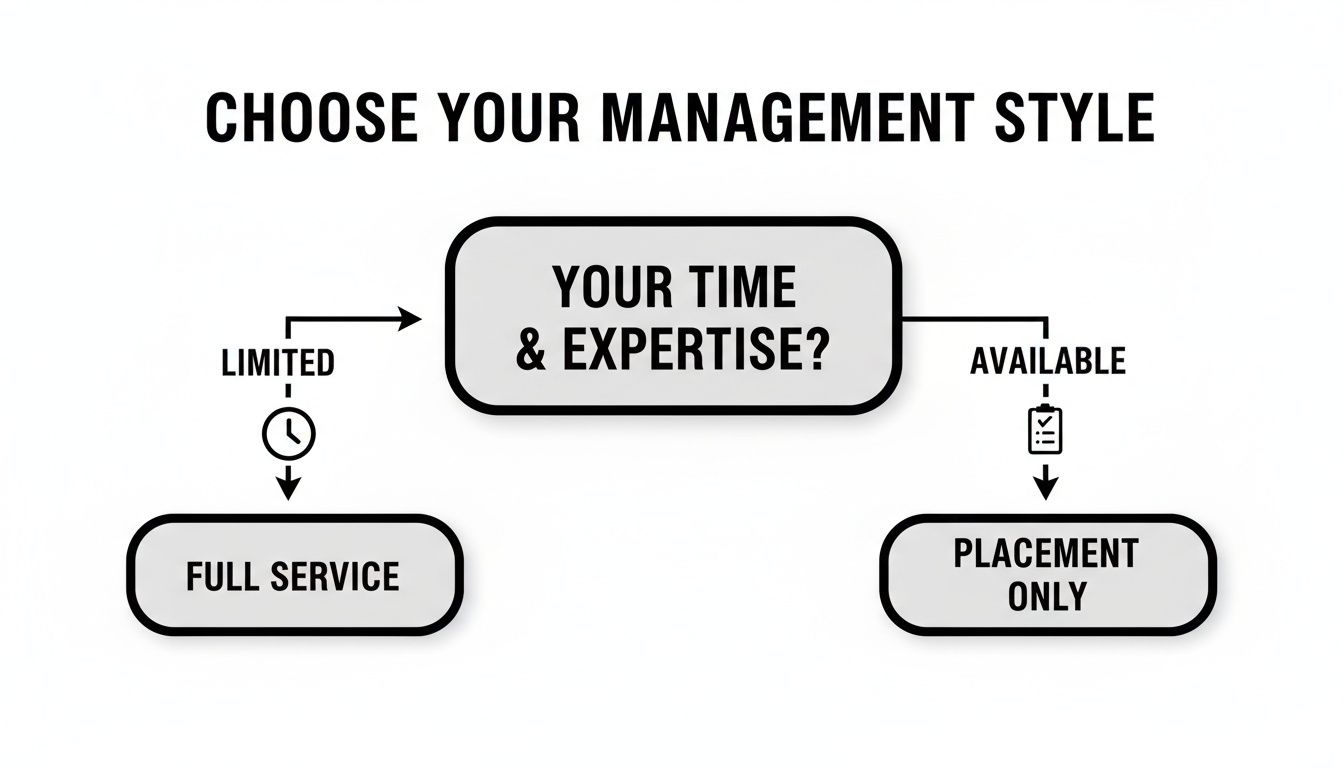
As the chart shows, if your time and expertise are limited, a Full-Service model is the way to go. But if you have those resources, a Placement-Only service could be a viable option for you.
A low monthly fee can be tempting, but it often hides costs in other places, like a bad tenant placement, deferred maintenance, or legal mistakes. A true partner invests in the systems and expertise that deliver long-term value, even if their fee is a little higher.
Making your choice based on competence and trust—not just the price tag—is the smartest move you can make. The right manager doesn't cost you money; they make you money by optimizing rent, cutting down on vacancies, and protecting your asset from predictable risks. For a more detailed breakdown, you can learn more about how to find a good property manager in our comprehensive guide. Choosing the right firm is the foundation for successful, stress-free property ownership.
Preparing Your Property for a Smooth Handover
You’ve done your homework and picked the right property manager. That's a huge step. Now, it's time to shift gears and focus on making the handoff from you to them as smooth as possible. This isn't just about dropping off the keys; it's about setting the stage for a great partnership right from day one.
A clean, organized handover gets rid of any guesswork, builds trust from the get-go, and helps your manager get your property on the market that much faster. When you prep your property and paperwork the right way, you’re giving your manager the tools they need to attract top-tier tenants and run things efficiently. Think of it as laying the foundation for a stress-free experience with your rental properties management team.
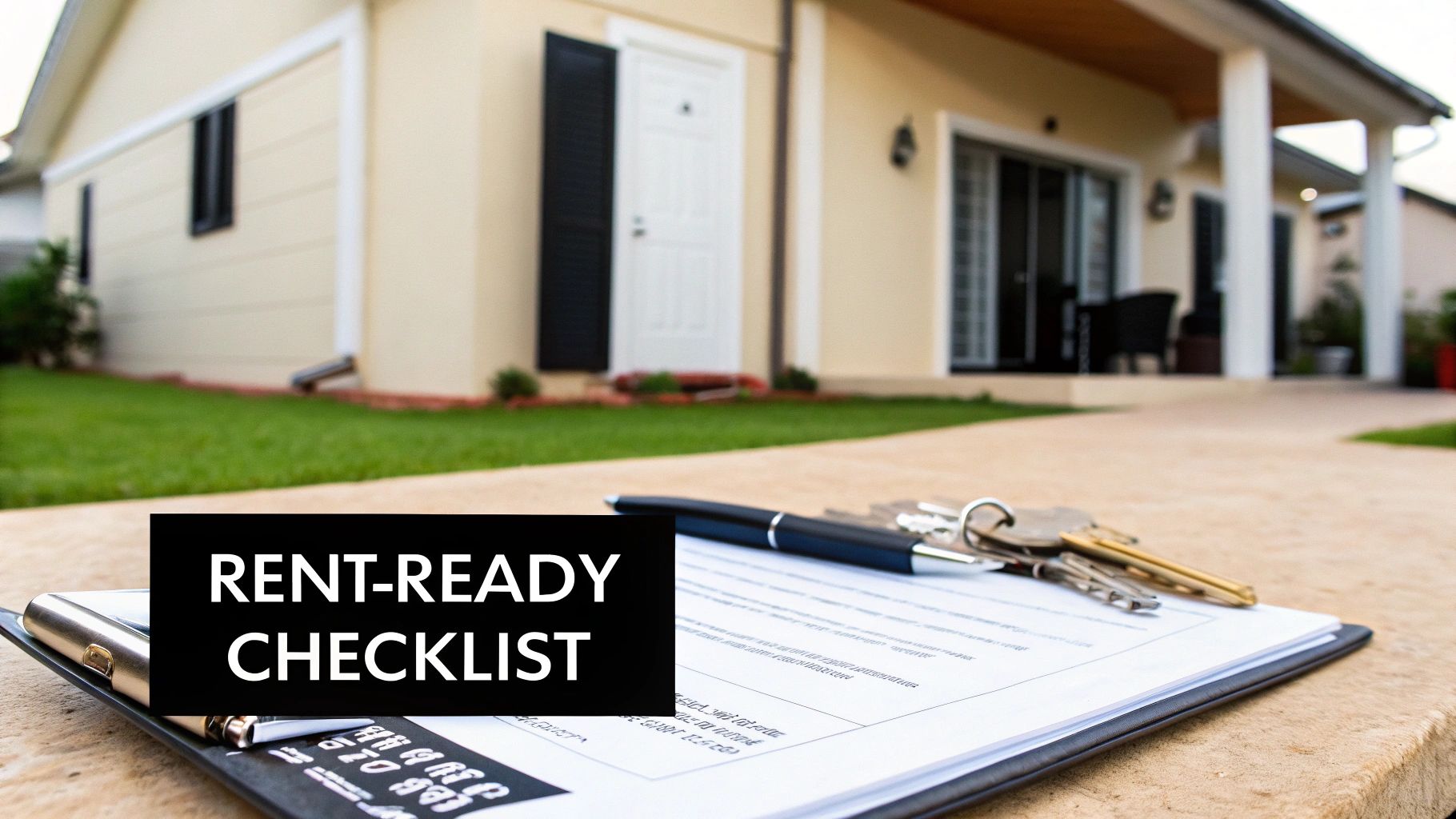
Your Essential Rent-Ready Checklist
Getting your property "rent-ready" is your first big task. We're not talking about a full-blown remodel, but about handling all the little details that make a place safe, functional, and inviting to potential renters. A home that shows well, rents well. It’s that simple.
Before your manager officially takes over, do a walkthrough with a critical eye. Hit these key areas:
- Core Repairs and Functionality: Take care of any nagging issues you already know about—that leaky faucet, the door that always sticks, or the finicky appliance. Make sure the big systems like the HVAC, plumbing, and electrical are all in solid working order.
- Safety and Compliance: This part is non-negotiable. Check that all smoke and carbon monoxide detectors have fresh batteries and are installed in the right spots. Double-check that every lock on the doors and windows is secure and works properly.
- Curb Appeal and Cleanliness: First impressions are everything. Simple things like mowing the lawn, trimming back the bushes, and power washing the entryway make a massive difference. To ensure a seamless transition for new tenants, proper preparation of the property, including professional move-out cleaning services, is crucial.
A property that looks good is a property that rents fast. Spending a little time and money upfront to present a clean, safe, and well-maintained home has a direct impact on your wallet by cutting down on vacancy time.
Tackling this list means you're handing over an asset that's ready to be marketed immediately. For a more granular breakdown, our comprehensive rental property inspection checklist will make sure you don't miss a thing.
Assembling Your Handover Documentation
Once the property itself is in shape, it's time to get your paperwork in order. Giving your manager a complete file lets them get up to speed quickly and manage the property without hitting any snags. This is a key part of professional rental properties management.
Get these essential documents together:
- Keys and Access: Have clearly labeled sets of keys ready for all doors, mailboxes, and any common areas. Don't forget garage door openers or gate codes.
- Existing Lease Agreements: If you have tenants in place, provide a copy of the current lease, their original application, and any addendums or related paperwork.
- Appliance Information: Gather up any warranties or user manuals you have for the refrigerator, stove, dishwasher, washer, and dryer. It’s a small thing that can save a lot of headaches later.
- Property Details: Put together a simple sheet with HOA contact info, details for the utility providers, and the locations of the main water and gas shut-off valves.
Being proactive with your documentation sets clear expectations and empowers your manager to handle just about any situation that comes their way. This is more important than ever. In the United States, property management revenue is on track to hit $136.9 billion by 2025, but managers are facing real challenges—with 60% citing compliance workloads as a major hurdle. Good documentation helps them navigate that complexity, which means smoother sailing for you.
Common Questions About Rental Property Management
Thinking about hiring a professional to manage your rental property is a big step, and it's bound to bring up a lot of questions. That’s perfectly normal. You want to be clear on the big stuff—pricing, how tenants are chosen, and what your role will be once you hand over the keys.
Let's dive into the practical, real-world questions we hear most often from property owners. These are the things every landlord thinks about when deciding if a professional partnership is the right move.
How Much Can My House Realistically Rent For?
Figuring out the right rent for your property is a mix of art and science. A good property manager doesn't just guess or pull a number out of thin air. They conduct a detailed comparative market analysis (CMA), which is way more than a quick glance at Zillow.
It's a deep dive into hyper-local data. We meticulously compare your home to similar properties that have rented very recently in your specific neighborhood. This analysis weighs all the critical factors:
- Exact square footage and layout.
- Any recent upgrades or unique amenities.
- The quality of the local school district.
- Current market demand and what the local vacancy rates look like.
The goal is to hit that sweet spot—a price that maximizes your income without letting the property sit empty for weeks on end. We then give you a data-backed report showing exactly how we landed on the recommended price. This empowers you to make a solid, informed decision about your investment’s potential.
How Strict Is Your Tenant Screening Process?
A rock-solid, unyielding screening process is the single best defense for your investment. Think of it as a firewall protecting you from the headaches of late payments, property damage, and even costly evictions down the road. Our approach is thorough, consistent, and applied to every single applicant, ensuring we are always in full compliance with Fair Housing laws.
Our process digs deep into several key areas:
- Full Credit Check: We review an applicant's entire credit history to get a clear picture of their financial responsibility.
- National Criminal Background Search: This is a crucial step for the safety and security of your property and the surrounding community.
- Employment and Income Verification: We don't just take their word for it. We confirm stable employment and require a gross monthly income of at least 2.5 to 3 times the rent.
- Landlord Reference Checks: We pick up the phone and talk to past landlords. This gives us priceless insight into an applicant's rental history and behavior.
Being 'strict' isn't about being difficult; it's about applying these high standards to everyone, every time. This consistent diligence is the foundation of successful property management, protecting your cash flow and the long-term health of your investment.
Will I Lose Control Over My Property?
This is a really common and totally understandable worry. But the truth is, hiring a manager is about building a partnership, not giving up your authority. As the owner, you're still in the driver's seat for all the major decisions. Think of yourself as the Chairman of the Board and the property manager as the CEO who carries out your vision.
You always have the final say on the big-picture items. For example, you will:
- Approve the final terms of the lease agreement.
- Set the rules on important things, like whether or not to allow pets.
- Authorize any significant repairs that go over a pre-agreed spending limit.
The manager’s role is to handle the day-to-day operations within the guidelines you set. With modern owner portals, you get 24/7 access to financial statements, maintenance logs, and inspection reports, so you’re always in the loop. You’re essentially trading the daily grind for high-level oversight, which frees up your time without costing you control.
How Are Maintenance and Repairs Handled?
We’ve built our maintenance system for one reason: to be efficient, cost-effective, and completely transparent for you. When a tenant submits a request through our online portal, our first move is to troubleshoot it with them. You'd be surprised how many "emergencies" can be solved with a quick phone call, saving you the cost of a service visit.
If a pro is needed, we send a trusted, licensed, and insured vendor from our network. For routine repairs under a spending limit that we set together, we handle the whole thing to get it fixed fast.
For bigger, more expensive jobs, it's a different story. We'll gather multiple quotes from qualified vendors and present them to you for your approval before any work starts. This guarantees you have the final word on major expenses. Plus, you get the benefit of our volume pricing with vendors, which often means you pay less than you could on your own. Every single work order and invoice is tracked and available for you to see anytime in your owner portal.
If you want a full checklist of what to ask any potential firm, our guide on questions to ask a property management company will help you vet them properly. This kind of oversight gives you total peace of mind, knowing your property is being cared for without you having to juggle the logistics.
At Edinhart Realty and Property Management, our goal is to provide unparalleled service that protects your investment and maximizes your returns. Whether you need comprehensive management or expert help placing the perfect tenant, we have the systems and local expertise to help you succeed. Learn more about how our services can benefit you at https://edinhart.com.


