

You're probably doing one of two things right now. You're either scrolling through rental listings trying to figure out why one California City house is priced far above another, or you're worried that the cheapest listing will turn into the most expensive mistake after move-in.
That's the right instinct.
When people try to rent a house in California City, they often focus on the monthly rent first and everything else second. In a thin market, that's backwards. The better approach is to judge value, screening quality, lease terms, and move-in risk together. A house that looks cheaper upfront can cost more in delays, repair issues, confusing lease language, or a poor management setup.
California City rewards renters who make decisions quickly, but not blindly. The goal isn't just to find a house. It's to find a house that is priced fairly for its condition, managed clearly, and likely to work for the full lease term.
Starting Your Search to Rent a House in California City
California City doesn't behave like a big metro rental market. You won't see endless options in every price band and neighborhood. Public market data shows a small rental pool, with as few as 44 rental properties listed at a time, and pricing can move around enough that old assumptions get stale fast. Realtor.com also reports 1,286 active home listings and a median days-on-market of 126 days for homes for sale, which helps explain why you need current comparables instead of relying on a number you saw a few months ago. Different trackers have reported average rents shifting from $1,408 to $1,785 within about a year, which is why timing matters when you decide what feels “normal” in this market (California City market data from Realtor.com).
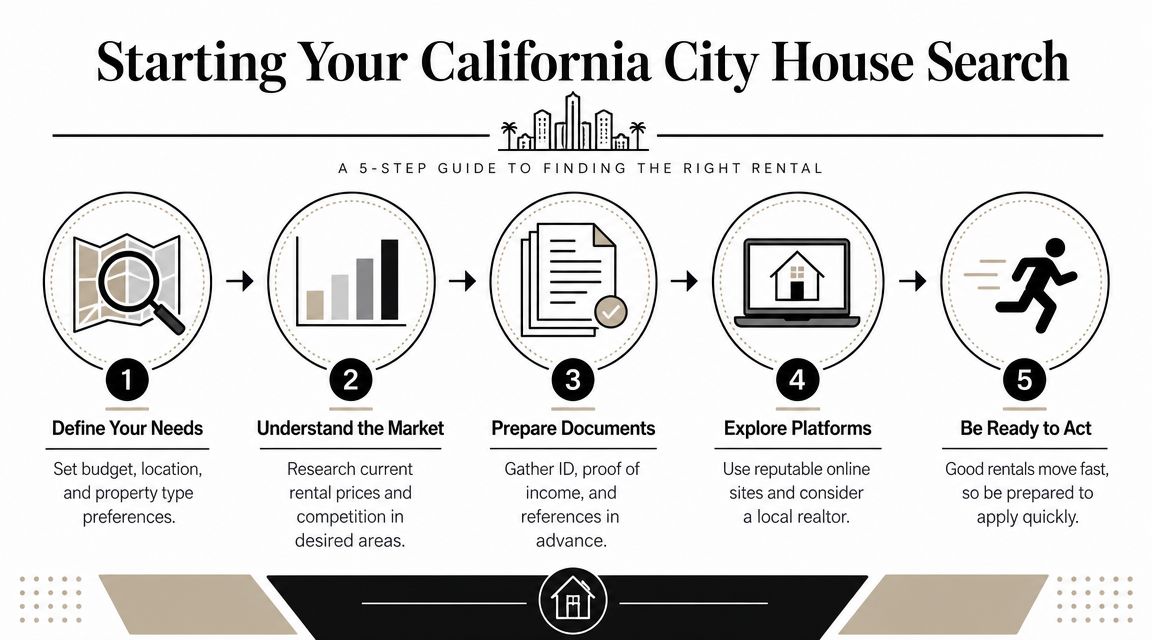
Build a search system, not just a bookmark list
If you want to rent house in California City without missing good options, use a simple operating routine.
- Set a real budget first. Don't start with the highest number you could possibly stretch to. Start with the number that still leaves room for utilities, moving costs, and a repair or travel surprise.
- Save searches on multiple portals. California City inventory is fragmented. One platform may show homes another one doesn't.
- Turn alerts on immediately. In a low-inventory market, delay costs you choices.
- Keep documents ready before touring. If a house checks the right boxes, you want to apply the same day.
- Call local managers, not just listing portals. Some firms know what's coming available before the broader public sees it.
For portal research, a practical place to compare your options is this roundup of rental listing websites for finding homes and houses. It's useful because California City listings can be scattered, and no single site gives the full picture.
Know where online listings fall short
Photos and listing descriptions help, but they can hide the details that matter most in a desert market and a smaller city. You still need to ask whether the home is professionally managed, whether maintenance is handled systematically, and whether the advertised condition matches reality.
Practical rule: In California City, the best listing isn't the one with the lowest rent. It's the one where the price, condition, and management setup make sense together.
If you're comparing listings posted by owners and managers, it also helps to understand how presentation affects your evaluation. Better visuals can make a home easier to assess from a distance, and some managers now easily generate property panoramas from text to create clearer remote previews of layout and flow. That doesn't replace an in-person walkthrough, but it can help you eliminate weak options sooner.
What to do in the first week of searching
Use your first week to narrow your standards, not to chase every listing.
A good first pass looks like this:
- Remove overpriced outliers: If a home is priced well above similar-looking options, ask what justifies it. Newer interior finish? Fenced yard? Pet flexibility? Included appliances?
- Flag incomplete listings: Sparse descriptions often mean more legwork on your side.
- Separate “tour now” from “watch list”: Don't spend your energy equally on every option.
- Track listing changes: If a home sits, the issue might be price, condition, location, or screening friction.
That discipline matters more in California City than in a deep inventory market. Fewer choices means every weak listing can steal time from a better one.
Evaluating Listings and Understanding True Rental Costs
A California City house can look affordable at first glance, then turn into a weak value once you factor in condition, utilities, commute, and move-in cash. In a market with limited choices, that distinction matters more than shaving $100 off the monthly rent.
Analysts at Trulia show a relatively small pool of single-family rentals in California City, and that thin supply is part of why pricing can feel inconsistent from one listing to the next. You will see homes clustered near the same rent point, but they are not offering the same living experience, maintenance risk, or lease flexibility (California City single-family rental listings on Trulia).
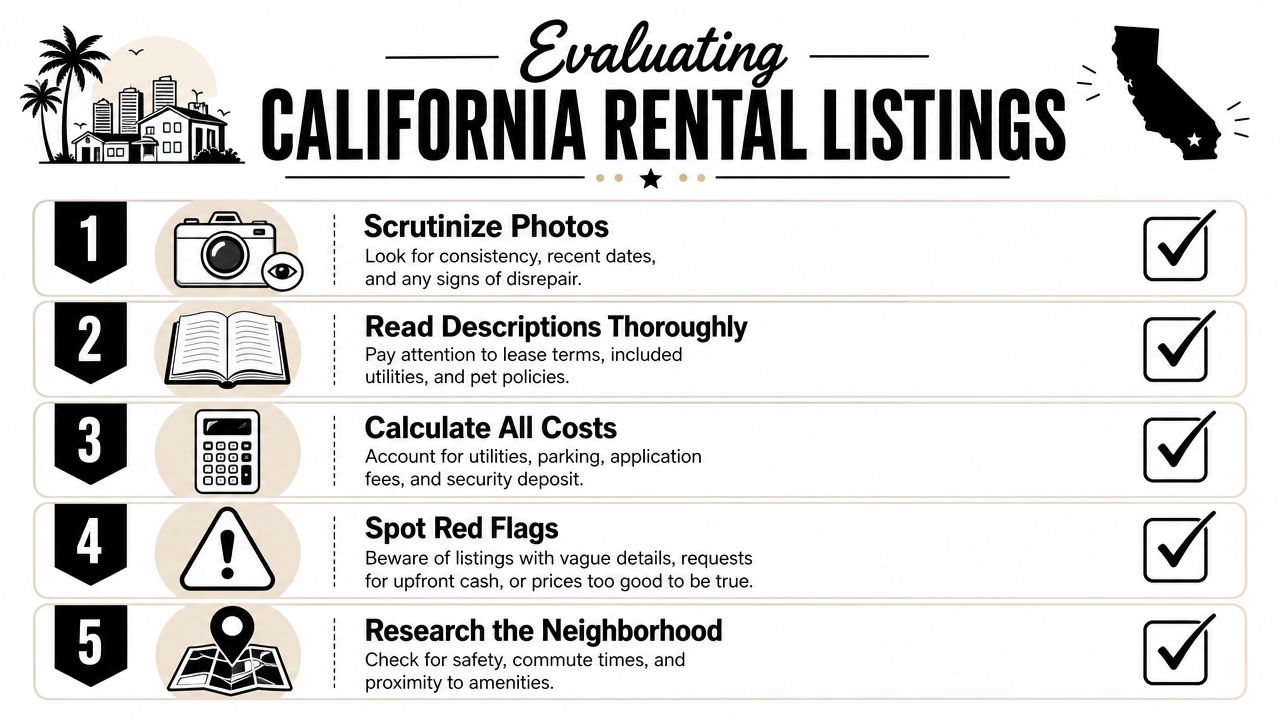
Use a value filter, not a price filter
A first-time renter usually compares listings by monthly rent alone. That is how people end up touring homes that were never good options.
Use a simple decision framework instead. Ask four questions before you book a showing. Is the home presented clearly? Does the condition justify the asking rent? Are the lease terms workable for your household? Does the location save or create costs in your daily routine?
That last point gets missed a lot. A cheaper house on paper can cost more over a year if it adds fuel, time, or utility burden.
When I review a California City listing, I usually place it in one of three buckets. Fairly priced. Cheap with a catch. Higher rent for a reason.
A house is often fairly priced when the photos line up with the description, the owner or manager answers basic questions upfront, and the rent fits the visible condition. A house is often cheap with a catch when the ad is vague, the photos avoid key rooms, or the contact process feels disorganized. A higher-rent listing can still be the better deal if it offers better upkeep, fenced outdoor space, included appliances, a clear pet policy, or a manager who runs a consistent process.
Use this table to screen listings before you spend time touring:
| What to check | What a strong listing looks like | What should make you pause |
|---|---|---|
| Photos | Consistent rooms, clean condition, clear exterior shots | Missing kitchen, missing bathrooms, only close-up photos |
| Description | Lease term, pet policy, appliances, contact method | Vague language, no specifics, generic copy |
| Rent level | Makes sense against visible condition | Much lower or higher without explanation |
| Management setup | Clear screening process and next steps | Informal or confusing instructions |
| Maintenance clues | Clean details, working fixtures, solid finishes | Stains, patched walls, incomplete repairs |
Budget for the full monthly cost
The advertised rent is one line item. Your actual housing cost usually includes several other expenses that determine whether the house is affordable.
Look at the numbers this way:
- Monthly rent: Start here, but do not stop here.
- Move-in funds: Confirm the full amount due before signing, including deposit and any approved fees.
- Utilities: Ask which services transfer into your name. A single-family house often means higher utility responsibility than an apartment.
- Pet costs: Get the exact policy in writing, including deposit, monthly pet rent, breed or size rules, and limits on the number of animals.
- Transportation: Map the drive to work, school, groceries, and regular errands. Distance affects cost.
- Maintenance burden tied to the property type: Yard size, older systems, and detached-home utility use can change your monthly spend even when the rent looks reasonable.
If you want a quick benchmark before applying, use this fair market rent calculator for California rentals to see whether the asking price falls into a reasonable range for the area.
Here is the practical question to ask: does this house justify its total monthly cost with reliability, usable space, and fewer headaches?
That question matters because low-inventory markets reward speed, but they also punish rushed decisions.
Red flags that matter in a small market
California City renters sometimes accept weak listings because there are fewer houses to choose from. That is understandable. It is also expensive when the problem shows up after move-in.
Pay close attention to these warning signs:
- Unclear readiness date: If no one can tell you when the property will be available, expect delays or unfinished repairs.
- Pressure for money before verification: Do not send funds until you have confirmed ownership or management authority and seen a legitimate application process.
- Photos that do not match the write-up: This often points to stale marketing or a listing copied from an older ad.
- Missing detail on repairs or systems: If the ad skips over the condition of basics like appliances, HVAC, or plumbing, ask directly.
- A rent number that only makes sense if you ignore the trade-offs: Lower price can mean higher utility bills, rougher condition, stricter limitations, or slower maintenance response.
In California City, compromise is normal. Paying for hidden problems is not.
Navigating the Application and Tenant Screening Process
The application stage is where many first-time renters lose a workable house. Not because they're unqualified, but because they're slow, incomplete, or unprepared.
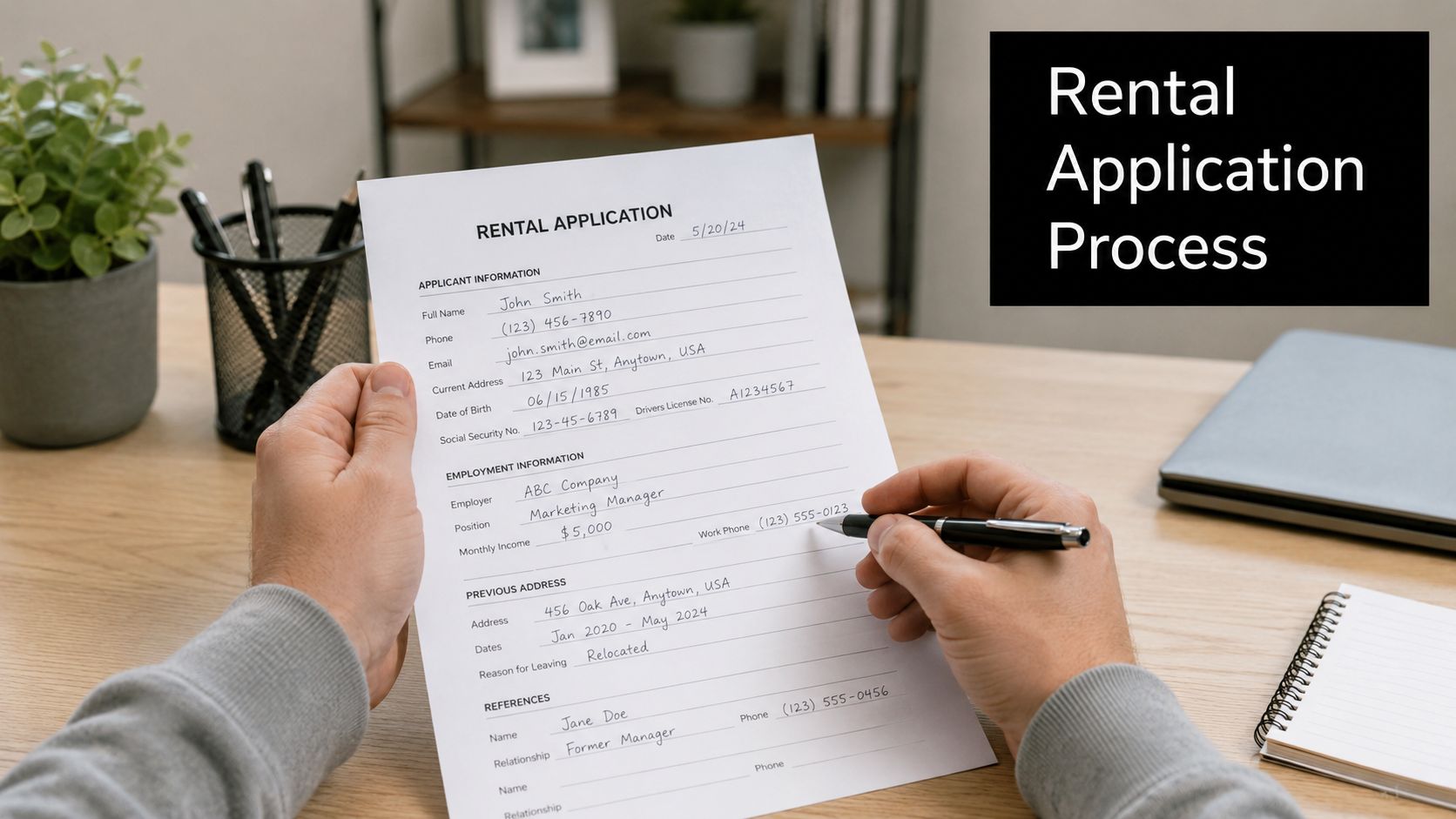
California City has a real split between private-owner rentals and professionally managed properties. HotPads highlights 9 private landlord rentals in the area and also shows lower-cost private listings, including homes advertised as low as $850 to $1,200 per month, along with some Section 8 inventory. The tradeoff is that the cheapest options can come with more move-in friction, less predictable maintenance, or less formal documentation, while professionally managed homes tend to use stricter but clearer screening systems (private landlord rental listings in California City on HotPads).
What a clean application package looks like
You want the manager or owner to open your application and feel that nothing is missing.
Bring these items together before you tour seriously:
- Identification: Government-issued ID that matches the application details.
- Income documentation: Recent pay stubs or other accepted proof of income.
- Rental history: Current and prior housing information with accurate contact details.
- References: Use people who will answer quickly and speak clearly.
- Pet documentation if needed: Breed, weight, vaccination records, or support documentation when applicable.
If one adult in the household is organized and the other isn't, the whole application feels weaker. Treat it as a group package.
Private landlord versus professional manager
This choice affects more than approval odds. It affects your daily life after move-in.
A private landlord may offer flexibility, especially on unusual situations. But flexibility can cut both ways. You may also get inconsistent paperwork, slower maintenance systems, or less clarity on what happens if something breaks.
A professional manager often asks for more documentation upfront. In return, you're more likely to see a defined process for screening, repairs, lease renewals, and notices. That predictability matters.
A strict screening process can be inconvenient for a day. A sloppy management process can be inconvenient for your entire lease.
If you're checking whether a listing is legitimate before sending documents or money, this guide on how to avoid rental scams is worth reviewing.
One practical example of a professional option in Central California is Edinhart Realty and Property Management, which offers placement and ongoing management services for rental housing. For renters, that usually means a more structured application and lease workflow than you might get through an owner-managed listing.
A quick walkthrough of common rental application expectations can also help you avoid preventable mistakes:
How to improve your approval odds without overselling yourself
Don't try to “market” yourself with vague promises. Be easy to verify.
A strong applicant does three things well:
- responds quickly,
- submits complete documents,
- answers questions consistently.
If your file has a complication, explain it briefly and directly. Missing paperwork creates more concern than an honest explanation.
Decoding Your California Lease Agreement
A lease tells you how the tenancy will function. Rent amount matters, but it's only one part of the risk.
In California, rent stabilization rules can affect tenant movement and renewal stability. An independent study found that cities with rent control had about 5 percentage points fewer households moving over a decade. The practical takeaway for renters is that tenancy length, renewal language, and location-specific rules deserve close attention if you want predictable housing over time (rent control and tenant outcomes summary from American University).
The clauses worth slowing down for
Read the lease in this order, not from top to bottom.
First, find the lease term. Confirm the start date, end date, and what happens after the initial period. Does it convert automatically? Does it require notice? Are renewal terms described clearly or left vague?
Second, read the maintenance language carefully. You need to know who handles routine issues, what counts as a tenant responsibility, and how repair requests must be submitted.
Third, review all property-use rules. Pets, guests, yard care, parking, smoking, and alterations often create the biggest day-to-day disputes.
A simple lease review checklist
Use this before signing:
- Renewal terms: Are they written clearly enough that you know what comes next?
- Repair procedure: Does the lease explain how to report maintenance and what happens after?
- Charges and violations: Are extra charges described clearly, or buried in broad language?
- Entry notices and access: Do you understand when management may enter the property?
- Move-out standards: Are cleaning and condition expectations spelled out?
Some renters read the lease looking for legal traps. A better approach is to read it looking for operational friction.
Insurance is another area renters overlook until there's a problem. If you're trying to understand moisture and property-damage issues in a California context, this piece on understanding mold coverage for LA renters helps frame the questions to ask your insurer and your landlord before a claim ever exists.
What usually causes trouble later
Most lease disputes don't start with dramatic conflicts. They start with assumptions.
A renter assumes yard maintenance is included. A landlord assumes the tenant will replace filters routinely. A pet approval is discussed casually but not documented. A repair request is texted, but the lease requires a formal submission path. Those small gaps create bigger disputes later.
If something matters to your living situation, ask for it in writing before you sign.
Finalizing Your Move and Getting Settled In
You get the approval email, schedule the truck, and assume the hard part is over. In California City, that is often the moment small mistakes get expensive. Low inventory pushes renters to move fast, but move-in day is where you confirm whether the house is actually a good value, not just a house you managed to secure.
The monthly rent is only part of the decision. The actual figure is your total move-in cash, your first 30 days of setup costs, and the condition of the property on day one. A cheaper house with deferred maintenance, missing appliances, or utility headaches can cost more in time, stress, and out-of-pocket fixes than a slightly higher-rent home that is clean, functional, and clearly managed.
Before keys change hands, pin down the operational details:
- Funds due: Get the exact amount, payment method, and deadline in writing.
- Utility setup: Confirm which services must be in your name before occupancy.
- Insurance: Start the policy before move-in, not after.
- Condition report: Fill out the move-in inspection form completely.
- Photos and video: Record every room, every existing defect, and each appliance while it is still empty.
Details matter here. Note worn flooring, loose door hardware, cracked switch plates, stained caulking, damaged screens, garage issues, and yard condition. If an item looks minor now, document it anyway. Security deposit disputes usually start with conditions that seemed too small to mention on day one.
Keep your records organized from the start.
A simple folder, digital or paper, should hold the signed lease, payment receipts, inspection forms, utility confirmations, insurance documents, photos, and every repair message you send or receive. If you want a practical model for documenting repairs clearly, these maintenance request form templates show what a useful maintenance paper trail should include.
Good landlord-tenant relationships usually come from clear records and early communication, not from informal promises. Report problems while they are small. Use the written reporting method your manager requires. In my experience, renters who document carefully at move-in have fewer arguments later because both sides are working from the same facts.
If you are still weighing options between self-showing rentals, brokerage listings, and professionally managed homes, Edinhart Realty and Property Management is one local resource for practical guidance on listings, screening, leasing, and ongoing property management in Central California.


