

It's 10 p.m. and your renter texts about a leaking water heater. You're also waiting on this month's rent, sorting receipts in a shoebox, and wondering whether you gave proper notice before entering last week. That's the moment many Fresno area owners start asking what professional help changes, not in vague promises, but in daily work.
What Property Management Experience Really Means
You bought or kept a house in Clovis thinking rent would cover the mortgage and build equity. Then reality arrives in pieces. A tenant dispute needs a calm, documented reply. A vendor wants payment before you'll see an invoice. A late payment needs follow up that follows California rules. None of these tasks is impossible alone, but together they demand repeatable systems, not good intentions.
Property management experience means a professional has built those systems and uses them the same way every time. It covers tenant screening, rent administration, maintenance coordination, documentation, financial records, and regulatory compliance. You're not buying a portal password. You're hiring judgment that's been tested across leases, repairs, renewals, and move outs.
The work is a recognized occupation, not casual landlord help. The Bureau of Labor Statistics estimated property, real estate, and community association managers held approximately 460,400 jobs in 2025 in the BLS occupational outlook for property and community association managers. That same federal outlook reported median annual pay of $69,990 in May 2025 and a projected 4% employment growth from 2025 to 2035.
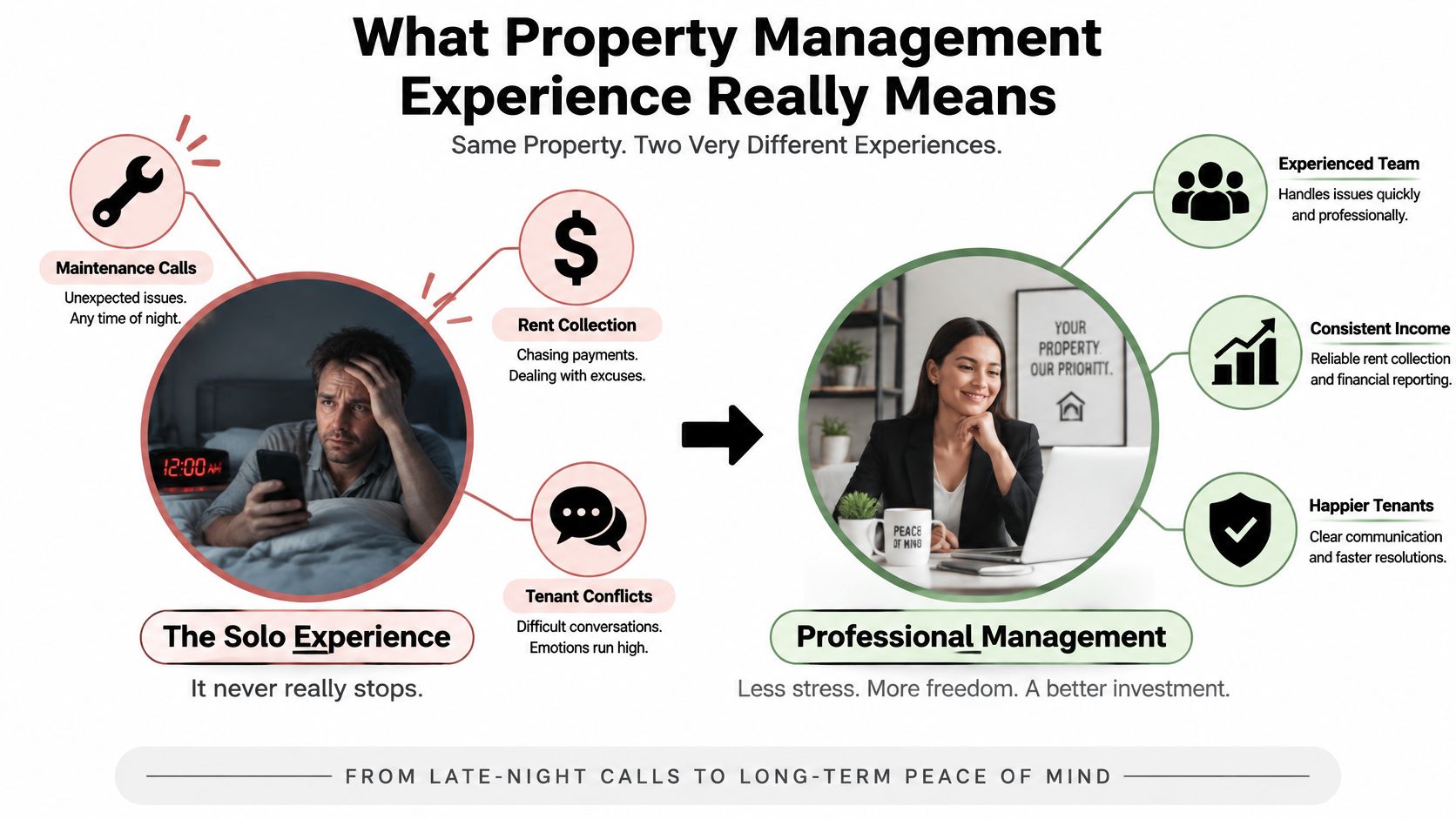
The contrast between solo management and organized coverage helps explain why owners look for help.
What experience looks like in practice
An experienced manager doesn't improvise when the phone rings. They've got an intake process for repairs, approved vendors, a screening file they can audit, and a calendar for notices and renewals. If you're out of state, that structure matters even more, since you can't drive over and check a leak yourself.
Owners of larger or specialized communities often ask similar questions about reliable connectivity and shared services. Resources like Purple's multi-tenant senior living network show how different property types build systems for residents at scale. A single family rental is simpler, but the principle is the same. Residents need a clear way to reach someone, and owners need a record of what happened.
Practical rule: If a manager can't explain their process in plain steps, they probably don't have one you can rely on.
That clarity protects your time and your asset. Calls get triaged, payments get logged, and decisions get documented instead of living in someone's memory.
Core Services That Define Professional Management
Think of a strong manager like a general contractor for an ongoing project. The contractor doesn't swing every hammer. They sequence trades, check work, control costs, and keep the owner informed. Professional management works the same way, coordinating people and paperwork so small gaps don't become vacancies or lawsuits.
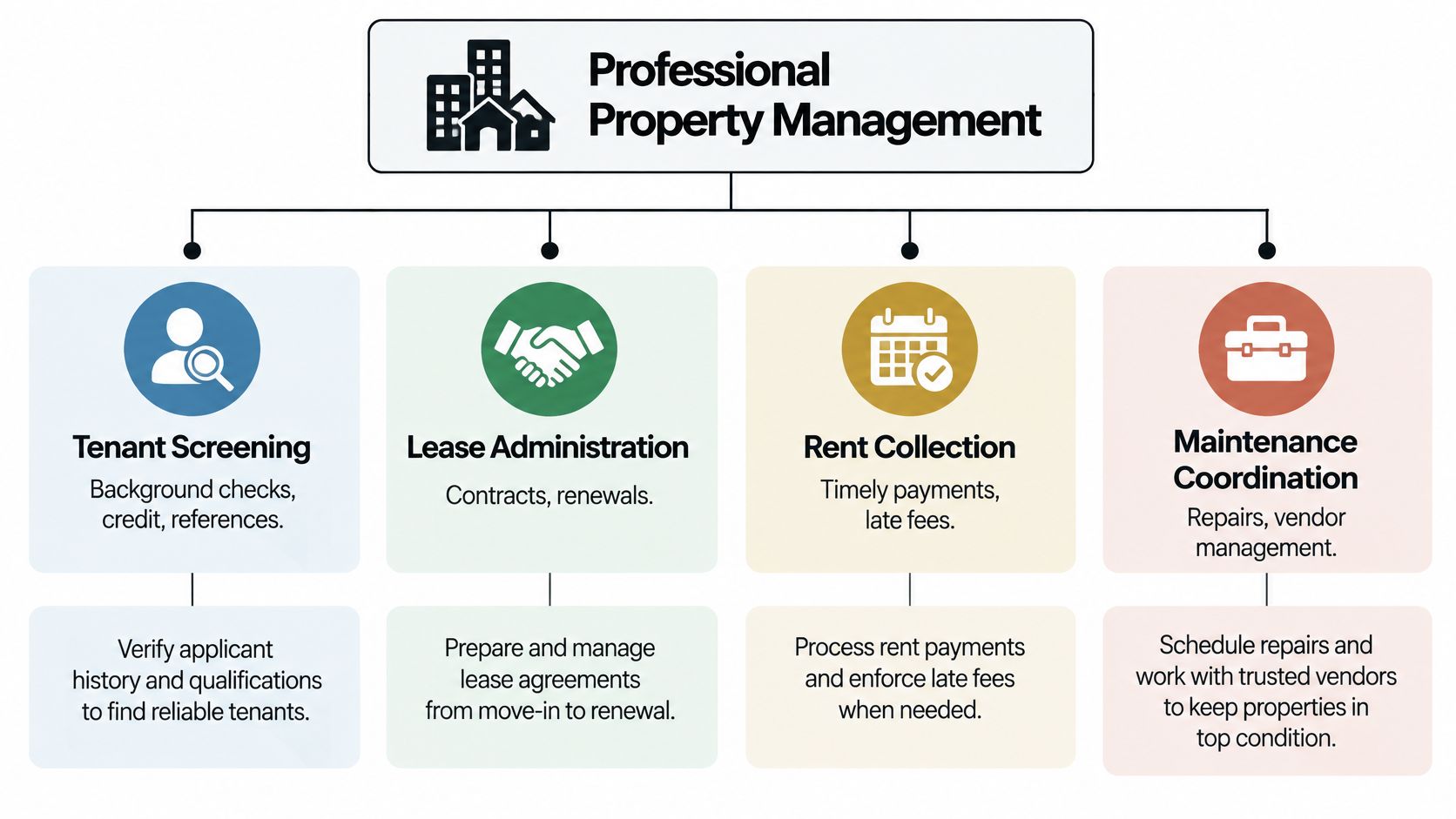
These core services show how the work breaks into distinct responsibilities.
The four pillars owners should expect
- Tenant screening: Verify income, rental history, and identity using written criteria, then document the decision so it's consistent for every applicant.
- Lease administration: Draft and renew leases with current California forms, track dates, and deliver notices correctly.
- Rent collection: Provide an easy payment path, follow up promptly on late rent, and reconcile every dollar in owner statements.
- Maintenance coordination: Triage requests, dispatch vendors, validate invoices, and confirm work is finished.
Move in and move out inspections connect those pillars. Photos and condition notes at both ends protect the security deposit process and reduce arguments about damage. Financial reporting ties it together, showing you income, expenses, and what's still pending.
Historical national research underlines why discipline here matters. HUD reported 88% of rental units were in properties where owners or managers handled maintenance immediately and practiced preventive maintenance in HUD's summary of the first national survey of rental property owners. That same survey found only 4% were in properties where most maintenance was postponed until major problems occurred.
Preventive beats reactive
Reactive management waits for a failure. Preventive management schedules filter changes, checks for slow leaks, services heating and cooling before peak season, and documents it all. You'll still get emergencies, but fewer of them start as ignored warnings.
A repair you can plan is almost always easier to control than a breakdown you discover after damage spreads.
Use this picture as your checklist. If a company offers marketing but can't explain accounting, or collects rent but has no vendor controls, you're looking at a partial service, not full professional coverage.
Measurable Outcomes of Good Management
Owners often ask a fair question. How will I know it's working? Skip slogans and measure four things consistently. You'll get a clearer answer from records than from a sales pitch.
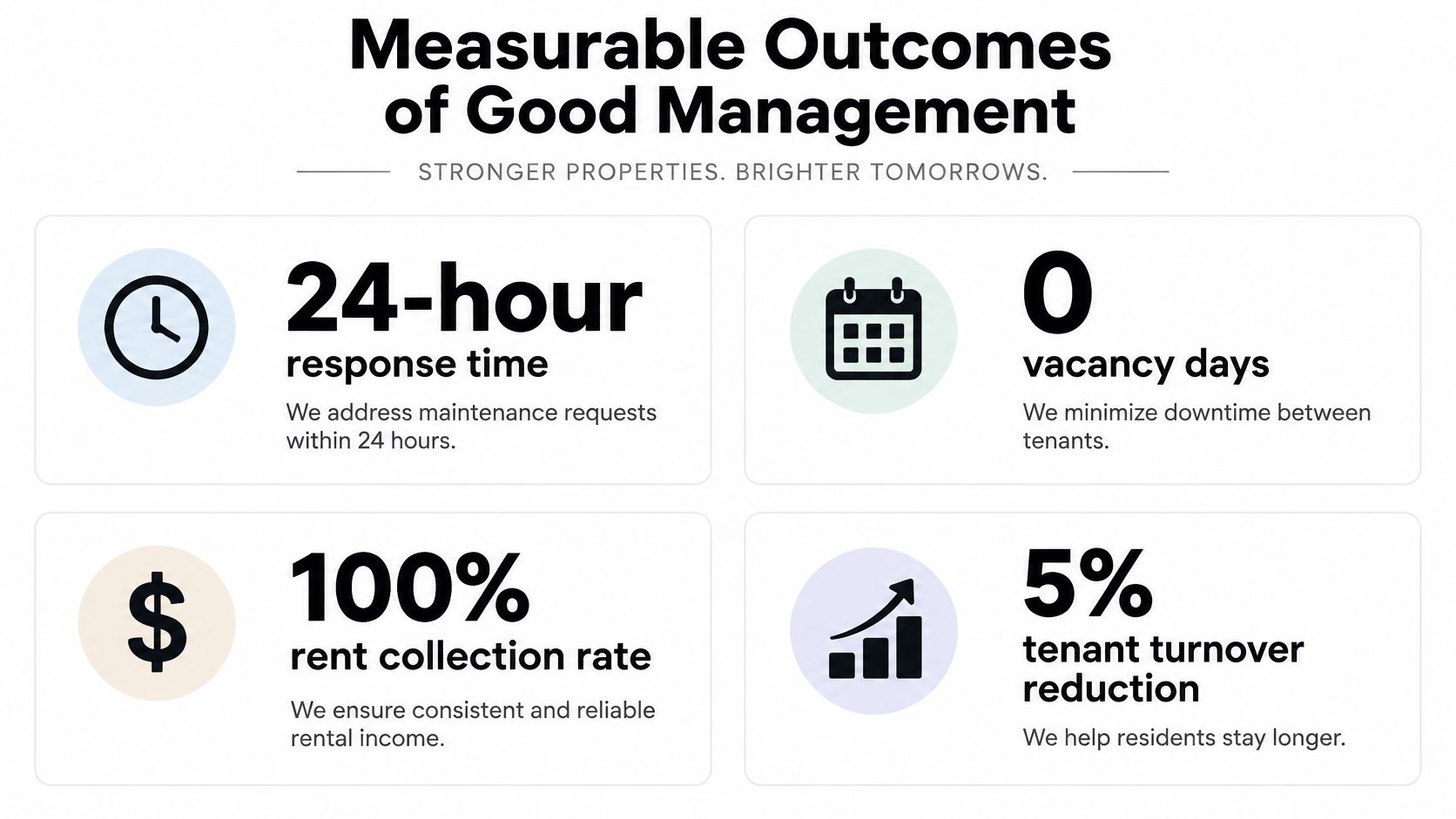
This visual summary frames the outcomes owners should track month after month.
Metrics that reveal performance
- Maintenance response: Time from request to acknowledgment, triage, dispatch, and completion.
- Vacancy days: Time between a move out and a qualified tenant starting a lease, including cleaning and repairs.
- Payment reliability: Whether rent arrives on schedule and how quickly late cases get resolved.
- Financial transparency: Whether statements reconcile with invoices, leases, and bank activity without unexplained gaps.
Maintenance speed isn't just convenience. An international evidence review found rapid, competent repair responses improve residents' comfort and wellbeing, while delayed or poor work compounds condition problems, as described in research on repair responses and tenant wellbeing. Track repeat work orders too. A quick first visit doesn't count if the same problem returns next week.
You can also use Edinhart's guide to property management KPIs to compare reported metrics against your own statements. Ask how numbers are calculated. Does vacancy time include owner delays in approving repairs? Does completion mean a vendor visited, or the resident confirmed the fix worked?
The video below offers a useful walkthrough of outcomes owners can discuss during manager interviews.
Good property management experience connects these measures. Better screening supports payment reliability. Prompt repairs support retention. Clear accounting lets you spot rising costs early and decide whether you're protecting value or just staying busy.
How to Evaluate a Property Management Company
Interview managers like you'd interview anyone who'll handle money and legal notices for you. Bring written questions, take notes, and ask for sample documents with personal details removed. You're checking for a process, not a personality.
This framework from Edinhart's property manager interview questions helps you compare answers side by side. Use the same questions with every company so you aren't comparing a detailed answer from one firm with a vague promise from another.
Questions to Ask a Property Manager
| Question | What a Strong Answer Looks Like |
|---|---|
| How do you screen applicants? | Written criteria, verified income, rental history review, and documented human review of adverse items |
| How fast do you triage repairs? | Clear urgency categories, escalation rules, vendor dispatch steps, and follow up after completion |
| What will I see each month? | Itemized statement, invoices, rent status, and notes on pending work or lease dates |
| How do you handle vacancies? | Pricing method, photos, showing process, application timeline, and move in inspection steps |
| Who covers emergencies? | Named on call coverage, spending authority limits, and how you'll be notified |
Screening deserves extra care. Strict doesn't automatically mean defensible. A 2026 study of 591 landlords found 62.5% received algorithmic screening recommendations and 43.1% used some form of blanket denial rule, according to a study of landlord screening and algorithmic recommendations. That matters because software can blur the difference between a filing and a completed eviction if nobody reviews context.
Ask how staff review reports, correct errors, and give applicants a chance to dispute inaccurate items. A strong answer names criteria and exceptions in advance. A weak answer is a shrug and the words good tenant.
Red flag to note: A manager who won't share a sample statement or explain their screening matrix is asking you to trust them without evidence.
Check communication too. Who answers owner questions, how quickly, and what happens when your usual contact is away?
Full-Service vs Placement-Only Management
Two owners can need very different help. One lives outside California and can't meet a plumber on a Tuesday. Another lives in Fresno, enjoys maintenance decisions, but hates marketing and screening. The right model depends on where you'll struggle, not on which package sounds more complete.
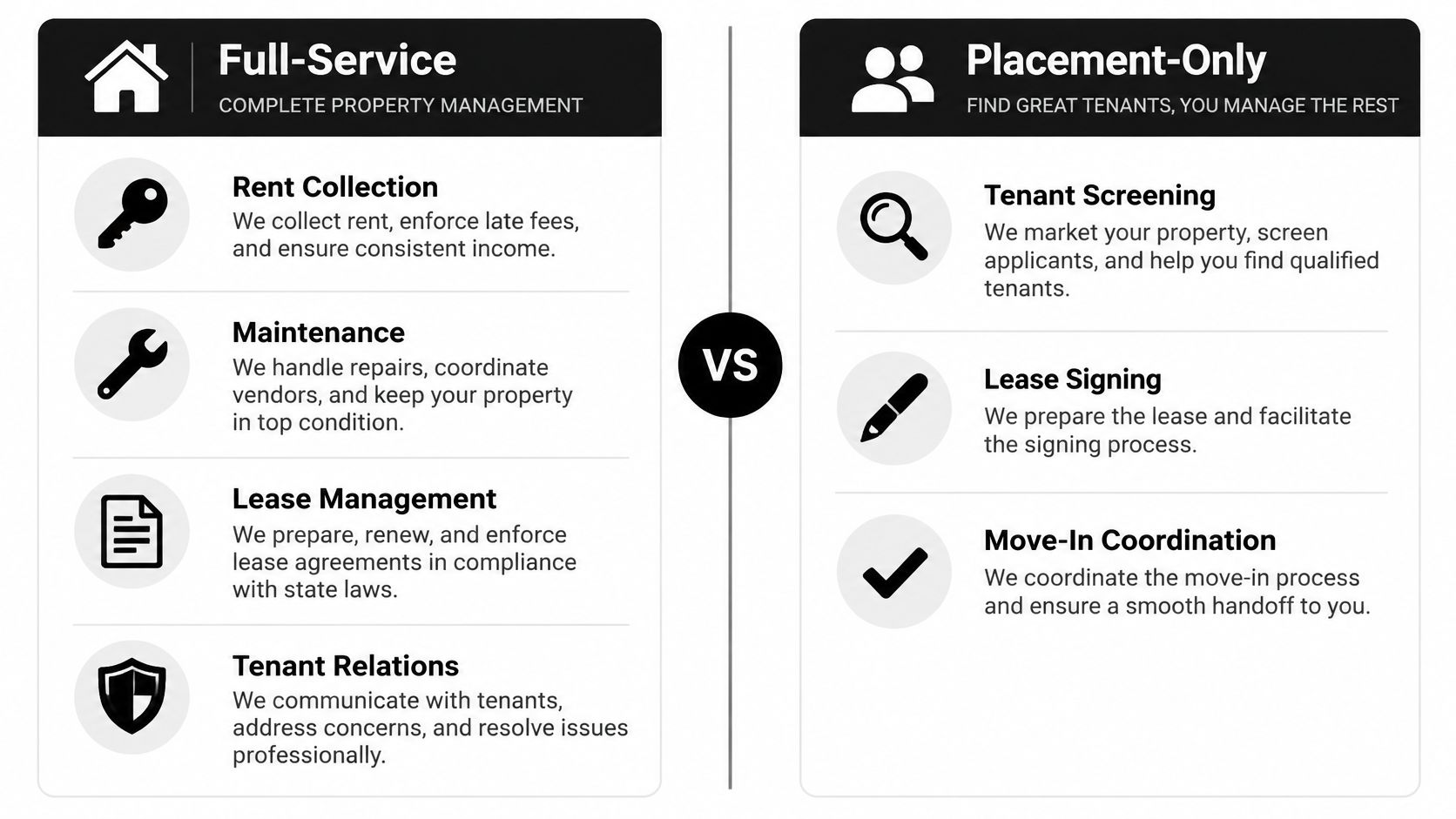
This comparison shows where responsibility sits under each model.
What full service covers
Full Service Monthly Management handles day to day operations after placement. That includes rent collection, repair coordination, tenant communication, move in and move out coordination, lease renewals, notices, and detailed accounting statements. You approve budgets and major decisions, but you aren't the first call for a clogged drain or a missed payment.
Edinhart Realty and Property Management offers this full service model alongside placement only help, using automated rent collection and on call agent coverage for ongoing properties. For an out of state investor, that continuity is usually the point. Someone local is accountable when timing matters.
What placement only leaves with you
Placement Only Service focuses on the front end. You get professional marketing and photography, online applications, applicant screening, a recommendation on qualified applicants, and final lease drafting. After move in, you collect rent, coordinate vendors, handle renewals, and keep records yourself.
That split works if you're local, organized, and comfortable with tenant communication. It works poorly if you travel often or delay maintenance calls. Be honest about your calendar and your tolerance for conflict.
Technology doesn't erase this choice. A 2025 survey of 415 U.S. rental owners found 38% identified property upkeep as a major challenge and 66% of renters said portal or app access was important in Baselane's rental market trends survey. A portal helps intake, but a person still has to judge urgency and follow through.
Choose based on tasks you'll reliably do every month. Gaps in coverage cost more attention than a model that matches your life.
Why Local Expertise Matters in Fresno and Clovis
A manager can know leases in general and still misprice your house. Rental demand shifts by neighborhood, school boundaries, commute routes, and property condition. Fresno, Clovis, and Friant don't behave like one uniform market, and your rent strategy shouldn't treat them that way.
Pricing and vendor knowledge are local
Local staff see which listings sit and which get strong applications at a given price point. They know whether a feature matters to renters nearby or whether you're spending money on an upgrade that won't change demand. They also know vendors who serve the Central Valley, what normal scheduling looks like, and when a quote seems out of line.
That matters during hot weather, when heating and cooling failures can't wait for a distant call center to find coverage. It also matters for inspections. Someone can walk the property, photograph condition, and confirm a repair instead of relying on a tenant's description alone.
California rules need local follow through
California landlord obligations change, and paperwork errors can delay your options. A local manager who uses current California Association of Realtors forms and tracks legal updates gives you a process built for this state. You're still the owner, so ask how they notify you about changes affecting your lease or notices.
National software can store a lease. Local judgment helps you price, place, and maintain the home in the market where it actually sits.
Distance is the other issue. Academic research summarized earlier in this article linked absentee ownership with weaker oversight outcomes. If you don't live near the property, local coverage isn't a luxury feature. It's how you verify condition, meet vendors, and respond before a small issue damages the home or the tenant relationship.
Ask any manager how many properties they handle nearby, which neighborhoods they serve most, and who physically visits the property. Specific answers tell you whether local expertise is real or just a service area on a website.
Preparing Your Property for Professional Management
A clean handoff saves weeks of back and forth. Start before you sign a management agreement so pricing, photos, and showings aren't waiting on basic repairs. Your manager can market a ready home. They can't overcome deferred maintenance with good copy.
Use Edinhart's preparing house for rent checklist as a working punch list, then walk the property room by room. Look for safety items first, then habitability, then cosmetic updates. That order protects residents and helps you spend in the right sequence.
Steps to complete before listing
- Fix safety and function first: Repair leaks, confirm heating and cooling work, check locks, smoke and carbon monoxide devices, and clear trip hazards.
- Gather documents: Collect the current lease if occupied, appliance information, warranties, HOA rules if applicable, utility details, and vendor history.
- Deep clean and document: Clean thoroughly, handle yard basics, and take date stamped condition photos before marketing.
- Decide your rules in writing: Pets, smoking, parking, landscaping duties, and maintenance spending approval limits shouldn't be decided mid application.
Talk through target rent with current comparable listings, not with what you need to cover the mortgage. Your costs matter for your decision to rent, but renters price against alternatives nearby. If you're debating rent versus sale, ask for both a rental estimate and a sale preparation discussion, since staging and photography serve different goals in each path.
Set communication expectations at the same meeting. Confirm how quickly you'll approve repairs, what spending needs your written okay, and where statements and documents will live. Slow owner approvals can create vacancy days and repair delays that look like manager problems later.
Finally, be ready to let the process work. If you've hired screening and communication help, don't negotiate side agreements with tenants that aren't in the lease. One channel keeps records clean and expectations fair.
Making the Right Choice for Your Property
Strip away the marketing language and the decision is simple. You're choosing who'll screen fairly, respond quickly, document condition, handle money cleanly, and tell you the truth early. Property management experience shows up in those habits, not in a list of software features.
Start with your own constraints. If you live far away, travel for work, or don't want emergency calls, full service coverage fits your reality. If you're local, organized, and comfortable being the tenant's contact, placement only can work, provided you'll keep up with accounting, notices, and repairs.
A final decision check
- Convenience: Do you want one accountable contact for rent, repairs, renewals, and statements?
- Control: Do you prefer approving every vendor and speaking with tenants directly?
- Evidence: Can the company show sample reports, a screening matrix, and clear response steps?
- Fit: Do they manage homes like yours in Fresno, Clovis, or Friant?
Don't choose on fee alone without asking what's excluded. A lower price that leaves you coordinating emergencies isn't cheaper if it costs you time, delays, and turnover. Compare the full scope, then decide what your time and risk are worth.
You don't need to guess. Interview carefully, verify documents, and match the service model to your life. That's how you turn a rental from a second job into an investment you can oversee with confidence.
If you're weighing full service management against placement only help in Fresno, Clovis, or Friant, Edinhart Realty and Property Management can walk you through both options, review your property's rental readiness, and explain screening, reporting, and maintenance coverage in plain terms. Visit the site to ask for a rental evaluation and choose the level of support that fits your property and your schedule.


