

Getting your home ready to sell is about way more than just sticking a sign in the yard. It's a strategic game, and the prep work you do before it ever hits the market is what separates a quick, profitable sale from one that languishes for months.
The most important things you can do? A serious deep clean, decluttering like you mean it, and getting ahead of any potential repairs. This upfront effort truly sets the stage for attracting the best possible offers.
Your Pre-Listing Blueprint for a Profitable Home Sale
The journey to a successful home sale really kicks off weeks, or even months, before you list. This is your blueprint phase. It's when you have to mentally shift from thinking of it as "my home" to seeing it as "a product for sale."
Every single decision from here on out needs to be made through the eyes of a potential buyer. You're aiming to create a clean, welcoming, and solid space that lets people easily imagine their own lives unfolding there. This isn't about sinking money into a massive remodel; it’s about smart, focused prep work.
The Core Pillars of Preparation
I've found that sellers get the biggest bang for their buck by concentrating on three key areas:
- Deep Cleaning: I'm not talking about your regular weekend tidy-up. This is a top-to-bottom, inside-and-out scrub down. To make sure you don't miss a spot, this comprehensive house deep cleaning guide is a fantastic resource for tackling every room.
- Strategic Decluttering: Buyers are buying space. If they open a closet and stuff falls out, or a room feels cramped with furniture, they immediately think the house is too small. Renting a small storage unit for a month or two is one of the smartest investments you can make at this stage.
- Pre-Sale Inspection: This is a pro move. Finding out about a leaky pipe or a faulty wire before a buyer's inspector does puts you in the driver's seat. You can either fix the big issues or price the home with the repair in mind, which prevents those frantic, last-minute negotiations that can kill a deal.
A well-prepared home almost always fetches a higher price and spends less time on the market. Buyers are overwhelmingly drawn to properties that feel move-in ready. It just feels less risky and like less work for them.
To get you started, here's a quick checklist that prioritizes the most crucial prep tasks and gives you a rough idea of the time they take.
High-Impact Home Sale Preparation Checklist
| Priority Task | Area of Focus | Estimated Time |
|---|---|---|
| Deep Clean & Declutter | Entire Home | 1-2 Weekends |
| Minor Repairs | Leaky Faucets, Sticky Doors, Patching Walls | 1 Weekend |
| Boost Curb Appeal | Landscaping, Paint Touch-ups, Power Washing | 1 Weekend |
| Professional Photography | All Rooms & Exterior | 4-6 Hours |
| Depersonalize | Removing Family Photos, Personal Items | 1 Day |
Tackling these items systematically will make a world of difference in how your home presents to potential buyers.
This image below breaks down the logical steps for figuring out your home's true market value—a critical part of your overall prep.
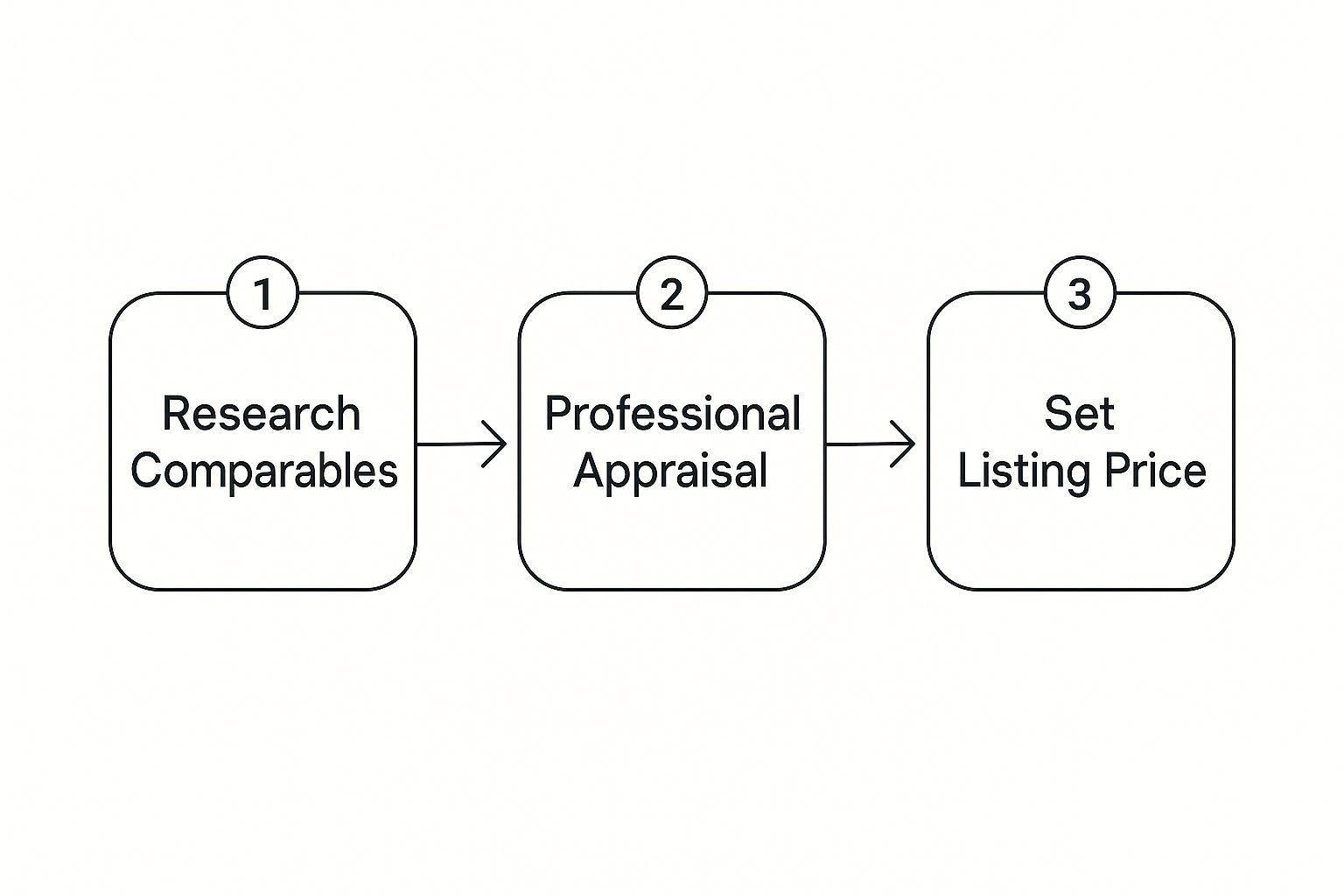
As you can see, solid, data-driven research and getting a professional assessment are the cornerstones of a great pricing strategy. Following this roadmap helps you move past the guesswork and land on a confident, market-aligned price that will bring in serious buyers from day one.
Executing Repairs and Upgrades That Maximize ROI
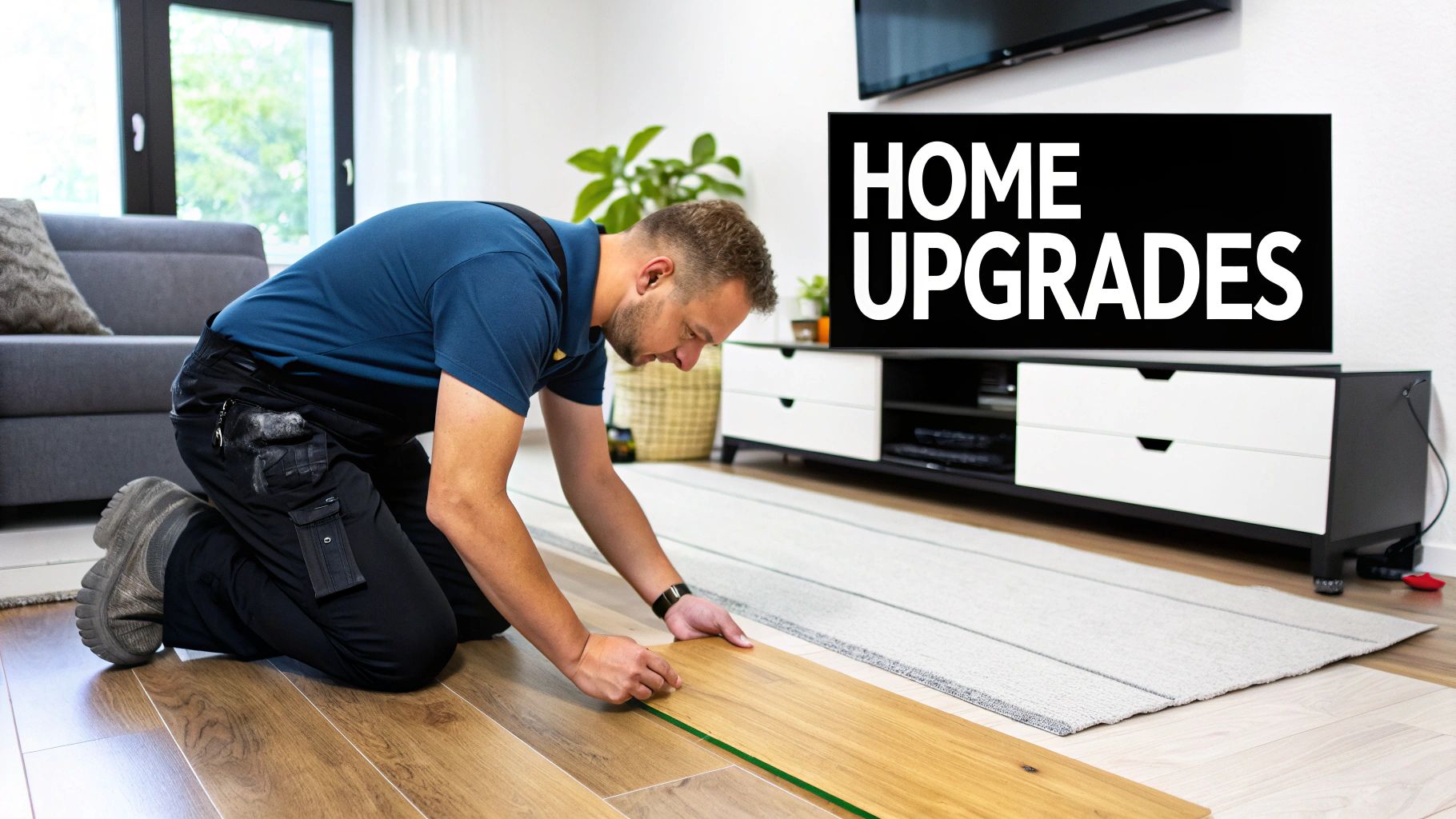
Once you’ve decluttered, it's time for the critical financial balancing act of home prep. It’s tempting to either fix nothing at all or go overboard with a full renovation. The smart money, however, is always in the middle.
Your focus should be laser-sharp: only tackle repairs and upgrades that offer a tangible return on your investment. The mission isn't to finally build your dream home; it's to create a market-ready product that appeals to the widest pool of buyers.
Think of it this way: every dollar you spend needs to do one of two things. It either removes a buyer's objection or adds enough perceived value to bring in a higher offer. That leaky faucet isn't just a drip. To a buyer, it’s a red flag for deferred maintenance, making them wonder what else you’ve neglected. This is where you have to stop thinking like a homeowner and start acting like a savvy investor.
Performing a Smart Home Audit
Before you even think about calling a contractor, grab a notepad and walk through your home with the ruthless eye of a buyer. Create two distinct columns: “Necessary Repairs” and “High-ROI Upgrades.” This simple act is the key to managing your budget and your sanity.
Necessary repairs are the non-negotiables. These are the deal-killers that will absolutely show up on an inspection report. We’re talking about a faulty light switch, a running toilet, or a screen door that’s off its track. Small fixes that prevent big headaches.
High-ROI upgrades, on the other hand, are all about cosmetic impact. They deliver that "wow" factor that makes your home feel fresh and well-cared-for, without costing a fortune.
Key Takeaway: The most successful sellers I've worked with don't overspend on massive renovations. They strategically fix the obvious flaws and invest in cosmetic touches that make the entire property feel updated and move-in ready.
Prioritizing Repairs That Protect Your Sale Price
That "Necessary Repairs" list you made? It's your top priority. Think of these fixes as defensive moves—they protect your home's value and stop buyers from trying to lowball you over a simple fix.
Here are the kinds of repairs that buyers and their inspectors spot from a mile away:
- Plumbing Issues: A slow drain or a minor leak under the sink can scream "big, expensive problems ahead" to a cautious buyer. Get it fixed.
- Electrical Problems: Address any dead outlets, flickering lights, or mysteriously labeled breaker switches. Electrical safety is a massive concern for families.
- Structural Red Flags: Look for sticking doors or windows, as they could hint at foundation issues. And definitely address any visible water stains on ceilings, even if the leak was fixed ages ago.
Sometimes, a critical repair means getting proactive. For instance, understanding the cost of termite treatment and dealing with it before you list shows buyers that your home has been meticulously maintained.
Choosing Upgrades That Add Real Value
With the must-do repairs handled, you can turn to the fun part: upgrades. Just remember, we’re focused on return. A $20,000 kitchen remodel might only add $15,000 to your sale price. But a $500 kitchen refresh can make the space feel modern and priceless to a buyer.
Concentrate on these high-impact, low-cost projects:
- A Fresh Coat of Neutral Paint: This is, without a doubt, the single most effective upgrade you can make. Light, neutral colors—think greige, off-white, or light beige—make rooms feel larger, brighter, and cleaner. It gives buyers a blank canvas.
- Updated Hardware and Fixtures: This is a weekend project that packs a punch. Swap out dated cabinet pulls, old brass doorknobs, and cheap, builder-grade light fixtures to instantly modernize the feel of your entire home.
- Kitchen and Bath Refreshes: Forget the full remodel. Consider painting dated oak cabinets, replacing an old, crusty faucet, or installing a new, modern vanity light. These small changes can completely transform the most important rooms in the house without destroying your budget.
Mastering Staging and Boosting Curb Appeal

You only get one chance to make a first impression, and with real estate, that impression is formed in seconds. This is precisely why staging and curb appeal aren't just "nice-to-haves"—they are absolutely essential when you're preparing to sell. These are the tools that build an emotional bridge with buyers, turning your property from just another listing into a place they can see themselves calling home.
The real goal isn’t just to make your house look pretty. It's about helping buyers truly visualize their life unfolding inside those walls. That means creating an inviting, neutral canvas that feels spacious, bright, and full of potential. It’s a subtle art, but one that can have a massive impact on both how quickly you sell and for how much.
The Power of a Blank Canvas
The very first move in staging is to depersonalize your space. We all love our family photos, quirky collectibles, and bold accent walls, but for a potential buyer, those things are just distractions. They make it much harder for someone to mentally place their own furniture and life into the room.
Think of it less as erasing your personality and more as creating a blank canvas for someone else's. Pack away the personal photos, niche decor, and any religious items. This simple step helps buyers shift from seeing it as your house to seeing it as their future home.
There's a serious financial incentive here, too. Staging is one of the most reliable investments you can make for a positive return. A staggering 83% of buyer's agents agree that staging makes it far easier for a buyer to visualize a property as their own home—a critical factor in closing a deal faster.
Arranging for Space and Flow
With the personal items packed away, it's time to focus on how your furniture is arranged. Most of us set up our homes for our own comfort and daily life. Staging, however, is all about showcasing space and clearly defining what each room is for.
A classic mistake is cramming too much furniture into a room, or using pieces that are simply too large for the scale of the space. It instantly makes a room feel cramped and smaller than it really is.
- Create Obvious Pathways: Buyers need to be able to move through your home effortlessly, without bumping into chairs or sidestepping ottomans.
- Pull Furniture Off the Walls: It sounds counterintuitive, but floating furniture away from the walls and creating conversational groupings actually makes a room feel larger and more intentional.
- Give Every Room a Job: Is that spare room a dumping ground for random boxes? Stage it as a simple home office, a cozy reading nook, or a guest bedroom. Removing the guesswork for buyers is key.
A well-staged room doesn't just look good; it feels good. The right layout creates a natural flow that guides a buyer through the home, making the whole experience feel seamless.
If you’re ready to dive deeper into room-by-room strategies, these additional home staging tips for sellers are a fantastic resource.
Making an Unforgettable First Impression with Curb Appeal
Let's be honest: your home’s exterior is the cover of the book. It’s the very first thing a buyer sees, and if it looks neglected, they'll assume the inside is, too. Boosting your curb appeal is arguably the highest-ROI activity you can undertake, often with minimal investment for a huge impact.
You don't need to hire a landscape architect. Just focus on a few small, high-impact projects that signal a well-maintained and cared-for property.
Quick Wins for Major Curb Appeal:
- A Freshly Painted Front Door: A pop of a classic, welcoming color like black, navy, or a deep red can completely transform your entire entryway.
- Updated House Numbers: Swap out those old, faded house numbers for something modern and easy to read. It's a small detail that speaks volumes.
- Lawn and Garden TLC: Mow the lawn, trim back overgrown bushes, pull the weeds, and lay down a fresh layer of mulch. A tidy yard is incredibly inviting.
- Power Washing: Blast years of dirt and grime off your siding, driveway, and walkways. It’s like an instant facelift for your whole property.
These simple actions create an immediate sense of quality and care, setting a positive tone before a buyer even walks through the door. That initial feeling of confidence can color their entire perception of your home.
How to Price Your Home for a Competitive Market
Let’s be honest: setting the right price for your home is probably the single biggest decision you’ll make when you decide to sell. This isn't just about picking a number you feel good about. It's a strategic move that dictates how many buyers see your listing and how quickly the offers start rolling in.
Nail the pricing, and you can spark a bidding war that drives your final sale price higher than you hoped. Get it wrong, and your home can quickly become "stale" on the market, leaving buyers to wonder what's wrong with it. That leads to the dreaded price drop, which often signals desperation and attracts lowball offers. On the other hand, pricing too low means you’re just leaving money on the table.
The trick is to take your emotions out of the equation. Your goal is to find that sweet spot where your price grabs buyers' attention while still reflecting your home's true market worth.
Conducting a Realistic Market Analysis
Before you can even think about a list price, you have to know what people are actually paying for homes like yours, right now. This is where a Comparative Market Analysis (CMA) comes in. While your agent will put together a detailed report, you can give yourself a head start with some initial homework.
You’ll want to look for three types of properties in your immediate neighborhood or a very similar one nearby:
- Recently Sold Homes: These are your gold standard. They show you exactly what buyers were willing to pay for a comparable home in the last three to six months.
- Active Listings: This is your direct competition. Take a hard look at their condition, features, and especially how long they've been on the market. If a similar house has been sitting for 60 days, it’s a red flag that it's probably overpriced.
- Expired Listings: These are the cautionary tales. These homes were pulled off the market, usually because they were priced too high and never found a buyer. They show you the ceiling you don’t want to break through.
A quick heads-up: Don't mistake your home's tax-assessed value or a Zillow Zestimate for its actual market value. A solid CMA built on recent, comparable sales is the only reliable way to land on an accurate price.
Getting the price right from the start is statistically huge. We know that a home priced just 1% below its market value sells about 20% faster than an overpriced one. In competitive areas, around 30% of listings that start too high end up needing a price cut, which adds an average of 40% more time on the market. For more real estate stats, the National Association of Realtors is a great resource.
Fine-Tuning Your Price with Key Factors
A CMA gives you a price range, but where your home falls within that range depends on its unique story. Two houses on the same street with the exact same floor plan can be worth vastly different amounts.
Think about how your home really stacks up against the competition in these key areas:
| Feature | Impact on Price | Example Scenario |
|---|---|---|
| Condition | High | A home with a brand-new roof and a remodeled kitchen will always fetch a higher price than a similar one with a 15-year-old roof and dated 1980s cabinets. |
| Upgrades | Medium | In-demand features like hardwood floors, modern countertops, or energy-efficient windows can easily justify a price at the top end of your CMA range. |
| Location | High | A quiet cul-de-sac lot is far more valuable than a spot on a busy main road. A premium lot with a great view can also add serious value. |
| Market Trends | High | In a hot seller's market with few homes for sale, you can be more aggressive. In a buyer's market, you'll need a sharper price to stand out from the crowd. |
Figuring out these details is where the expertise really comes in. If you want to dig deeper into this, our guide on how to price a house to sell it quickly breaks it down even further.
Strategic Pricing to Maximize Visibility
Finally, let's talk about the psychology of numbers. How buyers search online can make or break your listing's visibility. Most real estate websites use price brackets, like $475,000 to $500,000.
This is where you can be smart. Let's say your analysis points to a value of $505,000. Pricing it at $499,900 is a brilliant move. Why? You instantly show up in searches for every buyer looking up to $500,000—a massive pool of people who would have completely missed your listing otherwise.
This small adjustment doesn't cheapen your home. It dramatically boosts its exposure, which is the first step to getting more showings, more interest, and ultimately, better offers.
Get Your Paperwork and Marketing in Order

Alright, your house is looking fantastic and you've got a smart price in mind. Now for the final push: putting together your marketing toolkit. This is where you package everything up—stunning visuals, a compelling story, and all the essential paperwork—to make your home irresistible and the transaction a breeze.
Don't think of this as just administrative busywork. This is the final polish that takes a well-prepared house and turns it into a listing that buyers can't wait to see.
In today's market, nearly every buyer starts their search online. That means your digital first impression is absolutely everything. Professional photography isn't a luxury; it's non-negotiable. Grainy phone pictures or poorly lit rooms will get your listing skipped in a heartbeat, no matter how amazing your home is in person. A pro knows how to capture the light, space, and vibe that makes people stop scrolling.
Tell a Story That Sells
Great photos grab their attention, but the property description tells them the story. This is your chance to go beyond the basic stats like square footage and bed/bath counts. You need to paint a picture of the lifestyle someone will have when they buy your home.
Think about what you love most about living there. Is it the morning sun that pours into the kitchen? The quiet, private backyard that's perfect for summer get-togethers? Those are the emotional hooks that connect with people.
Instead of just saying "updated kitchen," try something like, "Enjoy cooking in the bright, modern kitchen, fully equipped with quartz countertops and stainless steel appliances—it's the perfect spot for entertaining guests." See the difference?
Pro Tip: Your listing description should be a highlight reel, not an exhaustive inventory. Zero in on the top three to five features that truly make your property stand out. This keeps buyers engaged and leaves them wanting to see more in person.
Gather All Your Key Documents
While your marketing materials are busy attracting buyers, having your paperwork in order is what keeps a potential deal from falling apart. Nothing adds stress and delays like a last-minute scramble for a missing utility bill or an appliance warranty.
Think of it as creating a "home binder" for the next owner. It shows them you've been a meticulous homeowner, which builds a ton of confidence. It also prevents those annoying little hiccups that can pop up during due diligence and closing.
Your Home Sale Document Checklist:
- Property Tax Records: Your most recent tax bill is essential for buyers and their lenders.
- Average Utility Bills: Pull together a year's worth of gas, electric, and water bills. This helps buyers accurately budget for their monthly costs.
- HOA Documents: If you're in a Homeowners Association, get the covenants, conditions, and restrictions (CC&Rs) and recent statements ready.
- Warranties and Manuals: Dig up the paperwork for major appliances, the HVAC system, the roof, or any other recent upgrades you've made.
- Capital Improvement Records: Keep receipts for any significant upgrades. This can have tax implications and provides proof of the home's value.
Know the Market Before You Launch
Having all your ducks in a row is one thing, but knowing when to go live is another. Timing is a critical piece of the puzzle. Recently, the U.S. housing market inventory climbed to around 1.45 million homes, a 20.8% jump from the previous year.
With the average time on the market now at 29 days, your marketing has to be on point to stand out. Interestingly, a little strategy can go a long way—homes listed on a Thursday tend to sell for about 1.4% more than those listed on a Sunday. It just goes to show how even the day you list can impact your bottom line. You can dive deeper into current real estate statistics to help shape your launch plan.
A Few Common Questions We Hear From Home Sellers
Selling your home can feel like stepping into a whole new world, full of its own language and rules. It's totally normal to have questions. We put together this guide to give you clear, straightforward answers to the things we hear most often from sellers just like you.
Think of this as your personal cheat sheet. We're breaking down the practical stuff—costs, timing, commissions, and how to manage your daily life when your house is officially on the market.
How Much Should I Expect to Spend Getting My House Ready?
This is usually the first question on every seller's mind, and honestly, the answer is "it depends." A good starting point is to budget between 1% and 2% of your home's target sale price for all the prep work. This covers things like minor repairs, a fresh coat of paint, deep cleaning, and maybe some light staging.
The real cost, though, comes down to your home's current condition. If you've kept up with maintenance and your house is already in great shape, you might only need a professional cleaning and some new mulch for the flower beds.
But if you've got bigger projects on the list, like replacing dated carpet or swapping out old, clunky light fixtures, you’ll need to plan for a larger budget. The trick is to be smart about where you spend your money. Focus on the high-impact updates that will either boost your sale price or get your home sold faster.
Is There Really a "Best" Time of Year to Sell?
If you look at the historical data, spring is hands-down the hottest season for real estate. Buyer activity tends to shoot up from March through June. The weather is better, and families are trying to get moved in before the next school year kicks off. All that demand can mean a faster sale and, sometimes, better offers.
But don't write off the rest of the year. The fall market can be surprisingly strong, filled with serious buyers who want to be settled before the holidays. Even winter has its advantages. With fewer homes on the market, you'll have far less competition, which can make your property stand out.
The absolute best time to sell is when it’s right for you and when your home is 100% ready to shine. A beautifully presented home will find a buyer any month of the year.
How Do Real Estate Agent Commissions Actually Work?
It’s essential to understand how your agent gets paid so you can budget accurately. The total commission is almost always a percentage of the home's final sale price, typically somewhere between 5% to 6%. That total amount is then split between the agent representing you (the seller) and the agent representing the buyer.
Here’s a quick example: On a $500,000 home sale with a 6% commission, the total payout is $30,000. The brokerage for the seller and the brokerage for the buyer would each get $15,000, which they then share with their agents. This is a key detail: the commission is paid by the seller out of the proceeds from the sale at closing. For a deeper dive into the numbers, our guide to understanding real estate agent commission rates breaks it all down.
Should I Stick Around for Showings or an Open House?
In a word: no. It feels counterintuitive—of course you want to be there to highlight all the work you've put into your home! But it’s almost always better for everyone if you make yourself scarce.
When the seller is home, buyers can feel like they're intruding. They get awkward and rush through the tour. They're less likely to open closet doors, peek into cabinets, or have an honest conversation with their agent about what they really think. Giving them the freedom to explore on their own lets them truly imagine themselves living there, which is exactly what you want.
How Can I Keep My House "Show-Ready" While Still Living in It?
This is easily one of the biggest challenges of selling your home. Keeping your space looking pristine while juggling work, kids, and just life can feel overwhelming. The secret is to have a solid system.
- Create a 15-Minute Tidy-Up Routine: Every evening before bed, do a quick reset. Wipe down kitchen and bathroom counters, put away the day's clutter, and fluff the pillows.
- Use a "Go-Basket": Grab a laundry basket or a cute tote bag. Before a showing, do a quick sweep of the house and toss in any stray personal items—mail, keys, phone chargers, remotes—and stick it in your car.
- Stay Ahead of the Grime: Focus on the high-impact zones. Make sure bathrooms sparkle, the kitchen sink is always empty, and the main floors are vacuumed.
A little bit of consistent effort goes a long way and makes that "we're on our way!" call from your agent so much less stressful.
At Edinhart Realty and Property Management, we provide expert guidance to help you navigate every step of the home-selling process, ensuring you are perfectly prepared to achieve the best possible outcome. Find out how we can maximize your home's value at https://edinhart.com.


