

A professional plumbing inspection usually costs around $300, with a common range of $100 to $500, and camera inspections can run $250 to $1,375 depending on scope and property size. That's a small line item compared with the thousands a missed leak, sewer issue, or water heater failure can cost once drywall, flooring, and tenant disruption get involved.
If you're a landlord in Fresno or Clovis, you're probably dealing with the same question I hear all the time: is a plumbing inspection really necessary if nothing seems wrong? In practice, yes, especially when the property is older, recently renovated, or turning over between tenants. Plumbing problems don't announce themselves politely. They show up as cabinet rot under a sink, a soft bathroom floor, a tenant calling about “bad pressure,” or a water heater that quits on a holiday weekend.
The expensive part usually isn't the pipe. It's the collateral damage, the emergency scheduling, the resident complaint, and the fact that water keeps moving until someone stops it. A smart owner treats plumbing inspection as risk control, not maintenance theater.
Your Pre-Inspection Preparation Plan
Plumbing deserves more respect than most owners give it. Extensive home inspection data found plumbing infrastructure issues in 13.6% of inspections and water heater problems in 12.2%, which makes plumbing one of the most common trouble areas in a property, according to home inspection research summarized here.
That matters before a sale, before a new lease, and before a remodel. It also matters when a property has had years of piecemeal repairs by different tenants, handymen, or owners.
Gather the paper trail first
A better inspection starts with better context. Don't wait for the plumber to guess what happened over the last few years.
Bring together:
- Past repair invoices for leaks, drain cleaning, water heater work, fixture replacement, and slab leak repairs.
- Photos from prior work if walls were opened and piping was replaced.
- Appliance and water heater records so the inspector can see patterns of repeat service.
- Any remodel notes that mention moved sinks, added bathrooms, laundry relocations, or garage conversions.
- A simple symptom log with dates and observations, such as slow tub drainage, hammering noise, inconsistent hot water, sewer odor, or a toilet that rocks slightly.
That symptom log is especially useful because owners often normalize small problems. A tenant says, “the guest bath sink has always drained slow.” To me, that's not trivia. It's a clue.
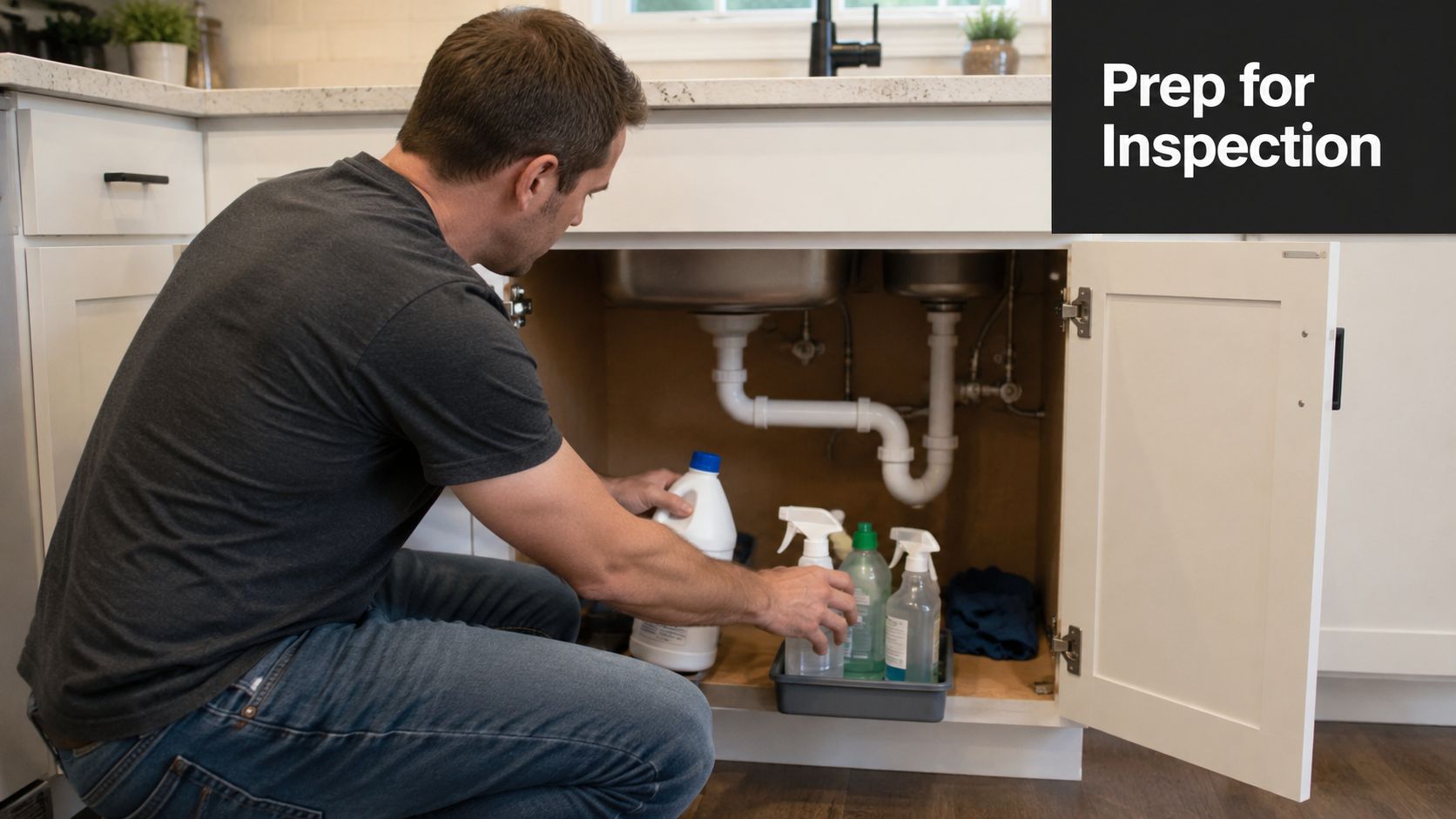
Prep the property like access matters
Inspectors can't evaluate what they can't reach. Before the appointment, open access and remove clutter from the obvious choke points.
Focus on these areas:
- Under sinks: Pull out stored cleaners, trash cans, and stacked supplies.
- Water heater area: Clear boxes, shelves, paint cans, and anything blocking the unit or shutoffs.
- Laundry connections: Move the washer if access is tight and practical.
- Exterior hose bibs and cleanouts: Trim back vegetation and open side gates.
- Main shutoff and meter area: Make sure the inspector can get to them without hunting.
Practical rule: If a plumber has to spend paid time moving your storage bins, you're buying labor instead of information.
Do a live-use check before they arrive
Run the plumbing shortly before the appointment. Don't stage the property to look perfect. Use it enough to reveal what only shows up under normal demand.
A simple pre-check helps:
- Run faucets at sinks and tubs.
- Flush every toilet and notice whether any refill slowly or keep running.
- Operate the dishwasher and disposal if the unit has them.
- Check hot water delivery at more than one fixture.
- Look and smell under sinks, around the water heater, and near exterior walls.
Fresh moisture, active drips, and sewer odor are much easier to verify when the system has just been used. That's especially true in rental property, where intermittent complaints can otherwise turn into “no issue found.”
The Ultimate Room-by-Room Inspection Checklist
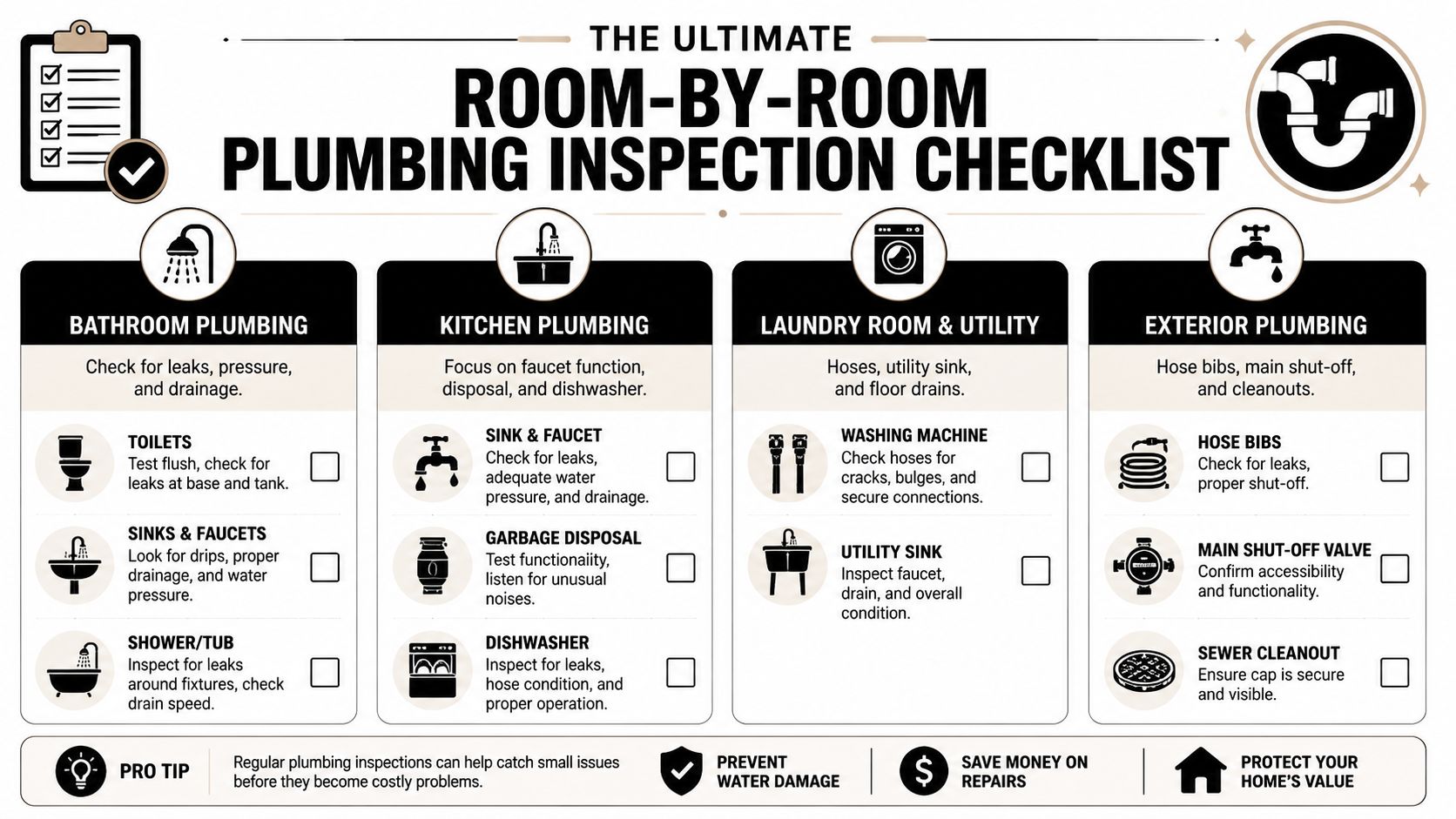
A good plumbing inspection doesn't start and end under one sink. It moves through the house the way water does. If you're walking with the plumber, follow the sequence. If you're doing your own screening before hiring one, use the same path each time so you don't miss blind spots.
This visual gives you a strong starting framework.
Kitchen checks that actually matter
The kitchen hides leaks well because owners store things under the sink and don't look back there for months.
Check these items in order:
- Supply lines and shutoffs: Look for corrosion, staining, mineral buildup, or damp cabinet bottoms.
- Drain connections: A slow drip at the trap can ruin the cabinet floor long before anyone notices.
- Faucet performance: The stream should be consistent on hot and cold.
- Sink flow rate: A commonly missed benchmark is that a standard sink should deliver at least 5 gallons per minute, as noted in this fixture testing guide. If flow is weak, inspect the aerator, shutoff position, and broader pressure conditions.
- Dishwasher discharge: Check for leaks at the connection point and signs of backup in the sink.
- Garbage disposal: Listen for grinding, humming, or delayed drainage after operation.
What doesn't work is checking only for obvious drips. Many kitchen issues show up as swelling, discoloration, musty odor, or loose laminate inside the cabinet.
For broader rental turnover reviews, I like pairing a plumbing walk with a full rental property inspection checklist so plumbing issues get caught alongside flooring, appliances, and habitability items.
Bathrooms reveal neglect fast
Bathrooms produce some of the most expensive “small” plumbing problems because a failed seal can soak subflooring for a long time.
Start with the toilet:
- Rock the base gently: Toilet stability matters. A loose toilet can point to a compromised wax seal and hidden floor damage.
- Inspect the base: Staining, soft flooring, or caulk gaps deserve attention.
- Watch the refill cycle: Running or repeated refilling often means internal tank parts need repair.
- Test flush performance: A useful benchmark is whether the toilet immediately pulls down about 4 feet of toilet paper during a flush. If it doesn't, the system may have a clog or performance issue.
Then move to the sink and tub:
- Compare hot and cold pressure: Big differences can signal valve, line, or buildup problems.
- Let the drain run for a minute: Slow drainage often means a clog deeper in the line, not just hair at the stopper.
- Inspect caulk and splash zones: Some “plumbing” damage starts as failed sealing around a fixture and ends as wall damage.
A bathroom can look clean and still have a failing wax ring, a weak shutoff valve, and a hidden cabinet leak. Cosmetic condition doesn't equal plumbing condition.
Here's a useful video if you want a visual walk-through of common inspection points in a home:
Utility room and water heater area
I've observed owners either save themselves major trouble or ignore warning signs until replacement becomes urgent.
Inspect the area for:
- Corrosion on connections
- Moisture at the base
- Signs of prior leaking
- Accessible shutoff valves
- Secure strapping on the water heater
- Condition of laundry hoses and connections
If the house has a utility sink, test it like any other fixture. Fast discharge can reveal whether the drain line handles volume properly.
If there's a sump or ejector setup, don't just look at it. Operate it if practical and verify it responds.
Exterior points owners forget
Exterior plumbing problems are easy to miss because no one sees them during daily indoor use.
Use this short checklist:
| Area | What to inspect | Why it matters |
|---|---|---|
| Hose bibs | Leaks, drips after shutoff, wall staining | Slow exterior leaks can damage siding and foundations |
| Main shutoff | Accessibility and operation | You need it fast during an emergency |
| Water meter area | Ongoing movement when water should be off | Can indicate a hidden leak |
| Sewer cleanout | Visibility and secure cap | Access matters if the line backs up |
| Exposed exterior lines | Insulation damage or cracking | Weather and sun exposure shorten service life |
A thorough inspection methodology also includes pressure testing and checking the meter after closing the main shutoff, which is a strong indicator of hidden leaks. For more formal inspection procedures, see this plumbing inspection method overview.
Decoding Your Plumbing Inspection Report
Most plumbing reports aren't hard to read because the words are technical. They're hard to read because owners don't know what deserves action now, what can wait, and what needs a second opinion from a licensed plumber.
That distinction matters even more because home inspectors usually have no liability beyond the fee paid for the service, according to this discussion of inspection liability limits. In plain English, if someone misses a major defect, you may have very little financial recourse.
Sort every finding into three buckets
Don't read the report top to bottom and treat every line item equally. Triage it.
Urgent fix
These items involve active leaks, potential contamination, sewer problems, failed shutoffs, or anything that threatens habitability, property damage, or safety. If water is moving where it shouldn't, this bucket comes first.
Planned repair
These are the issues that aren't flooding the property today but will cost more if ignored. Think corrosion at valves, aging supply lines, recurring slow drains, or a toilet seal that hasn't failed yet but is clearly suspect.
Monitor
These notes deserve a calendar reminder, not panic. Mild wear, older fixtures still functioning properly, and items with no current leakage often belong here.
The report is not the repair plan. It's the evidence file you use to build one.
Translate inspector language into owner decisions
Some report wording sounds bigger or smaller than it is. Here's a practical way to read it:
- “Slow drainage” means assume a developing clog until proven otherwise.
- “Active leak” means stop waiting and get repair pricing.
- “Improper configuration” often means code or workmanship risk, especially after amateur remodels.
- “Recommend further evaluation” means the inspector saw enough to hand the problem off, not that the issue disappeared.
When hidden moisture is suspected, owners often need a clearer workflow before calling for repairs. If you need a practical reference on tracing the problem, these steps to find house water leaks from Bear Valley Plumbing & Heating are useful for narrowing down where to look first.
Use the report to get real quotes
Don't ask three plumbers, “How much to fix my plumbing?” You'll get three different scopes and three prices that can't be compared.
Instead, send each contractor the same findings and ask for pricing on the same items. A clean way to do that is to organize the notes in a standardized format like this property inspection report template.
Ask for:
- A scope tied to each reported issue
- A distinction between immediate repair and optional upgrade
- Photos of the problem area
- Clarification on code-related corrections
- Confirmation of whether wall opening, patching, or access work is included
That approach protects your budget and keeps a vague report from turning into vague invoices.
Common Plumbing Problems and Smart Fixes
Landlords often get into trouble. Not because they're careless, but because the wrong repair mindset creates expensive follow-up work. A smart owner handles simple fixture problems in-house when the risk is low, and calls a plumber when the repair crosses into code, concealed piping, drainage configuration, or anything that can multiply damage.
The line matters because DIY plumbing projects are the leading cause of code violations that fail inspections, often involving missing expansion tanks, improper venting, and illegal S-traps instead of P-traps, according to this overview of common inspection failure causes.
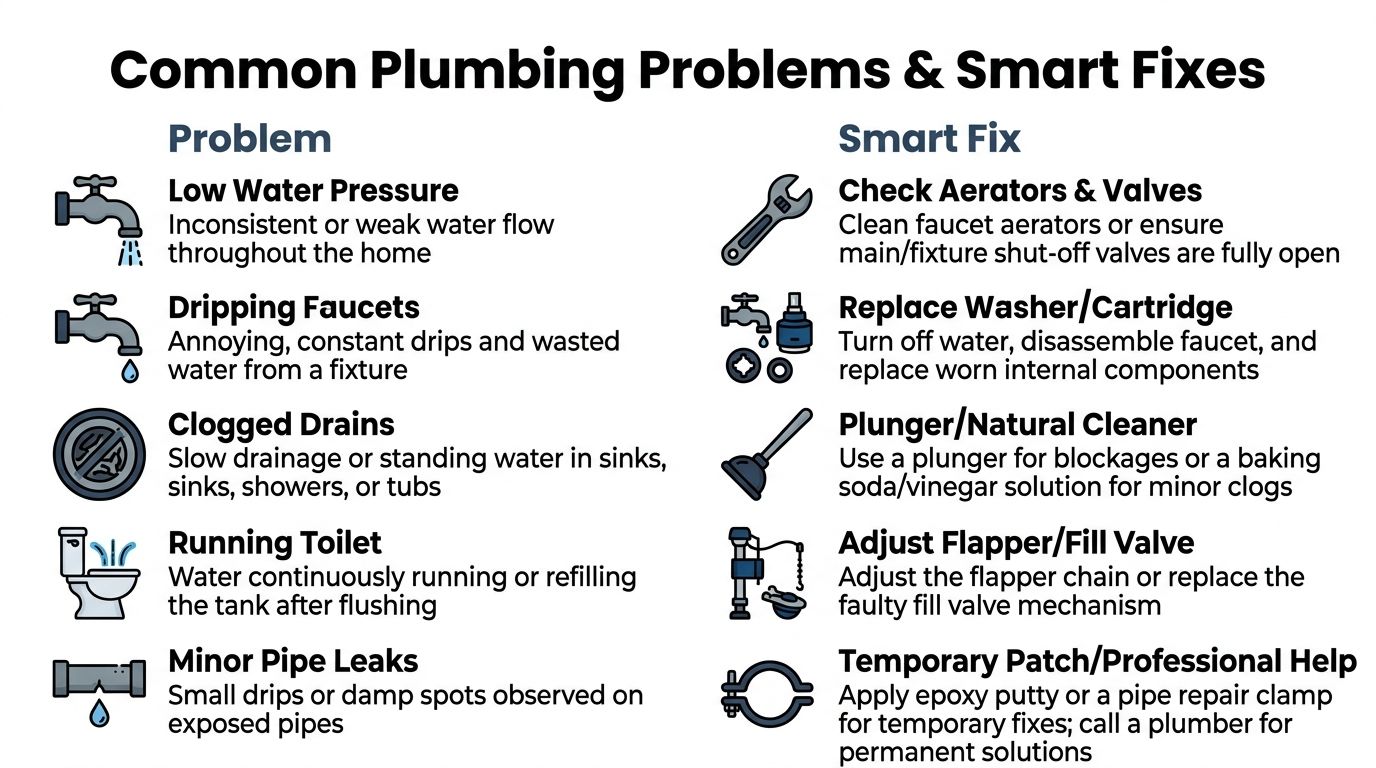
What you can usually handle yourself
Some plumbing fixes are low-risk if you shut off water properly and stay inside the fixture itself.
| Problem | DIY move | When it makes sense |
|---|---|---|
| Low faucet pressure | Clean the aerator, confirm shutoffs are fully open | Good first step when one fixture is affected |
| Dripping faucet | Replace washer or cartridge | Reasonable if the faucet model is standard and accessible |
| Running toilet | Adjust chain, replace flapper, inspect fill valve | One of the best landlord DIY repairs |
| Minor sink clog | Plunger, trap cleaning if accessible | Fine when the clog is local and visible |
| Small exposed drip | Temporary clamp or epoxy as a stopgap | Only to control damage until permanent repair |
These are labor-saving jobs if you know your limits. They're not license-saving shortcuts for bigger problems.
What should go straight to a plumber
Some calls aren't worth experimenting with.
Call a pro when you see any of the following:
- Leaks inside walls, floors, or ceilings
- Multiple slow drains at once
- Sewer odor that persists
- Loose toilets with flooring damage
- Water heater venting or strapping concerns
- Main shutoff problems
- Drain reconfiguration or venting changes
- Anything involving gas lines or concealed piping
If a repair requires cutting pipe, changing drainage geometry, opening walls, or bringing old work up to current code, the cheap path often becomes the expensive path.
Owners save money with selective DIY, not ambitious DIY.
Compare the trade-offs before you touch it
A few examples make the decision clearer.
Low water pressure
If one sink is weak, clean the aerator first. That's cheap and fast. If several fixtures are weak, stop assuming it's debris. You may be dealing with a larger supply issue, a pressure problem, or buildup deeper in the system.
Slow drains
If one bathroom sink is slow, basic clearing may solve it. If the tub, toilet, and sink in the same area all lag, don't keep pouring products down the line and hoping. That's when a professional diagnosis pays for itself.
Minor leaks
A drip at a supply connection might just need tightening or replacement of a small part. A stain under laminate flooring or bubbling paint on a wall is a different category entirely. By then, you're no longer fixing a leak. You're managing damage.
For broader cold-weather prevention thinking, especially around vulnerable piping and burst-risk habits, I like the practical insights from Facility Management Insights. Use that as prevention guidance, not as a substitute for a property-specific inspection.
The mistakes that cost the most
The worst plumbing repairs usually start with one of these choices:
- Replacing visible parts while ignoring the cause
- Using temporary patches as permanent repairs
- Assuming a handyman fix equals code-compliant work
- Leaving “small” leaks in place between tenants
- Skipping professional review after a DIY remodel
A landlord's job isn't to prove independence. It's to protect the asset.
Costs Frequency and California Compliance
A Fresno landlord usually asks about plumbing after a tenant calls with water on the floor. That is the expensive time to start caring about inspection cost, timing, and code issues.
For most rentals, the inspection fee is the cheap part. The actual cost shows up when an unnoticed defect turns into drywall replacement, cabinet damage, vacancy loss, or an after-hours call that could have been prevented. The pricing benchmarks were covered earlier. What matters here is how to use that spend to control risk.
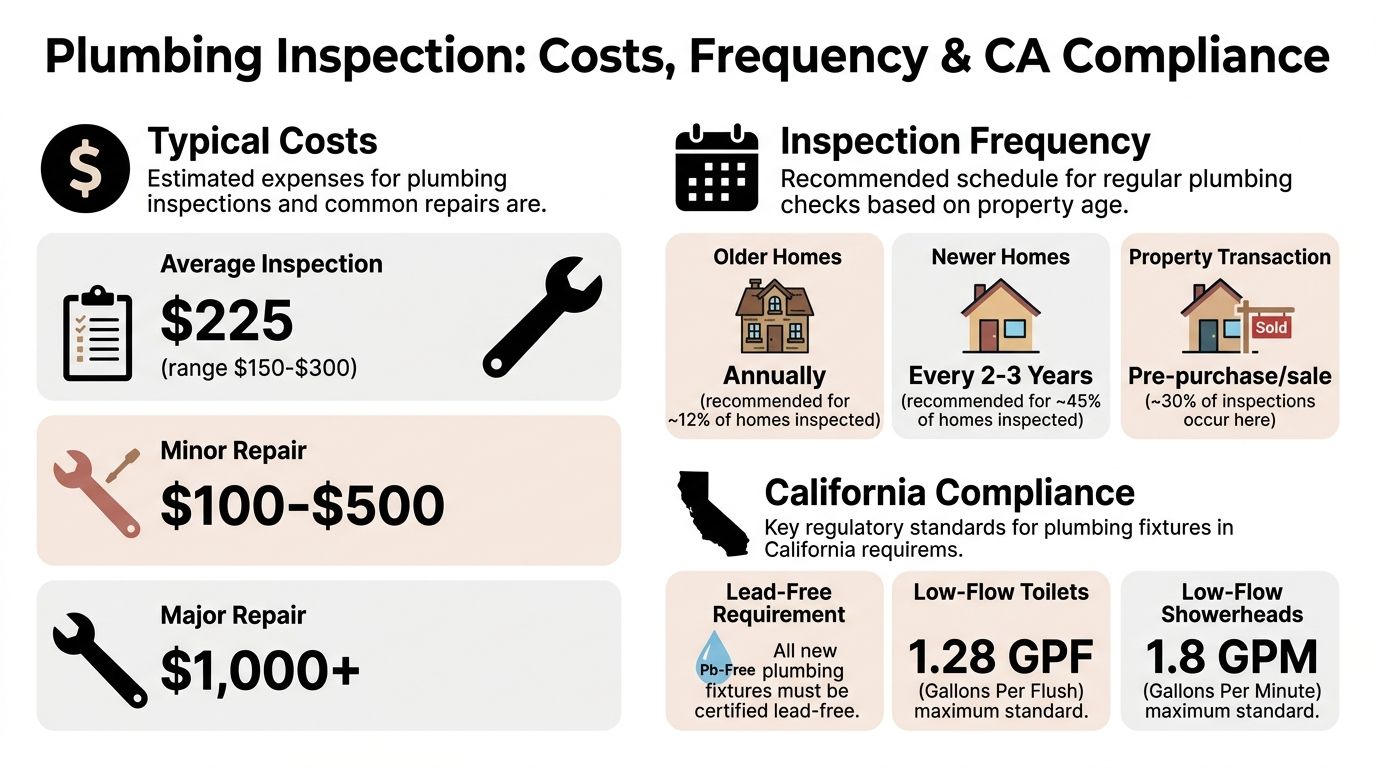
How often to schedule a plumbing inspection
Set the schedule based on property risk, not habit.
A newer rental with a clean repair history may not need the same inspection cadence as a 1950s house with patched drain lines and years of turnover. In Fresno, I recommend annual inspections for older homes, properties with previous leaks, and rentals where past owners or contractors made a lot of piecemeal plumbing changes. That frequency is less about checking a box and more about catching slow failures before they become insurance claims or tenant habitability disputes.
Other times to schedule one are easy to justify:
- Right after acquisition: You need a baseline before the first surprise hits your operating budget.
- After a remodel or major plumbing repair: Confirm the work performs properly and does not create drainage, venting, or fixture problems.
- Before a lease renewal on a troubled unit: It is cheaper to inspect during planning than during conflict.
- Before listing a sale or refinancing: Plumbing issues can stall negotiations fast.
If the property has recurring backups, unexplained water bills, or signs of hidden moisture, waiting for the next annual date is poor risk management. Inspect sooner.
California compliance that owners should treat seriously
California compliance is not abstract. It affects habitability, liability, and how exposed you are if a tenant complains or a transaction puts the property under scrutiny.
The common problem areas are predictable:
- Water heater strapping: Earthquake bracing needs to be in place and installed correctly.
- Leaks and failed shutoffs: These are maintenance issues until they interrupt safe occupancy or cause property damage.
- Unpermitted or sloppy DIY plumbing work: Bad venting, improper traps, and incorrect drain slopes tend to surface during inspections, escrows, and repair calls.
- Cross-connections or contamination concerns: Any setup that can affect potable water deserves licensed review.
- Questionable pipe or fixture materials: Older materials may still function while creating insurance, financing, or replacement-planning problems.
A good inspection should answer two questions. Is the system working today, and is anything likely to create a compliance or liability problem next?
For landlords, repair responsibility and plumbing compliance overlap more than many new owners realize. If you need a clearer line on owner obligations, review what repairs landlords are responsible for in California rentals.
The financial view that matters
The smart comparison is not inspection cost versus doing nothing. It is inspection cost versus the full price of delayed action.
One inspection can help you prioritize reserves, avoid cosmetic repairs before fixing the source, document pre-existing conditions, and get cleaner bids from plumbers because the scope is clearer. It also helps you separate true urgency from items that can wait until turn or scheduled maintenance. That is how experienced owners protect cash flow.
The Smart Investor Takeaway on Plumbing Health
The owners who protect cash flow over the long run usually do one thing differently. They don't wait for plumbing to fail before they pay attention to it.
A plumbing inspection is one of the cleaner examples of preventive spending in real estate. For a few hundred dollars, you get visibility into the system most likely to damage finishes, trigger after-hours calls, upset tenants, and interrupt leasing plans. You also get a chance to separate true urgency from manageable maintenance.
That matters in Fresno rentals because water problems rarely stay isolated. A leak becomes cabinet damage. A failed toilet seal becomes flooring work. A bad shutoff turns a minor repair into a bigger event because no one can stop the water quickly.
The profitable property is usually the quiet one. Good plumbing helps keep it that way.
The right mindset is simple. Don't think of plumbing inspection as a checklist item you complete for peace of mind. Think of it as an asset protection tool. It helps you budget better, respond faster, document conditions clearly, and make fewer emotional repair decisions under pressure.
If you own one rental, it protects your margin. If you own several, it protects your operating system.
If you want help managing inspections, maintenance coordination, tenant communication, and the day-to-day decisions that protect rental value, Edinhart Realty and Property Management serves owners across Fresno, Clovis, Friant, and the greater Central California region with practical, high-accountability property management and real estate support.


