

Treating your apartment building like a professional business—not just a side hustle—is the first and most critical step. You absolutely have to get the legal and financial framework solid before a single tenant signs a lease. This isn't just paperwork; it's about protecting your assets and making sure your operations run smoothly from day one.
Building Your Management Foundation

Before you even think about marketing a vacancy or screening applicants, you have to build the bedrock of your rental business. I can't stress this enough. This initial setup shields you from serious liability and puts professional systems in place that will pay dividends for years. Skipping these early steps is a surefire way to expose your personal finances to risk and invite legal headaches down the road.
One of the first moves I advise new landlords to make is forming a business entity. The most common choice for a reason is the Limited Liability Company (LLC). An LLC creates a legal wall between your personal assets (your home, car, savings) and your business assets. If a lawsuit ever pops up related to the property, this structure helps ensure only the LLC's assets are on the line, keeping your personal wealth safe.
Essential Financial and Legal Preparations
Once the LLC is in place, getting your finances organized is next on the list. You must open dedicated bank accounts for the property. Don't even think about mixing it with your personal checking. You need two, minimum:
- An Operating Account: All the rent money goes in here, and all property expenses—mortgage, repairs, insurance, taxes—get paid from here. Simple.
- A Security Deposit Account: This is a big one. Many states, especially California, have very strict laws about how you handle tenant security deposits. Mixing those funds with your operating cash is illegal in many places and can land you in hot water. A separate account makes everything clean, compliant, and transparent.
Next up is insurance, and this is non-negotiable. Your standard homeowner's policy won't cut it for a rental. You need a specific landlord insurance policy. This typically covers damage to the property itself, liability if a tenant gets injured, and even loss of rental income if the building becomes uninhabitable after something like a fire.
A well-structured foundation isn’t just about paperwork; it's about risk management. By separating your business and personal finances and securing proper insurance, you create a firewall that protects your investment and personal life from unforeseen challenges.
Navigating the Regulatory Landscape
Knowing the laws is fundamental to staying in business. Housing regulations are a complex web of federal, state, and even city-specific rules that govern just about everything you do as a landlord.
At the top is the federal Fair Housing Act, which strictly prohibits discrimination based on race, color, religion, sex, disability, familial status, or national origin. Violating this can bring crushing fines and legal battles you don’t want.
On top of that, state and local laws add another layer. Here in California, for example, we have statewide rent control and "just-cause" eviction laws that dictate exactly how much you can raise the rent and the limited, specific reasons you can ask a tenant to leave. You have to know these inside and out.
The property management industry is booming, with U.S. revenue projected to hit $134.2 billion by 2025. This growth means things are getting more professional, with a heavy focus on using technology to find quality tenants and reduce costly turnover. To get your operations in order from the start, it's worth looking into a good multifamily property management software to keep everything streamlined.
Finding and Keeping Quality Tenants

Let's be honest: your building is only as successful as the people living inside it. Finding and holding onto high-quality tenants isn't just one part of the job; it's the most critical activity you'll undertake as a landlord. This process is part science, part art, and it all starts with how you present your property to the world.
A vague, poorly written listing with dark, blurry photos will attract the wrong kind of attention—or worse, no attention at all.
To bring in a pool of qualified applicants, you need to create compelling listings that do more than just list the square footage. Invest in professional, high-quality photos that show the unit in its best light: bright, clean, and inviting. Write a detailed description that not only highlights key features but also paints a picture of the lifestyle, mentioning nearby parks, popular cafes, or convenient transit options.
Creating an Ironclad Screening Process
Once the applications start rolling in, your best defense against future headaches is a systematic and rigorous screening process. This isn't about being judgmental; it's about being diligent to protect your investment and ensure a peaceful community for your other tenants. A consistent process is also your key to complying with the Fair Housing Act, as you'll be applying the same criteria to every single applicant.
For a deeper dive into this crucial step, our complete guide on how to find good tenants provides even more actionable strategies to refine your approach.
Here’s a practical checklist to help you build a screening process that is both comprehensive and fair, ensuring you find reliable and responsible tenants for your property.
A Practical Tenant Screening Checklist
| Screening Component | What to Look For | Why It Matters |
|---|---|---|
| Credit Check | Consistent, on-time payments; manageable debt-to-income ratio. | A solid credit history often indicates financial responsibility and the ability to meet rent obligations consistently. |
| Background Check | Relevant criminal history (following local/federal laws). | This helps protect your property and ensure the safety and security of the entire community. |
| Income Verification | Gross monthly income is at least 3x the rent; direct confirmation with the employer. | Verifiable, stable income is the clearest indicator that a tenant can afford the rent without financial strain. |
| Landlord References | Positive feedback on payment history, property care, and neighborly conduct. | Past behavior is the best predictor of future behavior. A glowing reference is worth its weight in gold. |
By following this checklist, you can make informed decisions that set the foundation for a positive and long-lasting landlord-tenant relationship.
A thorough screening process is your best predictor of future tenant behavior. Spending the time to verify every detail upfront can save you from months of late rent, property damage, and the costly eviction process.
The Lease and Move-In Procedure
Once you've approved a fantastic applicant, the next step is the lease agreement. Think of this document as the legal backbone of your relationship. It needs to be comprehensive, clear, and leave absolutely no room for ambiguity.
Your lease must clearly define all responsibilities, including:
- Rent Payment Details: The exact amount, due date, acceptable payment methods, and any grace periods or late fees. Be specific.
- Property Policies: Clearly outline the rules on pets, smoking, guests, and quiet hours.
- Maintenance Procedures: Explain exactly how tenants should submit repair requests and what constitutes a genuine emergency.
The final step before you hand over the keys is the move-in inspection. Walk through the unit with the new tenant, using a detailed checklist to document the property's condition. Take photos or videos of every room, every appliance, and any pre-existing wear and tear. Both you and the tenant should sign this document, creating an official record that protects both parties and makes security deposit deductions transparent and defensible when they move out.
Mastering Proactive Property Maintenance
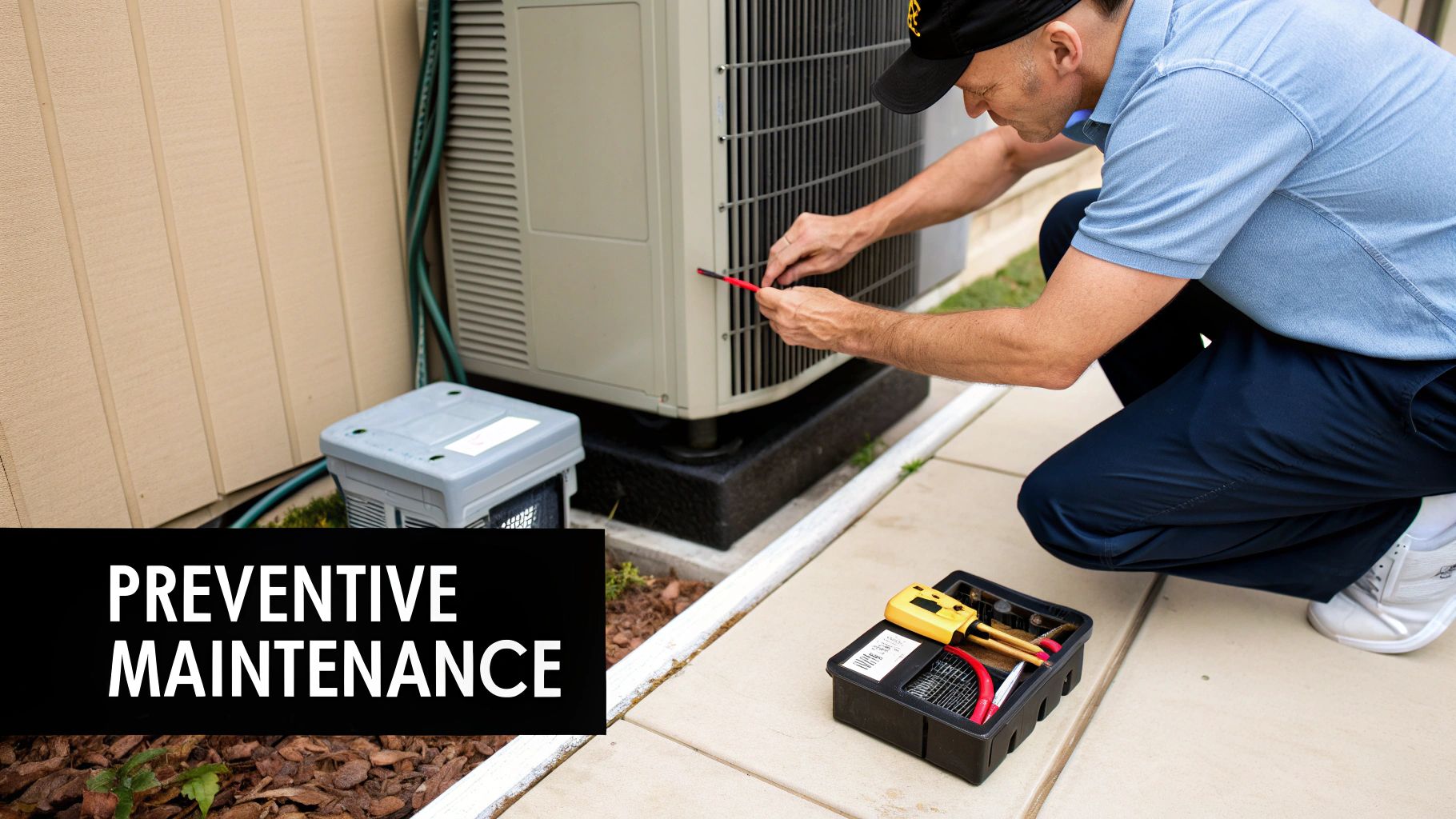
Smart maintenance is the line between protecting your asset's value and being stuck in a constant cycle of expensive, reactive repairs. When you manage an apartment building, your entire approach to upkeep directly hits your bottom line, impacts tenant happiness, and defines the long-term health of your investment. It’s all about getting ahead of problems instead of just fixing them when they break.
A proactive strategy really comes down to three things: routine, preventive, and emergency maintenance. When you weave these together into a solid plan, you start catching the small issues before they snowball into budget-breaking disasters. This keeps your property safe, running smoothly, and makes it a place people actually want to live.
The numbers don't lie. The multifamily housing construction and maintenance market was valued at $851.09 billion in 2024 and is expected to hit $918.51 billion in 2025. That kind of growth means competition is fierce. Top-tier maintenance isn't a luxury anymore; it's essential for meeting tenant expectations. You can get more insights on this trend from The National Law Review.
Building a Seasonal Maintenance Calendar
One of the most practical ways to get proactive is with a seasonal maintenance calendar. It’s a simple but powerful tool that organizes tasks around the time of year they’re most needed, heading off predictable issues before they even start. It turns property management from a series of frantic emergencies into a predictable, manageable workflow.
For instance, your calendar might look something like this:
- Spring: Get those HVAC systems serviced before the first heatwave. Clean out gutters clogged with winter gunk, get on the roof to inspect for damage, and fire up the irrigation systems.
- Summer: Schedule pest control treatments, check all the decks and patios for safety issues, and power wash the building exteriors and sidewalks to keep curb appeal high.
- Fall: Service the heating systems before the cold weather hits. This is also the perfect time to insulate pipes to prevent them from freezing and clear any leaves from drainage areas.
- Winter: Keep an eye out for ice dams on the roof, double-check that common area heating is working perfectly, and test every single smoke and carbon monoxide detector.
Following a schedule like this does more than just extend the life of your building’s major systems—it sends a clear message to your tenants that you care. That kind of visible, consistent upkeep goes a long way in building trust and satisfaction. To keep track of these checks, it helps to use a standardized form. You can see what a good one looks like by checking out our property inspection report template.
Your Network of Trusted Vendors
Let's be real: you can't do it all yourself. Having a go-to list of reliable vendors is non-negotiable. The last thing you want is to be frantically scrolling through Yelp reviews when a pipe bursts at 2 AM. Building relationships with trusted, insured professionals before you need them is a cornerstone of smart management.
Start by finding and vetting local plumbers, electricians, HVAC techs, and a good general contractor. Always, always verify their licenses and insurance. A pro tip is to ask for a certificate of insurance that lists your property as an "additional insured"—this protects you from liability if an accident happens on your property.
Get fair rates negotiated upfront and set clear expectations for response times, how you'll communicate, and how they'll invoice you. A great vendor relationship is a partnership.
A strong vendor list is your emergency response team. Investing time to find reliable, insured professionals upfront saves you money, minimizes property damage, and provides peace of mind when a crisis hits.
Streamlining Tenant Maintenance Requests
Finally, you need a dead-simple, crystal-clear system for tenants to submit and track their maintenance requests. The process has to be easy for them and efficient for you. An online tenant portal or even just a dedicated email address can work wonders.
When a request comes in, the process is simple:
- Acknowledge Promptly: Shoot them a quick reply letting them know you got the request and give them a rough timeline for the fix.
- Document Everything: Keep a detailed log of the issue, all your communications, which vendor you sent, and what the final resolution was.
- Follow Up: Once the work is done, circle back with the tenant. Make sure the problem is actually solved and that they're happy with the job.
This straightforward process ensures nothing slips through the cracks. It also turns a potential complaint into a chance to show off your excellent customer service, which builds your reputation as a responsive, professional landlord.
Managing Your Finances and Legal Duties
To get this right, you have to stop thinking like a homeowner and start acting like a business owner. Seriously. Managing an apartment building isn't a hobby; it's a full-fledged business, and the two pillars holding it up are rock-solid financials and airtight legal compliance. If you let either one slide, that promising investment will turn into a massive headache and a money pit.
Let's start with the money. The lifeblood of your operation is consistent rent collection. In this day and age, chasing down checks and dealing with cash is just asking for trouble and delays. Getting an online rent collection system is a non-negotiable. These platforms send out automatic reminders, let tenants set up auto-pay, and drop the money right into your account. It's the single best thing you can do for your cash flow.
This digital approach flows right into the next crucial task: keeping the books straight.
Keeping Your Books in Order
Good bookkeeping isn’t just something you scramble to do at tax time. It’s your monthly financial health check-up, and it’s the only way to know if you're actually making money. You need a clean, simple system to track every dollar in and every dollar out.
Every single month, you should be logging:
- Income: This is mainly rent, but don't forget late fees, laundry money, or parking charges. It all adds up.
- Expenses: This is where you have to be disciplined. Track everything—your mortgage, property taxes, insurance, utilities, all repairs, landscaping, and any management fees.
You don't need a PhD in accounting. A simple software like QuickBooks or even a well-organized spreadsheet will do the trick. Tracking your expenses is absolutely critical for budgeting and, just as importantly, for maximizing your tax write-offs. We dive deep into this in our guide on rental property tax benefits, which explains how to turn those costs into savings.
Think of it this way: clear financial records are your investment's report card. They tell you exactly how you're doing, shine a light on where you can save money, and are your best defense if you ever face an audit.
Navigating Legal and Safety Compliance
Okay, beyond the numbers, you have a serious legal responsibility as a landlord. A huge piece of that puzzle is keeping the property safe. Regular inspections aren't just a good idea—they're a core part of managing your risk.
These walkthroughs are your chance to find and fix problems before someone gets hurt and you get a lawsuit.
The Inspection and Compliance Workflow
Treat inspections like a routine health check for the building. A smart schedule includes checking individual units and all the common areas regularly. When you're doing these walkthroughs, you need to have a laser focus on safety.
Are the smoke and carbon monoxide detectors working? In California, state law requires landlords to install and maintain them. Are the handrails on the stairs wobbly? Are the walkways clear of cracks or roots that someone could trip on? It’s these seemingly small things that often become the center of a big lawsuit.
Handling tenant problems needs that same structured, by-the-book approach. When a dispute comes up or someone violates their lease, you have to act fast, document everything, and follow the law to the letter. A quick chat might work for a minor first-time issue, but anything serious or repeated needs a formal written notice.
If things go south and you have to evict someone, you must follow the exact legal script. In California, that process kicks off with serving a specific legal notice, like a “3-Day Notice to Pay Rent or Quit.” Whatever you do, don't try a "self-help" eviction by changing the locks or shutting off the power. That's illegal, and it will land you in a world of legal and financial pain. Always, always talk to an attorney to make sure every step you take is correct. It’s the only way to protect yourself and your investment.
Choosing Your Management Style and Scaling Up
Once your portfolio starts to grow, that hands-on approach that worked perfectly for your first duplex can quickly become a major bottleneck. Scaling up means you have to get real about how you want to manage your properties, and that means picking a style that can grow with you.
This decision really boils down to two main paths. Are you going to hand the keys over to a full-service property management company? Or will you keep the day-to-day control and just use a placement-only service to handle the headache of finding good tenants? Each option has a very different impact on your time, your wallet, and your stress levels.
Full-Service Versus Placement-Only Management
Making this call requires an honest look at your goals, how much free time you actually have, and how deep in the weeds you want to be. A full-service firm literally handles everything—from the 2 AM emergency maintenance calls to chasing down rent and even navigating the eviction process. It's the perfect setup for investors who want genuinely passive income and have zero desire to be hands-on.
A placement-only service, on the other hand, is for the owner-operator who prefers to manage the property but hates the marketing, screening, and leasing grind. They do the heavy lifting to find you a fantastic, well-vetted tenant and get the lease signed. Then, they hand the relationship over to you. It's a great middle ground if you're local and don't mind the operational work but want to sidestep the risky, time-sucking process of tenant acquisition.
To help you figure out which path makes sense for your investment strategy, here’s a quick breakdown of how these two models stack up.
Full-Service vs Placement-Only Management
A side-by-side comparison to help you decide which property management model best fits your needs and goals.
| Feature | Full-Service Management | Placement-Only Service |
|---|---|---|
| Cost Structure | Monthly fee (8-12% of rent) | One-time flat fee (e.g., one month's rent) |
| Responsibilities | Handles all operations: rent, maintenance, tenant relations, evictions. | Focuses solely on marketing, screening, and leasing. |
| Best For | Out-of-state investors or owners seeking a passive investment. | Local, hands-on owners who want to manage daily operations. |
| Your Involvement | Minimal; you review financial statements and approve major expenses. | High; you are the primary contact for all tenant needs. |
No matter which route you choose, understanding how to handle tenant issues is a huge part of the job. This flowchart gives you a clear look at the decision-making process when a lease violation pops up, from a simple warning all the way to starting an eviction for more serious problems.
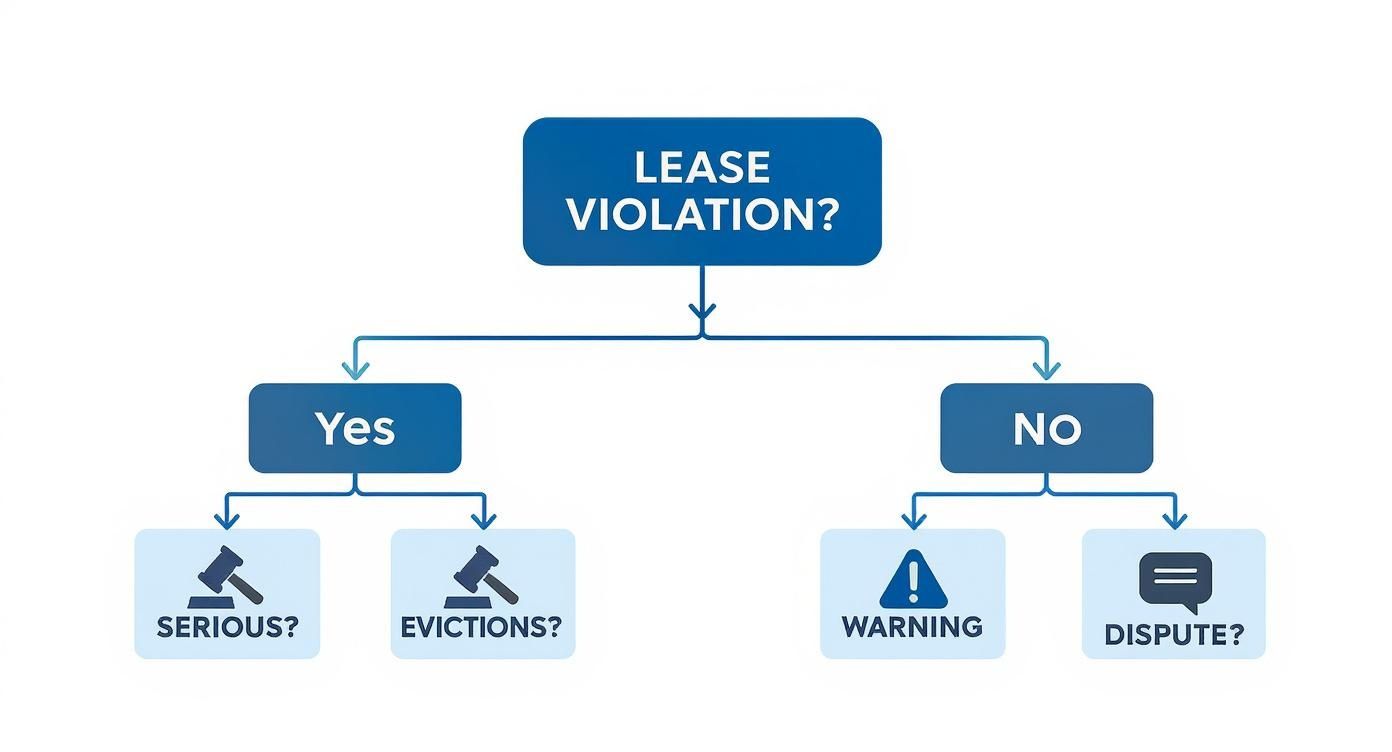
As you can see, the right move depends entirely on the situation. It really drives home the need for solid judgment and sticking to the letter of the law.
Strategies for Efficiently Scaling Your Portfolio
Whether you hire a manager or do it yourself, growth requires systems. Period. As you add more doors, you simply can't afford to reinvent the wheel every single time. The secret to scaling successfully is creating a repeatable, standardized process for everything you do.
This means using the same lease agreement, the same tenant screening checklist, and the same maintenance request form across every single one of your properties. Technology is your best friend here. A good property management software becomes the central hub for your entire operation. It automates rent collection, tracks maintenance tickets, and spits out financial reports, giving you a bird's-eye view of your whole portfolio from one screen.
Scaling isn’t about working harder; it's about building smarter systems. Standardized processes and the right technology allow you to manage more units with less effort, turning portfolio growth into a manageable and profitable endeavor.
As you expand, your time becomes your most precious resource. To grow your portfolio without running yourself into the ground, you have to delegate. Outsourcing administrative work by hiring virtual assistant services for rental properties can free you up to focus on the big picture, like hunting for your next deal.
By standardizing your workflows and delegating smartly, you build a business that’s designed for sustainable, long-term growth.
Frequently Asked Questions in Apartment Management
When you're managing an apartment building, the same questions tend to pop up again and again. It doesn't matter if you're a seasoned pro or just getting your feet wet; getting clear answers to common hurdles saves a ton of time and helps you dodge expensive mistakes.
Let’s dive into some of the questions we hear the most from property owners. Think of this as the practical, real-world advice you'll need for situations that are guaranteed to come up. Nailing these fundamentals is the key to running a tight ship.
What Are the First Things I Absolutely Must Do?
Before you even think about tenants, you need to get your legal and financial house in order. First and foremost, form a business entity like an LLC. This is non-negotiable. It creates a legal shield between your personal assets and your business, protecting you if a lawsuit ever comes your way.
Next up, get your banking straight. You need at least two separate accounts: one for collecting rent and paying operating expenses, and another exclusively for holding tenant security deposits. This isn't just good bookkeeping; in states like California, it's the law. Commingling these funds can land you in serious hot water. Finally, lock in a solid landlord insurance policy that covers liability, property damage, and lost rental income. Skipping these foundational steps leaves you wide open to massive financial and legal risks right out of the gate.
How Should I Handle Late Rent Payments?
The best way to handle late rent is to have a rock-solid policy baked right into your lease agreement. Your lease needs to spell out the exact due date, the length of the grace period, and precisely how much the late fee will be. The moment that grace period ends, your first move should be to issue a formal written notice.
If the rent still doesn't show up, you have to follow your state's legal eviction process to the letter. This usually starts with serving a formal “Notice to Pay or Quit.” It is absolutely critical that you never resort to "self-help" evictions, like changing the locks or tossing a tenant's stuff on the curb. Those actions are illegal and will backfire on you. Always stick to the proper legal channels and talk to an attorney to make sure you're compliant. One procedural mistake can get your entire eviction case thrown out of court.
A consistent, legally sound process for late rent is your best friend. It protects your cash flow, shows tenants you're a professional, and preserves all your legal rights if you end up in a worst-case scenario.
What Technology Do I Actually Need Today?
If there’s one piece of tech you can’t live without, it's good property management software (PMS). A modern PMS is the command center for your entire operation, putting all those time-sucking administrative tasks on autopilot.
When you're shopping for a system, make sure it has these key features:
- Online Rent Collection: Gets you paid on time and makes bookkeeping a breeze.
- Maintenance Request Portals: Gives tenants a simple way to report issues and lets you track every job from start to finish.
- Tenant Screening Integrations: Makes running background and credit checks seamless.
- Lease Management and Document Storage: Keeps all your critical paperwork organized and just a click away.
This kind of software makes you way more efficient, improves how you communicate with tenants, and gives you the hard data needed to make smart decisions. For larger buildings, things like keyless entry and smart thermostats are also becoming great amenities that help attract top-tier renters.
How Often Should I Be Inspecting My Units?
A smart inspection schedule really boils down to four key moments. The first is the move-in inspection. You'll walk through the unit with the new tenant and document its condition in detail, complete with photos. This sets a clear baseline.
Second, plan on doing seasonal or semi-annual inspections—say, every six months or so. This is your chance to catch small maintenance issues before they become big problems, check for any lease violations, and test safety devices like smoke detectors. Just be sure to always give tenants proper legal notice before you enter.
Third, get in the habit of doing occasional drive-by inspections of the property's exterior and common areas. This helps you keep an eye on curb appeal and overall upkeep. And finally, you'll conduct a detailed move-out inspection once the tenant leaves to accurately calculate any deductions from their security deposit. This simple cycle of inspections is your best defense for proactive maintenance and consistent lease enforcement.
Managing an apartment building brings its own unique set of challenges. Having an expert partner in your corner can make all the difference. At Edinhart Realty and Property Management, we offer the professional guidance and hands-on support you need to protect your investment and maximize its potential. Whether you need full-service management or just a little help finding the perfect tenant, we have a solution that fits.
Learn more about our Fresno property management services and how we can help you succeed.


