
At 9 p.m., a tenant calls to say water is pouring through the hallway ceiling. The plumber wants an emergency dispatch fee, the tenant is standing in pooled water, and you're trying to remember which vendor has a key. By morning, the original failed fitting is only one part of the problem. You're also dealing with wet drywall, damaged flooring, tenant communication, insurance paperwork, and a repair schedule that now affects more than one unit.
That's why maintenance cost reduction isn't mainly about negotiating a cheaper service call. It's an operating system for the rental: planned inspections, dependable vendors, clear tenant responsibilities, accurate records, and small improvements that prevent repeat failures. After handling hundreds of repair tickets around Fresno and the Central Valley, I've found that owners save more by controlling the workflow than by chasing the lowest invoice.
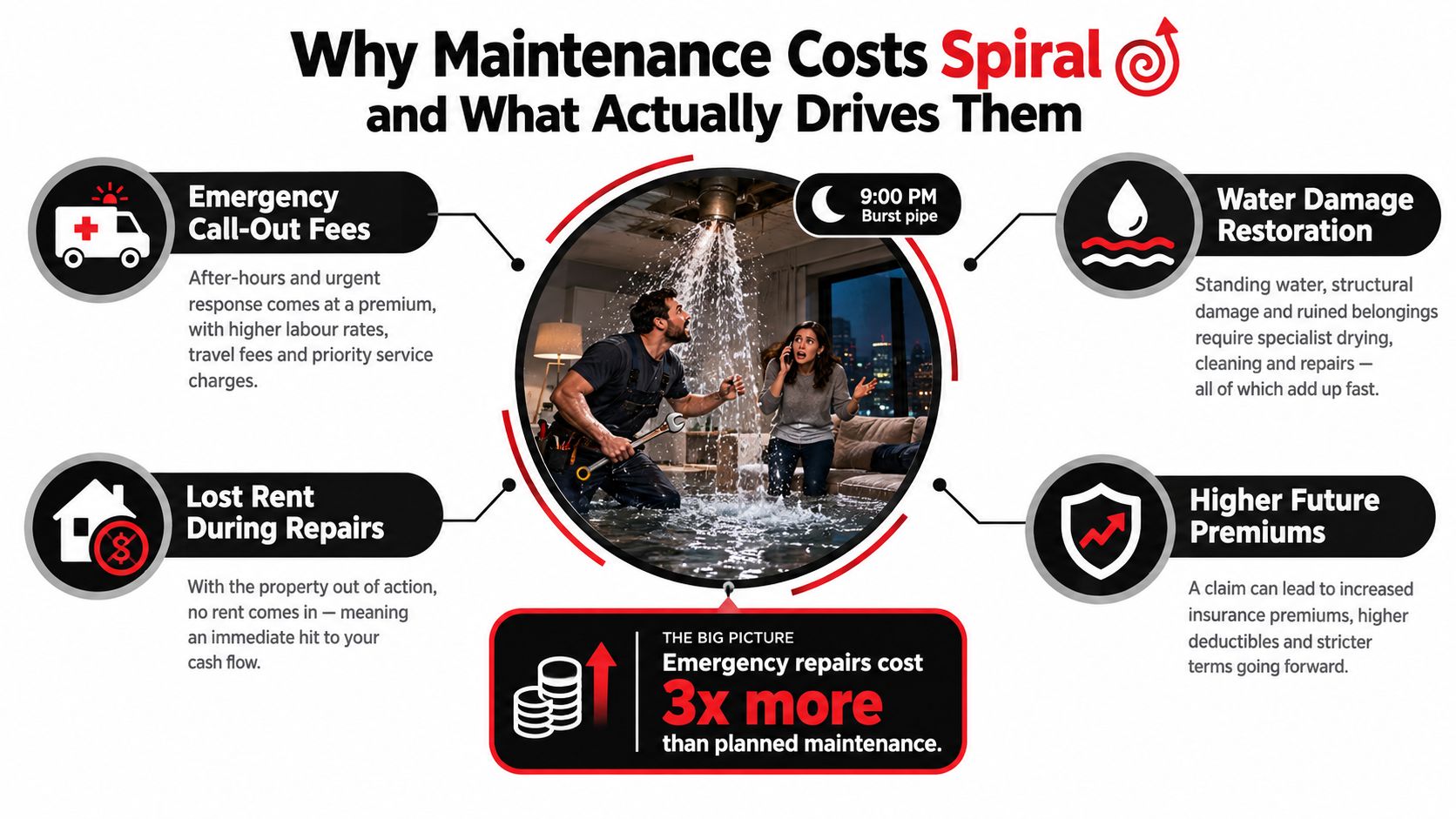
Why Maintenance Costs Spiral and What Actually Drives Them
A $280 water heater leak in Fresno can become a $3,400 repair once the ceiling, drywall, and a neighboring unit's flooring are included. The first invoice gets attention, but it's rarely the largest cost. Emergency labor, restoration, tenant disruption, and administrative work often create the financial damage.
The first hidden multiplier is deferred preventive work. A gutter that isn't cleared, a worn shutoff valve that isn't replaced, or an aging water heater that isn't inspected can turn a manageable task into a weekend emergency. The second is single-vendor dependence. If one plumber handles every property, you lose negotiating power when that company is booked or raises its trip charge.
Reactive-only scheduling creates another problem. Your calendar fills with failures instead of planned visits, so each emergency interrupts leasing, inspections, and rent-related work. Loose tenant reporting standards finish the chain. A slow leak that goes unreported can damage cabinets, subfloors, and adjacent units long before the owner sees the first photo.
Focus on the cost multipliers
Use four questions after every significant work order:
- What failed first? Identify the component or behavior that started the problem.
- Why wasn't it detected earlier? Check whether an inspection, sensor, tenant report, or vendor note could have caught it.
- What made the response expensive? Separate emergency labor, secondary damage, access delays, and replacement parts.
- What prevents a repeat? Assign one follow-up action, not a vague intention to “keep an eye on it.”
A widely cited building-operations benchmark says preventive maintenance can reduce building maintenance and energy costs by up to 20% per year, while facilities may save 12% to 18% through preventive maintenance. The same benchmark says predictive maintenance can add another 8% to 12% in savings compared with preventive programs (BGE's preventive maintenance strategy).
The practical lesson is simple. Don't ask only whether a repair was cheap. Ask whether your process made the next emergency less likely.
Reactive, Preventive, and Predictive Maintenance Compared
Small landlords usually run a mixture of strategies, even if they've never named them. Reactive maintenance means waiting for failure, then dispatching help. Preventive maintenance schedules work by time, season, or usage. Predictive maintenance uses condition information, such as water sensors or HVAC trends, to decide when attention is needed.
The right blend depends on portfolio size, asset criticality, and how quickly you can respond. I wouldn't install monitoring equipment on every inexpensive appliance, but I would consider it for a water heater above a finished ceiling or an HVAC system serving several units.
| Strategy | Annual Cost Per Door | Best For | Drawback |
|---|---|---|---|
| Reactive | $1,400 to $2,200 | One to three doors with strong reserves and simple systems | Emergency premiums, secondary damage, and unpredictable cash flow |
| Preventive | $900 to $1,400 | Four to fifty doors needing a dependable operating rhythm | Can over-service equipment if tasks aren't tied to actual failure risks |
| Predictive | $700 to $1,050 | Larger portfolios and high-consequence assets | Requires monitoring, data review, and model calibration |
These Central California figures are planning ranges from the requested operating model, not universal benchmarks. The verified evidence supports the direction of travel: a NIST summary reports advanced maintenance methods associated with 15% to 98% maintenance-cost reductions, 35% to 45% downtime reductions, and 65% to 95% defect reductions (NIST maintenance-cost summary).
Predictive programs work best when alerts lead to action. A sensor that sends notifications but doesn't create a prioritized work order, reserve the part, and schedule a technician is just another subscription.
For owners building that dispatch workflow, the complete guide to field service dispatching is a useful reference for organizing urgency, technician availability, access details, and work-order status. The savings don't come from choosing one category forever. They come from using reactive work only where failure is acceptable, preventive work for predictable upkeep, and predictive monitoring where early warning protects the most value.
Building a Preventive Maintenance Plan for Your Rentals
Start with a walkthrough, not a calendar template. Record the HVAC model and age, water heater installation date, roof condition, appliance serial numbers, irrigation equipment, shutoff locations, and any component that would cause secondary damage if it failed.
Then place each asset on a seasonal schedule. Central California properties have long hot periods, Tule fog, dry landscaping conditions, and occasional freeze warnings. A schedule that works in a coastal climate may miss the stress that Fresno-area equipment sees during summer heat.
A practical yearly cadence
- January: Test smoke and carbon monoxide detectors, inspect exposed plumbing, and review freeze warnings.
- February: Check weatherstripping, under-sink valves, appliance hoses, and visible roof drainage.
- March: Inspect irrigation, remove debris from exterior drains, and prepare HVAC filters.
- April: Schedule the first HVAC service and check condensate lines before sustained heat.
- May: Verify cooling performance, inspect shade structures, and review pest activity.
- June: Flush water heaters where appropriate, inspect hose bibs, and check irrigation coverage.
- July: Monitor HVAC strain, look for exterior paint failure, and inspect attic ventilation.
- August: Check for leaks around toilets and supply lines, then review tenant maintenance reports.
- September: Inspect appliances, filters, and weather seals before the season changes.
- October: Schedule the second HVAC check and confirm heating operation.
- November: Clear gutters, inspect the roof, and document vulnerable exterior areas.
- December: Protect exposed pipes during freeze warnings and test life-safety devices.
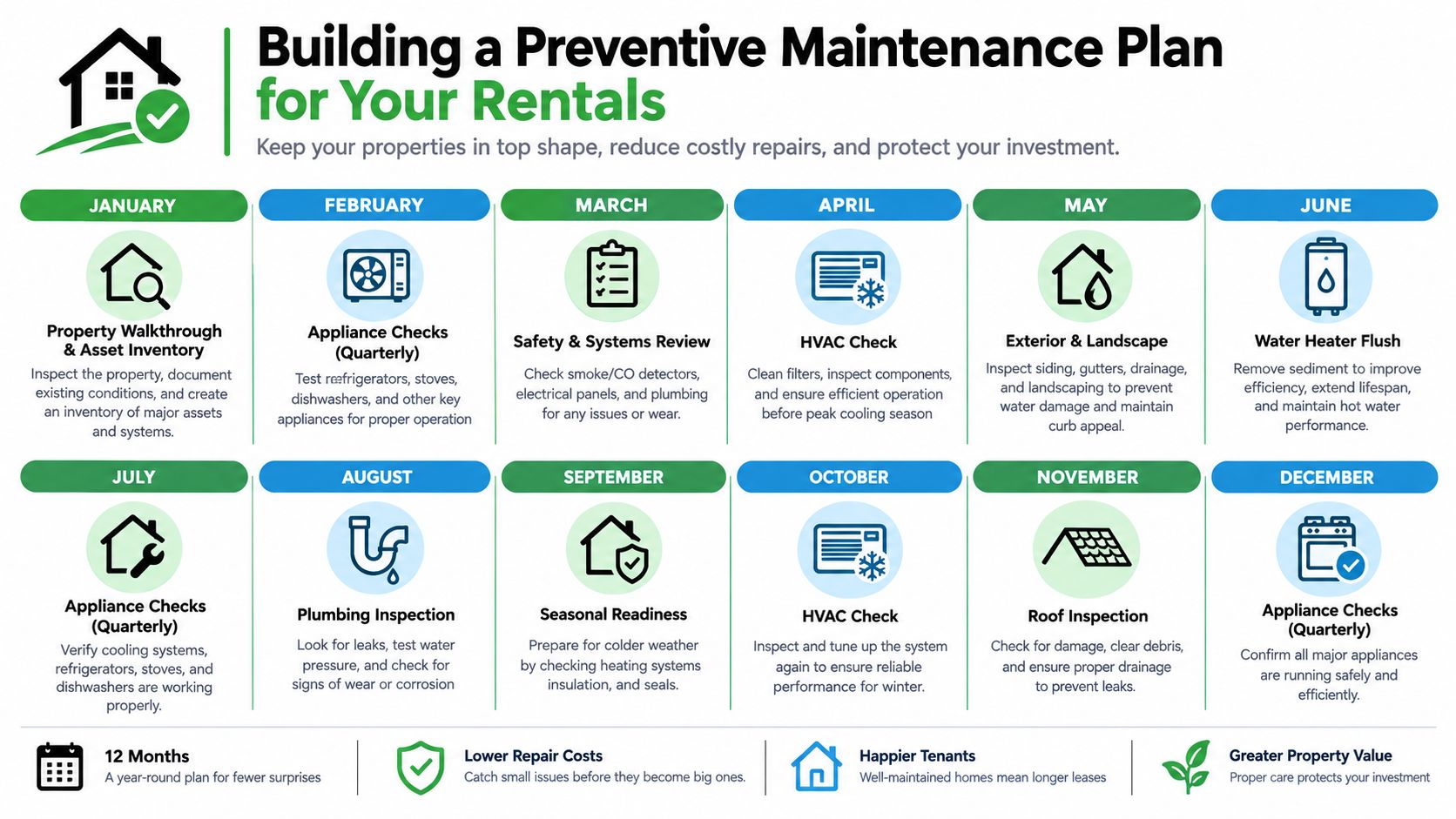
A spreadsheet works if every task has an owner, due date, property, asset, vendor, completion date, and photo. You can also adapt this preventive maintenance checklist to keep recurring work visible.
The goal isn't a perfect calendar. It's a reliable one. Even partial completion creates better visibility than waiting for tenants to report failures.
This video provides another visual way to think about scheduled property upkeep:
Review the schedule monthly and move tasks when access, weather, or occupancy makes the original date impractical. A missed inspection should be rescheduled, not quietly deleted.
Vendor Management and Contracting That Save Money
For owners with one to ten doors in Fresno, Clovis, or Bakersfield, a reliable vendor list is often the strongest practical lever. You don't need a huge contractor network. You need enough qualified coverage that one unavailable plumber or electrician can't control your response time or pricing.
Begin with three candidates per trade. Verify licensing and insurance, then ask for references that involve occupied rentals rather than only remodels. A contractor who does excellent new construction may still be a poor fit for tenant access, documentation, and small repeat repairs.
Qualify vendors before you need them
Score candidates on:
- Response time: Can they distinguish an active water event from a cosmetic repair?
- Warranty terms: Will they return if the same failure comes back?
- Documentation: Do they provide photographs, material details, and a clear scope?
- Bundling: Will they inspect several related items during one scheduled visit?
- Communication: Can they update the owner, tenant, and manager without repeated calls?
Put expectations in writing. A useful service-level agreement can set a four-hour emergency response window, a 48-hour routine-repair target, and a 30-day window for non-urgent work. Those are operating targets for your contract, not guarantees that every vendor can meet in every circumstance.
Your master service agreement doesn't need to be complicated. Cover hourly rate caps, trip-charge rules, warranty handling, access procedures, photo requirements, and approval thresholds. Require written approval before work exceeds the agreed limit, except where immediate action is needed to stop active damage or address a safety issue.
Practical rule: Pay for the repair that prevents the second visit, not merely the lowest first-hour rate.
An unmarked invoice is a recordkeeping problem and a pricing problem. Require the property address, unit, date, labor description, parts, photographs, and any warranty information. Paying reliable vendors promptly can help preserve priority status, but don't trade documentation for speed. Review the list periodically so pricing remains credible and performance stays visible.
For specialized building work, a resource on commercial electrical repair can help owners understand the scope of electrical service before approving a vendor. The same principle applies to plumbing, roofing, HVAC, and restoration. Know what the work should include before comparing bids.
Measure the work every month
Keep one Google Sheet with a tab for each property and a dashboard tab. Record:
- Routine repairs
- Emergency calls
- Preventive service
- CapEx reserve transfers
Divide trailing 12-month repair spending by gross rent to calculate your maintenance ratio. The requested planning benchmark for older Central California rentals is 8% to 12%, but treat that as a comparison point, not a universal rule.
Track three core KPIs: average cost per work order, emergency tickets as a share of all tickets, and vendor callback rate. Set an alert when emergency work rises above 25% of tickets, because that may indicate a preventive or reporting gap rather than bad luck.
A property maintenance platform can make work-order assignment, asset history, vendor notes, and follow-up easier to maintain. Owners comparing systems can review property maintenance management software as one example of the workflow category.
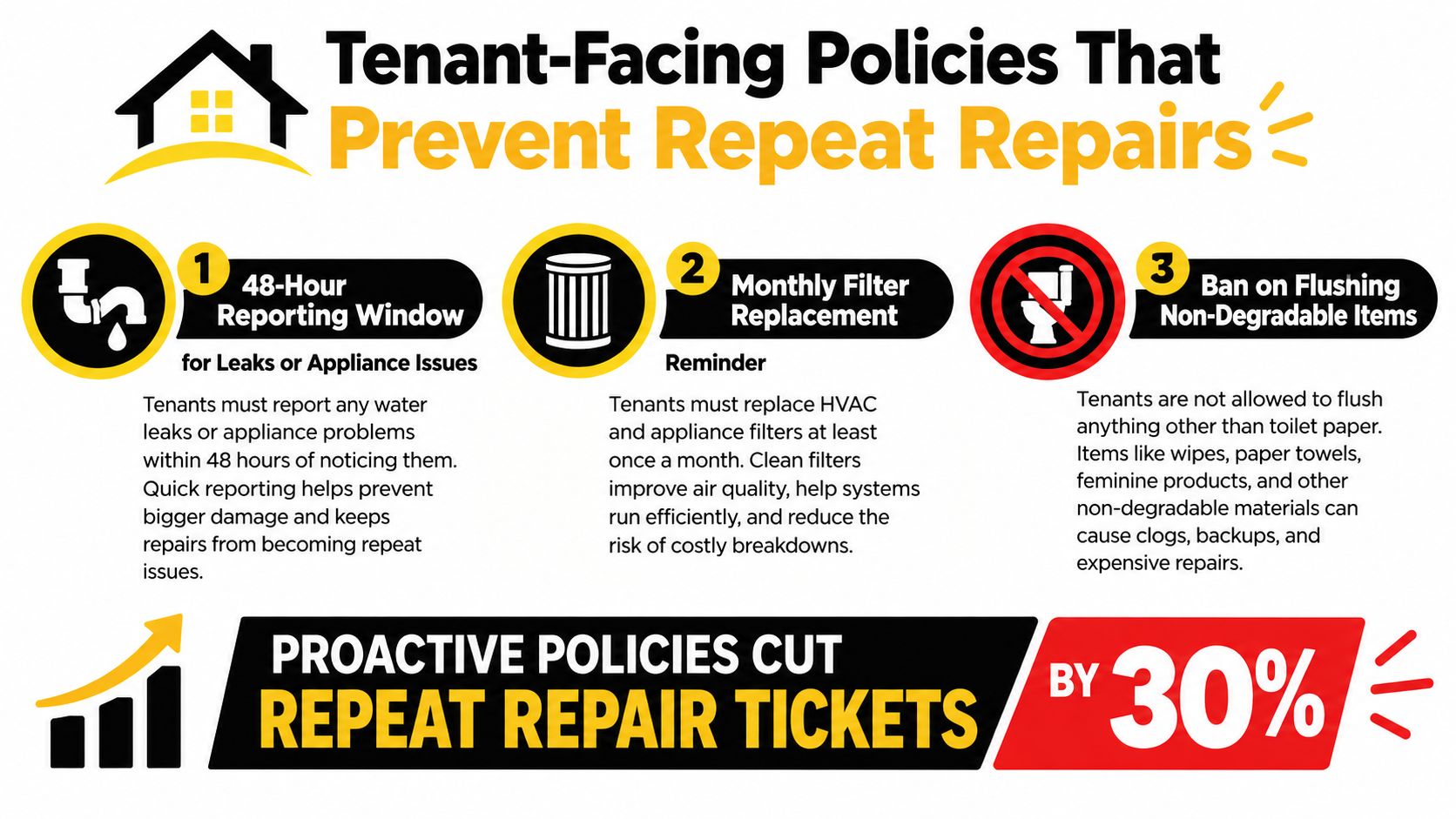
Tenant-Facing Policies That Prevent Repeat Repairs
Tenants often notice the first warning sign before an owner or vendor does. A dripping valve, slow drain, warm refrigerator, or air conditioner that runs constantly can remain minor if reported promptly. It becomes expensive when the tenant assumes someone else will notice.
Write the expectations into the lease addendum and explain them at move-in. Three clauses deserve plain language:
- Report promptly: Require tenants to report leaks, appliance faults, unusual odors, and loss of heating or cooling within 48 hours of noticing them.
- Assign routine care: State who replaces HVAC filters and how the tenant can request help if the filter is difficult to access.
- Protect the plumbing: Prohibit chemical drain cleaners and non-degradable items that can damage traps, create blockages, or complicate diagnosis.
Give tenants a one-page guide with emergency examples, the after-hours number, routine-request instructions, and the process for assessing misuse charges. Don't bury these details in legal language that a tenant won't read during a stressful event.
A modest reporting incentive may help, but it must be documented and applied consistently. Some owners use a small rent credit for early defect reporting, while others rely on clear communication and prompt follow-up. The key is to reward useful information without creating confusion about ordinary maintenance responsibilities.
Use a tenant-present walkthrough twice each year when practical. Photograph HVAC coils, gutters, under-sink valves, and other recurring trouble spots, then store the images with the work-order history. A clear tenant move-in checklist template can help establish condition and responsibilities before the first repair request.
Tenants who see that reports receive a real response are more likely to report the next issue early. That behavior protects the building and gives you better information for maintenance cost reduction.
Small Renovations With Real ROI and Which to Skip
Every upgrade should pass a payback test. The relevant return may come from fewer repairs, a shorter turnover, longer asset life, or a rent increase that the local market can support. A beautiful finish that doesn't improve one of those outcomes is usually an owner preference, not an investment.
Use local bids and property-specific history before approving work. Costs and benefits vary by building condition, labor availability, tenant profile, and whether the property is vacant.
| Upgrade | Typical Cost | Annual Benefit | Payback (Years) | Verdict |
|---|---|---|---|---|
| Tankless water heater | Get a local installed bid | Fewer tank-related replacement concerns and possible utility benefit | Calculate from verified savings | Consider when replacement is already due |
| PEX repipe | Get a plumbing assessment | Reduced leak exposure in aging supply lines | Calculate from avoided repairs | Consider for recurring supply-line failures |
| Composition shingle reroof | Get a roof inspection and bid | Fewer leak calls and better turnover presentation | Calculate from remaining roof life | Do when condition warrants it |
| Vinyl plank flooring | Compare installed material bids | Easier turnover repairs and replacement of damaged sections | Calculate from turnover history | Often practical in high-wear areas |
| Smart thermostat | Price the device and installation | Better scheduling and operating visibility | Calculate from documented utility benefit | Consider when HVAC control is a recurring issue |
| LED retrofit | Price fixtures and labor | Lower replacement frequency and energy use | Calculate from measured savings | Usually sensible during turnover |
| Drought-tolerant landscaping | Use a landscape design and maintenance bid | Lower irrigation demand and fewer recurring landscape issues | Calculate from current maintenance spend | Consider where irrigation is costly |
Don't approve marble counters, jetted tubs, decorative glass showers, premium appliances above the neighborhood's expected tier, or expensive security systems without a documented insurance benefit. These features can increase replacement complexity, damage exposure, and tenant expectations without reducing recurring maintenance.
Use the three-question filter
Ask:
- Does the project reduce a recurring repair?
- Does it shorten turnover work?
- Does it support a rent increase above comparable local properties?
Two yeses support moving forward. One yes means hold the project until the financial case improves. No yeses means keep the money in reserves or address a known failure point instead.
Reliability Centered Maintenance offers a useful way to sharpen this thinking. A framework study reported a 52.17% maintenance-cost reduction, with savings of about 6.19 million Egyptian pounds, after classifying asset functions, failure modes, and criticality before selecting tasks (RCM framework study). The lesson for rental owners is not to copy an industrial framework blindly. It's to avoid blanket work and spend first on assets whose failure causes the most damage.
Your 30-60-90 Maintenance Cost Reduction Rollout
A maintenance program fails when it depends on memory. A 30-60-90 rollout turns scattered invoices, tenant messages, and vendor calls into a repeatable operating rhythm.
Days 1 through 30
Pull the last 12 months of invoices, emails, texts, and work orders. Categorize every ticket as routine, emergency, preventive, or improvement, then identify the three failure points that appear most often.
Set a reserve target using property age, condition, and actual history. The requested planning range is 8% to 12% of rent, but use your own trailing records to decide where each property belongs within that range.
Create a simple asset register. Include the property, unit, system, installation date when known, vendor, last service, warranty status, and next action. Missing information is itself a task.
Days 31 through 60
Build the seasonal calendar and assign each task to an owner or vendor. Qualify backup vendors for every essential trade, then confirm access procedures and approval limits.
Draft the tenant addendum and maintenance guide. Explain what qualifies as an emergency, how to shut off water when safe, which number to call after hours, and how to submit photos for routine issues.
Start logging every work order against a property and asset component. A description such as “bathroom leak” won't reveal a recurring toilet supply-line problem. Specific records will.
Days 61 through 90
Launch a dashboard with total spend per door, average days open, emergency share of tickets, and preventive completion. Review vendor response and callback performance, then remove or redesign tasks that don't address a credible failure mode.
Predictive maintenance deserves selective use here. The verified summaries describe condition-based programs using sensors, anomaly baselines, failure-probability modeling, and prioritized work orders, while warning that false positives and weak calibration can create unnecessary inspections and part replacements (predictive maintenance cost savings overview). For rentals, start with high-consequence leak or HVAC risks rather than monitoring everything.
A broader practical facility maintenance cost guide can provide additional context for organizing maintenance budgets and processes, but the property-level discipline matters more than the software brand.
Look at three numbers during the first week of every month:
- Total maintenance spend per door
- Emergency work as a percentage of tickets
- Preventive work completed as scheduled
Four habits erase savings: skipping the tenant walkthrough, choosing the cheapest bid without checking repeat visits, treating landscaping as optional, and waiting until year-end to review invoices. Write one paragraph explaining every unusual monthly spike, then adjust the next quarter's reserve or schedule.
Maintenance cost reduction isn't a one-time renovation project. It's the monthly habit of noticing patterns early, assigning responsibility, and funding the work that prevents a larger bill.
Edinhart Realty and Property Management coordinates tenant requests, vendor dispatch, inspections, repair follow-up, and property records through its full-service management model, while its placement-only service supports owners who prefer to manage daily operations themselves. Visit Edinhart Realty and Property Management to discuss a maintenance workflow for your Fresno-area rental portfolio.


