

When seeking long term rentals palm springs, you've probably already run into the same problem everyone else does. You type "monthly rental Palm Springs" into Google, and the results are packed with furnished vacation homes, resort-style listings, and seasonal stays priced for tourists, not residents. They look great in photos. They often tell you almost nothing about what a real, unfurnished 12-month lease looks like.
That distinction matters more here than in most markets. In Palm Springs, a "monthly rental" often means a furnished stay with hospitality pricing, utility bundles, and house rules built around short visits. A true long-term rental usually means an unfurnished home, condo, apartment, or casita leased for a full year, with a standard application, screening, deposit, and lease agreement.
Serious renters need to know where actual year-long inventory lives. Serious owners need to know what the long-term tenant pool will really pay, expect, and reject. If you're evaluating this market as an investor, resident, or landlord, the useful questions aren't glamorous. They're practical. Is the home unfurnished? Who handles the pool? Is the listing professionally managed? How competitive is annual inventory? What kind of screening should you expect?
Your Guide to Long-Term Renting in Palm Springs
The first thing to understand is that Palm Springs has a fragmented rental market. Vacation-rental websites dominate search results, and that muddies the picture for anyone trying to find stable housing. One overview notes that Homes.com lists around 277 homes for rent in Palm Springs, while Apartments.com shows 35 private-owner rentals, which helps explain why true long-term inventory can feel thin and scattered across multiple platforms rather than concentrated in one place on a single website (Vacasa long-term Palm Springs overview).
That fragmentation creates two common mistakes. Renters waste time touring furnished seasonal homes that were never meant to be full-time housing. Owners compare their unfurnished annual rental to polished "monthly stay" listings that include furniture, linens, and short-term pricing logic.
Practical rule: If a listing leads with poolside lifestyle photos, bundled amenities, and monthly rates but says little about lease term, tenant qualifications, or utility responsibility, treat it like a hospitality product until proven otherwise.
In day-to-day property management terms, long term rentals palm springs usually means a standard residential lease, often for 12 months, with conventional screening and a move-in process designed for residents rather than travelers. That's the lane where pricing discipline, tenant quality, and lease clarity matter most.
Owners should also think about taxes before they sign a lease and start collecting rent. A straightforward rental income tax guide is useful if you're converting a second home or former seasonal property into a conventional rental and want a cleaner picture of how income, expenses, and recordkeeping typically work.
What works here is a targeted search and a realistic definition of inventory. What doesn't work is assuming every "monthly" listing is a legitimate long-term option.
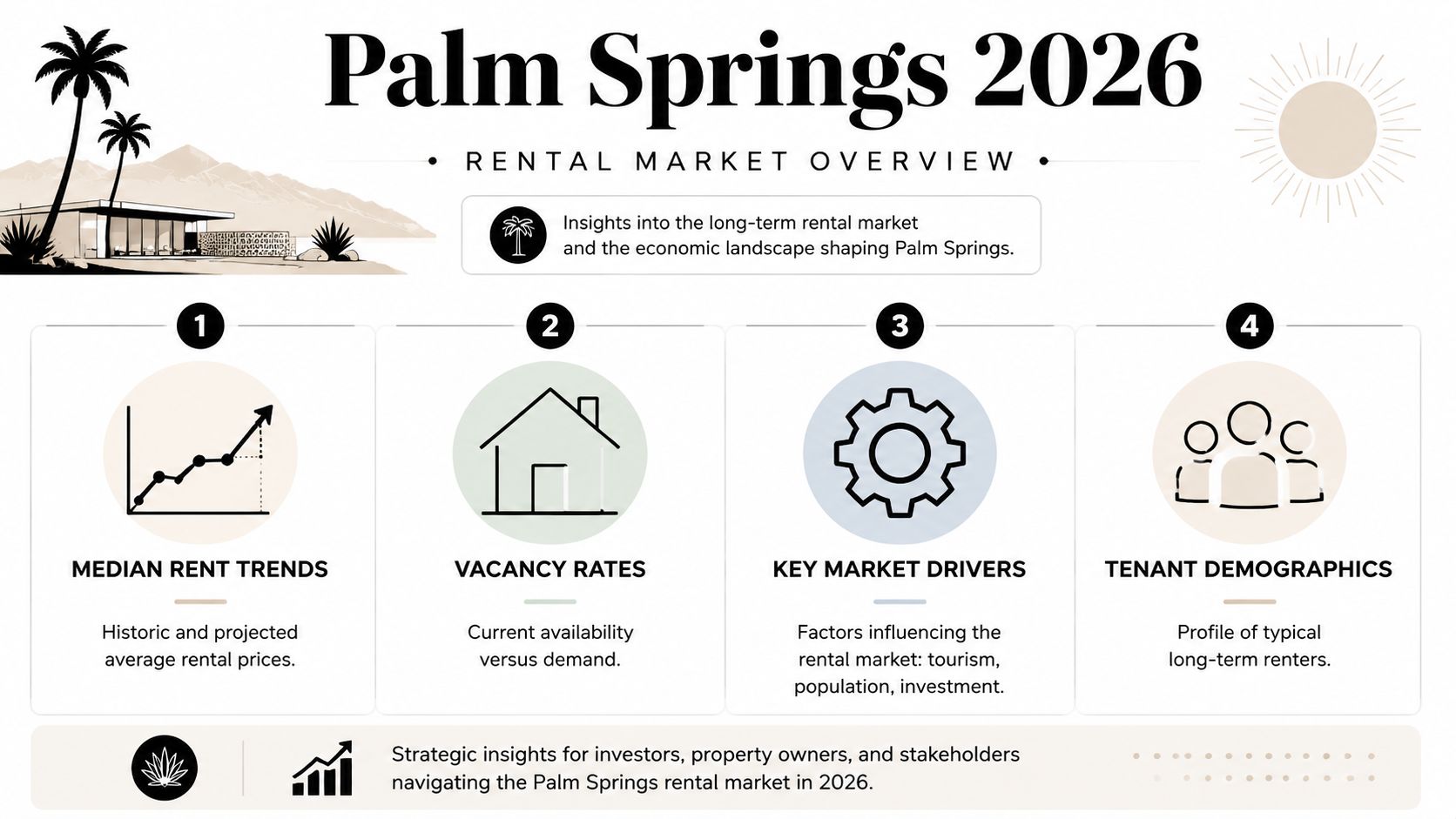
Understanding the 2026 Palm Springs Rental Market
A common Palm Springs mistake looks like this. A renter budgets for a standard 12 month lease, searches "monthly rentals," and keeps finding furnished homes priced like vacation inventory. An owner does the reverse and assumes those seasonal rates are the right benchmark for an unfurnished annual lease. Those are two different products, and the gap matters more here than in many desert markets.
Why regulation matters so much
Palm Springs has a large and unevenly distributed vacation rental presence. The city reports about 6.6% of its 35,000 housing units, roughly 2,268 homes, are licensed as vacation rentals, and some neighborhoods carry far higher concentrations. Racquet Club Estates is reported at 36.7%, Sunmor at 29.5%, and Twin Palms at 27.7%. The same reporting notes that at least 17% of homes in 11 neighborhoods are short-term rentals (Palm Springs Post reporting on city vacation-rental data).
For long-term renters, that helps explain why inventory can feel thinner than a broad online search suggests. A meaningful slice of housing is committed to visitor use, and that pressure is not spread evenly across the city. For owners, the choice is rarely abstract. It usually comes down to whether the property fits a hospitality model with compliance, turnover, and guest expectations, or a residential model with steadier occupancy and fewer moving parts.
The investor trade-off
Short-term income still gets a lot of attention, and for good reason. AirROI's 2026 Palm Springs dataset, covering May 2025 to April 2026, estimates that the average Airbnb listing generates $55,542 in annual revenue, with 36.4% occupancy, a $518 ADR, and $196 RevPAR. The same source says guests stay about 6.2 nights on average and book about 68 days in advance. AirDNA's Palm Springs overview, as summarized there, also shows 6,152 vacation rentals in the market, with average occupancy around 50%, a $473 daily rate, and about $37,872 in monthly revenue (AirROI Palm Springs Airbnb data).
Those numbers influence owner psychology. I see that regularly. Owners shopping the annual market often compare a realistic 12 month lease against the best part of winter short-term performance, not against the full year of vacancy risk, cleaning costs, furnishing expense, platform fees, licensing limits, and management time.
That is where underwriting gets distorted.
A true long-term rental in Palm Springs should be judged on repeatable income and lower operational drag, not on peak seasonal screenshots from a furnished listing. An unfurnished resident lease usually produces less gross upside, but it can produce a more predictable net result and fewer surprises.
What long-term owners should model instead
Annual leasing works best when owners model the property as residential housing from day one, especially if the home was previously used seasonally.
Focus on:
- Actual lease type: Unfurnished 12 month pricing should be compared to other resident leases, not furnished monthly stays.
- Stability of occupancy: One qualified tenant for a full term usually creates less income volatility than multiple short bookings spread across the year.
- Operating workload: Annual rentals cut down on turnover coordination, frequent cleaning, guest communication, and constant calendar management.
- Neighborhood compatibility: Some Palm Springs neighborhoods absorb visitor activity better than others. Others are stronger as full-time residential product.
- Tenant quality and lease execution: A clean application, strong income, and a well-run lease often protect returns better than chasing top-line rate.
For serious renters, the takeaway is straightforward. If you want a place to live full time, filter hard for unfurnished listings, clear lease terms, and standard resident screening. For landlords, the same discipline applies on the pricing side. The strongest long-term decisions in Palm Springs start with an accurate comparison set.
Best Palm Springs Neighborhoods for Long-Term Renters
Neighborhood choice in Palm Springs isn't just about style. It's about whether your daily routine fits the area once the vacation gloss wears off. The right neighborhood for a remote worker isn't always right for a retiree, and the right family area often isn't where a short-term visitor would choose to stay.
For the renter who wants walkability
Downtown-adjacent areas and the Uptown side of town appeal to renters who want coffee shops, restaurants, errands, and social life within a short drive or an easy walk. These areas tend to suit professionals, creatives, and remote workers who care less about lot size and more about convenience, design, and being near activity.
The housing mix often leans toward condos, smaller homes, and character properties. The upside is lifestyle. The trade-off is that you're closer to the city's visible visitor economy, so you need to pay close attention to parking, HOA rules, and how much privacy you want from neighboring turnover.
If you work from home, don't choose a neighborhood based only on weekend appeal. Test the weekday rhythm, traffic flow, noise level, and how quickly you can get groceries, coffee, and basic services.
For retirees and quiet long-term residents
South Palm Springs tends to attract renters who want a more residential pace. Many people looking for a true "live here, not vacation here" setup prefer areas where streets feel calmer, landscaping is established, and the surrounding properties behave more like homes than transient lodging.
This part of the market often appeals to retirees, second-home owners making a longer transition, and renters who want a low-drama lease in a settled area. The key questions here are less about nightlife and more about sunlight, pool exposure, HOA restrictions, guest parking, and how much upkeep the property requires.
For families and renters who need more space
Families and renters who need a yard, extra bedroom, or less compressed layout often start looking in neighborhoods with more single-family inventory. In practice, that usually means prioritizing daily logistics over image. You want easier parking, simpler school and commute routines, and homes where kids, pets, and storage needs fit without constant compromise.
These neighborhoods may not show up in glossy tourism marketing, which is often a good sign for a long-term tenant. What matters is whether the home functions well across all seasons and whether the owner has priced it like a residential rental rather than a furnished resort substitute.
For architecture-first renters
Palm Springs attracts renters who care greatly about design, and some neighborhoods deliver a strong mid-century or historic identity. That's a real draw, but architecture comes with practical questions. Older homes can have unusual layouts, more maintenance needs, and stronger expectations around landscaping or preservation.
Renters who love design should still inspect the boring stuff. Storage, insulation, parking, appliance condition, and outdoor maintenance responsibilities matter a lot more after month two than the curb appeal that got you in the door.
Palm Springs Neighborhoods at a Glance
| Neighborhood | Best For | Typical Housing | Vibe & Key Features |
|---|---|---|---|
| Downtown adjacent areas | Remote workers, social renters, professionals | Condos, apartments, smaller homes | Walkable, active, close to dining and retail |
| Uptown side | Design-focused renters, professionals | Stylish condos, character units, renovated homes | Trend-forward, convenient, strong local identity |
| South Palm Springs | Retirees, quiet long-term residents | Condos, single-family homes, established communities | Residential feel, calmer streets, steadier day-to-day living |
| Family-oriented residential pockets | Families, pet owners, renters needing space | Single-family homes with yards, larger layouts | Practical, less tourist-driven, easier everyday logistics |
| Design-centric mid-century neighborhoods | Architecture enthusiasts, lifestyle renters | Vintage homes, distinctive remodels, iconic layouts | Character-rich, visually strong, sometimes higher-maintenance |
The best neighborhood is usually the one that makes an ordinary Tuesday easier, not the one that looks best in a winter vacation brochure.
How to Find and Evaluate Long-Term Rental Listings
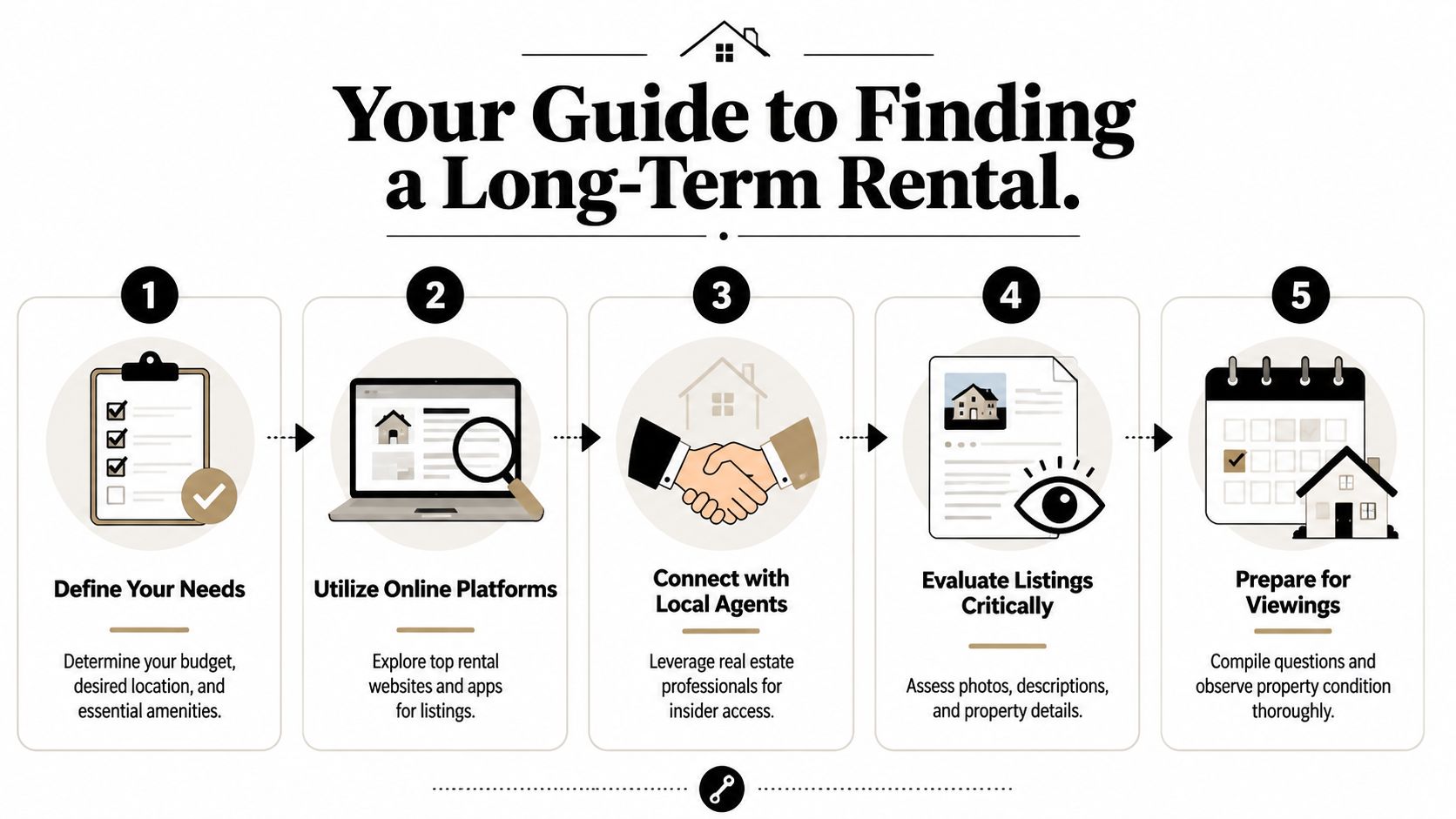
Most renters lose time in Palm Springs before they lose money. They spend days clicking through listings that were never viable for a true annual lease. The fix is a tighter search process and better filters from the start.
Start where real annual inventory is more likely to appear
Prioritize property management websites, MLS-connected rental feeds, and dedicated rental portals over vacation platforms. If you want a practical starting point, this roundup of the best rental listing websites helps narrow the field to platforms that are more useful for conventional residential searching.
Professional listings usually give themselves away quickly. They state lease term, screening criteria, deposit structure, pet rules, and utility responsibilities clearly. Hospitality-style listings usually focus on amenities, availability windows, and booking convenience.
Use a short evaluation checklist
When a listing looks promising, slow down and verify the details that affect your real monthly cost and your lease experience.
- Confirm the lease type: Ask whether the property is offered as an unfurnished 12-month lease, a furnished seasonal rental, or a month-to-month arrangement.
- Check who pays for upkeep: In Palm Springs, pool service, landscaping, pest control, and HOA fees can shape the actual cost and workload tied to the home.
- Verify the address and management contact: A complete address, a named management company or owner contact, and a consistent application process usually signal a legitimate listing.
- Study the photos for function: Look past the staged exterior shots. You need to see closets, appliances, parking, window coverings, laundry setup, and the actual condition of bathrooms and kitchens.
- Look for rule clarity: Good listings spell out smoking rules, pet policies, occupancy limits, and move-in requirements.
Red flags that deserve a second look
Not every weak listing is a scam, but vague listings create avoidable problems. Be careful when you see:
- Missing interior photos
- No mention of lease term
- No explanation of furnished versus unfurnished
- Unclear utility responsibility
- Pressure to apply before seeing the property
- A lifestyle-heavy description with almost no lease details
A strong long-term listing reads like housing. A weak one reads like a getaway.
Questions to bring to a showing
A showing should answer operational questions, not just visual ones. Ask:
- Is the owner looking for a standard one-year tenant?
- Are pool and yard services included?
- Are there HOA rules on parking, guests, or move-ins?
- What's the maintenance request process?
- Has the home been used as a short-term or seasonal rental before?
- Are appliances, window coverings, and laundry included?
Palm Springs rewards renters who stay disciplined. If you search like a tourist, you'll get tourist inventory.
Navigating the Application and Tenant Screening Process
A renter tours a Palm Springs house in July, likes the kitchen, and submits an application that night. The next morning, they learn they were competing with applicants who already had proof of income, IDs, references, and pet information ready to send in one clean package. That is how this stage usually works here. Good long-term homes move faster than casual renters expect, especially because true 12-month rentals sit in a different pool than furnished monthly vacation inventory.
Why screening is often stricter in Palm Springs
Owners here usually have options. Some have used a property seasonally in the past. Others are comparing the stability of a year-long tenant against the higher management load that comes with shorter stays. As noted earlier, Palm Springs also regulates vacation-rental activity, which pushes some owners to be more selective about who gets a standard lease.
From the management side, firm screening is practical. A weak placement can mean missed rent, lease violations, faster wear on the home, and another vacancy in a market where turnover costs add up quickly.
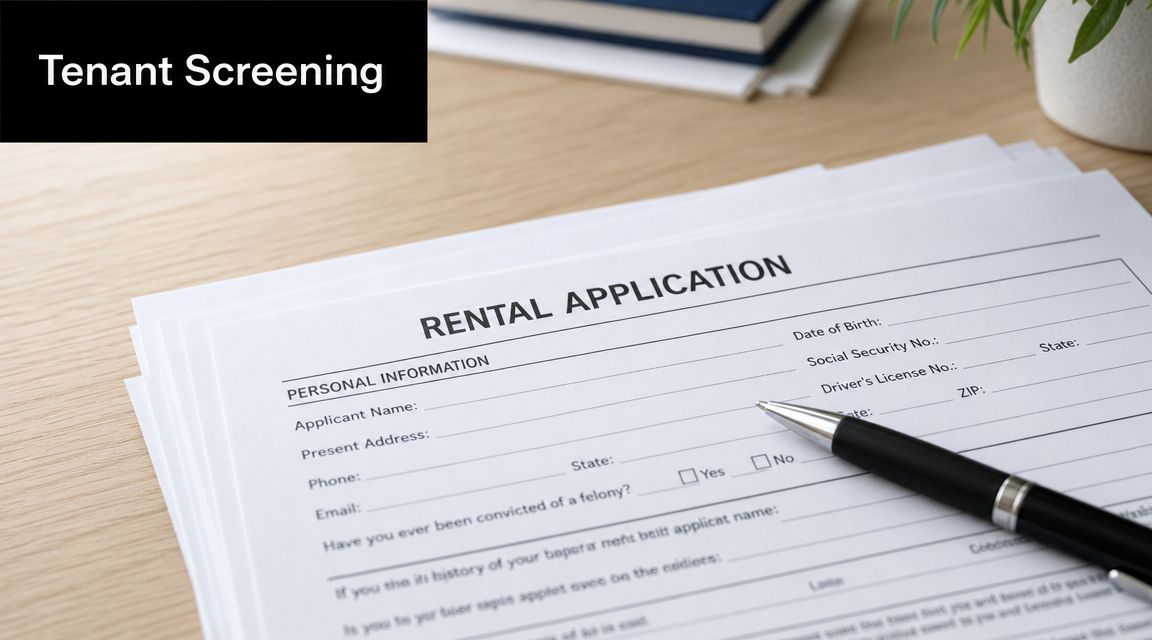
What serious applicants should have ready
A complete file stands out immediately. In my experience, managers are less concerned with flashy presentation than with consistency and speed.
- Income documents: Recent pay stubs, an offer letter, tax returns, or other records that show reliable income.
- Credit history: The score matters, but the payment pattern matters more. Late accounts, collections, and heavy debt load usually need explanation.
- Rental references: Prior landlords should be able to confirm on-time payment, property care, and whether the tenant followed the lease.
- Background screening: This should be handled consistently and within fair housing rules.
- Government-issued ID: Managers need it to confirm identity and reduce fraud risk.
- Pet details, if applicable: Breed, weight, vaccination records, and photos often save time.
Applicants who want a clearer picture of what gets reviewed should read a practical tenant screening checklist before applying.
What gets an application approved faster
Clear files win. If you are self-employed, explain your income structure upfront and support it with statements or tax returns. If you changed jobs recently, include the offer letter and start date. If your credit has an old problem, address it briefly instead of hoping it gets ignored.
Silence slows everything down.
The most common problem is mismatch. The application lists one occupant, the showing included two adults and a dog, the income documents do not line up with the stated employer, and the reference number goes nowhere. At that point, a manager usually stops chasing answers and approves the cleaner file.
The strongest application answers questions before the manager has to ask them.
Landlords should take the same disciplined approach. Apply the same standards to every applicant, document the process, and avoid making a rushed decision just to fill the property. A vacancy is expensive. So is placing the wrong tenant.
One last practical point for renters. If you do get approved, keep records from move-in and leave the home in documented, lease-ready condition at the end of the term. A simple cleaning checklist can help you secure your full bond back.
Decoding Your California Lease Agreement in Palm Springs
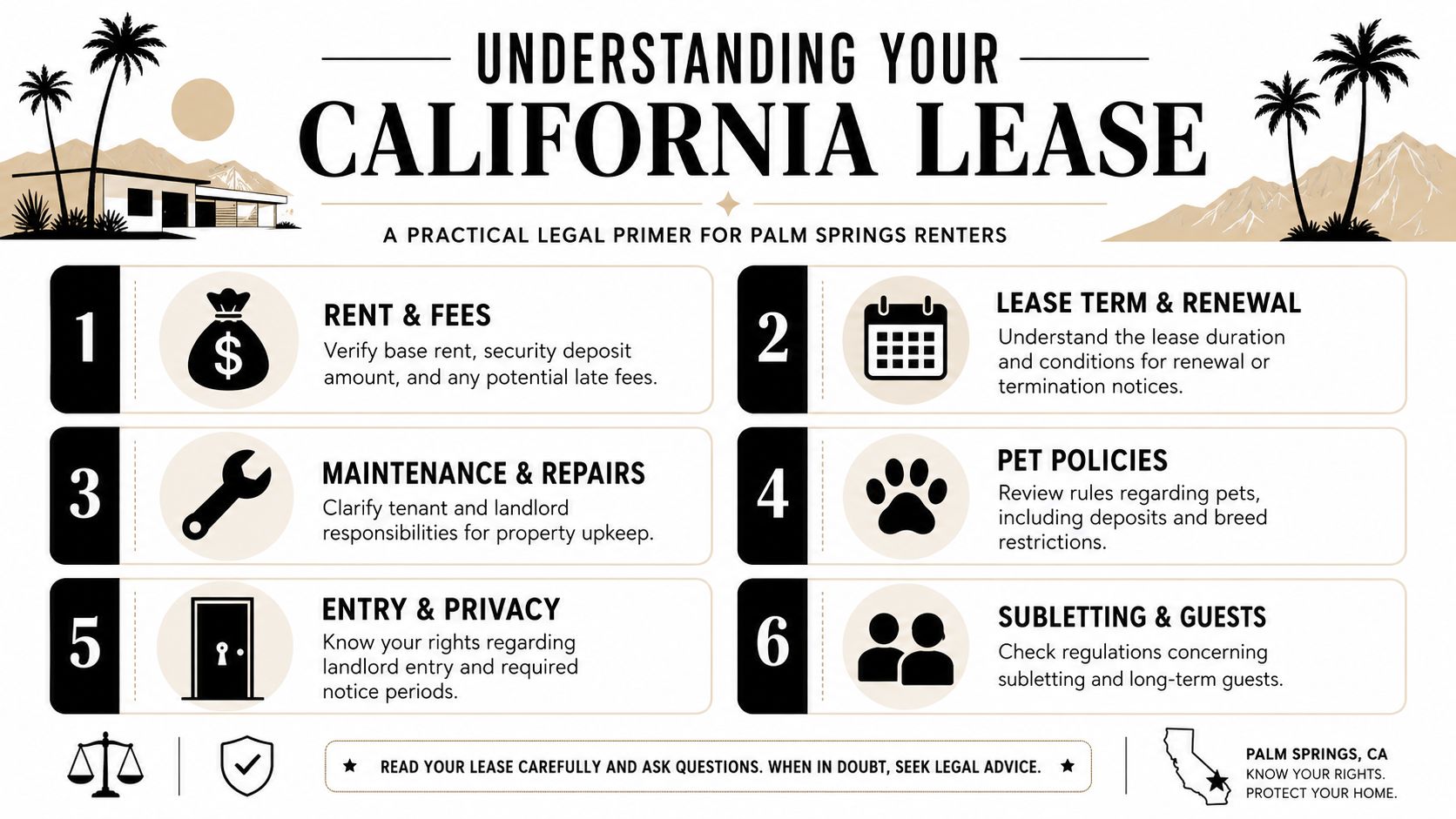
A signed lease should remove confusion, not create it. In Palm Springs, that means reading beyond the monthly rent line and focusing on the clauses that shape how the property is lived in and maintained.
Clauses that matter more in this market
Palm Springs leases often need extra clarity around exterior maintenance. If the property has a pool, spa, citrus trees, desert landscaping, or HOA-managed common areas, don't assume responsibility is obvious. It should be written plainly.
Utilities also deserve careful review. Some rentals are straightforward. Others involve combinations of owner-paid and tenant-paid services, especially in condo communities or properties with shared service arrangements.
Read these sections slowly
The strongest leases answer ordinary problems before they become arguments.
- Maintenance responsibility: Who handles pool service, landscaping, air filter changes, pest service, and minor upkeep?
- HOA rules: Condo and planned communities may regulate parking, guest access, patio use, noise, and move-in procedures.
- Entry and notice: California rules matter, and the lease should reflect lawful notice standards for owner or vendor access.
- Guest and occupancy terms: This becomes important quickly in a city where friends and family often want to visit.
- Pet language: Breed, weight, number of animals, and property-specific restrictions should all be clear.
If you want a baseline view of how residential lease language is commonly structured, a rental lease agreement template can help you compare key sections before signing.
Think ahead to move-out on day one
The easiest way to avoid a deposit dispute is to document condition thoroughly at move-in and understand the cleaning standard expected at move-out. A practical cleaning checklist can help tenants secure your full bond back by turning vague "leave it clean" language into a room-by-room process you can follow.
Lease disputes usually start where the paperwork got vague. If the home has special systems or special upkeep, the agreement should spell them out.
A good lease in Palm Springs translates local realities into plain responsibilities. That's what protects both sides.
When to Use a Property Manager or Real Estate Agent
Palm Springs looks simple from the outside. Find a property, sign a lease, collect rent. In practice, the friction points stack up fast. Inventory is scattered, furnished and unfurnished listings get mixed together, screening needs to be consistent, and lease terms have to match the actual property operations.
For owners, a property manager makes sense when the priority is reliable execution. That usually means professional marketing, tenant screening, lease preparation, rent collection, maintenance coordination, renewals, and accounting handled in one system. If you're local and want to stay hands-on, placement-only service can also be a workable middle ground. You get stronger marketing and screening without outsourcing the full relationship after move-in.
For renters, a real estate agent can help most when the search is narrow, higher-end, or timing-sensitive. That's especially true when a renter needs guidance on private inventory, neighborhood fit, or negotiation strategy rather than broad public listings. If you're in that camp, a sales-oriented guide for real estate agents gives a useful look at how strong agents manage communication, expectations, and follow-through. Those same habits matter in rental representation.
The biggest mistake on both sides is assuming Palm Springs behaves like a generic rental market. It doesn't. The line between hospitality inventory and residential housing is too blurry for casual searching or loose management.
If you're an owner, use professional help when you need cleaner underwriting, better tenant selection, and fewer operational surprises. If you're a renter, use professional help when the search keeps circling back to polished vacation inventory instead of real housing.
If you want experienced help with leasing, placement, or full-service management, Edinhart Realty and Property Management offers California-focused support for owners who want better screening, stronger marketing, compliant lease handling, and a smoother rental process from listing to move-out.


