

When you sign a lease with a tenant, you’re making a fundamental promise: that the property is safe and livable. This isn’t just good business—it’s a legal concept known as the implied warranty of habitability, and it’s the bedrock of every rental agreement in California.
Think of it as the non-negotiable baseline for your property. It’s your guarantee that the home meets basic living standards from day one.
Defining Your Core Repair Obligations
The implied warranty of habitability isn't just a stuffy legal term; it's a practical checklist of what makes a rental unit a home. It ensures tenants have what they need to live safely and comfortably, from reliable utilities to a roof that doesn't leak.
While some local laws might add a few extra details, this warranty covers the big-ticket items. Getting a handle on these landlord responsibilities for repairs is your first line of defense against legal headaches and the key to building great tenant relationships.
Key Habitability Requirements
So, what does this actually look like day-to-day? As a landlord, you’re on the hook for maintaining:
- Structural Integrity: This means solid roofs, floors, walls, and windows that properly protect your tenants from the weather.
- Essential Utilities: You’re responsible for providing consistent access to hot and cold running water, functional plumbing that works, and a safe, up-to-code electrical system.
- Heating and Weatherproofing: A working heater is an absolute must. The property also needs to be properly sealed to keep the elements out and the living space secure.
- Health and Safety: It's your job to keep the property free from serious hazards like lead paint, asbestos, or major mold problems. You also need to make sure common areas are clean and safe for everyone.
This isn’t just a legal expectation; it’s what tenants expect, too. A 2023 survey of over 1,000 tenants confirmed that they look to landlords for major system failures. For instance, landlords are expected to handle furnace and hot water tank repairs 82% of the time and large appliance repairs 79% of the time. These numbers show just how closely tenant expectations align with legal standards.
The warranty of habitability is your promise that the property is fundamentally safe and livable. It’s not about making the unit perfect or luxurious, but about ensuring it meets the basic human needs for shelter, safety, and sanitation.
Distinguishing Landlord and Tenant Duties
Drawing a clear line between your duties and your tenant’s is critical for a smooth rental experience. You handle the major systems and structure, while tenants are generally responsible for basic cleanliness and any minor issues they cause themselves.
If you want to get into the nitty-gritty, you can check out our detailed guide on what repairs landlords are responsible for. To make things even simpler, here’s a quick-reference table that breaks it all down.
Landlord vs Tenant Repair Responsibilities At a Glance
Here’s a simple table to help clarify who typically handles what. This summary is based on legal standards and what you'll find in most well-written lease agreements.
| Repair or Maintenance Task | Primary Responsibility (Landlord/Tenant) | Notes and Common Exceptions |
|---|---|---|
| Leaking Roof or Faulty Gutters | Landlord | This is a core structural and habitability issue. |
| Broken Furnace or Water Heater | Landlord | Considered an essential utility required for habitability. |
| Clogged Main Sewer Line | Landlord | The building's primary plumbing infrastructure is the landlord's duty. |
| Tenant-Caused Drain Clog | Tenant | If misuse (e.g., flushing non-flushable items) causes the clog. |
| Burnt-Out Lightbulbs | Tenant | Generally considered routine upkeep and the tenant's responsibility. |
| Normal Wear and Tear (e.g., faded paint) | Landlord | Gradual deterioration from normal use is a cost of business. |
| Tenant-Caused Damage (e.g., hole in wall) | Tenant | Damage beyond normal wear and tear is the tenant's financial duty. |
Having a clear understanding (and a clear lease) makes managing repairs and tenant expectations far more straightforward.
Emergency vs. Non-Emergency Repairs
Let's be honest, not every call from a tenant is a five-alarm fire. A burst pipe flooding the kitchen at 2 AM is a world away from a loose cabinet door. Getting this distinction right isn't just common sense—it's at the core of your legal duties and managing your property effectively. Your landlord responsibilities for repairs are tiered, with the clock ticking faster depending on how serious the problem is.
Think of it like a hospital's ER. The person with a sprained ankle doesn't get seen before the patient with a heart attack. You have to triage repair requests to figure out what poses a real, immediate threat to your tenant's health, their safety, or the building itself. This simple act of sorting dictates how fast you need to move to stay compliant and protect your investment.
Defining An Emergency Repair
An emergency repair is any problem that, if you ignore it, could cause major harm to the tenant or catastrophic damage to your property. These are the showstoppers, the issues that make a unit unsafe or flat-out unlivable. They demand your immediate attention, typically within 24 hours.
Here are some clear-cut examples of a true emergency:
- No Hot Water: This is a big deal, especially in the winter. It’s a basic habitability requirement.
- Total Loss of Heat: A furnace on the fritz when it's cold out is a serious health and safety hazard.
- Major Water Leaks or Flooding: Think burst pipes or a gaping hole in the roof. This kind of water damage can destroy a property and create a breeding ground for mold.
- Gas Leaks: If a tenant smells gas, the response is immediate. Evacuate the property and call the gas company. No exceptions.
- Serious Electrical Issues: This includes any exposed wires, sparking outlets, or a complete power outage that isn't part of a neighborhood-wide issue.
- Broken Main Door Lock: If the front door can't be secured, the tenant's safety is compromised. This is an urgent fix.
When you're hit with one of these, you need a plan. Having a list of go-to contractors, like reliable emergency plumbing services or a 24/7 electrician, is non-negotiable.
Identifying Non-Emergency Repairs
On the flip side, we have non-emergency, or routine, repairs. These are the annoyances and inconveniences that don't put anyone in immediate danger. Your landlord responsibilities for repairs still cover these, but the law gives you a "reasonable" amount of time to get them sorted. In California, that's generally up to 30 days.
Examples of non-emergency issues include:
- A dripping faucet or a minor, containable leak under the sink.
- A toilet that won't stop running.
- A broken garbage disposal or a dishwasher that's on the fritz.
- A cracked window pane (as long as it doesn't create a security risk).
- A wobbly handrail or a cabinet hinge that's come loose.
The key difference is the impact. An emergency directly threatens a person's well-being or the building's integrity. A non-emergency is an inconvenience that can be scheduled without putting anyone at risk.
This decision-making flow can help visualize where responsibility lies for different types of repairs.
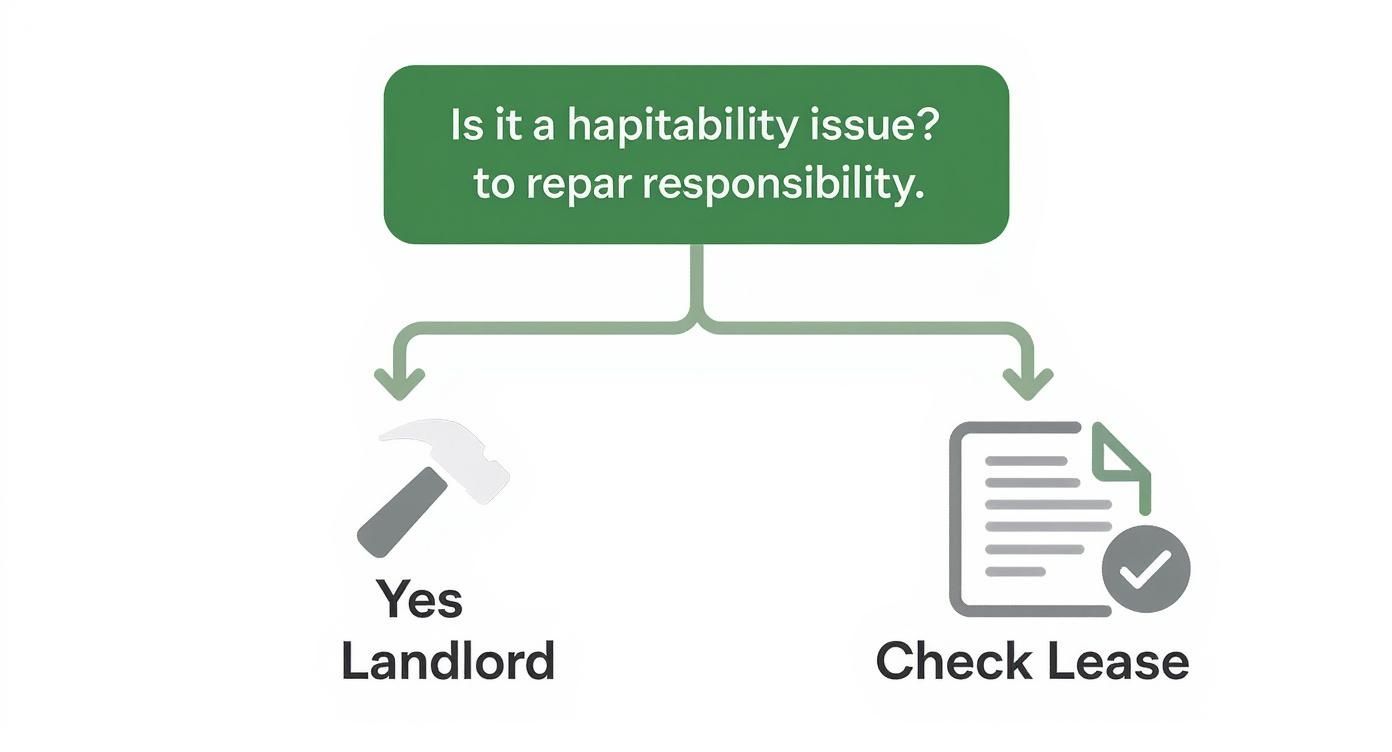
As the flowchart shows, problems affecting habitability are squarely on the landlord's shoulders. Other issues might depend more on what you've spelled out in the lease agreement.
Why The Distinction Matters
Getting this categorization right is a game-changer. First, it keeps you on the right side of the law, protecting you from tenant disputes or costly legal battles. Second, it helps you manage your tenants' expectations by giving them a clear and fair timeline for the fix.
Finally, it lets you handle your money and resources wisely. You can save the emergency funds and after-hours contractor fees for true crises. By creating a clear system for handling requests, you can respond like a pro every single time, keeping your property safe and your relationship with your tenants a positive one.
Understanding Legal Timelines For Repairs
When a tenant reports a problem, the clock starts ticking. But how fast? The law often uses the frustratingly vague phrase "a reasonable time," which can feel like a guessing game with some pretty serious consequences. This isn't just a friendly suggestion; it’s a legal standard that’s at the core of your responsibilities as a landlord.
Responding promptly is about more than just keeping your tenants happy—it’s about staying on the right side of the law. Let’s break down that legal ambiguity into a concrete schedule you can actually use.
Decoding "A Reasonable Timeframe"
Think of repair timelines like different lanes on a highway. The emergency lane is for urgent, high-speed responses. The regular lanes are for issues that can move at a standard, steady pace. The type of repair dictates exactly which lane you need to be in.
In California, this is how it generally breaks down:
Emergency Repairs: For any issue that threatens a tenant's health and safety—think a gas leak, no heat in the dead of winter, or major flooding—you need to act almost immediately. The standard is typically within 24-48 hours. This doesn’t mean the problem has to be completely solved in a day, but you must be taking significant, tangible steps, like calling a plumber out or shutting off the water main to stop the crisis.
Non-Emergency Repairs: For the more routine stuff like a dripping faucet, a cranky garbage disposal, or a cracked window, the law gives you more breathing room. You generally have up to 30 days to get these non-urgent fixes done after you've received a written notice from your tenant.
This tiered system ensures the most dangerous problems get handled first, while giving you a practical window to schedule and complete less critical maintenance. This framework isn't just a California thing, either. Similar principles apply elsewhere. For instance, landlords in the United Kingdom are also required to address repairs in a reasonable timeframe, which can vary from a few days to several weeks depending on how severe the problem is. You can discover more insights about these landlord obligations on The Independent Landlord.
"A reasonable time" isn't about what's convenient for you; it's what the law deems necessary to protect a tenant’s right to a safe and habitable home. Documenting how quickly you respond is just as critical as the repair itself.
The Power Of The Paper Trail
How a tenant lets you know about a problem—and how you respond—matters immensely. A quick phone call about a leak can easily be forgotten or disputed down the road. But a documented, written notice? That creates a clear starting point for the legal timeline and protects everyone involved.
Your whole repair management process should be built on a foundation of clear, written communication. This isn't about being stuffy or overly formal; it's about being professional and creating a bulletproof record of your actions.
From Tenant Notice To Documented Action
Here’s how to handle tenant notices the right way, creating a solid paper trail and showing you’re serious about your landlord responsibilities.
Require Written Requests: Politely insist that all non-emergency repair requests come through in writing, whether it’s an online portal, email, or even a formal letter. This officially starts the clock on that 30-day repair window. For emergencies, a phone call is obviously fine, but you should immediately follow up with a written summary of the call and your planned next steps.
Acknowledge Receipt Promptly: As soon as you get that written request, send a quick reply to confirm you've got it. A simple email saying, "Thanks for letting me know about the leaky faucet. I've received your request and will be in touch shortly to schedule a repair," is perfect. This small step shows the tenant you're on top of it and logs your timely response.
Provide a Clear Plan: In your follow-up, give the tenant an idea of what’s coming next. Let them know when you plan to inspect the issue yourself or when they can expect a call from a contractor to schedule a visit. Managing expectations heads off a lot of follow-up calls and reduces tenant anxiety.
Document Every Single Step: Keep a detailed log of every communication and action. Note the date of the initial request, when you responded, when the repair was scheduled, and when the work was completed. Take before-and-after photos of the repair for your records. This meticulous documentation is your absolute best defense if a dispute ever arises.
By turning vague timelines into a structured process built on clear communication, you protect your investment, stay compliant with the law, and build a reputation as a reliable, professional landlord.
Creating A Smooth Repair Management Process
Knowing your legal duties is one thing; actually putting them into practice is another beast entirely. A solid repair process is your best defense against chaos, tenant conflicts, and costly mistakes. It transforms handling repairs from a reactive scramble into a predictable, professional workflow.
Think of it as the difference between a home cook and a professional chef. Both can make a meal, but the chef has a system—a mise en place—that makes every step efficient and consistent. Let's build that system for your rental property.
Step 1: Build Your Communication Foundation
Good communication is the bedrock of a smooth repair process. Your first move should be to set up a clear, documented way for tenants to submit maintenance requests. This simple step kills any "he said, she said" arguments and creates an official paper trail from the get-go.
A simple online form or even a dedicated email address works wonders. It ensures every request is timestamped and has all the key details: the tenant's name, the specific issue, and their permission to enter.
Once you get a request, acknowledge it right away. A quick reply confirming you've seen it and are on the case manages tenant expectations and shows you’re on top of things.
Step 2: Assemble Your A-Team Of Contractors
The last thing you want is to be frantically Googling plumbers at 2 AM while a pipe is flooding your property. Building a network of trusted, licensed, and insured contractors before you need them is one of the smartest things you can do.
Start vetting these pros now. You'll want:
- Plumbers: Have one for routine jobs and another who offers 24/7 emergency services.
- Electricians: Make sure they are certified and know the local building codes inside and out.
- HVAC Technicians: Absolutely essential for keeping those heating and cooling systems humming.
- General Handyman: Your go-to for smaller tasks like fixing a loose railing or a sticky door.
Think of this list as your emergency toolkit. You hope you don't need it urgently, but you'll be prepared and confident when you do. It saves you time, money, and a whole lot of stress in a crisis.
Step 3: Master The Art Of Documentation
In property management, meticulous records are your best friend. A detailed log protects you from potential legal trouble by creating a clear, undeniable history of every action you took.
For every single repair job, you need to document these five things:
- The Initial Request: Save the tenant's written request and note the exact date you received it.
- Communication Log: Keep a running record of all emails, texts, and calls with both the tenant and your contractors.
- Notice to Enter: Always provide proper written notice before entering a unit and save a copy. California law typically requires 24 hours' written notice.
- Visual Evidence: Take "before" photos to document the problem and "after" photos to prove the repair was completed correctly.
- Invoices and Receipts: Hold onto every paid invoice. These are non-negotiable for tax purposes and for justifying any security deposit deductions for damage caused by the tenant.
This might feel like a lot of detail, but it's what separates the pros from the amateurs. It proves you're committed to your responsibilities and, most importantly, protects your investment.
Pairing this system with a solid checklist can make your operations even smoother. You can learn more by checking out a detailed rental property maintenance checklist to make sure nothing falls through the cracks. When you create a seamless process, you build tenant trust, minimize your risks, and just plain run a better business.
Handling Repair Costs And Security Deposits
Money is almost always at the root of landlord-tenant disputes. If you want to navigate the financial side of repairs, you have to get one thing crystal clear: the difference between normal wear and tear and tenant-caused damage. Getting this right is everything when it comes to managing funds and handling security deposits correctly.
Think of "wear and tear" as the property aging gracefully. It’s the kind of gradual decline you just can't avoid when someone actually lives in a home. As the landlord, those costs are on you—it’s simply part of doing business.

Differentiating Wear And Tear From Damage
Knowing the difference protects you from illegally keeping a tenant’s deposit, but it also gives you the confidence to charge for legitimate damages. It’s the gap between paying to repaint slightly faded walls and charging a tenant for punching a hole clean through one.
Normal Wear and Tear (Landlord's Cost):
- Faded paint from sunlight over the years.
- Worn carpeting in the main walkways.
- Minor scuffs on the walls where furniture used to be.
- Loose grout in the bathroom that’s simply old.
Tenant-Caused Damage (Deductible from Deposit):
- Large stains or ugly burns on the carpet.
- Broken windows or doors from carelessness.
- Unauthorized paint jobs that you now have to fix.
- Holes in walls from hanging heavy decor or just plain accidents.
It's worth noting that in some rental markets, the cost of this routine upkeep is already baked into the monthly rent. It’s actually common in many parts of the world for rent to cover repair and replacement costs, which often explains why rents are higher in places where landlords have more of these obligations.
The Correct Process For Security Deposit Deductions
So, a tenant moves out, and you find damage that goes far beyond normal wear and tear. You can absolutely deduct those repair costs from their security deposit—but you have to follow the rules to the letter. In California, you have a strict deadline of 21 calendar days after the tenant moves out to return their security deposit.
If you’re making any deductions, you must give the tenant three things:
- A written, itemized statement explaining every single deduction.
- Copies of receipts or invoices for the work you paid for.
- The rest of their security deposit.
If you miss that 21-day deadline or fail to provide the itemized list, you could lose your right to make any deductions and even end up paying the tenant penalties. For a much deeper dive, our guide on California security deposit laws is a must-read.
Meticulous documentation is your best defense. An itemized statement isn't a suggestion—it's a legal requirement that provides transparency and justifies every dollar you withhold for valid repairs.
To get a better handle on what you might be spending, it helps to look at typical average appliance repair cost breakdowns. This can help you budget for future issues and give you a realistic baseline for what to charge if a tenant negligently damages an appliance.
At the end of the day, handling repair costs and security deposits is all about fairness, clear communication, and keeping impeccable records. When you respect the line between wear and damage and follow the legal timelines, you protect your investment while treating your tenants the right way.
When To Hire A Property Manager For Repairs
Every landlord who self-manages has a story. It's usually the one about the late-night emergency call that ruins a family dinner, or the frantic search for a reliable plumber on a holiday weekend. Handling repairs yourself can feel empowering at first, but that feeling fades fast when your side project suddenly becomes a stressful, all-consuming second job.
The decision to bring in a professional often comes down to one simple question: Are you running your property, or is it running you? If you’re constantly stepping away from your job or family to put out fires, it’s a sure sign you need backup. This is especially true if you live far from your rental or are trying to juggle multiple properties—at that point, effective hands-on management becomes next to impossible.
The Problems A Property Manager Solves
Hiring a property manager isn’t just about having someone to call a handyman. It’s about installing a professional system designed to solve the exact pain points that burn out self-managing landlords. This system protects your time, your asset, and your sanity.
When you partner with an expert team like Edinhart Realty and Property Management, you're plugging into a ready-made solution that provides:
- 24/7 Availability: Your tenants get a response, even if they call when you're in a meeting or on vacation. A property manager acts as the dedicated point of contact for every single issue, from a burst pipe to a leaky faucet.
- A Vetted Vendor Network: Forget scrambling through online reviews. A good manager has a roster of pre-vetted, insured, and reliable contractors who provide quality work at competitive rates.
- Ironclad Legal Compliance: They know California's landlord-tenant laws inside and out. Every step—from issuing the proper "Notice to Enter" to correctly deducting repair costs from a security deposit—is handled by the book, shielding you from costly legal mistakes.
- Streamlined Coordination: They take over the entire repair process. From documenting the tenant's initial request and scheduling the work to inspecting the final job, you’re completely freed from the role of project manager.
Think of hiring a property manager as buying back your time and offloading your risk. It’s the move that shifts your property from an active business requiring constant attention to a truly passive investment.
Ultimately, bringing on a professional is a strategic business decision. It marks the moment you decide to stop being an on-call landlord and start being an investor whose asset is being professionally protected and maintained.
Common Questions About Landlord Repair Duties
When you're a landlord, navigating the ins and outs of property repairs can bring up a lot of specific "what if" scenarios. To give you some clarity, we’ve tackled a few of the most common questions we hear from property owners, with practical answers that build on what we’ve already covered.
What Happens If I Don't Make Repairs On Time?
This is a big one. Dragging your feet on necessary repairs can open you up to some serious headaches and legal consequences. Your tenants could gain the right to "repair and deduct"—fixing the issue themselves and taking the cost out of their next rent payment.
In more serious cases, they might be able to withhold rent entirely or even break their lease without any penalty. Beyond that, you could be looking at lawsuits or fines from local housing authorities for not keeping the property habitable. The bottom line? Acting fast is always your best defense against these expensive outcomes.
At its core, being a landlord means providing a safe and stable home. That responsibility starts with addressing repairs quickly and always keeping an open line of communication with your tenants.
Can I Charge A Tenant For Normal Wear And Tear?
The short answer is no. Landlords are legally on the hook for costs that come from normal wear and tear. Think of it as part of the cost of doing business as a rental property owner; you simply can't pass that expense on to your tenant.
So, what does that look like in the real world? It's things like needing to repaint walls after a long-term tenant moves out or replacing a carpet that’s just plain worn out from years of being walked on. You can only charge tenants for damage that goes beyond normal use—things caused by neglect or accidents, like a broken window or a huge, permanent stain on the floor.
Am I Responsible For Appliances Included In The Lease?
Yes, you are. If you provide appliances like a refrigerator, stove, or dishwasher as part of the rental, you're generally responsible for making sure they work.
If one of them breaks down from normal use, it's up to you to get it repaired or replaced. A good way to think about it is that you’re maintaining the amenities you promised when the tenant signed the lease. As always, your specific lease agreement is the final word, so make sure you know what it says.
Juggling repair requests, vetting vendors, and making sure you’re following the letter of the law can easily feel like a full-time job. Edinhart Realty and Property Management takes these challenges off your plate, turning them into a smooth, hands-off process that protects your investment and gives you back your time. Learn how our expert property management services can give you peace of mind.


