

A successful tenancy begins long before the moving truck arrives. For landlords navigating California's complex rental market, a meticulous move-in process isn't just good practice; it's your first line of defense against future disputes and your best tool for establishing a positive, professional relationship from day one. Relying on memory or an incomplete plan can quickly lead to security deposit conflicts, legal liabilities, and preventable maintenance headaches down the road.
This is where a detailed landlord move in checklist becomes indispensable. This guide provides a systematic, 8-step framework designed specifically to address the critical tasks every California property owner must complete. Following these steps helps secure your asset, simplify operations, and set the foundation for a profitable, stress-free rental cycle.
We will cover every essential element required to properly prepare your property and onboard your new tenants. You will learn how to master:
- Property Inspection and Condition Documentation
- Utility Account Setup and Verification
- Safety and Code Compliance Inspection
- Lease Agreement Review and Signature Execution
- Security Deposit Collection and Move-In Cost Accounting
- Tenant Orientation and Move-In Instructions
- Key and Access Control Management
- Insurance Documentation and Tenant Requirements
Whether you manage your properties yourself or partner with experts, mastering this process is a non-negotiable part of professional property management. Let's dive into the checklist that will protect your investment and build a strong landlord-tenant relationship from the start.
1. Property Inspection and Condition Documentation
A thorough property inspection before a tenant moves in is the single most important step for protecting your investment and setting a clear standard for the tenancy. This process involves meticulously documenting the property's condition with a combination of written notes, high-resolution photos, and video. This creates an undeniable baseline record that is essential for fairly assessing any potential damages beyond normal wear and tear when the tenant moves out.

This initial documentation serves as your primary evidence in the event of a security deposit dispute. Without a clear, timestamped record of the property's state at move-in, it becomes your word against the tenant's, a situation that often favors the tenant in legal proceedings. A detailed report signed by both parties prevents misunderstandings and demonstrates professionalism.
How to Implement a Flawless Inspection
Your goal is to create a complete and indisputable record. This isn't just a quick walkthrough; it's a systematic documentation process.
- Use a Standardized Checklist: Create a detailed checklist that covers every room and feature, from appliances and flooring to windows and light fixtures. This ensures consistency across all your rental units and prevents you from overlooking important areas.
- Embrace Multimedia: Don't rely solely on written notes. High-resolution, timestamped photos are crucial. Take wide shots of each room, then close-ups of any pre-existing scuffs, scratches, or minor damage. A video walkthrough is also excellent for showing that appliances, faucets, and lights are in working order.
- Document Utility Meters: Before the tenant's name goes on the utility accounts, take clear photos of the water, gas, and electric meter readings. This provides a definitive starting point for billing.
- Formalize the Report: Compile all photos, videos, and your completed checklist into a formal "Move-In Condition Report." Both you and the tenant should sign and date it. Provide the tenant with a copy within 24-48 hours of their move-in for their records.
Key Insight: In California, landlords are required to provide tenants with the option of an initial inspection before the end of the tenancy. Having a robust move-in report makes this pre-move-out walkthrough much more effective and objective. This initial report is the foundation for a smooth and dispute-free conclusion, as detailed in our guide to the landlord move-out inspection checklist.
2. Utility Account Setup and Verification
A smooth transition of utilities is crucial for a positive start to any tenancy. Coordinating the setup and transfer of electricity, gas, water, and trash services prevents service interruptions and clearly establishes financial responsibility from day one. This proactive step ensures tenants have essential services immediately upon move-in and protects you from being billed for their consumption.
Failing to properly manage the utility transfer can lead to significant problems, from a tenant moving into a home with no power to disputes over who owes what. A clearly documented transfer, including initial meter readings, creates a clean break between your responsibility and the tenant's. This is a fundamental part of any professional landlord move in checklist and demonstrates a commitment to operational excellence.
How to Implement a Flawless Utility Transfer
Your objective is to ensure a seamless handover of utility accounts with no service gaps or billing confusion. This requires clear communication and advance planning with both the tenant and the utility providers.
- Provide Clear Instructions: Give your new tenants a welcome letter that includes the names and contact information for all relevant utility companies. Clearly state which utilities they are responsible for setting up as per the lease agreement.
- Coordinate Timing: Contact utility providers at least 5-7 business days before the move-in date to inform them of the change in tenancy. This gives them ample time to process the account transfer and avoid any service interruptions. Some providers may require the tenant to call as well.
- Document the Starting Point: As mentioned in the inspection step, take clear, timestamped photos of the electric, water, and gas meters on the day the lease begins. This creates indisputable evidence of the starting readings for which the tenant is responsible.
- Clarify Landlord-Paid Utilities: If you are responsible for any utilities (like water or trash in some municipalities), ensure your lease agreement explicitly states this. Set up automatic payments for these accounts to avoid late fees or service shutoffs that would affect your tenant.
Key Insight: In California, some water districts have specific notification requirements for changes in tenancy due to state conservation laws. Smart property managers build relationships with local utility providers to understand these nuances and expedite service activation, ensuring compliance and a smooth move-in experience for tenants.
3. Safety and Code Compliance Inspection
Ensuring a rental property meets all local, state, and federal safety codes is a non-negotiable part of a landlord's responsibility. This systematic evaluation goes beyond basic upkeep; it's about proactively protecting your tenants from harm and shielding yourself from significant legal and financial liability. A thorough safety and code compliance check before move-in demonstrates due diligence and establishes a secure living environment from day one.
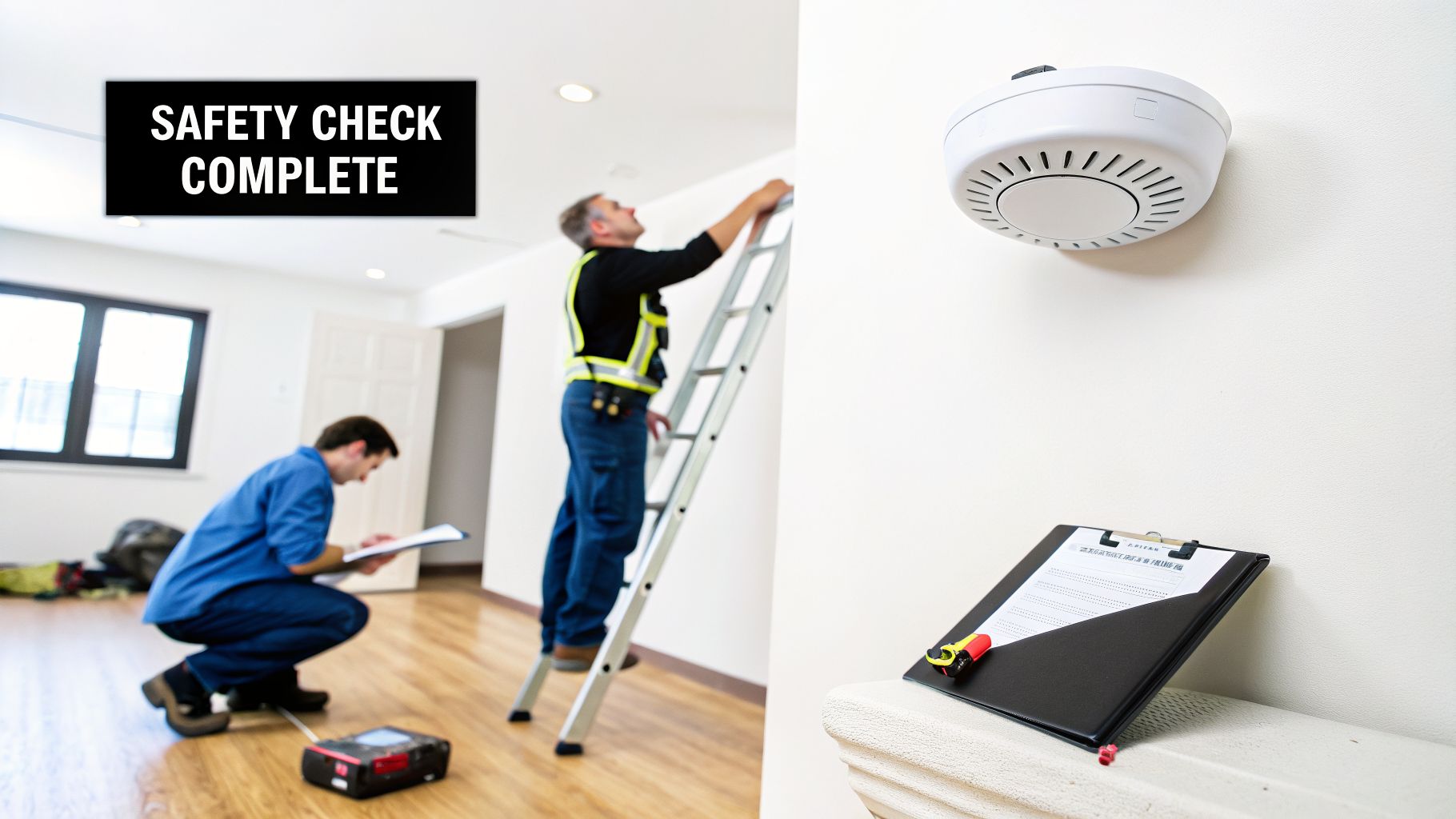
Failing to meet these standards can result in fines, voided leases, and, in a worst-case scenario, catastrophic accidents. This inspection is a critical part of any professional landlord move in checklist, providing peace of mind for both you and your new resident. It confirms that essential systems like smoke detectors, electrical wiring, and plumbing are not just functional but also up to current legal requirements.
How to Implement a Flawless Safety Inspection
Your objective is to verify and document that every aspect of the property complies with safety regulations. This requires a methodical approach that leaves no room for error.
- Create a Hyper-Specific Checklist: Develop a safety checklist tailored to your property's age, type, and location. This should cover smoke detectors, carbon monoxide detectors, fire extinguishers, GFCIs (Ground Fault Circuit Interrupters) in kitchens/bathrooms, window locks, and handrail stability.
- Test and Document All Devices: Physically test every smoke and carbon monoxide detector. Document the test with a short video clip or a photo showing the device's test light illuminated. Check the expiration dates on all detectors and the charge on fire extinguishers.
- Verify Major Systems: Confirm that the HVAC system, water heater, and electrical panel are in safe, working order. As part of this, it's wise to review the ultimate dryer maintenance checklist for fire safety to mitigate a common household fire risk.
- Formalize and Communicate: Add the completed safety checklist and any related certificates (e.g., from a professional inspection) to the tenant's move-in packet. Provide tenants with written documentation on the location and function of all safety features.
Key Insight: In California, the law is very specific. Carbon monoxide detectors are required in any unit with a fossil-fuel-burning appliance or an attached garage. Smoke detectors must be present on every level and outside sleeping areas. Forward-thinking property managers often exceed these minimums as a best practice, creating a safer environment and reducing long-term risk.
4. Lease Agreement Review and Signature Execution
The lease agreement is the legal backbone of the entire tenancy, transforming a prospective renter into a legal tenant. Properly executing this document involves more than just getting a signature; it requires a final review of all terms, addenda, and legally mandated disclosures to ensure complete clarity and compliance. This step formalizes the landlord-tenant relationship and establishes the rules of engagement that will govern the property for the lease term.
A well-constructed lease, signed by all parties, is your primary tool for enforcing rules, collecting rent, and managing expectations. It protects both you and your tenant by clearly defining rights and responsibilities, minimizing the potential for future disputes. Professional property managers, for instance, often use updated templates that incorporate all current California rental law changes, ensuring every agreement is legally sound from day one.
How to Implement a Flawless Lease Execution
Your objective is to create a legally binding agreement that is clearly understood by all parties. This final review and signing process solidifies the terms discussed during the application phase.
- Use Compliant Forms: Start with a legally sound foundation. Employing updated forms, such as those provided by the California Association of Realtors (CAR) or consulting a landlord-tenant attorney for custom leases, is critical for compliance.
- Verbally Review Key Terms: Before signing, walk through the key sections of the lease with your new tenant. Cover rent amount, due dates, late fee policies, security deposit details, and maintenance request procedures. This verbal confirmation prevents future claims of misunderstanding.
- Incorporate All Required Disclosures: California law mandates several disclosures. Ensure your lease packet includes forms for lead-based paint (for homes built before 1978), mold, Megan's Law database, and any relevant local ordinances or flood zone notices.
- Streamline with Digital Signatures: Use a secure digital signature platform like DocuSign or Adobe Sign. This creates an efficient, verifiable, and legally recognized signing process, providing an easily accessible audit trail for all parties.
- Distribute and File Copies: Immediately after execution, provide the tenant with a complete, signed copy of the lease agreement and all addenda for their records. Maintain your own copies in both a secure digital folder and a physical file for easy access.
Key Insight: The lease isn't just a formality; it’s an active management tool. By clearly specifying responsibilities for utilities, outlining maintenance response expectations, and defining house rules, you establish a firm and professional standard from the very beginning. For a deeper dive into what your agreement must contain, review our guide on what to include in a California lease agreement.
5. Security Deposit Collection and Move-In Cost Accounting
Handling move-in funds correctly is a critical legal and financial step in any tenancy. This process involves collecting the security deposit, first month's rent, and any other applicable fees, while meticulously documenting every transaction. Proper accounting and receipting protect both you and the tenant, establishing financial transparency from day one and ensuring compliance with California's strict security deposit laws.

This initial financial exchange sets the tone for the entire landlord-tenant relationship. By providing clear, itemized statements and official receipts, you demonstrate professionalism and build trust. More importantly, it creates an unassailable paper trail that is essential for legal compliance, particularly concerning the handling and eventual return of the security deposit. Failure to do so can lead to significant financial penalties.
How to Implement Flawless Financial Onboarding
Your objective is to create a transparent and legally sound record of all funds received at the start of the lease. This involves more than just collecting a check; it's about systematic documentation and proper fund management.
- Provide an Itemized Move-In Statement: Before collecting any money, give the tenant a clear, written statement. This document should break down all expected costs: the first month's rent, the security deposit amount, and any other deposits (e.g., for a pet), referencing the specific terms in the lease agreement.
- Issue Official Receipts Immediately: For every payment received, whether by check, electronic transfer, or cash, issue a formal, signed receipt. The receipt must detail the amount paid, what the payment was for (e.g., "Security Deposit"), the property address, the tenant's name, and the date of payment.
- Use Property Management Software: Tools like AppFolio or Buildium automate this entire process. They generate professional statements, track payments, and maintain separate accounting ledgers for security deposits versus rental income, which drastically reduces the risk of human error and commingling funds.
- Maintain Separate Bank Accounts: Never deposit security deposit funds into your personal or general business operating account. California law views these as the tenant's funds being held in trust. Open a dedicated, separate bank account solely for holding tenant security deposits to avoid illegal commingling.
Key Insight: Under California Civil Code Section 1950.5, penalties for the bad-faith retention of a security deposit can be severe, potentially reaching up to twice the amount of the deposit, plus actual damages. Meticulous move-in accounting and keeping funds in a separate account are your first lines of defense against such claims, which can easily exceed $5,000 in judgments.
6. Tenant Orientation and Move-In Instructions
A tenant orientation is the final, crucial step in the move-in process where you educate the tenant on the property's systems, rules, and procedures. This structured walkthrough goes beyond just handing over the keys; it's an opportunity to set clear expectations, demonstrate how things work, and establish a positive landlord-tenant relationship from day one. A thorough orientation reduces tenant confusion, prevents accidental misuse of property features, and minimizes unnecessary maintenance calls.

By proactively explaining maintenance responsibilities, emergency protocols, and community guidelines, you empower your tenants to be responsible occupants. This single meeting can prevent future disputes over issues like unauthorized alterations or misunderstandings about who fixes what. It transforms the move-in from a simple transaction into a professional onboarding experience, reflecting well on you as a landlord.
How to Conduct an Effective Tenant Orientation
The objective is to ensure your tenant feels confident and informed about living in the property. This orientation should be scheduled as the very last step before you provide keys, ideally with all paperwork already signed.
- Create a Welcome Packet: Assemble a folder with all essential documents. This should include a copy of the signed lease, the move-in condition report, emergency contact numbers, and a summary of key rules and procedures. Providing this information in a physical or digital packet gives the tenant a resource to reference later.
- Demonstrate Key Systems: Don't just point to things; show how they work. Physically demonstrate the operation of the HVAC system, major appliances, circuit breaker panel, and main water shut-off valve. This is especially important for properties with unique or complex systems.
- Review Emergency Procedures: Clearly explain what constitutes an emergency (e.g., major flood, no heat in winter) versus a routine repair request. Provide written instructions on who to call and what steps to take in an emergency situation.
- Clarify Maintenance Requests: Detail your process for submitting non-emergency maintenance requests. Explain the expected response times and how to report issues, whether through a tenant portal, email, or phone call. This is a key part of any complete landlord move in checklist.
- Sign an Acknowledgment: Conclude the orientation by having the tenant sign a simple form acknowledging they have received the information, had their questions answered, and understand the key operational and community rules.
Key Insight: Property management firms often create video tutorials for common tasks, such as changing an HVAC filter or resetting a garbage disposal. These can be shared with tenants and serve as a permanent resource, reducing repeat questions and reinforcing the information provided during the initial orientation.
7. Key and Access Control Management
Effective management of keys and property access is a critical security function for any rental property. This process involves the systematic issuance, control, and documentation of all keys, fobs, and access codes. Properly handling access credentials protects your property, ensures tenant safety, and provides a clear chain of custody, which is vital for security and liability management.
Implementing a strict key policy is a fundamental part of a professional landlord move in checklist. It prevents unauthorized access from previous tenants or their acquaintances and establishes clear rules for the new tenancy. Failing to rekey locks or track keys can create significant security vulnerabilities and expose you to potential legal issues should an incident occur. A well-documented system demonstrates due diligence and reinforces the security of the premises.
How to Implement a Robust Access Policy
Your goal is to maintain complete control over who can access your property at all times. This requires a formal system for key handling from the moment a tenancy begins until it ends.
- Rekey Between Every Tenancy: This is non-negotiable. Always rekey or replace the locks after a tenant moves out, even if they return all their keys. This eliminates any risk from unreturned or illicitly copied keys and is a standard practice for professional property managers.
- Establish a Key Issuance Protocol: Document every key you provide. Use a "Key Receipt Form" that the tenant signs, listing the date, the number of keys issued, and specific key codes or identifiers. Limit the number of keys to two or three per unit to discourage unauthorized duplication.
- Consider Modern Access Solutions: Digital keypads and smart locks offer superior security and convenience. They allow you to easily change access codes between tenants without a locksmith and can provide an audit trail of who entered the property and when.
- Set Clear Lease Terms: Your lease agreement should explicitly state that unauthorized key duplication is prohibited. It should also outline the tenant's financial responsibility for lost keys, including the cost of rekeying the property if necessary. Define clear procedures for key return upon move-out.
Key Insight: In California, landlords must provide tenants with a safe and habitable living environment. This includes ensuring all doors and windows have functioning security devices. A rigorous key management policy is a core component of fulfilling this obligation, directly contributing to tenant safety and reducing landlord liability.
8. Insurance Documentation and Tenant Requirements
Proper insurance coverage is a non-negotiable aspect of professional property management, serving as a critical financial safety net for both you and your tenant. This step involves verifying your own landlord policy is adequate and enforcing a lease requirement for tenants to obtain renters insurance. Documenting both policies before handing over the keys ensures that all parties are protected from unforeseen events, preventing liability gaps and potential financial devastation.
This documentation process creates a clear framework of financial responsibility. Your landlord insurance protects the physical structure and provides liability coverage for the premises, while the tenant's renters insurance covers their personal belongings and personal liability. Without this dual-layer of protection, a simple accident like a kitchen fire or a water leak could lead to complex, uninsured losses and contentious legal disputes.
How to Implement Flawless Insurance Protocols
Your objective is to confirm all necessary coverages are active and documented before the tenancy officially begins. This proactive approach minimizes risk and establishes clear expectations from day one.
- Review Your Landlord Policy: Annually, review your landlord insurance with your agent. Confirm that your coverage is for the property's full replacement cost, not just its cash value, to protect against a total loss. Photograph all significant upgrades and improvements to document their value for your insurer.
- Mandate Renters Insurance: Make renters insurance a mandatory condition of the lease agreement. Specify the minimum required liability coverage (e.g., $100,000 or more) and require the tenant to provide a "proof of coverage" certificate before move-in. Professional firms like Edinhart Realty make this a standard, non-negotiable part of their lease terms.
- Collect and File Documentation: Obtain a copy of the tenant's insurance declaration page and keep it on file. Some landlords also request to be named as an "additional interested party" on the policy, which means the insurance company will notify you if the policy is canceled or lapses.
- Educate Your Tenant: Provide a brief, written explanation of what their renters insurance covers (personal property, liability, loss of use) versus what your policy covers (the building itself). This simple step can prevent significant confusion if an incident occurs. Ensure your tenants are adequately covered by requiring them to obtain comprehensive insurance, including specific considerations like renters insurance with earthquake coverage, which is a vital but often overlooked protection in California.
Key Insight: In California, standard insurance policies often exclude damage from events like earthquakes or floods. If your property is in a federally designated flood zone and has a mortgage, flood insurance is mandatory. While earthquake insurance is optional, it is highly recommended to protect your asset. Clearly defining these responsibilities in the lease is a crucial part of your landlord move in checklist. To understand more about your own protection, explore this detailed guide on what is landlord liability insurance.
8-Point Landlord Move-In Checklist Comparison
| Item | Implementation Complexity 🔄 | Resource Requirements ⚡ | Expected Outcomes ⭐📊 | Ideal Use Cases 💡 | Key Advantages ⭐ |
|---|---|---|---|---|---|
| Property Inspection and Condition Documentation | Moderate — time‑intensive for thorough coverage 🔄 | Camera/video, cloud storage, inspector time; possible pro hire ⚡ | Clear baseline evidence for disputes and insurance claims ⭐📊 | Move‑in/move‑out, high‑value or contested units 💡 | Strong legal protection; reduces tenant disputes ⭐ |
| Utility Account Setup and Verification | Low–Moderate — coordination with providers 🔄 | Administrative time, possible connection fees, provider docs ⚡ | Services ready at move‑in; baseline meter records 📊 | New tenancies, transfers, multi‑unit move‑ins 💡 | Prevents service delays; clarifies billing responsibility ⭐ |
| Safety and Code Compliance Inspection | High — may require licensed specialists and code knowledge 🔄🔄 | Professional inspection, safety device replacement, moderate cost ⚡ | Code compliance, reduced liability, tenant safety ⭐📊 | Older properties, units with fuel appliances, legal compliance checks 💡 | Mitigates fines/claims; ensures occupant safety ⭐ |
| Lease Agreement Review and Signature Execution | Moderate — legal updates and coordination 🔄 | Lease templates, legal review if needed, e‑signature tools ⚡ | Legally binding terms; reduced disputes and clear obligations ⭐📊 | All tenancies especially custom clauses or high‑risk situations 💡 | Establishes clear legal framework; enforceable remedies ⭐ |
| Security Deposit Collection and Move-In Cost Accounting | Moderate — strict record‑keeping and timelines 🔄 | Separate bank accounts, accounting software, admin processes ⚡ | Accurate refunds, audit trail, compliance with CA law 📊⭐ | Properties charging deposits; multi‑property portfolios 💡 | Protects funds; prevents accounting disputes; legal compliance ⭐ |
| Tenant Orientation and Move-In Instructions | Low–Moderate — scheduling and thorough walkthroughs 🔄 | Staff time, welcome packet, digital portal or videos ⚡ | Fewer misuse incidents; higher tenant satisfaction and fewer calls 📊 | Complex systems, first‑time renters, high‑service management 💡 | Reduces emergencies and maintenance calls; improves retention ⭐ |
| Key and Access Control Management | Moderate — logistics of rekeying/tracking 🔄 | Locksmith/digital locks, key logs, possible deposits ⚡ | Controlled access; faster emergency response; security audit trail 📊 | Between tenancies, multi‑unit buildings, high‑security needs 💡 | Prevents unauthorized entry; quick rekey/upgrades ⭐ |
| Insurance Documentation and Tenant Requirements | Low–Moderate — policy review and enforcement 🔄 | Landlord insurance premiums, tenant proof collection, agent reviews ⚡ | Financial protection and clear liability allocation 📊⭐ | High‑value properties, flood/earthquake risk areas (CA) 💡 | Reduces catastrophic loss exposure; clarifies claim process ⭐ |
From Checklist to Lasting Success
Completing a tenant move-in involves far more than simply handing over the keys. It is the foundational moment that defines the entire landlord-tenant relationship and safeguards your real estate investment for the duration of the lease. By diligently working through each step of a comprehensive landlord move in checklist, you are not just ticking boxes; you are actively building a framework for a successful, profitable, and low-conflict tenancy. This process sets a clear, professional tone from day one, demonstrating your commitment to property maintenance and legal compliance.
A well-documented move-in establishes an undeniable baseline. The detailed property inspection report, complete with photos and videos, becomes your most powerful tool for fairly assessing damages and handling the security deposit return down the line. It transforms potential disputes over "who broke what" from a subjective argument into an objective, evidence-based discussion. This initial diligence protects your financial interests and promotes a transparent relationship with your tenants.
The Long-Term Value of a Methodical Move-In
Beyond just documentation, a structured move-in process is your first and best opportunity to educate your tenants and establish clear expectations. Walking them through the property, explaining maintenance responsibilities, and confirming the proper channels for communication are not just niceties. These actions are strategic steps that prevent future misunderstandings and costly mistakes.
Key takeaways from this detailed process include:
- Mitigating Legal Risk: Properly handling security deposits, providing required California-specific disclosures, and ensuring the property meets all safety codes are non-negotiable. A checklist ensures you don't miss a single legal requirement, protecting you from potential fines and lawsuits.
- Preserving Property Value: Thorough inspections and a clear tenant orientation on property care are direct investments in your asset. When tenants understand how to operate appliances and who to call for repairs, they are more likely to treat the property with respect.
- Fostering Positive Relationships: A professional, organized move-in shows tenants you are a responsible landlord. This initial positive experience can lead to better communication, on-time rent payments, and a higher likelihood of lease renewals, reducing your turnover costs.
Ultimately, mastering the move-in process transforms you from a passive property owner into a proactive manager of your investment. While this guide provides the essential roadmap, successfully managing a rental property, especially in a market with complex regulations like California, requires significant time and expertise. From meticulous tenant screening to staying abreast of ever-changing laws, the demands can be substantial. For owners in Fresno, Clovis, and across the Central Valley who want to ensure every step is executed flawlessly without sacrificing their personal time, professional management is a powerful option.
If you're ready to secure your investment and ensure a seamless, legally compliant process for every tenancy, consider the benefits of expert assistance. The team at Edinhart Realty and Property Management specializes in every aspect of the rental cycle, including executing a rigorous landlord move in checklist that protects you and your property. Explore how their placement-only or full-service management can help you achieve peace of mind and maximize your returns by visiting Edinhart Realty and Property Management today.


