

When you decide to sell your home, your goal is to help buyers see themselves living there, not just visiting. That’s the magic of home staging. It’s all about creating an emotional pull that makes someone walk in and feel like they’ve already found their future.
This means more than just tidying up. We're talking about a thoughtful process of decluttering, depersonalizing, deep cleaning, and arranging furniture to make every room feel bigger, brighter, and more inviting. You’re essentially transforming your personal home into a highly desirable product ready for the market.
Why Staging Is Your Secret Weapon in Real Estate
Before you even think about moving a sofa, it’s crucial to understand why staging isn't just a "nice-to-have"—it's one of the most powerful marketing tools at your disposal. This isn't just about making your house look pretty for photos; it's a smart strategy grounded in buyer psychology. A beautifully staged home doesn’t just show off rooms; it sells a lifestyle.
Think about it: when buyers step through your front door, they aren't just counting bedrooms and bathrooms. They're subconsciously trying to imagine their life unfolding in that space. Staging bridges that gap. It creates a warm, aspirational atmosphere that clears out your personal story so they can begin to write their own.
The Core Principles of Effective Staging
Getting staging right comes down to three fundamental ideas. Once you nail these, you're well on your way to preparing to sell your home for its maximum value.
- Depersonalization: This one can be tough, but it's vital. Packing away family photos, unique art, and personal collections creates a neutral space. Buyers can then picture their own belongings in each room, rather than feeling like they're intruding in someone else's house.
- Decluttering: Nothing makes a room feel smaller than clutter. It can also subtly suggest that the home lacks storage. A serious decluttering effort showcases the true size of your home and sends a strong signal that the property has been cared for.
- Maximizing Space and Light: The right furniture placement can completely change the feel of a room. Combined with sparkling clean windows and good lighting, you can make spaces feel much larger and more open. Every choice should be aimed at highlighting your home's best features.
These aren't just theories; they lead to real, tangible results. The numbers consistently prove that staging is an investment that pays for itself. If you're just getting started, taking a moment to understand exactly what is house staging is the perfect first step.
A study that looked at over 2,800 home sales found that staged properties sold for 4.8% more than homes that weren't staged. That’s a clear example of how a little upfront effort in presentation can put thousands more in your pocket at closing.
To get you started, here’s a quick-reference table that breaks down these core ideas and how they influence potential buyers.
Home Staging Quick Start Guide
| Staging Principle | Primary Action | Buyer Impact |
|---|---|---|
| Depersonalization | Remove personal photos, collections, and distinct decor. | Allows buyers to mentally "move in" without distraction. |
| Decluttering | Clear countertops, floors, and surfaces of excess items. | Makes rooms feel larger and implies ample storage space. |
| Space & Light | Arrange furniture for flow; open blinds; add lamps. | Creates a bright, airy, and welcoming atmosphere. |
| Cleaning | Deep clean everything from baseboards to light fixtures. | Shows the home is well-maintained and cared for. |
This table is a great starting point, but the real-world impact is even more compelling.
Staging Creates a Measurable Advantage
The benefits of staging aren't just a feeling; they show up in the market data. Staged homes don't just get better offers—they also fly off the market. One in-depth analysis revealed that staged homes spent an average of only 23 days on the market, while non-staged homes sat for 47 days.
That’s a 51% reduction in market time. Think about what that means for you: fewer mortgage payments on a home you're trying to sell, less stress from keeping it "show ready," and a much faster transition to your next adventure.
At the end of the day, staging is the secret weapon that turns your property from just another listing into a home that buyers can't wait to own. It gives you a powerful edge, especially when the market gets competitive.
Create a Canvas Buyers Will Love
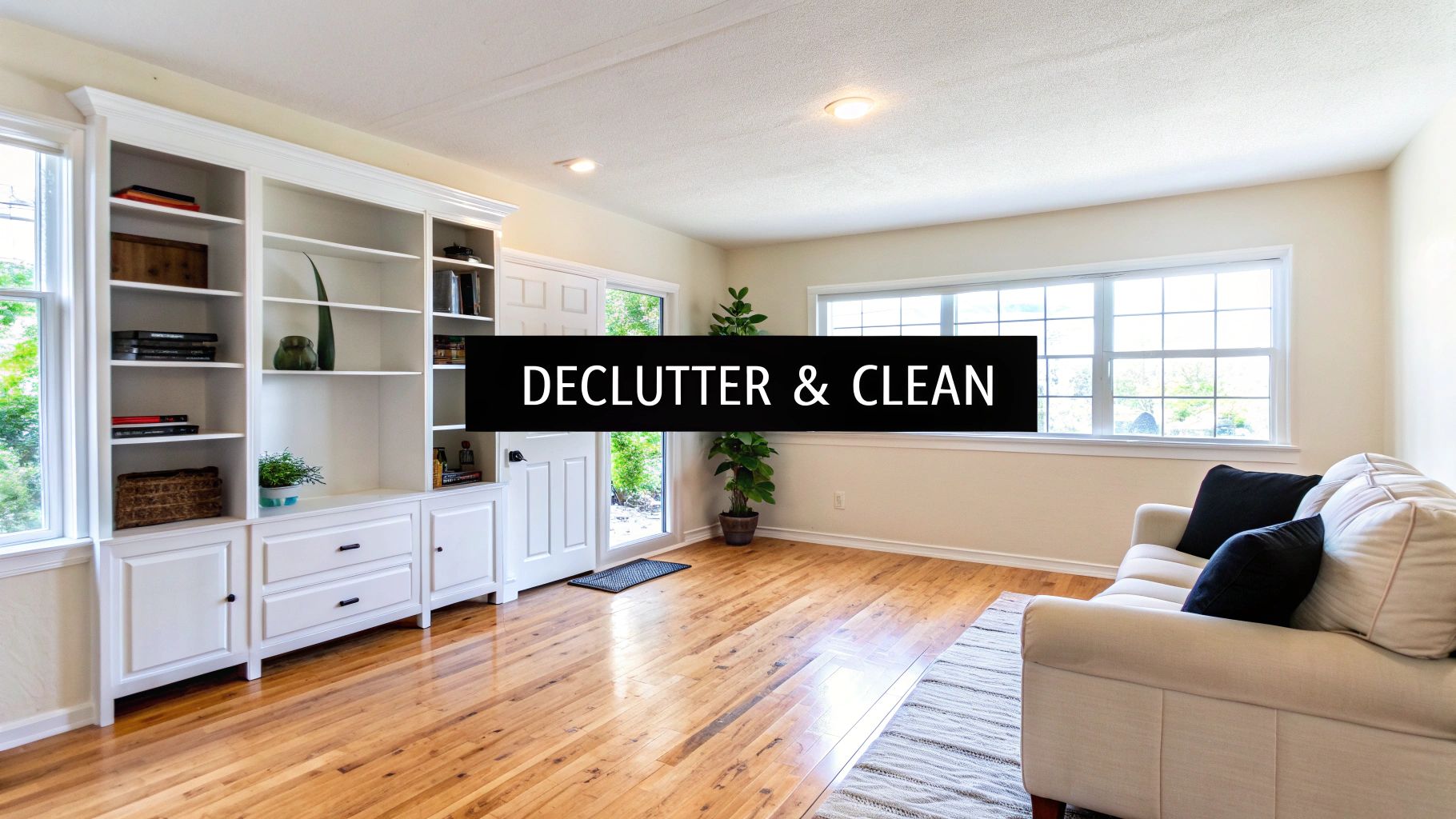
This is where the real magic of home staging happens. We're moving past basic tidying and getting into the core work that truly prepares a home for the market. It all boils down to three things: decluttering, depersonalizing, and deep cleaning.
These aren't just chores; they're the foundational steps to creating a neutral, inviting space. The goal is to help potential buyers see the property not as your home, but as their future home.
Think of it like prepping a gallery before a big show. The walls have to be pristine and the floors clear so the art—in this case, your home’s best features—can really pop.
The Art of Strategic Decluttering
Clutter is the number one enemy of a successful home sale. It does more than just make a room look messy; it makes it feel smaller, darker, and scream "not enough storage!" Your mission is to get rid of anything that distracts the eye or visually shrinks the space.
Don't try to tackle the whole house at once—that’s a recipe for burnout. Focus on one room at a time. And within that room, one surface at a time. Start with the kitchen counters, then the coffee table, then the bookshelves.
A simple three-bin system is your best friend here:
- Store It: These are things you love and will use in your next home but don't need right now. We're talking seasonal clothes, extra bedding, and most of your books.
- Donate It: Items in good shape that you just don't use anymore. Be ruthless. If you haven't touched it in a year, it's time for it to find a new home.
- Discard It: Anything that's broken, expired, or just plain junk.
This isn't just about clearing space. It's about showcasing your home's potential. When a buyer opens a closet and sees organized, open space, they instantly feel confident their own stuff will fit.
Depersonalize to Universalize Your Home
I won't lie, this can be the toughest part emotionally, but it is absolutely critical. Buyers need to be able to picture their own lives in your home, and they can’t do that if they're staring at your family vacation photos or your kid's finger paintings on the fridge.
You want your home to feel welcoming but anonymous, kind of like a chic boutique hotel. You’re erasing your personal story so a buyer can start dreaming up their own.
Think about it: when a buyer walks into your bathroom, their comfort level is fragile. Seeing your toothbrush or a used towel is a jarring reminder that they're in a stranger's private space. That small detail can create an emotional wall, preventing them from connecting with the home.
Start by packing away these items:
- Family photos and portraits
- Diplomas, awards, and personalized knick-knacks
- Niche collections (like sports memorabilia or figurines)
- Anything with your family’s name on it
Swap these personal items for simple, neutral art, a decorative mirror, or a nice plant. You're creating a blank slate that appeals to the widest possible audience.
A Deep Clean That Goes Beyond the Surface
The kind of cleaning you do for staging is on another level from your typical weekend spruce-up. This is a meticulous, top-to-bottom scrub down, hitting all the little details that buyers notice, even if they don't realize it.
A sparkling clean home sends a powerful message: this property is well-maintained and cared for. That builds trust.
Your checklist needs to be thorough. Go beyond just wiping down counters.
The Essential Deep-Cleaning Checklist
- Windows and Sills: Clean them inside and out to let in as much natural light as possible. Don't forget to wipe down the sills and tracks.
- Baseboards and Trim: These are dust magnets. Wiping them down makes an entire room feel instantly fresher.
- Grout and Caulking: Scrub the grout in kitchens and bathrooms. If it's badly stained, a grout pen or professional cleaning can work wonders.
- Light Fixtures and Switch Plates: Dust every light fixture and ceiling fan, and wipe down every single light switch and outlet cover.
- Inside Cabinets and Drawers: Yes, buyers absolutely look inside. Make sure they're wiped clean and neatly organized. Aim for 30-40% empty space to show off how much storage you have.
Once your home is a clean, depersonalized canvas, you can add back the warmth. To truly win over buyers, you'll want to explore a detailed guide to making your home cozy and inviting. This is how you transform the space from just clean to completely captivating.
Arrange Furniture to Maximize Space and Flow
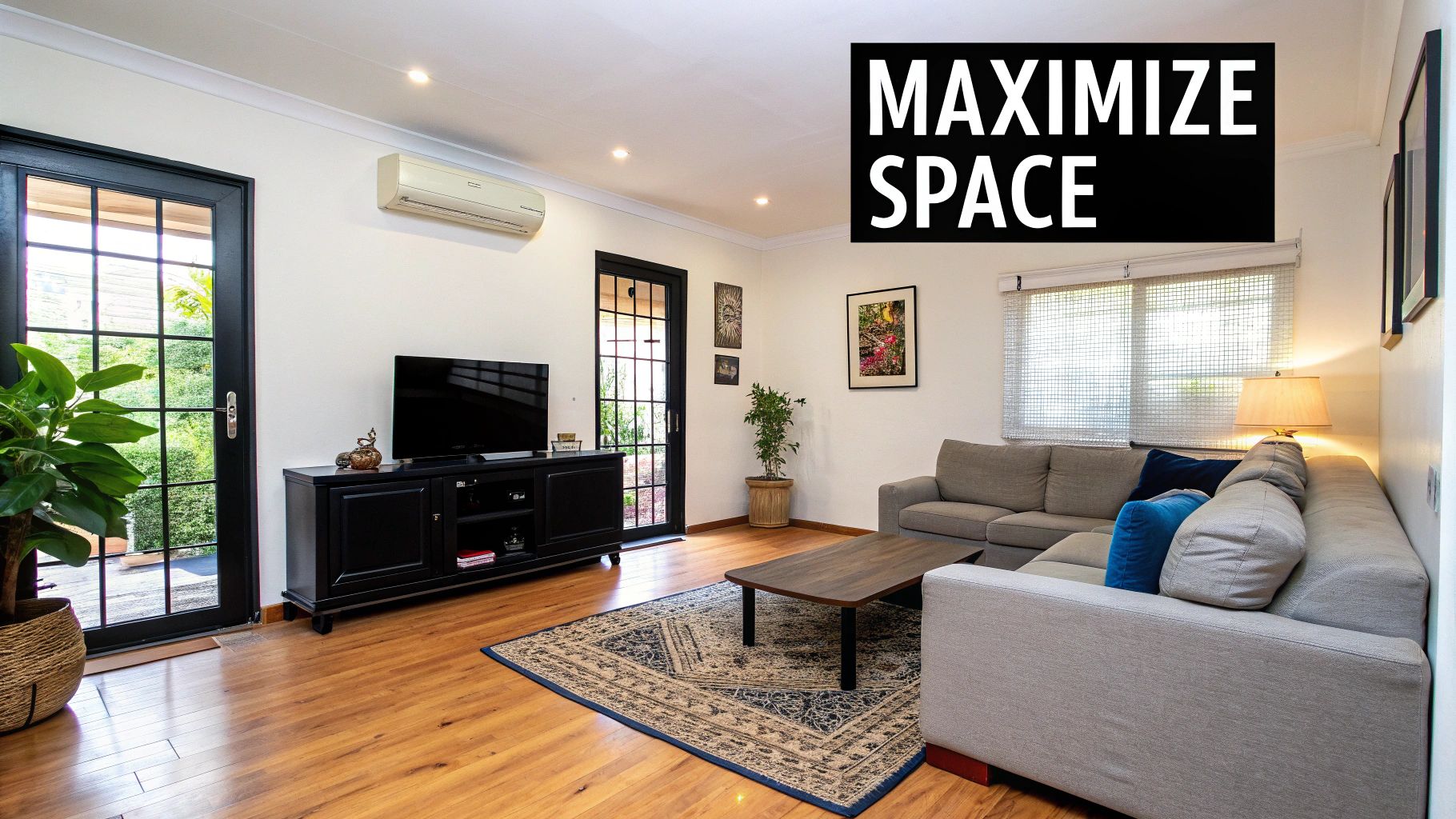
Now that you've got a clean, decluttered canvas to work with, it’s time to tackle the furniture. This is where the real magic of staging happens. We're not just making rooms look tidy; we're using furniture to tell a story and show buyers how they could live in the space. The right layout can make a tiny room feel surprisingly open or give an awkward floor plan a clear purpose.
Your goal is to guide a buyer's eye—and their feet. You want to create clear, inviting pathways that make them want to explore, not feel blocked by a rogue armchair. A well-arranged room just feels right. It feels balanced, functional, and, most importantly, bigger than it is.
Create Conversational Groupings
One of the most common mistakes I see homeowners make is shoving all their furniture against the walls. It seems logical, right? More open space in the middle must feel bigger. In reality, it just creates a cold, empty "dance hall" effect that feels anything but homey.
Instead, think about creating cozy, functional zones. In the living room, try pulling your sofa and chairs away from the walls and grouping them together. A good rule of thumb is to leave about 14-18 inches between a coffee table and a sofa—close enough to be useful, but with enough legroom. Simply "floating" your furniture like this defines a conversation area and makes the entire room feel more intimate.
Buyers don't purchase houses; they purchase a feeling. Arranging furniture into conversational groups helps them envision hosting friends or having a quiet family evening, creating an emotional connection that an empty-feeling room can't match.
Have a large, open-concept space? Use area rugs to anchor different zones. A rug under your seating area clearly defines the living room, while another under the dining table separates it from the eating space. It’s a brilliant way to create separation without building a single wall.
Define Clear Traffic Pathways
Put yourself in a buyer’s shoes walking through your home for the first time. The journey from one room to the next should feel effortless. A home with a clear, logical traffic flow feels well-designed and easy to live in.
As you arrange your furniture, make sure you leave at least 30-36 inches for major walkways. We’re talking about the path from the front door into the living room, from the kitchen to the dining area, and around the bed. Anything less than that, and the space starts to feel cramped and poorly planned.
To test your layout, just walk through the house.
- Are you squeezing past the sofa to get down the hall?
- Is a dresser blocking the path from the bedroom door to the closet?
- Can you easily circle the dining table?
If you find yourself turning sideways or bumping into things, you can bet buyers will too. It’s a subconscious red flag that screams, "this house might be too small," even when it’s just a furniture issue. Keep tweaking until the flow is completely smooth.
Tackle Tricky and Small Spaces
Let’s be honest, not every room is a perfect square. This is where staging really proves its worth. Small bedrooms and weirdly shaped living rooms can be a headache, but the right approach can turn a flaw into a charming feature.
For a small bedroom, don't fall into the trap of using tiny furniture. It can actually make the room feel more cluttered and even smaller. Instead, use a properly scaled bed with a simple headboard and place it against the longest, most solid wall. This creates a strong focal point and opens up the most floor space.
Solutions for Awkward Rooms:
- Long, Narrow Living Room: Break it up. Create two distinct zones, like a main seating area at one end and a cozy reading nook or a small workspace at the other.
- Room with Angled Walls: Don’t fight the angles—lean into them. An unusual corner is the perfect spot for a unique corner bookshelf or a comfy armchair, turning a weird nook into a purposeful space.
- L-Shaped Room: Use your furniture to clearly define the two sections. For instance, the back of a sofa can act as a soft "wall" to separate the living area from a home office or dining space.
Ultimately, your furniture arrangement should highlight your home's best features and minimize its quirks. When you maximize space and create a natural flow, you’re helping buyers see the incredible potential in every single room.
Use Light and Color to Set the Mood
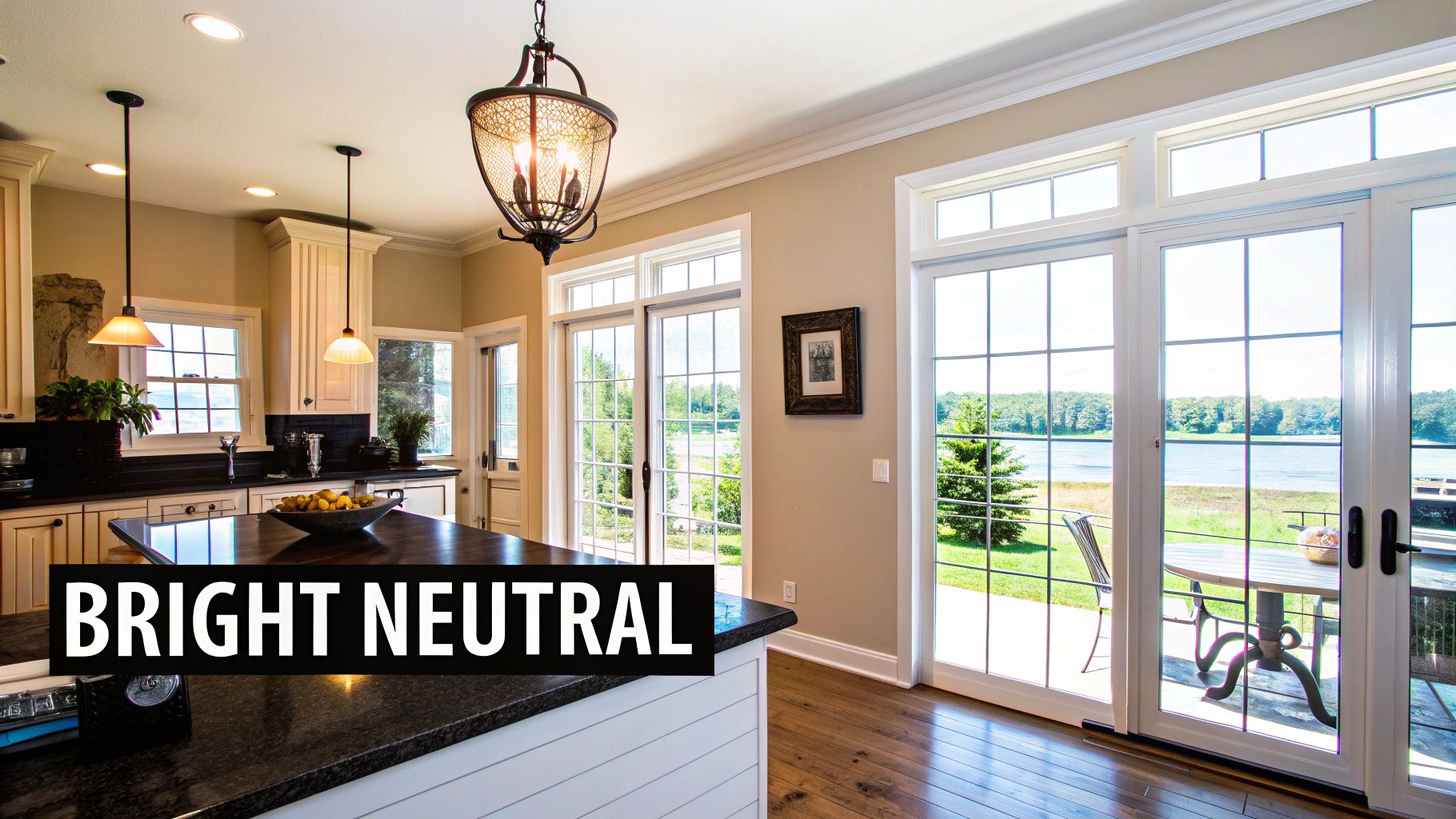
Alright, now that the furniture is perfectly placed, we need to talk about two of the most powerful—and most overlooked—tools in staging: light and color. These two elements are your secret weapons for creating an atmosphere.
Get them right, and your home will feel bright, expansive, and incredibly welcoming the second a potential buyer walks through the door. Poor lighting can make even a gorgeous room feel cramped and depressing. The wrong paint color? It can stop a buyer in their tracks and make them focus on the work they'd have to do, not the home's potential.
Our goal is to create a mood that feels serene, clean, and just plain positive.
Master the Three Layers of Lighting
Good lighting is so much more than a single bright fixture hanging from the ceiling. A room that feels truly warm and dynamic uses multiple light sources. It's a classic designer trick called the three-layer strategy, and it’s surprisingly easy to implement.
- Ambient Lighting: This is your room’s main light source—think recessed lighting or a ceiling fixture. It’s supposed to provide even, general light. If your fixtures are looking a bit dated, swapping them out for something simple and modern is an affordable update that makes a massive impact.
- Task Lighting: This is all about function. It's the focused light you need for specific activities, like under-cabinet lights in the kitchen, a reading lamp next to a cozy armchair, or a desk lamp in that home office nook. It subtly shows buyers how they could live in the space.
- Accent Lighting: Now for the fun part. Accent lights are used to highlight the cool stuff, like a picture light over a great piece of art or an uplight tucked behind a big plant. This is what adds depth, drama, and a high-end feel.
When you combine all three, you get this balanced, inviting glow that chases away dark corners and makes every room feel more special. The pros know this well; the global property staging market is booming, in part because we have a much better handle on how things like lighting affect a buyer's emotions. If you want to dive deeper, you can explore recent market analysis to see how these trends are taking shape.
Choose a Neutral and Inviting Color Palette
Let’s talk paint. I know you love that vibrant accent wall, but when you're selling, your personal favorites might not be the best choice. Staging is about appealing to the widest possible audience. That means creating a neutral backdrop where buyers can easily imagine their own furniture and their own lives.
Bold colors are extremely personal. A buyer might walk into a bright red dining room and all they can think about is the weekend they'll lose painting over it. Neutral tones, on the other hand, are calming and sophisticated. They have a magical ability to make rooms feel bigger and brighter.
The right neutral color is like a perfect handshake—confident, welcoming, and not overpowering. It doesn't shout for attention; it simply creates a pleasant, serene environment where buyers feel relaxed and can focus on the home itself.
Stick to a palette of warm grays, soft beiges, and creamy off-whites. These shades reflect light beautifully and give you a clean, modern canvas to work with.
Designer-Approved Neutral Paint Colors
But not all neutrals are created equal. You want to avoid anything that feels sterile or cold. The key is to pick a color with some warmth and complexity.
After years of staging, I have a few go-to shades that never fail:
- Sherwin-Williams Agreeable Gray: This is the perfect "greige"—a mix of grey and beige. It looks amazing in almost any lighting.
- Benjamin Moore Revere Pewter: A true classic. It's a warm gray that feels sophisticated and works with just about any decor style.
- Behr Swiss Coffee: If you want a white, this is the one. It's soft and creamy without ever looking yellow, creating a beautifully bright and airy feel.
Once the walls are painted, you can bring personality back in with your accessories. Use throw pillows, blankets, and artwork to introduce pops of color and texture. This gives you the best of both worlds: a universally appealing foundation with just enough style to make your home memorable.
Add Finishing Touches That Make an Impression
You’ve done the heavy lifting—the decluttering, the deep cleaning, and the furniture arranging. Now for the fun part. This is where we add the final layer, the thoughtful details that take your home from just another listing to one that buyers truly remember.
These finishing touches are what make a space feel cared for and aspirational. It's about creating small, curated moments that tell a story of a wonderful life lived here, allowing buyers to linger just a little longer and forge that all-important emotional connection.
Style Surfaces with Intention
Empty surfaces feel cold and sterile, but cluttered ones just scream chaos. Your goal is to find that perfect balance by styling key areas like coffee tables, mantels, and bookshelves with real purpose.
A simple trick I always rely on is the "rule of three." It’s a classic design principle for a reason—items grouped in odd numbers, especially threes, are just more appealing and memorable to the human eye. Don’t just scatter things around; create a small, intentional vignette.
For a coffee table, this could look like:
- A couple of nice hardcover books stacked together.
- A small, stylish tray to keep things feeling organized.
- A simple vase with a single fresh stem or a high-quality candle.
This creates a focal point without overwhelming the space. The goal is a curated, almost gallery-like look, not a shrine to your personal belongings. When you nail these details, they look incredible in listing photos. You can find more great tips on how to prepare a house for a photography session to make sure every corner is ready for its close-up.
Breathe Life into Every Room
Nothing—and I mean nothing—adds instant warmth and vitality to a room like a touch of nature. A few fresh flowers or some healthy green plants can make a space feel more alive and well-tended in an instant. You don't need giant, elaborate bouquets; simple and elegant is almost always better.
Try placing a small potted orchid on a nightstand, a fiddle-leaf fig in a bright living room corner, or even just a bowl of fresh lemons or green apples in the kitchen. These organic elements add a pop of color, great texture, and a subtle sense of freshness that buyers absolutely pick up on.
When a buyer sees a healthy, thriving plant, it sends a subconscious message that the home is filled with good light and has been lovingly maintained. It's a small detail that builds significant trust and positive feelings.
Create a Spa-Like Bathroom Retreat
The bathroom is one of those make-or-break spaces. Once you've scrubbed it clean, the finishing touches can transform it from a purely functional room into a serene, spa-like escape.
Start with a fresh set of fluffy, all-white towels. Fold a bath towel neatly on the rack with a matching hand towel layered right over it. White towels are the universal symbol for cleanliness and luxury, immediately giving off high-end hotel vibes.
Keep the counters as minimal as possible. A single, stylish grouping is all you need:
- An elegant soap dispenser (ditch the branded plastic bottles).
- A small, decorative tray.
- Maybe a tiny bud vase or a new, unwrapped bar of artisanal soap.
And please, get all personal items out of sight. Toothbrushes, used razors, and half-empty shampoo bottles in the shower need to go. You want to present a pristine, depersonalized space where buyers can imagine relaxing, not feel like they're intruding on your morning routine. Trust me, these small adjustments can make all the difference.
Deciding Between DIY and Professional Staging
One of the first big questions you'll face is whether to stage your home yourself or bring in a professional. Honestly, there's no single right answer. It really boils down to a mix of your budget, how much time you can realistically commit, and how confident you feel in your own design skills.
Both paths can get you to a beautifully presented home, but it's crucial to be honest with yourself about what each one truly involves.
Going the DIY route is obviously the most wallet-friendly option since you're relying on your own elbow grease and existing decor. If you have a natural eye for design and are ready to roll up your sleeves to declutter, deep clean, and rearrange furniture, you can absolutely get fantastic results.
But let's be real—if your schedule is already slammed or the thought of making objective design choices for your own home feels daunting, a DIY project can quickly turn into a source of major stress.
Evaluating the Cost and Return
Hiring a professional stager is an upfront investment, but it's one that often pays for itself—and then some. Pros bring a fresh, objective perspective, a warehouse full of perfectly scaled furniture, and an insider's understanding of what today's local buyers are looking for. They know exactly how to play up your home's best features and cleverly downplay any potential quirks.
The financial upside can be pretty staggering. The return on investment (ROI) for home staging is remarkably high. In fact, some studies have shown an average ROI of up to 2,334%. With a typical staging investment hovering around $3,588, staged homes frequently sell for thousands more than unstaged ones—sometimes fetching an average of $56,000 over the asking price. For a deep dive into the numbers, check out this comprehensive RESA data analysis.
To get a clearer picture, let's compare the two approaches side-by-side.
Staging Options Cost and Benefit Analysis
| Factor | DIY Staging | Professional Staging |
|---|---|---|
| Upfront Cost | Low (cost of cleaning supplies, minor decor) | Moderate to High ($500 – $6,000+) |
| Time Investment | High (days or weeks of personal labor) | Low (a few hours for consultations and prep) |
| Design Expertise | Relies on personal taste and online research | Access to industry knowledge and trends |
| Furniture/Decor | Uses existing items, may require purchases | Access to a curated inventory of modern items |
| Potential ROI | Good, but dependent on execution quality | Excellent, often leading to higher offers |
| Objectivity | Difficult to be impartial about your own home | A key benefit; they see the home as a product |
| Best For | Sellers with a tight budget, ample free time, and a strong design sense. | Sellers wanting to maximize sale price, those short on time, or selling a vacant property. |
Ultimately, both options have their place. Your decision depends on weighing the upfront savings of DIY against the potential for a much higher return and less stress with a professional.
"A professional stager isn't just decorating; they are marketing your property. They create a product that appeals to the broadest range of buyers, which directly translates to a faster sale and a higher offer."
This decision tree infographic is a great visual guide, breaking down the styling process into key actions for the biggest impact.
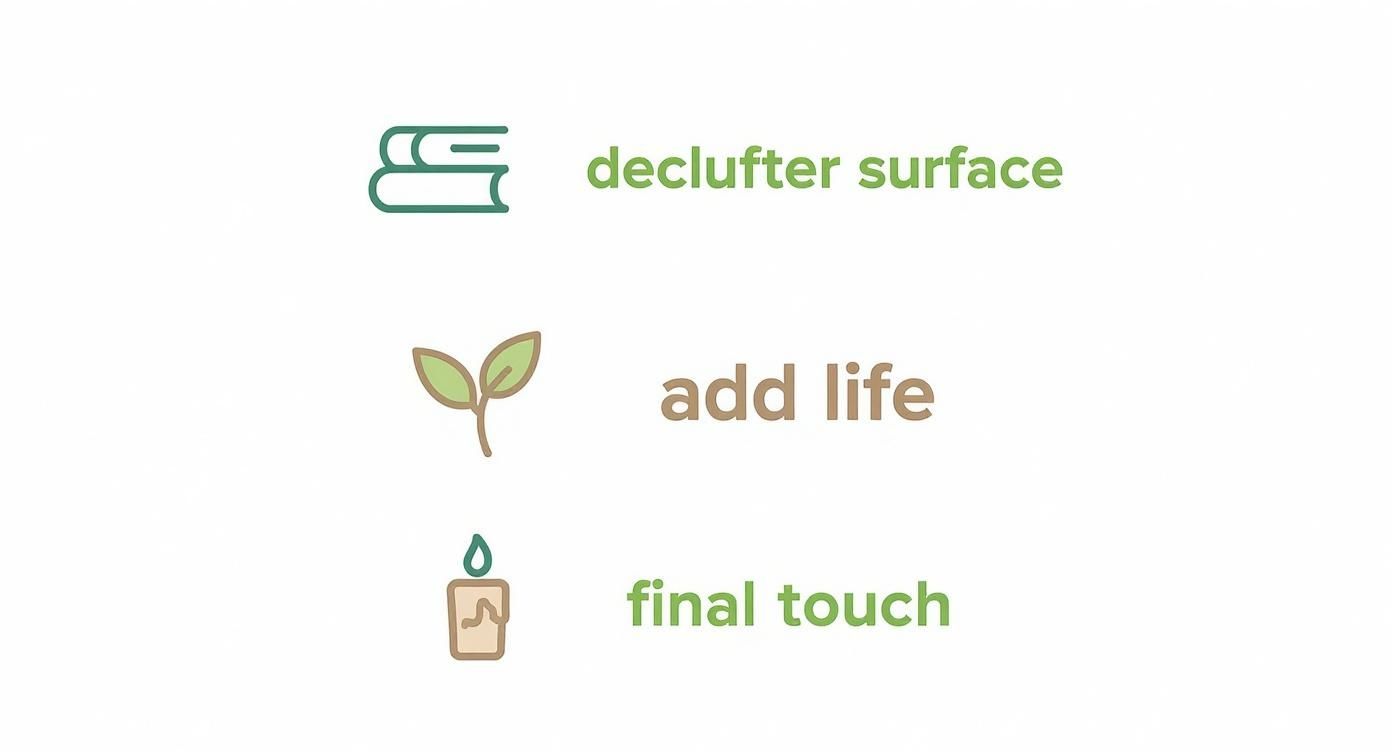
As you can see, successful staging always starts with a clean, decluttered slate. From there, it's about adding life with plants and good lighting, and finishing with those inviting details that make a house feel like a home.
Finding the Right Fit for You
If you do decide to hire a pro, you'll find that their services aren't one-size-fits-all. You can pick and choose based on your needs and budget.
- Consultation: This is a great starting point. A stager will do a walkthrough of your home and give you a detailed, room-by-room action plan that you can execute yourself.
- Partial Staging: The pro works with your existing furniture but brings in key pieces of art, accessories, and textiles to elevate the look.
- Full Staging: This is the go-to for vacant homes. The stager brings in everything needed—from the sofa down to the spoons in the kitchen drawer—to fully furnish the property.
For empty properties, there's another fantastic tool in the arsenal: virtual staging. This digital approach uses technology to place stylish, realistic furniture into photos of your empty rooms. It's a powerful way to show a home's potential in online listings without the cost of renting physical furniture.
To learn more about this modern method, take a look at our guide on using virtual staging when selling a home.
Answering Your Top Home Staging Questions
Even with the best game plan, you're bound to have some questions pop up once you start staging. Let's tackle some of the most common ones right now. Getting these cleared up will give you the confidence to make smart, strategic moves that pay off big time.
Can I Stage My Home While I'm Still Living in It?
Absolutely. In fact, it's more common than you might think.
The secret is to switch your mindset from "living in my house" to "living in a show home." It means keeping the place ready for a viewing at a moment's notice, which, I'll admit, takes a little daily discipline.
All the core principles—decluttering, depersonalizing, deep cleaning—still hold true. You just need to build a few new habits. Think quick, daily routines like making every bed, wiping down every counter, and having a designated spot to stash personal stuff like mail or toiletries before you head out the door. It's a temporary lifestyle change, but it makes all the difference.
What Are the Most Important Rooms to Stage?
If you're on a tight budget or timeline, don't sweat trying to make every single room perfect. Instead, put your energy where it has the most impact on a buyer's first impression.
Think about the rooms where potential buyers will spend the most time and form their strongest opinions. Here’s the general hierarchy of what to focus on:
- The Living Room: This is usually the first room buyers see and where they need to imagine themselves relaxing or hosting friends.
- The Primary Bedroom: Buyers want to see a peaceful, spacious retreat. This is their future sanctuary.
- The Kitchen: For so many people, the kitchen is the heart of the home. A clean, bright, and functional kitchen can seal the deal.
Once those three are looking great, turn your attention to the dining room and the main bathroom. Zeroing in on these key areas will give you the absolute best return on your staging investment.
How Much Does Home Staging Typically Cost?
Staging costs can really run the gamut, depending on your home's size, where you're located, and whether you DIY it or bring in a pro. Just getting a professional consultation might run you somewhere between $200 and $600.
For a vacant 2,000 sq. ft. house, bringing in a professional to fully stage it with rented furniture could cost anywhere from $2,000 to $7,000 for the first month. On the flip side, a focused DIY effort can often be done for just a few hundred dollars by sticking to deep cleaning, decluttering, and getting creative with the furniture you already have.
At Edinhart Realty and Property Management, we leverage expert staging and high-quality photography to maximize your home's sale price and appeal. Discover how our professional real estate services can make all the difference.


