

You're staring at a lease-renewal notice, a property that has finally built meaningful equity, and a calendar that's forcing a decision. The tenant wants another term, summer buyer activity is approaching, and you're wondering whether to list now, wait for vacancy, improve the property first, or roll the proceeds into another investment.
That's the core question behind how to sell rental property. The process isn't just “clean it up, put it on the market, and accept the highest offer.” You're sequencing tenant rights, cash flow, buyer demand, documentation, depreciation recapture, and possibly a 1031 exchange. A strong sale plan starts before the listing agreement.
Deciding Whether to Sell Now or Wait
A Fresno landlord recently faced the familiar June decision. The tenant had paid reliably, the lease was approaching renewal, and the property needed exterior paint before the next rainy season. Listing immediately could capture active summer demand, but selling with the tenant in place would restrict showings. Waiting until the tenant left in October would make the property easier to present, but it would also create vacancy, turnover work, and carrying costs.
That decision has four moving parts:
- Cash flow versus sale presentation: An occupied property continues producing rent, while a vacant property gives buyers easier access and a cleaner emotional connection.
- Tenant cooperation versus vacancy logistics: A cooperative tenant can make an occupied sale workable. A vacant property removes access friction but requires preparation and expense.
- Current tax basis versus another year of ownership: A sale can create both capital gain and depreciation-related tax exposure. Holding changes the basis calculation and may add another period of depreciation.
- Selling versus exchanging: If you're considering a 1031 exchange, the replacement property and qualified intermediary must be planned before the sale closes.
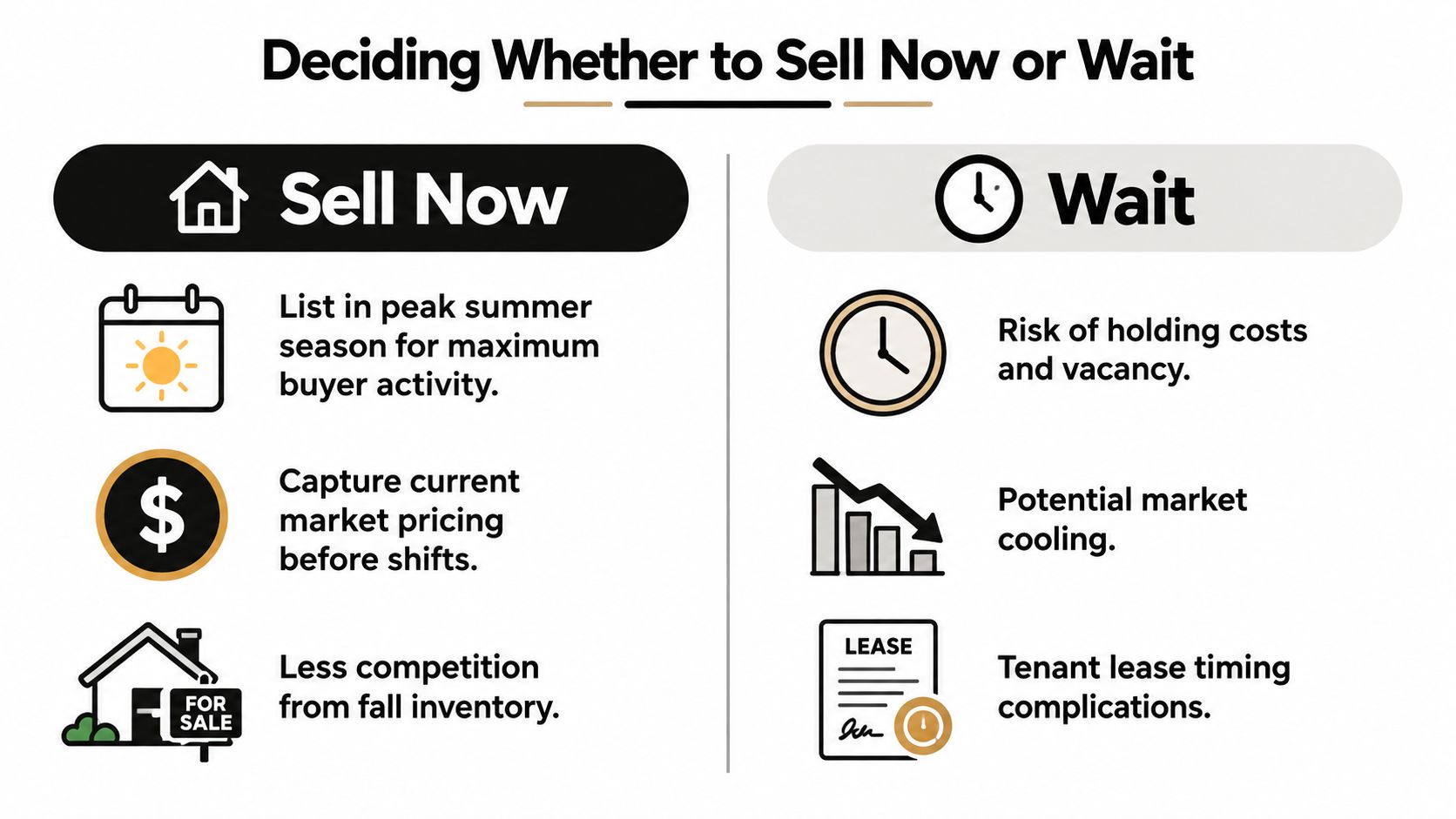
Signals that support listing now
List now when the property's next major expense is approaching, the lease end aligns with your preferred marketing window, or deferred maintenance is beginning to compound. A known replacement investment can also justify moving quickly, especially when waiting could cause you to lose that opportunity. If your financing terms are becoming less attractive or your investment goals have changed, another year of rent may not compensate for the delay.
Waiting makes more sense when a month-to-month tenant is likely to leave soon, a modest renovation has a clear effect on presentation, or a replacement property needs additional time before you can evaluate it. Don't renovate on instinct. Approve work only when the expected buyer response supports the cost and disruption.
Use the rent-or-sell decision guide to pressure-test the broader household and investment consequences, then answer these questions in five minutes:
- Will the property need a major repair before the next leasing cycle?
- Is the tenant likely to cooperate with access?
- Do I have a defined replacement property or a reason to preserve cash?
- Can I cover vacancy and preparation costs if I wait?
- Would I still buy this property today at its current value?
If the answers point toward a clear buyer or investment opportunity, stop waiting for a perfect market. Build the sale around the next unavoidable event.
Preparing the Property and Your Sale Packet
Serious buyers don't make decisions from listing photos alone. They want to understand the building's condition, income, expenses, lease obligations, and future risk before committing to an offer. Prepare for that review first, then decide which cosmetic improvements are worth doing.
Start with condition, not decoration
Walk the property as an inspector and an investor would. Address active leaks, electrical or plumbing concerns, broken safety features, roof issues, and HVAC service needs. Fresh paint in high-wear areas, a deep clean, and organized exterior spaces can improve presentation without turning the sale into a remodel. In counties with frequent pest activity, arrange appropriate inspection or clearance documentation when the property's condition warrants it.
Avoid expensive upgrades that mainly reflect your personal taste. A buyer may value a clean, functional rental more than a luxury finish that increases the asking price without improving the property's income or market position.
Build the buyer file
Your sale packet should answer the questions an investor will ask before underwriting:
- Current rent roll: Include tenant names or legally appropriate identifiers, rents, deposits, lease dates, options, concessions, and delinquency status.
- Lease file: Provide executed agreements, amendments, notices, and relevant correspondence.
- Operating records: Assemble trailing income and expense statements, utility responsibilities, maintenance costs, insurance information, and property tax records.
- Depreciation schedule: Give the buyer's team the schedule used for tax reporting, then have your tax professional confirm the figures.
- Property documents: Gather permits, warranties, title information, HOA materials, rent-control disclosures, inspection reports, and seller disclosures appropriate for a rental.
- Maintenance history: Show completed repairs, vendor invoices, recurring service contracts, and open work orders.
A practical reference for organizing the required paperwork when selling property can help identify missing transaction documents. Your property manager should pull the rent roll, lease abstracts, ledger, and maintenance log into one secure folder rather than leaving you to search through email during escrow.
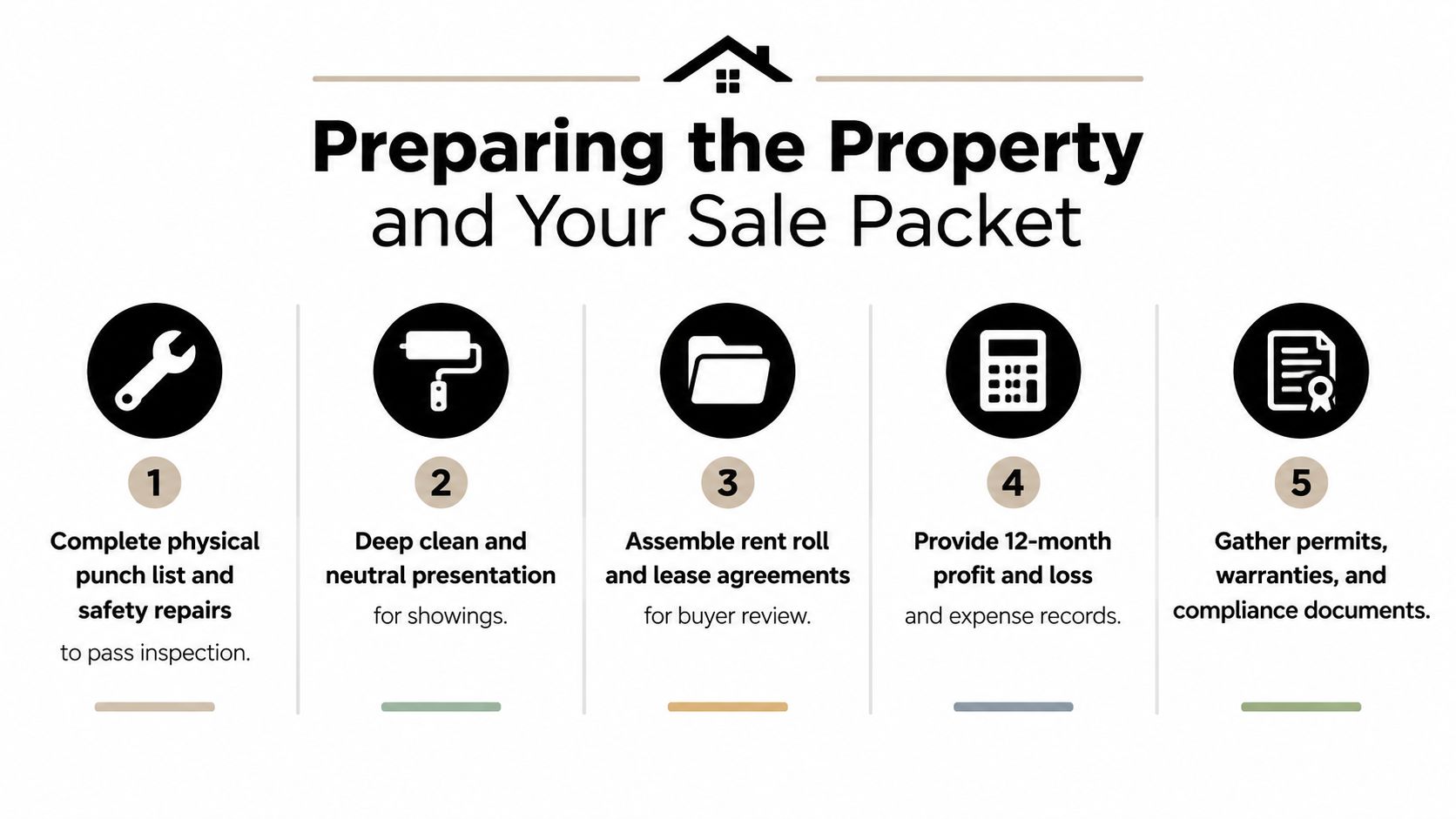
Before marketing, confirm that you have:
- A completed repair and safety list
- Clean, consistent financial records
- Every current lease and amendment
- The depreciation schedule
- Vendor, warranty, permit, and compliance records
- A showing plan approved by the tenant, when occupied
- A preliminary estimate of selling costs and tax exposure
Selling With Tenants in Place vs Waiting for Vacancy
The occupied-versus-vacant decision should be scored against the buyer you want, not judged by a universal rule. An occupied rental often appeals to investors and exchange buyers who want documented income from day one. A vacant property gives owner-occupants a clearer opportunity to imagine living there and can simplify inspections, repairs, staging, and scheduling.
| Factor | Sell With Tenants In Place | Wait for Vacancy |
|---|---|---|
| Buyer pool | Primarily investors and income-focused buyers | Investors plus owner-occupants |
| Cash flow | Rent continues during marketing | Rent stops while the property is vacant |
| Presentation | Showings require notice and tenant cooperation | Easier access, cleaning, repairs, and staging |
| Lease obligations | Buyer generally receives the existing tenancy | Seller can deliver possession according to the agreed terms |
| Due diligence | Inspectors coordinate around occupants | Inspectors and contractors have more scheduling flexibility |
| Turnover risk | Limited preparation may be possible before closing | Seller absorbs cleaning, repairs, and vacancy exposure |
| Pricing logic | Buyer focuses heavily on current income and lease quality | Buyer can value both income potential and personal use |
Don't assume an occupied sale automatically creates a discount. The buyer may accept access limitations because the rent roll is strong, the tenant is stable, and the property requires little work. Conversely, a vacant property can underperform if the seller spends heavily on turnover without fixing the issues buyers notice.
Lease timing matters more than the calendar season. Selling shortly before a fixed-term lease expires creates a different negotiation than selling to a buyer who must honor a long remaining term. A month-to-month tenancy may offer more flexibility, but California notice requirements still control what you can do.
Use this quick decision test:
- Stable tenant, strong records, investor pricing: Sell occupied and market directly to rental buyers.
- Tenant leaving soon, modest turnover work needed: Wait, prepare quickly, and target both buyer groups.
- Long lease, limited access, owner-occupant pricing goal: Obtain legal advice before promising vacant possession.
- Tenant conflict or unresolved repairs: Stabilize the tenancy and documentation before listing.
Edinhart's investor-marketing lane fits owners who want the income story presented clearly. Its retail-marketing lane is more appropriate when vacancy, condition, and buyer access support an owner-occupant campaign.
California Tenant Notice and Lease Transfer Rules
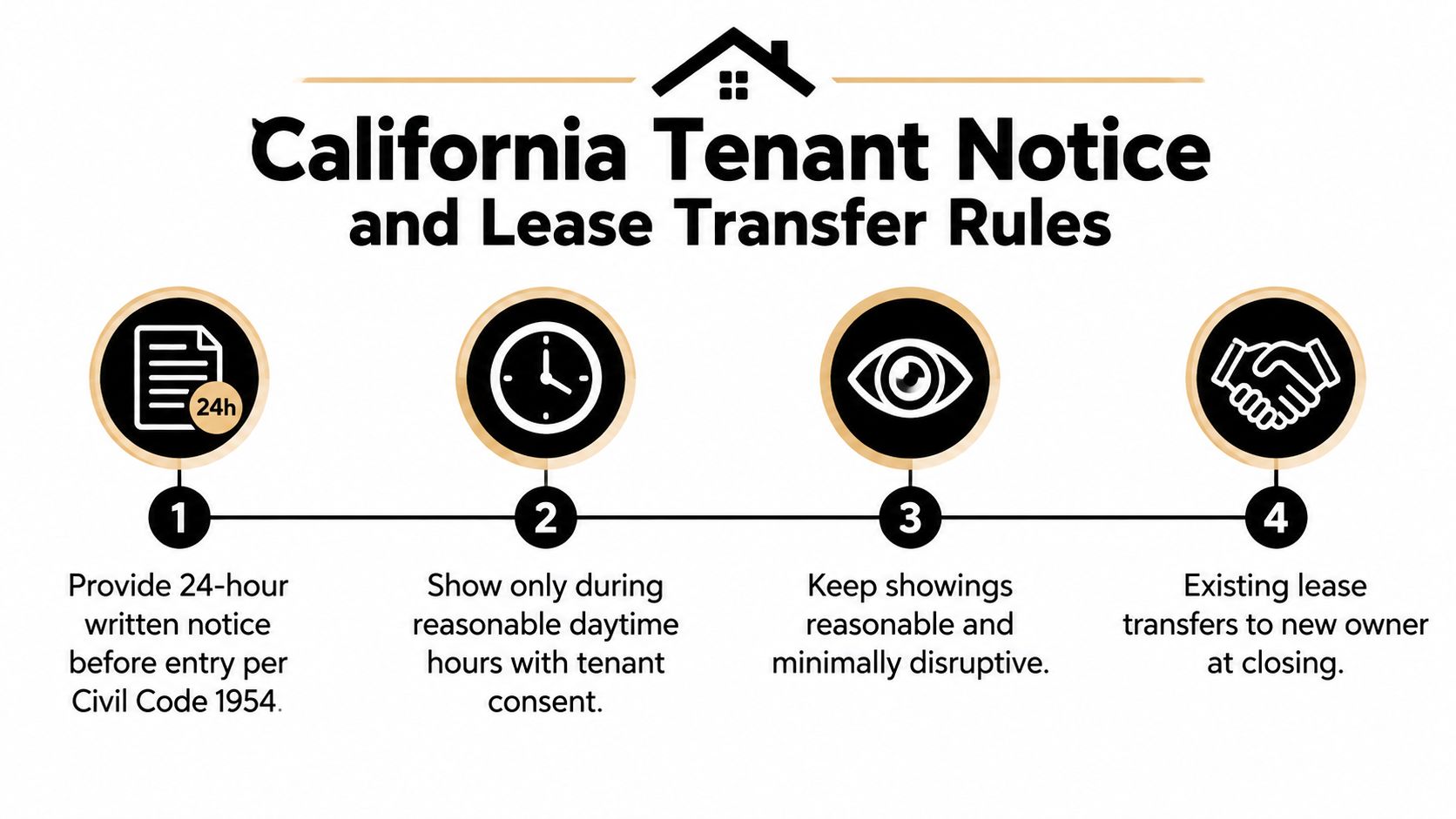
California landlords need a showing plan before they publish the listing. Under Civil Code 1954, a landlord generally provides 24-hour written notice before entering for a showing, inspection, or other permitted purpose. Entry should occur during reasonable hours, and repeated access must remain reasonable rather than becoming a daily disruption.
Start with a respectful conversation:
“I'm evaluating a sale of the property and want to protect your privacy while giving buyers reasonable access. I'll provide written notice before each entry, schedule showings during reasonable hours, and keep you informed as the process develops.”
Follow that conversation with a written inspection or showing notice that identifies the date, approximate time, purpose, and contact person. Keep a log of notices, entries, cancellations, and tenant requests. That record protects both sides when a listing becomes active.
The lease usually survives the sale
A sale doesn't automatically terminate a fixed-term lease. Unless the agreement and applicable law provide otherwise, the buyer generally steps into the seller's position and must honor the existing lease terms through expiration. Put the lease, amendments, deposit records, notices, and payment history into the buyer's due diligence file.
After acceptance, tell the tenant promptly:
“The property is now in escrow. Your lease remains in effect, and I'll provide the confirmed ownership and payment instructions after closing. Until then, continue following the existing lease and payment process.”
Don't pressure a tenant to leave because you want a cleaner listing. California anti-retaliation protections under Civil Code 1942.5 can apply when a landlord responds improperly to a tenant exercising legal rights. Forcing a tenant out to sell can expose the landlord to up to $100 per violation plus actual damages, as summarized in the provided rental-sale guidance. Get California legal advice before offering a move-out agreement or changing possession terms.
AB 1482 just-cause protections may also apply. If a buyer intends to occupy the home, a 60-day no-fault termination notice may be relevant in qualifying circumstances, while Ellis Act situations involve different rules and carve-outs. Don't use a generic national notice template.
A practical planning calendar might include:
- Day 1: Announce the potential sale and discuss access.
- Day 7: Schedule photography or inspection with written notice.
- Day 14: Begin controlled showings.
- Day 30: Consider an open house only if access and tenant consent make it reasonable.
- Day 45: If escrow opens, coordinate inspections, appraisal, and tenant communication.
This video provides another visual explanation of the tenant-access and transfer issues landlords should coordinate with counsel and their agent.
Taxes, Depreciation Recapture, and the 1031 Exchange Option
Tax planning belongs before the listing paperwork, not after the buyer removes contingencies. A rental sale can trigger more than one federal tax layer. The gain generally reflects appreciation above the owner's adjusted basis, while depreciation claimed or allowable can create unrecaptured Section 1250 gain.
For residential rental real estate, the depreciation-related portion is generally taxed at a maximum federal rate of 25%, while the remaining long-term capital gain is typically taxed at 0%, 15%, or 20%, depending on income. A property held for more than 12 months is generally treated as a long-term asset for federal purposes. These rules come from the IRS explanation of rental-property depreciation on sale. Your actual liability can also depend on filing status, other income, state treatment, selling costs, improvements, and prior tax reporting.
What a 1031 exchange changes
A properly structured Section 1031 exchange can defer recognition of eligible gain when investment real property is exchanged for qualifying replacement real property. It isn't an afterthought. The same taxpayer generally needs to complete the transaction, a qualified intermediary must hold the proceeds, and the identification and closing deadlines must be managed from the start.
The practical choices are:
- Sell outright: Receive proceeds, recognize the applicable gain, and pay the resulting tax.
- Exchange: Reinvest under the exchange rules and defer eligible gain.
- Partial exchange: Reinvest some proceeds, while taxable boot or other nonqualifying value may create current recognition.
For a plain-language planning reference, review PropLab's 2026 investor 1031 guide, then confirm every deadline and structure with your CPA and qualified intermediary. Edinhart's 1031 exchange service information can help you evaluate the real-estate sequencing question, but it doesn't replace tax advice.
| Line Item | No 1031 Exchange | Full 1031 Exchange |
|---|---|---|
| Sale proceeds | Received from buyer | Reinvested through the exchange structure |
| Capital gain | Generally recognized under applicable rules | Eligible gain generally deferred |
| Depreciation-related gain | May be recognized, subject to the applicable Section 1250 rules | Eligible gain generally deferred when requirements are satisfied |
| Cash received | Available after closing costs and taxes | Reinvestment limits personal access to proceeds |
| Planning requirement | Tax estimates before closing | Qualified intermediary and advance coordination required |
Don't treat an exchange as a way to erase tax automatically. The property, taxpayer, proceeds, replacement asset, and documentation must fit the rules. Ask your CPA for a written estimate showing adjusted basis, accumulated depreciation, selling expenses, taxable gain, and the effect of any exchange before you set the asking price.
Pricing, Marketing, and Working With the Right Agent
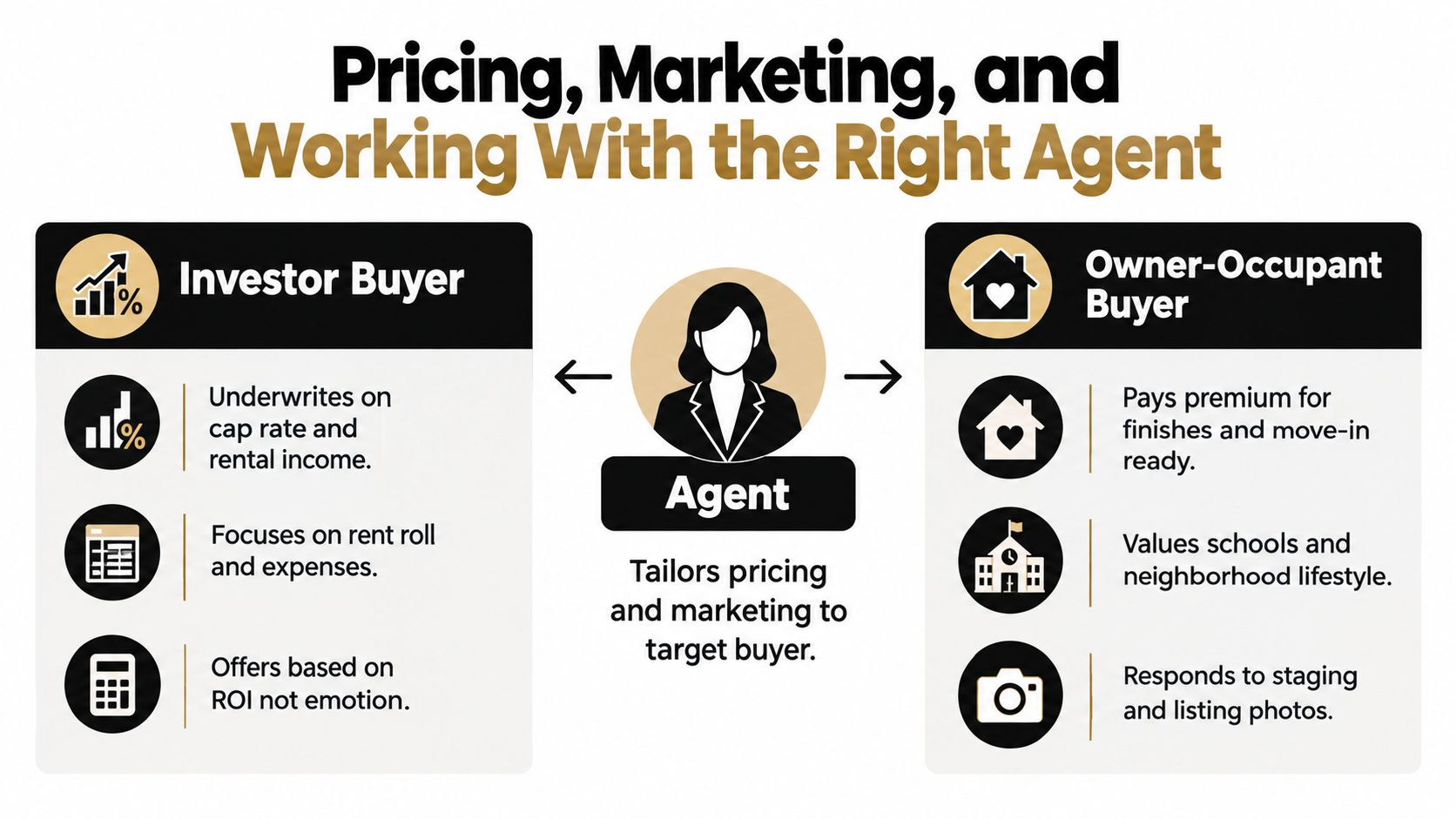
A rental property has two possible stories, and your pricing strategy changes depending on which buyer you want to attract. An investor sees rent, operating expenses, lease risk, and return potential. An owner-occupant sees layout, finishes, schools, neighborhood feel, and move-in readiness.
Start with three valuation lenses:
- Comparable sales: Review recent nearby sales with similar property type, condition, size, and use. The closer the comparison, the more useful it is.
- Income approach: Estimate net operating income and divide it by the target capitalization rate. This gives investors a value framework tied to the property's earnings.
- Cost-to-replace anchor: Consider the cost of recreating the improvements and land utility, then adjust for age, condition, and functional problems.
The final price should reconcile those methods, not blindly follow one. A house with attractive finishes may command retail attention, while a dated property with dependable income may be more valuable to an investor than its photographs suggest. Use a dedicated rental-property pricing framework to keep the income and comparable-sales analyses separate before combining them.
Match the marketing file to the buyer
For investors, lead with the rent roll, lease terms, income and expense statements, vacancy history, repairs, and a clear contact process. An investor listing should let a qualified buyer decide quickly whether to request the full packet and schedule a property review.
For owner-occupants, emphasize professional photography, staging, neutral presentation, MLS exposure, floor-plan clarity, and well-managed open houses. Advertising can support reach, but it must target the correct audience. If you're evaluating paid campaigns, this explanation of how real estate agents use Facebook ads offers useful context on audience selection and creative.
The agent's role differs by lane. Investor marketing requires accurate numbers, disciplined due diligence, and offer comparison based on terms and execution risk. Retail marketing requires presentation, buyer-emotion management, showing coordination, and careful handling of appraisal concerns.
Interview agents with direct questions:
- How many rental-property sales have you closed recently?
- Will you price from both income and comparable-sales evidence?
- Can you explain the tenant-access plan in writing?
- Who assembles the financial packet?
- Will you coordinate with the property manager?
- How will you compare an investor offer with a retail offer that has different contingencies?
Choose the agent who understands the asset as a business, not just as a house.
From Accepted Offer to Post-Sale Handoff
Once you accept an offer, the sale becomes a controlled transfer of information, money, possession, and responsibility. Create a closing checklist tied to the expected close date and assign every task to a specific person. The seller, agent, property manager, escrow officer, buyer, and tenant shouldn't assume someone else is handling the same document.
The final 60-day sequence
At the beginning of escrow, provide the buyer's team with the lease file, rent ledger, deposits, maintenance records, vendor contacts, insurance information, permits, warranties, and operating statements. Order tenant estoppels when requested, but explain their purpose and avoid asking tenants to sign documents they don't understand. The buyer's inspector and appraiser need scheduled access, and each visit should follow the notice process already established.
As closing approaches, reconcile the financial handoff:
- Rent proration: Escrow calculates the allocation of rent through the closing date using the lease and settlement instructions.
- Security deposits: Coordinate the transfer and accounting under the applicable California requirements, including Civil Code Section 1950.7 where relevant to the property and tenancy.
- Prepaid amounts: Identify prepaid rent, utility balances, service contracts, and other credits.
- Tenant payment instructions: Prepare a written ownership-change notice that identifies the new owner or manager, payment method, mailing address, emergency contact, and effective date.
The seller or authorized property manager should send the tenant notice after the ownership change and payment instructions are confirmed. Don't direct tenants to alter payment before the transfer is legally and operationally complete. Escrow should confirm what appears on the settlement statement, while the property manager should verify the ledger and deposit records.
Closing rule: The buyer should receive a usable operating file, not a box of disconnected documents.
Closing day and after
At the closing table, deliver the finalized lease documents, tenant ledger, deposit accounting, vendor list, keys, access codes, warranties, permits, and any prepaid-item documentation required by the contract. Confirm that the buyer or new manager has received the tenant communication and knows who handles maintenance requests immediately after closing.
After recording, save the settlement statement, releases, correspondence, and final ledger. Notify insurers, utilities, vendors, lenders, and tax professionals as appropriate. Keep records that establish the sale terms and your tax basis. Don't continue giving instructions to the tenant after management has transferred, and don't assume the buyer has accepted responsibility for an item that wasn't documented.
A clean handoff protects the tenant from confusion and protects the seller from lingering operational liability. It also gives the buyer confidence that the property can continue operating without an avoidable interruption.
Edinhart Realty and Property Management helps California landlords coordinate tenant-occupied sales, assemble rental documentation, prepare property presentation, and connect the sale with ongoing management or investment planning. Visit Edinhart Realty and Property Management to discuss your property's timing, buyer strategy, sale packet, and post-close handoff before you list.


