

Once you decide to sell your rental property, you hit your first major fork in the road. Do you list it right away with your tenants still in place, keeping the rent money flowing? Or, do you wait until they move out, giving you an empty canvas to prep and show?
This one decision sets the stage for everything that follows. There’s no magic answer here; the right move for you boils down to your specific lease, your financial picture, and how quickly you want to get this done.
Deciding Your First Move Selling an Occupied Property
Many landlords get stuck on this question, trying to balance the immediate cash flow of an occupied property against the potential for a higher sale price with a vacant one. The answer almost always lies in the pages of your current lease agreement and your ultimate financial goals. Getting a handle on these two things is your first, and most important, step.
Analyzing Your Lease Agreement
Before you do anything else, pull out that lease agreement. It’s your rulebook.
A fixed-term lease is straightforward: your tenant has the legal right to stay until the lease ends. If you sell, the lease and the tenant transfer to the new owner. On the other hand, a month-to-month tenancy usually gives you more wiggle room. In California, for example, you can typically give a 30- or 60-day notice to vacate, depending on how long they've lived there.
Also, scan the document for any clauses specifically mentioning the sale of the property. Some leases have a "sale clause" that lays out the rules for showings, but many don't. This document defines the legal guardrails for your entire sale.
Weighing the Financial Implications
Keeping the property occupied means you keep collecting rent. That’s a huge plus. With the average time to sell a house often stretching for months, a vacancy can mean a significant hit to your wallet. That steady income is also a massive draw for investor-buyers who are looking for a turnkey rental that’s already generating cash.
The flip side is that an empty home often appeals to a wider group of buyers—people who want to move in themselves. A vacant property can be cleaned, staged, and shown at a moment's notice, which can sometimes lead to a higher final sale price.
The choice to sell occupied or vacant is a classic risk-versus-reward situation. Do you take the guaranteed income with a potentially smaller pool of buyers? Or do you risk a vacancy for a shot at a higher price and a faster close with a traditional homebuyer?
This flowchart can help you visualize the decision based on your lease situation.
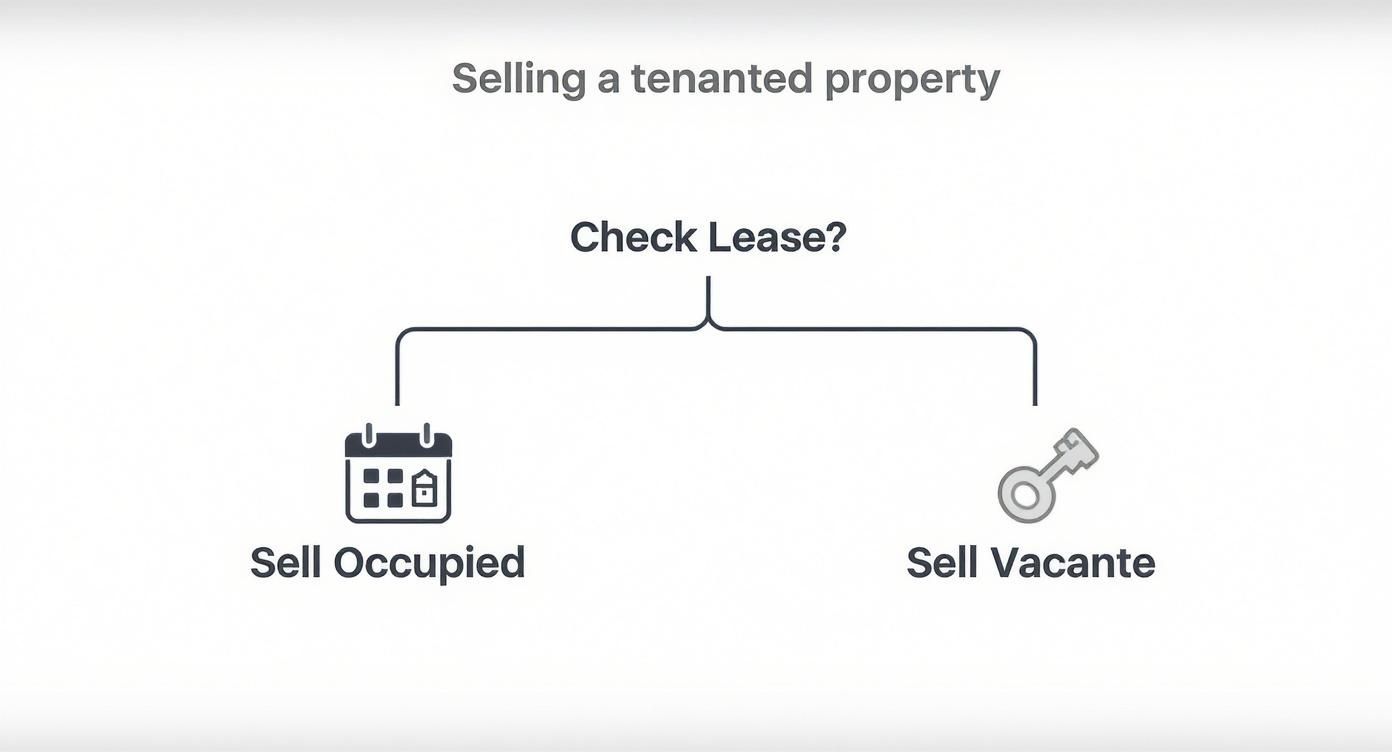
As you can see, it all starts with that lease review. That simple check dictates whether selling occupied is your only option or if you can aim for a vacant sale.
If you're still weighing the pros and cons, our guide on whether you should rent or sell your house can offer more perspective. Each path requires a completely different strategy for marketing, showings, and negotiations.
Selling Occupied vs Vacant A Quick Comparison
To make it even clearer, let's break down the pros and cons side-by-side. This can help you see which path aligns best with your goals.
| Factor | Selling with Tenant (Occupied) | Selling After Tenant Leaves (Vacant) |
|---|---|---|
| Income | Continuous rental income throughout the sale process. No vacancy loss. | No rental income during the sale period. You cover all holding costs. |
| Buyer Pool | Primarily appeals to investors looking for a turnkey rental. | Attracts a wider range of buyers, including traditional homebuyers. |
| Sale Price | May sell for a slightly lower price due to tenant limitations. | Often commands a higher sale price due to better presentation. |
| Showings | More difficult to coordinate; requires tenant cooperation and legal notice. | Easy to show anytime. Can be staged to maximize appeal. |
| Property Condition | Sold "as-is" with tenant's belongings. Repairs are harder to do. | Allows for repairs, renovations, and deep cleaning before listing. |
| Timeline | Can be listed immediately. Sale timeline depends on finding the right investor. | Requires waiting for the lease to end or tenant to vacate. |
Ultimately, the best choice depends on your priorities. Are you focused on minimizing financial risk with steady income, or are you aiming for the highest possible sale price, even if it means a period of vacancy?
Navigating Tenant Rights and Landlord Obligations

Before you even think about listing your property, you have to get one thing straight: your asset is your tenant’s home. This is the single most important concept to grasp for a smooth, legal, and successful sale. Tenants have very specific, legally protected rights that don’t just vanish when a "For Sale" sign pops up on the lawn. Trying to ignore them is the surest way to kill your deal and find yourself in legal hot water.
At the heart of it all is the tenant's right to quiet enjoyment. This isn't just a courtesy; it's a legal covenant ensuring they can live in their home without you causing unreasonable disturbances. Yes, you have the right to sell your property, but that right doesn't give you a free pass to disrupt their life. That means no surprise drop-ins and no scheduling a constant parade of viewings at all hours.
And let’s be clear: the lease agreement is king. If your tenant is on a fixed-term lease, that contract stays in full effect, even after you sell. The new owner steps into your shoes as the landlord and must honor every single term—from the rent amount to the expiration date. You’re not just selling a building; you’re transferring a binding legal agreement along with it.
Fixed-Term vs. Month-to-Month Leases
The type of lease you have in place dramatically shifts your game plan. A fixed-term lease gives tenants the strongest protection. You can’t just end their lease early because a buyer comes along, unless there's a specific clause about it in the agreement (which is pretty rare).
A month-to-month tenancy, on the other hand, offers you more wiggle room. In most places, including California, you can give the tenant proper written notice to vacate.
- 30-Day Notice: This is usually what’s required if the tenant has been there for less than one year.
- 60-Day Notice: Required if the tenant has lived in the property for one year or more.
This flexibility opens up the possibility of selling the property vacant, a huge plus for many buyers. Just make sure you follow the notice rules to the letter.
Key Takeaway: A fixed-term lease travels with the property, binding the new owner. A month-to-month lease allows you to end the tenancy with proper notice, giving you the choice to sell a vacant home.
Your Legal Obligations for Property Access
When it's time for showings, appraisals, or inspections, you can’t just waltz in. You are legally required to provide reasonable and proper written notice. While "reasonable" can be a gray area, the industry standard is 24 hours' written notice.
In California, the rules are specific: the notice has to be in writing and clearly state the date, a reasonable window of time, and the reason for entry. So, no, you can't just call your tenant at 9 a.m. and tell them a buyer is swinging by that afternoon. The right way to do it is to send a formal written notice—email often works if your lease allows it—on a Monday for a showing you’ve scheduled for Wednesday afternoon.
It’s easy to get tangled in local regulations. That’s why a solid grasp of landlord-tenant law in California is non-negotiable for a sale that’s both compliant and stress-free.
Avoiding Illegal Eviction Tactics
The pressure to sell can make even well-meaning landlords consider a dangerous path. If a tenant isn't cooperating, the temptation to engage in "self-help" eviction methods can creep in. Don't do it. These actions are flat-out illegal and come with severe financial penalties.
Illegal eviction tactics include things like:
- Changing the locks.
- Shutting off the water or electricity.
- Moving the tenant’s stuff out of the property.
- Harassing or intimidating the tenant to get them to leave.
Trying any of these opens you up to lawsuits for damages, hefty attorney's fees, and other penalties that will cost you far more than any inconvenience. The law is crystal clear: only a court can order an eviction, and only a law enforcement officer can physically remove a tenant. Respecting your tenant’s rights isn’t just good business—it's your legal duty.
Thinking Through Your Sales Strategy for a Tenanted Property

Okay, you’ve sorted out the legal side of things. Now comes the fun part: figuring out how to actually market and sell a house with tenants inside. This isn't your typical home sale. It requires a completely different playbook aimed at a very specific buyer.
Your success really boils down to one question: Who sees an occupied property as a huge plus, not a problem? The answer is almost always a real estate investor. A regular homebuyer wants a blank canvas, but an investor sees a proven income stream from day one. That’s your target.
Zeroing In On the Right Buyer
Right off the bat, your potential buyers split into two camps. Knowing what makes them tick is everything.
- Traditional Homebuyers: These are people looking for a place to live. They want to move in right after closing. An existing tenant is just a roadblock, a delay they don’t want to deal with.
- Real Estate Investors: This group is all about the numbers. A reliable, paying tenant is a massive selling point for them. It proves the property is a good rental and means they get an immediate return on their investment.
This distinction changes your entire approach. The way you write your listing, the photos you take, and the features you highlight all need to be tailored to attract investors who get the value of a turnkey rental.
Getting Inside the Investor's Head
Investors think with spreadsheets, not with their hearts. They're focused on one thing: the property's financial performance.
To get their attention, you need to lead with the metrics that matter most to them:
- The current rent amount and a solid payment history
- All the key lease terms, especially the expiration date
- Your annual operating expenses (taxes, insurance, any big maintenance costs)
- The Capitalization Rate (Cap Rate) and potential cash flow
Putting this information front and center in your listing acts like a filter. It pulls in serious investors and helps you avoid wasting time with traditional buyers who just aren't the right fit. And don't just think of big corporations; over 70% of U.S. rental properties are owned by individual landlords. These are people just like you, which can make connecting with them that much easier.
Pro Tip: Put together a simple "investment package"—a one-page summary of the lease, a rent roll, and a breakdown of expenses. Handing this to interested buyers makes you look like a pro and gives them everything they need to make a quick decision.
A Special Note on 1031 Exchange Buyers
There's a special group of investors you should know about: those using a 1031 exchange. This is a tax code that lets investors defer capital gains by rolling the profits from one property sale into a new one.
Here’s the catch: they are on a very tight clock. They must identify a new property within 45 days of their sale.
This urgency makes them fantastic potential buyers. They are actively looking for stable, income-producing properties that are ready to go. A home with a great tenant already in place is a dream scenario for them, as it eliminates the headache of finding a renter. If you want to move your property quickly, learning a few strategies to sell a tenanted property fast can really help you appeal to these time-crunched buyers.
Managing Tenant Communication and Property Showings
So you’ve decided to sell. From this moment on, the single most important person in this entire transaction is the tenant living in your property. They can either become your greatest partner or your biggest obstacle, and the outcome almost always comes down to how you handle them.
A smooth sale hinges entirely on good communication, respecting their home, and working with them to coordinate showings. The goal here is simple: make them an ally, not an adversary.
This all starts with one crucial, human conversation. Dropping the news that you're selling can be incredibly stressful for a tenant, so you need to approach this with empathy. Ditch the sterile email or text message and schedule a real conversation, either face-to-face or over the phone. That personal touch goes a long way in setting a cooperative tone.
Kicking Off the Conversation
When you break the news, don’t just wing it. Come prepared with clear, direct answers to the questions they’ll immediately have. Explain what the sale means for their lease, be crystal clear about their rights as a tenant, and give them a rough idea of how showings will work.
Their first thought will be, "Am I going to be forced to move?" Reassuring them that their lease will be honored by the new owner (if that’s the case) is the quickest way to lower their anxiety.
Frame the whole thing as a partnership. You could say something like, "I've decided it's time to sell the property, and I wanted to tell you personally before a 'For Sale' sign ever goes up. Your lease and all your rights are fully protected. My main goal is to make this as painless as possible for you, and I'd love to figure out a showing schedule that works with your life."
Structuring a Showing Schedule That Works
Nothing will sour a tenant relationship faster than constant, random requests for showings. It's their home, and the last thing they want are strangers popping in at all hours. The key is to create a predictable, structured schedule.
Work with your real estate agent and the tenant to create a system that everyone can stick to. Here are a few strategies I’ve seen work wonders:
- Time Blocking: This is my favorite approach. Set up specific "showing windows" each week, like Tuesdays from 5-7 PM and Saturdays from 10 AM-12 PM. The tenant can plan their life around it, and you have dedicated times to stack viewings.
- The 24-Hour Notice Rule: In California, you're generally required to give 24 hours' written notice before entering. Treat this as sacred. Never push for last-minute exceptions. Consistency builds trust.
- Virtual Tours First: A good 3D virtual tour is non-negotiable. It acts as a powerful filter, weeding out the tire-kickers and ensuring only genuinely interested buyers request an in-person visit. This drastically cuts down on foot traffic.
A cooperative tenant is your best marketing asset. A home that feels welcoming and is easy to show will always sell faster than one where viewings are a constant battle. The small effort you put into tenant relations pays huge dividends.
The Power of Goodwill and Small Incentives
Let’s be honest: you’re asking for a huge favor. Your tenant has zero financial stake in this sale, yet you need them to keep their home clean and accommodate strangers walking through it. Acknowledging this with a small incentive can completely change the dynamic.
This doesn't mean breaking the bank. A little goodwill goes a long way.
- A simple thank you: After a particularly busy week of showings, send them a gift card to a local coffee shop or restaurant.
- A temporary rent reduction: Offering a $100 to $200 discount on their monthly rent while the home is on the market is a powerful motivator. It shows you value their cooperation.
- Professional cleaning services: Pay for a cleaner to come in every other week. It helps you by ensuring the property shows well, and it's a fantastic perk for them.
These aren't bribes; they're a professional courtesy. It's a tangible way of saying, "Thank you for helping me make this sale a success." This thoughtful approach is what turns a potentially tense situation into a true team effort.
Preparing Your Property and Navigating the Close

Alright, you and your tenant have a game plan for showings. That’s a huge step. Now comes the next major hurdle: getting the property ready for the market while someone is still living there. It’s a delicate dance, for sure—respecting their home while making sure it looks its absolute best for potential buyers.
This part of the process is all about creative teamwork and being as unobtrusive as possible. You're not aiming for a perfectly staged, empty house. The goal is a clean, inviting, and well-kept space that allows buyers to see the potential, even with the tenant's furniture and belongings in place.
Getting the Property Market-Ready With a Tenant
The secret to prepping an occupied property is simple: focus on decluttering and deep cleaning. You’ll want to work with your tenant to find ways to open up the space. This might mean temporarily moving some bulky furniture or personal items. A great incentive is offering to cover a small storage unit for a month or two—it’s a small cost for a big return.
Next, knock out all those minor repairs. That dripping faucet, the squeaky door, the loose cabinet handle—these little things can be a huge turn-off for buyers. Coordinate with your tenant to find a good time to get a handyman in, working around their schedule to minimize the disruption. For investor buyers, a well-maintained property is a green flag that you've been a diligent landlord.
Even with a tenant in place, top-notch presentation is everything. Professional photos can absolutely make or break your listing. It's worth exploring some professional realtor photoshoot ideas for elevating your listings to make your property stand out. For more hands-on advice, our own guide on https://edinhart.com/how-to-prepare-a-house-you-are-about-to-sell-or-rent-for-a-photography-session/ is packed with practical tips.
Navigating the Closing Process
You’ve accepted an offer—fantastic! Now the real paperwork begins. The closing process for a tenant-occupied property has a few extra layers to ensure a smooth, legal handover to the new owner.
This isn't just about signing a deed; it's about legally transferring a tenancy. A seamless transition is critical for keeping your tenant happy and protecting both yourself and the buyer from any future legal headaches. The new owner needs everything in hand to step into your shoes as the landlord without skipping a beat.
Selling with tenants is becoming more and more common. Recent surveys found that over 54.5% of landlords were actively trying to sell properties, which has a direct ripple effect on renters. While it can speed up the sale for you, it definitely creates some uncertainty for the person living there.
A smooth close for a tenanted property is all about documentation. The new owner is inheriting a legal contract, and they need the complete history to manage the tenancy effectively from day one.
Essential Handover Documents and Financials
While you're in escrow, you'll need to pull together a package of key documents for the new owner. This is non-negotiable and ensures they are fully prepared to take over landlord duties.
Crucial Transfer Items:
- The Original Lease Agreement: The new owner must have the signed, original copy.
- Security Deposit Transfer: The tenant's security deposit has to be legally transferred from your account to the new owner's. Make sure this is clearly documented on the closing statement.
- Prorated Rent: Rent will need to be prorated based on the closing date. If you close on the 15th and rent is paid for the full month, you will credit the new owner for the remaining days.
- Tenant Contact Information: Pass along all necessary phone numbers and email addresses.
- Move-In Inspection Report: A copy of the original move-in checklist, photos, or video is vital for documenting the property's condition when the tenancy began.
- Keys and Access Codes: Hand over every single key, garage door opener, and security code at closing.
Getting these details right creates a professional and clean handoff. It protects you from any post-sale issues and really sets the new owner up for a positive landlord-tenant relationship right from the start.
Common Questions About Selling a House With Tenants
Selling a house with tenants can feel like a puzzle with a lot of moving parts. Even with a solid plan, specific questions are bound to pop up. Landlords often wonder about the same handful of tricky situations, from what to do when a tenant digs in their heels to how the finances work at closing.
Getting clear, straightforward answers to these questions is key to moving forward with confidence. Below, we've tackled some of the most frequent concerns landlords have when they decide to sell an occupied property.
What Can I Do If My Tenant Is Uncooperative?
This is probably the number one fear landlords have, and for good reason. A difficult tenant can easily derail a sale by refusing showings, letting the place get messy, or just creating a tense atmosphere for potential buyers.
First, always circle back to your communication. Have you been clear, respectful, and consistently providing the legally required 24-hour written notice for every single showing? Often, a little friction comes from a tenant feeling bulldozed or left in the dark.
If good-faith communication isn't solving the problem, it’s time to lean on the lease agreement and some smart incentives. Gently remind them of their obligations under the lease regarding property access. If that falls flat, think about sweetening the pot. A one-time "cooperation bonus" paid out at closing or a more substantial rent reduction can work wonders.
When all else fails, you might explore a "cash for keys" agreement. This is exactly what it sounds like: you offer the tenant a lump sum of money to voluntarily end their lease early and move out. It can feel like a big expense, but it’s often a smart investment to secure a vacant property, which almost always sells for a higher price.
Important Note: Never, ever resort to illegal tactics like changing the locks or shutting off utilities. This is what's known as a "self-help" eviction, and it will land you in a world of legal and financial trouble.
How Is the Security Deposit Handled During the Sale?
This one is thankfully pretty straightforward, but you have to get it right. That security deposit belongs to the tenant, not you. When the property sells, you are legally required to transfer the full deposit amount over to the new owner.
This transfer needs to be clearly itemized on the closing statement, showing up as a credit to the buyer. You also have a duty to notify the tenant in writing that the sale is complete, providing them with the new owner's name and contact information.
From that point on, the new owner is responsible for holding the deposit and returning it (minus any legal deductions, of course) when the tenant eventually moves out. A clean handoff here prevents a lot of future headaches.
Can I Make the Tenant Leave During Showings?
In a word, no. You cannot legally force a tenant to leave their home for a showing. It's their residence, and they have every right to be present. While an empty house is definitely the ideal scenario for a viewing, you can only request their absence, not demand it.
This is another place where that positive relationship—and a few incentives—become your best tools. A polite ask goes a long way. Try phrasing it as a request, asking if they might be willing to take a walk or grab a coffee during the scheduled showing window. Offering a small gift card to a local cafe can turn an inconvenient demand into a respectful partnership.
Do I Have to Tell Prospective Buyers About the Tenant?
Absolutely, 100% yes. You must disclose that the property is tenant-occupied right from the get-go. This isn't just about being transparent; it's a fundamental fact that shapes the entire deal.
Hiding the fact that there's a tenant is a recipe for disaster. It can lead to serious legal blowback and will almost certainly cause the sale to implode once the buyer finds out. Most buyers looking for a place to live themselves will be turned off by inheriting a tenant.
On the flip side, an investor-buyer will see a good tenant as a major plus. For them, be ready to provide a copy of the lease agreement and a snapshot of the rent payment history. Honesty from the start attracts the right buyer for your unique situation.
Can the New Owner Raise the Rent or Evict the Tenant?
This all comes down to the lease agreement currently in place. The new owner essentially steps into your shoes as the landlord and is bound by the exact same terms.
- Fixed-Term Lease: If the tenant is in the middle of a fixed-term lease, the new owner cannot raise the rent or evict them until that lease expires. They have to honor every word of that contract.
- Month-to-Month Tenancy: If the tenant is on a month-to-month agreement, the new owner can choose to end the tenancy or raise the rent, but only after providing proper legal notice. In California, that's typically 30 or 60 days.
It is critical that the buyer understands these obligations before you get to the closing table. It prevents major conflicts down the road and makes for a much smoother transition for everyone involved.
Navigating the sale of a tenanted property requires careful planning and a deep understanding of both real estate and landlord-tenant law. At Edinhart Realty and Property Management, we specialize in helping landlords achieve successful sales while managing tenant relationships with professionalism and care. Whether you need full-service management or expert guidance on selling your investment, we're here to help you maximize your return. Learn more about our real estate services and let us make your sale a seamless experience.


