

Let's be honest, selling your house quickly isn't about crossing your fingers and hoping for the best. It's a calculated process. I've seen it time and again: a successful, fast sale boils down to a powerful combination of three things: competitive pricing, a home that shows beautifully, and marketing that gets people in the door. If you can nail these three pillars from the get-go, you're setting yourself up for strong, fast offers.
Your Blueprint For A Fast Home Sale
To get your home sold quickly and for a great price, you need a clear, actionable game plan. So many sellers accidentally shoot themselves in the foot by overpricing their home, ignoring repairs that buyers will absolutely notice, or just not marketing their property effectively.
A better way to think about it is like launching a new product. Every single detail has to be fine-tuned to grab immediate attention and create a sense of urgency.
The real work starts long before a "For Sale" sign ever touches your lawn. It begins with a brutally honest look at your property and what's happening in the market right now. You absolutely have to know how your home stacks up against the competition.
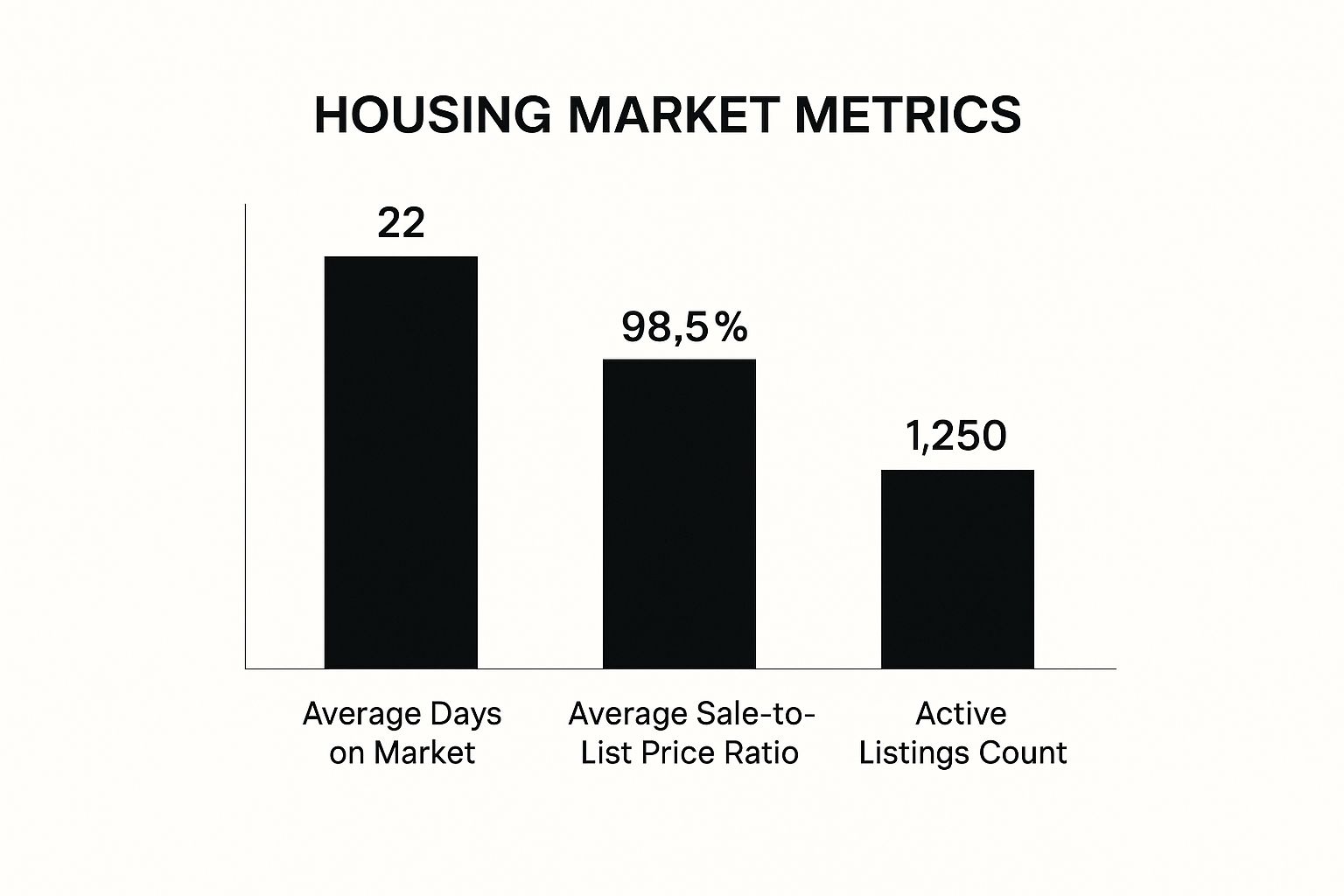
The data doesn't lie. Homes that are priced right from day one (with a high sale-to-list price ratio) sell faster, even when there are a lot of other houses for sale.
Key Factors Influencing Your Home's Selling Speed
To really understand what this means for you, it helps to see what a winning strategy looks like compared to common mistakes. The choices you make in these key areas directly dictate how long your home sits on the market.
This table breaks down the most critical elements for a fast home sale, outlining the best-practice approach versus common mistakes and their likely impact on your timeline.
| Factor | Fast Sale Strategy (Best Practice) | Slow Sale Trap (Common Mistake) | Impact on Timeline |
|---|---|---|---|
| Pricing | Price at or just below market value based on a detailed market analysis. | Pricing based on emotion or what you "need" to make from the sale. | An overpriced home gets ignored by qualified buyers, significantly extending its time on the market. |
| Presentation | Deep clean, declutter, and stage the home to appeal to the widest audience. | Leaving personal clutter, deferred maintenance, and dated decor visible. | Poor presentation prevents buyers from emotionally connecting with the home, leading to fewer and lower offers. |
| Marketing | Use professional photos, virtual tours, and a multi-channel promotion plan. | Relying on poor-quality smartphone pictures and a single MLS listing. | Weak marketing fails to capture online attention, resulting in minimal foot traffic and interest. |
Ultimately, your success hinges on getting these fundamentals right from the beginning. A proactive, strategic approach ensures you’re not just listing your home, but truly launching it.
A fast sale is the result of front-loading the effort. By preparing your home meticulously and pricing it accurately from day one, you create urgency and competition among buyers, which is the ultimate goal.
This mindset is everything. If your home has already been on the market for a bit, it’s not too late to pivot. You can explore effective strategies to revive stale listings and sell for over asking to get things moving again. By focusing on these core pillars—pricing, presentation, and marketing—you build a powerful foundation for a successful sale.
Pricing Your Home to Attract Immediate Offers
Let's cut to the chase: nothing influences how fast your home sells more than the price tag. It's hands-down your most powerful marketing tool. Aim too high, and you'll be invisible to qualified buyers who have set their search filters. Go too low, and you're just leaving cash on the table.
The trick is finding that sweet spot. This isn't about plucking a number out of thin air or pricing based on what you hope to walk away with. Smart pricing is an art backed by hard data. It takes a clear-eyed look at the market and a bit of buyer psychology to make your home the one everyone wants to see.
Performing a Comparative Market Analysis
To get your price right, you need to think like an appraiser and run a comparative market analysis (CMA). This is just a fancy way of saying you’re analyzing homes similar to yours—we call them "comps"—to figure out what your property is actually worth right now.
A solid CMA zeros in on three key groups of properties:
- Recently Sold Homes: This is your gold-standard data. It shows what buyers have actually paid for homes like yours in the last 3-6 months.
- Active Listings: This is your current competition. See how they’re priced and presented. To sell fast, you need to offer a better deal, either with a sharper price or by being in better shape.
- Pending Sales: These homes are under contract but haven't closed. They offer the most up-to-the-minute glimpse of what the market is doing, showing which prices are successfully getting buyers to bite today.
When you're comparing, look past just the bed and bath count. You need to weigh everything: square footage, lot size, the home's age and condition, and any recent upgrades. A house with a brand-new kitchen is going to fetch a higher price than a similar one with a 20-year-old design. It’s all about the details.
Pricing your home is a delicate balance. The goal is not just to sell, but to sell quickly. A well-researched price based on solid comps minimizes market time and maximizes your return by attracting serious, qualified buyers from day one.
The Psychology of Pricing
Once your CMA gives you a solid value range, you have to pick the actual list price. This is where a little psychology goes a long way, especially with how people search online. Most buyers on real estate sites set firm price ceilings.
Here’s a real-world example: A buyer sets their maximum search price at $500,000. If you list your home for $505,000, your property will never even show up for them.
But if you price it at $499,900, you slide right into their results. That one small tweak can instantly expose your home to a massive new pool of potential buyers. It taps into something called the "left-digit effect," where a price like $499k feels significantly cheaper than $500k, even though it's barely different. That feeling is often enough to get more people through the door.
Adjusting for Current Market Dynamics
Your pricing strategy can't live in a bubble. You have to consider what’s happening in the broader economy, like inventory levels and mortgage rates, because these factors massively impact buyer behavior.
For instance, the market today is a mixed bag. While more new homes are being built, the supply of existing homes is still historically low. That scarcity can create bidding wars for well-priced properties. At the same time, higher mortgage rates are making some buyers hesitate.
To sell quickly in this kind of environment, you have to be competitive. You can dig deeper into how housing supply affects sales in this J.P. Morgan housing market outlook.
Understanding these dynamics is everything. In a seller's market with barely any homes for sale, you might be able to price a bit more aggressively. But in a buyer's market with lots of options and rising rates, a sharper price—maybe even slightly below market—is what it takes to get that fast sale. An experienced real estate agent is your best asset here; they live and breathe local trends and can help you position your home perfectly.
Preparing Your Home For A Winning First Impression
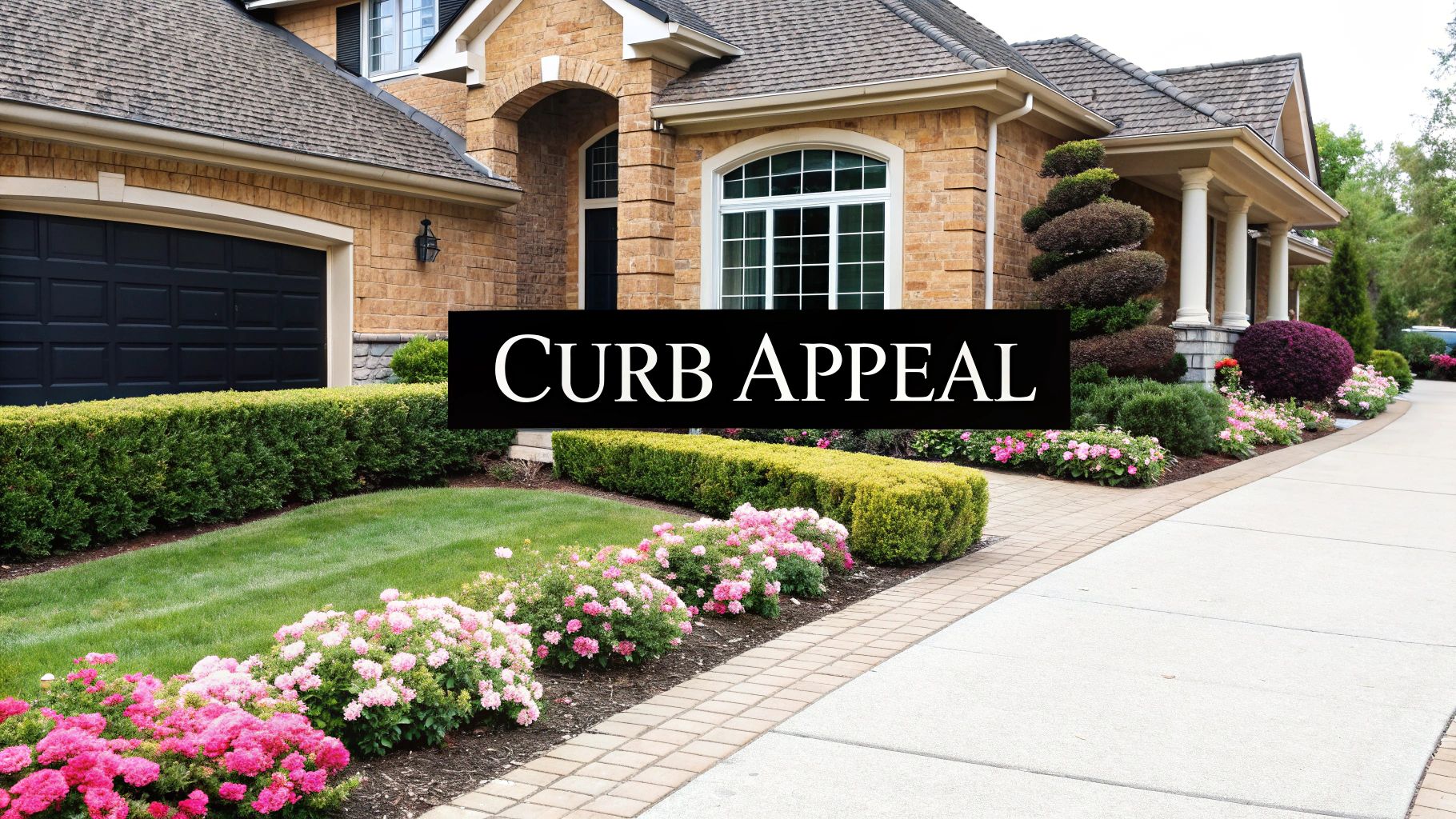
You get a few seconds. That’s it. Whether a buyer is scrolling through listings online or pulling up to your curb for the first time, their opinion is formed almost instantly.
That initial gut reaction sets the tone for everything that follows. If you want to sell your house quickly, a powerful first impression isn't just nice to have—it's everything. This goes way beyond just tidying up. We're talking about the real work: depersonalizing, making smart repairs, and mastering the art of curb appeal to create a vision that buyers can't resist.
Make Your Curb Appeal Count
The journey to a fast sale starts the second a buyer lays eyes on your property. Your home’s exterior is the cover of its story. If it's neglected, most people won't even bother to open the book.
To make an unforgettable impression, you'll want to focus on the key visual elements, especially the entrance. You can find some fantastic residential entry design tips from the pros to help create that welcoming vibe that pulls buyers in.
Start with these high-impact tasks:
- Tidy Landscaping: Mow the lawn, trim back those overgrown shrubs, and pull every last weed. A fresh layer of mulch in the garden beds gives everything a clean, polished look.
- A Welcoming Entryway: The front door is your focal point. A fresh coat of paint in a classic, inviting color like black, navy, or a deep red can completely change the game.
- Pressure Wash Everything: Blast away years of dirt from the siding, driveway, and walkways. It’s a low-cost job with a surprisingly high return on investment.
These small efforts send a huge signal to buyers that your home has been meticulously cared for. It builds trust before they even step foot inside and sets the expectation that the interior will be just as impressive.
Key Insight: Curb appeal isn't just about looking pretty; it's a marketing tool. A pristine exterior tells buyers the property is well-maintained, which reduces their hesitation and encourages faster, stronger offers.
Declutter And Depersonalize For Maximum Impact
Once you get buyers through the door, the goal is simple: help them see their life in your space, not yours. This is where decluttering and depersonalizing become your secret weapons. You’re essentially creating a blank canvas for their imagination.
This is more than just clearing off the kitchen counters. It means packing away the family photos, the kids' artwork, and any distinct collections you have on display. While those things make a house your home, for a potential buyer, they're just a distraction.
Think of it like you're merchandising a product. Your home is now a commodity, and its best features are the space and potential it offers. By removing your personal stamp, you let the home's true character—the architectural details, the natural light, the floor plan—shine through. This one act makes every room feel bigger, brighter, and more inviting.
The Power Of Paint And Small Repairs
When you're trying to sell fast, you don't have time for a massive renovation. Instead, your energy should go toward small, high-return updates that pack a big punch. The most effective of these? Without a doubt, it’s a fresh coat of paint.
Recent data shows that home presentation has a massive influence on selling speed. In fact, a staggering 85% of experts agree that painting walls a soft, neutral white adds the most value and broadens a home's appeal more than any other color. On the flip side, bold choices like lime green can be a major turn-off. It’s clear proof that while market conditions matter, smart aesthetic choices can seriously speed up a sale.
Fixing the little things is just as critical. A leaky faucet, a broken cabinet pull, or a squeaky door might seem minor, but together they scream neglect. Tackling these small issues shows buyers you have pride of ownership and stops them from mentally adding to a "project list" that could scare them away.
Finally, the most crucial step before listing is getting your home ready for its close-up. High-quality photos are your number one marketing tool. To make sure your property looks absolutely perfect online, check out our guide on how to prepare a house for a photography session.
Mastering Your Marketing to Showcase Your Property
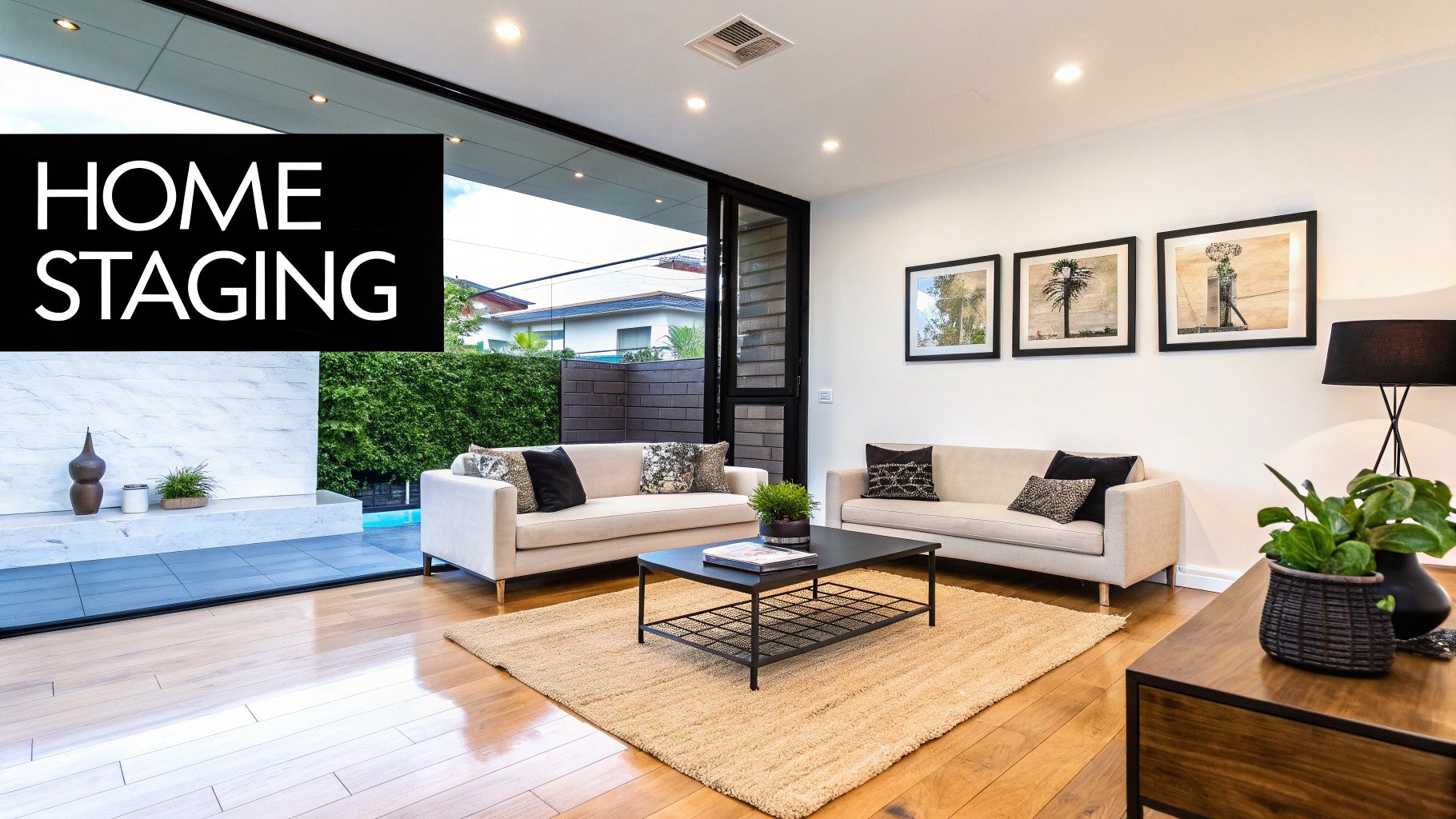
With your home priced right and prepped for its big debut, it's time to create some serious buzz. A smart marketing strategy is the bridge connecting your beautifully prepared home to its ideal buyer—a critical piece of the puzzle for selling your house quickly. This is about so much more than just sticking a sign in the yard; it’s about creating an irresistible online presence that simply can't be ignored.
The home search process for today’s buyer starts online. They spend hours scrolling through listings, and your property has to be the one that stops them in their tracks. This means your marketing materials need to be absolutely top-notch from day one.
Invest in Professional Real Estate Photography
If you only make one investment in marketing, let this be it: professional photography. In a sea of endless online listings, high-quality photos are the single most effective tool you have for grabbing a buyer's attention. Homes with professional photos don't just get more clicks; they immediately create a perception of value and care.
Put yourself in a buyer’s shoes for a moment. Crisp, bright, well-composed images tell them a home is well-maintained and desirable. On the other hand, grainy, dark, or crooked smartphone pictures do the exact opposite, often making a fantastic home look completely unappealing.
To really make your listing pop, consider a few advanced options:
- Twilight Photography: That "golden hour" shot of your home's exterior, with all the interior and exterior lights glowing, creates a dramatic, high-end feel. It’s an incredibly compelling photo to use as your main image.
- Drone Photography: If your property has a good amount of land, a stunning view, or a great location, aerial shots offer a powerful perspective that ground-level photos just can't match.
- Virtual Tours: Immersive 3D walkthroughs, like those from Matterport, are almost essential these days. They let out-of-town buyers or people with packed schedules tour your home thoroughly online. This means the people who book in-person showings are usually far more serious and qualified.
A fascinating tidbit from the National Association of Realtors®: 27% of recent sales were made in cash. These buyers, who are often investors, prize efficiency and can make snap decisions based on great visuals, making professional photos and virtual tours even more essential.
Craft a Compelling Listing Description
Once your stunning photos have done their job and grabbed a buyer's attention, the listing description needs to hold it. This is your chance to tell a story, not just rattle off facts. A great description goes beyond "3 bed, 2 bath" and paints a vivid picture of what life is actually like in the home.
Instead of just stating there’s a back patio, describe it: "Enjoy your morning coffee on the sun-drenched back patio overlooking the private, fully fenced yard." This simple shift helps buyers emotionally connect with the space. Be sure to highlight unique features that photos might not fully capture, like how quiet the street is, the friendly neighborhood vibe, or how close you are to a popular park.
Use descriptive, evocative language and break the text into short, easy-to-read paragraphs. Structure your description logically, starting with the most compelling features and flowing through the home just as a visitor would.
Maximize Your Reach with Multi-Channel Marketing
To sell your house quickly, you need to cast a wide net. A top real estate agent won't just list your home on the Multiple Listing Service (MLS) and cross their fingers. An aggressive marketing plan uses multiple channels to get your property in front of as many potential buyers as possible.
This includes targeted social media advertising on platforms like Facebook and Instagram. Here, your agent can showcase your home's best photos and videos to users whose demographics and online behavior suggest they might be looking to buy. An agent's personal network of colleagues and past clients is another invaluable resource for spreading the word.
Finally, you have to be ready for showings. The more flexible you can be with scheduling, the better. A "go-bag" can be a lifesaver, letting you quickly tidy up and head out on short notice. You never want to miss an opportunity to let a motivated buyer walk through your door. This combination of stellar visuals, a compelling story, and wide-reaching promotion is what creates the urgency needed for a swift sale.
Navigating Offers and Negotiations for a Fast Close
Getting that first offer feels like a huge win. But hold on—this is a major milestone, not the finish line. How you handle the next steps is what separates a quick, clean closing from a deal that gets messy or falls apart entirely.
The real key to a fast sale isn't just about chasing the highest dollar amount. It's about finding the offer with the best chance of actually closing on time, with the fewest possible headaches. Believe me, a slightly lower all-cash offer can be worth its weight in gold compared to a higher offer tangled up in shaky financing.
Evaluating the Entire Offer Package
A serious offer is so much more than a number on a contract. To protect your timeline, you have to look beyond the price and really dig into the whole package. Every term in a buyer's proposal can either speed things up or slow them down.
Here’s exactly what I scrutinize in every offer that comes across my desk:
- Financing Contingency: Is it cash or a mortgage? A cash offer is king for speed because it completely sidesteps the lengthy mortgage approval process and the risk of a low appraisal. If they need a loan, I want to see a full pre-approval letter, not just a flimsy pre-qualification.
- Buyer Qualifications: A strong pre-approval from a respected lender is a great start. An even better sign? A significant down payment. It shows they have skin in the game and makes final loan approval much more likely.
- Proposed Closing Date: Does their timeline work for you? A buyer who can close in 30 days or less is exactly what you're looking for. Be cautious with requests for long closing periods—they just open the door for more things to go wrong.
- Earnest Money Deposit: A solid earnest money deposit, usually 1-3% of the purchase price, shows you have a serious buyer who isn't going to get cold feet and walk away over something small.
When you weigh all these factors, you get a much clearer picture of an offer's true strength. A buyer who comes in with a clean offer, solid financing, and a quick closing date is telling you they're ready to get this done.
Managing Multiple Offers and Counter-Offers
If you're in a hot market, you might get lucky and end up with multiple offers. This is your moment to strategically play them off each other to get the best possible terms. It's a delicate dance, though, and you have to be careful not to scare off good, solid buyers.
When the offers start rolling in, your agent can ask all interested parties for their "highest and best." This move sets a firm deadline and creates a sense of urgency, often leading to better prices and terms all around.
Once you have the offers in hand, you’ve got three moves: accept, reject, or counter. A counter-offer is your best tool for keeping a deal moving forward while tweaking the terms to better suit you. You can obviously counter on price, but don't forget you can negotiate other critical points, too.
For instance, you could accept their price but counter with a shorter inspection period—say, 7 days instead of 14. Or you might ask them to waive a minor contingency. This keeps the momentum going and pushes the deal toward the finish line.
The goal with any counter-offer is to be firm but fair. You're showing the buyer you’re serious about making a deal, but you're also protecting your own interests. This is where an experienced agent really earns their keep, helping you write a response that's both compelling and effective. After all, their pay often relies on a successful sale, so understanding how real estate agent commission rates work helps explain why they're so motivated to get you the absolute best deal.
Using Incentives to Secure a Fast Close
In a market where buyers are a bit more hesitant, the right incentive can be the final push you need to get an offer signed. This isn't just about dropping your price; it's about strategically addressing a buyer's worries to make your home the obvious choice.
This is especially true right now. We're seeing a split market where existing home sales have slowed down, but new construction is still moving. Existing home sales recently dropped by 2.4% year-over-year, mostly because high mortgage rates are hitting affordability hard. To compete, sellers like you need to get creative.
Here are a few strategic incentives that work wonders:
- Seller Concessions: Offering to pay for a piece of the buyer's closing costs can be a game-changer, especially for first-time buyers who are often cash-strapped.
- Home Warranty: Tossing in a one-year home warranty (which only costs a few hundred dollars) gives buyers incredible peace of mind. It assures them they won't be hit with a surprise bill for a major repair right after moving in.
- Flexibility on Closing: If you can work with a buyer's preferred move-in date, it's a powerful, no-cost incentive that can make your home the most convenient option on their list.
By skillfully navigating offers, countering with intelligence, and using smart incentives, you take back control of the closing process. This proactive approach is the final, crucial step to selling your house quickly and on your terms.
Your Questions Answered for a Speedy Home Sale
Selling a home fast can feel like a high-stakes sprint, and it's only natural for questions to bubble up along the way. Getting straight answers is the key to making smart moves and feeling confident about the path forward.
Let's break down some of the most common questions we hear from sellers who are up against the clock. This should help you navigate the process and keep your sale on the fast track.
What Is the Absolute Fastest Way to Sell a House?
For pure, unfiltered speed, nothing comes close to a direct cash offer from a professional home-buying company, sometimes known as an iBuyer or real estate investor. These companies can get you an offer in as little as 24 hours and often close the entire deal in just 7 to 14 days.
The process is a world away from a traditional sale:
- You get to skip the entire listing process.
- No strangers traipsing through for showings or open houses.
- You won't lift a finger for repairs—they buy homes completely "as-is."
- Financing contingencies are off the table, so you don't have to worry about a buyer's loan falling through.
Of course, this speed comes with a trade-off. The incredible convenience of a rapid, no-fuss sale almost always means accepting an offer below what you could get on the open market. It's a classic case of speed vs. profit. For anyone who needs to close yesterday, a cash buyer is the clear winner.
Should I Make Repairs or Sell As-Is?
This is a question every seller grapples with, especially when time is tight. When you need to sell quickly, the strategy is to focus only on high-impact, low-cost fixes that give you the most bang for your buck. We're talking about tackling the small stuff that screams "red flag" to a potential buyer.
A drippy faucet, a light that won't stop flickering, or a toilet that constantly runs can make buyers nervous about what other, bigger problems might be lurking. These minor fixes are non-negotiable. Another game-changer? A fresh coat of neutral paint. It can completely transform a room, making it feel cleaner and brighter, and it consistently delivers a great return on investment.
Key Takeaway: Forget about major renovations like a full kitchen or bathroom remodel when you're in a hurry. They cost a fortune, take forever, and you'll almost never get all your money back. Selling strictly "as-is" is faster, but it will shrink your pool of potential buyers and usually lead to lower offers.
How Critical Is a Real Estate Agent for Selling Fast?
It can be tempting to go the For Sale By Owner (FSBO) route to save on commission, but when speed is the goal, an experienced real estate agent is your most valuable player. Their worth goes way beyond just putting a sign in your yard. A great agent is a strategist, a marketer, and a tough negotiator all rolled into one.
They give you instant access to the Multiple Listing Service (MLS), which blasts your listing out to thousands of websites where buyers are looking. Even better, they have a built-in network of other agents and qualified buyers, often generating buzz before your home officially hits the market.
Their deep knowledge of the local market is absolutely crucial for setting the right price from day one—the single most important factor for a quick sale. They also manage all the complex negotiations and mountains of paperwork to make sure nothing derails the deal. This guidance becomes priceless during difficult life events. For instance, if you're selling because of a separation, getting an agent's help to understand the details of selling a home during divorce can be a true lifesaver.
At the end of the day, the numbers don't lie. Homes sold with an agent consistently sell faster and for more money than FSBO properties. That higher sales price often more than covers the commission, making it a smart move for both your timeline and your wallet.
At Edinhart Realty and Property Management, we know how urgent and complicated selling your home quickly can be. Our team uses expert staging, top-tier photography, and smart pricing strategies to make your property stand out and attract serious buyers in a hurry. If you're ready for a smooth, fast, and profitable sale, let's connect.


