

Before you even think about picking up the phone to call a property manager, the most critical decision has already landed squarely in your lap. You need to figure out exactly what you want.
Are you looking for a completely hands-off investment where someone else handles the late-night emergency calls? Or are you comfortable managing the day-to-day but just need a pro to find you a great tenant? Answering this one question first will save you a ton of time and frustration down the road.
Matching Your Needs with the Right Management Style
Honestly, the biggest mistake landlords make is hiring a property manager without first defining their own role. It’s the number one cause of friction in the owner-manager relationship.
Think of it this way: you wouldn't hire an employee without writing a job description first. You need to do the same thing here. Outline your expectations and what level of support your property actually needs.
Are you an out-of-state investor who needs boots on the ground for everything from a leaky faucet to lease renewals? Or are you a local, hands-on landlord who’s great with maintenance but dreads the marketing and legal paperwork that comes with finding new tenants?
Full-Service vs. Placement-Only: A Clear Distinction
The property management world basically breaks down into two models, each built for a different type of landlord. Getting this right is everything.
A simple way to look at it is to decide what your main priority is: passive income or direct control? This visual breaks it down perfectly.
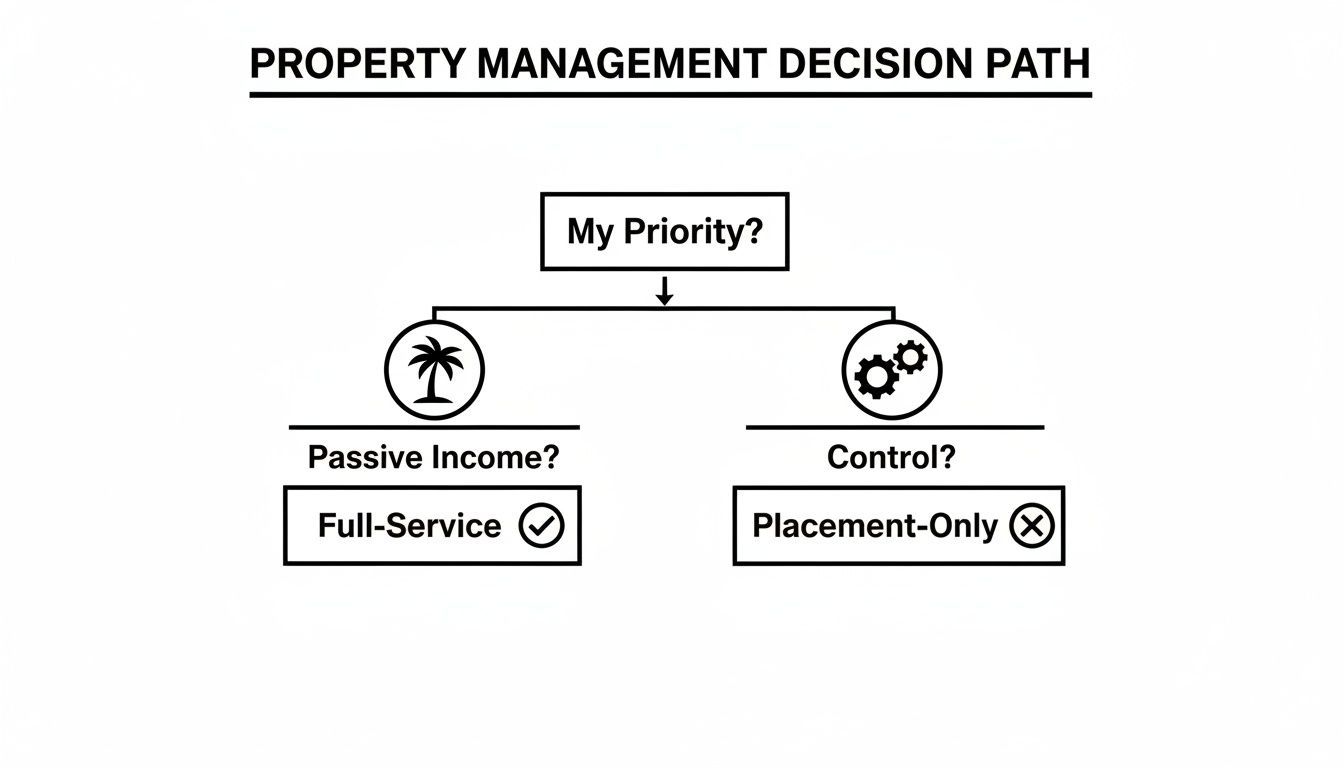
As the chart shows, if your goal is passive income, full-service is your path. If you want to maintain control, you're likely better suited for a placement-only arrangement.
To help you decide, let's look at what each service really offers and who it's best for.
| Feature | Full-Service Management | Placement-Only Service | Best For |
|---|---|---|---|
| Scope of Work | Handles all aspects: marketing, screening, leasing, rent collection, maintenance, inspections, and financial reporting. | Focuses solely on marketing the property, screening applicants, and signing the initial lease agreement. | Full-Service: Out-of-state investors or local owners who want a completely passive investment. |
| Tenant Relationship | The property manager is the primary point of contact for the tenant throughout their entire tenancy. | The owner takes over all communication and management duties once the tenant moves in. | Placement-Only: Hands-on local landlords who are comfortable with day-to-day management tasks. |
| Maintenance | Coordinates and oversees all repairs and maintenance requests, often using a network of vetted vendors. | The owner is 100% responsible for handling all maintenance and emergency calls directly with the tenant. | |
| Fee Structure | Typically a percentage of the monthly rent (8-12% in Central California) plus a one-time leasing fee. | A one-time flat fee, often equivalent to 50-100% of the first month's rent. |
Ultimately, the right choice comes down to your personality, your location, and how much time you're willing to commit. There’s no single "best" answer, only what's best for you.
Creating Your Property Needs Checklist
Once you’ve settled on a management style, it's time to get specific. A single-family home in Clovis has completely different needs than a four-plex near Fresno State. If you own a house, you can get more insight here on the unique aspects of managing single-family homes.
Create a checklist that covers the key areas of your operation. This isn't just a wish list; it's the agenda you'll use when you start interviewing companies.
Having this list ready prevents you from getting distracted by a slick sales pitch and keeps the focus on what truly matters for your property’s bottom line.
A big part of this is also understanding how a company operates. The way how real estate teams manage their connections with clients and properties can tell you a lot about their efficiency. A well-organized firm that communicates clearly is going to be better at both full-service and placement-only tasks.
Verifying Credentials and True Local Expertise

Once you've decided on the level of service you need, it's time to separate the real pros from the pretenders. A slick website and a friendly voice on the phone are nice, but they mean nothing if the company isn't properly licensed and insured to manage your property. This is about more than just avoiding bad service—it's about protecting yourself from serious legal and financial blowback.
Here in California, the law is airtight. Any person or business managing rental properties for other people must operate under a licensed California Real Estate Broker. This is non-negotiable.
If a potential manager gets cagey or can't immediately give you their broker license number, that’s your signal to walk away. You can—and absolutely should—verify their status yourself on the California Department of Real Estate (DRE) website. It’s a five-minute check that can save you a five-year headache.
Beyond the License: Insurance and Affiliations
A valid license is just the ticket to get in the door. A truly professional firm will also carry the right insurance to protect everyone involved. You need to ask for proof of two specific policies.
- General Liability Insurance: This covers things like slip-and-fall accidents or other injuries that might happen at a property they manage.
- Errors & Omissions (E&O) Insurance: This is crucial. It protects against costly mistakes in their professional duties, like a botched eviction process or a fair housing complaint.
Think of these policies as your financial safety net. If a tenant sues over an injury or an agent makes a critical error, you need to know the management company can handle it without dragging your personal assets into the mess.
An experienced property manager doesn't just manage buildings; they manage risk. Their credentials and insurance are the first line of defense for your investment, ensuring that a simple mistake doesn't turn into a financial disaster.
Also, keep an eye out for affiliations with professional groups like the National Association of Residential Property Managers (NARPM) or the California Association of Realtors (CAR). Membership usually signals a real commitment to higher ethical standards and staying current on our state's constantly changing rental laws.
Gauging True Local Market Knowledge
This is where the rubber really meets the road. A license proves they can legally operate, but it doesn't prove they can make you money. That comes from deep, on-the-ground knowledge of the specific neighborhood where your property is.
For instance, any real Fresno expert knows that rental rates for a three-bedroom house zoned for the Clovis Unified School District can command a much different price than a similar house near the Tower District. They get the local vacancy cycles, know the tenant demographics for different parts of town, and understand which amenities renters here actually pay a premium for. You can learn more about the nuances of the local market by reading our in-depth guide to Fresno property management.
This is the kind of hyper-local intel that allows a great manager to price your rental perfectly, market it to the right people, and keep those costly vacancy periods to a minimum.
Questions That Reveal Real Expertise
When you start interviewing managers, skip the generic questions. You need to dig into their local playbook. Their answers will tell you everything you need to know.
Try asking them these questions directly:
- "My property is in [your neighborhood]. What's the ideal tenant profile you'd target for it, and why?" A solid answer will be specific, mentioning things like proximity to Community Regional or Saint Agnes, major employers, or popular school districts.
- "Who are your go-to plumbers, electricians, and HVAC guys in this area? Are they reliable and cost-effective?" A seasoned manager will have a vetted list of vendors they trust. If they hesitate or give you a vague answer, that’s a huge red flag.
- "For a property like mine, how have rental rates trended in the last 12 months? What's your projection for the next year?" They should be able to speak confidently about local market dynamics without needing to look everything up.
Choosing a manager based on these deeper qualifications ensures you’re not just hiring a task-doer; you’re partnering with a team that can strategically grow the value of your asset.
Decoding Their Tenant Screening and Marketing Playbook
The person you put in your property will make or break your entire investment experience. It's that simple. A nightmare tenant can drain your bank account with unpaid rent and damages, while a great one turns your property into the predictable, passive income stream you always wanted.
This is why a property manager's screening and marketing playbook isn't just a minor detail—it's everything. If they're cutting corners here, they are gambling with your money. You need to pull back the curtain and see exactly how they attract and vet applicants.
The Anatomy of a Bulletproof Screening Process
A basic credit check just doesn't cut it anymore. A truly professional screening process is a deep dive, looking at an applicant from every critical angle to get a complete picture of who they are.
When you're interviewing a property manager, don't be shy. Ask for a step-by-step breakdown of their screening criteria. If they get vague, that's a red flag. A solid process always includes these non-negotiables:
- Comprehensive Credit Report: They need to look past the score. What's their debt-to-income ratio? Do they have a history of late payments? Are there any accounts in collections? These details tell the real story.
- Nationwide Criminal Background Check: A local check isn't enough. This has to be a national search to flag any relevant history that could put your property or the neighborhood at risk.
- Eviction History Search: Past behavior is the best predictor of future behavior. A past eviction is one of the biggest warning signs you can find.
- Income and Employment Verification: This means getting copies of recent pay stubs and, just as importantly, picking up the phone to call the employer. They need to confirm the applicant works there and that their income is stable. We look for a gross monthly income of at least three times the rent.
Getting granular on these points is essential. To see what a truly professional-grade screening looks like, check out our guide on the best tenant screening services and what we look for.
A rigorous tenant screening process is the single most effective risk management tool a landlord has. It's not about being difficult; it's about being diligent to protect the long-term health of your investment.
Marketing That Attracts a Premium Tenant Pool
Of course, before you can screen anyone, you have to get quality applicants in the door. In a competitive market like Fresno, a company that just throws a sign in the yard and posts a few blurry phone pictures online is already failing.
Their marketing needs to be sharp enough to attract a large pool of qualified renters, not just the first person who happens to drive by.
A huge piece of this is visual presentation. Great photos are non-negotiable. Understanding the finer points of lighting for photography can make the difference between a listing that gets ignored and one that gets dozens of inquiries.
Beyond great photos, a modern marketing strategy has to be multi-channel. This means writing compelling descriptions that sell the lifestyle of the home and syndicating that listing to all the major rental hubs like Zillow, Trulia, and HotPads. The goal is maximum exposure to find the best possible tenant fast, cutting down on that expensive vacancy time.
Ultimately, great marketing and screening lead to better tenant retention, which is where the real money is saved. Top-tier property managers know this; the number of managers focused on high retention has actually tripled since 2021. Why? Because keeping a great tenant saves you a fortune in turnover costs. For landlords here in Central California, a professional team can boost retention by up to 20%—a number that goes straight to your bottom line.
Inspecting Maintenance Protocols and Financial Transparency

How a company handles a burst pipe at 2 a.m. or documents a simple plumbing bill reveals everything. This is the real stress test of their professionalism, and it’s where you separate the true pros from the rest of the pack.
These two areas—maintenance and money—are the operational heart of your investment. Get them right, and you'll have happy tenants, a protected asset, and clear oversight. Get them wrong? You're in for a world of surprise expenses, frustrated renters, and a total lack of control over your own property.
Evaluating Their Maintenance Systems
A property manager's approach to maintenance should be proactive, not just reactive. Anyone can call a plumber after a flood. A great manager works to prevent problems from happening in the first place through regular inspections and preventative care.
When you're interviewing potential managers, you have to dig deep into their process. A vague "we handle it" just won't cut it. You need to understand their system from the ground up.
Key maintenance capabilities to verify:
- 24/7 Emergency Response: Do they have a dedicated line answered by a live person for emergencies? A voicemail system is a recipe for disaster when a water heater blows on a holiday weekend.
- Vetted Vendor Network: Ask them about their go-to vendors in the Fresno and Clovis area. A top-tier manager will have a trusted network of licensed, insured, and reasonably priced contractors they've worked with for years.
- Approval Thresholds: What’s their spending limit for repairs before they need your approval? A standard threshold is often $250-$500, but this has to be clearly spelled out in the management agreement to avoid nasty surprises on your statement.
A well-defined maintenance process isn’t just about fixing things—it’s about managing liability, controlling costs, and preserving the value of your asset. It transforms property management from a reactive chore into a strategic function.
Their ability to respond quickly and effectively has a huge impact on tenant satisfaction. Recent industry data shows that 40% of uncertain renters would re-sign their lease if more was invested in upkeep, and 31% would stay if response times were faster.
Demanding Financial Transparency
"Transparency" is a word every property management company loves to throw around, but few actually deliver. Real financial transparency isn't just getting a statement at the end of the month; it's about having on-demand access to the financial pulse of your property.
This means you need a partner who uses modern accounting software built specifically for property management. If they're still fumbling with spreadsheets, that's a massive red flag signaling disorganization and a higher risk of costly errors.
The gold standard today is an online owner portal. This tool should give you real-time, 24/7 access to all the critical financial data for your property.
What to look for in their reporting:
- Detailed Monthly Statements: Look for itemized breakdowns of all income and expenses. Every single charge, from a management fee to a repair invoice, should be clearly listed and easy to understand.
- Access to Invoices: The best companies attach digital copies of all vendor invoices directly within the owner portal. This lets you verify every expense without ever having to ask for backup.
- Year-End Tax Statements: A professional firm will provide a comprehensive year-end statement and a 1099-MISC, making tax time a breeze for you and your accountant.
At the end of the day, the numbers don't lie. Properties managed by professional teams can achieve up to 15% higher net operating income (NOI), thanks in large part to efficient maintenance and tight financial controls. In fact, 74% of rental owners rank customer service and reporting as their top priority.
According to Buildium's latest industry report, this focus on clear systems is a key trend among industry leaders. Choosing a company with robust, transparent systems for both maintenance and financials is how you pick a partner that truly protects your investment.
Reading Between the Lines of Fees and Contracts

The management agreement is the foundation of your entire relationship with a property manager. It’s not just a formality; it’s the legal playbook that will dictate everything for years to come. Getting this part wrong can lock you into a costly, frustrating partnership you'll regret.
Before you ever sign, you have to look past the headline number. A low monthly percentage might look tempting, but it can be a smokescreen for a laundry list of hidden charges. A solid, transparent contract protects everyone by setting crystal-clear expectations right from the start.
Demystifying Common Fee Structures
Property management fees aren't one-size-fits-all, so you'll run into a couple of different models. The most common are percentage-based and flat-rate fees. Knowing the pros and cons helps you figure out which one actually aligns with your bottom line.
Percentage-Based Fees: This is the industry standard, especially for full-service management. The company will charge a percentage of the monthly collected rent, which usually falls between 8% to 12% here in the Fresno market. The key word is "collected." A good manager only gets paid when you get paid, which keeps them motivated to have a quality, paying tenant in your property.
Flat-Rate Fees: Some companies offer a fixed monthly fee, no matter what the rent is. This can be great for owners with higher-rent properties because it makes your monthly expenses totally predictable. Just make sure that flat fee truly covers the full scope of services you need.
Uncovering the Hidden Costs
The monthly management fee is often just the tip of the iceberg. The real test of a company’s honesty is how upfront they are about all the other service fees. These are the charges often buried in the fine print that can eat away at your profit.
Keep an eye out for these common add-ons:
- Leasing Fee: A fee for placing a new tenant. This is standard practice, but it can vary wildly from 50% to 100% of the first month's rent.
- Setup Fee: This is a one-time charge to get your property onboarded into their systems. It's always worth asking if they'll waive this, especially if you have multiple properties.
- Lease Renewal Fee: Some firms will charge you a fee just to sign a renewal with a tenant who is already there.
- Maintenance Markup: This is a big one. Does the company tack on a surcharge—often 10-20%—to every vendor invoice for coordinating repairs?
- Eviction Fee: An hourly rate or flat fee to cover their time and administrative work if an eviction becomes necessary.
A transparent fee structure isn't about finding the cheapest manager; it's about finding an honest one. A company that is upfront about all potential charges is more likely to be a trustworthy partner in the long run.
Critical Contract Clauses You Must Review
Never, ever sign a management agreement without reading it from start to finish. If the language is overly complicated or vague, that’s a massive red flag. While having your attorney review it is ideal, you need to understand these key clauses yourself.
A quick checklist for your contract review:
- Scope of Authority: This section defines exactly what the manager can and can't do without your approval. Pay close attention to the spending limit for repairs they can authorize on their own.
- Termination Clause: How do you get out of the contract if things go south? Look for the required notice period (usually 30-60 days) and any penalties for early termination. Avoid any agreement that locks you in for a full year with no escape clause.
- Owner Responsibilities: The contract should clearly spell out your obligations, like maintaining proper insurance and funding a reserve account for repairs.
- Hold Harmless Clause: This is a standard clause protecting the property manager from liability, but you need to make sure it doesn't protect them from acts of their own gross negligence.
In today's market, the best firms are separated from the rest by their operational efficiency. It's become the top strategic focus, with 32% of top managers reviewing market data weekly to stay competitive. For Fresno and Clovis investors, this means you need a company that uses technology for everything from automated rent collection to real-time analytics, especially when 73% of firms are feeling pressure from staffing and revenue challenges. A well-written contract will reflect this modern approach.
Professionally managed properties can see 15-20% better net operating income and retention, so make sure the company's contract supports these data-driven operations. You can explore more about these industry trends and what they mean for property owners in this recent report on property management.
Got Questions? Let's Get Them Answered.
Even after you've done your research, a few critical questions always pop up. Getting straight answers to these common concerns is the last hurdle before you can feel truly confident in your choice. This is where the rubber meets the road—moving from what a company says on its website to how they’ll actually handle your Fresno-area investment.
Let's dig into some of the most frequent questions we hear from property owners just like you.
What’s a Fair Management Fee in the Fresno Area?
Here in Fresno and across the Central Valley, you’ll find that full-service management fees generally land somewhere between 8% and 12% of the monthly rent that's actually collected. The exact number can shift a bit depending on your property type, how many units you have, and exactly what’s included in their service package.
For placement-only services, where they just find and screen a tenant for you, it's a different story. You'll typically see a flat fee, usually equal to 50-100% of the first month's rent.
But don't get too hung up on the percentage alone. A manager charging a slightly higher fee who keeps your property occupied with great tenants, heads off expensive repairs, and minimizes vacancy will almost always put more money in your pocket at the end of the year. Price is what you pay; value is what you get.
How Hands-On Do I Need to Be?
Honestly, the whole point of hiring a full-service property manager is to buy back your time and ditch the landlord headaches. Once you’re through the initial setup, your day-to-day involvement should drop to almost zero, freeing you up for, well, anything else.
Your main tasks should boil down to the simple stuff:
- Glancing over your monthly owner statements to see the income and expenses.
- Giving the green light for major repairs that go above the threshold you both agreed on in the contract.
- Chatting about strategy when it's time to renew a lease or consider a significant upgrade.
A great manager runs the show. They handle the tenant calls, the routine maintenance, and all the daily operational details without needing to bother you. Their job isn’t to give you another person to manage; it's to deliver peace of mind and predictable cash flow. Think of them as a partner who completely lifts the operational weight off your shoulders.
What if I Want to End the Contract?
This is a big one, and you need to get it crystal clear before you sign anything. Every professional management agreement will have a termination clause spelling out the exact process for parting ways.
Typically, you'll need to give 30 to 60 days' written notice. Some agreements might also include an early termination fee if you decide to leave before the initial contract period is over.
When you're reviewing the contract, keep an eye out for a "satisfaction guarantee" or a clause that lets you exit without a penalty if the manager fails to deliver on key promises, like finding a tenant within a specific timeframe. This is your safety net, ensuring you aren't stuck in a partnership that just isn't performing. A transparent company will always have a fair and straightforward exit path.
At Edinhart Realty and Property Management, we build our partnerships on a foundation of trust and transparency. That means giving you clear answers and delivering even clearer results. If you’re ready to see how professional management can protect your asset and boost your returns, let’s talk. Learn more about our services at https://edinhart.com.


