

Renting out a room in your house really boils down to three main stages: getting the space ready, finding and screening the right person, and then managing the whole arrangement. The secret to making it work smoothly is to treat it like a small business from day one. That means paying attention to the legal side of things, keeping communication open, and being incredibly thorough when you vet potential tenants.
Turning Your Spare Room Into a Reliable Asset
Deciding to rent out a room is a fantastic way to bring in some extra cash, chip away at your mortgage, and just make smarter use of the space you have. But it's about more than just sticking a "For Rent" sign in the window. You’re essentially becoming a landlord in your own home, which requires a bit of finesse to make sure it’s a great experience for both you and your tenant.
The good news is you can break the whole thing down into manageable chunks, each with its own clear goals and to-do list.
The Three Pillars of Renting a Room
Getting this right really hangs on mastering three key phases. Each one sets the stage for the next, creating a solid foundation for a rental that's profitable and, just as importantly, stress-free.
- Preparation: This is all the upfront work to get your house ready, both physically and legally. We’re talking about everything from a deep clean and furnishing the room to understanding your local laws and what’s expected of you as a landlord.
- Finding a Tenant: Here’s where you put on your marketing hat. You’ll create a great listing to attract applicants and then—this is the most critical part—screen them carefully. The goal isn’t just to find someone who can pay the rent, but someone who will be a good fit for your home.
- Management: Once your tenant is in, your role shifts to day-to-day management. This covers everything from collecting rent and handling maintenance to simply maintaining a good relationship through clear rules and open communication.
To help you visualize the entire journey, I’ve put together this quick overview.
Room Rental Process at a Glance
This table breaks down the core stages of renting out your room, giving you a clear roadmap of the entire process from start to finish.
| Stage | Primary Goal | Key Actions |
|---|---|---|
| 1. Preparation | Get the room and your legal framework ready for a tenant. | Clean and furnish the room, set house rules, understand local laws, and determine a fair rent price. |
| 2. Marketing & Screening | Attract and select a reliable and compatible tenant. | Create a compelling listing, advertise online, conduct showings, and run background and credit checks. |
| 3. Leasing & Management | Formalize the agreement and maintain a positive tenancy. | Draft and sign a lease, collect a security deposit, manage rent payments, and handle communication. |
Following these structured steps helps take the guesswork out of the process and sets you up for a much smoother experience.
This infographic lays out the essential flow, from that initial prep work all the way through ongoing management.
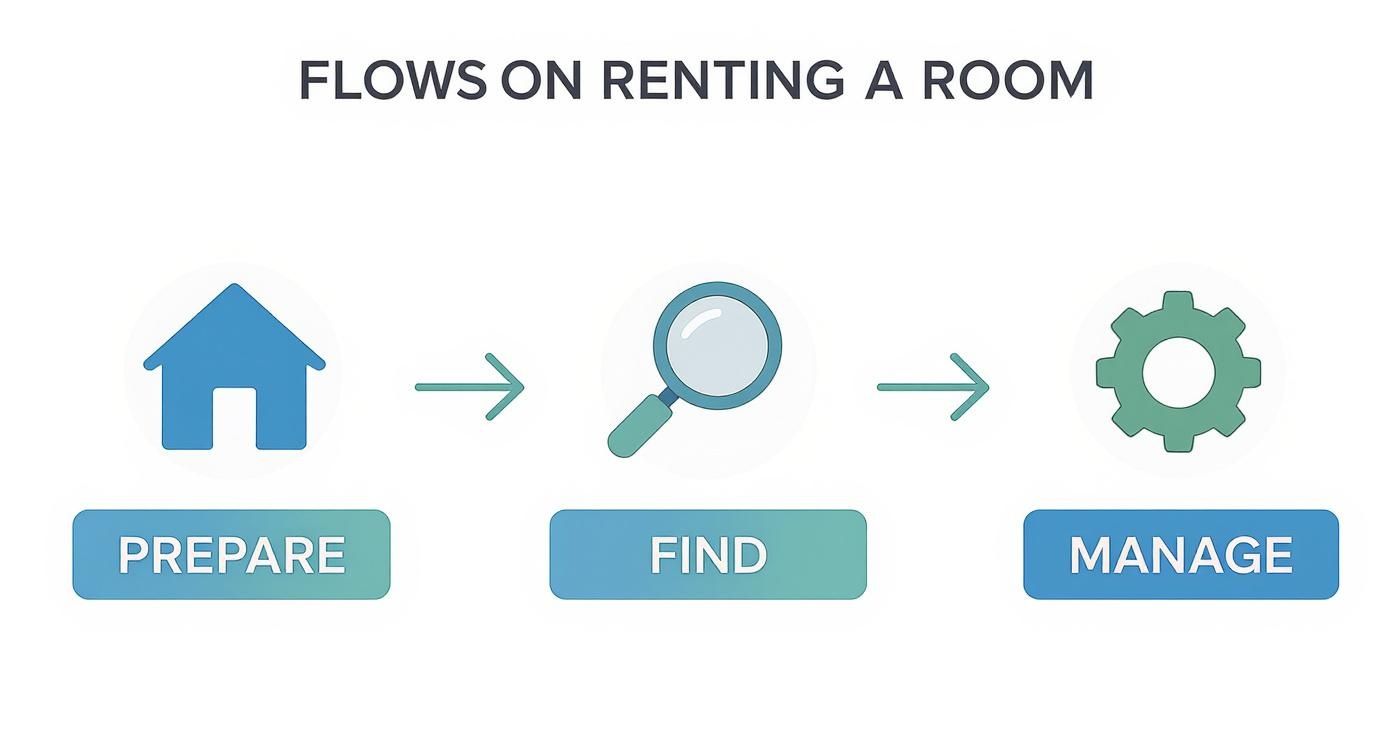
As you can see, a successful rental is a structured process, not just a series of random tasks.
The timing for this couldn't be better. The current housing market is creating a huge opportunity. Projections for 2025 show a major housing supply shortage is pushing more people toward renting. In fact, key developed economies are short an additional 6.5 million housing units, which is driving over 80% of households in these areas to rent instead of buy. You can dig into more of these trends on Hines Research.
This all adds up to a large pool of potential tenants looking for exactly what you can offer: an affordable, flexible place to live.
Prepping Your Space and Getting the Legal Stuff Right
Turning a spare room into a rental isn't just about sticking a "For Rent" sign in the window. The real work happens before you even think about posting an ad. This is where you lay the groundwork for a smooth, conflict-free tenancy.
Think of it like this: getting the room ready is what will attract a great tenant, but understanding your legal duties is what will protect you both down the line. Nailing both from the get-go is the only way to do it.
Making the Room Move-In Ready
First impressions are everything, especially when someone’s looking for a place to call home. Your goal is to show off a space that’s not just clean, but safe and inviting. This is more than just a quick tidy-up; it's about creating a blank slate for your new tenant.
A deep, thorough clean is the bare minimum. I’m talking scrubbing floors, washing windows, and getting into all the nooks and crannies like baseboards and light fixtures. If that room has been your personal storage unit, it's time to clear it out completely. Anything that isn’t for the tenant has to go.
Next, you need to decide: furnished or unfurnished? A furnished room can definitely pull in a higher rent and is a huge plus for students or professionals on short-term contracts who don’t want to haul furniture. If you go this route, make sure the pieces are in great shape. A solid bed, a clean mattress, a small desk, and some decent storage are the basics.
A quick tip from experience: A furnished room can be a huge selling point, but only if the furniture is modern and functional. Old, worn-out pieces will make the space look worse than if it were completely empty.
Finally, don't forget the basic safety checks. You have a legal responsibility to provide a habitable living space. That means:
- Testing all smoke and carbon monoxide detectors. Don't forget to swap out the batteries.
- Making sure every lock on the doors and windows works properly. Security is a big deal.
- Checking that all electrical outlets and light fixtures are safe and in good working order.
These small tasks show you’re a serious and responsible landlord, which gives your future tenant peace of mind.
Navigating the Legal Landscape of Renting
While getting the room ready is pretty straightforward, the legal side of things requires your full attention. Trust me, ignoring local laws is a recipe for disaster, potentially leading to hefty fines and nasty disputes. Every landlord—even if you're just renting out one room—has to play by the rules.
First, check with your local city or county about zoning laws. Some areas have surprising restrictions on renting out rooms in a single-family home. If you're part of a Homeowners Association (HOA), you absolutely need to read the bylaws. Many have specific rules about renters, parking, and using common areas.
The big one you can't ignore is the federal Fair Housing Act. This law makes it illegal to discriminate based on race, color, religion, sex, national origin, disability, or familial status. In simple terms, you have to apply your screening criteria evenly to every single applicant. You can't turn someone away because they have kids or for any other protected reason. There is a narrow "Mrs. Murphy" exemption for owner-occupied buildings with four or fewer units, but many state and local laws close that loophole.
Beyond the federal level, state and local laws are where the nitty-gritty details are. These rules cover everything from how much you can charge for a security deposit to the notice you have to give before entering their room. For example, rules governing landlord-tenant relationships can be wildly different from one state to another. To see just how specific these regulations can get, take a look at California's landlord-tenant law. Understanding your duties is crucial for protecting yourself; a simple mistake with a security deposit could end up costing you big. A little research now will save you a world of headaches later.
Marketing Your Room to Find a Great Tenant
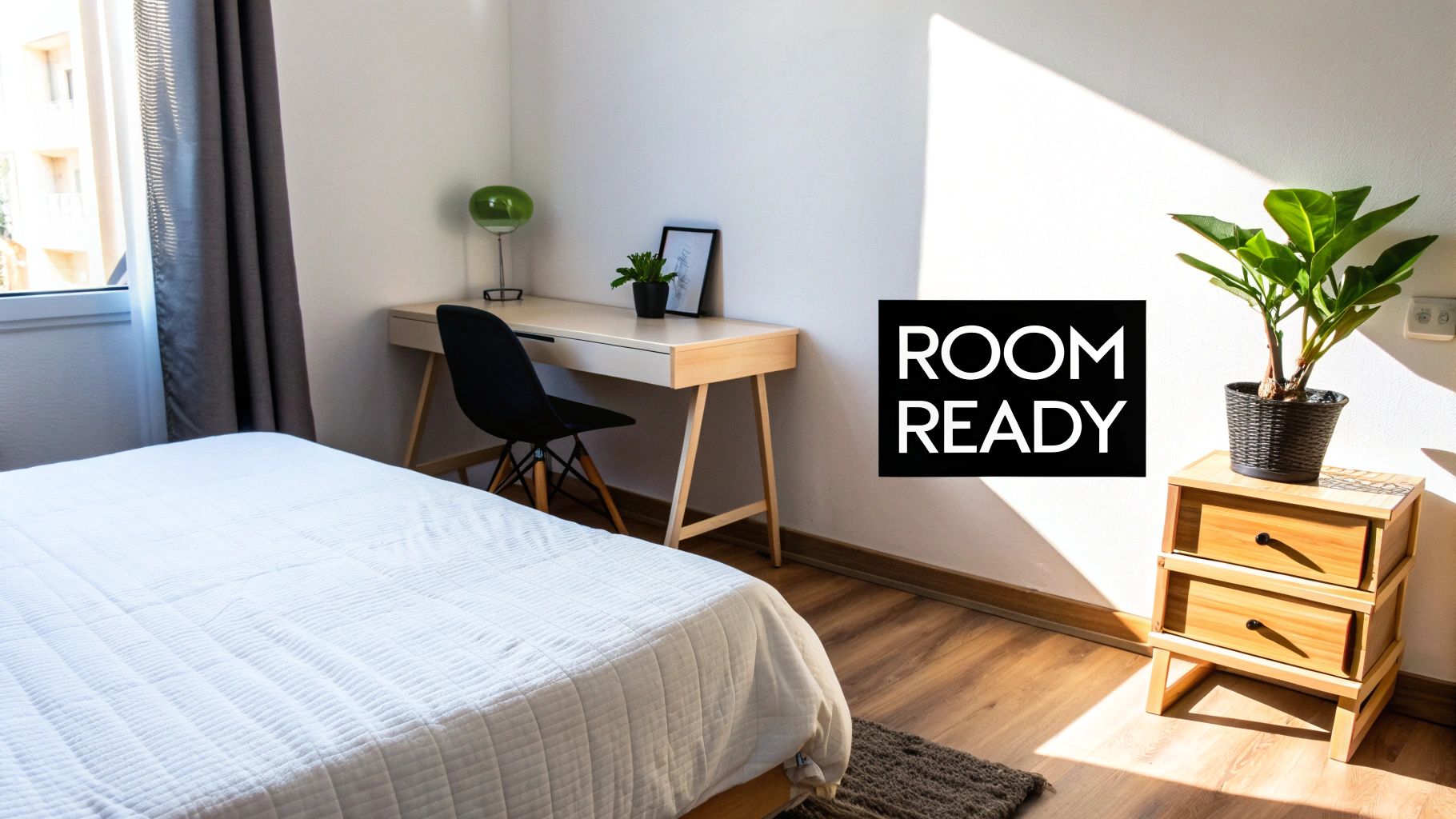
You've got a clean, safe, and legally ready room. Now comes the real challenge: finding the right person to live in it. This is where crafting a compelling rental listing becomes crucial. It's truly both an art and a science—your number one tool for attracting qualified applicants while steering away those who just aren't a good fit.
Think of your listing as the first handshake. It needs to be welcoming, honest, and packed with the right information. You're not just selling a room; you're selling a living experience. A well-written ad will save you a ton of time, set clear expectations from day one, and ultimately help you find a housemate you'll genuinely enjoy sharing your home with.
Crafting a Listing That Attracts Quality Applicants
The secret to a fantastic rental ad? Details, details, details. Vague listings lead to vague inquiries, which means you'll be stuck in an endless loop of back-and-forth questions. A thorough, transparent post shows you respect an applicant's time and that you're an organized, professional landlord.
First up, nail the headline. Ditch the generic "Room for Rent." Instead, try something like, "Sunny Room with Private Bath in Quiet Northwood Neighborhood." That one sentence immediately paints a clearer picture and makes your ad pop in a sea of listings.
In the body of your ad, you need to lay out all the essential info someone needs to make a decision. This goes way beyond the room itself—it’s about the entire living situation.
Your listing absolutely must include:
- The Rent Price: State the monthly rent clearly. No surprises.
- Security Deposit: Specify the exact amount required upfront.
- Utility Arrangements: Break down which utilities are included (like Wi-Fi and water) and which are shared (like electricity). It's a good idea to provide an estimated monthly cost for those shared bills, too.
- Lease Term: Are you looking for month-to-month, a 6-month lease, or a full year? Be specific.
- Availability Date: Let people know the earliest they can move in.
Beyond the basics, you need to tell a story about the home and the neighborhood. Mention how close you are to public transport, local parks, grocery stores, or university campuses. This kind of context helps potential tenants actually picture themselves living there.
Setting Clear Expectations with House Rules
When you're renting out a room in your own home, being upfront about house rules isn't just a good idea—it's non-negotiable. This isn't about being a drill sergeant; it's about making sure you and your future tenant are compatible and avoiding headaches down the road. Your listing is the perfect place to introduce these expectations.
Be direct but polite about your policies on things like:
- Guests: Are overnight guests okay? If so, are there limits on how often?
- Pets: Is your home pet-friendly? If so, be specific about size or type if you have any restrictions.
- Smoking: Make it crystal clear if smoking is not allowed anywhere on the property.
- Shared Spaces: A quick line about expectations for keeping the kitchen and living room tidy goes a long way.
Including these details is a game-changer because it helps applicants self-screen. The person with the Great Dane or the one who loves hosting friends every weekend will know to keep scrolling, saving everyone a lot of time.
A detailed listing acts as your first filter. By being transparent about rules and expectations, you empower the right people to apply and gently discourage those who wouldn't be a good match, long before you ever schedule a viewing.
Showcasing Your Space with Great Photos
In an online world, your photos do most of the talking. It doesn't matter how amazing your description is if the pictures are grainy, dark, or show a cluttered room. You don't need to be a professional photographer, but a little effort here makes a world of difference.
Before you even think about snapping a picture, clean and declutter the room completely. Open the curtains and let in as much natural light as possible—it instantly makes a space feel bigger and more inviting. Take shots from several angles, including one from the doorway to give a real sense of the layout. And don't forget to include photos of the shared spaces people will be using, like the kitchen, living room, and any outdoor areas.
For a listing that truly stands out and attracts top-tier tenants, consider investing in professional real estate photography to showcase your space at its absolute best.
It also pays to know what renters are looking for. Right now, the demand for certain features is soaring. Over 40% of tenants are searching for pet-friendly options, and another 40% are prioritizing affordability. If you can highlight these aspects, your listing will be far more competitive. Got energy-efficient appliances? That's another fantastic selling point to mention.
Screening Applicants To Find The Right Fit

Once your rental listing is live, the inquiries will start rolling in. This next phase is, without a doubt, the most important part of renting a room successfully.
Choosing the right person to share your home with goes far beyond simply finding someone who can pay on time. It's about ensuring your safety, maintaining a comfortable living environment, and protecting your peace of mind.
A thorough, consistent screening process is your best defense against future conflicts and financial headaches. By setting up a clear system from the start, you can evaluate every applicant fairly and legally, which dramatically increases your odds of finding a great housemate. This isn't a step where you can afford to cut corners or just go with a gut feeling.
Creating A Standard Rental Application
Your first tool in this process is a solid rental application. This document formalizes the inquiry and gives you the essential, consistent information you need from every single person who is seriously interested. A standardized form also shows you're a professional and helps you comply with fair housing laws by asking everyone the same questions.
Your application should be straightforward but comprehensive. It’s the foundation for all your background checks and reference calls later on.
Key sections to include are:
- Personal Information: Full legal name, phone number, and email.
- Housing History: Current and previous addresses, landlord contact information, and reasons for moving.
- Employment and Income: Current employer, job title, supervisor’s contact info, and monthly income.
- References: At least one personal and one professional reference (who isn't a relative).
- Authorization: A clear statement authorizing you to run background, credit, and eviction history checks.
Getting this authorization signed is non-negotiable. It protects you legally and confirms the applicant's consent before you move forward.
Conducting Showings And Assessing Compatibility
The in-person showing is so much more than a quick tour; it's your first real opportunity to see if you'll be compatible. Since you’ll be sharing your actual home, this step is just as critical as verifying their income.
Pay attention to how they interact with you and the space. Are they respectful and punctual? Do they seem genuinely interested?
Remember, this is a two-way street. It's their chance to see if the living situation is a good fit for them, too. Be prepared to answer questions honestly about the neighborhood, shared spaces, and your general lifestyle. Use this time to casually bring up the house rules you mentioned in your listing.
For instance, you could say, "I'm usually pretty quiet during the week for work, so I try to keep things low-key after 10 PM. How does that fit with your schedule?" This conversational approach can reveal a lot about a person's habits without feeling like an interrogation.
The Nuts And Bolts Of Background Checks
Once you have a promising applicant who has seen the room and filled out an application, it's time for the formal verification. Never, ever skip this step. An application is just a piece of paper until you've confirmed the information on it is true.
Before diving into the checks, it helps to have a clear idea of what you're looking for. This checklist breaks down the key components of a thorough screening process.
Tenant Screening Checklist
| Screening Step | What to Look For | Why It's Important |
|---|---|---|
| Credit Report | A healthy credit score, consistent payment history, and manageable debt-to-income ratio. | Shows financial responsibility and the likelihood they'll pay rent on time. |
| Eviction History | A clean record with no prior evictions or judgments from previous landlords. | Past evictions are a major red flag for future rent payment issues and potential property damage. |
| Criminal Background | Any history of convictions that could pose a threat to your safety or property. | Helps ensure a safe living environment for you and your family. |
| Income Verification | Stable employment and an income that is at least three times the monthly rent. | Confirms they can comfortably afford the rent and other living expenses. |
| Reference Checks | Positive feedback from previous landlords and employers. | Provides third-party validation of their character, reliability, and rental history. |
Following these steps for every qualified applicant ensures you're being fair and thorough.
Your screening should cover three critical areas:
- Credit and Eviction History: A credit report reveals their financial responsibility. An eviction check is equally crucial, as a history here is a serious warning sign.
- Criminal Background Check: This gives you insight into an applicant’s history, helping you keep your home and family safe.
- Income and Employment Verification: Always call the employer listed on the application. A common rule of thumb is to look for an income that is at least three times the monthly rent.
Many reputable online services can bundle these checks for you, and the fee is typically paid by the applicant. This makes the process simple and cost-effective. For a deeper look, you can find a complete walkthrough in our comprehensive guide on how to screen tenants.
A consistent screening process applied to every applicant is your best protection. It not only helps you find a reliable tenant but also ensures you are treating everyone fairly and complying with the Fair Housing Act.
Ultimately, screening is about gathering concrete data to support your decision. You’re looking for a pattern of responsibility—someone who pays their bills on time, has a stable income, and gets glowing reviews from past landlords. By being methodical, you can confidently choose someone who isn't just a source of income, but a respectful and compatible person to share your home with.
Drafting a Solid Lease Agreement
Once you’ve found the perfect person to share your home with, it's time to make it official. A handshake and a verbal agreement simply won’t cut it when you’re renting a room. A strong, written lease is your single best tool for protecting yourself, your property, and the positive relationship you're hoping to build.
Think of the lease as the official rulebook for your shared home. It gets rid of any gray areas by clearly defining everyone’s rights and responsibilities. When expectations are crystal clear from day one, you drastically lower the odds of future arguments over money, guests, or quiet hours.
Fixed-Term vs. Month-to-Month Leases
One of the first big decisions is the lease duration. Each option comes with its own trade-offs in stability and flexibility, so the right choice really boils down to your personal situation and what you're trying to achieve.
A fixed-term lease is set for a specific period, usually six months or a full year. This is great for stability, as the rent and rules are locked in for both of you. It's an excellent choice if you’re looking for a predictable income stream and you feel really confident about the tenant you’ve chosen.
On the other hand, a month-to-month lease offers maximum wiggle room. This agreement just renews automatically each month and can be ended by either of you with proper written notice (typically 30 days, but always double-check your local laws). This is the way to go if you’re not sure about your own long-term plans or if you want a trial period to make sure you and your new housemate are a good fit.
A huge part of a solid lease agreement involves understanding real estate contracts to ensure all the legal bases are covered. A well-written lease is more than just a piece of paper; it’s a legally enforceable document that lays out the entire foundation of the tenancy.
Essential Clauses Your Agreement Must Include
A comprehensive lease leaves nothing up for debate. While templates are a decent starting point, you absolutely must customize the document to reflect your specific house rules and local landlord-tenant laws. For a solid foundation, check out this customizable rental lease agreement template that you can adapt to your needs.
Make sure your lease always covers these critical areas:
- Rent and Security Deposit: State the monthly rent amount, the exact due date (e.g., the 1st of every month), and how they can pay. Detail any late fees, including the grace period and the fee amount. Also, specify the security deposit amount and the conditions for its full return.
- Utility Responsibilities: Be crystal clear about who pays for what. For example: "Landlord covers water and Wi-Fi. Tenant is responsible for 50% of the monthly electricity and gas bill, payable to the Landlord with rent." This nips any confusion in the bud before the first bills even arrive.
- House Rules and Policies: This is where you put all those expectations from your listing into writing. Include specific rules on quiet hours (e.g., 10 PM to 7 AM on weeknights), overnight guests, smoking or vaping, and who cleans which shared spaces.
- Access and Maintenance: Outline how repairs will be handled and your right to enter the tenant's room. Be sure to specify the notice period required by your state's laws, which is usually 24 hours.
Putting these specific terms in writing is vital. Consider this: some regional forecasts show rent increases between 3% and 5% for 2025 and 2026, driven by economic shifts. A fixed-term lease locks in today's rate, offering predictability. A month-to-month lease, however, would let you adjust the rent with proper notice to keep pace with the market.
By drafting a thorough and clear lease, you’re not just protecting your investment—you’re setting the stage for a respectful and peaceful living situation. It’s the professional way to rent a room and the smartest move you can make as a live-in landlord.
Keeping Things Running Smoothly: Managing Your Rental and Tenant
Alright, the lease is signed, the boxes are in, and your new tenant is officially moved in. Now your job description changes from "applicant screener" to "rental manager." This is where having a solid process and keeping the lines of communication wide open really pays off. Remember, you're not just their landlord—you're their housemate, too.
First things first: the move-in inspection. Before a single item gets unpacked, you need to walk through the room together. Grab a move-in checklist and document the condition of everything—walls, floors, windows, any furniture you’ve provided. Take a ton of photos and videos from different angles. This gives you an undisputed baseline, protecting both of you when it’s time to talk about the security deposit at move-out.
Creating Day-to-Day Harmony
Let's talk about the big one: rent. Using a digital payment app is usually the simplest route for everyone. It creates a clean record, and you can even set up automatic payments. Be firm but fair with your late fee policy, just like you spelled out in the lease. A quick, friendly reminder a day or two before the due date can often prevent late payments from ever becoming a thing.
Beyond the money, setting clear boundaries is absolutely vital for a peaceful house-share. You're in a pretty unique situation, wearing two hats at once. The key is to nip small issues in the bud before they have a chance to grow into major frustrations.
The secret to a successful live-in landlord setup is clear, respectful communication. Trust me, it’s far better to have a slightly awkward five-minute chat about kitchen cleanup than to let resentment simmer for months.
For instance, if your tenant consistently leaves a mountain of dishes in the sink, don't just stew over it. A simple, non-confrontational comment usually does the trick: "Hey, just a quick reminder about our agreement to wash dishes right after using them. It really helps keep the kitchen clear for both of us."
Handling Repairs and Wrapping Up the Tenancy
As the landlord, all maintenance and repairs fall on your shoulders. When a tenant flags an issue, whether it's a leaky faucet or a flickering light, jump on it. A fast response not only shows you’re a responsible landlord but also builds a ton of goodwill, which is priceless when you live under the same roof.
This whole relationship really boils down to a few key practices:
- Be Proactive: Don't wait for things to break. A casual "everything going okay in the room?" every few weeks can help you catch potential problems early.
- Respect Their Space: You must always give the legally required notice (usually 24 hours) before you need to enter their private room for repairs or an inspection. No exceptions.
- Document Everything: Keep a written trail of all important conversations, from repair requests to formal notices. A quick email or text creates a timestamped record that can save you headaches later.
Eventually, all tenancies come to an end. Whether the fixed-term lease is up or it's time to end a month-to-month agreement, you have to handle it by the book. Both you and the tenant must give proper written notice as detailed in your lease and required by your local laws.
Once they're out, it’s time for the move-out inspection. Compare the room’s current state to your original move-in photos. You can deduct from the security deposit for any damages that go beyond normal wear and tear, but you have to provide an itemized list of every deduction. By managing the entire process with professionalism from start to finish, you'll set yourself up for a positive and profitable room rental experience.
Got Questions About Renting Out a Room?

Even with the best plan in place, you're bound to have a few questions pop up when you decide to rent a room. It’s totally normal. Let's walk through some of the most common things that first-time, live-in landlords wonder about.
How Much Rent Should I Charge?
This is the big one, right? The best way to start is by doing a little homework. Hop on sites like Zillow or even Facebook Marketplace and see what similar rooms are going for in your specific neighborhood.
Your asking price should really depend on what you're offering. Think about the room's size, whether it has its own bathroom or shares one, and what perks are included. Are utilities covered? Is there a dedicated parking spot? Can they use the washer and dryer? You want to land on a price that feels fair for the value you're providing and is competitive with what's already out there.
Do I Really Have to Report This on My Taxes?
Yes, absolutely. The IRS considers this income, so you have to report every penny. But here's the good news: you can also deduct a whole bunch of your rental-related expenses. We're talking about a portion of your mortgage interest, property taxes, home insurance, utilities, and any money you spend on repairs.
My Two Cents: Seriously, talk to a tax professional. They'll make sure you're following all the rules and, more importantly, help you find every single deduction you're entitled to. It can turn a tax headache into a real financial benefit.
How Should I Handle the Security Deposit?
Before you do anything else, you need to look up your local and state laws. They are very specific about this stuff.
These laws will tell you the maximum amount you can legally charge for a deposit and exactly how you need to hold onto that money (often in a separate bank account). And always, always give your new tenant a written receipt for their deposit. It protects both of you.


