

You've got the keys in your hand, a vacant house in Fresno or Clovis, and a question that gets heavy fast. What now? Not in a vague sense. In a real sense. Who handles repairs, how do you price it, where do you advertise, what can you say to applicants, what has to be documented, and when does doing it yourself stop saving money?
That's how property management operates in Central California. It isn't one task. It's an operating system for a rental asset.
A lot of owners start with a part-time-landlord mindset. They think in isolated chores: post the listing, sign a lease, collect rent, call a plumber when something breaks. The problem is that rentals don't reward disconnected effort. They reward repeatable decisions, clean documentation, and good timing. In Fresno, where summer HVAC calls can hit hard and vendor scheduling matters, that gap shows up quickly.
Your Guide to Managing a Central Valley Rental Property
Property management is a business, not a side errand. That isn't just opinion. In the U.S., property management industry revenue is estimated at $119.1 billion in 2024 and projected to reach $123.502 billion in 2025 according to iPropertyManagement's industry statistics. That scale tells you what the job has become: a professional service built around operations, tenant relations, and portfolio performance.
If you're new to this, start by changing the frame. Don't ask, “What do I need to do this month?” Ask, “What system will I use every month?” That single shift clears up most of the confusion.
Think in workflows, not errands
A Fresno rental usually lives or dies on a few repeatable workflows:
- Leasing workflow. Pricing, photos, listing copy, showing coordination, application handling.
- Screening workflow. Written criteria, consistent review, documentation, compliant approvals and denials.
- Move-in workflow. Lease signing, funds collection, condition photos, utility setup expectations, key delivery.
- Operations workflow. Rent collection, maintenance intake, vendor dispatch, notices, renewal timing.
- Accounting workflow. Owner statements, repair records, income tracking, reserve planning.
When owners struggle, it's usually because one or more of those workflows only exists in their head.
Practical rule: If a task happens more than once, put it in a process. If money is involved, document it.
The Central Valley adds its own pressure points. Heat stresses HVAC systems. Irrigation issues can turn curb appeal into dead landscaping quickly. Older homes may have more deferred maintenance hiding behind fresh paint. You need a system that works when the property is quiet and when it suddenly isn't.
A good starting point is understanding the full scope of the role. This overview of what property management includes is useful if you want to see the difference between basic landlord tasks and a complete management operation.
Preparing Your Fresno Property for Top-Dollar Rent
“Clean enough” doesn't command top rent. Rent-ready does. In Fresno, tenants notice condition fast because they're comparing your home to newer rentals, refreshed flips, and well-presented homes that photograph better than they show in person. If your property feels tired, it gets filtered out before a showing is ever booked.
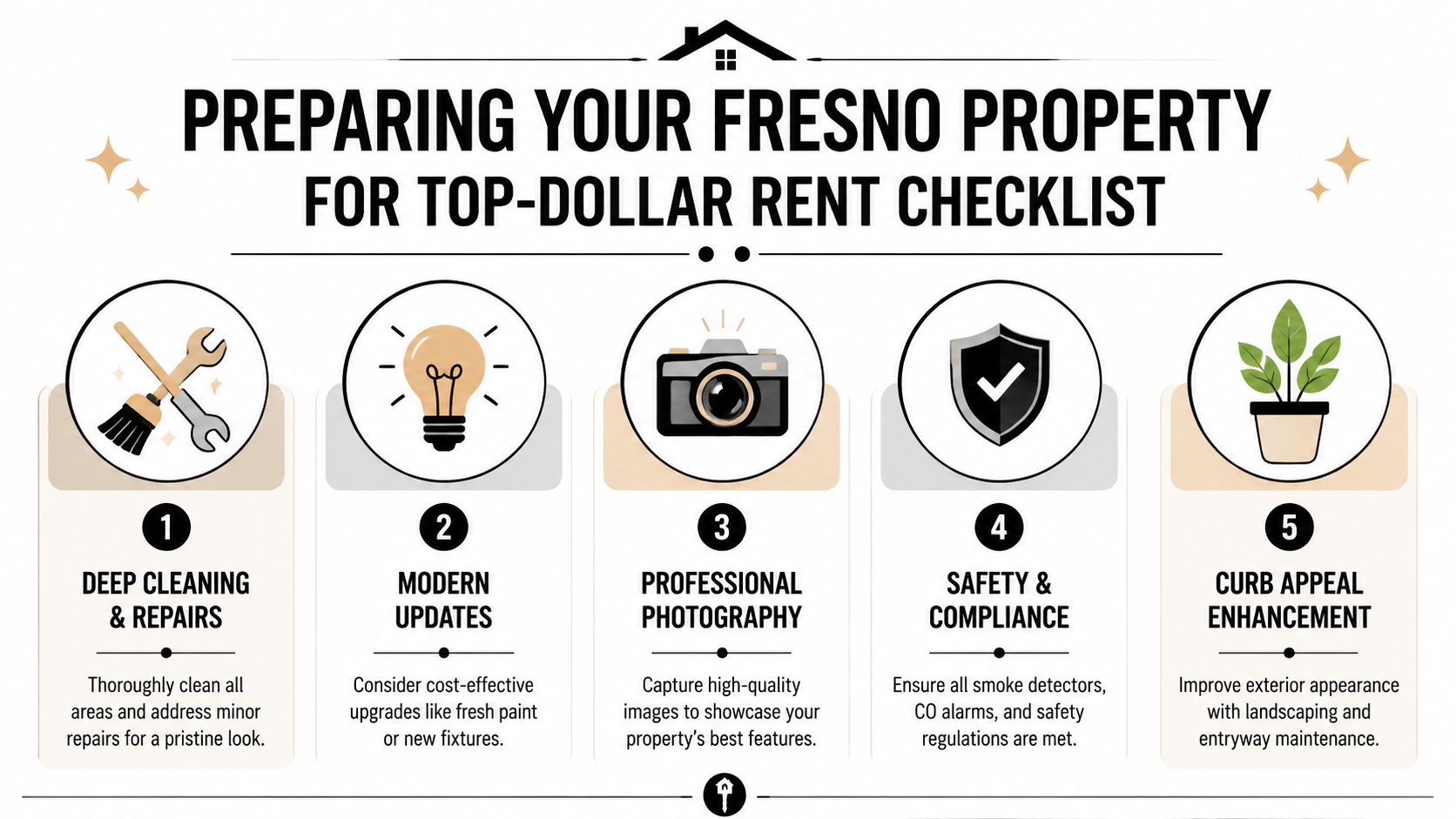
Start with safety and compliance
Before paint colors and landscaping, handle the items that affect habitability, liability, and move-in readiness.
Use a simple pre-leasing checklist:
- Smoke and carbon monoxide alarms. Confirm they're installed correctly and functioning.
- Water heater strapping and basic safety items. Make sure obvious California safety requirements are covered.
- Locks, latches, and windows. Test every exterior lock, window operation, and sliding door function.
- Electrical and plumbing basics. Check outlets, light switches, drains, leaks under sinks, and running toilets.
- HVAC performance. In Fresno, weak cooling isn't a small issue. It becomes a leasing problem and then a tenant-retention problem.
A property can look good online and still fail in person if a bedroom window sticks or the air conditioning struggles in the afternoon.
Spend on what tenants see first
Most owners overspend in the wrong places. They put money into upgrades that feel expensive instead of upgrades that improve leasing. For many Central Valley rentals, the strongest practical improvements are still the basics:
- Fresh neutral paint that brightens the home and makes photos cleaner
- Updated light fixtures where old brass or builder-grade pieces date the property
- Clean flooring decisions, which might mean replacement in one room and professional cleaning in another
- Front-yard cleanup so the home looks occupied, maintained, and easy to care for
- Sharp entry presentation, including the front door, porch light, house numbers, and visible hardware
These changes don't just help with appearance. They signal how the property has been maintained.
Here's a useful way to think about improvements:
| Upgrade type | Usually worth it | Usually not worth it before leasing |
|---|---|---|
| Paint | Yes, if walls are marked or colors are dated | Designer color experiments |
| Lighting | Yes, if fixtures are obviously old | High-end statement fixtures |
| Landscaping | Yes, for basic cleanup and irrigation function | Complex, high-maintenance redesign |
| Kitchen updates | Yes, if hardware, paint, or lighting improves it | Full remodel unless the kitchen is dragging the whole property down |
| Flooring | Yes, if damaged or heavily worn | Replacing serviceable flooring just to chase trends |
After prep work is done, study how an experienced agent walks a property before photos and showings. This video is a useful visual reference.
Rent-ready means show-ready every day
A Fresno property should be able to handle a same-day showing without apology. That means no lingering contractor debris, no missing switch plates, no dead plants by the entry, and no “we'll fix that after move-in” promises. Those promises usually cost more later.
Tenants often decide whether a home feels well-managed before they ever read the lease.
Marketing Your Rental to Attract Quality Tenants
Bad marketing creates bad screening conditions. That's the part many landlords miss. If your listing only attracts a thin applicant pool, you don't get to be selective. You end up choosing from whoever happened to tolerate poor photos, vague copy, or delayed responses.
Professional marketing solves a financial problem first. According to one industry summary, more than 73% of property managers handle vacancy advertising and lease facilitation, and 48% identified growth as a top priority, which ties directly to reducing vacancy through better marketing and leasing, as summarized by NGB Management's property management statistics.
What amateur listings get wrong
A weak rental listing usually has the same issues:
- Phone photos taken too low or too close
- No clear lead image
- A description that lists rooms but sells nothing
- No mention of commute value, school proximity, or neighborhood convenience
- Slow reply times after inquiry
In Fresno and Clovis, tenants don't just compare rent. They compare ease. The listing that answers questions early and looks organized gets more serious inquiry.
What works in the Central Valley
Strong listings do three things well.
First, they use professional photography. Clean verticals, bright natural light, and a logical photo order matter because most applicants decide whether to inquire in seconds. If the first image is a dark living room or a crooked garage shot, you lose attention before the kitchen or backyard ever gets seen.
Second, they write descriptions like a leasing professional, not a tax assessor. Mention the details that affect daily life. Shade in the backyard. Indoor laundry. A practical floor plan for roommates or a family. Garage storage. Proximity to Clovis jobs, freeway access, or local shopping. Keep it factual, but useful.
Third, they syndicate broadly and respond quickly. The right platform mix depends on the property, but the principle stays the same. Get in front of enough qualified renters to create options.
A vacant home is expensive. A poorly marketed vacant home is worse because it drags out the most preventable part of the turnover cycle.
The listing should pre-screen for you
Your ad can reduce wasted showings if it clearly states the basics up front:
- Monthly rent and deposit structure
- Pet policy
- Key property features
- Occupancy expectations where appropriate and lawful
- Showing instructions
- Application process
That doesn't replace screening. It improves the quality of the pool before screening starts. That's how good marketing supports the rest of how to property management. It doesn't just fill the calendar. It improves the odds of a cleaner placement.
Ironclad Tenant Screening and Compliant Leases
Tenant screening should feel boring. That's a good sign. If screening feels intuitive, emotional, or flexible depending on the person in front of you, you're taking on avoidable risk.
The safest approach is a written standard applied the same way every time. That matters for business reasons and legal reasons. A technically sound workflow starts with data unification and standardized core rules such as lease approvals, because consistency across applicants improves decision quality and reduces legal risk, as explained in Digiscorp's property management data guidance.
Build one screening standard and stick to it
Every applicant should move through the same checkpoints in the same order. A practical screening file usually includes:
- Completed application with full identifying information
- Credit review for payment patterns and open obligations
- Background check within the scope allowed by law and your policy
- Eviction history review
- Income verification
- Employment verification
- Landlord reference calls
- Documentation of final decision
The mistake I see most often is owners changing standards midstream. One applicant gets a strict review. Another gets extra flexibility because they “seem nice” or need to move quickly. That's where screening breaks down.
Keep Fair Housing and California compliance front and center
DIY management quickly becomes expensive. In California, the lease-up process has to be organized and controlled. Your criteria should be lawful, written, and consistently applied. Your communications should stay professional and documented. Your denials should follow the same process every time.
If you want a practical reference point for a tighter process, this guide on how to screen tenants lays out the operational side in a straightforward way.
Use legally vetted lease documents as well. Many managers rely on California Association of Realtors forms because they're built for California practice and updated as rules change. That matters. A lease pulled from a generic template site might look complete, but if it's outdated, missing disclosures, or poorly drafted, it won't help much when a dispute starts.
Separate approval from negotiation
Once you decide the applicant qualifies, then you move to lease execution. Don't negotiate basic screening standards inside the approval process.
A clean approval workflow looks like this:
- Application reviewed against written criteria
- Supporting documents verified
- Decision documented
- Lease package prepared
- Funds collected in the required form
- Move-in date confirmed
- Condition documentation completed before key handoff
The more standardized your approval process is, the less likely you are to make inconsistent decisions under pressure.
In Fresno, where many owners manage one or two homes on the side, screening discipline is often the difference between a stable rental and a year spent cleaning up a preventable mistake.
Streamlining Rent Collection and Financial Reporting
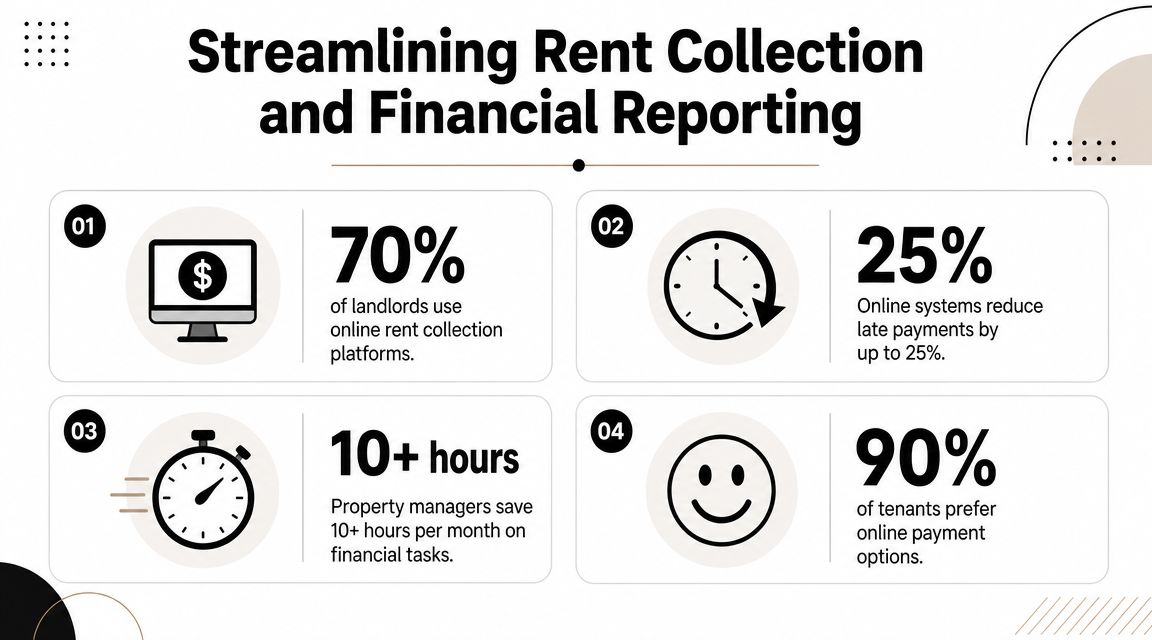
Most rent problems don't start with a bad tenant. They start with a weak system. If rent collection depends on reminders, screenshots, handwritten notes, or “I'll check with them tomorrow,” your process is already leaking money and time.
The fix is simple in concept. Use one payment channel, one documented policy, and one ledger that shows exactly what happened each month.
Tight collection systems protect income
Online payment portals work because they remove ambiguity. The tenant knows where to pay. The manager knows when payment arrived. The owner has a record. That beats text-message confirmations and manual deposit chasing every time.
Your written policy should cover:
- Due date
- Accepted payment method
- Late fee terms
- What happens after nonpayment
- How partial payments are handled
- Who communicates with the tenant and when
Consistency matters more than toughness. A rent policy that gets applied every month is stronger than a strict policy that changes depending on who calls.
Small pricing errors become large asset problems
Precise financial management matters because small misses repeat. One industry example notes that undercharging by $45 per month across 100 units equals $54,000 in annual lost income, which can translate to about $1.35M in lost property value at a 4% cap rate, according to Kolena's property management automation analysis.
Even if your portfolio is smaller, the logic holds. A rent amount that was never updated, recurring late fees that are never enforced, or maintenance charges that aren't tracked properly can distort your return more than owners realize.
Reporting should answer owner questions fast
Good reporting doesn't bury you in categories. It should let you answer basic questions quickly:
| Question | Your report should show |
|---|---|
| Did rent arrive on time? | Payment date and status |
| What did the property cost this month? | Itemized repairs and operating expenses |
| Are there repeat maintenance issues? | Vendor notes and repair history |
| What is the owner actually taking home? | Clear net proceeds after expenses |
If you want a cleaner process for the collection side, this guide on how to collect rent from tenants is a solid operational reference.
For owners comparing software, bookkeepers, or management support, look for systems that produce monthly statements without manual assembly. That's also the lane where a provider like Edinhart Realty and Property Management can fit for owners who want documented rent collection, accounting statements, and day-to-day administration handled under one process.
Mastering Maintenance Workflows and Vendor Relations
It is 4:30 p.m. on a July Friday in Fresno. A tenant reports the air conditioner is blowing warm air. If you do not have a process, you spend the evening texting contractors, guessing at pricing, and hoping someone can get there before the weekend heat turns into a habitability problem. That is not just an operations issue. It is a financial one.
Maintenance controls three costs at once: repair spend, vacancy risk, and legal exposure. In the Central Valley, delays get expensive fast. HVAC calls in peak summer are harder to schedule, plumbing issues in older Fresno neighborhoods can spread into drywall and flooring, and a poorly handled repair often shows up later as a lease dispute or a move-out notice.
Build a request-to-resolution process that protects margin
A good system starts before the first work order comes in. Every request needs one intake channel, one urgency standard, and one record that shows what was reported, who responded, what was approved, and when the job was closed.
Use a workflow like this:
- Tenant submits request with photos if possible
- Manager classifies it as emergency, urgent, or routine
- Tenant gets a response with next steps and timing
- Vendor is assigned based on trade, availability, and approval limits
- Access is coordinated and documented
- Completion is confirmed with notes or photos
- Invoice is reviewed, coded, and saved to the property history
That last step matters more than many owners expect. A saved repair history helps you spot repeat drain backups, recurring HVAC service calls, and appliances that are costing more to patch than replace. It also gives you a clean paper trail if an owner asks why a $180 fix turned into an $850 invoice after the vendor opened the wall.
Track a few numbers that change decisions
You do not need a dashboard packed with vanity metrics. You need numbers that help you decide whether to repair, replace, renegotiate, or change vendors. The National Apartment Association advises operators to track service request volume, completion time, and resident feedback because those measures affect retention and operating performance in practical ways (National Apartment Association maintenance management guidance).
For a Fresno landlord, the useful questions are straightforward:
- How fast was the first response?
- How many days did the repair stay open?
- Did the tenant follow up more than once?
- Did the same issue return within the next few months?
- Did the final invoice match the original approval range?
Those answers shape real money decisions. If one vendor is cheap on the first visit but causes repeat calls, that vendor is not saving you money. If an aging condenser needs two emergency visits in one summer, replacement may be the better financial choice even if the upfront bill hurts.
Vendor relations are a local advantage, not a back-office detail
In Fresno, Madera, Clovis, and the surrounding Central Valley market, your vendor bench is part of your operating model. Good plumbers and HVAC techs are not interchangeable during peak season. Neither are turnover crews when you are trying to get a unit rent-ready between leases.
I look for three things in a vendor list: licensed and insured specialists where the trade requires it, clear communication, and consistent arrival times. Price matters, but the lowest bid often loses on the second invoice. A painter who shows up three days late can cost more in vacancy than you saved on labor. A handyman who handles a disposal issue but misses a shutoff leak can create a bigger plumbing bill next week.
Set approval thresholds before work starts. For example, routine repairs under a set dollar amount can move without delay, while larger jobs need owner signoff with photos and a scope note. That keeps emergencies moving and prevents the constant back-and-forth that slows down ordinary repairs.
For owners who want an outside reference on plumbing coordination in shared buildings, this expert guide for Sydney strata managers is useful for process reasons. The local laws are different, but the operating lesson is the same: document recurring issues, assign responsibility clearly, and fix small leaks before they become restoration projects.
Preventive planning usually beats emergency spending. If a property has an older HVAC system, brittle shutoff valves, or a water heater near the end of its service life, budget for replacement on your schedule instead of paying premium rates during a crisis. That is how experienced owners protect cash flow in Central California.
Choosing Your Management Style DIY vs Professional
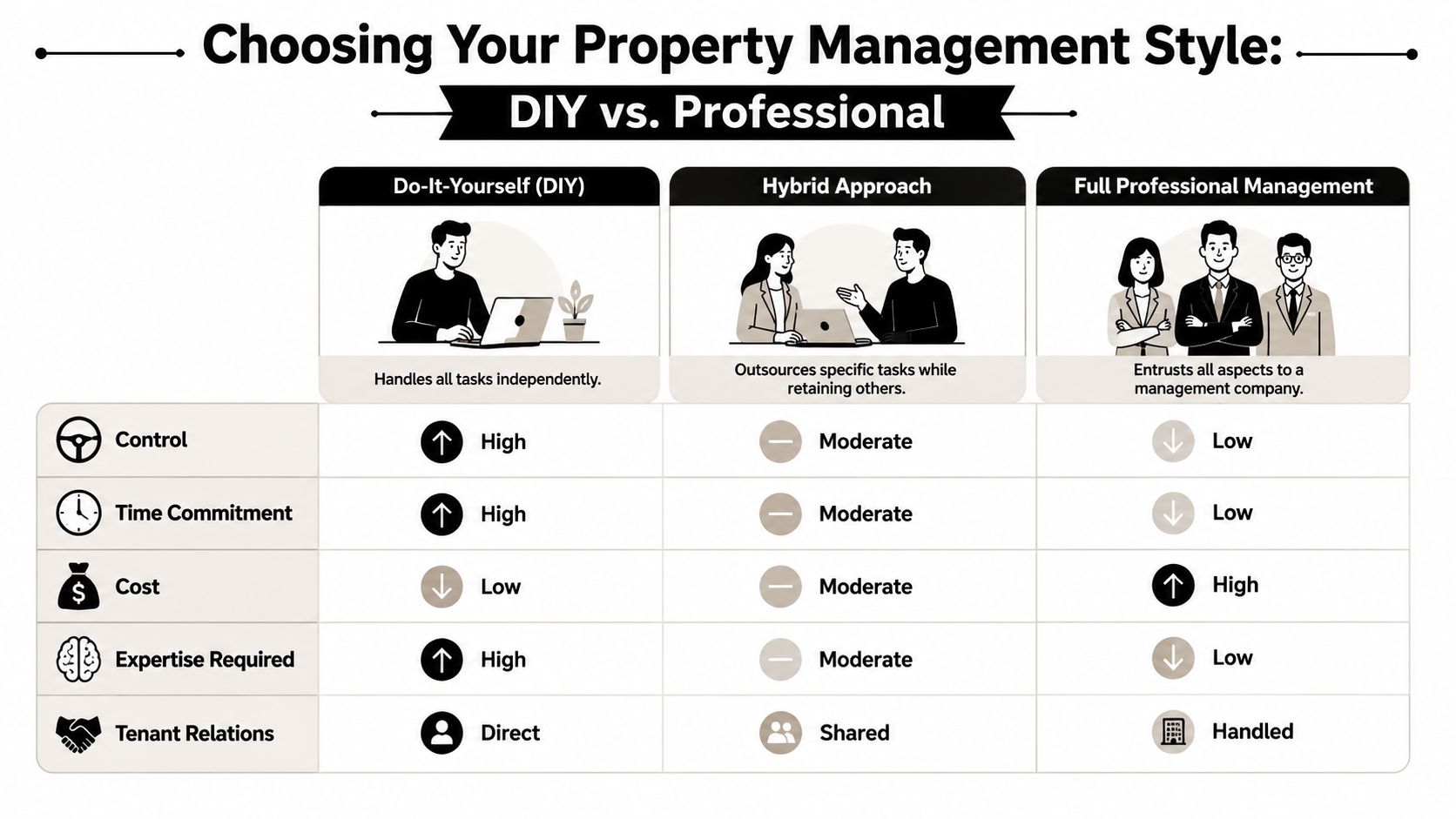
Most owners don't need help understanding tasks. They need help deciding who should own which tasks. That's the core financial question.
The most useful way to compare your options is not by fee alone. It's by net return after vacancy exposure, maintenance overhead, compliance risk, and your own time cost. As Rental Ready's discussion of property management ROI puts it, the key question is not what tasks a manager does, but which tasks create measurable ROI in your specific market.
A practical side-by-side comparison
| Model | Best fit for | Main advantage | Main risk |
|---|---|---|---|
| DIY | Local owner with time, systems, and compliance discipline | Maximum control | Inconsistent execution, slower response, legal mistakes |
| Placement-only | Owner who wants help leasing but will manage operations | Better marketing and screening without monthly delegation | Ongoing maintenance and rent issues still sit on the owner |
| Full-service | Owner who values systems, documentation, and less daily involvement | Operations handled under one process | Less direct control over daily decisions |
When DIY still makes sense
DIY can work well if you're local, available, organized, and comfortable handling difficult conversations. It also helps if the property is newer, in solid condition, and unlikely to generate constant repair coordination. If you already have good vendors, a payment system, and a documented screening process, DIY may be financially rational.
Where DIY usually weakens is not effort. It's consistency. Owners get busy. Standards drift. Follow-up slows down. Notices get delayed. A preventable maintenance issue sits for too long because the owner is at work.
When placement-only is the smart middle ground
Placement-only makes sense when leasing is your weakest link. Maybe you don't want to write listings, field inquiry volume, verify applicants, or draft a compliant lease package. But once the tenant is placed, you're comfortable running the property.
That model can be especially practical for Fresno owners who live nearby and want to keep direct control over repairs and rent enforcement while still improving the quality of the initial placement.
When full-service tends to win on ROI
Full-service often makes sense when one or more of these are true:
- You live out of area
- You own multiple units
- You don't want tenant calls
- The property is older or maintenance-heavy
- You want tighter accounting and documentation
- You want fewer compliance mistakes during leasing and renewals
The cheapest management choice on paper is not always the highest-return choice in practice.
If self-management leads to longer vacancy, weaker screening, slower repairs, or poor rent enforcement, the savings can disappear quickly. In Central California, where repair coordination and local vendor responsiveness matter, the value of structure is often higher than first-time landlords expect.
The right answer depends on your property, your time, your tolerance for interruption, and how strong your current systems really are.
If you want help deciding between placement-only and full-service support in Fresno, Clovis, Friant, or the surrounding Central California market, Edinhart Realty and Property Management offers both models. That gives owners a practical way to match the service level to the property, instead of forcing every rental into the same management approach.


