

Before you even float the idea of a rent increase, you need to do your homework. Jumping the gun without the right preparation can backfire, leading to tense tenant relationships, long vacancies, or even legal headaches.
A successful rent increase isn't just about demanding more money; it's about making a fair market adjustment backed by solid data. This prep work is the difference between a smooth business transaction and a messy, amateurish conflict.
Setting the Stage for a Successful Rent Increase
The goal here is to build an undeniable case for your new rental rate. When you can show your tenant that the new rent is right in line with the neighborhood and completely above board legally, the conversation changes. It's no longer an emotional plea, but a simple business discussion based on facts. That’s how you get buy-in.

Conduct a Thorough Market Analysis
First things first, you need to run the comps. This isn't a 30-second peek at Zillow. A proper comparative market analysis (CMA) means digging into what truly similar properties are renting for in your immediate area, right now.
Get specific and be objective. Here's what to zero in on:
- Apples to Apples: Look for rentals with the same number of bedrooms and baths, similar square footage, and comparable condition. Your updated 3-bedroom single-family home isn’t in the same league as a dated 2-bedroom apartment down the street.
- Hyper-Local Focus: Location is everything. Restrict your search to your specific neighborhood, or even just a few blocks. Rent prices can swing wildly from one side of a major road to the other.
- Amenity Check: Does the comp have a garage, a fenced-in yard, or in-unit laundry like your property does? These features all carry weight and directly influence the rental price.
- Listings vs. Leases: Pay attention to both what's currently listed and what has recently rented. Active listings show your competition, but recently closed leases show you what people are actually paying.
Understand the Local Legal Landscape
Once you have a target number in mind, your next move is to make sure it's legal. This is, without a doubt, the most critical step. Getting this wrong can have serious financial and legal repercussions.
Never assume you can just pick a number out of thin air. Many cities and states have specific rules to protect tenants from unreasonable rent hikes. Ignoring them can get your increase thrown out and land you in hot water.
Start by researching your state's landlord-tenant laws, then drill down to any local city or county ordinances. Places like California, Oregon, and New York have statewide or city-specific rent control laws that put a hard cap on how much you can raise the rent each year.
Review Your Existing Lease Agreement
Finally, it's time to pull out the current lease. That document is your contract, and it might have specific clauses that dictate how and when you can adjust the rent.
Look for a "rent review clause" or something similar. Some leases spell out a fixed increase (like 3% annually) or tie it to an index like the Consumer Price Index (CPI). If that clause exists, you're bound by it unless you and the tenant both agree to sign a new lease.
If the lease is silent on the matter, you generally have to wait until the current term is up to propose a new rate for the renewal period.
To make this process foolproof, I've put together a quick checklist. Running through these items before you make any decisions will ensure you've covered all your bases.
Pre-Increase Checklist for Landlords
| Action Item | Why It's Important | Key Metric to Track |
|---|---|---|
| Run a CMA | Establishes a fair market value for your property, providing data to justify the new rate. | Average Rent for 3-5 comparable local properties. |
| Check State Laws | Ensures compliance with statewide notice periods and limits on increase amounts. | State's maximum allowable rent increase percentage (if any). |
| Check Local Ordinances | Many cities have stricter rent control or stabilization rules than the state. | City/County-specific rent cap and required notice days. |
| Review Current Lease | Identifies any contractual limitations or specific clauses regarding rent adjustments. | Presence of a "rent review clause" and its terms. |
This checklist isn't just busywork; it's your defense. By methodically checking these boxes, you transform a potentially contentious request into a well-documented, fair, and legally sound business decision.
Calculating a Fair and Profitable Rent Increase

Once you’ve done your market and legal homework, it’s time to land on a number. This isn't just about picking a figure out of thin air; it's a careful balancing act. You need to boost your profitability but keep the increase reasonable enough to hold onto a great tenant.
A smart rent increase isn’t guesswork. It's a calculation that reflects your rising operational costs, the property’s real market value, and the return on any recent upgrades you've made. Get this wrong, and you could be leaving money on the table or, even worse, overpricing your unit and staring down a costly vacancy.
Accounting for Your Rising Expenses
Your costs as a landlord never stay put for long. Property taxes, insurance premiums, and HOA fees have a nasty habit of creeping up every year. If you don't account for them, you're essentially giving your tenant a discount at your own expense.
Start by adding up all your property-related cost hikes from the last 12 months.
- Property Taxes: Did your latest assessment come with a bigger tax bill?
- Insurance Premiums: Have your policy rates jumped because of inflation or new coverage requirements?
- Maintenance and Repairs: Think about both routine upkeep (landscaping, pest control) and those unexpected big-ticket items (a new water heater).
- Utilities: If you cover water, trash, or anything else, have those rates gone up?
Add these annual increases together. Let's say your property taxes went up by $300 for the year and your insurance premium rose by $180. That’s a $480 annual increase in your costs, which breaks down to $40 per month. That $40 is the absolute baseline increase you need just to break even.
Calculating ROI on Property Upgrades
Strategic improvements are your single best justification for a meaningful rent increase. Tenants are far more willing to swallow a rent bump when they can see and feel the value it adds to their home. But you need a clear way to connect your investment to the new price.
A solid method is to amortize the improvement's cost over its expected lifespan. For example, you spent $6,000 on a kitchen renovation that you expect to last about 10 years (120 months).
Here's the math:
$6,000 (Renovation Cost) ÷ 120 months (Lifespan) = $50 per month
This simple calculation gives you a $50 monthly rent increase that is directly and defensibly tied to the money you spent. When you add this to the $40 needed to cover your rising expenses, you now have a data-backed increase of $90 per month.
Historically, landlords have three main levers for raising rent: repricing when a tenant leaves, adjusting for inflation, and making capital improvements. The data consistently shows that smart upgrades—like a kitchen remodel, new appliances, or even adding high-speed internet—can justify rent premiums anywhere from 8% to 25%. It all depends on your market and the scope of the work. You can explore more data on the state of rent and find insights showing that renovated units simply lease faster and for more money.
Finding Your Market’s Rent Ceiling
Okay, the final and most critical step. You have your calculated number, but now you have to stack it up against the market ceiling you found in your comparative market analysis (CMA). This is the absolute highest price the local market will tolerate for a property like yours. If you push past this number, you’re asking for a long vacancy that will eat up any potential gains.
Let’s put our running example together:
- Current Rent: $1,800
- Expense-Based Increase: $40
- Improvement-Based Increase: $50
- Your Calculated New Rent: $1,890
Now, check your CMA. If similar renovated units in your area are going for $1,900 to $1,950, your proposed $1,890 is right in the sweet spot. It’s fair, competitive, and backed by your numbers.
But what if your market research shows the ceiling is $1,875? You might want to dial your increase back a bit to stay competitive. It’s often smarter to keep a great tenant than to lose them over a few dollars. This final gut check ensures your increase is not just profitable, but practical.
Adding Value to Justify the New Rent
Let's be real: no tenant is thrilled to hear their rent is going up. But they’re a lot more likely to accept it when they can see and touch the value you’re adding to their home.
Raising the rent without any noticeable improvements feels like a pure cash grab. It’s transactional and, frankly, can feel pretty unfair to your tenants. But when you tie that increase to tangible upgrades, you completely change the conversation. It’s no longer just a price hike—it's a fair exchange for a better living experience.
This isn’t just about making an increase feel more palatable; it's a cornerstone of a smart rental business. Strategic improvements don't just support a higher rent—they boost your property's market value and attract the kind of high-quality, long-term tenants we all want.
High-Impact Upgrades Tenants Actually Care About
When you're thinking about how to justify a higher rent, you need to explore strategies to increase property value that simultaneously make life better for your tenant. The best upgrades are the ones that solve a daily problem or add a serious dose of convenience.
Here are some of the heavy hitters that consistently justify a rent bump:
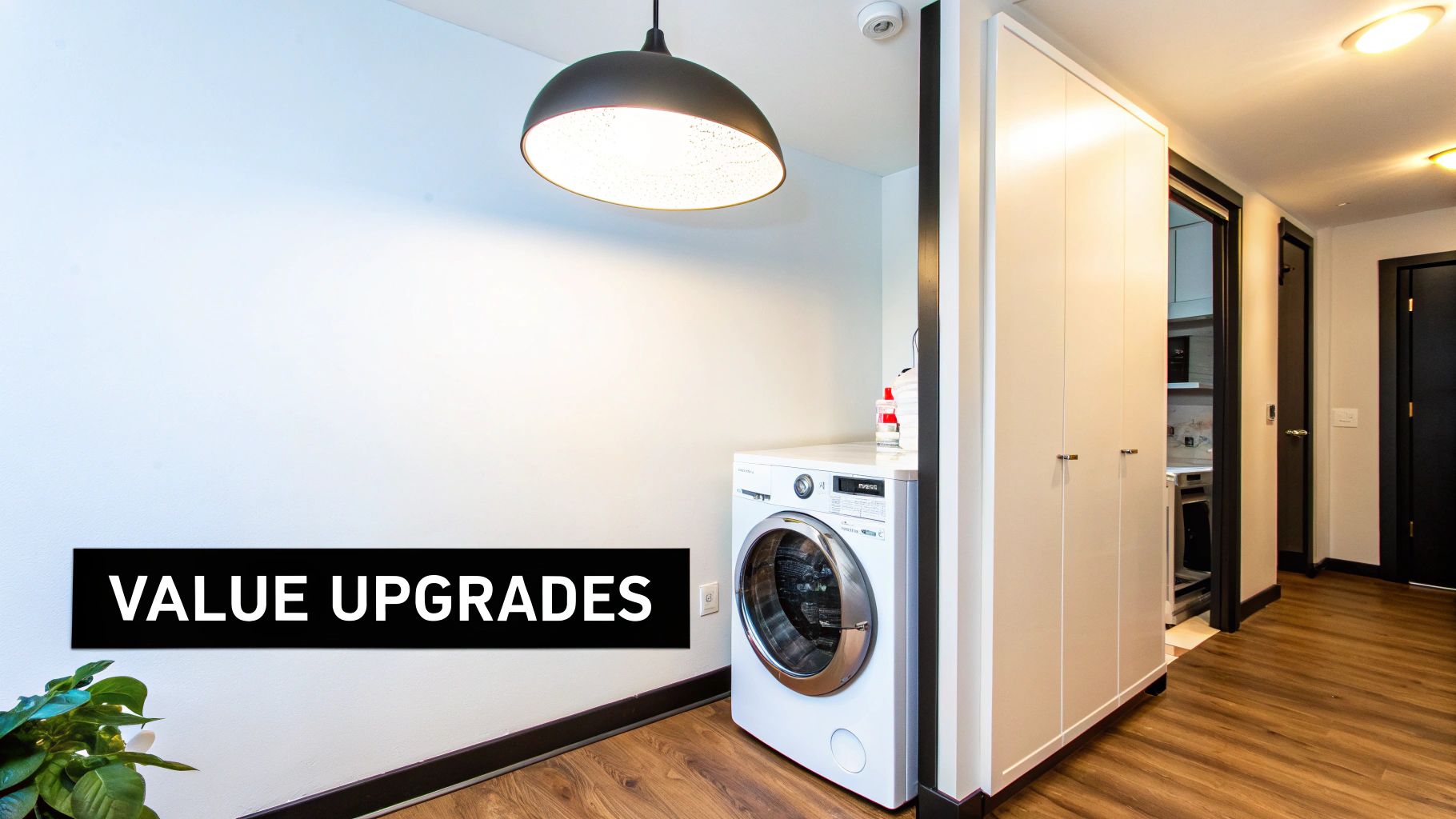
- In-Unit Washer and Dryer: This is the undisputed champion of amenities. For many tenants, the convenience of not dragging laundry to a shared room or laundromat is a massive lifestyle upgrade they will happily pay for.
- Kitchen and Bathroom Modernization: You don't have to tear everything down to the studs. Small things like swapping out dated faucets, installing a modern backsplash, or even just replacing old cabinet hardware can make a space feel brand new.
- Appliance Upgrades: Ditching an old, clunky refrigerator for a sleek, stainless-steel model is an immediate, visible win. Plus, new energy-efficient appliances can be a great selling point for tenants watching their utility bills.
- Smart Home Features: Simple tech adds can make a huge impression. A smart thermostat like a Nest, a Ring video doorbell, or smart locks give tenants a sense of modern convenience and security.
These upgrades directly improve daily life inside the unit, making a rent increase feel earned, not just demanded.
Tiered Improvements for Every Budget
You don’t need to drop $10,000 to add real value. Smart, targeted investments—even small ones—can significantly shift a tenant's perception of the property. The trick is picking the upgrades that give you the biggest bang for your buck.
Low-Cost, High-Impact (Under $500)
These are the quick wins that show you’re invested in keeping the property fresh and modern.
- Modern Light Fixtures & Ceiling Fans: Getting rid of old, builder-grade light fixtures can instantly change the feel of a room. A new ceiling fan in the bedroom is an upgrade tenants truly appreciate.
- Updated Hardware: It's a small detail, but swapping out old cabinet pulls, doorknobs, and light switch plates for something modern creates a clean, cohesive look.
- A Fresh Coat of Paint: Never underestimate the power of paint. A professional paint job in a neutral, modern color is one of the most cost-effective ways to make a unit feel pristine.
Mid-Range Investments ($500 – $2,500)
These are more substantial projects that can justify a more significant rent adjustment.
- New Flooring: Tearing out stained, worn-out carpet and replacing it with durable luxury vinyl plank (LVP) is a game-changer. It looks great, it’s a breeze to clean, and it's what today's renters are looking for.
- Countertop Refinishing: If brand-new quartz countertops are out of the budget, professional refinishing can give you a similar high-end look for a fraction of the price.
Remember, these improvements do more than just justify a rent increase—they build goodwill. When tenants see you reinvesting in the property, it strengthens your relationship and makes them want to stick around. You can learn more about effective tenant retention strategies that go hand-in-hand with smart property improvements.
Ultimately, by linking your rent increase to clear, desirable upgrades, you change the entire dynamic. It becomes a shared investment in the property, allowing you to maximize your income while giving your tenants a home they're happy to pay for.
Communicating the Rent Increase with Confidence
You’ve done the homework. You’ve crunched the numbers, analyzed the market, and made sure your plan is by the book. Now comes the part that makes or breaks the whole process: telling your tenant.
How you handle this conversation can mean the difference between keeping a great tenant and dealing with a costly, time-consuming vacancy. A clumsy, impersonal notice can make even a small, justified increase feel like a personal attack.
The goal here isn't to apologize. It's to be professional, direct, and transparent. Think of it less as delivering bad news and more as a straightforward business discussion that preserves a good relationship. Your confidence will come from knowing you've done your due diligence.
Crafting a Clear and Professional Notice
Your official rent increase notice is a legal document, but it shouldn’t read like one. Clarity is your best friend. A well-written notice is easy to understand and leaves zero room for misinterpretation.
Kick things off with a clear, direct subject line, like "Notice of Rent Adjustment for [Your Address]" or "Information Regarding Your Lease Renewal." This sets a professional, no-nonsense tone from the get-go.
Inside the notice, you need to hit a few key points to make sure it’s both effective and legally sound:
- Tenant's Full Name and Property Address: No confusion about who this is for or which property it concerns.
- The Current Rent Amount: Remind them what they are paying now.
- The New Rent Amount: State the new figure clearly and boldly.
- The Percentage of the Increase: This adds helpful context (e.g., "$1,950 per month, an increase of 5.4%").
- The Effective Date: The exact date the new rent is due.
This direct approach cuts through any potential confusion and puts the essential details right up front.
Framing the Increase with Justification
This is the most critical part of your communication: explaining the why. Without context, any price hike feels random and unfair. You have to connect the dots for your tenant, linking the increase back to the market realities you already researched.
Don't just say, "The rent is going up." Briefly explain the reasons behind the adjustment. Frame it in a way that shows you're running a responsible business and reinvesting in the property.
Pro Tip: Tenants are far more receptive when they understand that the increase is tied to real-world factors, not just a whim. Frame it as a necessary adjustment to keep up with rising operational costs and to continue providing a well-maintained home.
For example, you could write something like: "This adjustment is based on a recent review of current market rates for similar homes in the neighborhood. It will also help us cover recent increases in property taxes and insurance, ensuring we can continue to maintain the property to the high standard you expect."
And if you’ve recently made improvements, now is the time to mention them. A simple line like, "This new rate also reflects the significant upgrades made this year, including the new energy-efficient windows and updated kitchen appliances," directly ties the higher rent to a better living experience.
Offering Options and Incentives
One of the best ways to keep a great tenant—even with a rent increase—is to give them a sense of control. Instead of presenting a take-it-or-leave-it demand, frame it as a choice.
Consider giving your tenant a couple of options:
- Option A (The Standard): The full rent increase on a new 12-month lease.
- Option B (The Incentive): A slightly smaller increase if they agree to sign a longer lease, say 18 or 24 months.
This approach shows flexibility and rewards them for giving you long-term stability. The small discount you offer is almost always less than the cost of marketing the unit, processing applications, and covering a month of vacancy.
How you respond to their reaction is just as important. Being prepared for different scenarios can turn a potential confrontation into a productive conversation.
Communication Scenarios and Recommended Actions
Here’s a quick look at how different tenant reactions might play out and the best way to handle them.
| Tenant Scenario | Ineffective Response | Effective Strategy |
|---|---|---|
| Tenant is upset and threatens to leave. | "That's the new price. Take it or leave it." | "I understand this is a significant change, and I truly value you as a tenant. Would you be open to discussing a longer lease term for a slightly reduced rate?" |
| Tenant asks for justification. | "Because my costs went up." | "That's a fair question. The adjustment is based on rising property taxes and a review of comparable rents in the area, which are currently averaging [market rate]." |
| Tenant wants to negotiate a lower amount. | "Sorry, the price is non-negotiable." | "I can't go lower on a 12-month lease, but I could offer [lower amount] if you're willing to sign an 18-month lease. This gives you price security for a longer period." |
By being prepared with these strategies, you stay in control of the conversation while empowering your tenant with choices. This dramatically increases the odds that you'll find a solution that works for both of you, keeping your great tenant in place and your investment profitable.
Navigating Legal Notices and Deadlines
You’ve done your homework, run the numbers, and talked with your tenant. Now comes the most rigid and unforgiving part of the whole process: the formal legal notice.
This isn't a step you can afford to get wrong. A single procedural mistake can torpedo your entire rent increase, forcing you to start over and costing you months of income. Think of this as the final, critical checklist before your new rent can legally take effect.
Getting this right isn't just about ticking boxes—it's about protecting yourself. When you handle the legal notice flawlessly, you create a rock-solid official record. It leaves zero room for a tenant to claim they weren't properly notified, reinforcing that you're a professional landlord who operates fairly and by the book.
Understanding Notice Periods
First things first, you need to know exactly how much warning you're required to give. This isn't a one-size-fits-all situation; the notice period depends on state and local laws, and often, the size of the rent increase itself.
These are the most common timelines you'll encounter:
- 30-Day Notice: This is often the standard for smaller rent increases, typically anything under 10%. It’s most common for month-to-month tenants when the adjustment is minor.
- 60-Day Notice: Many areas, including California, require a longer notice period for a more significant jump—usually for increases over 10%. This gives tenants a more reasonable amount of time to adjust their budget or decide on their next steps.
- 90-Day Notice: Some tenant-friendly cities and states mandate even more time, especially for substantial rent hikes.
It is absolutely crucial to verify the specific requirements for your property's location. A landlord in Fresno, for instance, must follow California's statewide laws, but these can differ dramatically from the rules in another state. Making assumptions here is a recipe for disaster.
For a deeper look into the specific rules that apply in our state, it's always a good idea to review comprehensive resources covering landlord-tenant law in California to ensure you're in full compliance.
What Must Be Included in the Written Notice
A proper rent increase notice is a formal document, not just a quick email or text. To be legally valid, it has to contain specific information. If you miss any of these key details, a tenant could have grounds to challenge the entire increase.
Your written notice has to clearly state:
- Tenant’s Full Name and Address: List every tenant on the lease and the complete property address.
- Your Name and Contact Information: Identify yourself as the landlord or property manager.
- The Current Rent Amount: State the exact dollar amount the tenant is paying right now.
- The New Rent Amount: Clearly specify the new monthly rent they will be responsible for.
- The Effective Date: Pinpoint the exact date the first payment at the new rate is due.
Proper Delivery Methods
How you deliver the notice is just as important as what’s written in it. You need undeniable proof that the tenant received it on a specific date. Simply taping it to the door or sending a text just won't cut it in a legal dispute.
The gold standard for delivery is certified mail with a return receipt requested. This gives you a dated, signed confirmation from the post office—an official record that your tenant got the document.
While personal delivery might be an option, certified mail creates an indisputable paper trail. That small extra step provides immense peace of mind and is the hallmark of a professional who leaves nothing to chance.
Knowing When to Hire a Property Manager
Let's be honest. Juggling market analysis, tense tenant negotiations, and a mountain of legal paperwork can quickly feel like a full-time job you never signed up for.
As your portfolio grows or your personal time shrinks, the stress of pulling off a rent increase the right way can hit a boiling point. This is often the exact moment smart landlords realize it's time to call in a professional.
Hiring a property manager isn’t just about handing off tasks; it's a strategic move to protect your time and, more importantly, maximize your investment. If you're managing multiple properties, live out of state, or just feel like being a landlord is costing you your sanity, it's probably time to get some help.
Evaluating the Cost Versus Your Time
The biggest hang-up for most owners? The cost. Property management fees typically run between 8% to 12% of the monthly rent, and I get it—that can feel like a steep price to pay. But you have to weigh that fee against the value of your own time and the very real cost of making a mistake.
Think about it this way: a botched rent increase leads to a two-month vacancy. If your rent is $2,000 a month, you've just lost $4,000 in income, not to mention marketing and turnover costs. A good property manager’s expertise in pricing, tenant communication, and retention could have easily sidestepped that loss. Suddenly, their fee looks more like a smart investment than an expense.
A professional manager's deep market knowledge often lets them set a higher, yet still competitive, rent price that can partially or even fully cover their management fee. Their job is to optimize your income, not just collect a check.
Services That Justify the Expense
A professional manager does a lot more than just mail out a rent increase notice. They handle the entire lifecycle of a tenancy, which becomes incredibly valuable during a rent adjustment.
What are you really paying for?
- Data-Driven Market Analysis: They aren't just guessing. They use professional tools to run a detailed comparative market analysis, ensuring your new rent hits the market's sweet spot.
- Legal Compliance: They are experts in the maze of local and state landlord-tenant laws. This means every notice is delivered correctly and all deadlines are met, keeping you out of legal trouble.
- Tenant Communication: They serve as a professional buffer, fielding all the tough questions and handling negotiations with confidence and diplomacy.
- Maintenance and Upkeep: A good PM also coordinates property maintenance. They can oversee value-add upgrades that justify higher rent, like arranging for hardwood floor refinishing services for property management realtors to give a unit a fresh, modern look.
Ultimately, the decision comes down to one simple question: Is managing your property yourself preventing you from focusing on higher-value activities in your life or business? If the answer is yes, then learning how to find a good property manager is your next logical step.
Common Questions Landlords Ask About Raising Rent
Raising the rent can feel like walking a tightrope. You need to balance profitability with tenant retention and legal compliance. It's no surprise we get a lot of questions on this topic. Here are the answers to the most frequent ones we hear.
How Much Can I Legally Raise the Rent?
This is the million-dollar question, and the answer comes down to one thing: location, location, location.
Some areas, especially in California, have statewide or city-specific rent control laws. These rules put a strict ceiling on how much you can increase rent each year, often tying it to a set percentage plus the rate of inflation.
In other places, there are no limits at all. The market dictates the price. Your first and most critical step is to get familiar with your local and state regulations. The best place to start is your local housing authority's website for the most current rules.
Can I Raise the Rent Before the Lease is Up?
Generally, the answer is no. If you have a tenant on a fixed-term lease—say, for one year—that contract locks in the rent amount for the entire term. You have to wait until it’s time for renewal to introduce a new rate.
The story is different for a month-to-month tenancy. Here, you have the flexibility to increase the rent whenever you need to, as long as you provide proper written notice. In most places, that means giving 30 to 60 days' notice, but again, double-check your local landlord-tenant laws to be sure.
The big takeaway here is that your lease agreement is your guide. A fixed-term lease provides stability for everyone, locking in the rate until renewal.
What if My Best Tenant Says They'll Leave?
This is where you have to put on your business hat and take emotion out of the equation. When a great, long-term tenant pushes back, don't panic. Run the numbers.
First, figure out what a vacancy will actually cost you. It’s more than just a month of missed rent. You need to account for:
- Lost income during the vacancy period
- The cost of cleaning, painting, and any needed repairs
- Marketing and advertising expenses to find someone new
- Your own time spent showing the unit and screening applicants
Now, compare that total cost to what you'd gain from the rent increase over the next year. Often, keeping a fantastic tenant—even at a slightly lower rent—is the more profitable move. You might consider negotiating a smaller increase, or even phasing it in over a few months. Finding a middle ground can save you a lot of money and headaches in the long run.
Navigating rent increases, legal notices, and delicate tenant conversations takes time and expertise. At Edinhart Realty and Property Management, we handle this for our clients, using data-driven strategies to ensure your Fresno-area investment remains both compliant and profitable. Find out more about how we can help at https://edinhart.com.


