

Before you even think about drafting a rent increase notice, you need to build a rock-solid case. This isn't about gut feelings; it's about data. A strategic rent increase aligns your property's value with the current market, keeps you profitable, and ensures you're operating completely within legal boundaries.
Skipping this foundational work is one of the biggest mistakes landlords make. It’s a surefire way to either price your unit too high and lose a great tenant, or leave significant money on the table by pricing it too low.
This initial phase is all about crafting an argument so compelling that it justifies the change to your tenants and protects you from any potential disputes down the road.
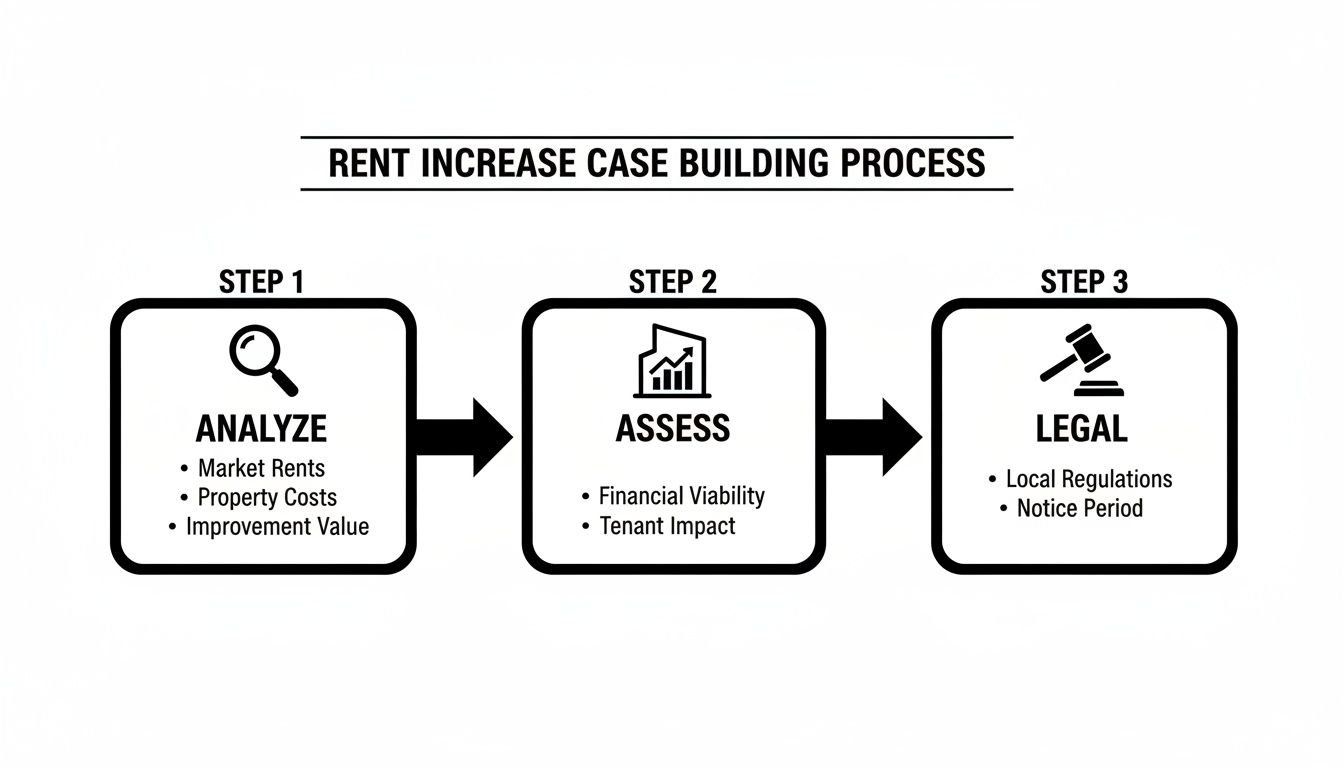
Each of these steps builds on the last, creating a logical and defensible strategy for your rent adjustment. Let's break it down.
Analyze Your Local Rental Market
First things first, you have to become an expert on your immediate rental market. You need a crystal-clear picture of what similar properties—what we call "rental comps"—are currently leasing for. This is more than a quick glance at a few listings; it’s about doing a real deep dive.
You need to gather data on properties that are genuinely comparable to yours. Look for units that match in:
- Location: In an urban area? Stick to a half-mile radius. In the suburbs, you can stretch it a bit. Neighborhoods can change drastically from one block to the next.
- Size and Layout: If you have a 3-bed, 2-bath house, you need to compare it to other 3-bed, 2-bath houses—not 2-bedroom apartments. Apples to apples.
- Amenities: Does your property have a fenced yard, a two-car garage, or central air conditioning? Find comps that offer a similar package of features.
- Condition: Be honest with yourself. Is your property freshly updated with modern finishes, or is it a little dated and in need of some cosmetic love?
Websites like Zillow, Rentometer, and Apartments.com are fantastic starting points. I recommend creating a simple spreadsheet to track at least 5-7 truly comparable properties and what they're renting for. This data is the backbone of your entire pricing decision.
Assess Your Property's Financial Health
Once you have your market data, it's time to turn the focus inward. A rent increase has to make sense for your bottom line. Let's be real—rising operating costs are a huge driver for most landlords.
A recent survey found that a staggering 85% of landlords raised rents specifically to offset these rising expenses. Many are planning an average increase of 6.21% in the coming year just to keep up.
Your property is a business. A rent increase isn't just about earning more; it's about ensuring that business remains profitable and sustainable in the face of inflation, rising taxes, and maintenance costs.
Think about how your own expenses have changed. Have your property taxes gone up? Is your insurance premium higher than last year? Are you paying more for landscaping or repairs? Factoring these real cost increases into your calculation is essential for justifying the need for a higher rent.
Understand the Legal Landscape
Finally, and this is non-negotiable, you must navigate the legal requirements for rent increases. These laws can vary dramatically by state and even by city. One misstep here can invalidate your entire notice and create serious legal headaches.
Before you do anything else, you need to verify:
- Rent Control Ordinances: Is your property subject to local rent control? This could put a hard cap on the percentage you can increase the rent each year.
- Notice Periods: Every state has specific rules for how much advance notice you must give a tenant. It could be 30, 60, or even 90 days, and it often depends on how much you're raising the rent.
- Proper Delivery: The law is very specific about how the notice must be delivered. Can you post it on the door, or does it have to be sent via certified mail?
These rules are not suggestions. For landlords in California, for example, a deep understanding of landlord-tenant law in California is absolutely critical. Always, always verify the specific statutes in your jurisdiction before moving forward. This legal due diligence protects both you and your tenant.
To help you get organized, I've put together a quick checklist of the essential steps and data points you need to gather before making any decisions.
Your Rent Increase Pre-Flight Checklist
This table summarizes the key information you should have in hand before you decide on a final number. Think of it as your prep work to ensure a smooth, legally compliant, and justifiable rent increase.
| Checklist Item | Why It's Important | Where to Find Information |
|---|---|---|
| Market Rent Comps | Establishes a fair market value for your property and justifies your asking price. | Zillow, Rentometer, Apartments.com, local property management companies. |
| Vacancy Rate Analysis | High vacancy rates might signal a softening market, suggesting a more conservative increase. | Local real estate reports, data from property management software (e.g., AppFolio). |
| Operating Expense Review | Tracks increases in taxes, insurance, utilities, and maintenance to justify the need for more revenue. | Your own financial records, utility bills, insurance statements, property tax assessments. |
| Local Rent Control Laws | Ensures your proposed increase is legally permissible and avoids fines or disputes. | Your city or county's housing authority website, local apartment association. |
| State Notice Requirements | Determines the legal minimum notice period you must provide to your tenant (e.g., 30, 60, 90 days). | State legislature or attorney general's website, Nolo.com, legal counsel. |
| Property Condition Assessment | An honest evaluation helps you align your rent with the property's true value and condition. | Self-inspection, tenant feedback, photos from the last turnover. |
Completing this checklist puts you in a powerful position. You'll have all the data needed to move forward confidently, knowing your increase is fair, competitive, and completely by the book.
Finding Your New Rental Rate Sweet Spot
Nailing the right price for your rental property is a delicate balancing act. Go too high, and you could push out a fantastic tenant and stare down a costly vacancy. But if you aim too low, you're literally leaving money on the table every single month. This is where we move past the broader market trends and get into the real-world math of a smart rent increase.

The goal here is to find that sweet spot—a number that boosts your income without giving your tenant a reason to start packing boxes. It means taking a hard, honest look at your expenses, the value you've added to the property, and where you fit in the local market.
Calculating Your Cost Basis
Your property is a business, plain and simple. And just like any other business, your pricing has to keep up with the rising costs of operation. A rent increase isn't just about padding your pockets; it's about keeping your investment financially healthy.
First things first, start by adding up all the expense hikes you've shouldered over the past year.
Common culprits include:
- Property Taxes: These almost never go down and can jump significantly from one year to the next.
- Insurance Premiums: Landlord insurance rates have been climbing steadily in most areas.
- HOA Dues: If your property is in an HOA, you can bet those fees see annual bumps to cover community upkeep.
- Utilities: Even if tenants cover their own, your costs for common areas or included services (like trash) can creep up.
- Maintenance and Repairs: The price of parts, materials, and a good handyman’s time has gone up across the board.
Tallying these up gives you a concrete baseline for how much more it costs you to run the property today versus a year ago. This number is a huge part of your justification—to yourself and your tenant—for raising the rent.
Factoring in Property Upgrades
Did you recently invest in the property? New appliances, fresh flooring, an updated bathroom? Those improvements add real, tangible value and should absolutely be reflected in the rent. A simple way to figure out a fair adjustment is to calculate the return on your investment (ROI).
Let's run a quick scenario. Say you spent $5,000 on a brand-new set of stainless steel kitchen appliances. A common practice is to amortize that cost over the expected lifespan of the appliances, maybe five years.
- The Math: $5,000 ÷ 60 months (that's 5 years) = $83.33 per month
Based on that, you could reasonably bump the rent by about $80-$85 a month to recoup your investment while giving the tenant a more valuable living space. The same logic applies to any upgrade, big or small.
Pro Tip: Not all upgrades are created equal in a tenant's eyes. Focus on the high-impact stuff they see and use every day—think modern kitchens, updated bathrooms, and solid curb appeal. These make a rent increase feel much more justified than, say, a new water heater in the basement.
Deciding on Your Market Position
Okay, you've got your costs and upgrades accounted for. The final piece of the puzzle is deciding where you want your property to sit in the market. Are you aiming to be the premium, top-dollar option, or the best value on the block?
- Premium Positioning: If your property boasts high-end finishes, great amenities, or a killer location, you can confidently price it at the upper end of your comps. You're targeting tenants who are willing to pay a bit more for quality.
- Value Positioning: If your property is clean, safe, and well-maintained but more standard, pricing it just a hair below the top-tier units can attract a bigger pool of applicants and keep your vacancy rate near zero.
This isn't just about price; it's a core part of your management strategy. While the data gives you a range, your positioning tells you where to land within it. It's also smart to keep an eye on the bigger economic picture. Lately, single-family rent growth has been cooling off a bit. For example, a recent report showed rents rose about 2.3% year-over-year, a significant slowdown from the 3.2% increase seen the previous year.
Ultimately, finding that perfect new rate is a blend of hard numbers and smart strategy. By following a clear process, you can set a price that feels fair to your tenant and profitable for your business.
For a more granular look at your property's earning potential, our fair market rent calculator can give you some powerful insights.
Adding Real Value to Justify Higher Rent
Just slapping a rent increase notice on a tenant's door because "the market says so" can feel arbitrary and often leads to friction. Good tenants can get resentful. A much smarter play is to connect that increase to real, tangible improvements they can see and use every day.
When your tenants see their rent money being put back into the property, it completely changes the conversation. They’re far more likely to accept a higher rate without a fight.
This isn't about running around fixing leaky faucets—that's just basic maintenance. This is about proactively boosting your property's appeal to command a premium price. You're not just asking for more money; you're offering a better living experience.
The trick is to zero in on upgrades that tenants actually interact with and appreciate. These kinds of investments don't just justify the new price point; they make your unit stand out, attracting higher-quality applicants down the road.
Strategic Cosmetic Upgrades for High ROI
You don't have to tear down walls to make a place feel more valuable. Smart, cost-effective cosmetic updates can completely transform the vibe of a rental, making a rent increase feel more than fair.
Think about the first impression. It’s often the small details that have the biggest impact on how a tenant perceives the value of their home.
Here are a few high-ROI cosmetic jobs I’ve seen work wonders:
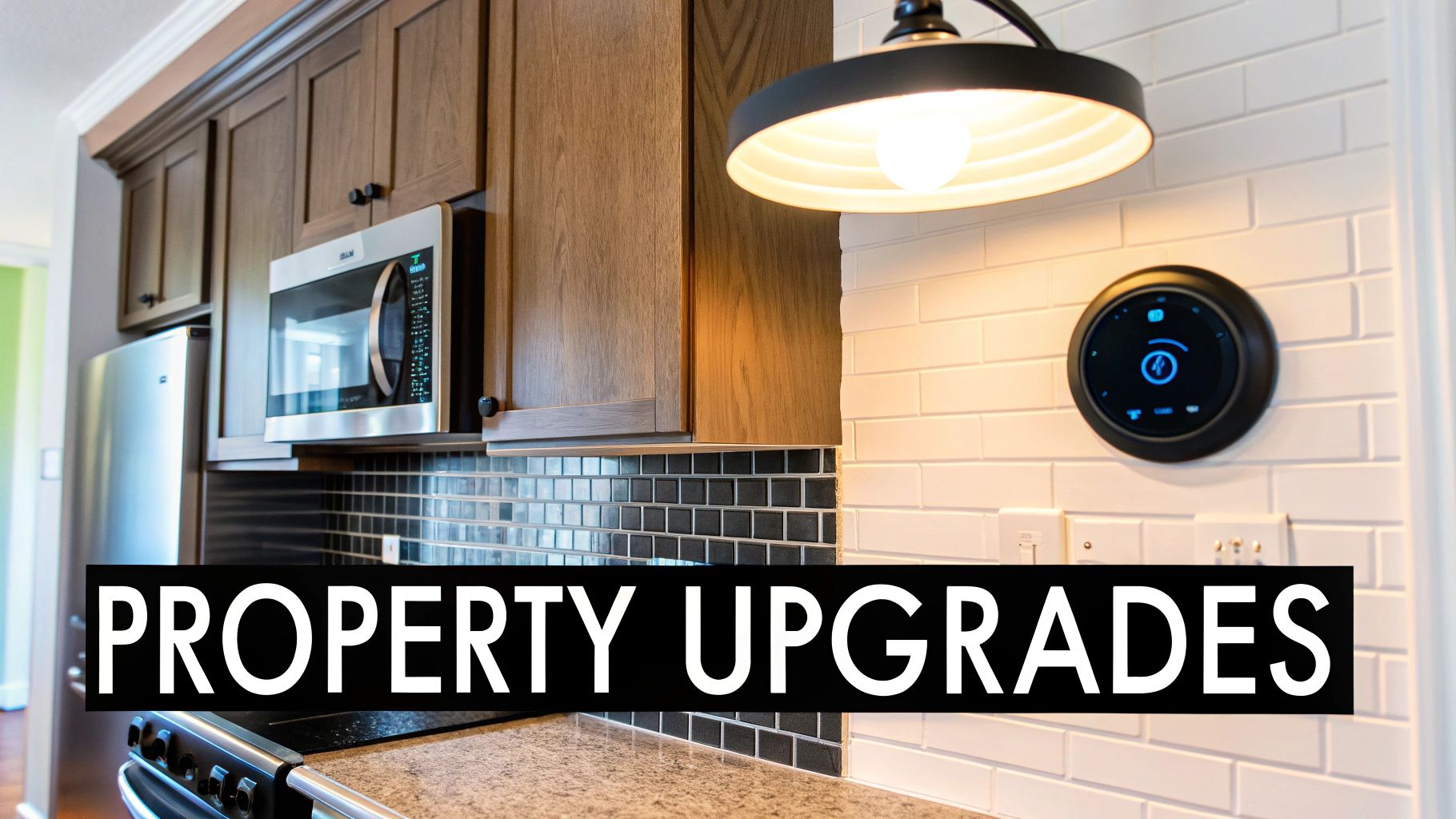
- Modern Lighting Fixtures: Get rid of those dated, builder-grade light fixtures. Swapping them for modern LED options in the kitchen, dining area, and bathrooms is a quick project that instantly brings a home into the current decade.
- Upgraded Hardware: This is a classic weekend project for a reason. Replacing old cabinet pulls, doorknobs, and even light switch plates makes a space feel fresh and intentional. Stick to one finish, like matte black or brushed nickel, for a polished, cohesive look.
- Fresh Paint: Never, ever underestimate the power of a professional-looking paint job. The right neutral, contemporary colors can make a small unit feel spacious, bright, and impeccably clean.
These small updates punch way above their weight class. They send a clear signal to your tenants: you care, and they're living in a premium, well-maintained property.
Capital Investments That Command a Higher Rent
While cosmetic touches are great for a quick facelift, sometimes you need to go bigger to push your property into a completely different rental bracket. These are the capital improvements—more significant investments, for sure, but they come with a substantial return by justifying a much larger rent bump.
To really make your property pop, look at major kitchen upgrades. A huge part of this is understanding the current kitchen cabinet refacing costs in your area; it can give you a high-end, brand-new look for a fraction of the cost of a full gut job. A refreshed kitchen is hands-down one of the most powerful upgrades for keeping tenants happy.
Beyond the kitchen, here are a few other game-changing capital investments:
- Flooring Replacement: Tearing out that old, stained carpet and laying down durable luxury vinyl plank (LVP) flooring is a night-and-day difference. It looks fantastic, it’s a breeze for tenants to clean, and it's what today's renters are actively looking for.
- Appliance Upgrades: Nothing says "value" like a new, matching set of energy-efficient appliances, especially in the kitchen. Tenants absolutely love the reliability and the bonus of lower utility bills.
- Smart Home Technology: Adding a smart thermostat, a keyless entry lock, or a video doorbell brings a layer of modern convenience and security that many tenants are more than willing to pay a premium for.
Investing in your property isn't just an expense; it's a strategic move to build equity and increase your cash flow. The right renovations can turn a standard rental into the most desirable unit on the block.
When you're budgeting for these projects, it helps to think like a homeowner getting ready to sell. For a deeper look into which upgrades deliver the best bang for your buck, checking out the best home renovations for resale offers solid insights that are just as relevant for attracting top-tier tenants.
By thoughtfully adding value, you reframe the entire rent increase conversation. It stops being about what the market is doing and starts being about offering a superior product that is demonstrably worth more. This approach not only protects your investment but also reduces turnover and builds your reputation as a landlord who provides real quality.
How to Talk to Your Tenants About a Rent Increase
You can get the math right and make stunning property upgrades, but a rent increase always boils down to a single, critical conversation.
Handle it with professionalism and empathy, and you can keep a great landlord-tenant relationship intact. A clumsy or impersonal notice, on the other hand, can send a good tenant straight to Zillow, creating the exact kind of costly vacancy you’re trying to avoid.
This part of the process is your playbook for clear, effective, and human communication. It's about much more than just ticking a legal box; it's about preserving the professional relationship you've built.
Laying the Groundwork with a Personal Touch
Before any formal document goes out, consider giving your tenant a heads-up. This is especially true for long-term tenants who have been reliable and respectful of your property. A brief, friendly phone call or a thoughtfully worded email can make all the difference.
This informal heads-up isn't a negotiation. Think of it as a professional courtesy that allows you to control the narrative and soften the blow. It’s your chance to briefly explain the reasons for the adjustment and let them know the official notice is on its way.
Crafting the Formal Written Notice
Every rent increase must be communicated through a formal written notice, delivered exactly as your local and state laws require. This document is non-negotiable, and it has to contain specific information to be legally valid.
Your notice must clearly state:
- The tenant's full name and property address.
- The new monthly rent amount, displayed prominently.
- The exact date the new rent takes effect (e.g., the 1st of the month).
- A reference to their right to terminate the tenancy (often a required legal disclosure).
Never rely on a verbal agreement or a casual text message to formalize a rent increase. A proper, written notice is your legal safeguard and gives the tenant the clear documentation they need.
Scripts for Explaining the Increase
When you have that conversation—whether it’s the informal heads-up or a follow-up—be ready with clear, honest talking points. The goal is to be transparent without oversharing your personal finances.
Here are a few scenarios to get you started:
- For increases due to operating costs: "Hi [Tenant Name], I'm calling to let you know that we'll be adjusting the rent to [New Amount], effective [Date]. This is our first increase in [X years], and it’s necessary to keep up with the significant jumps we've seen in property taxes and insurance rates."
- For increases after property upgrades: "As you know, we recently invested in the new kitchen appliances and flooring. To account for these improvements and bring the unit in line with the current market, the rent will be adjusted to [New Amount] starting [Date]."
Notice how both examples are direct, professional, and provide a concise reason. They steer the conversation toward business realities and property value, not personal need.
When it comes to the actual communication, what you say—and how you say it—matters. A poorly worded notice can feel cold and corporate, while a thoughtful one reinforces a positive relationship.
Rent Increase Communication Do's and Don'ts
| Strategy | Do This (Example) | Don't Do This (Example) |
|---|---|---|
| Tone | "As part of our commitment to maintaining the property, we're making a necessary rent adjustment…" | "Effective immediately, your rent is going up." |
| Justification | "This increase reflects recent upgrades and rising operating costs like taxes and insurance." | "I need more money to cover my mortgage." |
| Timing | "I wanted to give you an early heads-up before the official notice arrives next week." | Sending the notice on the last possible day with no prior communication. |
| Clarity | "The new rent of $1,850 will be effective on October 1st, 2024." | "The rent is increasing by 5% sometime this fall." |
| Professionalism | "Please review the attached formal notice and let me know if you have any questions." | "If you don't like it, you can move out." |
Ultimately, treating the notice as a professional business communication, rather than a personal demand, sets the right tone for a smooth transition.
Navigating Tenant Pushback and Market Realities
Even with a perfect approach, some tenants may push back. That’s completely understandable. Listen to their points, remain calm, and be ready to gently reinforce the value and market position of your property.
It’s also crucial to remember that market forces can limit your leverage. For example, a recent Canadian housing report showed that when rental supply goes up, it becomes much harder for landlords to implement increases. In one major city, rent growth slowed to a 20-year low because of these conditions, forcing many landlords to skip rent hikes for existing tenants altogether. You can discover more insights on how market conditions impact rental pricing from the Canada Mortgage and Housing Corporation.
If a valued, long-term tenant is hesitant, this is where you might consider alternatives like a phased-in increase, which we’ll cover next. The key is to be firm but fair, showing you’ve done your homework while still valuing their tenancy.
Thinking Beyond a Standard Rent Hike
A big, one-time rent increase isn't always the best move. While sometimes you have no choice, a sudden jump can catch a good tenant off guard, souring the relationship or even convincing them to pack their bags. There are smarter, more nuanced ways to get your property to its market rate without causing unnecessary friction.
Let's break down a few creative strategies that experienced landlords keep in their back pockets. These alternatives offer flexibility and can help you reach your financial goals while keeping tenant turnover—and the costs that come with it—to a minimum.

Phased Increases for a Softer Landing
When you realize your rent is way below market value, a phased-in increase is your best friend. Instead of hitting your tenant with one large hike, you simply break it down into smaller, more digestible steps over several months. This gives them time to adjust their budget without the shock.
Let’s say your market analysis shows you could get an extra $150 per month.
- The Standard Way: Rent jumps from $1,800 to $1,950 overnight. Ouch.
- The Phased Way: The rent goes up by $75 for the first six months of the new lease, and then another $75 for the final six months.
This gradual approach shows you're a reasonable person who understands that a big financial change can be a strain. It’s a fantastic way to keep a great, long-term tenant while still methodically bringing the rent up to where it should be.
Phasing in a rent adjustment shows you respect your tenant's financial situation. That small bit of consideration can be the difference between keeping a great tenant and facing a costly vacancy.
Using Incentives to Sweeten the Deal
Another solid strategy is to pair the rent increase with an incentive for renewing the lease. This completely reframes the conversation. It’s no longer just about you asking for more money; it's about making them an offer.
You're giving them a little something extra for their commitment to stay at the new rate. These perks don't have to break the bank to be effective. The goal is to make a small gesture that makes the increase more palatable.
A few popular lease renewal incentives I’ve seen work well:
- A Small Gift Card: A $50 or $100 gift card to a local hotspot for signing the new lease before the deadline.
- A One-Time Discount: A small credit on the first month's rent at the new rate.
- A Minor Upgrade: Promising a small improvement they've mentioned, like installing a new ceiling fan or a modern kitchen faucet.
This works because it taps into the power of reciprocity. When you offer something of value, tenants are naturally more likely to respond positively to your request.
When to Bring in a Property Manager
Let's be honest—rent negotiations can be awkward and time-consuming. If you're a landlord who prefers to stay hands-off, this is where a professional property manager becomes an absolute game-changer. They serve as a neutral third party, handling the entire process with professional expertise.
It might be time to call in a pro if:
- You're just not comfortable having direct financial talks with your tenants.
- You live out of state or are juggling a growing portfolio of properties.
- You want absolute certainty that every step is legally airtight and handled professionally.
Property management firms usually have a couple of service models that can help with exactly this situation.
Full-Service vs. Placement-Only Management
| Service Model | How It Helps with Rent Increases | Best For |
|---|---|---|
| Full-Service Management | The manager does it all: market analysis, tenant communication, serving legal notices, and collecting the new rent. | Landlords who want a completely passive investment and prefer not to deal with day-to-day operations or tenant talks. |
| Placement-Only Service | While this is mainly for finding new tenants, the service includes setting the initial market-rate rent. You can use their expertise to price the unit correctly during a turnover. | Landlords who are fine managing the property themselves but want professional help with marketing, screening, and pricing between tenants. |
Hiring a firm like Edinhart Realty & Property Management takes all the guesswork and personal stress out of the equation. They can put a rent increase strategy in place that maximizes your income while keeping tenant relationships positive—all while navigating California’s tricky landlord-tenant laws. That professional buffer is often well worth the investment.
Answering Your Most Common Questions About Rent Increases
Even when you've done your homework, raising the rent can feel like walking through a minefield of "what-ifs." Landlords constantly ask about the nitty-gritty details—the timing, tricky tenant situations, and all the legal hoops you have to jump through. Getting these details right is just as crucial as picking the right rent price.
One tiny misstep, like serving a notice a day late or using the wrong wording, can invalidate the whole thing and send you back to square one. Let's tackle some of the most common questions head-on so you can move forward with confidence.
Can I Raise Rent in the Middle of a Lease?
This is probably the number one question I hear, and the answer is a hard no—almost always. A fixed-term lease is a contract, plain and simple. That rent amount is locked in for both you and the tenant until the lease is up.
The only real exception is if your original lease agreement includes a specific rent review clause. This clause would have to spell out exactly when and how the rent could be adjusted mid-lease. Frankly, you don't see these very often in standard one-year residential leases. So, unless you have that specific clause, you’ll have to wait until it’s time to talk about a lease renewal.
How Often Can I Legally Increase Rent?
In most places, you're limited to raising the rent once every 12 months. This rule is there to give tenants some stability and prevent landlords from chasing a hot market with constant hikes, even on a month-to-month tenancy.
Let's say a tenant's one-year lease ends on June 30th, and they roll over to a month-to-month agreement starting July 1st. You can implement the new, higher rent on that date. But after that, you can't touch it again until July 1st of the next year. Always, always double-check your local city or county ordinances, as some have even stricter rules on frequency.
What if a Tenant Rejects the Increase?
If a tenant with a fixed-term lease rejects your proposed rent for a new lease, they're essentially telling you they won't be renewing. Their responsibility is to move out by the end of their current lease term.
The situation is pretty similar for a month-to-month tenant. If you've given them the proper legal notice about the rent increase and they refuse to pay the new amount, you can start the eviction process based on their failure to pay.
Remember, a tenant has the right to challenge an increase if they feel it’s retaliatory or discriminatory. Your reason for the increase must be a legitimate business decision—backed by market rates, rising operating costs, or property improvements.
This is exactly why all that upfront research is so important. When you have a folder full of market comps and a spreadsheet showing your increased insurance and maintenance costs, it's clear you're running a business, not targeting a tenant. That documentation is your best defense.
Navigating the maze of market analysis, tenant laws, and delicate conversations is a lot to handle. Edinhart Realty and Property Management provides the expert guidance landlords need to maximize their property's potential while keeping tenant relationships positive. Whether you’re looking for full-service management or just help placing a great tenant, our team can build a strategic and compliant plan for you. Learn more about our professional property management services.


