

The search for a great tenant doesn't start with a "For Rent" sign. It actually begins long before you even think about posting a listing online.
The real secret is to get your property in top shape and know exactly who you're looking for. When you take this proactive approach, you set the stage for a smoother, more profitable experience from day one.
Prepare Your Property to Attract the Best Applicants

Before a single person walks through the door, you've got some groundwork to do. I'd argue this initial prep phase is the most critical part of finding good tenants. It’s about more than just a quick vacuum—it's about strategically positioning your rental to appeal to the exact type of person you want living there.
Think of your property as a product you're bringing to market. The best products always attract the best customers, right? A clean, well-maintained, and fully functional home sends a clear message: you're a professional, hands-on landlord who cares. This simple act of preparation naturally weeds out applicants who aren't serious or responsible.
Define Your Ideal Tenant Profile
First things first, build a profile of your ideal renter. This should be based entirely on the property itself and its location. Is your two-bedroom condo near the university perfect for grad students or a young professor? Is your single-family home in that quiet suburb a great fit for a small family? Figuring out your target audience helps you highlight the features they'll care about most.
Let's say you have a family-oriented property. You’d want to emphasize things like:
- Proximity to top-rated schools
- A fully fenced-in backyard
- Nearby parks and community centers
This isn't about discrimination; it's just smart marketing. By knowing who you're trying to reach, you can tailor your entire approach to get their attention.
Make Your Property Shine
A pristine property is a magnet for high-quality applicants. Before you even think about taking photos or scheduling showings, make sure every corner of the unit is in excellent condition. This means a deep clean, fixing any of those nagging maintenance issues, and checking that every appliance and fixture works perfectly.
A fresh coat of paint is one of the highest-impact, lowest-cost improvements you can possibly make. It instantly makes a space feel clean, bright, and new, which is a massive draw for discerning tenants.
This is where the principles of home staging really come in handy. A lot of the same ideas that help a home sell also apply to renting it out. The basics of how to stage a house for sale effectively can be used to get your rental ready for the best applicants. Something as simple as selecting the right neutral tones makes a world of difference, and you can learn more about choosing paint colors for your rental home that appeal to almost everyone.
Establish Clear Rental Criteria
Finally, and this is a big one, create a written list of your rental qualifications before you start marketing. This document ensures you evaluate every single applicant using the same fair and consistent standards, which is absolutely essential for complying with Fair Housing laws.
Your criteria need to be objective and based on legitimate business factors. Some common standards include:
- Income Requirement: A common benchmark is a gross monthly income of 3x the rent.
- Credit Score Minimum: A specific score that gives you a picture of their financial responsibility.
- Positive Rental History: Verifiable, positive references from previous landlords.
- Clean Background Check: No relevant criminal convictions or prior evictions.
Having these standards defined upfront not only streamlines your decision-making but also gives you a clear, legal foundation for approving or denying applications.
Craft a Rental Listing That Gets Noticed

Think of your rental listing as more than just an ad—it’s your first and most powerful marketing tool. A really well-crafted listing does more than just fill a vacancy. It's your first line of defense, grabbing the attention of serious, qualified applicants and helping the wrong ones scroll right on by.
This all starts with a headline that packs a punch. Skip the generic "2 Bed/2 Bath for Rent." Get specific. Highlight what makes your property special.
Try something like, "Spacious 2BR Condo with Downtown Views & New Appliances" or "Charming Family Home with Fenced Yard Near Oakwood Elementary." A great headline instantly connects with the people you actually want to rent to.
Tell a Story with Your Description
Once the headline grabs them, the description is where you seal the deal. Don't just spit out facts and figures. Tell a story. Walk them through what it feels like to live there, from the "sun-drenched living room perfect for morning coffee" to the "private backyard patio ideal for summer barbecues."
You want to paint a picture that helps potential tenants see themselves in the space.
Mentioning recent upgrades, brand-name appliances, or any smart home features can help justify your asking price and attract tenants who appreciate quality. Be upfront about your policies on pets, smoking, and utilities, too. Honesty from the get-go saves everyone a lot of time.
The Power of High-Quality Photos
In today's rental market, professional-quality photos are non-negotiable. Grainy, dark, or cluttered pictures send a terrible message—that you don't care about your property. That's a massive red flag for the responsible tenants you’re trying to attract.
You don't have to hire a pro, but your photos absolutely must be bright, clear, and show off the home’s best assets.
Here are a few tips I've learned for taking much better property photos:
- Let the Light In: Open every blind and curtain. Always shoot during the day for the best, most natural light.
- Declutter Everything: Clear out personal items and any unnecessary stuff. This makes every room feel bigger and more welcoming.
- Shoot from the Corner: It’s a classic trick for a reason. This angle makes rooms look more spacious and gives a much better perspective.
- Use Good Equipment: A decent camera truly makes a difference. You can find some excellent advice on the best cameras for real estate that will help your listing look top-notch.
Your photos create that critical first impression. I've seen great images lead to 50% more inquiries, helping landlords rent their properties faster and often for a higher price. Make them count.
Where to Post Your Listing
To get the most eyeballs on your ad, you need to be where the renters are. Post your listing on the big rental platforms like Zillow, Apartments.com, and Realtor.com. These sites get a ton of traffic from people who are serious about finding a new home.
But don't stop there. Hyper-local options like neighborhood Facebook groups or Nextdoor can be goldmines for finding tenants who already know and love the area.
And for landlords who want to create some polished flyers for local coffee shops or community boards, using specialized real estate printing services can be a great touch. A multi-channel approach is always the best way to ensure your listing is seen by the largest possible pool of qualified people.
Nail Down a Consistent and Thorough Screening Process
Once you’ve got a stack of promising applications, it’s time to put on your detective hat. You're shifting from marketing your property to carefully evaluating who will live in it. A consistent, methodical screening process is your single best defense against late rent, property damage, and eviction headaches down the road.
This isn’t about being picky or finding flaws. It's about verifying the information you've been given and making sure every single applicant is measured against the same objective standards. Sticking to a system protects you legally and gives you a clear, data-driven path to making the right choice. Trust me, rushing this part of the process is one of the most expensive mistakes you can make as a landlord.
The whole thing kicks off the moment a completed application lands in your inbox and doesn't stop until a lease is signed. This visual gives you a great overview of how each piece connects.
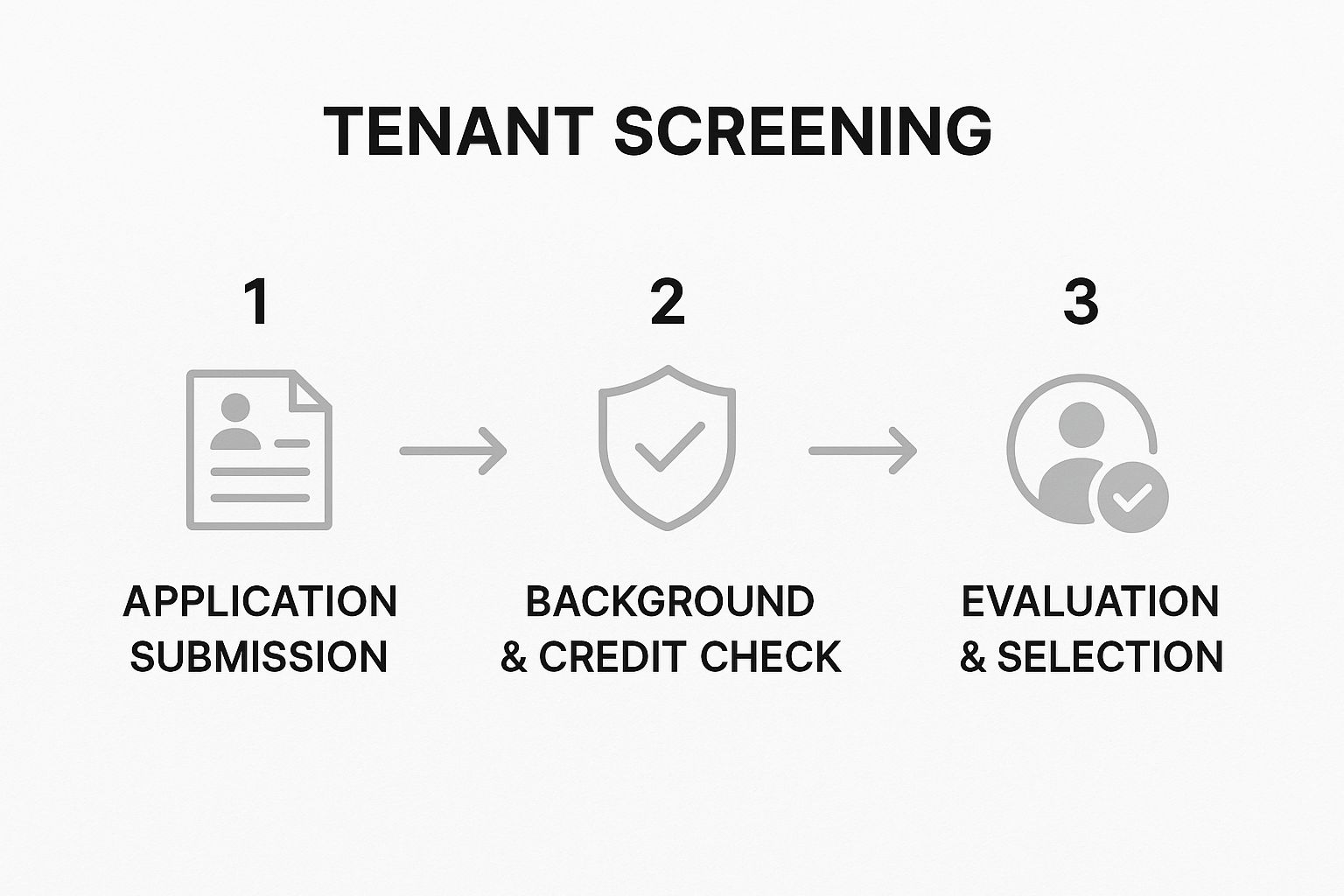
This simple flow—application, background check, and final decision—is the backbone of a solid screening system. It's how you find great tenants, every single time.
The Rental Application: Your Foundation
Think of the rental application as more than just a form. It's a critical legal document. It needs to be detailed enough to paint a complete picture of the applicant but also fully compliant with all Fair Housing laws.
And here's a non-negotiable rule: every single adult planning to live in the property must fill out their own application. No exceptions.
Your application is where you collect all the essential data points you'll need to verify later. Below is a quick checklist of everything you'll need to run a proper screening.
Your Essential Tenant Screening Checklist
Follow these essential verification steps for every rental applicant to ensure a consistent and fair evaluation.
| Screening Component | What to Verify | Why It Matters |
|---|---|---|
| Personal Details | Full name, DOB, phone, email, government-issued ID. | Confirms their identity and ensures you can contact them. |
| Rental History | Past addresses (3-5 years), landlord names and contact info. | Gives you a track record of their behavior as a tenant. |
| Employment & Income | Current employer, supervisor's contact, salary/wage. | Verifies they have a stable source of income to afford the rent. |
| References | Personal or professional contacts who can speak to their character. | Provides third-party insight into their reliability and responsibility. |
| Screening Consent | A signed authorization to run credit, background, and eviction checks. | This is your legal permission to dig deeper into their history. |
With this information in hand, you’re ready to start the verification process and make an informed decision based on facts, not just feelings.
Verifying Income and Employment
This step is straightforward but absolutely crucial. Your goal is simple: confirm the applicant has a stable, sufficient income to comfortably pay the rent each month. The unofficial industry standard is an income of at least three times the monthly rent.
Don't just take their word for it. Pick up the phone and call the employer they listed. Confirm their employment status, job title, and salary. If you're dealing with a freelancer or someone who is self-employed, ask for their two most recent tax returns or a few months of bank statements. You have to see the proof.
Always, always ask for the most recent pay stubs. This one document gives you a real-time snapshot of their earnings and proves they're still employed, which is far more reliable than an old W-2.
The Art of Checking References
Calling previous landlords is arguably the most valuable part of this whole process. This is your chance to get an unfiltered look at what it's really like to have this person as a tenant.
But don’t just ask generic questions like, "Were they a good tenant?" You need to dig deeper with specific, open-ended questions that will get them talking.
- Did they consistently pay rent on time?
- How well did they maintain the property? Did they report issues promptly?
- Were there ever any complaints from the neighbors?
- Did they provide proper notice before they moved out?
- Would you rent to them again?
Pay close attention to the answer to that last question. Even a slight hesitation can speak volumes.
With rental markets getting more competitive, tenant background checks are more important than ever. In the United States, about 36% of households were renting in 2023. This has powered a tenant screening service market that’s projected to grow from USD 4.5 billion in 2025 to USD 7.8 billion by 2032. As remote work continues to drive tenant turnover, it’s no surprise that 40% of landlords now see thorough screening as their top priority. You can dive deeper into these global tenant screening market trends to see just how critical this has become.
Use Technology for Smarter Tenant Screening
Let's be honest, manually checking every single detail on a rental application is a huge time-sink. Calling old landlords, verifying employment, digging through public records—it's not just tedious, it's easy to miss something important. This is where modern landlords have a serious advantage: technology.
Digital screening tools aren't just a convenience; they completely change the game. They make your process faster, more accurate, and a whole lot more reliable.
Using a professional tenant screening service is probably one of the smartest moves you can make as a landlord. These platforms give you instant access to critical information that would take you days, if not weeks, to dig up on your own. They pull everything together into comprehensive reports, giving you a complete picture of who you're dealing with.
This isn't just about saving time. These tools bring a standardized, objective approach to your decision-making, which helps strip away unconscious bias. You're focusing on the facts, which creates a fairer process for everyone and dramatically improves your ability to assess risk.
What to Expect from Screening Platforms
When you pay for a quality screening service, you're getting much more than a simple background check. You're getting a full suite of verification tools. Our guide on the best tenant screening services digs into the top options, but pretty much any reputable platform will deliver:
- Nationwide Criminal Background Check: This scours national databases for any relevant criminal history.
- Comprehensive Credit Report: You'll see their credit score, payment history, debt-to-income ratio, and any accounts that have gone to collections. It's a clear window into their financial responsibility.
- Eviction History Search: A crucial report that scans court records for prior evictions. For most landlords, a past eviction is a major red flag.
These reports give you a factual foundation to stand on, moving your decision from a "gut feeling" to an informed choice. A clean eviction history and a solid pattern of paying bills on time are powerful indicators of a great tenant.
Using a professional screening service creates a documented, consistent process. This not only helps you find better tenants but also provides a crucial layer of legal protection by demonstrating your commitment to fair and objective evaluation standards.
The Rise of AI in Tenant Screening
The property management world is getting smarter every day. The industry is huge—valued at over USD 119 billion—and a big chunk of that is being invested in technology to make operations smoother and find better tenants. As far back as 2025, it was estimated that 65% of property management firms were already using AI-powered systems to screen tenants faster and more accurately. You can see more on how tech is shaping the industry in these property management statistics and trends on resimpli.com.
These advanced systems can spot red flags a human might miss, like doctored pay stubs or other inconsistencies in an application. This doesn't replace your own judgment, of course. But it does add a powerful layer of security to your process. By embracing these tools, you're putting yourself in a much better position to make quick, smart decisions in a rental market that's only getting more competitive.
Make the Final Decision and Secure the Lease

You’ve done the hard work. The marketing, the showings, the screening—it all leads to this moment. Now it’s time to go over your top applicants and make the final call. This isn’t about picking favorites; it’s a methodical choice based entirely on the rental criteria you set up from the start.
Put the verified information for your finalists side-by-side. How do their income, credit history, and landlord references stack up against your requirements? An objective, head-to-head comparison strips emotion from the process. This ensures you're making a sound business decision while staying fully compliant with Fair Housing laws.
Trusting Your Gut (Within Reason)
While the numbers should absolutely guide your decision, don't ignore your intuition entirely. Think back to your interactions during the showing and any follow-up calls. An applicant who was consistently professional, clear in their communication, and respectful throughout the process often brings those same qualities into their tenancy.
But let’s be clear: intuition should never, ever override your objective criteria. If someone seemed really friendly but their background check revealed a history of late payments, the data wins. Every time. Think of your gut feeling as a potential tie-breaker between two equally qualified candidates, not a free pass to ignore red flags.
Drafting a Rock-Solid Lease Agreement
Once you’ve made your choice, the next move is to lock it in with a legally binding lease. This document is the absolute cornerstone of your landlord-tenant relationship. It needs to be clear, detailed, and compliant with all state and local laws to head off any future misunderstandings.
Your lease has to explicitly cover all the key areas:
- Rent Details: The exact amount, when it's due, how you'll accept payment, and what happens if it's late.
- Security Deposit: The amount, where the funds will be held, and the specific conditions for getting it back in full.
- Occupancy Rules: A clear list of who is approved to live there and your policy on long-term guests.
- Maintenance Responsibilities: Spell out who handles what, from small things like changing lightbulbs to bigger tasks like lawn care.
- Policies: Don't leave room for interpretation. State your rules on pets, smoking, and any alterations to the property.
A well-written lease is your best protection. It sets clear expectations from day one, creating a professional foundation and minimizing the potential for disputes.
Collecting the Initial Funds
How you handle this final transaction sets the tone for the entire tenancy. Before you even think about handing over the keys, you need to collect the security deposit and the first month's rent. Always provide a clear, dated receipt for these funds.
There's a reason for all this diligence. The global tenant screening market is projected to hit USD 7.10 billion by 2032. That number tells a story about a tightening rental market where landlords have to make swift, informed decisions to protect their investment. You can read more about these tenant screening market dynamics to see why this final step is so critical.
By finalizing the lease and collecting funds the right way, you secure your property and kick off the landlord-tenant relationship on solid, professional ground.
Landlord FAQs: Navigating the Tricky Parts of Finding a Tenant
Even when you have a solid game plan, you're bound to run into some tricky situations when picking a new tenant. Knowing how to handle these moments with confidence is key. It helps you avoid simple, costly mistakes and keeps the process moving smoothly. Let's tackle some of the most common questions that pop up for landlords.
What Are the Biggest Red Flags on an Application?
Your gut will tell you a lot, but there are specific warning signs on an application that should make you pause. An incomplete or inconsistent application is a big one. It often means the applicant is trying to hide something they don't want you to see.
Pay close attention if their stated income doesn't meet your criteria, which is usually 3x the monthly rent. Also, be cautious with anyone who seems overly pushy or tries to rush you through the process. If they resist a standard background and credit check, that’s a major problem. But maybe the most significant red flag of all is a history of evictions—that points to a pattern of serious issues you don't want to inherit.
How Do I Legally Deny a Rental Application?
You can absolutely deny an applicant, as long as your decision is based on legitimate business reasons and has nothing to do with discriminatory factors covered by the Fair Housing Act. The secret is to establish your written rental criteria before you even start marketing and then apply it equally to every single person who applies. No exceptions.
Perfectly legal reasons for denial include:
- Not having enough income to comfortably afford the rent
- A poor credit history showing a pattern of not paying bills on time
- Negative or lukewarm references from past landlords
- A prior eviction on their record
- A criminal background that could pose a risk to the property or neighbors
When you stick to your pre-set, non-discriminatory criteria, you’re not just being fair—you're giving yourself a legally sound reason for every decision. Be prepared to provide that reason if a denied applicant asks why.
Should I Hire a Property Manager to Find a Tenant?
This really boils down to your time, your experience level, and how close you are to your rental. Going the DIY route can definitely save you some money upfront, but it’s a serious time commitment. You're responsible for all the marketing, every showing, and the deep-dive screening for each applicant.
A professional property manager takes all of that off your plate. They use their expertise and proven systems to find qualified tenants quickly while making sure you stay on the right side of all rental laws. If you're a first-time landlord, live out of state, or simply value your time more than the cost, hiring a manager is a very smart move.
Trying to manage tenant placement and all the details of property management can be a real headache. Edinhart Realty and Property Management offers both Placement-Only and Full-Service Management solutions. We use professional marketing and a tough screening process to find reliable tenants for your Fresno-area property. Let our experience protect your investment and give you back your peace of mind. Learn more about our property management services.


