

Figuring out the right rental price is always a balancing act. You're trying to hit that sweet spot between what the market will bear and what your specific property is truly worth. A good rule of thumb is to aim for a monthly rent that’s between 0.8% and 1.1% of your property's total value, but that’s just a starting point.
The real work involves a bit of strategic thinking—diving into local comparables, crunching your numbers, and knowing how to showcase your property’s best features to maximize your income while keeping it occupied.
Finding Your Property's Perfect Price Point

Setting your rent is more of an art than a science, but it absolutely must start with a solid, data-driven strategy. The goal is to land on that perfect price that attracts great tenants fast without leaving any money on the table. If you want to turn your property into a successful investment, you have to move beyond simple guesswork.
This playbook gives you a clear roadmap. We'll walk through everything from market analysis to cost calculation and figuring out the value of your property's unique perks. Having a solid handle on https://edinhart.com/how-to-price-rental-property/ is non-negotiable if you want to balance profitability with low vacancy rates.
The Core Components of Pricing
Your entire pricing strategy really comes down to a few key pillars. Think of each one as a piece of the puzzle—if you ignore one, you could end up with a vacant property or an undervalued asset. Before you get into the nitty-gritty, it's crucial to understand these fundamentals.
To set a competitive and profitable rental price, every landlord needs to weigh a few core components. This table gives you a quick snapshot of what to look at and how it influences your bottom line.
Key Factors in Setting Your Rental Price
| Factor | What to Analyze | Impact on Your Rent |
|---|---|---|
| Market Analysis | Current listings for similar properties in your specific neighborhood (size, age, condition). | This sets your baseline. You need to know what the competition is charging to stay competitive. |
| Cost & ROI | All expenses: mortgage, property taxes, insurance, maintenance, and vacancy buffer. | Your rent must cover all costs and generate your target return on investment (ROI). |
| Property Value | Unique features: new renovations, premium amenities (pool, gym), prime location, or a great view. | These are your differentiators that justify a higher price point compared to the baseline. |
Each of these factors gives you a piece of the pricing puzzle. A thorough analysis ensures you're not just guessing but making an informed business decision.
A well-priced property doesn’t just attract tenants; it attracts the right tenants. If you overprice, you risk long vacancies and may end up with desperate applicants. If you underprice, you're cutting directly into your returns and might even make good renters wonder if something is wrong with the place.
From Pricing to Negotiation
Once you've settled on a price, you're not quite done. You need to be ready for the final steps of locking in a lease. Knowing a few effective lease negotiation strategies can make a huge difference in securing the best possible terms and protecting your investment.
Try to think of your price as just one part of the whole package, which also includes the lease length, pet policies, and what utilities are included. This gives you more room to maneuver. For instance, offering a slightly lower rent might be a smart move for a highly qualified tenant who’s willing to sign a two-year lease.
Your neighborhood and property set the stage, but a smart, flexible approach is what will ultimately give you a competitive—and profitable—edge right from the start.
Conducting a Smart Rental Market Analysis
We've all seen tools like Zillow's Rental Manager that spit out a rent estimate after you plug in an address. They’re a handy starting point, for sure. But if you stop there, you're almost certainly leaving money on the table or pricing yourself out of the market.
To hit that sweet spot, you have to get your hands dirty and understand the local market on a much deeper level. A solid comparative market analysis (CMA) is your best friend here. This isn't about broad city-wide averages; it's about digging into what similar properties are actually renting for, right in your own backyard.
The whole game is about finding true "comps"—properties a potential tenant would seriously weigh against yours. Looking at a two-bedroom across town is useless. You need to get granular.
Identifying True Comparables
Your mission is to find rentals that create a genuine apples-to-apples comparison. This is the only way to zero in on your property's real market value.
Start by filtering your search to find properties that mirror yours in the most critical ways:
- Location: Keep it tight. A one-mile radius is a good rule of thumb, but in a dense neighborhood, you might only look a few blocks away. Anything further isn't a real comp.
- Property Type: If you have a single-family home, compare it to other single-family homes. A condo needs to be compared to other condos.
- Size: Look for properties with a similar square footage, ideally within 10-15% of your unit's size.
- Bedrooms & Bathrooms: This one is non-negotiable. A 3-bed/2-bath home is in a completely different category than a 3-bed/1-bath.
Once you’ve got a shortlist, it's time to play detective. Look at the property's age, its overall condition, and any recent upgrades. That place down the street with the brand-new kitchen and quartz countertops? It’s going to command a higher rent than a unit with a dated 1980s look.
Pro Tip: Don't just focus on active listings. The asking price is often just wishful thinking. The real gold is finding out what similar properties actually leased for. That final number is the true market rate.
Making Smart Price Adjustments
Let’s be honest, no two properties are ever truly identical. The final step is to tweak your potential price based on what makes your property stand out from the comps.
- Premium Amenities: Do you have an in-unit washer and dryer? A private balcony? A dedicated parking spot in a crowded area? Each of these is a legitimate reason to ask for more.
- Location Perks: Is your property zoned for a top-tier school district? Can tenants walk to the local coffee shop, park, or public transit? These lifestyle perks absolutely add value.
- Pet Policy: Having a pet-friendly policy opens your property up to a much larger pool of renters. This demand often allows you to set a slightly higher rent or add a monthly pet fee.
This level of detailed analysis is more work than just punching an address into a website, but it's what separates a good investment from a great one. It’s exactly what seasoned property managers do to ensure their clients get the best possible return. If you need a hand with this kind of deep dive, exploring expert Fresno property management can give you a serious competitive edge.
This isn't just a local strategy; it reflects global trends. For instance, recent European data shows a modest 0.7% year-over-year rent increase, pointing to a stabilizing market. But dig deeper, and you'll see cities like Valencia with a 10.7% jump in rents. This shows just how critical hyper-local data is. You can read more about these global rent index trends. Taking this approach ensures your property is priced to perform, not just to sit on the market.
Calculating Your Costs and Profit Margin
Once you have a feel for the market, it’s time to look inward at your own numbers. This is where a lot of landlords get tripped up. A profitable rent covers a whole lot more than just the mortgage—it has to account for every single expense tied to your property. Skip this step, and you might find your "investment" is actually costing you money.
Your first move is to get brutally honest about your costs. I’m talking about a detailed list of every fixed and variable expense. This isn't just about the obvious monthly bills; you need to capture everything to find your true break-even point. Only then can you start thinking about profit.
Tallying Your Total Expenses
Think of this as a financial health check for your rental. Knowing your costs inside and out is the bedrock of a smart pricing strategy.
Start with the easy stuff—your core monthly obligations:
- Mortgage (PITI): This is your Principal, Interest, Taxes, and Insurance. It’s almost always your biggest line item.
- HOA Dues: If your property is in a homeowners association, these monthly or quarterly fees are a non-negotiable fixed cost.
- Property Management Fees: Bringing in a pro? Expect to budget 8-12% of the monthly rent for their services.
Now, let's move beyond the monthly grind. You have to plan for the expenses that don't hit your bank account every 30 days but are guaranteed to show up eventually.
Setting aside funds for future costs is non-negotiable. I’ve seen too many new landlords get blindsided by a major repair because they only focused on their monthly cash flow, completely forgetting that roofs and water heaters don’t last forever.
Planning for Vacancy and Capital Expenditures
The smartest landlords I know plan for the unexpected. Two of the most common budget-killers are vacancy and capital expenditures (CapEx). Ignoring these is just asking for trouble.
- Vacancy Reserves: Your property won't be occupied 100% of the time. It’s just not realistic. A good, conservative rule of thumb is to set aside 5-10% of the monthly rent to cover those empty periods between tenants.
- Capital Expenditures (CapEx): This is your "big ticket" fund. It’s for replacing major items like an HVAC system, a roof, or kitchen appliances. A common guideline is to budget 1% of the property's value every year for CapEx.
This simple process flow chart helps visualize how to get from market research to an actual price point.
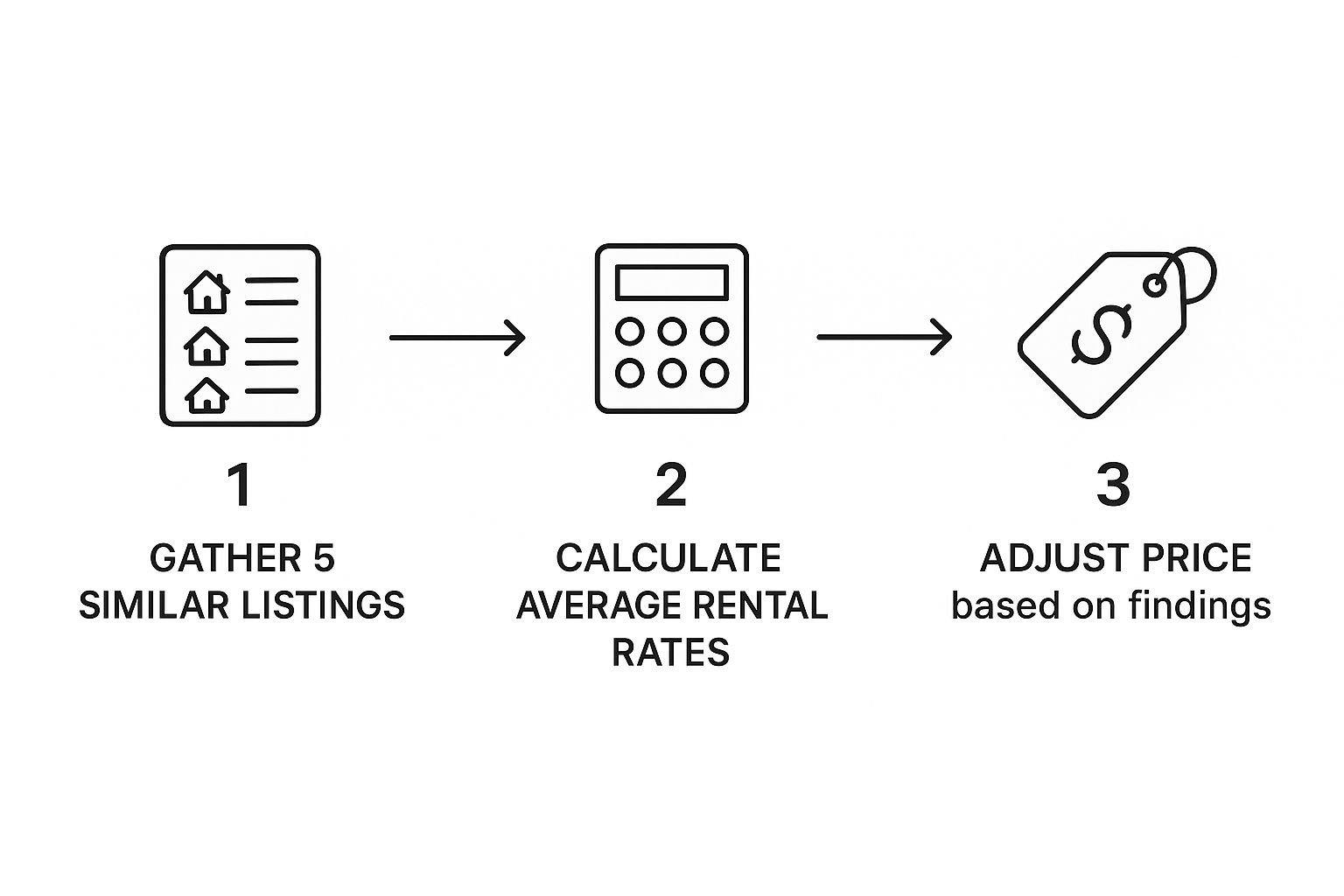
As you can see, after you've gathered all that market data and figured out the average rates, the final step is to tweak that number based on your specific costs and what your property truly offers.
Calculating Your Profit and ROI
With a complete picture of your annual expenses, you can finally set a price that actually makes you money. Just subtract your total annual expenses from your potential annual rental income (that’s your target monthly rent x 12). What's left is your net operating income (NOI).
This is where you bake in your profit. A lot of investors aim for a cash flow of at least a few hundred dollars per month, per unit. This simple math is also how you start to understand your return on investment. To really get into the weeds, you can learn more about how to calculate rental yield and see how your property is truly performing.
To get your numbers right and see your potential returns, a dedicated tool can be a huge help. Using a good rental yield calculator can help you perfectly balance what the market will bear with your own financial goals. That’s how you turn a property into a real, income-generating asset.
How Property Features Can Justify a Higher Rent
Once you've crunched the numbers on the market and your own costs, the final piece of the puzzle is the property itself. The specific features and amenities you offer are what really separate a standard unit from a premium one, and they have a direct impact on the rent you can realistically charge.
Not all features are created equal, though. Knowing what today’s tenants truly value is the key to justifying a higher monthly rent. A smart, thoughtful upgrade can often pay for itself many times over, not just in higher rent but also through lower vacancy rates.
Pinpointing the High-Value Amenities
Certain perks have become absolute deal-breakers for a huge chunk of renters. If your property has these, you've got a solid reason to price it above the neighborhood baseline. These aren't just "nice-to-haves" anymore; they're powerful leverage.
Take a look and see which of these in-demand features your property offers:
- In-Unit Laundry: The convenience of not having to haul clothes to a laundromat is a massive selling point. Properties with their own washer and dryer consistently command higher rent. It’s a game-changer for most tenants.
- Dedicated Parking: In any area where street parking is a battle, a guaranteed spot—whether it's a garage, carport, or just an assigned space—is a premium feature that people will happily pay extra for.
- Private Outdoor Space: A personal balcony, a small patio, or a little yard offers a private retreat that is incredibly desirable, especially in more densely populated cities and neighborhoods.
- Updated Kitchens and Bathrooms: Modern aesthetics really do matter. A freshly renovated kitchen with stainless steel appliances or a bathroom with contemporary fixtures can make your property far more appealing than a dated alternative down the street.
The little details can make a huge difference in a renter’s final decision. Things like ample closet space, hardwood floors, or even just great natural light can set your property apart and justify that extra $50 or $100 a month in rent.
The Growing Appeal of Modern Conveniences
Beyond the traditional upgrades, tenant preferences are definitely shifting. We're seeing a growing demand for features that make life easier, safer, and more efficient. Factoring these into your rental price is just plain smart.
Recent data shows that tenant preferences for things like pet-friendly policies and energy-efficient homes are significantly shaping rental prices. As of December of last year, the national median rent was $1,373, a figure heavily influenced by these supply-and-demand dynamics. You can dig deeper into these rental market trends to see just how much these factors can move the needle.
For instance, simply allowing pets instantly expands your pool of potential applicants. This often lets you charge a slightly higher base rent or a monthly pet fee.
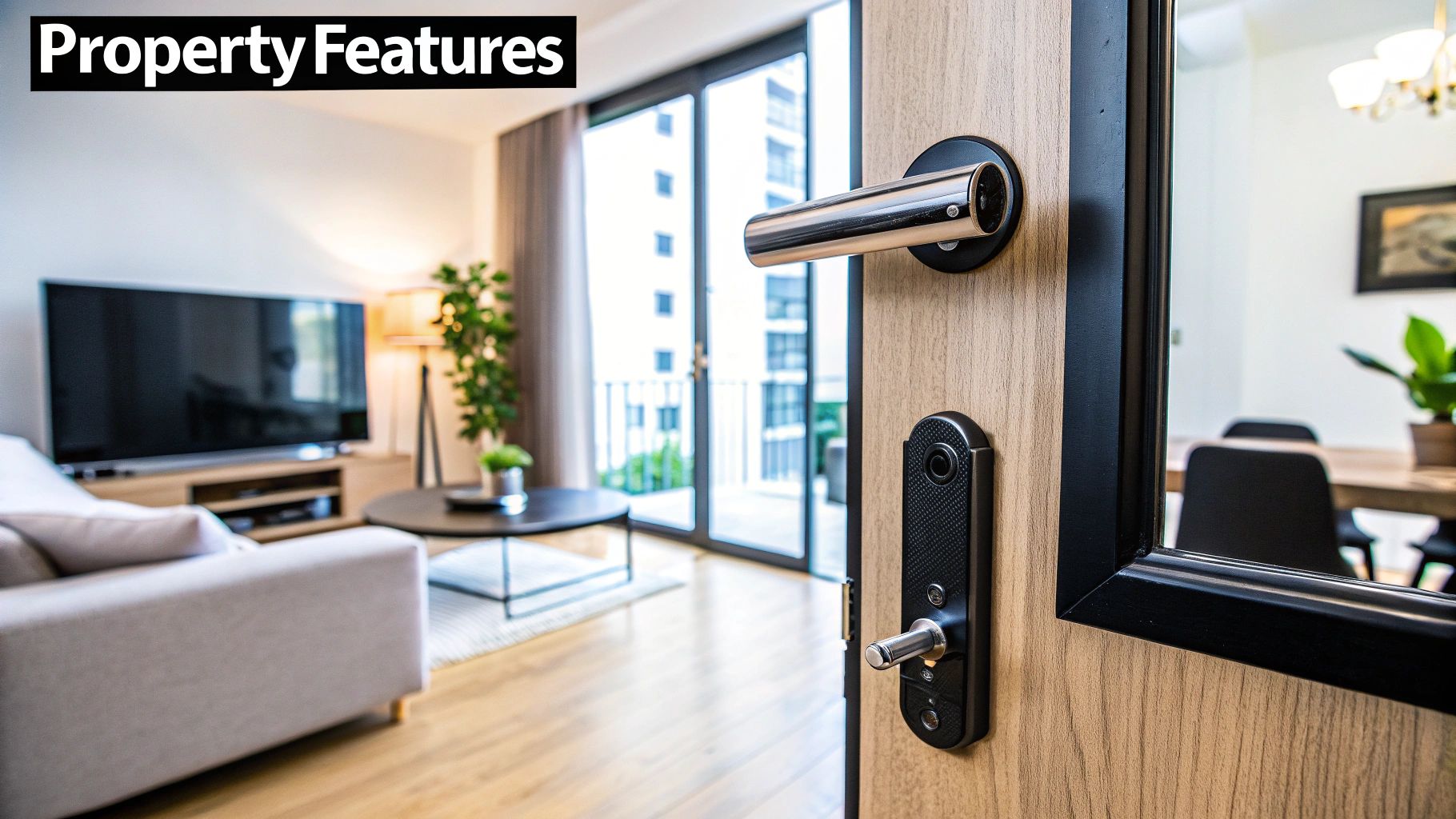
Likewise, things like energy-efficient appliances or smart home tech (think smart thermostats or keyless entry) are no longer niche. They appeal directly to modern renters who want lower utility bills and an extra layer of convenience.
By systematically comparing your property’s unique features against the local market standard, you can confidently set a premium price. This isn't about overcharging; it's about accurately pricing the superior living experience you’re offering.
Fine-Tuning Your Price for Market Shifts

Here's a hard truth: setting your rental price is not a one-and-done deal. The market is constantly in motion, swayed by everything from the time of year to big-picture economic shifts. To keep your property both competitive and profitable, you have to stay agile.
A static price in a moving market is a recipe for missed opportunities. You'll either leave money on the table when demand is hot or stare at a vacant unit for weeks when things cool down. Being proactive is the only way to maximize your annual income.
Reading the Market Signals
The market is always talking. The trick is learning to listen. Think of these signals as a real-time feedback loop, telling you if your price is hitting the sweet spot or missing the mark completely.
Keep a close eye on a few key indicators for your listing:
- Inquiry Volume: Are the calls and emails rolling in? If your phone suddenly goes quiet, it's often the first whisper that your price is too high for what the market will bear right now.
- Time on Market: Take a look around. If similar units are getting snapped up in two weeks and yours is still sitting there after a month, the market is sending a clear message. It’s time to rethink the price.
- Quality of Applicants: Are you attracting the kind of well-qualified tenants you want? Or are the applications just not meeting your standards? Your asking price has a huge influence on the caliber of your applicant pool.
Don't be afraid to make small, strategic price adjustments. A simple 5% price drop can be all it takes to reignite interest and get that lease signed. That’s a much better financial outcome than letting the property sit empty for another month while you hold out for a price that just isn't there.
Adapting to Seasonality and Economic Trends
The rental world has its own seasons, just like retail. Demand almost always surges in the warmer months—think May through September—when families are trying to move before school starts. Listing your vacancy during this peak season often means you can command a higher rent.
On the flip side, things tend to get quiet in the fall and winter. If you find yourself with an opening during these off-peak months, you’ll likely need to price your property a bit more competitively to attract the smaller pool of renters out there.
Broader economic forces are also at play. Inflation, shifts in interest rates, and local job growth all have the power to sway rental demand. For instance, when interest rates climb, would-be homebuyers often get pushed back into the rental market, which can seriously boost demand.
This isn't just a local game, either. Macroeconomic factors like global economic stability can have a real impact on rental pricing. A deeper dive into rent trends reveals that these larger variables are a critical piece of the puzzle. You can learn more about how global factors influence rent prices to get the full picture. Staying on top of these trends lets you anticipate market shifts instead of just reacting to them.
Common Questions About Setting Rental Prices
Even with all the research done and the numbers crunched, you might still have a few questions rattling around. That’s perfectly normal. Nailing down the right rent involves a lot of moving parts, and a few common scenarios tend to trip up even experienced landlords.
Let’s walk through some of the most frequent questions we hear. Getting these cleared up will help you lock in your price with confidence and manage your property like a pro.
What If My Property Has Unique Flaws?
This is a big one. What do you do if your unit is on a noisy street, has a bathroom straight out of the 1980s, or is short on closet space? The key here is to be honest and strategic. You can’t just pretend these drawbacks don’t exist and hope for the best.
The smart move is to price them in from the get-go. Look at your comps, then make a realistic deduction for the flaw. A slightly lower price acknowledges the issue right away and can be a huge draw for tenants who value affordability over perfection.
Acknowledge your property's weaknesses directly in your pricing strategy. A price that is 5-7% below the market average for a comparable but superior unit can be a powerful incentive, often leading to a quicker lease and preventing a costly month-long vacancy.
Should I Include Utilities in the Rent?
This is a classic dilemma, and there’s no single right answer. Tossing in utilities like water, gas, or internet can be a fantastic marketing tool. It makes budgeting simpler for tenants and can make your listing feel like a much better deal overall.
But it also introduces a risk for you. A tenant who blasts the AC 24/7 all summer can quickly eat into your profits. A good middle ground is to include the predictable costs—like water and trash—while leaving the variable utilities like electricity and gas to the tenant.
How Much Can I Legally Raise the Rent?
This is a critical question, and the answer depends entirely on where your property is located. Many cities and states have specific laws that dictate how and when you can raise the rent. You need to be aware of:
- Rent Control Caps: These laws might limit your annual increase to a specific percentage, often tied to inflation.
- Notice Periods: You’re almost always required to give tenants plenty of written notice—usually 30 to 60 days—before a rent increase kicks in.
- Lease Terms: You can almost never raise the rent in the middle of a fixed-term lease unless the agreement specifically spells out that you can.
Always, always check your local and state landlord-tenant laws before you make a move. Getting this wrong can land you in serious legal and financial hot water.
When Is It Smart to Offer a Discount?
Offering a small discount isn’t a sign of desperation—it’s a savvy business move when used correctly. Think about it in specific, strategic situations. For instance, offering a slightly lower monthly rent for a tenant who agrees to sign a longer lease (say, 18 or 24 months) gives you stability and slashes your turnover costs.
Another smart play is the "move-in special," like half off the first month's rent. This can be a great way to fill a vacancy during a slower season. Getting a great tenant in the door faster is often way more profitable than holding out for a few extra bucks while the unit sits empty.
Navigating these pricing questions can be tricky, but you don't have to do it alone. The team at Edinhart Realty and Property Management has the local expertise to help you set the perfect rental price, find qualified tenants, and maximize your investment returns. Visit us at https://edinhart.com to learn more about our full-service and placement-only management options.


