

Sometimes, spotting a problem tenant early isn't about finding a huge, obvious mess. It's about seeing the subtle red flags that can signal much bigger, and more expensive, problems down the road.
I'm talking about things like unreported minor leaks, strange smells that won't go away, or small, unauthorized "fixes" a tenant might try to make. Learning to tell the difference between these warning signs and just normal wear and tear is one of the most important skills a landlord can have. It’s the first real step in protecting your investment from serious damage.
Recognizing the Early Signs of Tenant Neglect
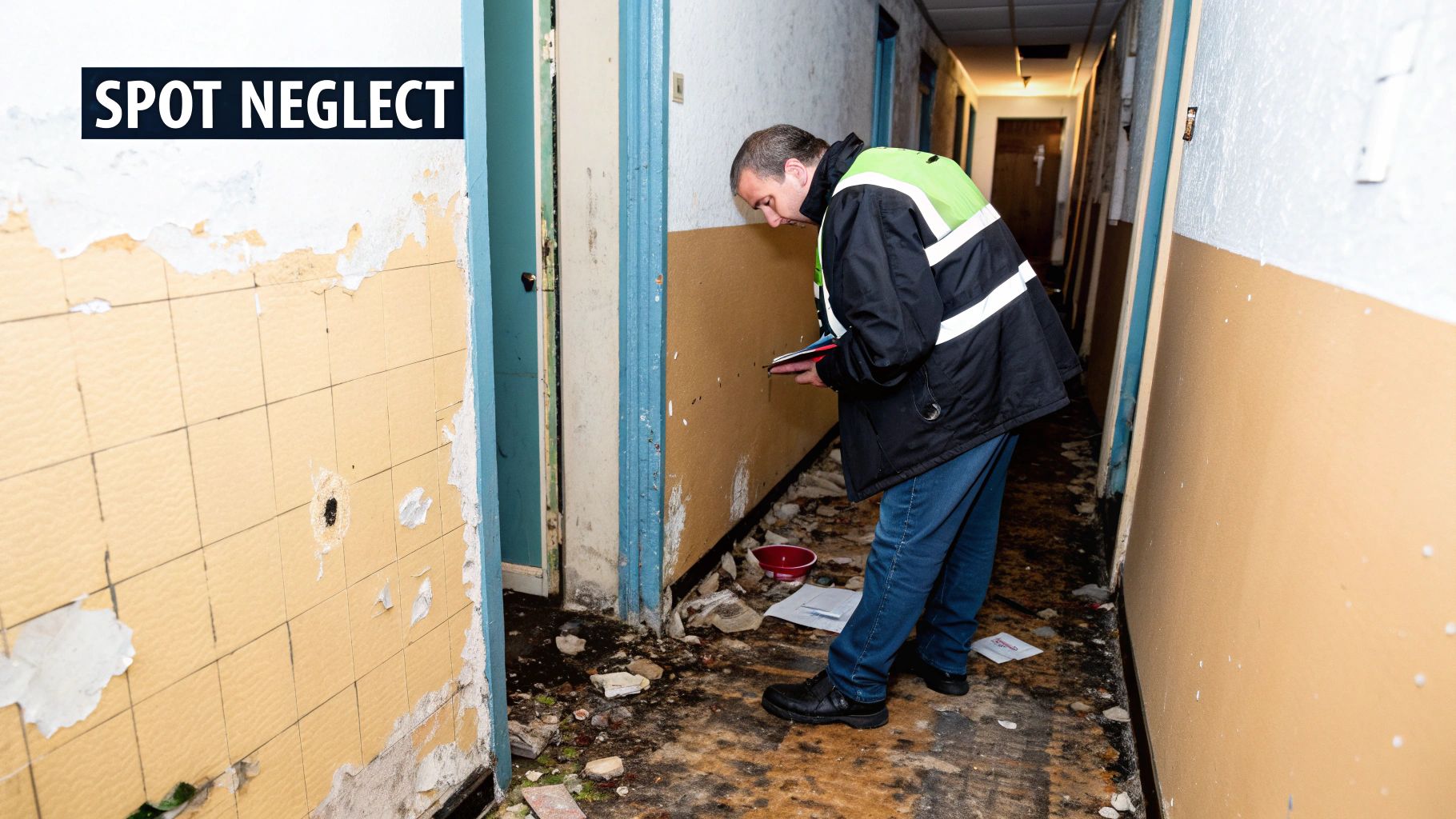
Dealing with a neglectful tenant doesn't start with a formal notice. It starts way earlier, with sharp eyes during your routine inspections. A lot of landlords fall into the trap of only looking for the big, dramatic stuff—hoarding, a kicked-in door, a smashed window. But honestly, the costliest issues usually start small, from minor problems the tenant either ignores or just doesn't report.
Your job is to catch these little things before they become big, expensive catastrophes. This means you have to look past general tidiness and focus on the actual health of the property's structure and systems.
Beyond the Obvious Mess
Look, a messy tenant isn't automatically a neglectful one. But that line can get blurry real fast. The key difference is whether their habits are causing actual damage or creating a health and safety risk.
A pile of clean laundry on the bedroom floor? That's just a lifestyle choice. But a pile of damp towels left against the drywall for weeks? That's going to cause mold and rot. That's neglect.
Here are some of those less-obvious signs you need to be looking for:
- Lingering Odors: A persistent musty smell is a huge red flag for a hidden water leak or mildew growing behind a wall. Strong pet smells that have sunk deep into the carpets (and maybe the subfloor) are also a clear sign of neglect.
- Minor Unauthorized Alterations: See a fresh patch of paint in one small area? They might be hiding a water stain or a hole they made. New, cheap-looking fixtures could mean a DIY plumbing "repair" that's just waiting to fail spectacularly.
- Early Pest Activity: A few ant traps or a can of bug spray doesn't mean you have a full-blown infestation… yet. But it does mean the tenant knows there's a problem. If they haven't called you to get professional treatment, you have to assume the problem is bigger than what you can see.
Landlord Insight: Your move-in condition report is your best friend. Seriously. It sets a clear, agreed-upon baseline for what the property looked like from day one. Without it, trying to prove that damage goes beyond "normal wear and tear" is an uphill battle you'll probably lose.
Normal Wear and Tear vs. True Neglect
You have to know the difference between a property aging gracefully and a property being damaged by a tenant. It’s fundamental. Normal wear and tear is the unavoidable decline that happens from someone just living in a place over time. Neglect is damage that happens because a tenant failed to take care of something or intentionally misused it.
Here’s how it breaks down in the real world:
- Faded Paint: Wear and Tear
- Crayon Art on the Walls or an Unauthorized Paint Job: Neglect
- Carpet That’s Worn Down in Hallways: Wear and Tear
- Pet Stains or Cigarette Burns in the Carpet: Neglect
- A Faucet Handle That's a Bit Loose from Years of Use: Wear and Tear
- A Broken Faucet from Being Yanked on or a Leak That Went Unreported: Neglect
Every time you do an inspection, take time-stamped photos of these little things. You're not just being picky; you're building a detailed record. This evidence becomes priceless if you ever need to have a serious talk with the tenant, deduct from their security deposit, or, in a worst-case scenario, start the eviction process.
Your First Move: Document and Communicate With Clarity

When you discover an issue caused by tenant neglect, your first instinct might be to pick up the phone, furious. I get it. But take a breath. The most powerful move you can make is a professional one, not an emotional one.
Resolving this efficiently starts with clear, documented communication. This isn't just about telling them what's wrong; it's about building your case from day one. Every photo, email, and notice you create is a brick in the foundation for any action you might need to take later, whether it's deducting from the security deposit or, worst-case scenario, eviction. Without it, you're in a "he said, she said" battle you can't win.
Crafting Your Initial Notice
Your first official communication needs to walk a fine line: be firm, but give the tenant a fair chance to fix the problem. This isn't the time for vague complaints. You have to be specific and, most importantly, tie the issue directly back to the lease agreement they signed.
For example, don’t just say, "The yard is a mess." That’s subjective. Instead, point to the specific rule they're breaking. This removes any wiggle room and shows you’re enforcing the contract, not a personal preference.
Here’s how you can frame it in the real world:
- For Landscaping Neglect: "An inspection on [Date] found the lawn overgrown with grass exceeding 12 inches in height. This violates section 8.1 of your lease, which outlines your responsibility for regular lawn maintenance."
- For Unreported Damage: "During our scheduled visit on [Date], we observed significant water stains on the bathroom ceiling. As per maintenance addendum 4.2, all signs of water leaks must be reported within 24 hours to prevent further damage."
- For Unauthorized Changes: "It was noted on [Date] that the living room has been painted without prior written consent, which is required under section 11.3 of the rental agreement."
This direct approach makes your expectations crystal clear.
Remember, the goal here is to get the problem solved, not to start a war. A calm, factual notice that points to specific lease clauses is always more effective than an angry phone call. It gives the tenant a clear roadmap to get back in compliance and helps preserve a professional relationship.
Setting Clear Deadlines and Expectations
A notice without a deadline is just a suggestion. Your letter must include a reasonable and specific timeframe for the tenant to "cure" the violation. Be realistic—asking someone to re-sod an entire lawn in 24 hours is setting them up to fail, but 10-14 days is perfectly fair.
Make sure your notice clearly states these four things:
- The Specific Violation: Reference the exact lease clause.
- The Required Action: What do they need to do to fix it?
- The Firm Deadline: Give a specific date.
- The Consequence: What happens next if they miss the deadline (e.g., a formal Notice to Cure or Quit will be issued).
This process of documenting neglect and communicating clearly is a huge part of protecting your investment. On that note, make sure your broader safety net is in place. It's always smart to periodically do a landlord insurance comparison to ensure your policy covers you for everything from tenant damage to liability claims. This kind of careful planning, both in your communication and your coverage, is how you deal with neglectful tenants from a position of strength.
Issuing Formal Notices When Communication Fails
When polite phone calls and documented requests fall on deaf ears, it’s time to change your approach. You have to shift from being a patient manager to a landlord who is formally enforcing the lease agreement. This means using the legal tools at your disposal, and the first one is the Notice to Cure or Quit.
Don't mistake this for an eviction notice—it isn't. Think of it as the final, legally binding warning. It gives the tenant one last, official chance to fix (or "cure") the specific problem within a certain timeframe. If they don't, then you can move toward "quit," which means filing for eviction. This notice officially brings the dispute into the legal realm, so every detail has to be perfect.
Crafting a Legally Sound Notice
A sloppy or vague Notice to Cure or Quit is worthless. Any mistake or ambiguity can invalidate the entire document, forcing you to start the process all over again. I've seen it happen, and it’s a frustrating and costly mistake for landlords.
To be effective, your notice absolutely must include:
- The Exact Violation: Don't just say the yard is messy. You need to reference the specific clause in the lease they've broken. For example, "Violation of lease section 7.B regarding property cleanliness and waste disposal."
- The Required Corrective Action: Be crystal clear about what needs to be done. Instead of "clean up the yard," write "remove all accumulated trash from the backyard and power wash the oil stains off the driveway."
- A Firm Compliance Deadline: Provide the exact date by which the issue must be resolved. This isn't an arbitrary date; it's often set by state or local law, so make sure you know the minimum notice period required in your area.
Key Takeaway: A Notice to Cure or Quit is a legal instrument. Its entire purpose is to either force the tenant to comply with the lease or to build the legal foundation for an eviction. Treat it with that level of seriousness.
Delivery and Local Laws
How you get the notice to the tenant is just as critical as what it says. Just taping it to the door might feel like enough, but it often isn't legally sufficient. Many areas have strict rules about how a notice must be delivered—often requiring certified mail or personal service to prove the tenant actually received it.
The laws governing this entire process change dramatically from state to state. For instance, understanding landlord-tenant law in California is non-negotiable for properties in the Golden State because the rules for notice periods and proper service are very specific. You must verify your local statutes before you do anything else.
It's also worth noting the bigger picture. According to a PwC report, rising construction and labor costs are squeezing rental markets globally. This financial pressure on tenants can sometimes lead to neglect, as they struggle to afford both rent and proper upkeep. This doesn't change your legal rights as a landlord, but it does highlight why following the correct legal procedure is so important for protecting your investment.
Navigating an Eviction for Property Neglect
Eviction is the absolute last resort. It’s the path you take when every other attempt to get your tenant to address property neglect has been ignored. After you’ve served a "Notice to Cure or Quit" and the deadline passes with no action from the tenant, you’re often left with no choice but to file a formal eviction lawsuit, also known as an unlawful detainer.
This isn’t just paperwork; it’s a serious legal proceeding. Treating it casually is a huge mistake.
Even a tiny error on a form or a misstep in the legal procedure can get your case thrown out by a judge. If that happens, you’re back to square one, losing more time, money, and sanity. Before you even think about filing, you have to be ready to see it through with painstaking attention to detail.
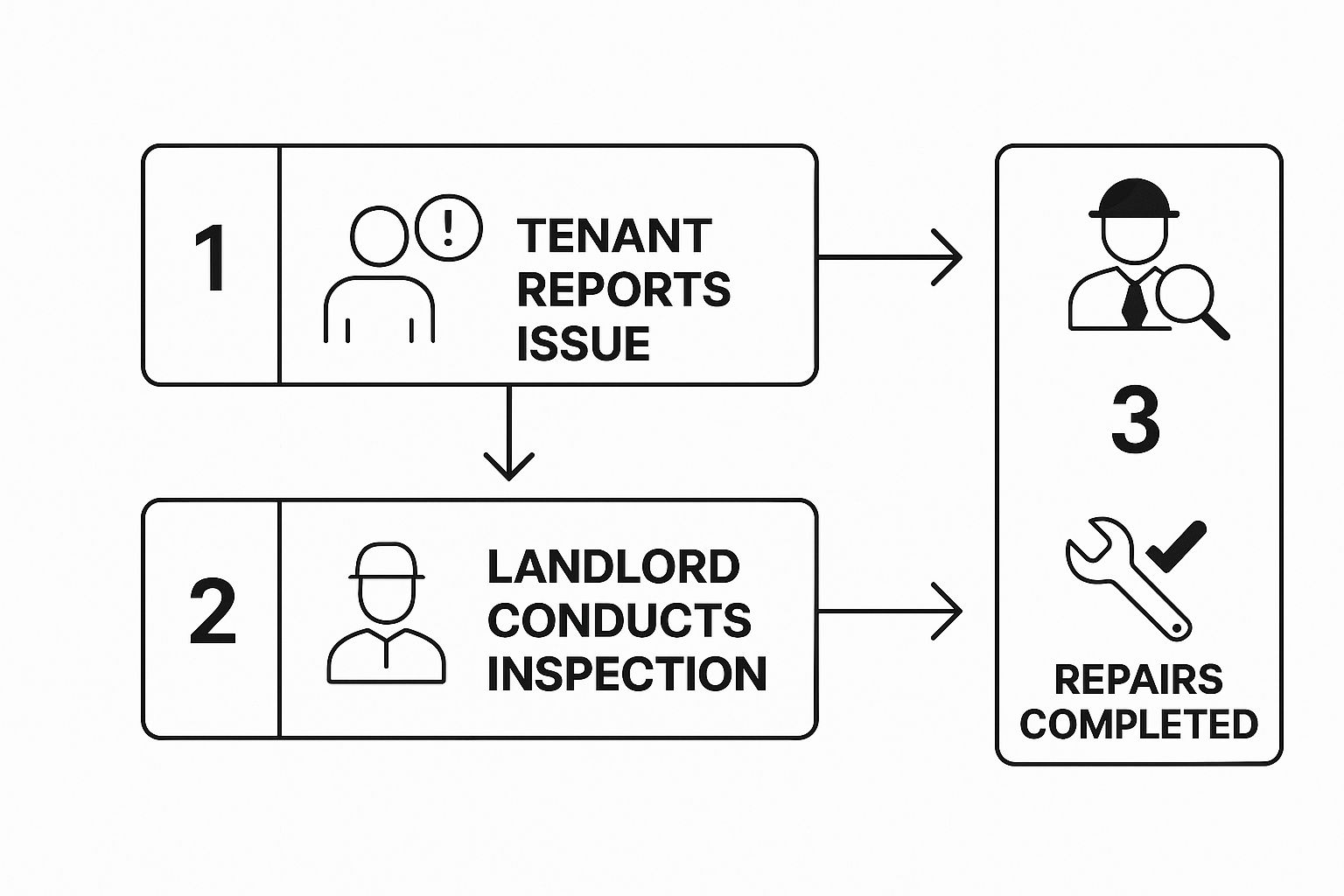
The image above lays out the perfect repair scenario, but this system completely falls apart with a neglectful tenant. The whole process hinges on the tenant actually reporting an issue. When they don't, neglect sets in, and the landlord is kept in the dark while minor problems spiral into major damage.
Building Your Case for Court
If you've been documenting everything from the very beginning, you’re already in a strong position. Your evidence is what will ultimately persuade a judge that eviction is your only remaining option. This isn't about your side of the story; it's about presenting a clear, factual timeline of neglect.
Your evidence file needs to be buttoned up and easy for a judge to understand. Think of it as painting a picture of the situation, piece by piece.
- Photo & Video Evidence: This is your most powerful tool. Have dated photos from your initial move-in inspection ready to compare with new photos from every subsequent visit. The goal is to visually show the decline.
- A Complete Communication Record: Gather every single email, text message, and formal notice you've sent. This includes your first friendly reminders all the way to the official, served "Notice to Cure or Quit."
- Inspection Reports: Any formal reports from your property visits are gold. They provide a professional, third-party assessment of the property's condition at specific moments in time.
- The Signed Lease: This is the contract. It proves the tenant knew the rules and agreed to them.
Your job in court is to prove the tenant was given every reasonable chance to fix the problem and simply refused. A meticulously organized file that shows this is infinitely more powerful than getting emotional on the stand.
What to Expect in the Court Process
Filing that unlawful detainer lawsuit officially starts the legal clock, a process that can take weeks or sometimes months to complete. Once you file with the court, the tenant must be legally "served" with the summons and complaint. They'll then have a very short window, often just a few days, to file a formal answer with the court.
If the tenant decides to fight the eviction, a court date is set. This hearing is your moment to present your case, and it’s where all that careful documentation pays off. You'll lay out your evidence, the tenant will have their say, and the judge will make a decision.
If the judge rules in your favor, they will issue a "writ of possession." This is the legal document that authorizes law enforcement to physically remove the tenant from your property if they don't leave on their own.
Recovering and Protecting Your Property Post-Eviction

So, you've finally gone through the eviction process and legally regained possession of your property. That’s a huge step. But once the tenant is out, the real work of recovery truly begins. It can feel like a mountain to climb when you first walk in, but a methodical approach is your best friend here. It will help you minimize your financial hit and get the unit ready for a responsible new tenant.
First things first: change the locks. Do it immediately. This isn’t just a suggestion; it’s a critical security measure to prevent any unauthorized re-entry.
With the property secured, it's time for a detailed move-out inspection. This isn't a casual glance around. You need to meticulously compare the unit's current state against your original move-in report, checklist, and photos. Go room by room, documenting every single issue with time-stamped photos and videos. This evidence is your lifeline for what comes next: handling the security deposit.
Calculating Deductions and Handling the Security Deposit
Now you need to build an itemized list of all damages the tenant caused. It’s crucial that this document clearly separates legitimate damages from normal wear and tear. For every deduction, you need to calculate the actual cost of the repair or replacement.
To make these deductions stick, you need solid proof. Gather everything you can, including:
- Photographic Evidence: Side-by-side photos showing the "before" (move-in) and "after" (move-out) condition are incredibly powerful.
- Contractor Invoices: Get detailed receipts or written quotes from licensed professionals for all repair work.
- Material Receipts: If you do some work yourself, keep every receipt for materials like paint, new fixtures, or flooring.
Once your itemized list of deductions is complete, you must mail it—along with any remaining deposit—to the tenant’s last known address. Be sure to do this within the specific timeframe your state law requires.
When Damages Exceed the Deposit
It’s a landlord's nightmare, but it happens: what if the repair costs are more than the security deposit? This is precisely why your thorough documentation is so critical. To recover those extra costs, your main recourse is small claims court. Filing a case allows you to present all your evidence—the photos, receipts, and inspection reports—to a judge and seek a judgment for the amount you're owed.
Landlord Insight: Taking a former tenant to small claims court is often the only way to hold them fully accountable for the damage they left behind. It’s more work, absolutely. But it sends a clear message and helps you recover losses that would otherwise come straight out of your own pocket.
Documenting Damage for Security Deposit Deductions
Properly documenting damage is the key to successfully withholding funds from a security deposit. Here’s a quick guide to what you need for common issues caused by tenant neglect.
| Type of Damage | Description of Neglect | Required Documentation |
|---|---|---|
| Large Holes in Walls | Unfilled holes beyond small nail marks from hanging pictures. | Photos of damage, contractor's invoice for drywall repair and painting. |
| Broken Appliances | Damage to a refrigerator door or cracked stove top due to misuse. | Photos of the broken item, receipt for repair parts or replacement appliance. |
| Stained or Burned Carpet | Stains from pets, spills, or cigarette burns not considered normal wear. | Move-in/move-out photos, quote/invoice for professional cleaning or replacement. |
| Unauthorized Painting | Painting rooms dark colors or with unapproved murals requiring primer. | Photos of the paint job, receipts for primer, paint, and labor costs. |
| Filth and Abandoned Trash | Excessive dirt, grime, or left-behind garbage requiring a hauling service. | Photos of the mess, invoice from a professional cleaning or junk removal company. |
This table illustrates why a detailed move-in inspection report is non-negotiable; without a baseline, it's difficult to prove the tenant caused the damage.
Managing these complex situations is undeniably challenging. It’s a major reason many property owners turn to professional help, especially in competitive markets. For those navigating these issues, understanding the benefits of expert Fresno property management can provide a clear path forward, from tenant screening to post-eviction recovery.
To better protect your property from future problems, consider upgrading your security. Modern tools like smart home security systems can offer enhanced monitoring and peace of mind between tenancies.
Your Top Questions About Tenant Neglect
Every landlord knows that some situations just don't fit neatly into a playbook. When you're dealing with a difficult tenant, it's the nuances that matter most. Let's tackle some of the toughest and most common questions that come up.
What's the Real Difference Between Normal Wear and Tear and Neglect?
This is probably the single biggest point of confusion for landlords, and getting it right is everything.
Think of normal wear and tear as the natural aging of a property. It’s the unavoidable, gradual decline that happens when someone lives in a space. Faded paint from sunlight, minor scuffs on the walls from furniture, or carpets getting a bit thin in the main hallway—that's all on you, the landlord, to fix.
Actual neglect is a different beast entirely. This is damage that could have been prevented. It happens because a tenant either failed to take reasonable care of the place or didn't bother to report a problem they should have. We’re talking about deep pet stains that have soaked through the carpet into the subfloor, a significant mold problem because a leaky pipe was ignored for months, or a window that got broken out of sheer carelessness.
Here’s the critical part: you can legally and justifiably deduct the cost of repairing neglect-related damage from the tenant's security deposit. For wear and tear, you can’t.
Can I Actually Evict a Tenant Just for Being Messy?
The short answer is usually no. Being messy or having a different standard of cleanliness isn't, by itself, grounds for eviction. But that changes the second their mess crosses a line into a genuine health and safety hazard or violates a specific clause in your lease agreement.
You definitely have grounds to take action if the unit's condition:
- Starts attracting pests: Piles of garbage or old food that are causing a roach or rodent problem.
- Blocks fire exits: So much clutter that emergency exits are no longer accessible.
- Causes property damage: Hoarding so severe it's stressing the building's structure or causing mold to grow from trapped moisture.
In these scenarios, eviction isn't your first move. You start with a formal Notice to Cure or Quit. This gives the tenant a clear warning and a specific timeframe to fix the hazardous problem.
A tenant has a right to live how they want, but that right ends where damage to your property and risks to safety begin. Always focus your communication on the tangible impact—the pests, the safety hazard, the damage—not just on the untidiness itself.
How Do I Handle a Neglectful Tenant Who's Struggling Financially?
This is where being a landlord gets really tough. It demands a delicate balance of compassion and smart business sense. The housing affordability crisis is making things incredibly complicated for everyone.
Consider this: there's a national shortage of 7.1 million affordable rental homes for the lowest-income families. With nearly 75% of these renters paying more than half their income just to keep a roof over their heads, it’s not hard to see how property maintenance can slip down the priority list. You can see the staggering data yourself in this detailed report from nlihc.org.
You can absolutely open a dialogue, try to understand what's going on, and even point them toward local tenant assistance programs or offer a payment plan for repairs. But—and this is a big but—you still have to protect your investment. If the neglect is causing serious, ongoing damage, you must follow the proper legal protocols and issue formal notices. It’s not personal; it’s about protecting your asset.
Handling these challenges takes experience and a rock-solid understanding of landlord-tenant law. At Edinhart Realty and Property Management, we bring professional, reliable expertise to the table, protecting your investment and managing difficult tenant situations with clarity and confidence. Learn how our property management solutions can bring you peace of mind.


