

The secret to getting paid on time, every time, is laying the groundwork before a tenant even gets the keys. It all starts with a rock-solid lease agreement that spells out the payment rules in black and white, backed up by professional, consistent communication. When you set clear expectations from day one, you head off confusion and make the whole process smoother for everyone.
Building Your Rent Collection Foundation

A lot of landlords think rent collection starts on the first of the month. I've learned from experience that it really starts the second the lease is signed. That document is more than just paperwork; it’s the official rulebook for the entire tenancy. Handing over a vague, generic lease is just asking for disputes and late payments down the road.
Your goal here is to leave zero room for interpretation. A strong lease is a powerful preventative tool, squashing potential problems before they even start. It also professionalizes the landlord-tenant relationship, making it clear that this is a business agreement with real obligations on both sides.
Essential Lease Clauses for Rent Collection
To turn your lease into an effective tool, you have to get specific about payments. Language like "rent is due monthly" just doesn't cut it. Your agreement needs to explicitly detail a few key things:
- The Exact Due Date: Spell it out. Rent is due on the 1st of every month. Not "the beginning of the month."
- Approved Payment Methods: List exactly how you’ll accept rent. Whether it's through an online portal like Buildium or TenantCloud, an ACH transfer, or a personal check, be specific. This stops tenants from trying to pay in ways you don't want, like with cash and no paper trail.
- The Grace Period: Clearly define your grace period, if you offer one. For example: "Payment is accepted without penalty until 5:00 PM on the 3rd of the month."
- The Late Fee Structure: Detail the exact late fee and precisely when it kicks in. Make sure you double-check your local and state laws first, as many places put a cap on how much you can legally charge.
Getting this granular might seem like overkill, but it creates a clear framework that prevents misunderstandings.
Getting Ahead of Payment Problems in the Lease
Your lease also needs to outline what happens when things go wrong. This isn't about being negative; it's about being prepared. A well-written lease protects your investment by setting clear, agreed-upon consequences for the worst-case scenarios.
A proactive approach is always better than a reactive one. The clauses you include for bounced checks and repeated late payments are your first line of defense, providing a clear, contractually agreed-upon path to resolution.
I always recommend adding clauses that specify the exact fee for a returned check, which should cover your bank charges and a little extra for your time. You can also include a provision that says something like, "after two late payments in a 12-month period, the landlord reserves the right to require all future payments be made via certified funds."
These kinds of terms show you run a professional business and can help stop bad payment habits before they even start.
Choosing Your Rent Payment Methods
The days of waiting for a rent check to finally show up in the mail are just about over. How you let your tenants pay you directly affects how quickly and consistently you get that money in your account. It's simple, really. A tenant who can pay in two clicks on their phone is way less likely to be late than one who has to track down a stamp and a mailbox.
The best approach is usually a mix. Offer a few modern, super-convenient options alongside a traditional method to make sure everyone's covered. The whole point is to find systems that are dead simple for your tenants and don't create more work for you. A painless payment process is a small but critical part of a good tenant experience, and that's the key to keeping great tenants around.
Modern Digital Payment Solutions
Online rent collection platforms were built specifically for landlords like us, and they can be a game-changer. These services typically roll payment processing, automatic late-fee calculations, and financial tracking all into one dashboard. Most let tenants pay via ACH bank transfer or with a credit card.
- ACH (Automated Clearing House) Transfers: Think of these as direct bank-to-bank payments. They're incredibly secure and usually have very low (or even zero) transaction fees for the landlord, which is why they're so popular.
- Credit/Debit Cards: This is peak convenience for tenants, but that convenience comes with a price tag. You should expect to cover a processing fee, which is usually around 2-3% of the rent amount. Some platforms let you pass that fee on to the tenant if they choose this option.
As the financial world keeps changing, some forward-thinking landlords are even starting to look into new technologies, like how cryptocurrency is transforming real estate payments.
This chart gives you a pretty clear picture of what tenants actually want when they have a choice.
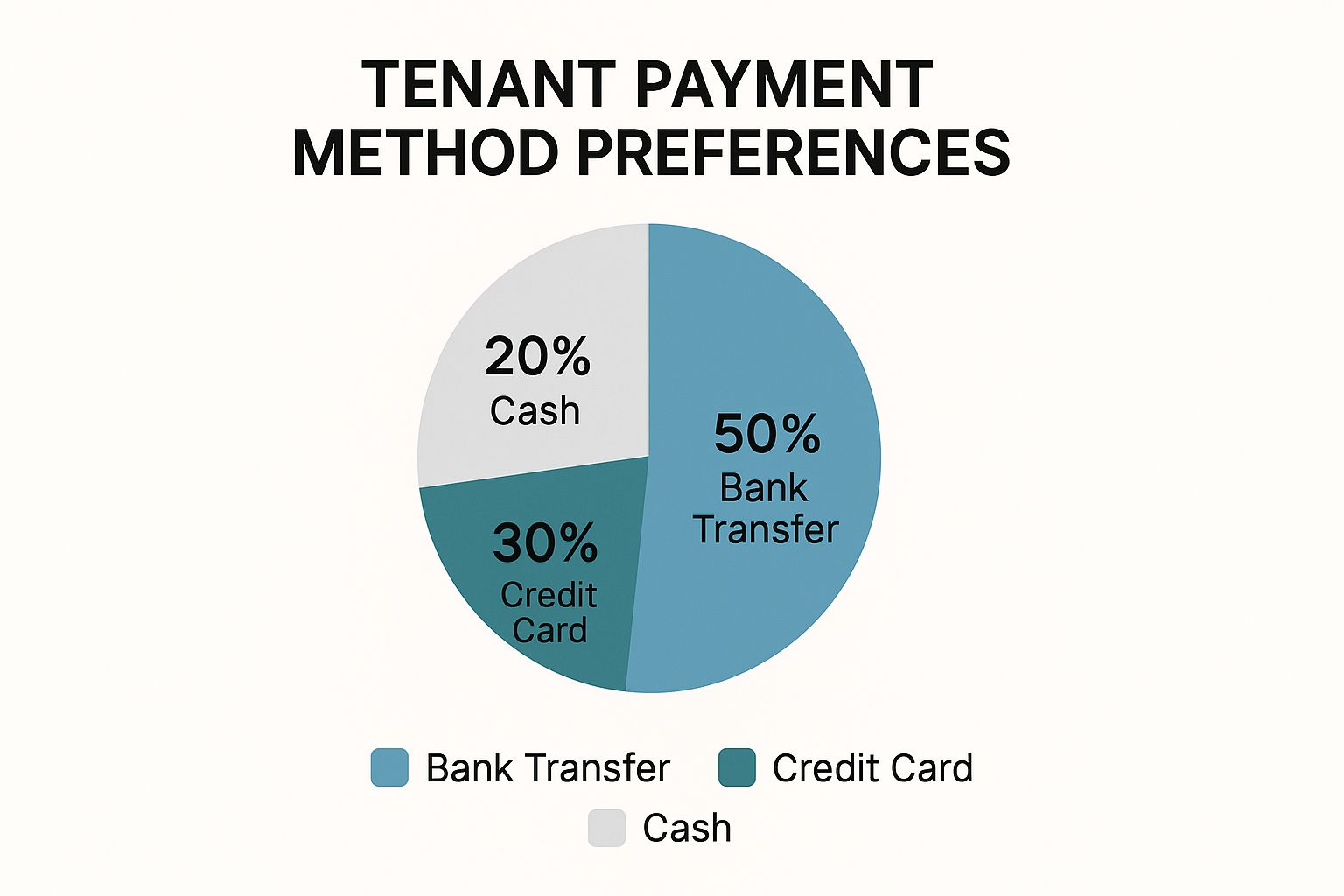
As you can see, the data doesn't lie. Half of all tenants prefer a straightforward digital bank transfer.
Comparing Rent Collection Methods
To help you decide, here's a quick breakdown of the most common payment options.
| Payment Method | Average Speed | Typical Cost for Landlord | Convenience Level | Best For |
|---|---|---|---|---|
| ACH/Bank Transfer | 3-5 business days | $0 – $2 | High | Most landlords seeking a low-cost, secure digital option. |
| Credit/Debit Card | 1-3 business days | 2-3% of rent | Very High | Tenants who need flexibility; landlords willing to absorb fees. |
| Online Platforms | Varies by method | Monthly fee + transaction costs | Very High | Landlords who want an all-in-one management solution. |
| Personal Check | 5-10 business days | $0 (plus your time) | Low | Landlords with only one or two units or less tech-savvy tenants. |
| Cashier's Check | 5-10 business days | $0 (plus your time) | Low | Situations requiring guaranteed funds, like first month's rent. |
Ultimately, online platforms that offer ACH and card payments give you the best of both worlds: security, speed, and convenience for your tenants.
Weighing Costs and Convenience
Picking the right platform is a bit of a balancing act. With property taxes, insurance, and maintenance costs all on the rise, an efficient system is non-negotiable. A recent survey found that a staggering 85% of landlords had to increase rents in the past year just to keep up with their own expenses.
While technology can make collecting rent a breeze, 35% of property owners say the cost of these platforms is a major hurdle. This makes finding a cost-effective solution absolutely crucial.
Your payment system should make your life easier, not more expensive. When you're comparing platforms, don't just look at the monthly subscription fee. Dig into the transaction costs for the payment methods your tenants will actually use.
This decision is also a piece of your bigger rental strategy. The payment options you offer can be a great selling point for your property, but you have to make sure any associated costs are baked into your pricing model. For a deeper dive on that, check out our guide on https://edinhart.com/how-to-price-rental-property/.
Still a Place for Traditional Methods
Even though digital is king, don't write off traditional options completely. Things like personal checks or cashier's checks can still have their place, especially if you have tenants who aren't comfortable with online payments.
Just be realistic about the downsides. Checks mean manual data entry, trips to the bank, and the ever-present risk of a bounce. They create a ton of administrative work and slow down your cash flow, which is exactly why most professional landlords and property managers are phasing them out as a primary collection method.
Putting Your Rent Collection on Autopilot

Let's be honest—chasing down tenants and manually tracking payments is a massive time-waster. When you put your rent collection on autopilot, you’re not just saving time; you're freeing yourself up to actually grow your portfolio instead of just babysitting it. Automation isn't a luxury anymore; it's a fundamental part of running a sharp, efficient rental business.
The first move is often the simplest and most effective: setting up automated reminders. A quick, friendly email or text that goes out three days before the due date can slash the number of late payments that are just due to forgetfulness. It’s a small, professional courtesy that keeps rent top-of-mind for your tenants.
Implementing Set-It-And-Forget-It Systems
The real game-changer is recurring auto-payments. When you give tenants the option to set up automatic withdrawals, you empower them to handle rent without a second thought. It’s the ultimate win-win. You get paid like clockwork on the first of the month, and they never have to stress about missing a payment.
Most property management software makes this incredibly simple. During onboarding, tenants authorize recurring debits from their bank account, ensuring the funds transfer on the same day every single month. It's predictable, it's reliable, and it completely kills the "check is in the mail" excuse for good. If you want to take your operations to the next level, it's worth exploring dedicated automated recurring billing solutions built for today's businesses.
Automating Fees and Receipts
A truly automated system doesn't stop at the payment; it handles the entire cycle, even the awkward parts. Instead of having to manually calculate late fees and send those uncomfortable follow-up emails, you can let your system be the bad guy.
- Automatic Late Fees: Set up your software to apply the late fee spelled out in your lease agreement the very minute the grace period ends. This takes the emotion out of it and guarantees you’re enforcing your policies consistently with every tenant.
- Instant Payment Receipts: The system should automatically fire off an email receipt to the tenant the moment their payment clears. This gives both of you a professional, documented record and cuts down on your administrative load.
This level of systemization creates a polished experience for tenants and builds a clean, indisputable financial history for every property you own.
In a competitive rental market, convenience is a key differentiator. Automation not only improves your efficiency but also enhances the tenant experience, which is critical for retention.
In today's market, this kind of efficiency is more critical than ever. With national U.S. asking rent growing by only 0.9% year-over-year and the average rent sitting at $1,773, landlords have to prioritize reliable rent collection to protect their margins. By automating the entire process, you professionalize your business and make paying on time the path of least resistance for everyone involved.
How to Handle Late Rent Payments
Even the most reliable tenants can fall behind on rent. It happens. A medical emergency, an unexpected job loss, or sometimes, they just forget. Your reaction in that moment—the very day after the grace period ends—sets the tone for the entire process and is crucial for protecting your investment.
The key is to be professional, firm, and fair, following a consistent, documented process every single time. No exceptions.
Your first move? Immediate communication. The moment rent is officially late, send a friendly but direct message. This isn't the time for an angry phone call; it's a professional notification. An email or a message through your tenant portal is perfect because it creates a timestamped paper trail. Keep it simple: state that the rent is overdue and ask when you can expect payment.
Escalating Your Communication
So, what happens if your gentle reminder gets ignored, or the tenant misses the new payment date they promised? It’s time to formalize things. You're shifting from a friendly nudge to an official notice. Your tone should still be professional, but now your communication needs to have legal teeth.
This is when you serve a formal Pay or Quit Notice. This isn't just a letter; it's a legal document that officially informs the tenant they have breached the lease by not paying rent. It must state the exact amount they owe, including any late fees, and give them a specific number of days to pay in full before you start the eviction process.
The rules for these notices are incredibly strict and vary wildly from state to state. You absolutely have to use the right format and deliver it correctly for your area. For a deeper dive into this, check out our guide on how to issue a notice to a tenant.
When to Offer a Payment Plan
Sometimes, you have a great tenant with a perfect payment history who just hits a rough patch. In these situations, jumping straight to eviction might not be the smartest move. Offering a one-time, written payment plan can be a pragmatic solution that keeps a good tenant in your property and ensures you get paid.
If you go this route, make sure the plan is formalized in writing and includes:
- The total amount due, including all late fees.
- Specific installment dates and amounts, which will be paid in addition to their regular upcoming rent.
- A clear consequence clause that states if they miss any part of the plan, the eviction process will begin immediately without further warnings.
This approach gives a struggling tenant a lifeline while still protecting your business. But tread carefully—this should be an exception, not the rule. If the same tenant constantly needs a payment plan, it's a major red flag signaling deeper financial instability.
It's a tough world for renters right now. Between January 2023 and 2024, tenants saw their rent expenses jump by nearly 18% globally, making late payments more common. A firm but flexible collection strategy is more critical than ever.
For landlords looking to take the stress out of this process, there are ways to learn how to collect late payments from customers automatically. Automating these reminders can help preserve the landlord-tenant relationship while still enforcing the lease.
Ultimately, if communication breaks down completely and all notices are ignored, your only path forward is to follow through with the legal eviction process as defined by your local landlord-tenant laws.
Navigating Legal Rules and Best Practices

Being a landlord is so much more than just collecting a check. It’s about running a business, and that means operating within a complex framework of laws. Getting a handle on these rules isn't just a good idea—it's absolutely essential for protecting your investment and maintaining a professional, defensible operation.
Every move you make, from how you set a late fee to the way you send a notice, is governed by specific regulations. These laws can vary wildly not just from state to state, but often by city or even county. Staying on top of your local requirements is non-negotiable.
Know Your Local Landlord-Tenant Laws
Your first job is to get intimately familiar with the statutes that control rental properties right where you operate. These laws are the rulebook for your landlord-tenant relationships and directly shape how you can and cannot collect rent.
There are a few key areas you absolutely have to research:
- Maximum Late Fees: Many states put a hard cap on how much you can charge for late rent, often tying it to a percentage of the monthly payment. Go over that limit, and you could be facing legal penalties.
- Grace Period Mandates: Some areas legally require you to offer a grace period. This gives tenants a few extra days to pay up before you can even think about applying a late fee.
- Notice Requirements: The law is incredibly specific about how you must deliver legal notices, like a "Pay or Quit" notice. Get it wrong, and it won't hold up in court.
Staying compliant is your best defense. The legal landscape is always shifting, so it's a good practice to review resources that break down the details. A great example is this overview of landlord-tenant law in California, which shows the level of detail you need to understand for your own state.
Fair Housing and Meticulous Records
Beyond the local rulebook, all of your policies have to line up with the federal Fair Housing Act. What does this mean in practice? You have to apply your rent collection rules—due dates, late fees, and enforcement—exactly the same way for every single tenant. You can't offer special treatment or make an exception for one person without offering it to everyone, as that could easily be seen as discrimination.
Meticulous documentation is the cornerstone of legal compliance. In any dispute, the landlord with the most detailed and organized records almost always has the advantage.
This is where your record-keeping has to be bulletproof. You need a detailed log of every single transaction and conversation.
- Payment Records: Always note the date rent was received and the payment method. Every time.
- Communication Log: Save every email, text message, and portal communication related to rent or payment issues.
- Formal Notices: Keep copies of any legal notices you send out, along with proof of delivery.
This paper trail creates a clear, indisputable record of your actions. It's invaluable if you ever find yourself in a legal challenge, proving that you run your rental business professionally, fairly, and—most importantly—by the book.
Common Questions About Collecting Rent
Even the most buttoned-up landlord with a rock-solid lease and automated rent collection will run into odd situations. It’s just the nature of the business. Knowing how to handle these moments with confidence is what separates the pros from the amateurs.
Let's walk through a few of the most common "what if" scenarios I see all the time.
What Is the Most Effective First Step for Late Rent?
Your first move should be immediate, polite, and documented. The very day after rent is officially late (after any grace period), send a friendly email or text. Nine times out of ten, a late payment is an honest mistake, and a gentle nudge is all it takes to resolve it.
This isn't the time to be aggressive. Just keep it simple and professional.
Your message should clearly state:
- The rent was due on the 1st.
- The total amount now owed, including any applicable late fees.
- A quick reminder of how they can pay.
This approach shows you’re on top of your business without souring the relationship. Most importantly, it starts a digital paper trail from day one—something that becomes absolutely critical if the problem doesn't get resolved quickly.
Can I Refuse a Partial Rent Payment?
Generally, yes, you can. But the real question is, should you? This is where things get tricky, and it really depends on your local landlord-tenant laws. Accepting a partial payment can sometimes torpedo an eviction process, forcing you to start all over again.
In many places, accepting even a single dollar of what’s owed can be legally seen as resetting the tenancy for that month. If the tenant doesn't pay the rest, you could be back at square one with any legal proceedings.
Before you accept a penny less than the full amount, you absolutely must know your local laws. If you do decide to accept it, get a signed agreement in writing. Always. This document needs to be crystal clear, spelling out the remaining balance, the non-negotiable deadline for paying it, and a statement that accepting this partial sum doesn’t waive your right to evict if they fail to pay in full.
How Can I Encourage On-Time Payments?
This is all about being proactive, not reactive. You want to make paying on time the path of least resistance for your tenants.
The easiest way to do this is to offer modern, convenient payment options. An online portal with an auto-pay feature is the gold standard. When a tenant can just "set it and forget it," you've eliminated the possibility of someone simply forgetting. You could even offer a small carrot, like a tiny discount for enrolling in auto-pay or for a perfect 12-month on-time payment record.
Finally, your late fee policy needs to be enforced with unwavering consistency. When tenants learn that late fees are applied automatically and without exception, it sends a powerful message about the importance of the due date. It shows you run a professional operation with clear, predictable rules for everyone.
Managing a rental property effectively takes real expertise and consistent effort. If you're looking to make your rent collection seamless and get the most out of your investment, Edinhart Realty and Property Management offers the professional, reliable services you need to handle every last detail. Let us take the stress out of being a landlord.
Learn more about our property management solutions.


