

So, you're ready to jump into the world of rental properties? It's a journey that starts with a hard look at your finances, moves into some smart market research, leads to buying the right property, and then settles into the rhythm of managing your tenants. If you master these stages, you can turn a real estate goal into a real, income-producing asset.
Your Path to Becoming a Landlord in Central California
Stepping into real estate investing for the first time can feel like a huge undertaking, but it’s one of the most reliable ways to build serious long-term wealth. The trick is to break the whole thing down into smaller, more manageable pieces.
For anyone looking to invest here in Central California, the markets in Fresno and Clovis are buzzing with opportunity. With a smart strategy, you can go from the planning phase to cashing that first rent check with confidence.
This guide is here to cut through the noise and show you the way. We’ll walk through the essential steps every new landlord needs to take, with practical advice geared specifically for our local area. Knowing the road ahead is the best way to make smart decisions that protect your investment and boost your returns.
The Landlord Journey Simplified
The path to owning your first rental can be broken down into a pretty straightforward flow: plan, buy, and manage. This visual lays it all out.
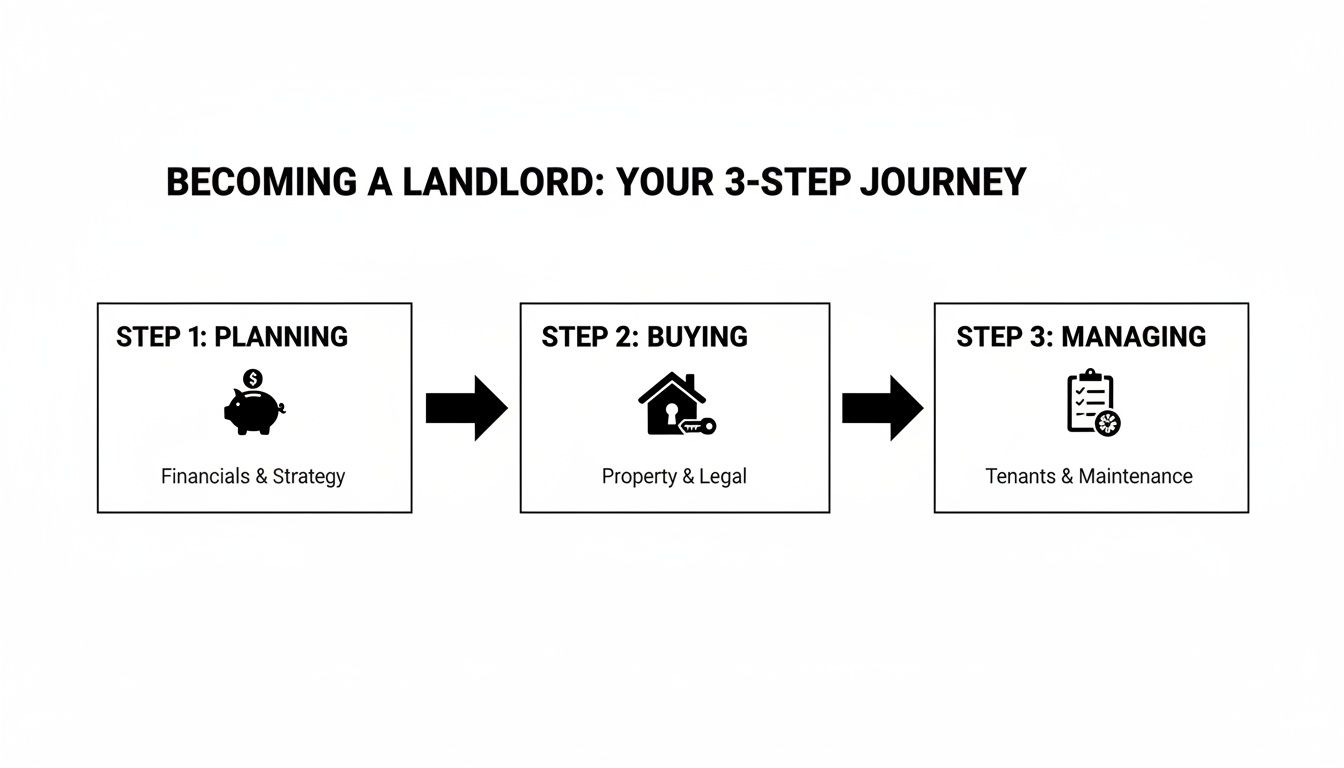
This roadmap makes it clear that success isn’t just about one big purchase. It’s a cycle. You need strategic planning, a smart acquisition, and then diligent, ongoing management. Each phase builds on the one before it, creating a solid foundation for a profitable rental business.
Why Rental Properties Are Still a Smart Investment
Even with all the economic ups and downs, real estate remains one of the most dependable ways to create wealth. Unlike stocks or other volatile assets, rental properties offer a unique mix of financial perks that work together to grow your net worth over time. And in growing areas like Fresno County, the consistent demand for housing means you'll have a steady stream of potential tenants.
Here’s what makes property investment so powerful:
- Consistent Cash Flow: That monthly rent check is a predictable income stream. It can cover your mortgage and expenses, and what's left over is pure profit.
- Property Appreciation: Real estate values tend to climb over the long haul. Your equity builds quietly in the background without you having to lift a finger.
- Tax Advantages: Landlords get access to some fantastic tax deductions, including mortgage interest, property taxes, operating costs, and even depreciation.
Becoming a rental property owner isn't just about buying a house—it's about building a business. Success demands a proactive mindset, a sharp eye for detail, and a clear understanding of both the financial opportunities and the legal responsibilities you're taking on.
This is where having a local expert in your corner makes all the difference. Working with a team like Edinhart Realty & Property Management gives you the insider knowledge you need to navigate the market confidently. From pinpointing up-and-coming neighborhoods to screening tenants and handling late-night maintenance calls, professional guidance helps you make the right call, every time. It’s an invaluable resource for first-time investors and seasoned pros looking to take their portfolio to the next level.
Building Your Financial Foundation for Investment
Before you even start browsing listings in Fresno or Clovis, you need to take a hard, honest look at your finances. This is the absolute first step, and it's way more than just saving up a down payment. Think of it as building a solid launchpad for your investment career—one that can actually handle the bumps and surprises that come with being a landlord.
Lenders see rental properties as a higher risk than your own home, so they want you to have more skin in the game. That means a down payment of around 20-25% is pretty standard. Putting this much down helps you sidestep Private Mortgage Insurance (PMI) and usually locks in a better interest rate, which is a direct win for your monthly cash flow.
But the down payment is just the first check you’ll write. You have to account for the total cost of getting the keys in your hand.
- Closing Costs: Expect these to run between 2% to 5% of the home's price. On a $400,000 property, that's another $8,000 to $20,000 in cash for things like the appraisal, loan fees, and title insurance.
- Immediate Repairs: Even if a place looks "turnkey," it probably needs something. A fresh coat of paint, new carpet, or a quick plumbing fix can make all the difference in getting it rent-ready from day one.
- Initial Vacancy: It’s rare to find a perfect tenant the day you close. You need to be prepared to cover the mortgage and utilities for a month or two without any rent coming in.
Assess Your Financial Health
When you apply for a loan, lenders are going to zoom in on two things: your credit score and your debt-to-income (DTI) ratio. A great credit score, ideally 740 or higher, shows you’re a responsible borrower and opens the door to the best loan terms.
Your DTI ratio tells them if you can truly afford another mortgage. It’s your total monthly debt payments divided by your gross monthly income. Most lenders want to see a DTI of 43% or less, and that includes the new mortgage payment you're about to take on. Do the math yourself first—it gives you a real-world idea of what you can actually afford.
Your cash reserve is your single most important safety net. I can't stress this enough. Set aside at least six months' worth of mortgage payments, taxes, and insurance in a separate account. This is the fund that will save you when you have a vacancy or a big, unexpected repair like a new HVAC unit. It turns a potential crisis into a manageable problem.
Define Your Investment Goals
Once your financial picture is clear, it's time to figure out what you're actually trying to achieve. Are you in this for steady monthly income or long-term growth? Your answer here will guide every single decision you make from this point forward.
- Cash Flow Focus: This strategy is all about immediate, consistent income. You’re hunting for properties where the rent easily covers the mortgage, taxes, insurance, and maintenance. A good target to aim for is a cash-on-cash return of 8% or higher.
- Appreciation Focus: With this approach, you're making a bet that the property's value will climb significantly over time. These homes might be in up-and-coming neighborhoods and may not generate much cash flow at first, but the big payoff comes when you eventually sell.
The real estate market is showing strong returns, especially as housing shortages push more people into renting. By 2025, U.S. real estate revenue hit $1.5 trillion, and the demand for single-family rentals has skyrocketed. Knowing your goals helps you analyze deals with a clear purpose, so you’ll know whether to go for a stable property in an established area or a place with high growth potential in a developing part of Fresno.
If you’re looking to get creative with funding, you might want to explore owner financing as an alternative to traditional banks. And for a deeper look into the conventional lending process, check out our guide on how to finance an investment property.
Finding the Right Investment Property in Fresno and Clovis

Okay, you've got your finances in order and your goals mapped out. Now for the exciting part—the hunt.
Let's be clear: finding the right investment property isn't about falling in love with a charming front porch. It’s about spotting a genuine asset that will work for you financially. In a market as competitive as Fresno and Clovis, that means you have to analyze properties like a seasoned pro, looking past the fresh paint to see the real numbers.
Becoming a successful landlord really boils down to this: can you spot potential where others don't? It's about knowing the local demand, having a good sense of where the area is headed, and, most importantly, running the numbers with a critical, unbiased eye.
Analyzing the Local Market
Before you even start scrolling through listings, you need to understand the lay of the land. Not all neighborhoods are created equal. A house in the Clovis Unified school district, for instance, will likely attract long-term families and command higher rent. On the other hand, a property near Fresno State could be a fantastic source of consistent student rentals.
You want to look for signs of a healthy, growing rental market:
- Job Growth: Are new companies moving in? A strong job market means more people needing a place to live.
- Population Trends: Is the city growing? More people means more demand for housing.
- Vacancy Rates: A low vacancy rate, ideally below 5%, is a great indicator that demand is strong.
- Future Development: Keep an eye on city plans. New parks, shopping centers, or transit lines can seriously boost a neighborhood's appeal and your property's value.
Don't underestimate these factors. The rental market is buzzing right now because so many people are stuck between wanting to own a home and the harsh reality of affording one. Recent research shows that while 71% of renters dream of homeownership, 56% feel it’s out of reach. With 75% of homes in Fresno considered unaffordable and median list prices hitting $424,200, the demand for good quality rentals isn't going anywhere. You can read more on the global housing sentiments here.
Key Metrics for Evaluating Profitability
Once you’ve identified a few promising neighborhoods, it’s time to get down to the nitty-gritty and analyze specific deals. A couple of quick calculations can tell you whether a property is even worth a second look.
The 1% Rule is a fantastic first-pass filter. The idea is simple: the gross monthly rent should be at least 1% of the total purchase price (including any immediate repair costs). So, for a $350,000 property, you'd want to see at least $3,500 in monthly rent. If it’s way off, it's probably not going to cash flow.
The Capitalization Rate (Cap Rate) is where you get serious. This is the real measure of an investment's return. It's your Net Operating Income (NOI) divided by the property's purchase price. A higher cap rate often means a better return, though sometimes it can signal higher risk.
To find your NOI, you just subtract all your operating expenses—property taxes, insurance, maintenance, vacancy estimates—from your total rental income. The cap rate is powerful because it lets you compare different properties apples-to-apples, no matter how you plan to finance them. For a deeper look at this, check out our guide on how to find investment properties.
Single-Family vs Multi-Family Properties
One of the biggest choices you'll face is the type of property you want to own. In the Central Valley, both single-family homes and multi-family units like duplexes or triplexes can be great investments, but they serve different purposes.
To make it easier, here's a quick breakdown of what you can expect from the most common rental property types in our area.
Investment Property Type Comparison for Central California
| Property Type | Pros | Cons | Ideal Investor Profile |
|---|---|---|---|
| Single-Family Home | Attracts long-term tenants (often families), lower turnover, simpler management, appreciates well. | Only one stream of income; a vacancy means 100% income loss. | A new investor focused on appreciation and building a stable, long-term asset. |
| Multi-Family Unit | Multiple income streams reduce vacancy risk, economies of scale for repairs, higher cash flow potential. | More complex management, higher tenant turnover, can be harder to finance. | An investor prioritizing cash flow who is comfortable with more active management. |
Ultimately, this choice circles back to your personal goals. If your top priority is maximizing monthly cash flow and you're ready for more hands-on management, a duplex in a solid Fresno neighborhood could be a home run. But if you’d prefer a simpler, lower-touch investment focused on long-term growth, a classic single-family home in Clovis might be the perfect fit.
This is where having some local, on-the-ground expertise becomes a game-changer. An experienced partner like Edinhart can give you the real scoop on neighborhood trends, school performance, and zoning changes that you'll never find on a national real estate site. That kind of insider knowledge gives you the edge you need to find an investment that truly pays off.
Getting Your Property Rent-Ready for Top-Tier Tenants
Alright, the deal is closed. Now the real fun—and the real work—begins. You’ve got the asset, but it’s not making you any money just sitting there. Your next job is to turn that house into a safe, desirable home that will have the best tenants in Fresno and Clovis lining up.
This isn't just about a quick clean-up. We're talking about strategic updates, locking down legal compliance, and marketing the property like a pro to get it rented fast and for top dollar.
Smart Renovations That Actually Pay Off
Not all renovations are created equal, especially in a rental. A full-blown kitchen remodel might look great on HGTV, but it probably won’t get you the return you need. The trick is to focus on high-impact, lower-cost improvements that boost the property's appeal and justify a higher rent.
Put yourself in a renter's shoes. They want something durable, neutral, and clean. A fresh coat of paint in a modern neutral like Swiss Coffee or Agreeable Gray can make a whole place feel brand new. Swapping out old, dim light fixtures for bright, modern LEDs is another easy win that brightens up a room and even lowers energy bills.
Here are a few updates that consistently deliver a great ROI:
- Flooring: Get rid of that stained, worn-out carpet. Luxury vinyl plank (LVP) is a landlord's best friend—it looks like hardwood, is incredibly durable, and handles the wear and tear of rental life beautifully.
- Kitchen & Bath Touch-Ups: You don't need to gut the place. Simple things like refinishing old cabinets, swapping out dated hardware, or reglazing a tired-looking bathtub can make a massive difference for just a few hundred bucks.
- Curb Appeal: First impressions are everything. A freshly painted front door, some new mulch in the flower beds, and a power-washed walkway create an inviting vibe before anyone even steps inside.
And don't forget security. It's a must. Using professional residential locksmith services to rekey all the locks between tenants is a simple, crucial step. It gives you and your new tenants peace of mind.
California's Habitability Laws: This Isn't Optional
Before a single tenant moves in, your property must legally meet California's "implied warranty of habitability." This is non-negotiable, and getting it wrong can land you in serious legal and financial trouble.
This means all the basic necessities must be in good working order. We're talking effective weatherproofing, functional plumbing and electrical systems, and a safe, clean environment without any pests or hazards. Working locks on every door and window are also required.
A "rent-ready" property is more than just clean—it's legally compliant and safe. Documenting the property's condition with a detailed move-in checklist and photos is your best protection against future disputes. This diligence establishes a baseline and reinforces professional management from day one.
Marketing and Nailing the Right Rent Price
How you market your property directly determines the kind of applicants you get and how long it sits empty. In a competitive market like ours, blurry cell phone pictures and a one-sentence description just won't fly.
Professional photography is a non-negotiable investment. It’s that simple. Great photos highlight your property’s best features, attract serious renters, and ultimately help you command a higher rent. Here at Edinhart, we bring in professional photographers and even use expert staging to ensure our listings pop.
Setting the rent is a balancing act. Price it too high, and the vacancy will eat into your profits. Price it too low, and you're just leaving money on the table. The solution is a detailed Comparative Market Analysis (CMA). This means digging into what similar properties in that specific neighborhood are currently renting for to land on a competitive, profitable price point.
This data-driven approach is critical, especially now. With a massive housing shortage, over 80% of households in developed economies are leaning toward renting. In the US, single-family rentals saw a 1.7% jump in 2025, hitting a seven-year high. Understanding these market forces helps you position your property for maximum success.
Mastering Your Role as a Landlord
Once your property is rent-ready, your hat changes. You’re no longer just an investor; you’re a landlord. This is where the rubber meets the road, and your success hinges on putting efficient, legally sound systems in place from the very beginning.
Believe me, mastering this role is less about putting out fires and more about making sure they never start in the first place.
The Make-or-Break Step: Rigorous Tenant Screening
Let me be blunt: the single most important thing you can do to protect your investment is to place a high-quality tenant. A thorough, consistent, and legally compliant screening process is your best defense against late payments, property damage, and the nightmare of eviction.
Rushing this part of the process is a rookie mistake I’ve seen cost people thousands. Never, ever rely on a gut feeling.
This isn’t just a simple check; it’s a multi-layered investigation into an applicant's financial stability and rental history. Here’s what we look at, without fail:
- Credit Report: We’re looking for a pattern of on-time payments and responsible debt management. A low score isn’t an automatic "no"—medical debt is a world away from a long history of maxed-out, unpaid credit cards.
- Nationwide Background Check: This uncovers any relevant criminal history that could signal a risk to your property or the neighborhood.
- Employment and Income Verification: We always verify income directly with the employer. The gold standard is an income of at least three times the monthly rent. This ensures they can comfortably afford the payment without being stretched thin.
- Rental History Verification: We talk to their last two landlords. We ask direct questions: Did they pay on time? Did they give proper notice? Would you rent to them again? The last question is often the most telling.
Your Legal Shield: The Ironclad Lease Agreement
Think of your lease as the legal backbone of the entire landlord-tenant relationship. This is absolutely not the place to download a generic template from the internet. California’s landlord-tenant laws are notoriously complex and tenant-friendly, making a professionally drafted, state-specific lease non-negotiable.
We exclusively use forms from the California Association of Realtors (CAR). Why? Because they are meticulously updated to reflect every new law and regulation, protecting you from legal landmines. This document sets clear, enforceable expectations on everything from rent payment schedules and late fees to maintenance duties and guest policies.
A strong lease is more than a list of rules; it's a foundational communication tool. It ensures that from the moment they get the keys, your tenants know exactly what's expected, which dramatically cuts down on future misunderstandings.
Smart Systems for Rent and Repairs
Consistent cash flow is the name of the game, and that starts with a bulletproof rent collection system. Moving away from chasing down checks is a game-changer for new landlords.
Online payment portals automate the entire process. They give tenants easy ways to pay, create a perfect digital record of all transactions, and can even send out automatic reminders and late-fee notices. It takes the emotion and awkwardness out of the equation.
You also need a crystal-clear process for handling maintenance. Tenants need to know exactly how to report an issue, whether it's a leaky faucet or a dead appliance. Responding quickly isn’t just good customer service that reduces turnover; it’s your legal obligation to maintain a habitable home. Trust me, timely repairs prevent small problems from turning into massively expensive disasters.
You can learn more about your specific duties in our guide to California landlord-tenant law.
How Hands-On Do You Want to Be?
This is a crossroads every investor reaches. What kind of landlord do you want to be? Are you the hands-on type who wants to field every call and coordinate every repair? Or do you see this as a more passive investment, preferring to let a professional team handle the daily grind while you focus on the big picture?
There’s no wrong answer, but you have to be honest with yourself.
At Edinhart, we’ve built our services around this choice, offering two distinct models to fit your goals and lifestyle. Understanding the difference is key to creating a rental business that works for you, not the other way around.
Edinhart Property Management Service Tiers
We've structured our services to provide the right level of support for any type of investor. Whether you just need help with the crucial first steps or want a completely hands-off experience, we have a solution.
| Feature | Placement-Only Service | Full-Service Monthly Management |
|---|---|---|
| Ideal For | Hands-on owners who live locally and want to manage tenant relations and maintenance themselves. | Investors seeking a passive experience, out-of-state owners, or anyone who values their time over tasks. |
| Marketing | Professional photos, compelling listings, and broad advertising to attract top applicants. | ✅ Includes all Placement-Only features. |
| Tenant Screening | Full credit, background, income, and rental history verification. | ✅ Includes all Placement-Only features. |
| Lease Execution | Drafting and signing of a legally compliant CAR lease agreement. | ✅ Includes all Placement-Only features. |
| Rent Collection | ✅ Ongoing monthly rent collection through an online portal. | |
| Maintenance | ✅ Coordination of all repairs with vetted, licensed vendors. | |
| Tenant Communication | ✅ Handling all tenant inquiries, requests, and issues. | |
| Financials | ✅ Detailed monthly and year-end accounting statements. | |
| Inspections | ✅ Regular property inspections to protect your investment. |
Our Placement-Only service is perfect if you're comfortable with the day-to-day management but want an expert to handle the high-stakes work of finding and vetting the absolute best tenant. We get the tenancy started on the right foot, then hand you the keys.
On the other hand, our Full-Service Management is the turn-key solution for owners who want the financial benefits of real estate without any of the headaches. We become the single point of contact for everything—from collecting rent to handling middle-of-the-night emergency calls—letting you enjoy true passive income and complete peace of mind.
Common Questions from New Rental Property Owners

When you're jumping into the world of rental properties, it’s only natural to have a ton of questions. Even the best-laid plans can leave you wondering about the specifics. We get it. Here are some direct answers to the most common uncertainties we hear from new investors right here in the Fresno and Clovis area.
How Much Profit Should I Expect from a Rental Property?
This is the big one, right? While every property is different, a solid benchmark to aim for is an 8% or higher cash-on-cash return. This is the real measure of your investment's performance—it shows you the annual cash flow you're getting back based on the actual cash you put in.
Let’s say you put $80,000 down in cash for a property (that’s your down payment plus all the closing costs). If you clear $8,000 in net profit for the year after every single expense is paid, your cash-on-cash return is 10%. That’s a healthy return that tells you the investment is working hard for you from day one.
You also have to think about vacancies. The Fresno market is strong, but you can't assume 100% occupancy. A smart move is to always budget for at least one month of vacancy each year, which works out to an 8.3% vacancy factor. It’s better to be safe than sorry.
What Are the Biggest Hidden Costs of Ownership?
Beyond the mortgage, a few surprise costs can catch new landlords off guard. Getting ahead of these is key to staying profitable and stress-free.
- Capital Expenditures (CapEx): These are the big-ticket items—think a new roof, an HVAC unit, or a water heater. They don’t happen often, but they’re expensive when they do. A good rule of thumb is to sock away 5-10% of your monthly rent just for future CapEx.
- Property Tax and Insurance Hikes: Don't get too comfortable with your initial escrow payment. Property taxes get reassessed, and insurance premiums almost always creep up year after year. Sometimes, the jump can be pretty significant.
- Turnover Costs: When one tenant moves out, the meter starts running. You’re looking at professional cleaning, fresh paint, changing the locks, and any marketing needed to get the next tenant in the door. It all adds up fast.
One of the most common pitfalls for new investors is underestimating maintenance and capital expenditures. A proactive budget for these inevitable costs is the difference between a profitable asset and a financial drain.
How Can I Legally Protect Myself as a Landlord?
Your best defense is a good offense, which means having the right paperwork, insurance, and legal structure in place from the start.
First, get a comprehensive landlord insurance policy. Make sure it covers not just property damage, but also liability and loss of rent. It’s your primary safety net.
Next, always use a rock-solid lease agreement. We recommend the ones from the California Association of Realtors (CAR), as they are constantly updated to comply with the latest state and local laws. You’ll also want to meticulously document the property’s condition before a tenant moves in—take photos, use a detailed checklist, and get it signed by the tenant.
For ultimate protection, think about setting up an LLC (Limited Liability Company) for your rental business. This creates a legal wall between your personal and business finances, which can be a lifesaver if you ever face a lawsuit.
Navigating these questions is a core part of successful property management. At Edinhart Realty and Property Management, our expertise is designed to provide you with the answers and systems you need for a stress-free and profitable investment experience. Discover how our professional services can help you build your real estate portfolio with confidence at https://edinhart.com.


