

Selling your home is more than a transaction; it's about presenting a dream to potential buyers. While you see a cherished space full of memories, buyers need to envision their own future within those walls. This is where strategic staging transforms your property from a personal home into a highly desirable product.
Effective home staging isn't about expensive renovations or hiding flaws; it's the art of highlighting your home's best features, creating an emotional connection, and maximizing its perceived value. To gain more comprehensive insights into boosting your home's appeal, exploring essential staging tips can provide a strong foundation for understanding these core concepts. Statistics from the National Association of Realtors consistently show that staged homes sell faster and for a higher price than their non-staged counterparts. In any competitive market, presenting a move-in ready, aspirational space is non-negotiable.
This comprehensive guide provides eight actionable home staging tips for sellers, moving beyond generic advice to offer specific strategies that will captivate buyers, encourage higher offers, and accelerate your sale. Let's dive into the expert techniques that will make your property stand out.
1. Depersonalize and Declutter: Creating a Buyer's Blank Canvas
The most crucial of all home staging tips for sellers is to transform your personal home into a prospective buyer's future residence. This foundational step involves two distinct but related actions: depersonalizing and decluttering. The goal is to create a neutral, inviting space where buyers can project their own lives, not feel like guests in yours.
Depersonalization means packing away the items that tell your family's story. This includes family photographs, children's artwork from the refrigerator, diplomas, personal trophies, and any distinct collections. While these items make a house a home, they can prevent a buyer from forming an emotional connection to the property.
Actionable Steps for Implementation
Simultaneously, a rigorous decluttering process is essential. This goes far beyond a simple weekend tidy-up. It's about strategically editing your belongings to maximize the perception of space.
- Kitchen Counters: Clear everything off except for one or two decorative items, like a bowl of fresh fruit or a stylish coffee maker.
- Bookcases and Shelves: Remove at least half of the books and objects. Arrange the remaining items artfully, with space between them to create a sense of openness.
- Closets and Cabinets: Buyers will look inside closets. Aim to have them no more than 50-60% full. Organized, half-empty closets suggest ample storage space, a major selling point.
- Furniture: Evaluate every piece of furniture. Is that oversized armchair making the living room feel cramped? Remove it. The less furniture you have, the larger the room will appear.
Key Insight: You are not just selling a house; you are selling square footage and possibility. Every cluttered surface or overstuffed closet detracts from the perceived value and space of your home.
To achieve a truly blank canvas, you often need to remove more than you think. Renting a temporary storage unit is an excellent strategy for housing excess furniture, boxes of personal items, and out-of-season clothing during the selling process. Understanding the benefits of self-storage for a less cluttered life can be a game-changer, helping you present a spacious, organized home that appeals directly to buyers.
2. Create Curb Appeal: Winning Buyers Over at First Glance
The first impression of your home is not made in the entryway; it is made from the street. This initial view, known as curb appeal, is a powerful home staging tool that sets the tone for a buyer's entire visit. A welcoming, well-maintained exterior signals that the home is cared for, creating an emotional pull that invites buyers inside before they even reach the front door.
A powerful exterior presentation can dramatically impact buyer interest and perceived value. For example, a Colonial home in Connecticut reported a 40% increase in showing requests after simply painting the front door a bold color and installing new flower boxes. Similarly, a ranch home in California sold for $25,000 above its asking price following a professional landscape refresh that made the property feel lush and inviting. This initial visual impact is critical for both in-person viewings and online listings, where the exterior photo is often the first image buyers see.

Actionable Steps for Implementation
Boosting your home's curb appeal doesn't necessarily require a massive budget. Small, strategic improvements can make a significant difference in attracting serious buyers. The key is to see your home through a buyer's eyes.
- Pressure Wash Surfaces: Cleanliness is paramount. Pressure wash the driveway, walkways, siding, and porch to remove years of built-up dirt and grime for an instant facelift.
- Refresh Landscaping: Mow the lawn, trim overgrown bushes, and pull all weeds. Add a fresh layer of mulch to garden beds and plant colorful, seasonal flowers in pots or along the walkway for a vibrant pop.
- Focus on the Front Door: Make the entrance a focal point. Apply a fresh coat of paint in a classic or welcoming color, polish the hardware, and add a new, clean welcome mat.
- Update Fixtures: Ensure house numbers, the mailbox, and exterior light fixtures are clean, modern, and in good condition. These small details contribute to a polished, updated look.
Key Insight: Your home's exterior is the cover of its book. A compelling cover makes buyers eager to see what is inside, creating positive momentum that can influence their perception of the entire property.
Investing in the outside is just as important as staging the inside, especially when preparing for professional photos. To learn more about getting your property ready for its close-up, see these guidelines on how to prepare a house for a photography session. For more specific advice on making the exterior shine, consider reading about how to enhance your curb appeal.
3. Use Neutral Color Schemes
While vibrant, personal color choices make a house feel like home to you, they can be a major deterrent for potential buyers. One of the most impactful home staging tips for sellers is to repaint bold or specific colors with a neutral palette. This strategy creates a serene, sophisticated backdrop that allows the home's architectural features and space to take center stage, rather than the seller's personal taste.
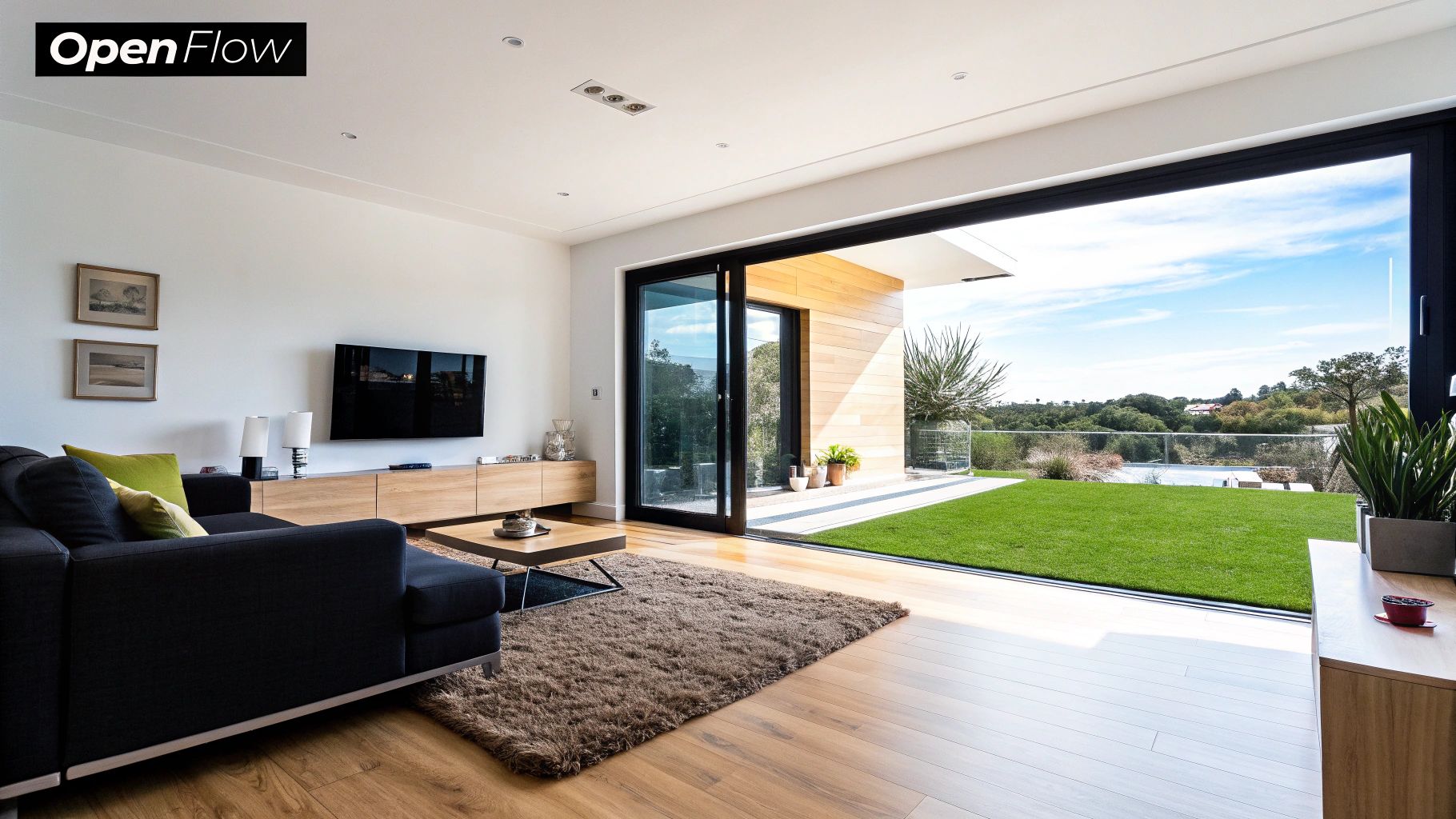
Neutral walls provide a blank slate, making it easier for buyers to envision their own furniture and decor in the space. An eclectic Denver home, for instance, sat on the market until its bright purple walls were repainted in a neutral gray; it sold within two weeks. Similarly, a Chicago loft with an industrial orange accent wall received multiple offers only after neutralizing the space. A fresh coat of neutral paint is a low-cost, high-return investment that broadens your home's appeal to the widest possible audience.
Actionable Steps for Implementation
Choosing the right neutral is key to creating a warm and inviting atmosphere. It's about more than just painting everything white; it's about selecting a cohesive and modern palette.
- Test Your Colors: Before committing, paint large swatches on different walls and observe them throughout the day. Light can dramatically alter a color's appearance.
- Embrace 'Greige': Colors like Benjamin Moore's "Revere Pewter" or Sherwin Williams' "Agreeable Gray" (a blend of gray and beige) offer a modern warmth that complements a wide range of flooring and furnishings.
- Keep Trim Crisp: A fresh coat of semi-gloss white paint on trim, doors, and ceilings creates a sharp, clean contrast that makes neutral wall colors pop and look intentional.
- Add Color Through Accessories: Use throw pillows, blankets, artwork, and rugs to introduce subtle color and texture. This creates visual interest without overwhelming buyers.
Key Insight: Your goal is to eliminate any feature that could give a buyer a reason to say no. A polarizing wall color is a simple objection to remove, transforming a potential "I'd have to repaint everything" into "I can move right in."
The power of a neutral palette lies in its universal appeal, making a space feel larger, brighter, and more expensive. For a deeper understanding of how to select the perfect shades for broad appeal, you can learn more about choosing the right paint colors for your property. This simple change can be the deciding factor for buyers on the fence.
4. Optimize Furniture Placement
How you arrange furniture can dramatically alter the perception of a room's size, flow, and function. Strategic furniture placement is one of the most impactful home staging tips for sellers because it’s about more than just filling a space; it’s about defining it. The objective is to create an arrangement that maximizes the feeling of space, establishes clear pathways, and highlights your home's most attractive architectural features.
This technique guides a buyer's eye and their movement through the home, making each room feel purposeful and inviting. A condo in Miami, for instance, sold well above its asking price after the sellers replaced a single oversized sectional with more appropriately scaled seating, instantly making the living area feel larger and more functional.
Actionable Steps for Implementation
Effective staging often means challenging the conventional wisdom of pushing all furniture against the walls. Creating a better layout is about crafting intuitive and appealing spaces.
- Create Conversation Areas: Pull sofas and chairs away from the walls and group them together. This creates a more intimate, welcoming setting and makes the room appear larger by showing off more floor space.
- Establish Clear Walkways: Ensure there are logical and unobstructed paths for people to walk through a room. Aim for at least 3 feet of clearance in major traffic areas to avoid a cramped feeling.
- Define Open-Concept Spaces: In open floor plans, use area rugs and furniture groupings to create distinct "zones" for living, dining, and other activities. This helps buyers understand how they can use the flexible space.
- Focus on a Focal Point: Arrange furniture to emphasize the room's best feature, whether it's a fireplace, a large window with a view, or a beautiful built-in bookcase.
- Remove Bulky Pieces: Oversized entertainment centers, massive armoires, and bulky recliners can dominate a room. Swap them for smaller, more modern pieces or remove them entirely to reclaim valuable square footage.
Key Insight: Your furniture's job during a sale is not to provide maximum seating for your family, but to showcase the room's potential. The right arrangement sells the space, not the sofa.
By optimizing furniture placement, you direct the buyer's experience, helping them envision a life of comfort and ease within the walls of the home. This crucial step can be the difference between a buyer seeing a collection of rooms and seeing their future home.
5. Maximize Natural Light: Illuminating Your Home's Best Features
One of the most powerful and cost-effective home staging tips for sellers is to harness the power of natural light. A bright, well-lit home feels larger, cleaner, and more welcoming to prospective buyers. Dark or poorly lit rooms can feel small, depressing, and can hide the very features you want to showcase. The goal is to make every room feel as airy and spacious as possible by inviting in and amplifying sunlight.
This strategy is about more than simply opening the curtains before a showing. It involves a deliberate approach to removing obstacles, cleaning surfaces, and using strategic decor to ensure light can flood into and bounce around your home. For example, a Tudor home in Seattle saw buyer interest jump after its heavy, dark drapes were replaced with simple white Roman shades, instantly transforming the interior feel.
Actionable Steps for Implementation
Creating a light-filled interior requires a multi-faceted approach that addresses windows, walls, and even the landscape outside. The cumulative effect of these small changes can dramatically alter a buyer's perception of your property.
- Window Treatments: Remove heavy, room-darkening draperies and outdated blinds. Replace them with lightweight, light-filtering options like sheer curtains or modern shades that can be pulled up completely to expose the entire window.
- Professional Window Cleaning: Dirty, smudged windows can block a surprising amount of light. Invest in a professional cleaning for both the interior and exterior of all glass, including skylights and glass doors, for maximum light transmission.
- Strategic Mirror Placement: Mirrors are a stager's secret weapon. Place a large mirror directly opposite a primary window to capture and reflect light, effectively doubling the brightness in a room and creating an illusion of greater depth.
- Outdoor Landscaping: Trim any overgrown trees, bushes, or vines that are blocking sunlight from reaching your windows. This simple outdoor task can have a major impact on your indoor environment.
Key Insight: Natural light is an asset you already own, but you must actively manage it. By treating light as a design element, you can make your home feel more valuable and inviting without significant investment.
Ultimately, a bright space allows buyers to see every detail clearly and helps them feel positive and optimistic about the home. A brownstone in Brooklyn, for instance, sold notably faster after the owners had the windows professionally cleaned and installed simple sheer curtains, a testament to how these small adjustments create a significant emotional impact on buyers.
6. Stage Key Rooms First: Maximizing Impact and Budget
Not every room in a house carries the same weight in a buyer's decision-making process. A strategic approach to home staging involves prioritizing your time, effort, and budget on the areas that have the most significant influence. Focusing on these key spaces ensures you make the strongest possible first impression where it counts the most.
The rooms that typically offer the highest return on staging investment are the living room, kitchen, primary bedroom, and main bathroom. These are the areas where potential buyers spend the most time during a showing and mentally "move in." For instance, a beautifully staged living room allows them to envision entertaining guests, while a serene primary bedroom helps them picture a peaceful retreat.
Actionable Steps for Implementation
This targeted strategy is one of the most effective home staging tips for sellers working with a limited budget or timeline. It's about being smart with your resources to create maximum appeal.
- Follow the Buyer's Path: Start with the first space a buyer sees, which is usually the entryway or living room. Ensure this area immediately feels welcoming and spacious.
- Allocate Budget Wisely: Devote the largest portion of your staging budget, perhaps 40-50%, to the living room and kitchen. These are the communal hearts of the home and are heavily scrutinized.
- Create a Primary Suite Retreat: The primary bedroom should feel like a sanctuary. Use luxe bedding, soft lighting, and minimal furniture to create an escape from daily stress.
- Refresh the Main Bathroom: A full bathroom renovation is rarely necessary. Simple touches like new, fluffy white towels, a stylish shower curtain, and a decluttered vanity can completely transform the space.
- Consider Virtual Staging for Secondary Rooms: If your budget is tight, focus physical staging on the key areas and use high-quality virtual staging for empty secondary bedrooms or basements in your online listing photos.
Key Insight: Buyers make decisions based on emotion, and they form the strongest emotional connections in the rooms where they will spend the most time. By perfecting these key areas, you anchor their perception of the entire property in a positive light.
7. Add Strategic Accessories and Art
Once your home is decluttered, cleaned, and neutralized, the final step is to add strategic decorative elements that bring the space to life. This isn't about re-introducing your personal items; it's about using carefully chosen accessories and artwork to inject warmth, create focal points, and add a touch of sophisticated personality that appeals to a wide audience. These finishing touches are what transform a sterile house into a welcoming, aspirational home.
The right accessories make a room feel complete and professionally designed. For instance, a minimalist San Francisco home added crucial warmth with strategically placed textiles and neutral art, helping it sell significantly above the asking price. Similarly, a contemporary condo in Chicago used abstract art and lush green plants to add personality, successfully attracting its target demographic of younger, design-conscious buyers.
Actionable Steps for Implementation
Accessorizing for staging requires a "less is more" philosophy. The goal is to enhance the space, not fill it. Every item should have a purpose, whether it's adding a pop of color, introducing a pleasing texture, or creating a sense of sophisticated living.
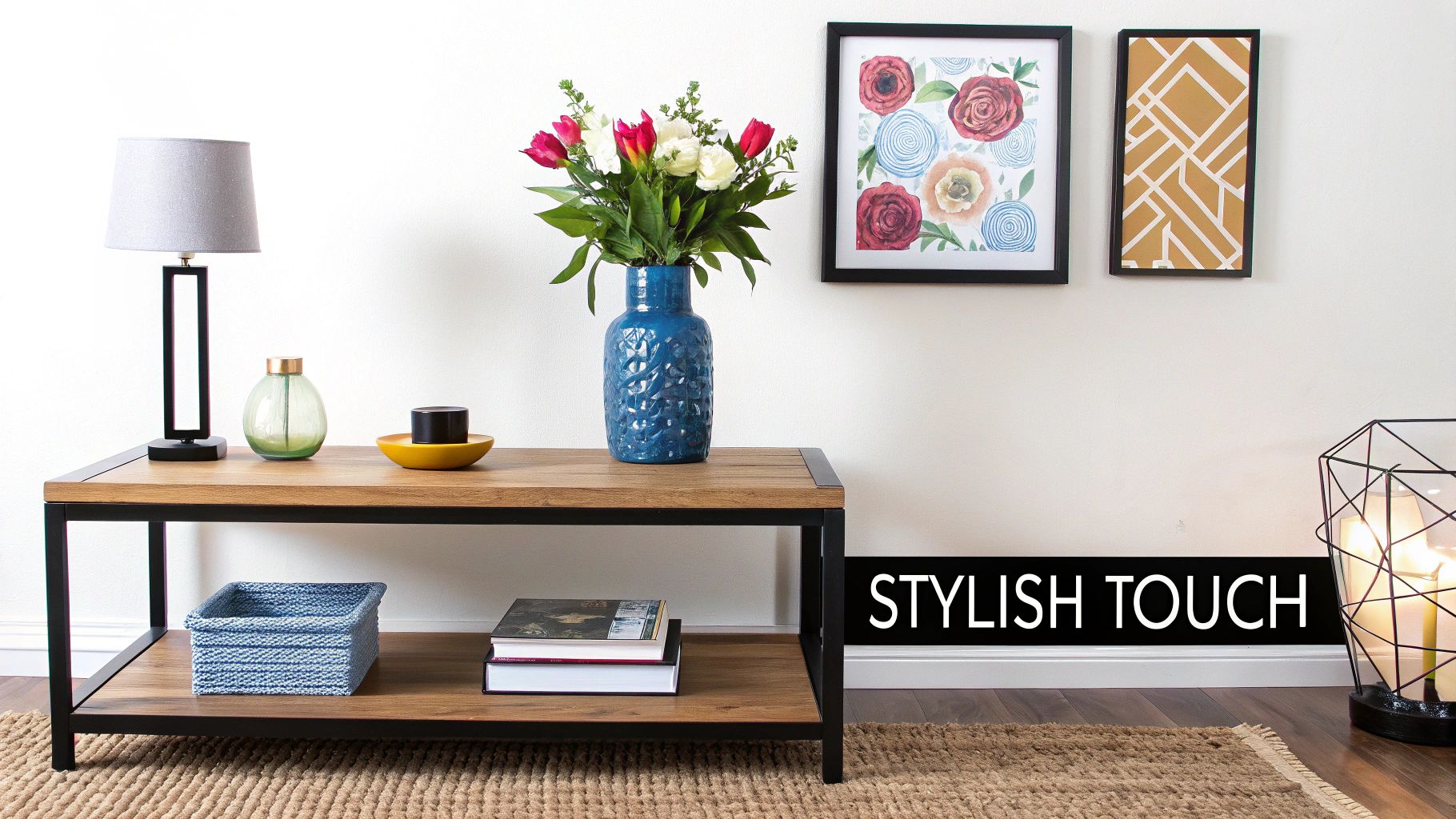
- Follow the Rule of Three: When grouping objects on a coffee table, mantle, or shelf, arrange them in odd numbers, typically threes. This creates a visually balanced and more engaging display than even-numbered groupings.
- Choose Complementary Artwork: Select large, neutral, or abstract art pieces that complement the wall color and overall feel of the room. Avoid pieces that are too specific, personal, or bold, as they can distract buyers. The art should enhance the space, not dominate it.
- Incorporate Greenery: Use fresh flowers or high-quality, realistic artificial plants to add life and color. A fiddle-leaf fig tree in a living room corner or a simple orchid on a nightstand can make a room feel instantly more vibrant.
- Coordinate Finishes: Create a cohesive look by ensuring metal finishes are consistent. If your kitchen faucet is brushed nickel, try to use accessories with a similar finish, like a decorative bowl or canister set.
- Use Purposeful Decor: Keep accessories on coffee tables and consoles minimal. A stack of two or three tasteful books, a simple tray, and a small decorative object are often all you need to create a stylish vignette.
Key Insight: Strategic accessorizing is the final layer of staging that tells a story of a well-cared-for, stylish home. It bridges the gap between a vacant property and a lived-in space, allowing buyers to emotionally connect and envision a beautiful life there.
8. Address Minor Repairs and Updates
One of the most impactful home staging tips for sellers is to proactively address the small fixes that collectively create an impression of a well-cared-for home. Buyers notice the little things, and a collection of minor issues like a leaky faucet, a squeaky door, or chipped paint can signal neglect and lead them to wonder what larger, hidden problems exist. Tackling these items eliminates immediate buyer objections and builds confidence.
Addressing these small but noticeable flaws prevents buyers from mentally compiling a costly "to-do" list as they walk through. A home that appears move-in ready is far more appealing and can command a higher price than one that seems like a project. A Texas ranch, for instance, received multiple offers after the sellers simply fixed squeaky floorboards and updated dated light fixtures.
Actionable Steps for Implementation
Walk through your property with the critical eye of a home inspector. Make a comprehensive list of every scuff, drip, and squeak that could detract from a flawless first impression. Focus on the details that buyers will interact with or notice in their first ten minutes.
- Hardware and Fixtures: Replace or spray paint dated cabinet pulls, doorknobs, and light fixtures. This is a low-cost update with a significant modernizing effect.
- Doors and Drawers: Ensure all doors, including closets and cabinets, open and close smoothly without squeaking or sticking. A small can of lubricant can make a huge difference.
- Paint Touch-Ups: Scrutinize walls, trim, and baseboards for scuffs and chips. A fresh coat of neutral paint is ideal, but meticulous touch-ups can also be highly effective.
- Functional Checks: Test every light switch, outlet, and faucet. Confirm that toilets flush properly and there are no drips. These are basic functional expectations that must be met.
Key Insight: You are not just fixing minor annoyances; you are managing buyer perception and eliminating reasons for them to negotiate down the price. Every small repair you complete is a potential negotiation point you have taken off the table.
Investing a small amount of time and money in these repairs can prevent buyers from requesting thousands of dollars in concessions. While a full renovation might not be necessary, knowing where to put your money for the best return is crucial. Understanding the potential return on investment for kitchen updates can help you prioritize which updates will truly add value and which ones to skip.
Home Staging Tips: 8-Point Comparison Guide
| Strategy | Implementation Complexity 🔄 | Resource Requirements ⚡ | Expected Outcomes 📊 | Ideal Use Cases 💡 | Key Advantages ⭐ |
|---|---|---|---|---|---|
| Depersonalize and Declutter | Medium – time-intensive, may need pros | Moderate – storage and organizing | Faster sales, higher offers, spacious feel | Preparing family homes for broad buyer appeal | Creates neutral, distraction-free spaces |
| Create Curb Appeal | Medium-High – landscaping & exterior upgrades | High – investment in materials & labor | Increased showing requests, higher perceived value | Enhancing first impressions and exterior appeal | Attracts more buyers, boosts home value |
| Use Neutral Color Schemes | Medium – repainting and coordination | Moderate – paint and possible consultation | Broader buyer appeal, brighter, cohesive spaces | Homes needing color refresh to appeal widely | Creates calming, spacious atmosphere |
| Optimize Furniture Placement | Medium – rearranging and possible rental | Moderate-High – furniture rental or purchase | Larger, functional rooms; improved flow | Highlighting space and room function | Emphasizes architectural features, better flow |
| Maximize Natural Light | Low-Medium – window treatment changes and cleaning | Low-Moderate – treatments & cleaning | Brighter, airy rooms; positive atmosphere | Homes with dim interiors or blocked windows | Increases perceived value and openness |
| Stage Key Rooms First | Medium – selective staging focus | Moderate – staging budget allocation | Strong buyer impressions on critical rooms | Budget-conscious staging targeting key areas | Maximizes staging ROI by prioritizing impact |
| Add Strategic Accessories and Art | Low – selecting and placing decor | Low-Moderate – accessories and art | Adds warmth and personality without clutter | Final staging touches to enhance appeal | Low-cost way to add life and focus points |
| Address Minor Repairs and Updates | Medium – identifying & fixing issues | Moderate – repair costs and services | Reduces buyer concerns; move-in ready impression | Homes with visible minor defects | Prevents negotiation, boosts buyer confidence |
Staging for Success: Your Final Step Towards a Profitable Sale
As we've explored, transforming your property from a personal residence into a market-ready product is a powerful, strategic endeavor. The journey involves more than just tidying up; it's a calculated marketing effort designed to captivate buyers and secure the highest possible offer. By implementing these foundational home staging tips for sellers, you are taking direct control over how your property is perceived, significantly influencing both its selling speed and final price.
Recapping Your Path to a Premium Offer
Let’s quickly revisit the core strategies that form the blueprint for a successful sale:
- Depersonalize and Declutter: This initial step is non-negotiable. By removing personal artifacts and clearing out excess belongings, you create a blank canvas, allowing potential buyers to mentally move in without distraction.
- Boost Curb Appeal: The first impression is everything. A well-maintained exterior, from a freshly mowed lawn to a welcoming entryway, sets a positive tone before a buyer even steps through the door.
- Embrace Neutral Palettes: Soft, neutral paint colors create a bright, spacious, and cohesive feel throughout the home. This simple change has a massive impact, appealing to the widest possible audience and making rooms appear larger.
- Optimize Furniture and Flow: Strategic furniture placement is crucial. You must define each space's purpose and create clear, intuitive pathways that guide buyers through the home, highlighting its best features and functional layout.
- Maximize Natural Light: A bright home is a happy home. By cleaning windows, using sheer curtains, and adding mirrors, you can amplify natural light, making the entire property feel more inviting, airy, and valuable.
- Focus on Key Rooms: Prioritizing the living room, primary bedroom, and kitchen ensures you make the most significant impact where it counts. These are the rooms that typically sway a buyer’s decision.
- Accessorize with Intent: The final layer of staging involves adding tasteful, modern accessories and art. These details create warmth, add a touch of color, and help build the emotional connection that turns a viewer into a buyer.
- Address Minor Repairs: Fixing leaky faucets, patching small holes, and ensuring every light works demonstrates pride of ownership and reassures buyers that the home has been well-maintained.
From Tips to Triumph: The Value of Strategic Staging
Ultimately, the goal of home staging is to eliminate any potential objections a buyer might have and create an undeniable "wow" factor. It’s about selling a lifestyle, not just a structure. When a buyer can effortlessly envision themselves hosting dinners in your dining room or relaxing in your living room, you have successfully bridged the gap between looking and owning. This emotional connection is often the tipping point that leads to a swift and profitable sale. Mastering these home staging tips is your most effective tool for standing out in a competitive market and achieving an exceptional return on your investment.
Ready to turn these expert tips into a successful sale in the Fresno or Clovis area? The team at Edinhart Realty and Property Management specializes in preparing and marketing homes to attract top-dollar offers. We combine professional staging advice, high-end photography, and targeted marketing to ensure your property achieves its maximum potential. Contact Edinhart Realty and Property Management today to learn how we can help you stage your home for an outstanding result.


