

Getting a home inspection before selling your property isn't just another task on the checklist. Think of it as your single most powerful strategic move—one that puts you firmly in the driver's seat of the entire transaction. By getting a pre-listing inspection, you uncover any potential problems on your own schedule, which saves you from the last-minute, high-stress surprises that can absolutely kill a deal.
Why a Pre-Listing Inspection Is Your Smartest Move

We’ve all seen it happen. You accept a fantastic offer, you're already packing boxes in your head, and then the buyer's inspection report comes back. Suddenly, a perfectly normal aging water heater or a minor electrical quirk is framed as a "major defect." The buyer starts getting nervous, demanding thousands in credits or threatening to walk away. It’s high-stakes drama you just don’t need.
A pre-listing inspection flips that script entirely. It turns a potential deal-breaker into a simple item you can manage calmly on your to-do list.
Build Rock-Solid Trust and Transparency
When you can hand a buyer a professional inspection report right from the start—complete with receipts for the repairs you’ve already handled—you build immediate confidence. It sends a clear message: this home is well-cared-for, and you have nothing to hide. That level of transparency really sets a positive tone for everything that follows.
This is more important now than ever. The national contract cancellation rate has hit 6%, and some data shows it's much higher. For example, Redfin reported nearly 15% of contracts fell through in May 2023, often because of what turned up in the buyer's inspection. A pre-listing inspection is the best defense against becoming one of those statistics.
By completing a home inspection before selling, you aren’t just fixing problems; you are eliminating a buyer’s primary negotiation tool and replacing their uncertainty with confidence.
Strengthen Your Hand at the Negotiating Table
A clean, pre-listing report is pure leverage. It justifies your asking price and gives you the confidence to stand firm, knowing the true condition of your home. Buyers who see a well-documented report are far less likely to come in with lowball offers or try to nitpick for credits.
Instead of reacting to a buyer’s laundry list of demands, you control the conversation. You get to decide the best path forward:
- Fix everything: You can tackle every item on the list to market a truly turnkey property.
- Address the big stuff: Maybe you just focus on any major health, safety, or structural concerns.
- Price it accordingly: You can also choose to disclose the known issues and adjust the price, which is perfect for attracting buyers who want to put their own touch on a place.
Each of these is a valid strategy for preparing your home for a successful sale. No matter which route you take, getting that home inspection before you list gives you the clarity you need to make smart, strategic decisions that lead to a faster, smoother, and more profitable closing.
How to Find the Right Home Inspector in the Central Valley

Let's be clear: your home inspection before selling is only as good as the professional you hire. Finding the right inspector in the Fresno or Clovis area isn’t just about checking a box. It’s about getting a partner who can give you a completely unbiased and thorough assessment of your property.
A great inspector delivers the kind of detailed insight you need to make smart repair choices and market your home with total confidence. A subpar one? They might miss major issues or hand you a confusing report, completely defeating the purpose of getting the inspection in the first place.
Vetting Credentials and Insurance
First things first, start your search by looking for inspectors certified by respected national organizations. These aren't just fancy acronyms; they represent a real commitment to high standards and continuous training.
- ASHI (American Society of Home Inspectors): To become a member, inspectors have to pass a tough exam and stick to a strict code of ethics.
- InterNACHI (International Association of Certified Home Inspectors): This group also has rigorous training and certification hoops its members must jump through.
Insurance coverage is just as critical. You should never, ever hire an inspector who can't prove they have both General Liability and Errors & Omissions (E&O) insurance. This is your safety net. It protects you if they get hurt on your property and covers you if they happen to make a major mistake during the inspection. It's similar to why you'd want bonded vs insured window cleaners for other services around your home—it's all about minimizing your risk.
The cheapest inspector is rarely the best inspector. A rock-bottom price can be a red flag for inexperience or, worse, inadequate insurance coverage. It’s a gamble you don’t want to take.
Key Questions to Ask Potential Inspectors
Once you've got a short list of candidates, it's time to pick up the phone. You're not just hiring a service; you're interviewing for a key role on your sales team. Your goal is to find someone with the right experience who can also communicate clearly.
Here are the questions I always recommend asking:
- How many inspections have you performed on homes like mine? You want someone who knows the quirks of homes in the Central Valley, especially those of a similar age and style to yours. Local experience is a massive advantage.
- Can I see a sample report? A quality report is detailed but still easy to follow, filled with clear photos and specific notes. If you get a generic checklist, walk away.
- How long will the inspection take? For an average-sized home, a truly thorough inspection should take 2-4 hours. Anything less than that might signal a rushed job, and that's the last thing you want.
When you find an inspector who is both meticulous and a great communicator, you've struck gold. Their report becomes more than just a piece of paper—it transforms into your strategic roadmap for a smooth and profitable sale.
Navigating the Pre-Sale Inspection Process
Let's pull back the curtain on what a home inspection before selling really looks like. First things first: this isn't a pass-or-fail exam for your house. Think of it more like a comprehensive health check-up, giving you a clear, unbiased report card on your home's current condition.
On inspection day, you can expect a licensed professional to spend about 2-4 hours at your property. They’ll be systematic, going through hundreds of components and documenting everything. Your job is to make their job easy so they can give you the most accurate report possible.
What the Inspector Is Really Looking For
An inspector's process is incredibly thorough, covering your home from the foundation to the shingles. They’re laser-focused on the major systems that are the true backbone of your property.
- Structural Integrity: They’ll be on the lookout for foundation cracks or signs of shifting, and they'll check the walls and framing for any issues.
- The Exterior Shell: The roof, gutters, siding, windows, and doors all get a close look for wear, damage, or any potential leaks waiting to happen.
- Major Systems: Your HVAC, plumbing, and electrical systems are under the microscope. The inspector will test how they function, hunt for safety hazards, and note the age and condition of things like your water heater and electrical panel.
- Interior Spaces: Inside, they’re checking for signs of water intrusion, testing the appliances you’re including in the sale, and getting a good look at the attic and crawl spaces.
That level of detail might sound a bit intense, but just remember that almost every home, new or old, will have a list of minor dings and imperfections. What we’re really trying to uncover are the significant items that could make a buyer hesitate.
And buyers are paying more attention than ever. A staggering 88% of recent homebuyers hired their own professional inspector. What's more, 79% of them are right there in person, walking through with the inspector, showing just how much weight the report carries. You can discover more about these homebuyer trends and see why getting out in front of this is such a smart move.
How to Prepare for a Smooth Inspection
How you prep your home can make a huge difference in the quality of the inspection report. A few simple moves will ensure the inspector can do their job properly, which means you get more reliable results.
Make it easy for the inspector to see everything. Blocked access to the electrical panel or a cluttered attic just creates delays and can lead to incomplete findings or the need for a re-inspection.
Before the inspector shows up, run through this quick checklist:
- Clear All Access Points: Make sure nothing is blocking the attic, crawl space, electrical panel, furnace, or water heater.
- Unlock Everything: Open up any gates, sheds, or utility closets they might need to get into.
- Leave the Utilities On: This is critical. The inspector needs running water, electricity, and gas to test all the systems correctly.
By making the whole process seamless, you get a much more complete picture of your home’s health. That gives you a powerful advantage long before a buyer’s inspector ever sets foot on your property.
Turning Your Inspection Report into an Action Plan
Getting that thick inspection report can feel overwhelming. It’s page after page of technical terms, photos, and notes that can easily make your head spin. But don't panic. This isn't a report card for your home—it's a roadmap.
A pre-listing home inspection isn't about finding fault. It's about giving you the power to address issues on your own terms, before a buyer is even in the picture. The first step is to simply read the report all the way through. You’ll find a mix of big-ticket items, minor maintenance suggestions, and everything in between. The trick is knowing what actually matters to a buyer.
Prioritizing Your Repair List
Let's be clear: you don't need to fix every single thing on that list. Trying to do so is a fast track to wasting time and money. The smart approach is to break it down and categorize every item.
We recommend a simple, three-tiered system to turn that long list into a manageable plan. This framework helps you focus on what will truly impact your sale.
The Repair Priority Framework
This table is your new best friend. Use it to sort every finding from the inspector's report and decide where to put your money and effort for the best return.
| Priority Level | Description & Examples | Recommended Action |
|---|---|---|
| Priority 1: The Deal-Breakers | These are the non-negotiables that scream "risk" to buyers and lenders. Think active roof leaks, faulty electrical panels, foundation cracks, or signs of mold. | Address Immediately. These are health, safety, and structural issues. Get professional quotes and schedule these repairs before listing your home. |
| Priority 2: The Major Concerns | These are significant systems that are old or failing. This includes an HVAC unit on its last legs, an aging water heater, or a deteriorating deck. | Decide & Disclose. You can choose to repair/replace, offer a buyer credit, or price the home accordingly. Fixing these can be a strong selling point. |
| Priority 3: The Minor Fixes | This is the "good housekeeping" category. We're talking about leaky faucets, loose doorknobs, cracked tiles, and missing outlet covers. | Handle If Time & Budget Allow. Many of these are simple DIY fixes. Taking care of them shows buyers the home has been well-maintained and builds confidence. |
Once you’ve sorted everything, you'll have a much clearer picture. The high-priority items are the ones that can derail a deal, so that's where you start.
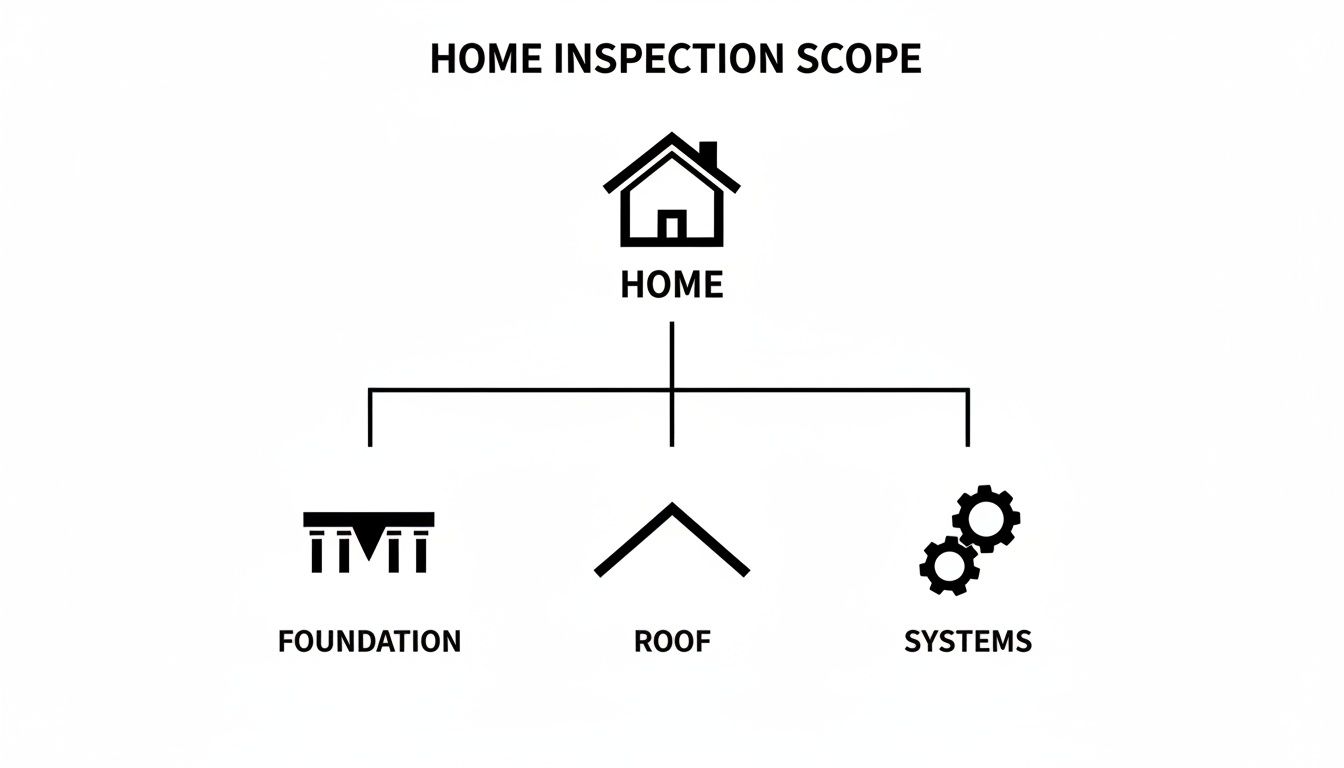
This gives you a sense of the core areas an inspector focuses on. It’s easy to see why Priority 1 and Priority 2 issues carry so much weight with potential buyers.
Creating a Smart Repair Budget
Now that your list is organized, it's time to talk money. The goal isn't a perfect home; it's a smart investment that protects your sale price and makes your property more appealing.
For all Priority 1 issues, your next move is to get quotes from qualified professionals. These are the repairs you should seriously consider completing before your home hits the market. For Priority 2 items, you have more flexibility—repair, offer a credit, or adjust the price. If you need help deciding, our guide on which home repairs offer the best return before selling is a fantastic resource.
How you respond to the inspection report sends a powerful message to buyers. Proactively tackling the important stuff shows pride of ownership and turns a potential red flag into a major selling point.
By addressing the findings head-on, you take control of the conversation. You’re not just hoping for the best; you're presenting a well-cared-for home with confidence, backed by smart, targeted improvements. This is how you set the stage for a smooth negotiation and a successful closing.
Using Your Inspection to Market and Sell Your Home
You've put in the work—now it's time to let that home inspection before selling work for you. That report isn't just a repair checklist anymore. It's one of the strongest marketing tools you have.
By being transparent and presenting the inspection results to buyers, you completely change the conversation. Instead of waiting for their inspector to uncover potential issues, you’re handing them the solutions on a silver platter. This immediately builds trust and shows buyers your home is a well-maintained, open book.
Creating an Inspection Marketing Package
We recommend putting together a simple, professional "Inspection Package" for potential buyers. This isn't just about handing over the raw report; it's about telling a compelling story of how you've cared for the property.
Here’s what should go inside:
- The Full Inspection Report: Don't hide anything. Providing the complete, original document shows you’re committed to full transparency.
- A Summary of Repairs: A clean, one-page document is perfect. List the issues the inspector found and, right next to them, describe exactly how you fixed them.
- Receipts and Warranties: Make copies of invoices from the licensed contractors you hired. If you installed a new water heater or HVAC unit, include any transferable warranties.
This package turns a list of potential flaws into solid proof of your pride of ownership. You're giving buyers tangible evidence that they are making a sound investment.
A pre-listing inspection report, when paired with proof of repairs, isn't a liability—it's your best tool for justifying your asking price and eliminating the buyer's biggest source of fear and hesitation.
Justifying Your Price and Minimizing Negotiations
A home that's been pre-inspected simply stands out from the competition. You’re not just selling four walls and a roof; you’re selling peace of mind.
This position of strength allows you to stand firm on your asking price. Why? Because you've already taken away the leverage buyers typically use to negotiate for credits or a lower price.
When you present your inspection package upfront, you can dramatically shorten the back-and-forth negotiation process. Buyers feel more confident and are less likely to bog down their offers with inspection contingencies. This leads to cleaner, stronger offers and a much faster path to the closing table.
This level of preparation shows you’ve considered every detail—a cornerstone of great marketing. If you want to explore other ways to make your property shine, check out these insightful real estate video marketing tips.
At Edinhart Realty, we help you showcase all this hard work. We make sure your inspection summary and repair documents are integrated right into our marketing materials. This strategy, combined with our professional home staging expertise, ensures every potential buyer sees the incredible value and care you’ve put into your home.
Common Questions About Pre-Listing Inspections
Deciding whether to get a home inspection before selling is a big decision, and it’s one that brings up a lot of valid questions. It's an extra step and an upfront cost, so it’s only natural to wonder if it's really worth it. Let's walk through the questions we hear most often from sellers just like you.
How Much Does a Pre-Listing Inspection Cost?
The price tag for a pre-listing inspection can shift depending on your home's size, age, and location, but you can generally expect to pay somewhere between $300 and $600. While that might feel like just one more thing to pay for, I encourage you to think of it as a strategic investment.
Here's why: if your inspection uncovers a major issue, you're in the driver's seat. You can get multiple quotes from contractors and handle the repair on your own timeline. Now, flip that scenario. Imagine the buyer finds that same issue. They'll almost certainly get the highest possible repair estimate and use it to demand a hefty credit, costing you far more money and control in the end.
Am I Required to Disclose Everything the Inspector Finds?
This is a big one. The short answer is yes. In California, sellers are legally required to disclose any known material facts that could impact the property's value or a buyer's decision to purchase. A material fact is something significant—think a leaky roof or an outdated electrical panel, not a sticky doorknob.
Your pre-listing inspection report becomes part of that documented history. While that might sound a little scary, full transparency is your best friend in a real estate transaction. It builds a foundation of trust with buyers and is your best protection against potential legal troubles down the road.
Proactively disclosing and addressing inspection findings shows buyers you've taken great care of the home and have nothing to hide. That integrity can be one of your most powerful selling points.
Will Buyers Still Want Their Own Inspection?
Almost certainly, yes. Any serious buyer will bring in their own inspector for an independent, third-party look at the property. Don't take it personally—it's a standard part of their due diligence process.
But your pre-listing inspection still holds incredible value. When the buyer's report comes back and highlights the same items you've already disclosed (and perhaps even repaired), it confirms your honesty. It reinforces their confidence in the home and minimizes the chance of eleventh-hour surprises that could derail the entire deal.
When Is the Best Time to Schedule the Inspection?
The sweet spot for scheduling your home inspection before selling is right before you're ready to put your property on the market. Timing it this way gives you a few powerful advantages:
- Time to Make Repairs: You'll have a window to address any critical issues without the pressure of a buyer's timeline looming over you.
- A Smarter Pricing Strategy: The inspection results give you and your agent a crystal-clear picture of the home's condition, allowing you to price it accurately from day one.
- Marketing Prep: You can put together a complete "Inspection Package" with the report and repair receipts, ready to present to the very first interested buyers.
By getting this done before your home officially hits the market, you set the stage for a smoother, more predictable, and more profitable sale.
Navigating the world of repairs, disclosures, and marketing can feel overwhelming. The team at Edinhart Realty and Property Management has the hands-on experience to guide you through every step, turning your pre-listing inspection into a tool that adds real value to your home. Find out how we can help you prepare for a successful sale at https://edinhart.com.


