

Becoming a landlord for the first time is a significant financial step, transitioning your property from a personal space into a revenue-generating asset. While the potential for passive income and long-term equity growth is substantial, the path is filled with critical responsibilities that, if overlooked, can lead to costly legal issues, prolonged vacancies, and significant stress. Success isn't accidental; it's the result of meticulous planning and systematic execution. This is where a comprehensive first time landlord checklist becomes your most valuable tool, acting as a roadmap to navigate the complexities of property management.
This guide is designed to be your definitive resource, moving beyond generic advice to provide a detailed, actionable framework for every stage of the process. We'll cover everything from ensuring your Fresno property meets California's strict legal and safety standards to implementing a professional-grade tenant screening process. You will learn how to set a competitive rental rate that attracts quality applicants, create an ironclad lease agreement that protects your investment, and establish efficient systems for rent collection and maintenance.
We will systematically break down each critical task, providing practical steps and real-world examples to help you avoid common pitfalls. Following this checklist will not only prepare your property but will also prepare you to operate as a confident, informed, and profitable landlord from day one. By the end of this article, you will have a clear, step-by-step plan to transform your property into a successful, well-managed rental business.
1. Screen and Select Quality Tenants
The single most impactful step in any successful first time landlord checklist is implementing a rigorous tenant screening process. This is the foundation upon which your entire rental business is built. Effective screening involves a systematic review of an applicant's financial stability, rental history, and background to ensure they are reliable and will care for your property.
A thorough process mitigates significant risks like late rent, property damage, and costly evictions. It’s about more than just a gut feeling; it’s a data-driven approach to protecting your investment. By verifying income, checking credit scores, and contacting previous landlords, you create a clear picture of who will be living in your home.
Why It's a Top Priority
Choosing the right tenant directly impacts your cash flow and peace of mind. A quality tenant pays on time, communicates effectively, and maintains the property, while a poor choice can lead to months of legal battles and lost income. For example, a Fresno landlord who used professional screening services identified an applicant with a hidden eviction history, avoiding a potential six-month eviction process and thousands in legal fees.
Actionable Screening Tips
To build a legally compliant and effective screening system, follow these steps:
- Establish Written Criteria: Before you even list your property, define your minimum standards. This includes credit score minimums (e.g., 650+), income requirements (e.g., gross monthly income must be 3x the rent), and policies on pets or smoking. Having these criteria documented helps you apply them consistently to all applicants, ensuring compliance with Fair Housing laws.
- Verify, Don't Trust: Never take an application at face value. Contact the HR department listed to confirm employment and salary. Call previous landlords directly (not just the references provided) and ask specific questions like, "Did they pay rent on time?" and "Would you rent to them again?"
- Run Comprehensive Checks: A full screening should include a credit report, a national criminal background check, and an eviction history search. These reports reveal financial responsibility and any red flags from past tenancies. For a deeper understanding of this critical process, you can explore our detailed guide on how to properly screen potential tenants.
Pro-Tip: Document every step of your decision-making process for each applicant. This creates a clear, factual record that can protect you from discrimination claims.
When to Get Expert Help: If the legal complexities and time commitment of screening feel overwhelming, this is the perfect time to engage a professional. Edinhart’s Placement-Only Service is designed specifically for this challenge, handling everything from marketing to expert-level screening and lease signing, so you start your landlord journey with a reliable tenant already in place.
2. Set Competitive and Compliant Rental Rates
Setting the right rental price is a critical balancing act on any first time landlord checklist. It’s the engine that drives your profitability, but it must be finely tuned to market realities. Pricing your rental correctly involves a detailed analysis of your property's features, its location, current market demand, and comparable properties in the immediate area.
This step directly determines your vacancy rate and return on investment. If you price too high, you risk extended vacancies that erase potential profits. Price too low, and you leave significant money on the table each month. A strategic, data-backed approach ensures you attract a wide pool of qualified applicants quickly while maximizing your monthly income.
Why It's a Top Priority
Your rental rate is the most important lever for your investment's financial performance. A miscalculation of just $100 per month results in a $1,200 annual loss. For instance, Clovis properties often command a 5-10% premium over similar homes in Fresno due to high demand and school districts. Without this local knowledge, a landlord might undervalue their Clovis rental, missing out on over a thousand dollars in yearly revenue.
Actionable Pricing Tips
To set a rate that is both competitive and profitable, follow these analytical steps:
- Conduct a Comparative Market Analysis (CMA): Don't guess what your property is worth. Use tools like Zillow and Apartments.com, along with local MLS data, to find 5-10 recently leased properties within a half-mile radius that are similar in size, age, and condition. This forms the baseline for your pricing decision.
- Factor in Unique Features: Quantify the value of your property’s premium amenities. A newly renovated kitchen, a two-car garage, or an updated primary bathroom can justify a higher price point. For example, properties professionally staged and photographed by Edinhart often achieve 8-12% higher rental rates because the presentation highlights these valuable features.
- Understand Local Nuances: Recognize that rental markets are hyper-local. A single-family home in Fresno might rent for $1,800-$2,100, but an identical home in Friant could have a different valuation based on local demand. For a complete breakdown of this process, explore our guide on how to properly set your rent price.
Pro-Tip: Document your rate-setting methodology. Keep records of the comparable properties you analyzed. This provides a clear, justifiable basis for your price if questioned and is useful for tax purposes.
When to Get Expert Help: If you're struggling to find accurate rental comps or feel uncertain about how to value your property's unique features, it's time to bring in an expert. Edinhart’s Full-Service Property Management includes a professional market analysis to set the optimal rent, ensuring you never underprice your investment or suffer from prolonged vacancy.
3. Create Clear, Compliant Lease Agreements
A well-drafted lease agreement is the legal backbone of the landlord-tenant relationship. This document is a crucial component of any first time landlord checklist because it legally protects both parties by clearly defining rights, responsibilities, and expectations before the tenancy begins. It transforms verbal agreements into a binding contract that can be referenced and enforced.
Your lease should be a comprehensive guide that outlines every detail of the tenancy, from rent payment schedules to house rules and maintenance obligations. A clear, compliant lease minimizes misunderstandings, prevents disputes, and provides a legal framework for resolving conflicts if they arise. It is your primary tool for managing your property and enforcing your policies.
Why It's a Top Priority
An incomplete or legally outdated lease is a significant liability. For instance, a Fresno landlord who used a generic online template discovered he couldn't legally enforce late fees because his agreement was missing specific language required by California Civil Code. Using legally vetted documents, like the California Association of Realtors (CAR) forms, ensures all state-mandated disclosures and clauses are included, making your terms fully enforceable.
Actionable Lease-Drafting Tips
To create a lease that protects your investment and complies with California law, follow these essential steps:
- Use Legally Vetted Forms: Start with a strong foundation like the California Association of Realtors (CAR) residential lease forms. These are regularly updated to reflect changes in state and local laws, saving you from unintentional legal violations.
- Be Specific, Not Vague: Ambiguity leads to disputes. Instead of "pets allowed," specify "maximum two pets under 25 lbs each, with an additional $500 pet deposit." Clearly outline which utilities are paid by the landlord and which are the tenant's responsibility.
- Include All Required Disclosures: California law mandates numerous disclosures, including those for lead-based paint (for homes built before 1978), mold, Megan's Law database, and pest control treatments. For an in-depth look at what to include, you can review our guide and rental lease agreement template.
Pro-Tip: Before a tenant signs, walk them through the key sections of the lease, such as rent due dates, late fees, and maintenance request procedures. Require them to initial these key pages to confirm their understanding.
When to Get Expert Help: Navigating the legal complexities of California lease agreements can be daunting for a new landlord. Edinhart’s Full-Service Property Management includes the drafting and execution of ironclad, legally compliant leases. We ensure your agreement is up-to-date and tailored to protect your specific property and investment goals.
4. Establish a Rent Collection System
Implementing a reliable, professional rent collection system is a non-negotiable part of any first time landlord checklist. This process is the financial engine of your investment, ensuring you receive consistent, on-time payments while minimizing administrative headaches. A modern, systematic approach moves beyond simply waiting for a check and involves clear instructions, convenient payment options, and meticulous record-keeping.
By formalizing how you collect rent, you improve cash flow predictability and create a professional relationship with your tenants. An effective system provides clear documentation for accounting, tax purposes, and, if ever needed, legal proceedings. It transforms rent collection from a monthly chore into a seamless, automated business function.

Why It's a Top Priority
An inconsistent rent collection process is a fast track to financial stress and tenant disputes. A streamlined system not only ensures you get paid on time but also enforces the seriousness of the lease agreement. For example, landlords who utilize online payment platforms with automatic reminders often see a 15-20% reduction in late payments. This consistency is crucial for covering your mortgage, insurance, and maintenance costs without interruption.
Actionable Rent Collection Tips
To create a professional and effective payment system, follow these steps:
- Specify Terms in the Lease: Your lease agreement must explicitly detail the rent collection process. State the exact rent amount, the due date (e.g., the 1st of the month), acceptable payment methods, and the specific amount and conditions for late fees. This legal clarity is your first line of defense.
- Offer Modern Payment Options: Accommodate tenant preferences by offering multiple ways to pay. Consider reputable online platforms like Zelle, Venmo for Business, or specialized landlord software that allows for credit card payments and automatic bank transfers. The easier you make it to pay, the more likely you are to be paid on time.
- Automate and Document Everything: Use technology to your advantage. Set up automated payment reminders to go out 5-7 days before rent is due. Meticulously record every payment received, including the date and method. This documentation is vital for financial tracking and creates an indisputable payment history.
Pro-Tip: Always keep rental income in a separate business bank account. This practice simplifies accounting, makes tax preparation easier, and protects your personal assets by maintaining a clear separation between your personal and business finances.
When to Get Expert Help: If managing monthly payments, tracking late fees, and handling tenant payment issues sounds like a burden, it’s time to call in a professional. Edinhart’s Full-Service Property Management includes a robust, automated rent collection system. We handle all tenant invoicing, payment processing, and follow-ups, ensuring your rental income is consistent and professionally managed from day one.
5. Prepare Your Property for Tenant Move-In
A critical, yet often underestimated, part of any first time landlord checklist is preparing the property before your new tenant arrives. This goes far beyond a quick sweep-up; it involves a meticulous process of cleaning, repairing, and ensuring every system is in perfect working order. This preparation sets the standard for the tenancy, protects your asset, and directly influences tenant satisfaction from day one.
Presenting a clean, safe, and fully functional home demonstrates professionalism and respect for the tenant and the property itself. It minimizes the likelihood of immediate maintenance requests, establishes a positive landlord-tenant relationship, and justifies the rent you are charging. This proactive approach ensures the property is not just "livable" but truly "move-in ready."
Why It's a Top Priority
First impressions are powerful and long-lasting. A pristine property attracts higher-quality applicants and can reduce vacancy time. For example, Fresno investment properties that undergo professional preparation often attract out-of-state investors and tenants willing to pay a premium. By addressing all issues beforehand, you prevent the vast majority of common maintenance emergencies that frustrate both tenants and landlords.
Actionable Preparation Tips
To ensure your property is presented in its best light and functions flawlessly, follow this move-in checklist:
- Deep Clean Professionally: This is non-negotiable. Hire professionals to deep clean everything, including carpets, windows, appliances, and grout. This creates a baseline of cleanliness that you can require the tenant to maintain.
- Test and Verify Everything: Do not assume anything works. Physically test every single appliance, light switch, faucet, drain, and outlet. Open and close every window and door. Run the HVAC system to ensure it heats and cools properly.
- Address All Repairs: Fix that leaky faucet, repair the running toilet, and patch any nail holes. Painting the interior with a neutral color like beige or light gray is a cost-effective way to make the entire space feel fresh and new.
- Boost Curb Appeal: The exterior is the very first thing a prospective tenant sees. Ensure the landscaping is neat, the entryway is clean, and the front door is in good condition. A positive first impression starts before they even step inside.
Pro-Tip: Document the property's pre-move-in condition with extensive photos and video. This creates an indisputable record that is invaluable for accurately assessing damages when the tenant moves out.
When to Get Expert Help: If coordinating cleaners, handymen, and photographers while trying to market your property sounds like too much to handle, it's time to call in professionals. Edinhart’s Full-Service Property Management includes coordinating all move-in preparations, from professional staging and photography to ensuring the home is immaculate, maximizing your rental income and attracting top-tier tenants without you lifting a finger.
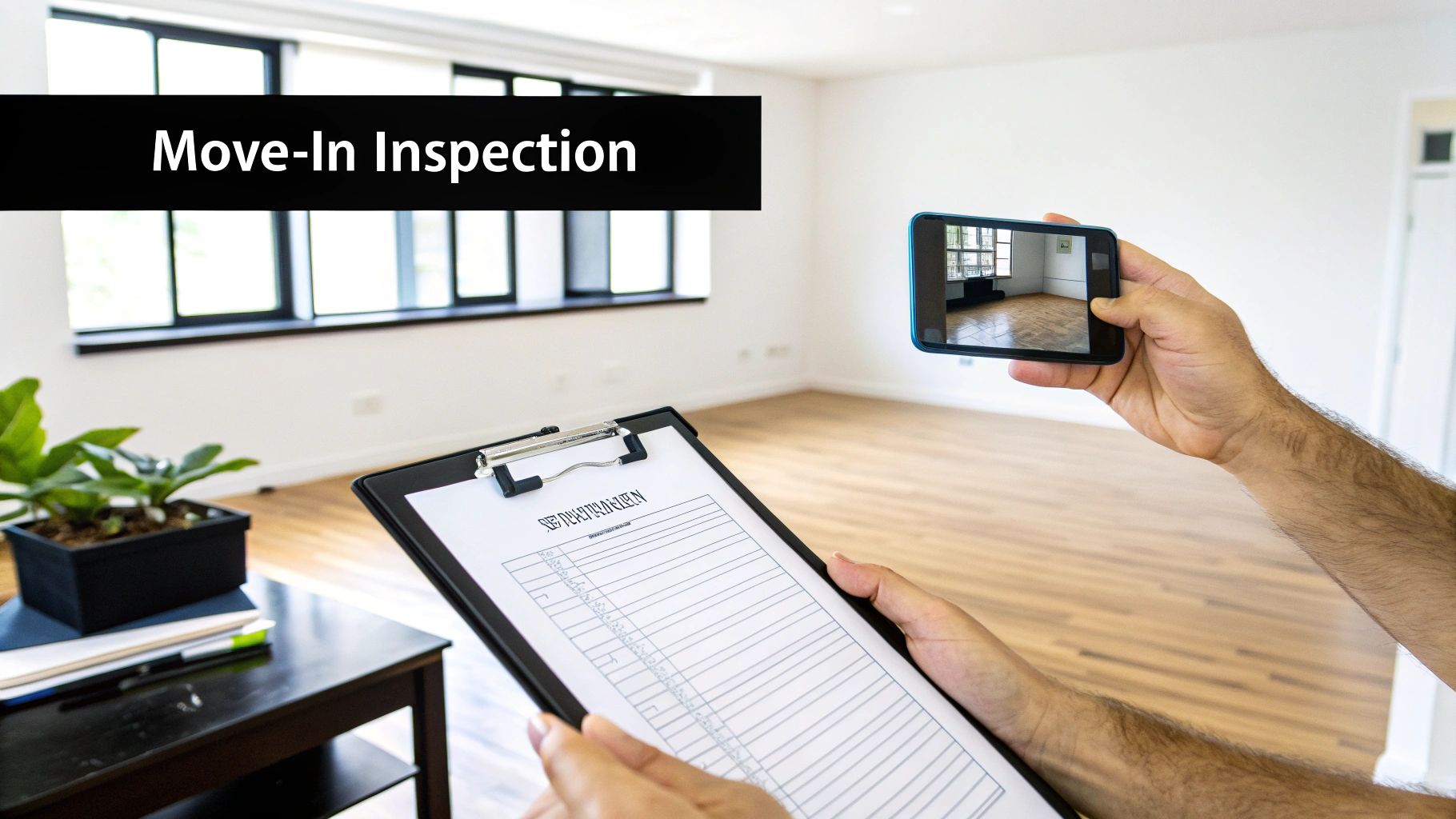
6. Document Everything with Move-In/Move-Out Inspections
A crucial component of any professional first time landlord checklist is the diligent documentation of your property's condition through move-in and move-out inspections. These inspections create an official, time-stamped record that serves as the baseline for the tenancy. This process isn't just about noting a few scuffs; it’s a systematic review that protects both you and your tenant from future disputes.
This documentation is your primary evidence when assessing wear and tear versus actual damages. It provides a clear, factual basis for any potential security deposit deductions, transforming a subjective disagreement into an objective discussion based on evidence. In California, where strict laws govern security deposits, this step is not just a best practice, it's a legal necessity.
Why It's a Top Priority
Failing to conduct and document thorough inspections is one of the fastest ways to lose a security deposit dispute. A detailed move-in report with photographic evidence is your best defense against a tenant claiming pre-existing damage. For example, a Fresno landlord with time-stamped photos of pristine carpets at move-in was able to successfully deduct the cost of professional cleaning and patching after the tenant left significant stains, avoiding a costly small claims court battle.
Actionable Inspection Tips
To create a legally sound and effective inspection process, follow these guidelines:
- Use a Standardized Form: Don't rely on memory. Use a comprehensive checklist that covers every room and feature, from walls and floors to appliances and fixtures. To protect both yourself and your tenants, it's essential to perform thorough inspections and maintain a detailed record of your property's condition; consider creating a detailed rental move-in/move-out inventory.
- Take Extensive Photos and Videos: A picture is worth a thousand words in a dispute. Take clear, well-lit photos and even a video walkthrough of the entire property before the tenant moves in. Be sure to capture close-ups of any existing minor damage, and make sure your files are dated.
- Get Signatures: Both you and the tenant should walk through the property together and sign the completed inspection report. This creates a mutual agreement on the property's initial condition. Provide the tenant with a copy for their records within a few days of move-in.
Pro-Tip: In California, landlords must provide tenants with an itemized statement of security deposit deductions, along with any remaining refund, within 21 days of the tenant vacating the property. Your detailed move-out inspection report and repair invoices are the foundation of this legally required documentation.
When to Get Expert Help: Managing detailed inspections, navigating security deposit laws, and handling potential disputes requires time and expertise. This is where professional management adds immense value. Edinhart’s Full-Service Property Management includes meticulous, digitally-documented move-in and move-out inspections, ensuring legal compliance and protecting your investment from start to finish.
7. Coordinate Maintenance and Repairs Efficiently
A professional maintenance system is a critical component of any first time landlord checklist, serving to protect your asset, keep tenants happy, and ensure legal compliance. It involves creating a clear process for handling everything from routine upkeep like HVAC servicing to urgent emergencies like a burst pipe. A well-organized approach ensures your property remains in excellent condition and legally habitable.
This proactive system moves you from reactive crisis management to strategic asset protection. Instead of scrambling when something breaks, you have a plan and a team of trusted professionals ready to act. This not only preserves your property's value but also builds a positive landlord-tenant relationship, as tenants see you are responsive and care for their home.
Why It's a Top Priority
Neglecting maintenance leads to tenant dissatisfaction, costly emergency repairs, and potential legal trouble. California law mandates that landlords maintain a habitable living environment, and failing to address repair requests in a timely manner can have serious consequences. For instance, spending $150 on annual preventive HVAC maintenance can prevent a $3,000 emergency system replacement in the middle of a Fresno summer heatwave.
Actionable Maintenance Tips
To build an efficient and legally compliant maintenance system, follow these steps:
- Establish Clear Reporting Channels: Don't rely on random texts. Provide tenants with multiple ways to submit requests, such as a tenant portal, a dedicated email address, or a specific phone number. Document every request with the date, issue, and your response.
- Define Emergency vs. Routine: Create a written policy that defines what constitutes an emergency (e.g., no heat or water, major leak) versus a routine request (e.g., dripping faucet, cosmetic paint touch-up). This manages tenant expectations and helps you prioritize responses accordingly.
- Build a Vendor Network: Before you need them, identify and vet at least two reliable, licensed, and insured contractors for each key trade: plumbing, electrical, HVAC, and general handyman services. Verify their credentials and check references to ensure quality work. Landlords must also be proactive in learning how to address bed bug infestations, which can be particularly challenging in rental properties.
Pro-Tip: Create an annual maintenance calendar to schedule proactive tasks like gutter cleaning, smoke detector battery replacement, and pest control services. This prevents small issues from becoming expensive problems.
When to Get Expert Help: If the thought of taking a 2 AM call for a plumbing emergency or vetting contractors is daunting, this is a clear sign to seek professional support. Edinhart’s Full-Service Property Management includes 24/7 maintenance coordination, leveraging our network of trusted vendors to resolve issues quickly and cost-effectively, so you can protect your investment without the stress.
8. Establish Proper Business Accounting and Tax Records
Treating your rental property as a legitimate business is a crucial part of any first time landlord checklist, and that starts with professional accounting. Establishing proper financial systems is essential for tracking profitability, maximizing tax deductions, and ensuring legal compliance. It moves you from hobbyist to savvy investor by creating a clear financial picture of your asset's performance.
Proper accounting involves more than just collecting rent; it means meticulously tracking every dollar of income and every deductible expense. This systematic approach not only simplifies tax season but also provides the data needed for audits, loan applications, and strategic financial planning. Without it, you risk overpaying taxes and making uninformed decisions about your investment.
Why It's a Top Priority
Failing to maintain clean financial records can be incredibly costly. Many first-time landlords leave thousands of dollars in tax benefits on the table by not properly documenting expenses. For instance, a Fresno landlord who began tracking all repair costs and property-related mileage saved over $3,200 in a single tax year through previously unclaimed deductions. Clear accounting also protects you from IRS penalties during an audit, which can easily exceed $5,000.
Actionable Accounting Tips
To build a professional and compliant financial system for your rental, follow these steps:
- Separate Your Finances: The first and most critical step is to open a dedicated business bank account. All rental income should be deposited into this account, and all property-related expenses should be paid from it. This separation is non-negotiable for clean bookkeeping and legal protection.
- Use Accounting Software: Leverage technology to automate and organize your records. Tools like QuickBooks, Wave, or Stessa are designed for landlords and allow you to categorize transactions, track income, and generate financial reports. Set up expense categories that align directly with IRS Schedule E (e.g., Repairs, Insurance, Property Taxes) to streamline tax filing.
- Document Everything Systematically: Save and digitize every receipt, invoice, and bank statement related to your property. Track mileage for trips to the property, hardware store, or bank. Keep detailed logs of capital improvements (like a new roof) separate from routine repairs (like patching a leak), as they are treated differently for tax purposes.
Pro-Tip: Schedule a mid-year and year-end review with a CPA who specializes in real estate. This proactive tax planning can help you identify opportunities for deductions and make strategic financial moves before the deadline passes.
When to Get Expert Help: If the thought of managing ledgers, depreciation schedules, and tax compliance feels daunting, it’s a sign to seek professional support. Edinhart’s Full-Service Property Management includes detailed monthly and year-end financial reporting, taking the entire accounting burden off your shoulders and ensuring your records are accurate, organized, and optimized for tax season.
First-Time Landlord: 8-Point Checklist Comparison
| Item | Implementation Complexity 🔄 | Resource Requirements ⚡ | Expected Outcomes 📊 | Ideal Use Cases 💡 | Key Advantages ⭐ | Key Considerations |
|---|---|---|---|---|---|---|
| Screen and Select Quality Tenants | Moderate — structured process with legal checks | Background-check services, staff time, applicant screening tools | Fewer evictions, lower vacancy, reduced damage | All rentals; higher-risk markets; long-term holdings | Reduces problem tenants; improves cash flow; preserves property | Must comply with Fair Housing; upfront costs; time-consuming |
| Set Competitive and Compliant Rental Rates | Moderate — data analysis and ongoing updates | Market data tools, MLS access, time for CMA | Optimized income, shorter vacancy periods | Market-sensitive areas; newly listed units; remodels | Maximizes rent; reduces vacancy; aligns with market | Requires continuous research; rent-control/local regs limit changes |
| Create Clear, Compliant Lease Agreements | Moderate–High — legal review recommended | Attorney or CAR forms, time to update, templates | Fewer disputes, enforceable rights, clearer obligations | Any rental where legal protection is needed | Protects legal rights; reduces conflicts; ensures compliance | Upfront drafting cost; must update for law changes; risk if poorly written |
| Establish a Rent Collection System | Low–Moderate — tech setup and policy enforcement | Payment platform fees, portal setup, bank reconciliation time | Higher on-time payments, predictable cash flow, clear records | Multi-unit owners; landlords wanting automation | Improves timeliness; reduces admin; better documentation | Processing fees; tenant tech limitations; manual follow-up still needed |
| Prepare Your Property for Tenant Move-In | Moderate — project coordination and inspections | Cleaning, repairs, photography, staging costs | Faster leasing, higher rent, fewer early maintenance issues | Turnovers, premium listings, markets with high competition | Attracts quality tenants; justifies premiums; baseline condition docs | Significant upfront cost and time; delays can affect income |
| Document Everything with Move-In/Move-Out Inspections | Moderate — systematic documentation required | Inspection forms, photo/video equipment, time | Strong deposit protection; fewer disputes; legal evidence | All leases; deposits subject to legal accounting | Protects deposits; reduces litigation; clarifies wear vs damage | Time-intensive; tenant coordination; professional inspections add cost |
| Coordinate Maintenance and Repairs Efficiently | High — processes + vendor management | Contractor network, tracking software, budget for repairs | Better habitability, longer asset life, higher tenant satisfaction | Properties requiring frequent upkeep; long-term rentals | Preserves value; reduces emergencies; improves retention | Ongoing costs; requires admin time; contractor variability |
| Establish Proper Business Accounting and Tax Records | Moderate–High — disciplined systems and expertise | Accounting software, CPA fees, separate bank accounts | Maximized deductions, audit readiness, clear profitability | Multi-property owners; tax-sensitive operations | Saves taxes; simplifies filings; improves financial decisions | Learning curve; professional fees; need for continuous record-keeping |
Partner with Experts to Guarantee Your Success
Navigating the landscape of property ownership for the first time is an ambitious and rewarding endeavor. This comprehensive first-time landlord checklist has provided a detailed roadmap, guiding you through the critical milestones of becoming a successful landlord in the Fresno area. From the meticulous process of screening and selecting quality tenants to establishing compliant lease agreements and setting competitive rental rates, each step is a foundational block in building a profitable and sustainable rental business. We have explored the importance of a seamless move-in process, the non-negotiable practice of detailed inspections, and the necessity of creating efficient systems for rent collection and maintenance requests.
Mastering these elements is not merely about ticking boxes; it's about creating a professional operation that protects your investment, minimizes your risks, and maximizes your returns. A well-prepared property attracts better tenants, a legally sound lease prevents costly disputes, and a systematic approach to accounting ensures you are prepared for tax season and have a clear view of your financial performance. The difference between a stressful, reactive landlording experience and a smooth, profitable one often lies in the diligence applied to these initial stages.
From Checklist to Confident Landlord
The journey from novice to seasoned landlord is paved with diligence, learning, and strategic decision-making. The most crucial takeaways from this guide underscore a central theme: proactive management is always superior to reactive problem-solving.
Think of it this way:
- Tenant Screening: A few extra hours spent verifying references and credit history can save you months of stress and thousands of dollars in eviction costs and lost rent. It is the single most effective risk-management tool at your disposal.
- Lease Agreement: A generic online template is a liability waiting to happen. A customized, attorney-reviewed lease that incorporates local Fresno and California regulations is your primary defense in any potential dispute.
- Documentation: From the initial move-in photos to every maintenance request and communication, a detailed paper trail is your best friend. It transforms "he said, she said" scenarios into clear, fact-based resolutions.
Embracing this proactive mindset transforms your role from simply a "landlord" to a savvy "real estate investor." It's about building a resilient business, not just collecting a rent check. While this checklist provides the essential framework, the day-to-day application requires consistent effort and expertise, especially when navigating unexpected challenges like late-night emergency calls, evolving housing laws, or difficult tenant negotiations.
The Smartest Investment: Your Time and Peace of Mind
The reality is that managing a property effectively is a significant time commitment. The operational demands can easily become a second job, pulling you away from your primary career, family, and personal pursuits. This is where a strategic partnership becomes invaluable. Recognizing when to delegate is not a sign of failure; it is a mark of a smart business owner who understands the value of their own time and the benefit of specialized expertise.
Whether you need expert help marketing your property and securing a high-quality tenant through a Placement-Only Service, or you desire complete freedom from the operational burdens with a Full-Service Management solution, professional support is the key to scaling your success. By entrusting the complexities to a team of experts, you not only ensure every item on this first time landlord checklist is executed flawlessly but also gain the peace of mind that your valuable asset is protected and optimized for peak performance.
Ready to turn your property into a high-performing, stress-free investment? The experts at Edinhart Realty and Property Management are here to implement every aspect of this checklist with professional precision, ensuring your success from day one. Contact us today to learn how our tailored Full-Service and Placement-Only solutions can protect your asset and maximize your returns in the Fresno market.


