

You're standing in the driveway after another long week, looking at a rural house outside Friant or maybe a few acres closer to Clovis, and the question isn't whether the place feels right. The question is whether it will hold value, rent cleanly, and stay manageable once the novelty wears off and the practical issues show up. That's the difference between a pretty country setting and a country air property that works for an owner, landlord, or investor in Central California.
What Country Air Property Really Means
A Fresno family shopping for more space usually starts with the same picture, a house on acreage, a quiet road, maybe a view of the foothills, and enough separation from neighbors to hear the wind instead of traffic. An out-of-state investor sees the same property and asks a different question, whether the land, systems, and tenant appeal make sense as an asset. That's the right split to keep in mind, because country air property is not just a lifestyle phrase, it's a practical property type.
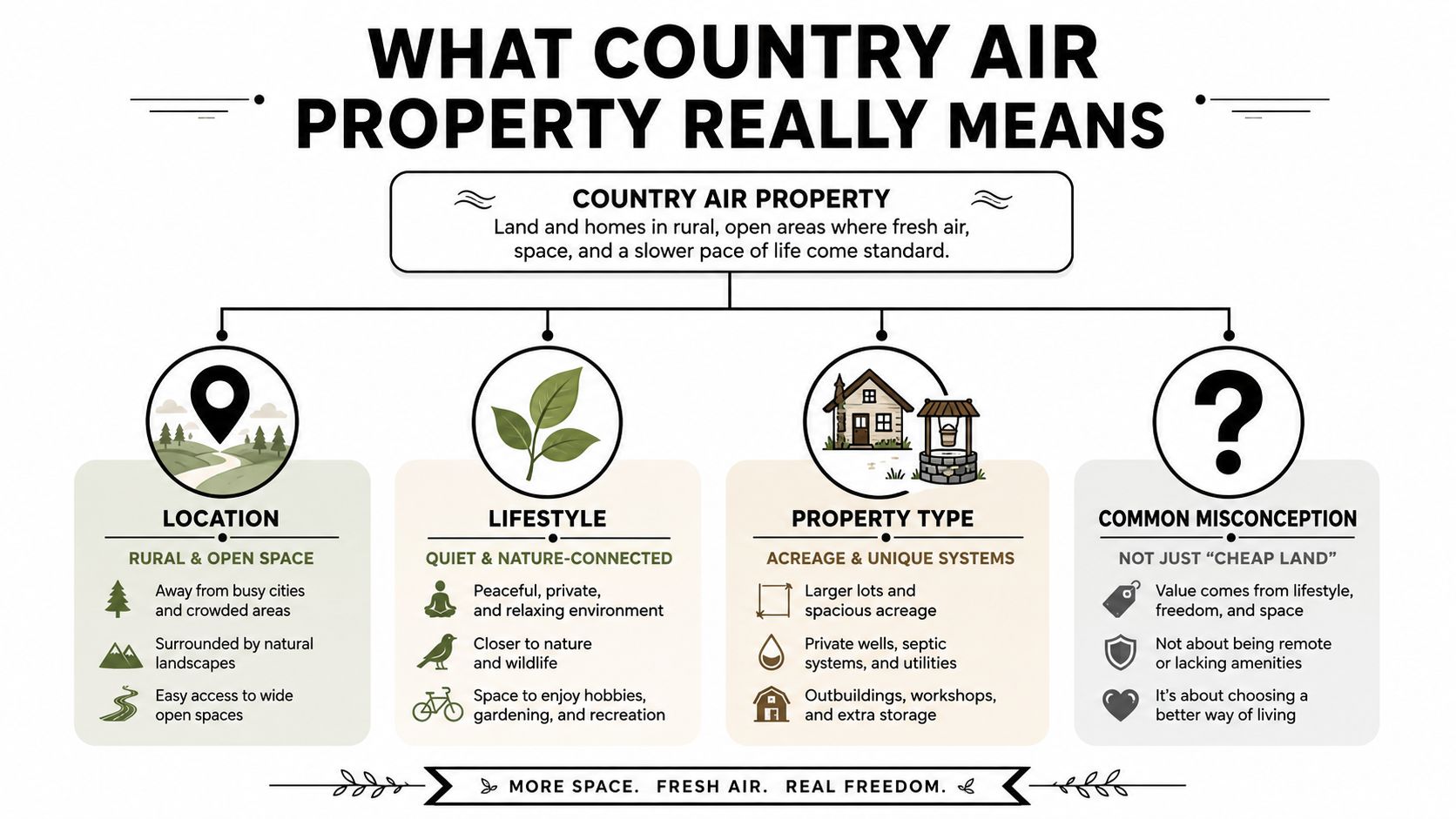
The working definition
In plain terms, country air property means rural or exurban real estate with usable open space, lower density, and a real gap between it and standard city lots. That can be a small homestead on a few acres, a house with outbuildings, a ranchette, a working farm, or a larger country estate. The label matters because buyers, sellers, tenants, and landlords don't all mean the same thing when they say “country.”
The phrase often gets confused with “cheap land.” That's sloppy thinking. Open space can raise value when it comes with privacy, views, and flexibility, but it can also drag value down when access, utilities, fire risk, or maintenance are weak.
If you want a broader lay of the land on acreage ownership, the homes on acreage guide is a useful companion piece. It helps frame the kind of tradeoffs people run into once they move past the dream stage.
Practical rule: If a property needs different infrastructure decisions than a city house, treat it like a country asset, not just a house with more dirt around it.
What buyers really mean by it
In Central California, the phrase usually covers land outside the tight suburban grid, from edges of Fresno and Clovis out toward Friant, Madera foothills, and other low-density pockets. The land may look simple from the road, but the ownership picture is usually not simple at all. Wells, septic, propane, road access, and emergency response time all enter the deal.
That's why I tell clients to stop thinking in lifestyle slogans. Think in privacy, utility, access, and long-term manageability. If those four pieces work together, the property is a real asset. If one of them is broken, the “country air” part gets expensive fast.
How Country Air Property Differs From Suburban and Urban Homes
A suburban house is usually built around predictability. City services are closer, utilities are more standardized, and buyers know what they're getting before they show up. A country home is different. It asks more from the owner, and it asks more from the person living there too.
The utility stack changes everything
In town, people expect municipal sewer, regular trash pickup, stable internet, and quick access to repair crews. Out in the country, the property may depend on well water, septic, propane, private roads, and vendor coordination. That changes how you price it, market it, inspect it, and manage it. It also changes tenant expectations. A tenant who wants low-friction living may not be happy on acreage unless you explain the setup clearly.
Internet is a bigger deal than most sellers admit. In rural housing, a weak connection can knock out a sale or shrink your renter pool. If you want a plain-language look at the connectivity side, the SwiftNet Wifi rural living guide is the kind of resource that helps buyers understand why “good enough” broadband usually isn't good enough.
Privacy is valuable, but so is friction
Country buyers pay for privacy, views, and breathing room. They also inherit more friction. The gate sticks. The driveway needs work. The pump acts up. The tenant can't find the property on the first try. Those are normal rural realities, not edge cases.
Straight talk: If the property only works when everything is perfect, it's a fragile investment.
Central California has its own version
Fresno, Clovis, Friant, and the foothill corridor produce a very specific kind of country air property. Agriculture, heat, irrigation realities, wildfire exposure, and distance from city services all shape the asset. A house that looks attractive on a listing site may still be a poor fit if access is awkward or if the support systems are too thin for year-round use.
So don't compare a rural home to a suburban tract house and expect the same buyer psychology. The story is different. The due diligence is heavier. The management burden is heavier too. That's why rural owners need a clearer lens than city owners do.
Rural Inspection and Maintenance Issues That Catch Owners Off Guard
Most bad rural deals don't fail because the house is ugly. They fail because the owner missed the systems that matter most. A country home can look solid and still carry hidden risk in water, waste, access, and exposure.
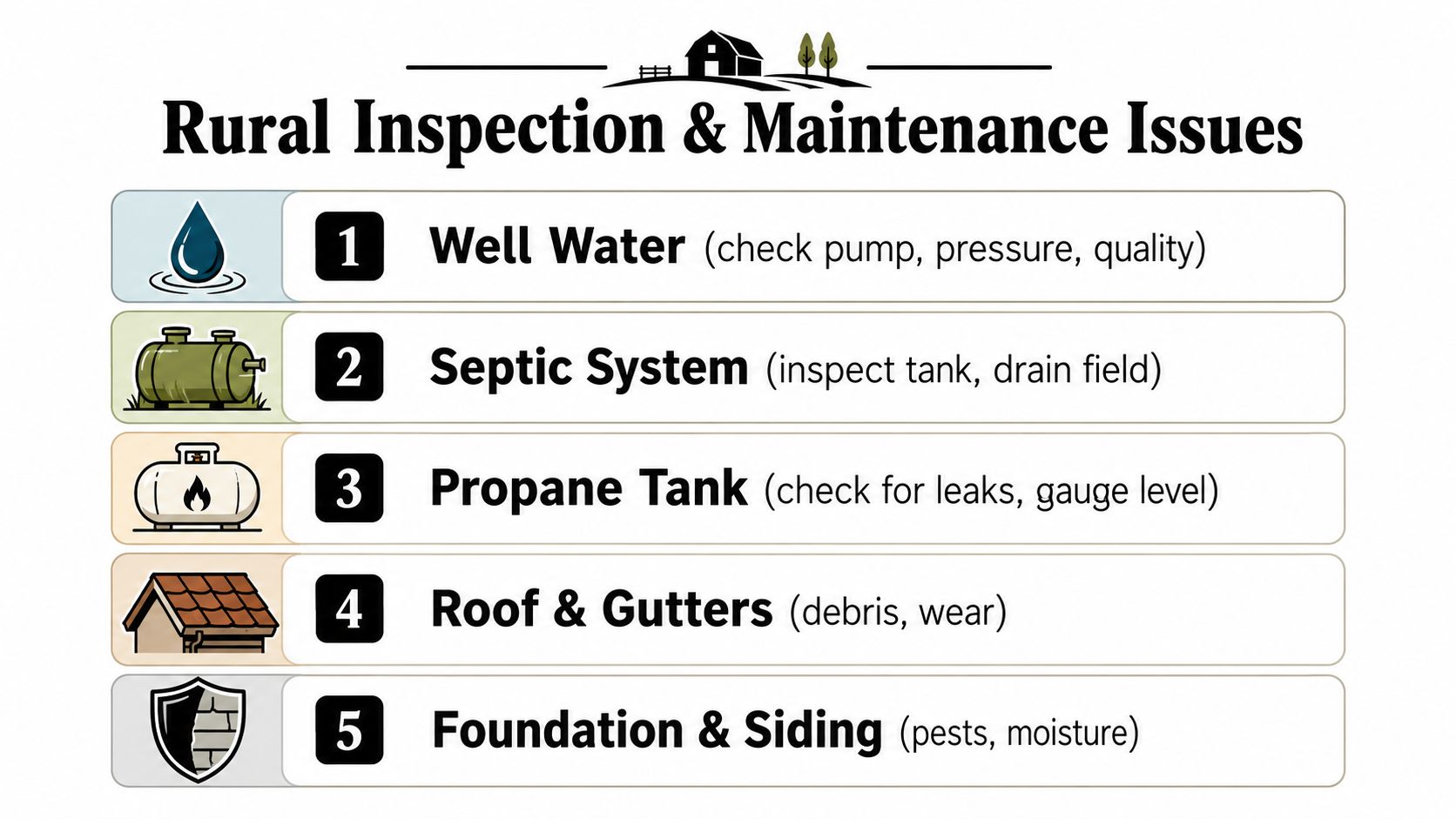
Start with the systems you can't see
Well water should be tested and understood before you buy, not after something tastes off. Septic should be checked for sizing, condition, and pumping history. Propane tanks need leak awareness and a real service plan. These are not optional boxes, they're the core operating systems of many rural homes.
Roof and gutter exposure also matter more when the house sits in open air with more debris, wind, and sun. Foundation, siding, and outbuildings deserve a close look because pests, moisture, and neglect move faster in rural settings than many city owners expect. Barns, shops, and ADUs can add value, but only if they're still structurally worth using.
The internal preventive maintenance checklist is the kind of tool that helps owners stay disciplined instead of reactive. Rural property rewards owners who track maintenance before problems become emergencies.
Don't import city assumptions
A lot of closings get derailed because someone assumes sewer, fiber, or same-day HVAC is part of the package. It isn't. In the countryside, service calls are often slower, more expensive, and more dependent on access than people want to admit.
The FAA's airport construction guidance treats exposed sites as places where earthwork, drainage, turf, and pavement all matter together, which is a good reminder that open land needs planning, not wishful thinking. Rural homes and land parcels work the same way, the surface may look calm, but weather, runoff, and wear are always in motion.
The embedded video below is worth watching if you want a visual reminder of how quickly a maintenance miss becomes a property problem.
What I'd never skip
- Well and water testing: Confirm pump function, pressure, and water quality before you rely on the property.
- Septic inspection: Verify tank condition, drain field health, and service records.
- Access review: Check road condition, easements, gates, and whether emergency vehicles can get in.
- Roof and exterior review: Look hard at wear, pests, and moisture exposure.
- Outbuilding inspection: Treat barns, shops, and ADUs as real assets, not bonus space.
Practical rule: In rural Central California, quarterly attention beats annual catch-up work. Owners who wait too long usually pay for it.
Valuation Factors That Move a Country Air Property
Rural value is not a copy of suburban value with extra land attached. Buyers pay for what they can use, what they can trust, and what they think they can resell without drama. That's why two properties with similar square footage can land at very different numbers.
What actually pushes value up
Usable acreage matters more than raw acreage. Water reliability matters more than guesswork. Good access matters more than pretty fencing. Outbuildings matter when they're functional, permitted, and in decent shape. View corridors help when they're real and permanent, not just a nice angle from the front porch.
Airport proximity and land-use constraints can also shape value, especially where future development potential is in play. And on the pricing side, rural comps should come from other rural sales, not city houses with different utility assumptions and different buyer pools. If you're trying to sort that out for a rental or sale price, the rental property value calculator is a practical starting point for thinking through income and market fit.
What quietly erodes value
A long driveway with poor access. A weak well. A septic system that makes buyers nervous. Limited broadband. Deferred maintenance on the roof, siding, or shop. Those issues don't just create repair costs, they shrink the buyer pool.
If the land looks good but the systems feel messy, buyers will discount the property hard. They assume there's more trouble they haven't seen yet. That's why rural owners need to fix the obvious problems before they list, not after the first inspection objection comes in.
For the farm and land-use side of value thinking, the SteadStack farm profitability calculator is useful when the property has a production angle or when you're trying to decide whether land should be treated as hobby acreage or operating ground.
Value creators versus value eroders
| Value Creator | Value Eroder |
|---|---|
| Usable acreage | Waste acreage that can't be used well |
| Reliable water | Questionable well performance |
| Functional outbuildings | Decrepit sheds, barns, or shops |
| Strong access and frontage | Hard-to-reach roads or unclear easements |
| Clean rural comps | Pricing against suburban sales |
| Clear land-use potential | Uncertain zoning or constrained use |
The best rural listings sell the asset, not the fantasy. Buyers want to know what the land does, not just what it looks like at sunset.
Choosing the Right Property Management Model for a Country Rental
Rural rentals punish sloppy management. If you're local, hands-on, and comfortable with coordination, you can stay involved. If you're remote, busy, or tired of getting called every time a pump hums wrong, you need a different setup.
Full-service versus placement-only
A full-service model handles rent collection, repair coordination, tenant communication, move-in and move-out, lease renewals, and accounting statements. That structure works when the property is farther out, has more moving parts, or needs tighter oversight because there are gates, acres, or multiple outbuildings.
Placement-only service fits owners who want to run the day-to-day themselves but still want professional marketing, applicant screening, and lease drafting. That can work for a local owner who knows the property well and already has a vendor bench.
Edinhart Realty and Property Management offers both approaches, which is useful because rural ownership doesn't come in one flavor. A remote investor near Friant doesn't need the same support as a hands-on owner in Clovis with one easy-to-manage house.
When full-service pays for itself
Time and risk are the true measures. If you're fielding late-night calls, juggling emergency vendors, or dealing with a property that has more than one access point, full-service is often the cleaner choice. It reduces missed rent follow-up, missed repairs, and missed communication.
The rural property management resource is a good fit for owners trying to decide whether they want to stay involved or hand off the work. In country rentals, the management model should match the property's complexity, not the owner's optimism.
My blunt recommendation
If the property is remote, full-service usually wins. If it's closer in, simpler, and you're experienced, placement-only can be enough. Don't choose based on pride. Choose based on how many things can break and how often you want to be the first person to hear about it.
How Edinhart Markets Country Air Property for Lease and Sale
Country listings need a different sales pitch. City marketing leans on kitchen finishes, commute convenience, and neighborhood feel. Rural marketing has to sell land, privacy, utility, and usable outdoor space without sounding vague.
Lead with the land, not the countertop
Good photography should show the acreage, the approach road, the setting, and the outdoor living areas before anyone worries about paint colors. Drone photos help because they show the layout. Twilight shots help because they make the property feel finished and cared for. But those images only work if the property is presented well.
Staging matters too. Rural interiors should feel clean, functional, and aligned with how people live on acreage. If the property has a shop, barn, or ADU, those spaces should be shown as usable assets, not afterthoughts.
Pricing has to respect rural comps
Too many sellers go wrong here. They anchor to a city house across town and ignore the fact that a rural buyer is evaluating water, access, and land use along with the structure. That mistake leaves money on the table or scares off the wrong audience.
Edinhart uses California Association of Realtors forms and ongoing legal updates, which matters because rural transactions get messy fast if the paperwork is loose. The selling story needs discipline, not hype.
Marketing should reach the right audience
Local renters want clarity on access, maintenance, and what daily living looks like. Out-of-state buyers want a clean explanation of the land, the setting, and the operating realities. The best listing copy says exactly what's there and doesn't pretend rural living is identical to suburban living.
That's how serious inquiries get separated from casual curiosity. Better marketing brings fewer tire-kickers and more qualified people who understand the property.
Screening Tenants for Country Air Rentals
Country tenants are not the same as city tenants. Some commute farther. Some keep equipment. Some have animals. Some are relocating from out of area and don't yet understand what rural living demands. Screening has to catch that early.
Verify the right things
Income matters, but rural wage reality isn't always linear, especially when applicants have agricultural or seasonal work histories. That means you need to look at employment stability, not just a paystub snapshot. Rental history matters too, and prior landlords should be contacted directly, not treated like a formality.
Clear pet rules matter in country rentals because of well water, septic, and property wear. Livestock policies should be written plainly too. If the owner doesn't want chickens, goats, or horses, say so before the tour.
Tours should happen in person
Rural properties need in-person walkthroughs more than city units do. Access roads, gates, outbuildings, parking, and utility setups are easier to explain on site than in a text thread. Applicants who understand the property after a real tour are less likely to become problem tenants later.
A strict screening standard isn't cruelty. It's protection for the land, the systems, and the owner's time. The better the screening, the cleaner the renewals usually are, especially when rent collection is automated and accounting is transparent.
Best practice: If a tenant seems confused by the basics of country living during the tour, they're probably not a fit.
A Practical Checklist for Moving Forward With Country Air Property
Whether you're buying, selling, or renting, the sequence matters. Start with the systems, then the value, then the management plan. That order keeps you from making emotional decisions that turn into expensive ones.
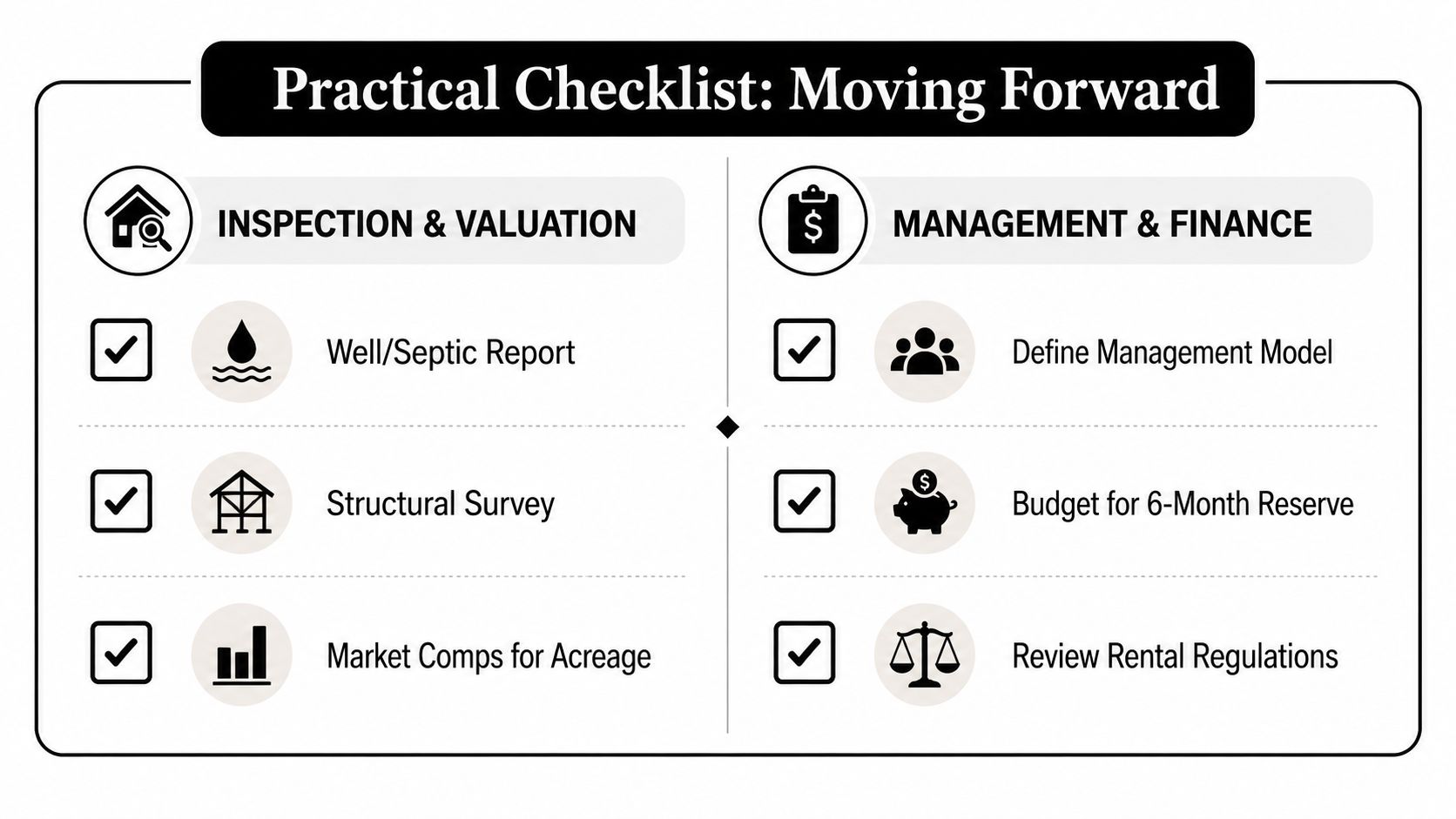
Your short list
- Inspect water and waste first: Get the well and septic checked before you argue about cosmetics.
- Review access and outbuildings: Make sure the property functions as a rural home.
- Use rural comps: Price or value the property against similar acreage, not suburban stock.
- Choose the right management model: Match full-service or placement-only to the property's complexity.
- Screen for fit, not just income: Rural tenants need to understand the setup before move-in.
- Budget for surprises: Country properties need a reserve, because delays and service calls are part of the game.
The right next move
If you own, buy, rent, or sell in Fresno, Clovis, Friant, or the broader Central California countryside, don't guess your way through it. Get a local read on the property, the systems, and the market story before you commit.
Edinhart Realty and Property Management handles full-service management, placement-only service, buying, selling, and strategic pricing for rural and exurban homes across Central California. If you're sorting out a country property and want a straight answer on value, tenant fit, or management, visit Edinhart Realty and Property Management and start the conversation with a local team that works these properties every day.


