

Monday starts with three messages waiting. A tenant says the plumbing issue is now urgent. An owner wants an update on rent collection before noon. A vendor is asking who approved the repair scope. None of these problems are unusual. What makes them expensive is when the answer is late, vague, or easy to misread.
That's why communication skills for managers matter so much in property management. The work looks operational from the outside, but most of the job is translating expectations clearly, keeping records clean, and lowering friction before it turns into a dispute. Poor organizational communication costs businesses between $10,000 and $55,000 per employee annually in lost productivity, according to High5's workplace communication statistics roundup. In this field, that cost shows up as repeated calls, preventable escalation, confused vendors, and owners who stop trusting the reporting they receive.
A strong communication program has five parts. First, establish your baseline. Second, sharpen the core skills that show up every day. Third, apply them in tenant, owner, and contractor scenarios. Fourth, fix the habits that keep causing misunderstandings. Fifth, build routines that make good communication repeatable, even when the day gets crowded.
Introduction to the Communication Program
Managers rarely lose control because they lack information. They lose control because the information is delivered too late, in the wrong format, or without enough precision for the person receiving it.
In property management, communication carries legal, financial, and relational weight at the same time. A rent reminder can sound routine to you and threatening to a tenant. A short owner update can feel efficient to you and incomplete to an investor who's out of state. A quick verbal approval to a contractor can create a billing argument later if nobody documents it.
Practical rule: Treat every important message as if two audiences will read it. The person involved today, and the person reviewing the file later.
That mindset changes how managers write emails, leave voicemails, and run phone calls. It pushes you to separate facts from assumptions, state the next step, and confirm who is responsible for what.
The managers who handle pressure best usually do a few things consistently. They slow down before sending high-stakes messages. They adapt tone without becoming vague. They document decisions in writing. And they don't confuse being brief with being clear.
Assessing Your Communication Baseline
Most managers judge their communication by intent. They think, “I explained it.” The better test is outcome. Did the tenant understand the next step? Did the owner know what action was needed? Did the vendor perform the right work without a follow-up call?
Communication skills are the most desirable competency employers seek, and 90% of a manager's day is spent on communication activities, according to Creative Organizational Design's hiring and leadership communication summary. That makes self-assessment more than a soft-skills exercise. It's an operating review.
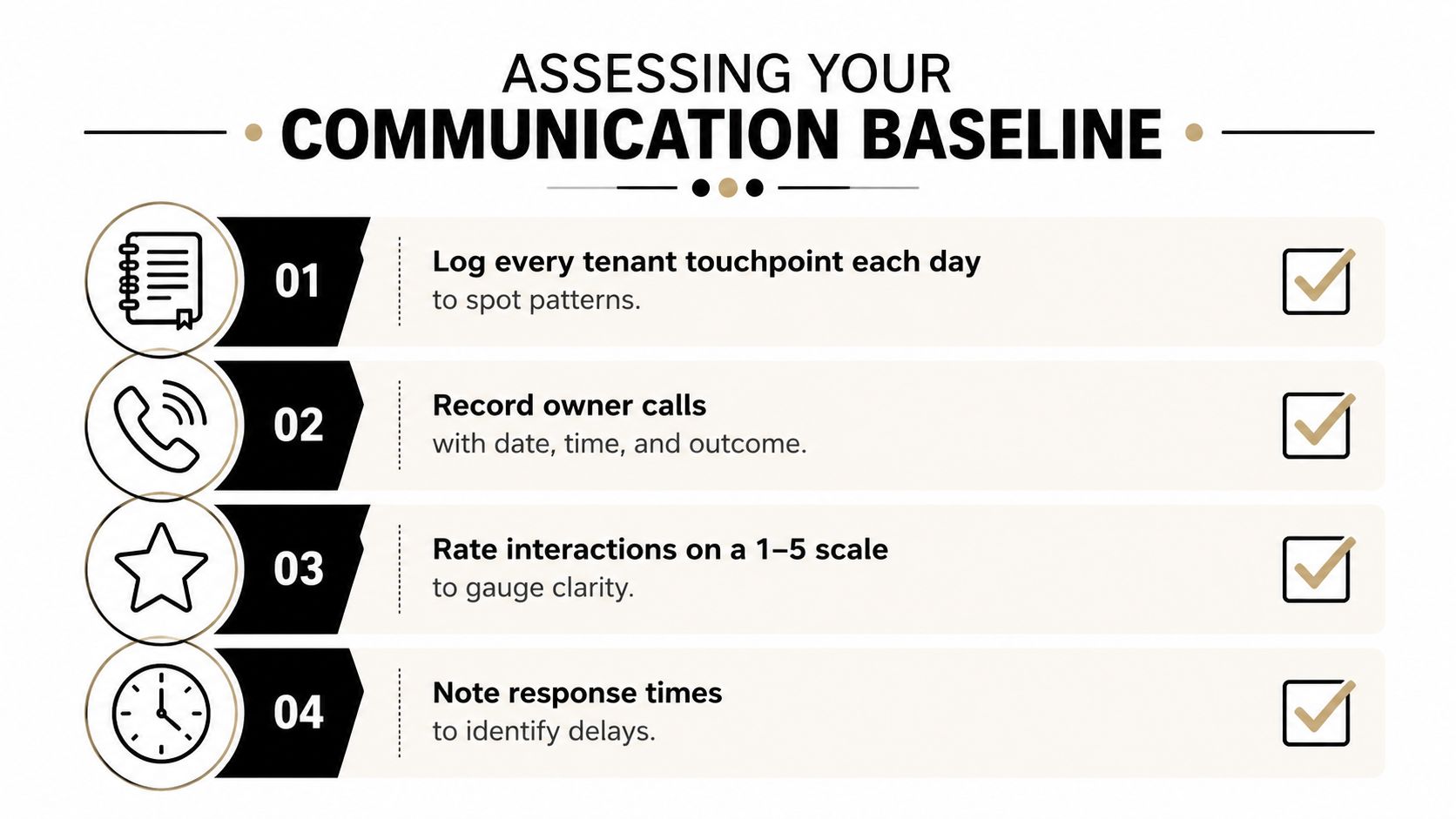
Run a one-week audit
Track every meaningful interaction for one workweek. Don't overcomplicate it. Use a spreadsheet, a property management note system, or a simple notebook if that's what you'll consistently maintain.
Log four things:
- Touchpoint type email, phone call, text, portal message, in-person conversation
- Audience tenant, owner, vendor, applicant, internal teammate
- Purpose update, request, correction, conflict, approval, follow-up
- Result resolved, waiting, misunderstood, escalated, needs documentation
Then score each interaction from 1 to 5 for clarity. A 1 means the exchange created confusion. A 5 means the other person understood the issue, the next step, and the timeline without extra back-and-forth.
Look for patterns, not isolated mistakes
One messy call doesn't tell you much. Repeated patterns do.
If your owner calls often end with “send me that in writing,” your verbal summaries may be too loose. If tenants keep asking the same question after receiving a notice, the written message may be legally correct but practically unclear. If vendors routinely ask for confirmation after dispatch, your work orders may be missing a decision point, approval source, or access instruction.
Use a simple benchmark table like this:
| Activity | Description | Self-Rating (1–5) |
|---|---|---|
| Tenant updates | Explaining next steps, timelines, and responsibilities clearly | |
| Owner calls | Summarizing property status and required decisions without rambling | |
| Written notices | Using plain language while keeping terms precise | |
| Vendor coordination | Giving complete instructions on scope, access, and billing | |
| Conflict conversations | Staying calm, listening well, and moving toward resolution | |
| Follow-up habits | Confirming decisions and documenting them in writing |
If you can't identify your three most common communication failures by Friday, you're not auditing closely enough.
Prioritize by cost of failure
Don't start by improving the easiest skill. Start with the one that creates the biggest operational risk.
For many property managers, that's one of these:
- High-stakes writing such as late rent notices, lease language, or repair responsibility explanations
- Conflict calls where tone determines whether the issue cools down or gets worse
- Owner reporting when raw numbers are delivered without context
- Documentation discipline after verbal conversations
A baseline is useful only if it leads to a narrower focus. Pick one written skill and one verbal skill to improve first. That's manageable, and it usually produces visible gains fast.
Developing Core Communication Skills
The best communication training for managers doesn't start with charisma. It starts with repeatable mechanics. In property management, five skills carry most of the load: listening, instruction, feedback, conflict handling, and written precision.
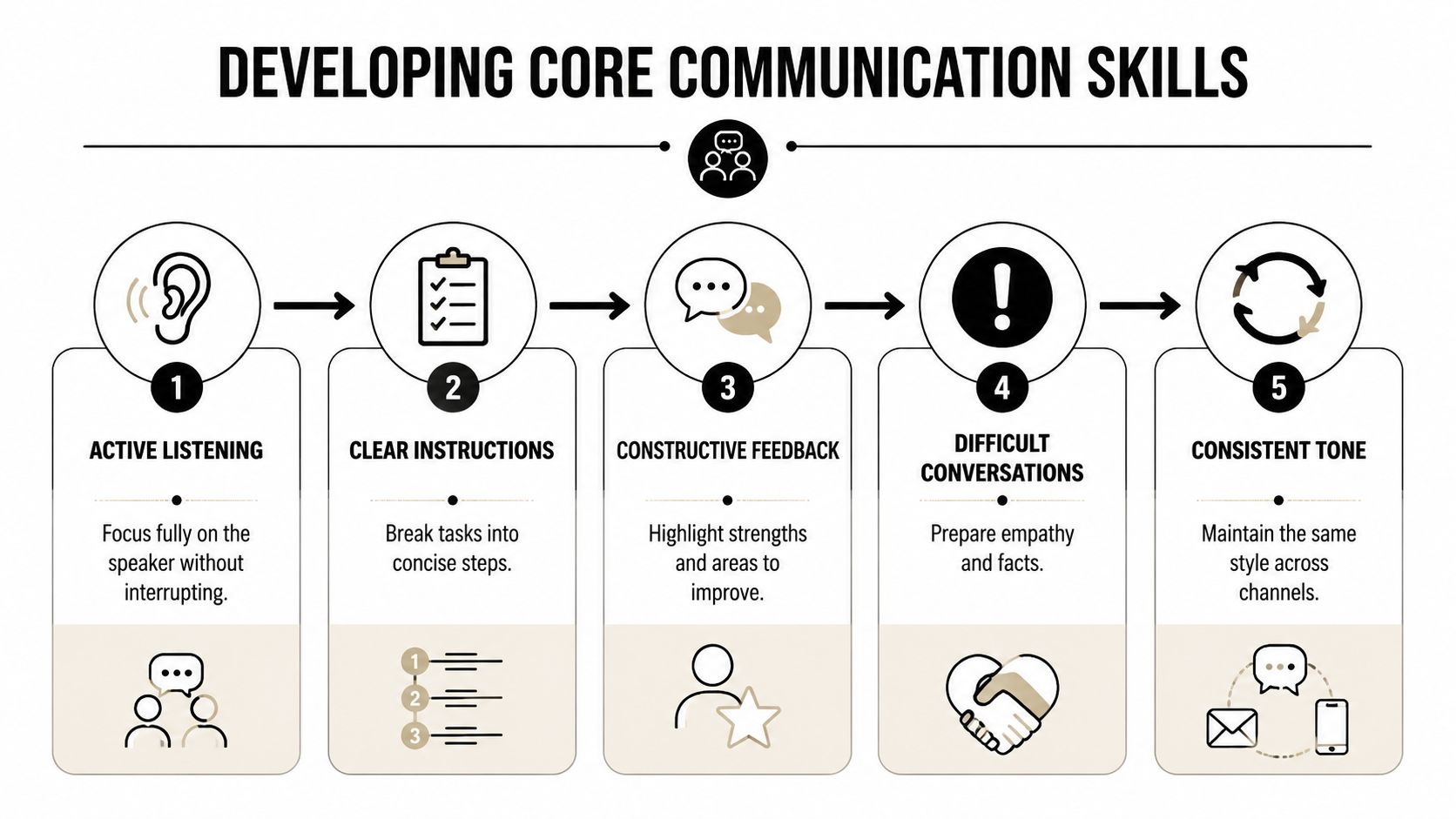
Active listening under pressure
Listening sounds basic until someone is angry, defensive, or talking in circles. Then most managers interrupt too early because they want to fix the issue quickly. That usually backfires.
A practical three-phase method works better. Stay calm. Empathize through active listening. Then work on a solution. That framework comes from REIQ's guidance for property managers handling difficult conversations, which emphasizes calm control, empathetic listening, and solution focus.
Try these prompts in live conversations:
- To slow the pace “Let me make sure I've got this right.”
- To show understanding “I hear your concern about timing and access.”
- To move forward “Here are the two next steps I can offer.”
Clear instructions that people can act on
Many managers think they're being efficient when they send short messages. Often they're just sending incomplete ones.
A useful instruction has four parts:
- What happened
- What needs to happen next
- Who is responsible
- When it needs to be done
For vendor coordination, “Please handle leak at Unit 4” is weak. “Tenant reported an active leak under the kitchen sink in Unit 4. Please inspect and stop the leak today if access is available. Bill under approved maintenance. Reply with arrival window and photos after completion” is much harder to misread.
Constructive feedback without friction
Managers also need to correct staff, vendors, or even owners without making the conversation defensive. The easiest structure is observation, impact, next step.
For example: “The invoice came in without photos or material detail. That makes owner approval harder. On the next job, include completion photos and a line-item summary.”
For written communication that needs to balance clarity and professionalism, reviewing examples like this lease renewal letter guide can help managers tighten tone and structure.
Here's a short training resource worth reviewing with your team:
“I hear you” works only if the next sentence proves you understood the actual issue.
Consistent written tone
Written tone matters most when emotions are already running high. Managers get in trouble when emails sound either too cold or too casual. The standard should be calm, specific, and neutral.
A good writing drill is to rewrite one difficult email each week in plain language. Remove jargon. Remove filler. Replace blame with facts. End with a direct next step and deadline. Over time, that habit builds control you can rely on when the message really matters.
Applying Skills in Property Management Scenarios
Real skill shows up in live situations, not training notes. The following scenarios reflect the kind of communication pressure property managers face all the time: tenant payment tension, owner reporting gaps, and contractor coordination that can easily go sideways.

Tenant communication when rent is late
Late rent conversations are where tone and precision have to work together. Too soft, and the message becomes unclear. Too aggressive, and you create defensiveness before discussing options.
One overlooked issue is legal empathy. Traditional guides often miss it, even though ambiguous notices are tied to 42% of California landlord-tenant disputes that escalate to legal action, according to Empathable's discussion of communication gaps in high-stakes conflicts.
Use this email template:
Subject: Update Needed on Rent Status for [Property Address or Unit]
Hi [Tenant Name],
Rent for [month] hasn't been received as of today. Please reply by [time/day] with your payment status or any issue affecting timing.If there's a problem, explain it clearly so we can outline the next step based on the lease terms.
Thank you,
[Manager Name]
That message does three things well. It states the fact. It invites a response without sounding vague. It leaves room for discussion without weakening the manager's position.
For a more detailed workflow around this type of situation, this guide on handling late rent payments is a useful companion reference.
Owner reporting that answers the real question
Owners rarely want raw data alone. They want to know what the data means for their property, cash flow, and decision-making.
A weak report says:
- Rent collected
- Repair completed
- Lease expires next month
A stronger report translates the same facts:
- Rent status Paid or outstanding, with note on any follow-up
- Repair summary What was fixed, why it mattered, and whether further work is recommended
- Lease timeline Renewal window, risk points, and decision needed from owner
Try this monthly owner update format:
| Section | What to include |
|---|---|
| Property status | Occupancy, current tenant standing, major issues |
| Financial note | Rent status, unusual charges, open balances |
| Maintenance summary | Completed work, pending items, approval requests |
| Leasing outlook | Renewal timing, vacancy risk, showing activity |
| Manager recommendation | One clear action or decision |
This structure reduces the common mistake of forwarding accounting details without interpretation.
Contractor communication that survives review
Contractor messages fail when they rely on assumptions. “Take care of the bathroom issue” may make sense in the moment, but it won't hold up later if the invoice is disputed.
A stronger dispatch email looks like this:
Subject: Work Order for [Property Address]
Issue reported: [brief factual description]
Access details: [occupied/vacant, gate code if appropriate, contact method]
Approved scope: [inspection only or repair if within authorization]
Documentation required: [photos, invoice detail, completion note]
Billing instruction: [where invoice should go]
This is where trade-offs matter. Too much detail can slow things down on a routine job. Too little detail creates rework and billing disputes. The right standard is enough information for a third party to understand the assignment without calling back for basics.
Troubleshooting Common Communication Challenges
The usual advice says to “communicate more.” That's incomplete. Managers don't always need more communication. They need cleaner communication.
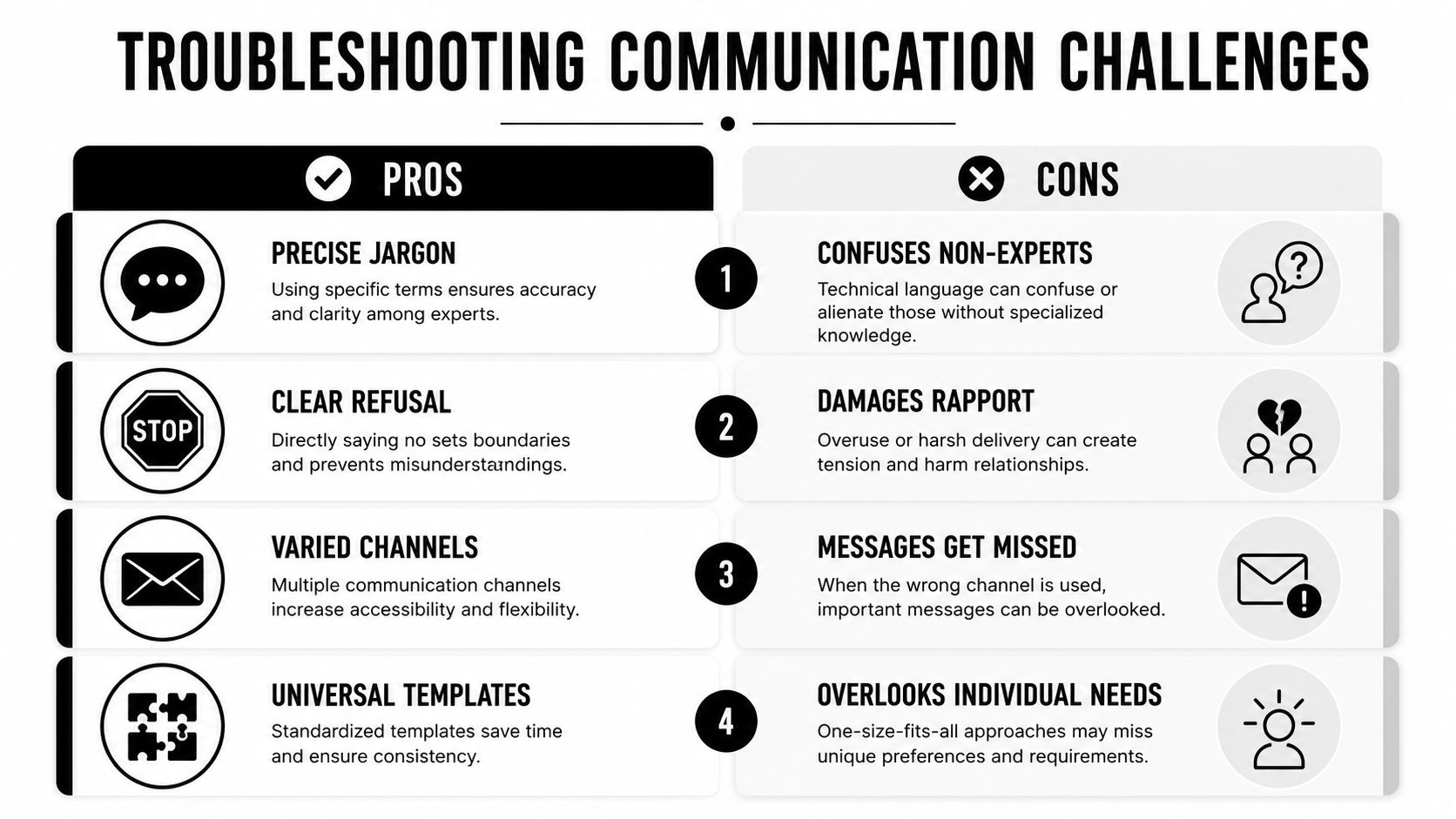
Technical jargon, flat refusals, and poor channel selection correlate with higher tenant dissatisfaction, and documenting every communication is essential for dispute prevention, as outlined in Catch-All Environmental's property manager communication guidance.
Four fixes that work better than talking more
Replace jargon with plain language
“Your prorated concession was adjusted pursuant to the ledger” might be accurate, but many tenants won't know what you mean. Say what changed and why in ordinary terms.Stop using flat no responses
“No, that's not allowed” often ends the conversation badly. A better line is, “We can't approve that request under the lease, but here are the options available.”Match the channel to the person
Some owners want a call for anything significant. Some tenants respond fastest through email or a portal. The wrong channel can make a good message ineffective.Document after verbal agreement
If a call resolves the issue, send the recap. That written follow-up becomes the reference point if memories differ later.
A manager's calm tone doesn't help much if the written record is missing.
Before and after rewrites make this visible:
| Before | After |
|---|---|
| “Per policy, your request is denied.” | “We can't approve that request under the current terms. What we can offer is [option].” |
| “Vendor will address as needed.” | “Vendor is scheduled to inspect on [day]. They'll confirm whether repair can be completed during that visit.” |
| “Please see attached.” | “Attached is the invoice and photo set from today's repair. The remaining question is whether you want approval for the follow-up item.” |
When a disagreement is already active, formal mediation principles often help managers slow the conversation down and define the issue properly. This overview of dispute resolution and mediation is a practical reference.
Conclusion and Next Steps
Good communication doesn't come from sounding polished. It comes from using reliable habits in demanding situations. That means auditing how you communicate, practicing the skills that hold up under pressure, using structured templates in live scenarios, and removing the habits that keep creating confusion.
Keep the next phase simple. Review one difficult conversation each week. Rewrite one high-stakes email before sending it. Build a standard follow-up note for verbal decisions. Ask a teammate to review messages that involve payment issues, lease terms, or owner approvals.
Communication skills for managers improve fastest when they're tied to actual work, not abstract theory. In property management, that usually means fewer repeat questions, cleaner records, better owner trust, and fewer situations that turn needlessly confrontational.
If you want experienced help handling tenant communication, owner reporting, lease renewals, and day-to-day property operations across Central California, Edinhart Realty and Property Management offers practical support grounded in compliance, clear processes, and consistent follow-through.


