

Buying and selling real estate through a trust isn't just for the super-rich. It's a savvy move for anyone who wants to keep their affairs private, sidestep the headaches of probate court, and manage their assets smartly. Instead of your personal name being plastered on the property title, the trust holds it, acting as a legal entity managed by a trustee for your heirs.
Why Smart Investors Use Trusts for Real Estate
Let's be clear: using a trust is a practical strategy for anyone serious about protecting their assets and making life easier for their family down the road. It really boils down to three things: privacy, control, and efficiency. These aren't just buzzwords; they offer real, tangible benefits over owning property in your own name.
The biggest win for most people? Skipping probate court. When property is in your name, it has to go through a public, slow, and often expensive legal process after you pass away. Only then can it be handed over to your heirs. A trust completely bypasses this mess.
Enhancing Your Privacy
When you buy a property as an individual, your name goes on the deed. That deed is a public record, which means anyone—nosy neighbors, aggressive marketers, or opportunistic lawyers—can look it up. It can make you a target.
By putting the property in a trust, you create an immediate privacy shield. Instead of "Jane Doe" showing up on the public record, the owner is listed as something like "The Sunshine Property Trust." That anonymity is a powerful tool for keeping a low profile, something many investors and private families really value.
The real power of a trust is its ability to separate your personal identity from your assets. It transforms a public holding into a private one, giving you and your family a layer of protection that individual ownership simply cannot offer.
This isn't about hiding assets illegally. It's about smart, discreet management of your affairs. It keeps your real estate portfolio from being easily searchable online, protecting you from frivolous lawsuits and unwanted attention.
Avoiding the Probate Process
This is a huge one. Probate is the legal process that can tie up an estate for months, sometimes even years. All the while, it’s racking up legal fees and court costs that eat away at the value of the assets you wanted to pass on.
A trust, on the other hand, owns the property directly. Since the trust doesn't "die," there's no need for a court to step in. When you pass away, the successor trustee you've already named simply follows the instructions in your trust document. They can manage or transfer the property to your beneficiaries privately, quickly, and without court supervision.
This benefit has led to a massive uptick in the use of living trusts for real estate in the U.S. since the 1990s. With over 40% of wealthier households now using trusts, the main drivers are clear: bypassing probate, minimizing estate taxes, and ensuring confidentiality. Considering probate can easily take 6 to 12 months (or more), a trust dramatically speeds up the transfer of your property. You can find out more about how trusts simplify estate management on Doorloop.com.
Individual Ownership vs. Trust Ownership At a Glance
To make it even clearer, let's break down the key differences between holding property in your name versus in a trust. This quick comparison highlights why so many people are making the switch.
| Feature | Individual Ownership | Trust Ownership |
|---|---|---|
| Privacy | Low (Owner's name is public record) | High (Trust's name is public record) |
| Probate | Required (Public, slow, and costly) | Avoided (Private, fast, and efficient) |
| Control | Direct control during lifetime | Direct control (revocable) or trustee control (irrevocable) |
| Asset Transfer | Subject to will and probate court | Managed by successor trustee per trust terms |
As you can see, a trust offers significant advantages in the areas that matter most for long-term asset management and estate planning. It puts you in control, protects your privacy, and saves your heirs from a costly and public court battle.
Setting Up Your Real Estate Trust Correctly
Creating a trust for your property might sound complex, but it really boils down to a few key decisions. Think of it as building a custom legal fortress around your assets. This is where you lay down the ground rules, pick your team, and make sure your wishes are followed to the letter.
The whole process starts with one big choice: revocable or irrevocable? This decision dramatically changes how you can handle the property and the kind of protection you get.
Revocable vs. Irrevocable Trusts: Which Is for You?
A revocable trust, also known as a living trust, is all about flexibility. As the person creating it (the grantor), you keep all the control. You can change the terms, move properties in or out, switch beneficiaries, or even scrap the whole thing if you change your mind.
- Real-World Scenario: Let's say you're a young investor buying your first rental. You want to avoid probate down the road, but you also need the freedom to sell or refinance easily. A revocable trust is a perfect fit. You can be your own trustee and manage the asset without jumping through hoops.
An irrevocable trust, on the other hand, is built to last. Once you put an asset in, you generally can't just take it back or change the rules. That sounds restrictive, but it comes with a massive upside: serious protection from creditors and potential relief from estate taxes.
- Real-World Scenario: Imagine a retiree who wants to make sure the family vacation home stays in the family. By putting it into an irrevocable trust, they build a strong wall around it, protecting it from future lawsuits or tax burdens and securing it for their kids.
The trade-off is pretty straightforward: a revocable trust gives you flexibility, while an irrevocable trust gives you protection. The right one for you depends entirely on your goals—control versus security.
Drafting the Essential Trust Document
After you’ve picked a trust type, it’s time to create the legal document that makes it real. And let's be clear: while you can find DIY templates online, this is not a corner you want to cut. For something as significant as real estate, working with an experienced estate planning attorney is non-negotiable. A poorly written trust can cause more problems than having no trust at all.
Your trust document needs to spell out a few critical elements:
- The Trustee and Successor Trustee: The trustee manages the trust’s assets. You can be the trustee for your own revocable trust, but you absolutely must name a successor to step in if you pass away or can't manage things yourself. Pick someone you trust who is organized and financially savvy.
- The Beneficiaries: These are the people or organizations who will inherit the assets. You need to be crystal clear with names and details to prevent any confusion later.
- The Powers of the Trustee: This section is the playbook. It details exactly what the trustee can and can't do—like buying, selling, renting, or mortgaging property. Clear instructions here will prevent fights and empower your trustee to act when needed.
This is all about getting your ducks in a row to protect your family and your legacy.
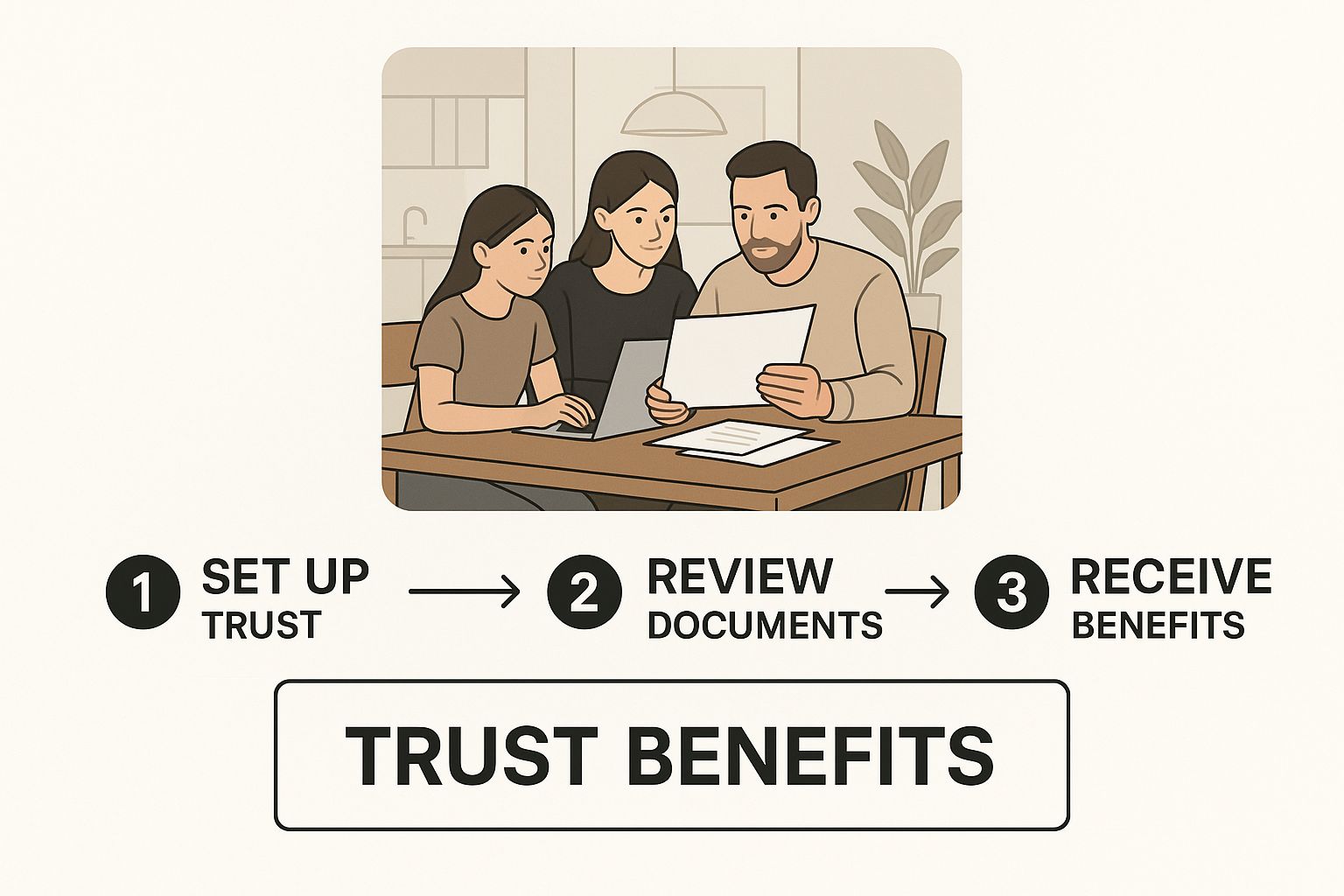
As you can see, the real benefit here is the peace of mind that comes from knowing your assets are secure for the future.
Finalizing and Executing Your Trust
The last step is making it official. You’ll need to sign the trust document in front of a notary public. Notarization is the formal verification that proves it was you who signed it willingly. This simple act is crucial for stopping any claims of fraud down the line.
Once it's signed and notarized, your trust is legally alive. But it's just an empty box until you "fund" it by transferring your property into its name. This final step is absolutely critical, and it’s what we’ll cover next. Without it, the trust does nothing to protect that property.
How to Actually Buy Property with Your Trust

Alright, you’ve got your legally executed trust in hand. Now for the fun part: putting it to work. Buying real estate with a trust isn't wildly different from a personal purchase, but it demands precision and a few extra steps. Knowing these nuances from the get-go is the key to a smooth ride from making an offer to getting the keys.
The very first move is writing the purchase offer. This is where you set the stage. Instead of putting your own name down as the buyer, you’ll name the trust. For example, the buyer line should read something like, "Jane Smith, Trustee of the Smith Family Revocable Trust, dated January 1, 2024." This language is non-negotiable. It’s a clear signal to everyone—the seller, the lender, the title company—that the trust itself will be the legal owner, not you as an individual.
Preparing Your Documentation
Once your offer is accepted, the seller's agent and the title company are going to immediately ask for proof that your trust is legitimate and that you, the trustee, have the authority to act. This is where a little prep work pays off big time.
You'll need what's called a Certificate of Trust (or sometimes an Affidavit of Trust). Think of it as the cliff-notes version of your full trust document. It verifies the trust's existence and your powers as trustee without broadcasting private details like who your beneficiaries are or your asset distribution plans.
Get ready to provide:
- The official name and date of the trust. This must match your offer perfectly.
- The names of the current trustees. This confirms you’re the one who can sign on the dotted line.
- The trust’s Taxpayer Identification Number (TIN). For a revocable trust, this is typically your own Social Security Number.
- Confirmation of the trustee’s powers. The certificate has to explicitly state that the trustee has the legal right to buy, sell, and mortgage real estate.
A well-prepared Certificate of Trust is your golden ticket. It gives title companies and lenders the verification they need while keeping the private details of your estate plan out of the public record. Having it ready to go prevents major delays.
The Mortgage Maze When Buying with a Trust
This is where a lot of people hit a snag: getting a mortgage. Not every lender is comfortable—or even experienced—with lending directly to a trust. Some flat-out have policies against it. They might force you to get the loan in your personal name and then transfer the property into the trust after closing, which just adds extra steps, costs, and potential headaches.
The simple way to avoid this mess is to be upfront. When you first start shopping for a loan, your first question should be, "Do you lend to revocable living trusts?" This one question will filter out the wrong lenders right away. Lenders who are trust-friendly will know the process inside and out and won't be surprised by the paperwork.
This strategy isn't new; trusts have been a go-to tool for asset management and tax efficiency for decades. The IRS has recognized trusts for holding real estate since the 1940s. By 2025, it's projected that over 30% of real estate in high-net-worth portfolios will be held in trusts to optimize financial outcomes.
Closing the Deal and Titling the Deed
The last step is the closing, where the property officially becomes an asset of your trust. At the closing table, you'll sign every document as the trustee. Your signature line will look something like this: "Jane Smith, Trustee."
Pay close attention to the most critical document of all: the deed. You have to verify that it correctly titles the property in the trust's name, using the exact legal name and date you established. Any mistake here can create serious title problems down the road.
If you’re managing multiple properties, understanding professional oversight is vital; our guide on https://edinhart.com/fresno-property-management/ offers key insights for investors. And when you're ready to make a purchase, having access to essential real estate forms can streamline the whole acquisition. A correctly written deed is your proof that the property is legally and successfully secured, ready to enjoy the privacy and protection your trust offers from day one.
Navigating the Sale of a Trust-Held Property
When it's time to sell a property that's held in a trust, the process feels a lot like a regular home sale, but with a critical twist. As the trustee, you're not just selling a house—you're a fiduciary. That's a legal term that means you're obligated to act in the best interest of the trust's beneficiaries.
Think of it this way: you’re the captain of the ship, but the trust document is your map. Your personal feelings or financial needs don't enter the picture. The trust is the one selling the property, and you're simply the person legally empowered to make it happen.
Proving You Have the Authority to Sell
The minute you accept an offer, the buyer's agent and the title company will immediately ask for proof that you can legally sell the property. They need to be 100% certain the sale is legitimate before they'll insure the title. This is where being prepared really pays off.
You'll need to have a few key documents ready to go:
- A Certificate of Trust: This is your most important document. It’s a summary of the trust's essential details—its name, when it was created, and who the trustees are—without spilling all the private details about the beneficiaries or assets.
- The Full Trust Document: Sometimes, especially if the Certificate of Trust is a bit vague or state laws are extra strict, the title company might ask to see the entire trust document.
- Proof of Identity: Just standard ID to confirm you are who the trust says you are.
A Certificate of Trust is your best friend in this process. It gives the title company everything they need for verification while keeping the private parts of the trust confidential. Having this ready from day one can prevent major headaches and delays at closing.
If you can't produce these documents quickly, the whole deal can grind to a halt. No buyer will move forward without a clear path to getting title insurance, and no title company will issue that policy if there's any doubt about who has the right to sell.
How to Sign on the Dotted Line
Once your authority is confirmed, every single piece of paper you sign is done in your role as trustee. This detail has to be perfect on all the legal paperwork. From the listing agreement with your real estate agent to the final closing documents, your signature needs to be precise.
For instance, you'll sign as "Jane Doe, Trustee of the Doe Family Revocable Trust," not just "Jane Doe." It might seem like a small thing, but it's a huge legal distinction. It makes it clear that the trust is the one making the deal, protecting you from personal liability and keeping the transaction ironclad.
Tackling Common Hurdles in Trust Sales
Selling a property from a trust can throw a few curveballs your way. A common one is when the trust document itself is unclear about the trustee's power to sell property. If that language isn't explicit, a title company might hit the brakes and require a court order to clarify things. This is exactly why a well-drafted trust is worth its weight in gold.
Another issue can be state laws. Real estate rules can be wildly different from one state to the next. A trust created in California might face different hurdles when selling a property located in Arizona. The title company is always going to follow the laws of the state where the property is, which could mean more paperwork or legal review.
Finally, if you have multiple beneficiaries, communication is everything. While you, the trustee, have the final say, keeping everyone in the loop can prevent arguments and make sure everyone feels their interests are being looked after. A little transparency goes a long way.
Navigating Tax and Legal Complexities

Setting up a trust is one thing, but the real power comes from understanding the financial and legal battlefield. This isn't just about sidestepping probate; it's about making savvy financial plays. When you’re buying and selling real estate through a trust, you absolutely must be fluent in the tax and liability rules.
How your trust is structured dictates everything about how the money is handled. With most revocable trusts, it’s actually pretty straightforward. The trust is a "pass-through" entity, so any income or expenses from the property just flow onto your personal tax return, tied to your Social Security Number.
Understanding Key Tax Implications
Taxes are always front and center when you’re managing property held in a trust. Let's imagine you own a rental property inside your revocable trust. All the rental income and those crucial deductible expenses—like repairs and property taxes—get reported on Schedule E of your personal Form 1040. It's exactly the same as if you owned it in your own name.
The same logic applies when you sell. Any capital gains are reported right on your personal return. A big question I always get is about the home sale exclusion, which lets you exclude up to $250,000 (or $500,000 for a married couple) in gains from your main home. Good news: the IRS lets you claim this incredibly valuable exclusion with a revocable trust, just as if you owned the home yourself.
Beyond the trust itself, digging into broader real estate investment tax benefits can seriously optimize your strategy. The rules around trusts open up unique opportunities that smart investors know how to use. For a deeper look, check out our guide on https://edinhart.com/how-to-prepare-for-tax-season-when-you-own-a-rental/.
One of the most powerful long-term tax perks is the stepped-up basis. When your heirs inherit property through the trust, its cost basis is "stepped up" to whatever the fair market value was when you passed away. This is huge. It means if they turn around and sell it right away, they'll owe little to no capital gains tax, protecting the full value of what you left them.
The Reality of Creditor Protection
Here’s a critical point that trips a lot of people up: not all trusts are created equal when it comes to protecting your assets. The gap between revocable and irrevocable trusts is massive when creditors come knocking.
- Revocable Trusts: Let's be clear—these offer almost no creditor protection while you're alive. Since you still have full control and can dissolve the trust whenever you want, the courts see the assets as yours. If you get sued, that property is fair game.
- Irrevocable Trusts: This is where you get real armor. By giving up control and making the transfer final, you legally wall off the property from your personal estate. Creditors typically can't touch assets held in a properly structured irrevocable trust.
You can see the power of trust-based models in the wider market. For instance, real estate investment trusts (REITs) saw their market cap explode by 17.6% annually from 1990 to 2021, hitting a staggering $1.75 trillion. That growth proves how effective these structures are for pooling investments and bringing down the barrier to entry.
A Critical Warning on Title Insurance and Lenders: Heads up. Some title insurance companies and mortgage lenders have incredibly strict—and often frustrating—rules about trusts. They might demand a mountain of paperwork or even insist you temporarily pull the property out of the trust to refinance, then put it back in. This can create new risks and extra costs. Always ask about these policies upfront.
This reality check is about making sure you're going in with your eyes wide open. A trust is an incredible tool, but its true power hinges on mastering these crucial tax and legal details. Talking to your financial and legal advisors isn't just a good idea—it's essential.
Common Questions About Real Estate Trusts
Even after you get the big picture, the world of real estate trusts can bring up a lot of "what if" questions. This is where theory meets reality. We've put together some straight answers to the most common—and important—questions clients ask us when they're getting ready to buy or sell property through a trust.
These aren't just abstract legal puzzles. They're the real-world issues that pop up during a deal or over the life of your trust. Getting clear on them now will give you the confidence to handle whatever comes your way.
How Do I Transfer My Existing Home into a Trust?
This is probably the most common question we hear. You've owned your home for years, and now you want to move it into the trust you just set up. The process itself is pretty straightforward, but it demands precision.
Your attorney will start by drafting a new deed—usually a Quitclaim Deed or a Grant Deed. This is the legal document that officially moves the property's ownership from you as an individual to you as the trustee. For example, the title would change from "John and Jane Smith" to "John and Jane Smith, Trustees of the Smith Family Trust."
Once it's drafted, you'll sign the new deed in front of a notary public. The final, critical step is to have that signed and notarized deed recorded with the county recorder's office where your property is located. This makes the transfer an official public record.
Crucial Tip: As soon as that new deed is recorded, call your homeowner's insurance company. You have to update your policy to name the trust as an "additional insured" so your coverage isn't interrupted. Forgetting this step could leave your most valuable asset completely unprotected.
What Are the Costs of Setting Up and Maintaining a Trust?
While a trust can save your family a ton of money by avoiding probate court, you do have to plan for the upfront and ongoing costs. It helps to be realistic about the investment from the start.
The initial setup can vary a lot depending on where you live and how complex your estate is. Generally, you can expect attorney fees for a complete revocable living trust package to fall somewhere between $1,500 and $4,000+. This usually covers drafting the trust itself, transferring a property or two into it, and creating other key estate documents like a pour-over will.
The good news is that after the setup, a revocable trust is very low-maintenance. There are no annual filing fees or mandatory reports. You might have small legal fees down the road if you need to amend the trust—say, to change a beneficiary or successor trustee—but it's a small price for the privacy and efficiency you get. Landlords should also understand their local regulations; for more information, you can explore key aspects of landlord-tenant law in California to stay compliant.
What Happens If a Trustee Can No Longer Serve?
This is a fantastic question because it gets right to the heart of building a plan that can withstand life's curveballs. People pass away, become incapacitated, or sometimes just want to step down from their duties. A well-written trust is ready for this.
Your trust document should name one or more successor trustees. These are the people you've picked to step into the role, in a specific order, if the main trustee can't anymore.
- Order of Succession: You can name a whole line of succession. For instance, "If my spouse cannot serve, then my eldest child shall serve. If my eldest child cannot serve, then my brother shall serve."
- Proof of Incapacity: The document should also be crystal clear on how incapacity is determined. Often, it requires a written declaration from one or two licensed physicians. This simple clause prevents ambiguity and potential family arguments.
This built-in succession plan means there's never a gap in management. The switch to a successor trustee happens automatically based on the trust's own rules, all without ever having to go to court. It keeps the management of your real estate seamless and, most importantly, private.
At Edinhart Realty and Property Management, we provide the expertise to help you navigate every step of buying, selling, and managing your real estate assets, whether they are held in a trust or not. Our team leverages strategic marketing, in-depth legal knowledge, and professional service to protect your investments and maximize your returns. Learn how we can empower you to achieve your real estate goals.


