

Building a successful real estate portfolio begins with one critical decision: choosing the right type of property. The world of real estate investing is vast, with opportunities ranging from stable single-family homes to high-yield commercial spaces. For investors in Fresno and Clovis, the path to maximizing returns isn't about finding a one-size-fits-all solution; it's about aligning your investment strategy with your personal goals, available capital, and risk tolerance.
Understanding the unique ROI drivers, typical costs, and management demands of each property type is essential for success. This comprehensive guide is your roadmap, breaking down the best investment properties to consider. We will explore a diverse range of options, from traditional single-family rentals and multi-unit duplexes to specialized assets like student housing and self-storage facilities.
Each section will provide a detailed look into what makes each investment tick, including:
- Potential ROI and Cash Flow: What kind of returns can you realistically expect?
- Costs and Financing: How much capital is needed and what are the typical financing routes?
- Risks and Management: What challenges should you prepare for?
- Local Market Insights: How does each property type perform specifically in the Fresno/Clovis area?
We will provide practical, actionable steps and real-world examples to help you identify the ideal investment for your portfolio. Whether you prefer a hands-on approach or seek the support of a full-service firm like Edinhart Realty & Property Management, this guide will equip you with the knowledge to turn your real estate ambitions into a profitable reality. Let's build your wealth, one smart investment at a time.
1. Single-Family Rental Homes
Single-family rental (SFR) homes are a cornerstone of residential real estate investing and one of the best investment properties for both new and seasoned investors. These standalone residences are consistently in high demand, appealing to families and long-term tenants who desire privacy, yard space, and a sense of community that multi-family units often lack. This stability translates into lower turnover rates and more predictable cash flow.
In markets like Fresno and Clovis, the demand for SFRs is particularly robust. Families are drawn to the region for its affordability, quality schools, and employment opportunities, creating a deep pool of qualified tenants. An SFR is an accessible entry point into real estate, offering a tangible asset that appreciates over time while generating monthly income.
ROI Drivers and Local Examples
The return on investment for an SFR is driven by a combination of monthly rental income, property appreciation, and significant tax advantages. For example, a well-maintained home in a desirable Clovis school district can command premium rent and attract stable, long-term tenants.
- Fresno Market: A $350,000 home in a desirable neighborhood like Woodward Park can realistically rent for $2,200-$2,500 per month.
- Clovis Market: A family home in a well-established subdivision could be acquired for around $400,000 and generate rental income of approximately $2,600 per month.
- Rural Properties: A home on a half-acre lot in the surrounding Central Valley can appeal to tenants seeking more space, offering a unique niche with less competition.
Key Insight: The primary appeal of single-family homes is their ability to attract "lifestyle renters," tenants who treat the property like their own home, leading to better upkeep and longer tenancies.
Actionable Next Steps
To maximize your success with single-family rentals, focus on a strategic approach from day one.
- Target High-Demand Neighborhoods: Prioritize areas with strong schools, low crime rates, and proximity to employment centers. This is the single most important factor in attracting quality tenants.
- Implement Rigorous Screening: A thorough screening process is non-negotiable. Edinhart’s placement-only service leverages a comprehensive 14-point screening process to identify reliable, long-term tenants, minimizing your risk of costly evictions and turnover.
- Budget for a Proactive Maintenance Plan: Set aside 8-12% of your annual rental income specifically for repairs and capital expenditures. This prevents small issues from becoming expensive emergencies and protects your asset's value.
- Leverage Professional Management: Whether you need full-service management to handle every detail or placement-only to secure a top-tier tenant, professional support streamlines operations and enhances profitability.
2. Multi-Unit Residential Properties (2-4 Unit Duplexes, Triplexes, and Fourplexes)
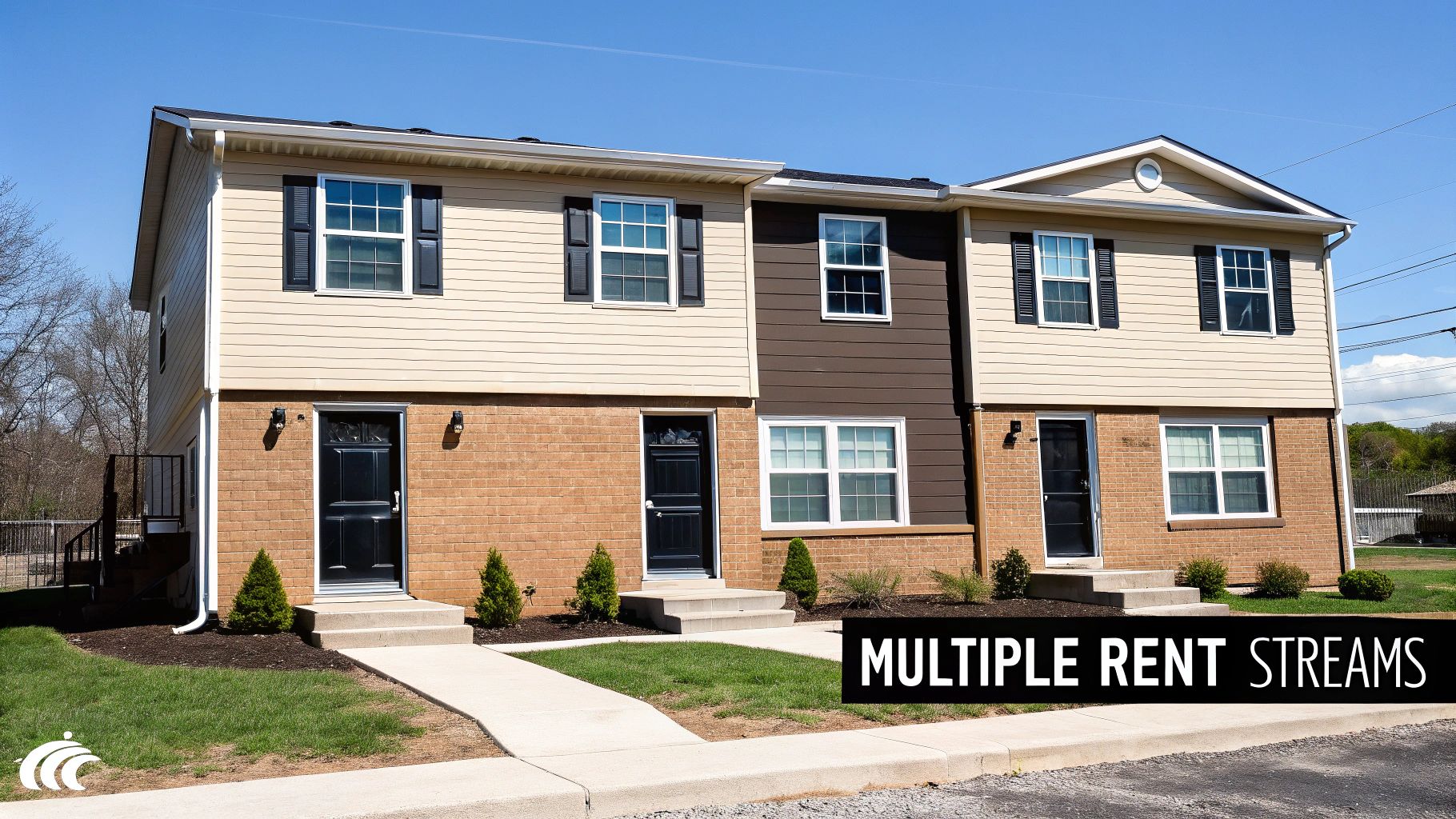
Multi-unit residential properties with two to four units are among the best investment properties for scaling a portfolio efficiently. These assets, which include duplexes, triplexes, and fourplexes, offer the powerful advantage of multiple income streams from a single property purchase. This built-in diversification minimizes the impact of a single vacancy, providing more stable and predictable cash flow compared to a single-family home.
In the Central Valley, where single-family home prices have risen, multi-unit properties represent a strategic path to higher returns. They are an ideal "house hacking" vehicle, where an investor lives in one unit while tenants in the others cover the mortgage. This strategy significantly reduces personal living expenses and provides an on-site management presence, all while qualifying for more favorable residential financing.
ROI Drivers and Local Examples
The return on investment for small multi-unit properties is amplified by collecting multiple rent checks against a single mortgage, insurance policy, and property tax bill. This consolidation of expenses boosts cash flow, while the property appreciates as a whole. Renovating units upon turnover can significantly increase rental income and force appreciation.
- Fresno Duplex: A well-located duplex in an established neighborhood could rent each unit for $1,200-$1,800, generating strong cash flow from a single asset.
- Clovis Triplex: A converted triplex could produce a combined monthly income of $4,500-$6,000, offering substantial revenue potential.
- Central Valley Fourplex: An investor could acquire an under-market-value fourplex, renovate the units, and stabilize the property with qualified tenants to maximize returns.
Key Insight: The ability to secure residential financing for up to four units is a major advantage, making these properties accessible to investors without needing to navigate the complexities of commercial loans.
Actionable Next Steps
To succeed with multi-unit investments, a unit-by-unit management approach is crucial.
- Conduct Detailed Inspections: Before purchasing, inspect each unit individually. Assess the condition of plumbing, electrical, and HVAC systems for all units to create an accurate capital expenditure budget.
- Establish Clear Lease Agreements: Develop separate, detailed leases for each tenant. Clearly outline rules for shared spaces like laundry rooms, parking, and common outdoor areas to prevent disputes.
- Implement Per-Unit Financial Tracking: Budget for maintenance and track income and expenses for each unit separately. This helps identify underperforming units and allows for precise profitability analysis.
- Leverage Professional Tenant Screening: With multiple tenancies to manage, Edinhart’s comprehensive 14-point screening process is essential for placing reliable tenants across all units, ensuring a stable and harmonious property environment.
3. Vacation Rental Properties (Short-Term Rentals)
Vacation rental properties, often called short-term rentals (STRs), are a dynamic and high-yield category, making them one of the best investment properties for investors willing to take a more hands-on approach. Managed through platforms like Airbnb and VRBO, these properties cater to tourists, business travelers, and individuals seeking temporary lodging, commanding significantly higher per-night rates than traditional long-term rentals. This model transforms a residential property into a hospitality business, capitalizing on high-demand locations.
The Central Valley's proximity to world-class destinations like Yosemite and Sequoia National Parks, coupled with a burgeoning local wine scene, creates a prime market for STRs. While they demand higher initial furnishing costs and more active management, the potential for 50-100% higher annual returns compared to a standard rental makes them an incredibly attractive investment class when managed effectively.

ROI Drivers and Local Examples
The return on investment for an STR is driven by maximizing occupancy and nightly rates, which often peak during holidays, local events, and tourist seasons. The key is creating a desirable guest experience that earns five-star reviews, boosting visibility and booking potential.
- Yosemite Gateway: A well-appointed home in Fresno or a nearby foothill community can serve as a base for park visitors, generating $4,500+ per month during peak season.
- Clovis Wine Country Retreat: A charming property near local wineries could be marketed as a weekend getaway, potentially earning $5,000-$7,000 monthly during harvest and event seasons.
- Luxury Rural Escape: A converted farmhouse in the Central Valley, complete with premium amenities like a pool or hot tub, can command nightly rates of $200-$300, appealing to those seeking a unique experience.
Key Insight: The success of a vacation rental hinges on treating it like a hospitality business. Professional photography, exceptional cleanliness, and responsive guest communication are non-negotiable for maximizing revenue.
Actionable Next Steps
To succeed in the competitive short-term rental market, you must focus on creating an exceptional and seamless guest experience from the very beginning.
- Master Your Listing: Invest in high-quality, professional photography and write compelling descriptions that highlight unique amenities like a hot tub, high-speed internet, or proximity to attractions. This is your most powerful marketing tool.
- Implement Dynamic Pricing: Use pricing software or a professional manager to adjust your nightly rates based on seasonality, local events, and demand. This ensures you never leave money on the table.
- Automate Guest Management: Leverage technology for automated check-in instructions, booking confirmations, and guest communication. This saves time and creates a smooth, professional experience for travelers.
- Adhere to Local Regulations: Before purchasing, thoroughly research and understand local zoning laws, permit requirements, and taxes for short-term rentals in your target city or county to ensure full compliance.
4. Multifamily Apartment Complexes (5+ Units)
Scaling up to multifamily apartment complexes with five or more units moves an investor into the realm of commercial real estate. These properties are considered some of the best investment properties for sophisticated investors seeking significant cash flow and portfolio diversification. Unlike smaller residential properties, apartment complexes benefit from economies of scale, where management and maintenance costs per unit decrease as the number of units increases. This scale provides a powerful buffer against vacancies, as one empty unit has a much smaller impact on overall profitability.
In growing markets like Fresno and across the Central Valley, the consistent demand for rental housing makes well-managed apartment complexes highly attractive. These properties appeal to a broad tenant base and are often targeted by institutional investors and real estate funds, which can drive up property values. Investing in a larger multifamily asset is a strategic move to build substantial, long-term wealth through a diversified income stream.
ROI Drivers and Local Examples
The return on investment for an apartment complex is driven by stabilized net operating income (NOI), property appreciation, and opportunities for value-add improvements. Commercial financing is standard for these assets, often offering more favorable terms than residential loans.
- Fresno Market: A 20-unit apartment complex purchased for $2.8 million could generate a gross monthly rent of approximately $28,000, offering substantial cash flow potential.
- Clovis Market: A 15-unit complex with strategic renovations to common areas and unit interiors can justify higher rent rates, significantly increasing its overall valuation and NOI.
- Central Valley Market: A professionally managed 30-unit property can achieve occupancy rates of 96% or higher, demonstrating the stability and income potential of a well-run commercial asset.
Key Insight: The value of a commercial apartment complex is directly tied to its income-generating potential. By increasing rents to market rates or reducing operating expenses, you can directly force the appreciation of the asset.
Actionable Next Steps
Success with large multifamily properties requires a professional, data-driven approach and a skilled operational team.
- Analyze Deals Like a Pro: Use commercial metrics like capitalization (cap) rate and cash-on-cash return to evaluate potential acquisitions. These figures provide a standardized way to compare the profitability of different properties.
- Conduct Rigorous Due Diligence: Go beyond a simple inspection. Scrutinize the rent roll, analyze tenant payment histories, review all operating expenses, and assess the physical condition of the building's major systems.
- Budget for Capital Improvements: Set aside 10-15% of your annual gross revenue for capital expenditures. Keeping the property competitive with modern amenities and well-maintained common areas is crucial for attracting and retaining tenants.
- Hire Expert Professional Management: Operating a large complex is a full-time business. A professional management company like Edinhart can handle everything from leasing and maintenance to financial reporting and resident retention, ensuring operational efficiency and maximizing your return.
5. Single-Family Homes for Fix-and-Flip or Renovation
The fix-and-flip strategy involves purchasing undervalued homes, completing strategic renovations, and selling them quickly for a profit. Unlike traditional buy-and-hold rentals that focus on long-term cash flow, this approach is centered on capturing short-term appreciation through forced equity. This method is one of the best investment properties for those with an eye for design, strong project management skills, and access to capital for renovations.
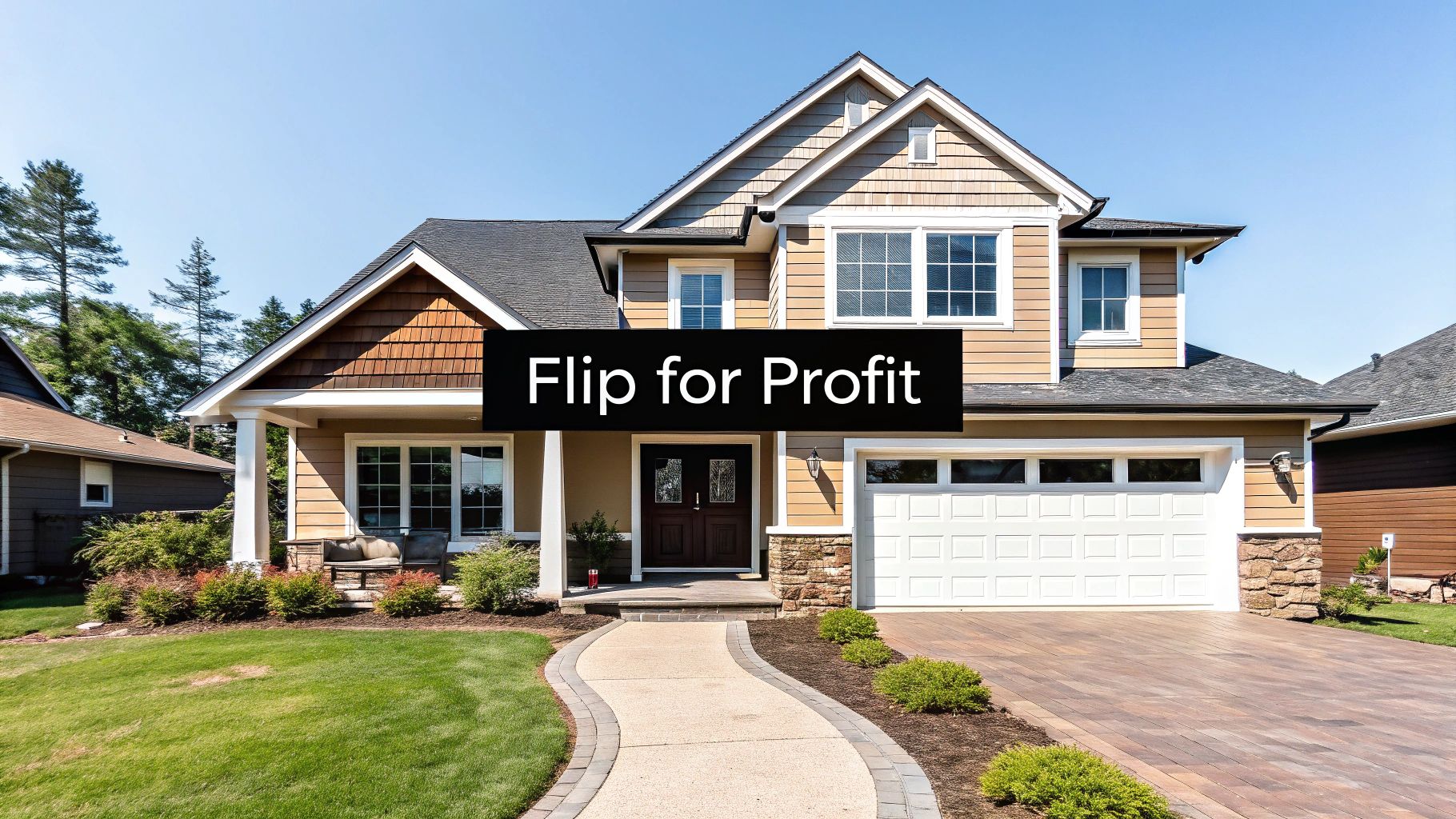
In the Fresno and Clovis markets, opportunities are abundant for properties that need anything from cosmetic updates to more significant system upgrades. Success hinges on accurately budgeting for renovations, understanding after-repair market values, and managing the project timeline efficiently to minimize holding costs.
ROI Drivers and Local Examples
The return on investment for a fix-and-flip project is driven by the profit margin between the total cost (purchase price plus renovation) and the final sale price. This is a capital-intensive strategy that can yield significant returns in a short period.
- Fresno Market: A dated ranch home in a solid neighborhood might be purchased for $180,000. A strategic $45,000 renovation focusing on the kitchen, baths, and curb appeal could result in a sale price of $280,000.
- Clovis Market: An older property with a functional but outdated layout could be updated for $25,000 in flooring and kitchen modernizations, potentially increasing its market value by $60,000.
- Central Valley Foreclosures: An investor might acquire a foreclosure, upgrade essential systems like the roof and HVAC, and resell it for a 25% profit margin.
Key Insight: The most successful flips focus on improvements with the highest perceived value to buyers, such as modern kitchens, updated bathrooms, and enhanced curb appeal, rather than over-improving for the neighborhood.
Actionable Next Steps
To execute a profitable fix-and-flip, you must operate with precision and a clear plan from purchase to sale.
- Develop a Detailed Renovation Budget: Before you even make an offer, create a line-item budget for all planned improvements. Always include a 15-20% contingency fund for unexpected issues that inevitably arise.
- Focus on High-ROI Improvements: Concentrate your capital on the "money rooms" like the kitchen and bathrooms. Fresh paint, modern fixtures, and new flooring offer some of the quickest and most cost-effective returns.
- Master Project Management: Monitor your timeline and budget relentlessly. Every day you hold the property adds to your costs for the mortgage, insurance, and taxes, which directly eats into your profit.
- Use Professional Staging and Marketing: A renovated property must be presented perfectly. Edinhart’s in-house design and professional staging services ensure your flip stands out, attracts top-dollar offers, and sells quickly.
6. Commercial Retail and Office Space
Commercial properties, including retail storefronts and office buildings, represent a sophisticated avenue for real estate investment and are among the best investment properties for those seeking predictable, long-term returns. These assets generate income through leases with businesses, offering stability often unmatched by residential properties. The key attraction is the longer lease terms, typically ranging from 3 to 10 years, which significantly reduces turnover costs and creates a consistent cash flow stream.
In Central California's expanding business corridor, opportunities are growing in professional services, healthcare, and retail sectors. Investing in commercial space allows you to partner with the region's economic growth. Unlike residential rentals, commercial leases (such as NNN or "triple net") often pass on the costs of property taxes, insurance, and maintenance to the tenant, minimizing the landlord's financial obligations.
ROI Drivers and Local Examples
The return on investment for commercial space is driven by long-term lease stability, built-in rent escalations, and the creditworthiness of the tenants. A property occupied by a national brand or an established medical practice provides a secure income source that institutional buyers find highly attractive, boosting the property's overall value.
- Fresno Medical Office: A well-located medical office building near a hospital can generate premium rents, with individual suites fetching up to $5,000 per month for a 1,500 sq ft space.
- Clovis Retail Center: A strip center anchored by a national coffee chain or quick-service restaurant ensures consistent foot traffic and reliable income, commanding strong lease rates.
- Central Valley Professional Complex: An office building leased to accountants and attorneys on 8-10 year terms provides exceptional income predictability and low management intensity.
Key Insight: The value of a commercial property is directly tied to the strength of its tenants and the length of its leases. Securing a creditworthy tenant on a long-term NNN lease can create a nearly passive, high-yield investment.
Actionable Next Steps
Success in commercial real estate requires a higher level of due diligence and strategic planning compared to residential investments.
- Prioritize Tenant Quality: Focus on acquiring properties with creditworthy, established business tenants. Conduct a thorough financial analysis of any potential lessee to ensure their long-term stability.
- Master Lease Structures: Understand the different types of commercial leases, particularly NNN (triple net), gross, and modified gross leases. Negotiate terms that protect your investment, such as annual rent escalations and clear renewal options.
- Analyze the Financials: Evaluate potential acquisitions based on key industry metrics like capitalization (cap) rate and cash-on-cash return. These figures provide a clear picture of the property's profitability.
- Plan for Capital Improvements: While tenants may cover routine maintenance, landlords are often responsible for major capital expenditures like roofing or HVAC systems. Budget accordingly to maintain the property’s appeal and functionality.
7. Industrial and Warehouse Properties
Fueled by the explosive growth of e-commerce and a re-shoring of supply chains, industrial and warehouse properties have emerged as one of the best investment properties for institutional and sophisticated private investors. These assets, which include manufacturing plants, distribution centers, and logistics hubs, are the backbone of modern commerce. They typically involve long-term leases with corporate tenants, providing exceptionally stable and predictable income streams.
The Central Valley’s strategic position as a logistics corridor between Northern and Southern California makes it a prime location for industrial real estate. Companies require space here to efficiently serve millions of consumers, creating high demand and low vacancy rates. This makes industrial properties a powerful asset class for generating strong cash flow and long-term appreciation.
ROI Drivers and Local Examples
The return on investment for industrial properties is driven by long NNN (triple-net) lease terms, built-in rent escalations, and the high cost of tenant relocation, which encourages renewals. Unlike residential properties, tenants are often responsible for taxes, insurance, and maintenance, reducing landlord operating expenses.
- Central Valley Warehouse: A 50,000 sq ft distribution center leased to an e-commerce company at $0.85/sq ft NNN could generate over $42,500 in monthly base rent.
- Fresno Manufacturing: A specialized food processing facility can be secured with a 10-year lease, locking in a credit-worthy tenant tied to the region's agricultural economy.
- Clovis Logistics Center: A modern logistics hub near Highway 99 could command premium rents from national distributors, generating substantial and reliable cash flow.
Key Insight: Industrial tenants invest heavily in their spaces with specialized equipment and systems, making them "stickier" than other commercial tenants. This high switching cost leads to impressive tenant retention rates and predictable income.
Actionable Next Steps
Success in industrial real estate requires specialized knowledge and a focus on the asset's strategic value and tenant quality.
- Focus on Location and Logistics: Target properties with excellent access to major transportation arteries like Highway 99 and I-5. Proximity to rail and airports is also a significant value driver.
- Conduct Rigorous Tenant Due Diligence: The financial health of your tenant is paramount. Carefully analyze their creditworthiness, business model stability, and industry outlook before signing a long-term lease.
- Negotiate Landlord-Favorable Leases: Work with a commercial real estate attorney to structure leases with annual rent escalations, clear maintenance responsibilities, and renewal options that benefit you.
- Partner with a Specialist: The industrial market is complex. Collaborating with specialized commercial brokers and property managers is essential for sourcing deals, understanding market rates, and managing these high-value assets effectively.
8. Mobile Home Parks and RV Communities
Often overlooked, mobile home parks and RV communities represent one of the best investment properties for generating consistent, high-volume cash flow. Unlike traditional residential rentals, the primary income stream comes from lot rent, where tenants own their homes but lease the land beneath them. This model creates a "sticky" tenant base, as moving a manufactured home is both difficult and expensive, leading to exceptionally low turnover and predictable revenue.
In areas like the Central Valley, these properties serve a critical need for affordable housing, particularly for retirees and working-class families. The business model combines the stability of real estate appreciation with the recurring cash flow of a service business, offering a unique and powerful investment vehicle. An investor acquires the land and infrastructure, then profits from the monthly lot fees.
ROI Drivers and Local Examples
The return on investment for a mobile home park is driven by collecting monthly lot rents from a large number of tenants, minimizing operational costs, and making strategic infrastructure improvements to justify rent increases over time. The key is operational efficiency and scale.
- Central Valley MHP: A 50-lot mobile home park with an average lot rent of $700 can generate a gross monthly income of $35,000, offering significant cash flow potential.
- Fresno RV Community: A well-located RV park near major highways can attract a mix of long-term residents and seasonal travelers, providing diverse and stable income streams.
- Clovis Community: A park with premium amenities like a clubhouse, pool, and social activities can command higher lot rents and attract a more desirable, stable resident demographic.
Key Insight: The true value in a mobile home park lies in its operational simplicity and the high barrier to entry for new competition. It is incredibly difficult to get new parks zoned and approved, making existing parks highly valuable assets.
Actionable Next Steps
Success in this niche requires specialized knowledge and a focus on community management.
- Prioritize Due Diligence: Thoroughly investigate the park's infrastructure, including water, sewer, and electrical systems. Deferred maintenance can quickly erase profits.
- Understand Local Regulations: Mobile home park laws are complex and tenant-protective. Familiarize yourself with all local and state regulations to ensure compliance and avoid legal issues.
- Invest in Community Amenities: Focus on improving common areas like roads, lighting, and recreational facilities. These improvements justify rent increases and foster a positive community environment.
- Implement Professional Management: The day-to-day operations of a park are specialized. While Edinhart focuses on traditional residential properties, we recommend seeking a management firm with specific experience in manufactured housing to handle rent collection, rule enforcement, and resident relations.
9. Student Housing and Purpose-Built Rental Communities
Student housing and purpose-built rental communities represent a specialized yet highly profitable niche, making them one of the best investment properties for those targeting a demographic-driven market. These properties capitalize on the consistent demand generated by universities and colleges, offering a predictable stream of tenants often backed by parental financial guarantees. This creates a resilient income source tied directly to academic calendars.
In Central California, institutions like Fresno State fuel a constant need for well-managed, proximate student housing. These properties command premium rents per bedroom and maintain high occupancy rates. Purpose-built communities, often featuring modern amenities, appeal to both students and young professionals, broadening the tenant pool and maximizing revenue potential.
ROI Drivers and Local Examples
The return on investment for student housing is driven by high occupancy, premium per-bed rental rates, and the ability to offer all-inclusive packages. The model minimizes vacancy risk by aligning leases with the academic year and securing parental co-signers, significantly reducing default risk.
- Fresno State Proximity: A multi-unit property near the campus could be configured to house 40 students, with each paying $1,200/month for a furnished room, generating a gross income of $48,000 monthly.
- Purpose-Built Community: A modern, 150-unit complex with amenities like a gym and study lounges could rent furnished units for $1,200-$1,500 each, appealing to a broad student and young professional base.
- All-Inclusive Model: A student housing complex offering a single, all-in rent that includes utilities, internet, and furniture simplifies the tenant experience, justifies higher prices, and boosts profitability.
Key Insight: The non-discretionary nature of education creates a recession-resistant demand for student housing, providing investors with a stable asset class that performs well even during economic downturns.
Actionable Next Steps
To succeed in this specialized market, a focused operational strategy is essential.
- Prioritize Proximity: Target properties within a one-to-two-mile radius of a major university campus. Walkability or easy access to public transit is a primary decision-making factor for students.
- Offer All-Inclusive, Furnished Units: Simplify the rental process for students by including utilities, high-speed internet, and modern furniture in the rent. This model reduces tenant friction and allows for premium pricing.
- Mandate Parental Guarantees: Implement a strict policy requiring parental co-signatures on all leases. This provides a crucial financial backstop and ensures rent is paid reliably and on time.
- Prepare for Seasonal Turnover: High turnover between academic terms is inevitable. A professional management company like Edinhart can streamline the make-ready process, ensuring units are cleaned, repaired, and ready for new tenants with minimal vacancy loss.
10. Self-Storage and Mini-Storage Facilities
Self-storage facilities represent a unique and often overlooked commercial real estate niche, earning their place as one of the best investment properties due to their recession-resistant nature and operational simplicity. These properties cater to a wide range of needs, from individuals in life transitions to businesses requiring extra inventory space. Unlike residential rentals, they require minimal day-to-day management and boast high tenant loyalty with low turnover costs.
The Central Valley's consistent population growth and business expansion fuel a steady demand for secure storage solutions. This creates an environment where investors can achieve stable, predictable cash flow with relatively low operational overhead. The business model is straightforward: rent out space, which requires far less maintenance and fewer tenant interactions than managing residential units.
ROI Drivers and Local Examples
The return on investment for self-storage is driven by high occupancy rates, operational efficiency, and the ability to incrementally increase rental rates. Ancillary income from selling locks, boxes, and tenant insurance further boosts profitability.
- Fresno Market: A mid-sized facility with a mix of unit sizes, such as 5×10 at $60/month and 10×20 at $150/month, can generate substantial income once stabilized.
- Central Valley Facility: A 100-unit facility operating at a conservative 75% occupancy could generate upwards of $18,000 in monthly revenue, depending on unit mix and pricing.
- Climate-Controlled Premium: Adding climate-controlled units in a key Fresno location can command premium pricing, often $1.50 per square foot compared to the standard $0.75, attracting clients with sensitive items.
Key Insight: The primary appeal of self-storage is its operational leverage. Automated systems for gates, billing, and rentals drastically reduce labor costs, allowing for higher profit margins compared to other real estate assets.
Actionable Next Steps
To succeed in the self-storage market, focus on location, operational efficiency, and meeting diverse customer needs from the outset.
- Analyze Demographic Trends: Target areas with high residential turnover, population density, and a mix of renters and homeowners. Relocation and downsizing are primary drivers of storage demand.
- Offer a Strategic Unit Mix: Don't just build one-size-fits-all. A well-planned facility includes a variety of sizes (e.g., 5×5, 5×10, 10×20) to capture the entire spectrum of customer needs, from students to small businesses.
- Implement Automation Technology: Invest in automated gate systems, 24/7 security cameras, and an online payment portal. This reduces staffing needs and provides the modern, convenient experience today's consumers expect.
- Prioritize Security and Cleanliness: These two factors are paramount for customers and justify premium rental rates. A well-lit, clean, and secure facility will always outperform a neglected competitor, leading to higher occupancy and tenant retention.
Top 10 Investment Property Types Comparison
| Property Type | Implementation Complexity 🔄 | Resource Requirements ⚡ | Expected Outcomes 📊⭐ | Ideal Use Cases | Key Advantages 💡 |
|---|---|---|---|---|---|
| Single-Family Rental Homes | 🔄🔄 Low–moderate (individual property care) | ⚡ Moderate capital (down payment, reserves); manageable DIY mgmt | 📊 Stable monthly cash flow, steady appreciation • ⭐⭐ | Long-term rental to families; small portfolios; owner-landlords | Strong tenant stability; easier financing; resale liquidity |
| Multi-Unit Residential (2–4 units) | 🔄🔄🔄 Moderate (multiple leases, shared systems) | ⚡ Higher acquisition cost; more hands-on mgmt or professional services | 📊 Diversified income per property; lower vacancy risk • ⭐⭐⭐ | House-hacking; investors seeking multiple rent streams in one asset | Multiple income streams; owner-occupancy advantage; residential financing |
| Vacation Rental (Short-Term) | 🔄🔄🔄🔄 High (frequent turnovers, guest services) | ⚡ High upfront furnishing + ongoing turnover costs; active mgmt | 📊 High revenue potential (seasonal variability) • ⭐⭐⭐ | Tourist corridors, near attractions; owners who can actively manage or outsource | Very high nightly rates; personal use flexibility; dynamic pricing |
| Multifamily Apartment Complexes (5+ units) | 🔄🔄🔄🔄 High (commercial rules, larger ops) | ⚡ Very high capital; commercial financing; professional mgmt required | 📊 Significant scale income and economies of scale • ⭐⭐⭐ | Experienced investors, institutional buyers, large-scale portfolios | Large cash flow, lower per-unit costs, scalable operations |
| Single-Family Fix-and-Flip | 🔄🔄🔄 High (project management, contractors) | ⚡ High capital for purchase + renovations; short holding costs | 📊 Potentially high short-term ROI; higher risk/variance • ⭐⭐–⭐⭐⭐ | Value-add opportunistic buyers, renovation specialists | Quick capital recovery; control over value creation; staging upsale |
| Commercial Retail & Office | 🔄🔄🔄🔄 High (commercial leasing, tenant improvements) | ⚡ High capital; commercial lending; specialized brokerage | 📊 Predictable long-term leases, income stability • ⭐⭐–⭐⭐⭐ | Long-term leases to creditworthy businesses; professional investors | Long lease terms (NNN), lower turnover, predictable cash flow |
| Industrial & Warehouse | 🔄🔄🔄🔄 High (specialized market, large TI) | ⚡ Very high capital; specialized brokers; long-term tenant vetting | 📊 Long-term stable income; strong demand with e‑commerce tailwinds • ⭐⭐⭐ | Logistics/distribution hubs; institutional investors | Very long leases, strong tenant credit, NNN structures |
| Mobile Home Parks & RV Communities | 🔄🔄🔄 High (regulatory, infrastructure mgmt) | ⚡ High capital for land/infrastructure; specialized operations | 📊 Stable lot-rent cash flow; moderate appreciation • ⭐⭐ | Affordable housing investors; cash-flow-focused portfolios | Recurring lot rents; lower per-unit maintenance; demographic resilience |
| Student Housing & Purpose-Built Rentals | 🔄🔄🔄 High (seasonal cycles, amenity ops) | ⚡ Moderate–high capex for furnished units; active turnover mgmt | 📊 High occupancy tied to academic calendar; premium rents • ⭐⭐–⭐⭐⭐ | Near universities; investors targeting guaranteed student demand | Predictable occupancy, parental guarantees, premium furnished rents |
| Self-Storage & Mini-Storage | 🔄🔄 Low–moderate (facility ops, automation) | ⚡ Moderate–high construction or conversion costs; low staffing | 📊 Recession-resistant income, high NOI margins • ⭐⭐⭐ | Dense residential areas, relocation corridors, passive investors | Low management intensity, scalable, month‑to‑month pricing flexibility |
Taking the Next Step: Partnering for Success in Central California
We've journeyed through a comprehensive landscape of the best investment properties, each offering a unique pathway to building wealth and generating income. From the steady, reliable returns of a single-family rental in a sought-after Clovis school district to the scalable growth potential of a multifamily apartment complex near Fresno State, the opportunities in Central California are as diverse as they are promising. You've seen how vacation rentals can capitalize on our proximity to national parks and how commercial spaces can anchor a portfolio with long-term stability.
The central theme connecting all these options is clear: the most successful investments are born from a combination of the right asset and the right strategy. Choosing one of the best investment properties is only the first step. True success lies in the meticulous execution of acquisition, financing, management, and eventual exit.
From Knowledge to Action: Your Strategic Blueprint
The information in this guide serves as your map, but navigating the terrain requires expertise. As we've detailed, each property type comes with its own set of challenges and demands a specific skill set. A fix-and-flip project requires a deep understanding of renovation costs and market trends, while managing a multi-unit property involves complex tenant relations and adherence to strict housing laws.
This is where the theoretical becomes practical. Your next step is to crystallize your personal investment thesis by asking critical questions:
- What is my risk tolerance? Are you seeking the lower-risk, slower appreciation of a turnkey single-family home or the higher-risk, higher-reward profile of a speculative fix-and-flip?
- What is my desired level of involvement? Do you envision yourself as a hands-on landlord managing day-to-day operations, or do you prefer a passive investment that generates income without demanding your time?
- What are my capital limitations and financing options? Your budget will naturally guide you toward certain property types, from a single mobile home rental to a multi-million dollar commercial complex.
- What are my long-term goals? Are you building a cash-flow machine for early retirement, or are you focused on long-term appreciation to build generational wealth?
Answering these questions transforms a general list of the best investment properties into a personalized, actionable blueprint tailored to your financial future.
The Edinhart Advantage: Your Local Partner in Execution
Navigating the complexities of the Fresno and Clovis real estate markets is not a journey you have to take alone. A knowledgeable local partner is not just a convenience; it's a strategic advantage that can dramatically impact your bottom line. At Edinhart, we are more than just property managers; we are investment strategists dedicated to maximizing the potential of your assets.
We understand that every investor's needs are different. For the experienced landlord who simply needs to fill a vacancy with a high-quality tenant, our Placement-Only Service leverages professional photography and rigorous screening to secure the best possible candidate quickly. For the busy professional or out-of-state investor seeking a completely hands-off experience, our Full-Service Monthly Management handles every detail, from rent collection and maintenance to financial reporting and legal compliance.
Key Insight: Your choice in property management is as crucial as your choice in property. The right partner protects your asset, optimizes your cash flow, and frees you to focus on growing your portfolio.
Our integrated approach ensures your property always performs at its peak. We use data-driven analysis to determine the optimal rent for your home, and our in-house expertise in staging and professional marketing ensures it stands out in a crowded market. This commitment to excellence translates into lower vacancies, higher rental income, and ultimately, a better return on your investment.
Ready to transform your real estate goals into a tangible, profitable reality? Let the expert team at Edinhart Realty and Property Management provide the strategic guidance and hands-on support you need to succeed in the Central California market. Explore our services and schedule a consultation today at Edinhart Realty and Property Management to begin building your legacy.


